Author name: alei

Vacuum Powder Transfer

Vacuum Powder Transfer System: The Ultimate Guide In 2025

Vacuum Powder Transfer System: The Ultimate Guide In 2025

Are you struggling to deal with powders? Why powder handling is so challenging? When thinking about the traditional way for powder filling methodology; indeed, it was very hard to handle. People might face so many complications. For instance, leakage, dust exposure, inaccurate dosage and so much more. Have ever heard about a vacuum powder transfer system?

This is the right place to explore the basic knowledge related to vacuum powder transfer systems. So, readers, I am sure that this article would be worth reading as it will help you in deciding the right machine and the basic points you must know when going to purchase the vacuum powder transfer system. Have a look at the below discussion.

    Add a header to begin generating the table of contents

    1.What is a vacuum powder transfer system?

    powder transfer

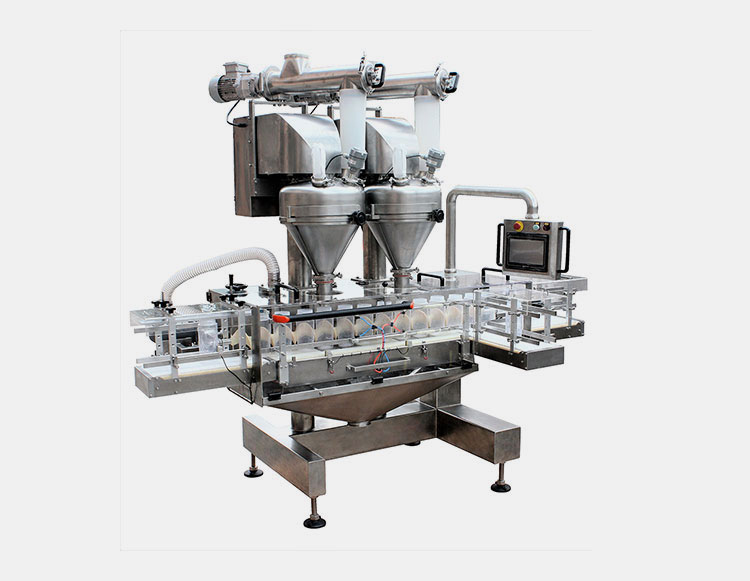
    Vacuum powder transfer system- Picture Courtesy: HAF Equipment

    A vacuum powder transfer system is an advanced solution offering you an enclosed framework for transporting powders from one point to another by utilization of vacuum suction criteria.

    The machine is capable of rapid, accurate, and safe movement of your materials via circulatory pipes which is helpful in the integration of various units used in the process. Due to its simple framework with efficient output, it is therefore considered as a paramount tool in various production and packaging industries worldwide.

    2.Why is there a need for a vacuum powder transfer system?

    The vacuum powder transfer system is a promising machine required in manufacturing and packaging world due to certain described reasons:

    Fast Mode of Transfer

    Fast Mode of Transfer

    Fast working- picture courtesy: Ganson

    In the conventional practice, the powder transfer task was not only challenging but also confronting many hurdles that were making your time utilization and implementation of more labor. There’s always a need for such system that can help you with the fast transfer of powder with content and user safety. The machine is capable of accelerating processes with high speed and minimum human involvement.

    As this process is hooked to more mechanical operation therefore you will face fewer problems as well as product loss.

    Extremely Safe and Hygienic

    Extremely Safe and Hygienic

    Safe powder packaging- Picture Courtesy: Made Safe

    When you belong to the manufacturing industry, along with producing a safe and hygienic product, you need to take care of your operators as well.

    This is your prime responsibility and when you are installing a vacuum powder transfer system in your facility, it offers you containment especially when it comes to subjecting toxic, harsh, or volatile substances.

    The machine is ideal and is designed with an enclosed structure that ensures reduced risk of material blowing, dust expulsion, and reduced dust suspension; so, it is keeping your environment and product safe.

    Diverse Materials Handling

    Diverse Materials Handling

    Vacuum Powder Transfer System- Picture Courtesy: T.H.E.M

    The vacuum powder transfer system is capable of dealing with broad spectrum materials handling that range from free flowing to non-free flowing, granules, pellets, etc in a flexible way. Moreover, it is a promising unit that can pick up the material from multiple pick-up points without need for any extra resources. This is very beneficial to install when your production is based on picking up material from different locations.

    Less Footprint

    Less Footprint

    Less footprint- Picture Courtesy: CSIRO

    When it comes to managing your space, the vacuum powder transfer system is absolutely an amazing solution as it is designed with a compact structure especially when you are addressing the filter receiver.

    Moreover, it can allow you to integrate the machine with another system easily to facilitate work without requiring large spaces, as it is capable of accommodating other units in such a way as to manage the powder transfer without any obstacles.

    Less wear and tear

    Less wear and tear

    Less wear tear- Picture Courtesy: NANJING SUNDGE

    The vacuum powder transfer system often shows lesser wear and tear because machine velocity is ideal for carrying materials from one place to another in a subtle way. While it is easier to clean and requires lower maintenance. Therefore, the machine is generally considered as a useful option with an extended shelf life.

    Energy efficient

    Energy efficient

    Energy Efficient

    This machine mainly focuses on the utilization of vacuum with the potentially higher outcome with the requirement for energy. Therefore, it is considered as a more energy-efficient equipment in your facility that can work in an optimized manner.

    Easy to install

    Easy to install

    Flexible installation

    The machine may look complex to you, but it gives an easy installation due to its modular structure. The machine is composed of the specific number of components making less intrusive installation process and test operation.

    Gentle Handling

    Gentle Handling

    Gentle handling of ingredients- Picture Courtesy: News- Medical

    Whether your material is fragile, free flowing, non- free flowing, abrasive, heat sensitive, or moisture sensitive, when it comes to dealing with a vacuum powder transfer system, it promises you that material integrity will be stable throughout the procedure.

    3.What industry requires vacuum powder transfer system?

    There are some special advantages of vacuum powder transfer systems- quick and dust-free powder transfer- due to which it is a go-to transferring system in industries. It is an incredible system immensely popular in various manufacturing sectors. Some fundamental industries that require this system include:

    Pharmaceutical Industry

    Pharmaceutical Industry

    Pharmaceutical Powder

    It is one of the most significant industries that require sterile processing, as otherwise, it causes severe problems of contamination in the formulation of medication, leading to serious health risks. Therefore, the vacuum powder transfer system is a major hit in this industry due to its transference of powders in a controlled sterile environment.

    Food and Beverage Industry

    Food and Beverage Industry

    Food Powder

    The vacuum powder transfer system is extensively utilized in the food and beverage sector because it maintains hygienic quality standards and reduces dust production, keeping food and beverage powders- for instance, flour, sugar, salt, herbs, spices, and food flavoring- safe and pure for consumption.

    Chemical Industry

    Chemical Industry

    Detergent Powder

    This industry often processes and handles hazardous chemical powders and their exposure to working personnel could lead to health hazards. Hence, for safety and product integrity, the vacuum powder transfer system is utilized in the chemical industry for the transportation of different pigments, resins, detergents, acidic and basic salts, etc.

    Cosmetic Industry

    Cosmetic Industry

    Cosmetic industry- Picture Courtesy: NCCS

    Cosmetic and personal care powders require gentle handing that is accomplished with the vacuum powder transfer system. It delicately conveys cosmetic materials such as talcum, face powders, eye shades, makeup, and skincare powders. It is pivotal in maintaining the quality of cosmetic powders.

    Additive Manufacturing Industry

    Additive Manufacturing Industry

    Additive Powders- Picture Courtesy: SAM Sputter Targets

    One of the significant contributions of the vacuum powder transfer system is in the additive manufacturing industry. It has a role in conveying metal, polymer, resins, additives, and other fillers powders and ensures accurate material feed for superior quality 3D printing,

    Agriculture Industry

    Agriculture Industry

    Agriculture Powders- Picture Courtesy: Gardening Mentor

    It plays a vital part in the transference of different kinds of agricultural powders, like fertilizers, herbicides, pesticides, animal feed, and other agrochemicals. It is increasingly seen in the agriculture industry because of its clean and smooth handling of agricultural powders

    Battery Manufacturing Industry

    Battery Manufacturing Industry

    Battery Powder- Picture Courtesy: AZoM

    The vacuum powder transfer system is an important part of the battery manufacturing industry because it transfers different metal powders, for example, lithium, cobalt, iron, and others for clean and efficient production of high-quality batteries.

    Paint Industry

    Paint Industry

    Paint Powder

    This machine is utilized in the paint and coating industry for conveying various types of powdered pigments, dyes, tints, primers, sealers, varnishes, stains, etc to maintain uniform batch quality.

    4.What are the types of vacuum powder transfer system?

    Based on the powder characteristics, there are the two basic types of vacuum powder transfer system:

    Dilute or Lean Phase Vacuum Powder Transfer System

    Dilute or Lean Phase Vacuum Powder Transfer System

    Dilute or Lean Phase Vacuum Powder Transfer System- Picture Courtesy: REICO

    The dilute or lean phase vacuum powder transfer system is used for those materials that require lesser pressure and high airflow speed to transfer them from one place to another place. Due to high velocities and a significant amount of force for the movement of powders, this is known as dilute phase.

    The machine is capable to produce a high air velocity with a confined pressure that can leads to produce greater fluidisation of the product.

    This kind of system is very useful in such industries where long-distance material is used to transfer, for example, medicines, agricultures, foods, or plastic or ceramic, etc. Also, this phase is mainly helpful when you have to subject material those are toxic in nature.

    Dense Phase Vacuum Powder Transfer System

    Dense Phase Vacuum Powder Transfer System

    Dense Phase Vacuum Powder Transfer System- Picture Courtesy: REICO

    This is kind of equipment following opposite working criteria than dilute phase vacuum powder transfer system. It utilises lesser speed and high pressure for materials transfer. The primary objective behind this concept is to deal products with fragile characteristics and can reduce the chances of wear tear of the circulatory system of the vacuum network especially when it comes to subjecting the abrasive materials.

    When it comes to talking about pressure, it is composed of specified compressors that ensuring work under compressed air inside the network ranges from 1 bar g to more.

    The benefit of this system is that it cannot results in piling up of the product inside the network, thus, giving you the safest working output.

    5.What is the operating principle of a vacuum powder transfer system? How does it work?

    The vacuum powder transfer system is processes when it sucks materials with air  elimination from the suction pipe. The atmospheric pressure forces the substances through the suction pipe. It is atmospheric pressure that is responsible for transferring the powders.

    It uses the principle of negative pressure and airspeed to transfer powders through the pipeline network. Look at the working steps one by one below:

    Principle of Vacuum Powder Transfer System

    Principle of Vacuum Powder Transfer System- Picture Courtesy: Lutena Vakuum

    Loading of Material

    Loading of Material

    Loading of Material- Picture Courtesy: VOLKMANN GmbH

    First, the powders are fed into a feed station. These stations are the material pick-up locations, consisting of hoppers, process machines, bins, bags, and other containers.

    Vacuum Generation

    Vacuum Generation

    Vacuum Generation- Picture Courtesy: BulkInside

    The vacuum powder transfer system uses a vacuum pump or blower to generate the vacuum (low-pressure environment) in the transfer line or separator body. Air enters from the feeding point via a hose. This air draws powders together with it.

    Powder Conveying

    Powder Conveying

    Powder Conveying- Picture Courtesy: Solberg Manufacturing

    Because of the unique construction of the separator body, air velocity is decreased, and powders are held above the discharge valve of the vacuum conveyor. A filter unit is responsible for filtering airborne dust and powders from the transferring air inside the separator body.

    Powder Discharge

    Powder Discharge

    Powder Discharge- Picture Courtesy: Join

    As soon as the separator is completely loaded with the product, the vacuum pump is turned off then the air pressure in the vacuum powder transfer system equalizes with the surrounding environment within a few seconds.

    Then the separated product is unloaded from the system via the discharge valve and dropped down directly into the destination location. After the discharge of the product, the filter units are automatically cleaned using an air shock system, and discharge valves are closed to start the whole powder transferring cycle again.

    6.What are the components of vacuum powder transfer systems?

    The vacuum powder transfer system is a simple unit with the composition of various parts. We have illustrated a figure for your understanding with specific functions. Have a look at below discussion.

    The parts of vacuum powder transfer system

    The parts of vacuum powder transfer system- Picture Courtesy: pneumatic conveyor

    Pick Up or a Loading Unit

    The pickup point which is also known as the suction point which is responsible for picking up of the materials toward destination by the help of the negative pressure.

    The purpose of sucking out the air is to provide a complete evacuation particles in this section. Moreover, fans and blowers make the controlled temperature and ensuring subtle blowing of materials.

    Destination or Receiving Point

    This is the middle point where the powder material has to stayed either for storage, mixing, filling or packaging purposes. It is facilitated by inlet which ensure subtle and airtight entry while discharge point which allows powder after treatment towards further units.

    Pump

    How is the negative pressure created? It is the pump which is responsible for the entire functionality of the vacuum powder transfer system. It is up to you what pump category you choose such as rotary, or diaphragmatic.

    7.What materials require a vacuum powder transfer system?

    Vacuum powder transfer system offers broad range materials dealsing, for instance:

    Granular Powders

    Granular Powders

    Granular Powders- Picture Courtesy: World Grain

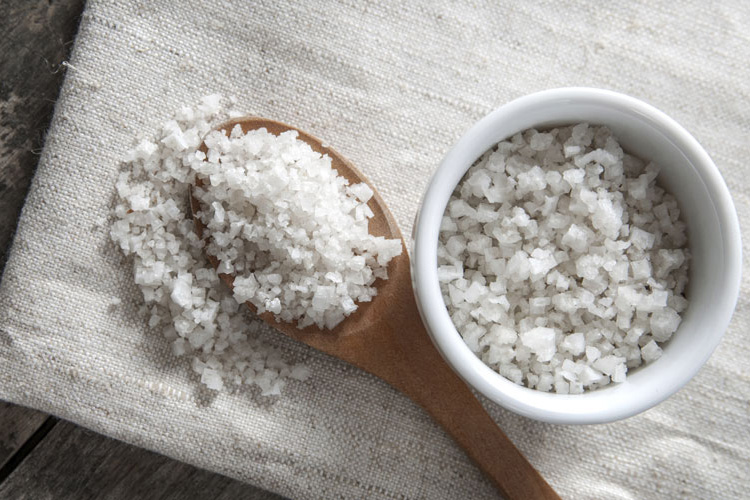
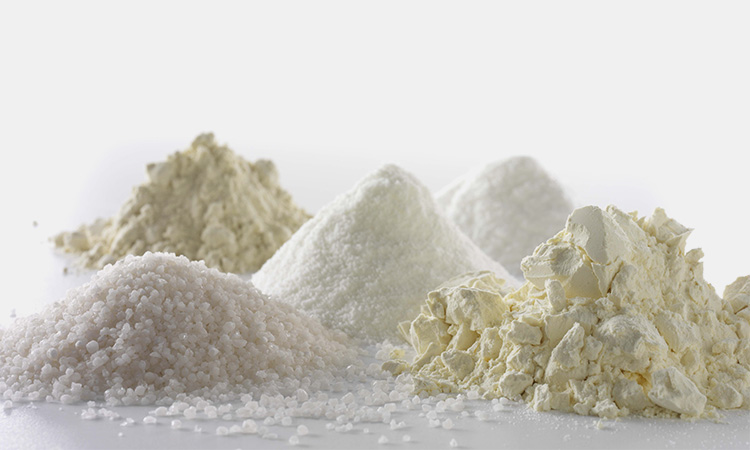
    These powders contain agglomerates of fine powders having a spherical shape. They have a coarse texture and better flowability than fine powders. Vacuum powder transfer system easily handles wide types of granular powders like pharmaceutical granules, sugar, salt, etc.

    Fine Powders

    Fine Powders

    Fine Powders- Picture Courtesy: The List

    They constitute small particles with a size of less than 100 µm in diameter and handling of these powders requires caution because they can generate a lot of dust, leading to blockage of conveying systems. However, the vacuum powder transfer system is perfect for transferring fine powders with its vibratory feeders and fluidizing systems.

    Pellets

    Pellets

    Pellets- Picture Courtesy: Global Pharma Tek

    They are often prone to chipping or breaking, so, a vacuum powder transfer system is used for delicately handling pellets, which preserves their structural composition during conveying.

    Moisture or air Sensitive Materials

    Moisture or air Sensitive Materials

    Moisture or air Sensitive Materials- Picture Courtesy: SGS

    Since the vacuum powder transfer system is an enclosed design, therefore, it is commonly utilized for transferring moisture or oxygen-sensitive materials, because this system reduces the contact of water and air to materials, which can otherwise degrade them.

    Hazardous Materials

    Hazardous Materials

    Hazardous Materials- Picture Courtesy: Concrete Décor Magazine

    This system is typically used for handling hazardous or toxic materials, as this device contains materials and keeps them enclosed, thus reducing the chances of explosions and inhalation of damaging particles.

    8.How does a vacuum powder transfer system protect your ingredients from contamination?

    A vacuum powder transfer system is incorporated with different features and mechanisms to maintain the integrity and sterility of powdered ingredients. Here are some significant safety features of the vacuum powder transfer system.

    Closed Design

    Closed Design

    Closed Design- Picture Courtesy: Hapman

    This system has enclosed and sealed construction that reduces exposure of powdered materials to the external environment, thereby averting the entry of airborne agents, dust, debris, and other foreign objects inside the device and keeping them from contaminating materials.

    Filtration System

    Filtration System

    Filtration System- Picture Courtesy: Canadian Plastics

    Different types of sophisticated filtration systems, like HEPA filters, are present at different locations in the vacuum powder transfer system to trap and remove airborne particles from the feed.

    Leakage Prevention

    Leakage Prevention

    Leakage Prevention- Picture Courtesy: Gericke

    This machine has a strong vacuum seal and every connection and joint are designed prudently to prevent leakage, thus, this system prevents the entrance of external agents during the powder conveying and maintains the hygiene of the product.

    Minimal Manual Handling

    Minimal Manual Handling

    Minimal Manual Handling- Picture Courtesy: Volkmann GmBH

    With this system, there is no need for a labor workforce, because it automatically handles and conveys the feed, consequently minimizing human contact with the powdery material, which is integral in preventing contamination from human mistakes or improper material handling.

    9.What are the process tips of vacuum powder transfer systems?

    Good practices can make your work life excellent. A vacuum powder transfer system is the safest method of transporting materials offering dilute or lean and dens phase process lines to convey in specialized pipelines. To have more efficient results, we have mentioned some straightforward process tips for you. If you follow them, we bet you will be approaching an extended shelf life of the unit.

    Routinely Cleaning of the System

    Routinely Cleaning of the System

    Routine cleaning of the unit

    Remember guys! The filter is the main component of the vacuum powder transfer system. Therefore, never ignore their cleaning regularly to have a sharp suction operation. If the filter pores are blocked and restricting the airflow, it can affect the throughput, so you can apply a vacuum cleaner to pick the blockage and make the filter effective and clear.

    Check Pumps and Gaskets

    Check Pumps and Gaskets

    Checking parts of vacuum powder transfer system- Picture Courtesy: Filquip

    As the system is entirely sealed and to assess the working status, you must check the pressure induced by the pumps and gasket. Any problem with these tools may result in a major drop in their performance due to air entrapment.

    Good Internal State and Check Control Unit

    Good Internal State and Check Control Unit

    Vacuum powder transfer system- Picture Courtesy: Nol-tec

    Your machine’s internal wiring and state must be ideal to reduce the chances of static issues. Moreover, it is essential to have a calibrated machine to gain good and optimized processing.

    10.What are the common problems and solutions of vacuum powder transfer system?

    Nowadays, a vacuum powder transfer system is considered a hotline solution for powder conveying from its pickup point till final discharge. Along with several benefits, it is also facing some challenges that are easy to manage. Let’s see the basic issues and their solutions.

    Pump pressure is jammed or stuck, the machine red indicator is ‘ON’ and shows you the delayed vacuum response.

    Pump pressure failure

    Pump pressure failure

    Solution

    Such problems may occur due to low voltage and the pump mechanically doesn’t respond or produce optimized vacuum pressure. Side by side, check the lubricant level inside the pump that may result from the blockage response.

    The machine doesn’t give a specified vacuum limit.

    Vacuum powder transfer system

    Vacuum powder transfer system

    Solution

    The pipeline of the system may leak or have air bubbles or air entrapment which keep emitting the pressure and may fail to attain the required vacuum, so the powder transferring is failed.  To solve the problem, we would recommend replacing the leakage area with a new one to obtain the best possible pressure and vacuum.

    How to deal with dust blowing during the powder transfer process?

    Vacuum powder transfer system-6

    Vacuum powder transfer system- picture courtesy: COSMEC

    Solution

    Although, the purpose of a vacuum powder transfer system is to maintain dust free working conditions sometimes you may encounter the presence of unwanted dust expulsion that might be controlled by utilizing of butterfly valve that must be installed with the system to give you a dust tight processing. Thus, the technician and work environment would be safer during the transfer of powders.

    11.What are the critical considerations for vacuum powder transfer system?

    When you’re planning to add the vacuum powder transfer system, we would suggest having a look at the below critical considerations to get the desirable unit and overall operation.

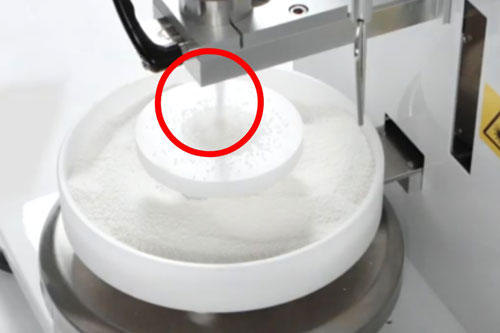
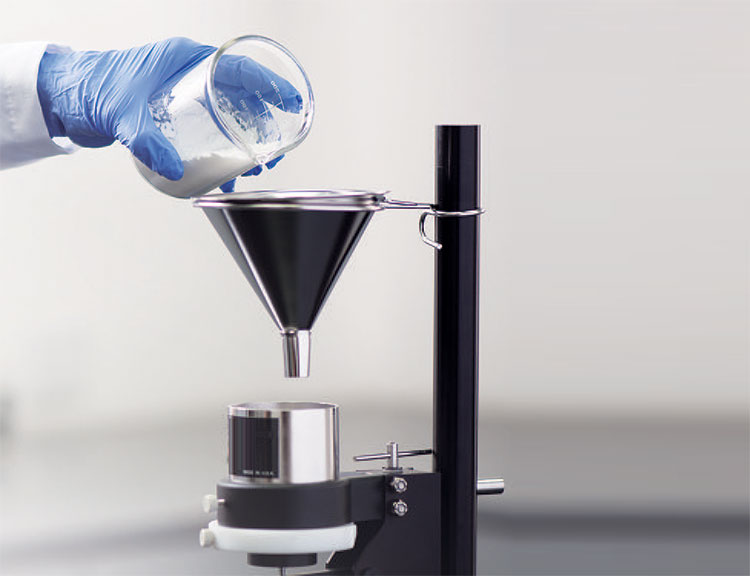
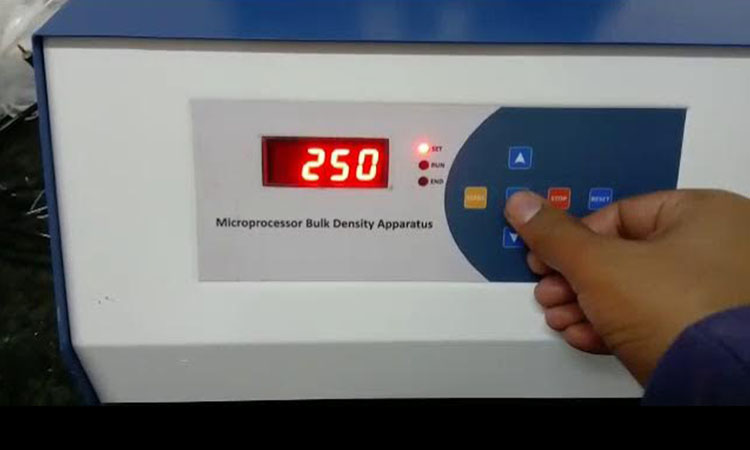
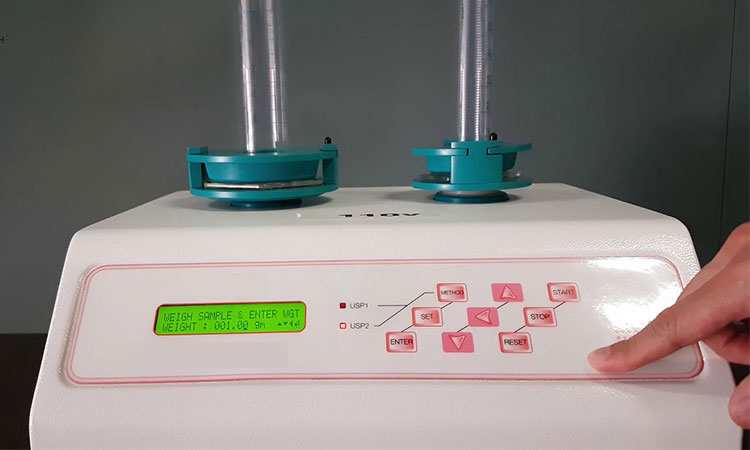
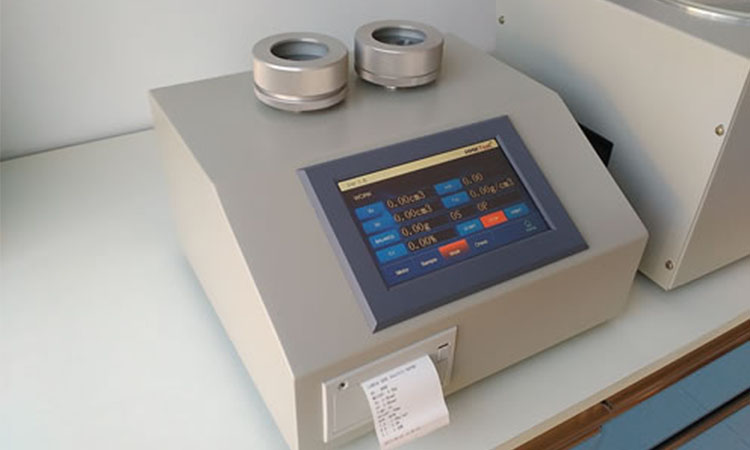
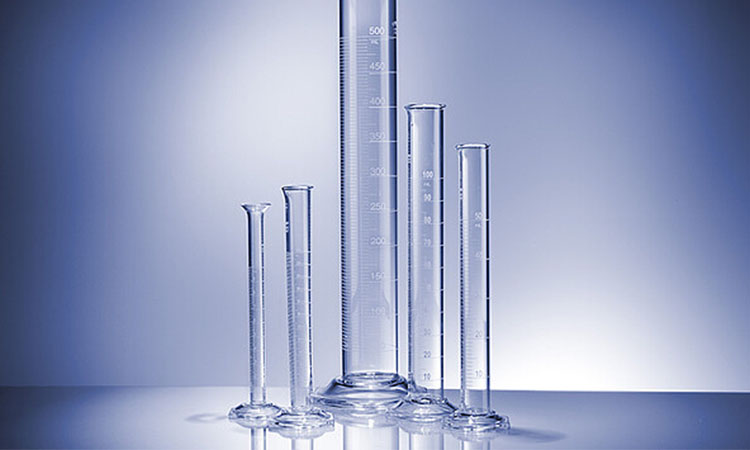
    Bulk density

    Bulk density

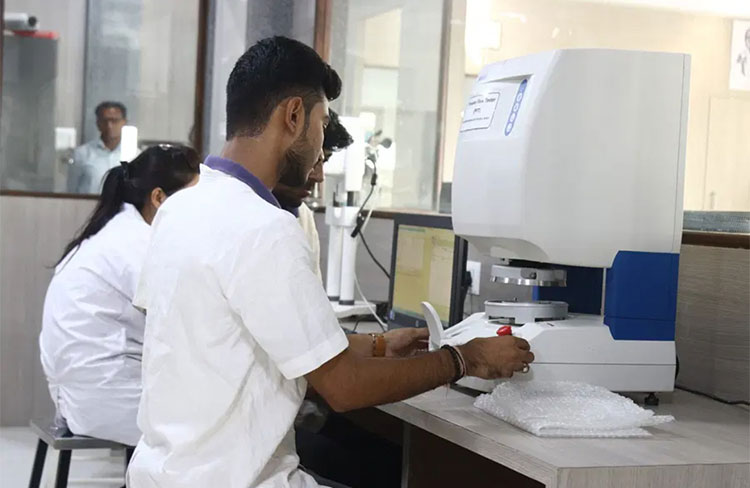
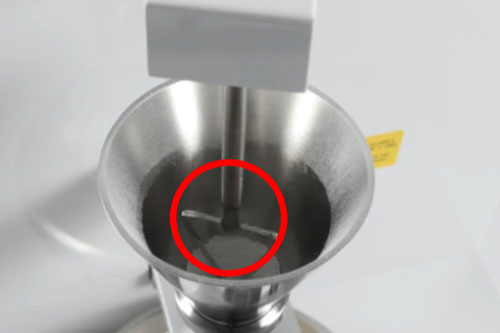
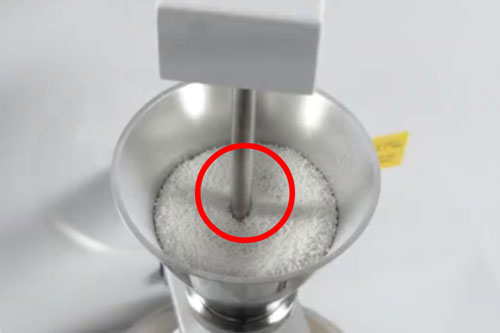
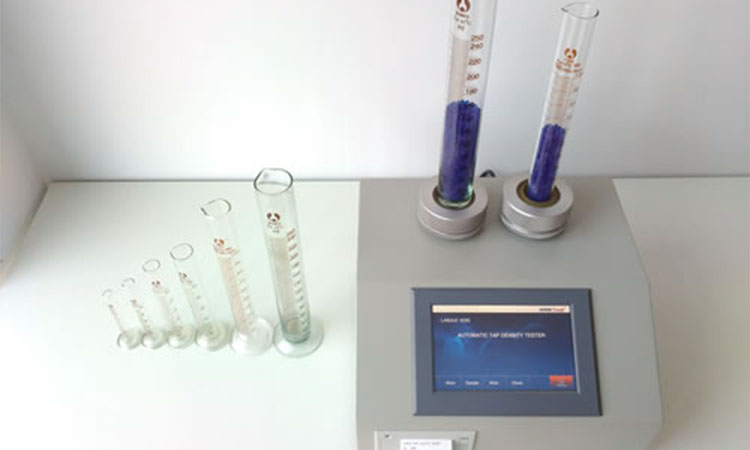
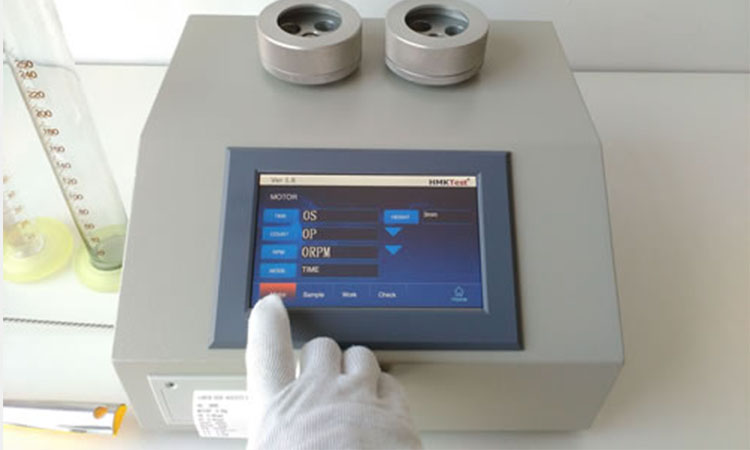
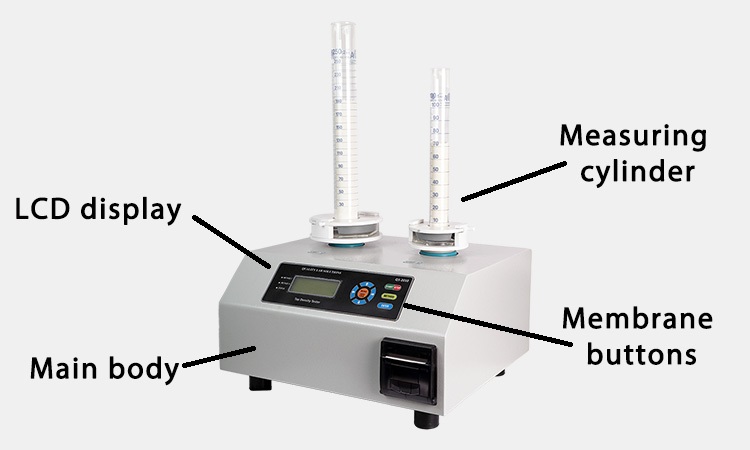
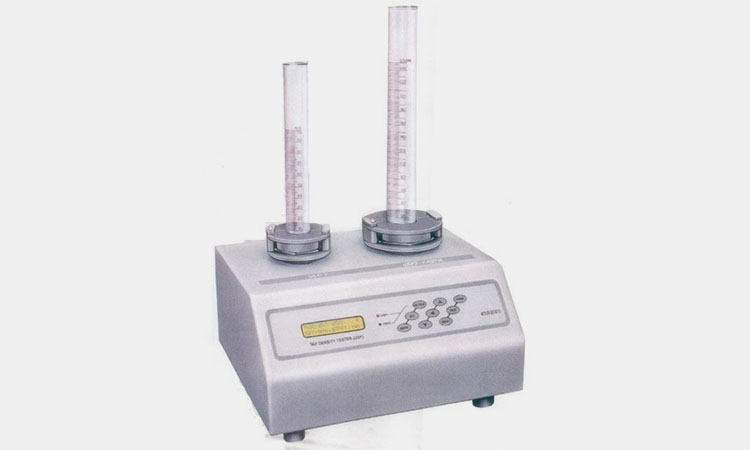
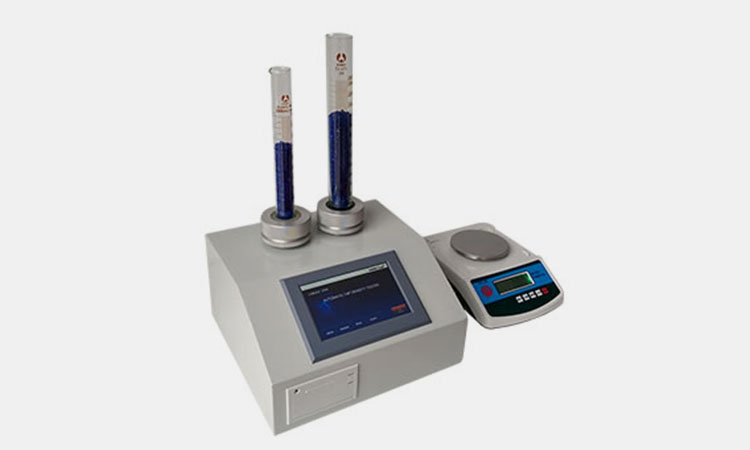
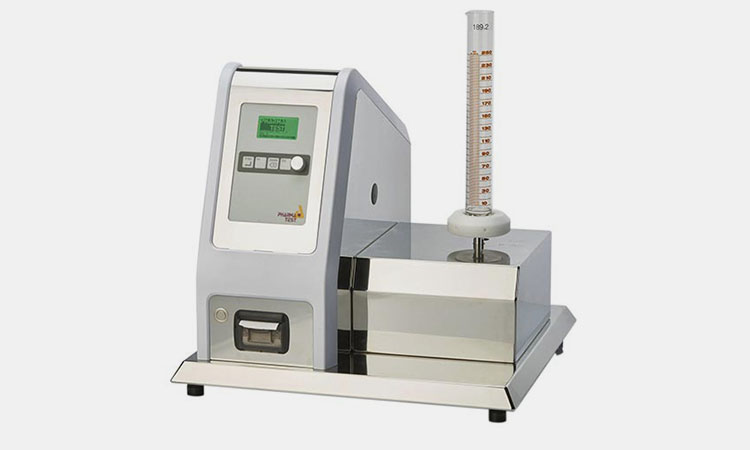
    Measurement of bulk density

    This is the important factor you must know, the reason behind estimating powder characteristics is only the great way to pick the vacuum transfer system. For example, if your powder bulk density is higher, you will need to select those units that are offering high velocities to suck the powder from the pickup point. Similarly, the powders with low bulk densities will require low vacuum velocities to pick powder from the pickup point.

    Size of pickup point

    Size of pickup point

    Pickup point sizes- picture courtesy: GEA

    The size of the pickup point is another significant factor you should consider when going to purchase the vacuum powder transfer system. This is because the right pick-up point will help you with flexible transportation of the powders. Also, it should be capable to configure various materials such as bag dump, bag unloaded, silo, etc.

    Distance

    Distance

    Distance- Picture Courtesy: Coperion

    You must know the distance between the pickup points of the vacuum powder transfer system, for example, the distance between loading and discharge into the container to get the most efficient supply and has capability to handle various types of blending materials perfectly.

    Flow Regimen

    Flow Regimen

    Gerald Classification of solid transfer- picture courtesy: Science direct

    You must know that not all solids or powders are preferable to transfer by this technique rather you should estimate the fluidization characteristics to select dense or dilute phase systems, and it is simply mentioned in classes established by Geldart in 1973. For example:

    Class A category particles exhibit the aeration with non-bubbles.
    Class B Powders begin with some bubbles upon fluidization.
    Class C here, the particles are characterized by cohesiveness and cannot fluidize rapidly.
    Class D particles are characterized by deep spouted layers.

    Cleaning

    Cleaning

    Easy to clean- Picture Courtesy: Bulkiinside

    Your machine should be easy to clean and do not require too much time or effort for this task. Therefore, never ignore this point when looking for the machine and go for the machine which is pretty easy to clean and maintain to reduce time drainage and downtime.

    Piping and layout considerations

    Piping and layout considerations

    Piping and layout considerations- Picture Courtesy: VAC-U-MAX

    This is very important to have the right vacuum piping and layout of the machine as it will help not only with transferring powders but with various ranges such as the finest dust particles to nanoparticles effectively. So, your system must be flexible with the running of materials with various characteristics and can be capable of withstanding powders belonging to different properties and densities.

    Conclusion

    The above discussion about the vacuum powder transfer system provides you with an ultimate gateway to choose the equipment for the material transfer in a controlled environment and maintain the safety of the product. The strictly enclosed circulatory system under a vacuum is undoubtedly the greatest approach to achieving benefits in your manufacturing and packaging sector. If you have any questions in your mind or want to speak to our technical experts for the machine’s purchase or guidance, we would like to send us a message or contact us via email now.

    Don't forget to share this post!

    CONTACT US

    Tell us your raw material and project budget to get quotations within 24 hours.

    WhatsApp Us: +86 181 6426 8586

    Invalid Email
    Invalid Number

    Vacuum Powder Transfer System: The Ultimate Guide In 2025 Read More »

    Phenomenon Of Agglomeration Of Particles In The Dryer

    How To Solve The Phenomenon Of Agglomeration Of Particles In The Dryer?

    How To Solve The Phenomenon Of Agglomeration Of Particles In The Dryer?

    Are you tired of severe agglomeration problems during the drying step? Does your product degrade during drying?

    Unintended agglomeration in the drying process could lead to a host of issues and it is challenging to address this problem. It is essential to control the particle size of bulk solids, as that contributes to the success of processes and products. This facilitates better processing and better outcomes, finally resulting in high-quality end products.

    It is a question in every manufacturer’s mind, “how to solve the phenomenon of agglomeration of particles in the dryer”. So, this is the perfect blog to get the answer to this question. By reading this blog post, you will be able to take the necessary steps to mitigate this problem and attain the desired output. Let’s explore this topic.

      Add a header to begin generating the table of contents

      1.What is the Agglomeration of Particles?

      Agglomeration of Particles

      Agglomeration of Particles

      Agglomeration of particles is a natural phenomenon in which particles of solid stick with each other. It is a particle size enlargement process that combines finer particles into bigger cohesive units. With agglomeration, the newer entity is obtained with a larger particle size.

      This process is utilized to enhance the properties of bulk solids, such as reduced dust generation, improved flowability, minimal segregation, and decreased sticking. Moreover, it is easier to handle, store, and transport granular particles than fine materials.

      However, unwanted agglomeration of particles can result in uncontrolled product accumulation, caking, bridging, and clumping.

      2.What are the Causes of Particle Agglomeration in the Dryer?

      Agglomeration of particles can happen due to a variety of reasons in the drying process and having a basic understanding is imperative in mitigating this issue. Let’s discuss different reasons for particle agglomeration one by one:

      High Ambient Moisture

      High Ambient Moisture

      High Ambient Moisture and Agglomeration- Picture Courtesy: Feeco International

      If there is too much humidity in the surroundings of the dryer, it impedes the drying efficiency of granular particles, causes high moisture accumulation on surfaces, and boosts the rate of agglomeration. Also, if there are different temperature zones in some drying units, then water content condenses on the materials during the cooling stage, resulting in a high rate of particle clustering.

      Particle Stickiness

      Particle Stickiness

      Particle Stickiness- Picture Courtesy: Feeco International

      Another reason for agglomeration in the dryer machine is the high moisture presence on the exterior of particles. Uneven evaporation of moisture from the surface causes some regions of the material surface to retain stickiness, leading to the cohesivity of particles. Moreover, due to the high heat in the dryer, the materials soften and stick with each other before their complete drying.

      Particle Size Distribution

      Particle Size Distribution

      Particle Size Distribution- Picture Courtesy: Organic Plant Boost

      Fine particles have more tendency to stick with each other due to their higher surface area-to-volume ratio. This increases the area for binding of molecules and promotes surface forces. Besides this, smaller particles stick to bigger particles more quickly.

      Furthermore, there is a high chance of massing in the dryer when particle size distribution is non-uniform. The irregularly contoured and sized particles have more contact points, increasing the chances of particle bonding.

      Insufficient Airflow

      Insufficient Airflow

      Insufficient Airflow- Picture Courtesy: Inora Pharmaceutical Machinery Co., Ltd.

      Owing to non-uniform or inadequate airflow in the drying vessel, the materials have uneven drying rates, consequently, some particles retain moisture level, while others dry quickly. These moist particles tend to adhere together, resulting in agglomeration.

      Particles remain separated during the drying phase because of low airflow. This increases their chances of contact and cohesivity.

      Inadequate Drying Time

      Inadequate Drying Time

      Inadequate Drying Time- Picture Courtesy: Gansons

      Rapid drying of the surface of particles may be a reason for agglomeration in the drying chamber. For example, the internal core of particles stays wet, while the exterior of particles is swiftly dried. This differential drying results in stickiness and agglomeration of particles.

      Also, if the drying time is short or the drying cycle is prematurely discontinued, then residual moistures in the materials foster agglomeration during the post-drying stage.

      Presence of Binders

      Presence of Binders

      Presence of Binder- Picture Courtesy: Pyropower

      Binders or other additives- for instance, gums and starches- incorporated in some formulations have inherent cohesiveness.. Although these binders are necessary for the formation of a product, however, they promote agglomeration due to the contact between particles at the drying stage.

      Presence of Electrostatic Charges

      Presence of Electrostatic Charges

      Presence of Electrostatic Charges- Picture Courtesy: Silica Specialist

      The particles in the bulk solids can acquire electrostatic charges in the dryer, particularly when air velocity is high. The force of attraction is increased between the particles due to the accumulation of electrostatic charges, leading to particle clumping and agglomeration. Moreover, if equipment is not properly grounded, it can lead to an uncontrolled buildup of charges, further promoting adhesivity issues.

      3.How To Solve the Phenomenon of Agglomeration of Particles in The Dryer?

      The stickiness of particles contributes towards its agglomeration that in turn causes undesired product buildup and accumulation of fine particles in the dryer device. Here are some suggestions to solve the phenomenon of agglomeration of particles in the dryer.

      Optimize Drying Variables

      Optimize Drying Variables

      Optimize Drying Variables- Picture Courtesy: GEA

      Since different kinds of drying parameters influence the agglomeration of particles in the dryer, it is vital to fine-tune them to optimize the efficiency of the drying process. Controlling humidity and temperature during the drying phase results in minimizing stickiness, in turn decreasing agglomeration.

      The temperature should be optimal for effective drying and it should not vary significantly to prevent non-uniform drying and particle adhesion.

      Maintaining a lower rate of humidity leads to less moisture buildup, decreasing the chances of condensing and agglomeration. Modifying airflow patterns like cross-flow or opposing flow also increases the drying quality and minimizes the chances of bridging between particles.

      In addition to this, high air speed is responsible for keeping the particles in motion and reducing their stagnancy, therefore, reducing their clumping and agglomeration.

      Equipment Design and Maintenance

      Equipment Design and Maintenance

      Equipment Design and Maintenance- Picture Courtesy: Servicon

      Equipment design has a significant contribution to the agglomeration in the dryer, so it should be designed in such a way as to properly distribute airflow, prevent regional hot spots or cold spots, and ensure optimal drying. Furthermore, the dryer should have gentle handling to avoid undesired stress on the materials that could otherwise cause agglomeration.

      The equipment should be leakage-proof and airtight because if even a small amount of water vapor enters the dryer, then it could promote adhesion and agglomeration. Also, tightly close the lid of the dryer to reduce air exposure because the latter causes oxidization of particles, changing their surface properties and contributing to lumping.

      The dryer should have convenient access for cleaning and maintenance, which improves the cleaning and upkeeping quality, hence reducing the likelihood of product accumulation.

      Particle Pretreatment

      Particle Pretreatment

      Particle Pretreatment- Picture Courtesy: FEECO International

      It is a valuable approach to prevent the possibility of particle agglomeration in the dryer. If the characteristics of particles are altered before drying, then their massing is averted. By reducing the size of particles through grinding or milling, the surface area of particles is increased, which reduces the odds of clumping.

      Similarly, the removal of bigger particles by sifting, screening, or classification will increase the uniformity of the batch and curtail the probabilities of agglomeration by reducing the chances of fine particles bonding with larger particles. Moreover, the shape of particles is changed to reduce their packing densities and contact points, which leads to less risk of stickiness of particles.

      Process Optimization

      Process Optimization

      Process Optimization- Picture Courtesy: iFormulate

      It is a strategy to tweak attributes of the drying process to reduce the particle agglomeration in the dryer and to maintain the product quality. The feed rate of particles is adjusted to ensure their uniform flow in the dryer and to prevent overcrowding, which can be the root cause of aggregation. It is advised to gradually and steadily load the materials to prevent unexpected surges that can lead to non-uniform drying and clumping.

      It is necessary to optimize the drying time so that particles have sufficient time in the dryer for complete drying; however, avoid providing excessive residence time as it can result in agglomeration.

      Prevention of Electrostatic Charges

      Prevention of Electrostatic Charges

      Prevention of Electrostatic Charges- Picture Courtesy: Marubeni Europe

      As already established, electrostatic charges are an integral contributor to the agglomeration of particles in the dryer. Therefore, manufacturers utilize different strategies to prevent the buildup of electrostatic charges in the dryer, for example, these charges are dissipated by following proper grounding procedures for equipment like conveyors, dryers, etc.

      Different kinds of static eliminators, for instance ionizing bars or blowers are utilized in the dryer to discharge ions into the surrounding air, hence; neutralizing the electrostatic charges. Also, the accumulation of electrostatic charges is minimized using anti-static additives in the dryer machine.

      Gradual Drying of Particles

      Gradual Drying of Particles

      Gradual Drying of Particles- Picture Courtesy: Pilotech

      Gradual drying involves slow and careful drying of material and is an integral approach to prevent particle clumping. In this process, moisture is removed in a controlled manner, which decreases the perils of particle stickiness. The moisture is vaporized evenly from the exterior and center of particles, thus preventing adherence to sticky surfaces.

      It is recommended to first set the temperature at lower settings and then increase gradually to avoid agglomeration. This process prevents the formation of a tacky outer layer on particles, which is the leading cause of agglomeration. With the decrease in moisture, the temperature is slowly raised in the dryer to remove residual watery content from the particle core. This reduces the incidence of sticky conditions that result in particle binding and cohesivity.

      Use of Additives

      Use of Additives

      Use of Coating Agents- Picture Courtesy: Feeco International

      One of the oldest methods to prevent the agglomeration of particles in the dryer is the use of additives that act as anti-caking agents or coating agents in the dryer. They are a separator or barrier, consequently averting the chances of the buildup of crystal bridges between particles during the drying. Silica, starch, cellulose, or other anti-caking agents are added both before or during the drying to minimize moisture absorption and surface cohesivity.

      The coating agents are usually hydrophobic and modify the characteristics of particles like reducing their surface tension, altering their viscosity, and decreasing their adherence with each other by reducing the forces of attraction between particles.

      Agitation and Other Mechanical Methods

      Agitation and Other Mechanical Methods

      Agitation and Other Mechanical Methods- Picture Courtesy: FEECO International

      This is a suitable approach routinely utilized in the dryer device to bar the agglomeration by disrupting the particle contact point and increasing rates of uniform drying. Mechanical agitators are pivotal in deterring the settling of particles and their clumping. Baffles and other agitators are ideal for improving particle motion, thereby reducing the contact duration between moist particles and breaking up clumps.

      In some dryers, such as rotary and drum dryers, stirring and rotation have an impact on the motion of particles, which reduces clumping. The materials tumble with rotation and roll over each other, thus reducing their contact with each other for a longer duration.

      Vibrating dryers and pulsating air increase the dispersal of particles and avert particle agglomeration by breaking the weak bonding between agglomerates. In some cases, ultrasonic waves are also utilized to disrupt the bridging between particles and improve their dispersal.

      Fluidized Bed Drying Approaches

      Fluidized Bed Drying Approaches

      Fluidized Bed Drying Approaches

      Fluidized bed dryers are highly popular in industrial settings to prevent particle agglomeration. In these dryers, particles are fluidized in the air or gas, remain under constant motion, and establish a fluid-like behavior. This continual movement hinders the stickiness of particles.

      The air is directed upward through a particle bed that lifts and moves particles continuously, hence preventing the likelihood of particle bonding and adherence. It promotes particle separation, and reduces the interaction between particles, thus preventing particle agglomeration.

      Spray Drying Techniques

      Spray Drying Techniques

      Spray Drying Techniques- Picture Courtesy; European Pharmaceutical Manufacturer

      Spray drying is one of the preferred techniques in the manufacturing sector for eliminating moisture from slurries, pastes, and granules. The materials are atomized and transformed into fine mist, and moisture is vaporized from droplets with a hot gas. It is advised to design spray nozzles with a smaller size, as smaller droplets have increased chances of quick and uniform drying, which decreases the opportunity for moist droplets to cluster.

      Furthermore, it is suggested to use a two-stage drying process to control the rate of agglomeration. Moisture is quickly reduced to prevent a sticky phase in the first drying stage. In the second drying stage, minimal temperature is applied to ascertain complete drying and to prevent material cohesivity.

      Use of Hybrid Approaches

      Use of Hybrid Approaches

      Use of Hybrid Approaches- Picture Courtesy: Spray Drying Nozzles

      These hybrid approaches incorporate several techniques to tackle the agglomeration challenge in the dryer. They present synergistic advantages and are exceptionally effective in intricate situations. Sometimes, they involve the utilization of a fluidized bed dryer and sprayer dryer consecutively, which allows rapid drying, even particle distribution, and minimal agglomeration.

      Connective drying is also used with fluidization to improve heat transfer and decrease the likelihood of particle cohesion and stickiness. Additionally, integrating the drying step with other methods like filtration and grinding boosts the process's effectiveness and hinders agglomeration.

      Conclusion

      Agglomeration is a beneficial process in industries for improving the handling of particles but sometimes it leads to undesired effects like caking and bridging. It reduces the efficiency of the dryer and results in poor-quality products. Various manufacturers do their best to solve the phenomenon of agglomeration. So, to facilitate these manufacturers this blog post “How to Solve the Phenomenon of Agglomeration of Particles in The Dryer” is compiled. Hopefully, you have learned about the combination of different techniques to prevent agglomeration by modifying the surface properties of particles and optimizing drying parameters. If you have more queries in mind, then call our customer care. We, Allpack are ever ready to guide and serve you.

      Don't forget to share this post!

      CONTACT US

      Tell us your raw material and project budget to get quotations within 24 hours.

      WhatsApp Us: +86 181 6426 8586

      Invalid Email
      Invalid Number

      How To Solve The Phenomenon Of Agglomeration Of Particles In The Dryer? Read More »

      Ampoule-Labeling-Machine-6

      Ampoule Labeling Machine:The Complete FAQ Guide In 2025

      Ampoule Labeling Machine:The Complete FAQ Guide In 2025

      As one of the important equipment in industries such as pharmaceuticals, cosmetics, and food, the stability and efficiency of ampoule labeling machines directly affect the quality and production efficiency of products.

      At present, there are various brands and models of ampoule labeling machines on the market which may be different in performance, efficiency, stability, and other aspects. Do you aspire to know any information about the definition, importance, main parts of ampoule labeling machines?

      This article will provide you with the most comprehensive information about ampoule labeling machines. Let’s explore the complete FAQ guide of ampoule labeling machine together!

        Add a header to begin generating the table of contents

        1.What Is the Ampoule Labeling Machine?

        Ampoule Labeling Machine

        Ampoule Labeling Machine - Sourced: ima.it

        The ampoule labeling machine represents a mechanical solution designed to efficiently and precisely affix labels onto ampoules. This automatic machine seamlessly handles the entire process, from measuring the dimensions of the ampoules and labels, to dispensing and applying the labels, all without the need for manual intervention.

        2.Why Is the Ampoule Labeling MachineImportant?

        The significance of ampoule labeling machines has been steadily growing in prominence, and it’s natural to wonder about the underlying reasons for this. Let’s delve into why their importance is on the rise.

        (1)Improve production efficiency

        Improve Production Efficiency

        Improve Production Efficiency - Sourced: yamatoscale

        Automatic ampoule labeling machines can significantly improve production efficiency, reduce manual labeling time and labor intensity. They can complete labeling tasks at high speed and stability, ensuring the continuous operation of the production line.

        (2)Ensure product quality and safety

        Ampoule

        Ampoule - Sourced: reagent

        Ampoule labeling machine can detect liquid filling and foreign objects (such as glass shards, impurities, etc.) inside the bottle, and automatically remove defective products, thereby improving the detection accuracy and safety of the product.

        Automated operations reduce direct contact between personnel and products, lowering the risk of cross contamination. Meanwhile, machines made of corrosion-resistant materials such as stainless steel also ensure the hygiene and safety of the production environment.

        (3)Prevent forgery and tampering

        Prevent forgery and tampering

        Prevent Forgery and Tampering - Sourced: Freepik

        Modern ampoule labeling machines can be equipped with anti-counterfeiting labels and traceability systems, which can enhance the anti-counterfeiting and traceability capabilities of products, thereby improving their safety and reliability.

        3.What Are the Applied Industries of Ampoule Labeling Machine?

        Have you seen ampoule in your daily life? Have you paid attention to their labels? Ampoule labeling machines are widely used in multiple industries, let’s explore them one by one.

        (1)Pharmaceutical industry

        Water for injection plastic ampoule

        Water For Injection Plastic Ampoule - Sourced: Lavoisier.Com

        Ampoule labeling machine plays an important role in the pharmaceutical industry, mainly used for label pasting of drug packaging bottles, ampoule and other products. These labels typically contain important information such as drug name, specifications, production date, expiration date, which are crucial for drug identification, tracking, and management.

        (2)Cosmetic industry

        RADIANCE AMPOULES

        Radiance Ampoules - Sourced: toskani

        Ampoule labeling machines are also widely used for packaging cosmetics, skincare products, and other products. These products usually have high requirements for packaging aesthetics and label clarity, and ampoule labeling machines can meet these needs.

        (3)Food and beverage industry

        Small Bottles for Beverage

        Small Bottles for Beverage - Sourced: beveragedaily.com

        Some special food and beverage products are also packaged in round containers. Ampoule labeling machines are used in this field to ensure clear and accurate information on labels.

        (4)Chemical industry

        Chemical Reagents

        Chemical Reagents - Sourced: Freepik

        Some chemical reagents and laboratory liquids are also packaged in ampoules. The ampoule labeling machine can ensure that the label information of these products is correct and error free, so that laboratory personnel can accurately identify and use them.

        (5)Health care industry

        Vitamin-C-Concentrate

        Vitamin C Concentrate - Sourced: nocheskincare

        Some health care products such as nutritional supplements and therapeutic liquids may use ampoules. The ampoule labeling machine can provide relevant information such as nutritional content and usage instructions in these products.

        4.What Are theMain Parts of Ampoule Labeling Machine?

        Main Parts of Ampoule Labeling Machine

        Main Parts of Ampoule Labeling Machine

        Ampoule labeling machine contains a variety of parts that work together to complete the labeling task. However, due to differences in design and functionality among ampoule labeling machines from different manufacturers, the specific types and quantities of parts may also vary. But generally speaking, ampoule labeling machines may include the following main parts:

        Main Parts Description
        Tube holding tray The tube holding tray is used to hold and arrange ampoules before processing. It ensures that the ampoules are in the appropriate position and sequence before entering the labeling machine. The rotating shaft on the tube holding tray is usually equipped with a motor and gear system to achieve smooth rotation and transportation of the bottles.
        Self adhesive label plate It is commonly used to extract self-adhesive labels from label scrolls. These labels are precisely attached to the ampoules with the help of a labeling machine.
        Touch screen The touch screen allows operators to set various parameters for labeling according to production needs, such as labeling speed, labeling position, labeling quantity, etc., to ensure the accuracy and efficiency of labeling.
        Emergency stop It ensures that equipment power can be quickly cut off in emergency situations to prevent accidents from occurring.
        Label transmit assembly It is responsible for transferring labels from the label supply system to the labeling location, ensuring that the labels can be accurately and stably attached to the ampoules.
        Conveyor The main function of the conveyor is to smoothly and continuously transport the ampoules to be labeled to the labeling position.
        Conveyor motor It can realize precise control over the speed and position of the conveyor belt to ensure the stability and accuracy of ampoules during the labeling process.
        Machine stand - installed with electric components Various electrical components that control the operation of the motor, such as contactors, relays, frequency converters, etc., are usually installed inside the motor cabinet for centralized control and management.

        5.What Can You Label through the Ampoule Labeling Machine?

        The information that can be placed on the label of the ampoule labeling machine is diverse, depending on the characteristics of the product and the needs of the manufacturing enterprise. Here are some common information that can be placed on ampoule labels:

        Ampoule Label Information

        Ampoule Label Information - Sourced: DailyMed

        (1) Product information:

        Product Name: Clearly indicating the name of the drug or product.

        Specification and Model: Indicating the product’s specifications, model, or capacity information.

        Production date: Marking the production date of the product for traceability and understanding of its production time.

        Validity/Shelf Life: Indicating the expiration date or shelf life of the product to ensure that consumers use it within the safe period.

        (2) Manufacturer information:

        Manufacturer Name: Indicating the name of the manufacturer that produced the product.

        Production address: Providing the detailed address of the manufacturer can help consumers understand the source of the product.

        (3) Instructions and warning for use:

        Usage and dosage: Providing detailed instructions on the usage and dosage of the product.

        Precautions: Listing the precautions to be taken when using the product, such as contraindications, side effects, etc.

        Warning signs: such as flammable, explosive, toxic and other warning signs, reminding consumers to pay attention to safety during use.

        (4) Other information:

        Batch number: it is used to distinguish products from different batches for quality traceability.

        Anti counterfeiting information: preventing the occurrence of counterfeit and inferior products through special markings or technologies.

        Barcode: it is used for product identification, tracking, and inventory management.

        6.What Quality Standards Should Ampoule Labeling MachineComply with?

        In the design and manufacturing process of ampoule labeling machines, a series of international quality standards and quality guidelines are usually followed to ensure their quality, safety, and compliance.

        ISO 9001

        ISO-9001

        ISO 9001 - Sourced: pcilasercut

        ISO 9001 is a quality management system standard developed by the International Organization for Standardization (ISO). This standard aims to assist organizations in establishing, implementing, maintaining, and improving quality management systems to ensure that the quality of products and services meets customer and regulatory requirements. For ampoule labeling machine manufacturers, following the ISO 9001 standard means:

        Clear quality policies and objectives need to be established and integrated throughout the entire organization.

        Ensuring the effective operation of the quality management system, including all aspects such as design, procurement, production, inspection, and after-sales service.

        ISO 14001

        ISO-14001

        ISO 14001 - Sourced: qassurance

        ISO 14001 is an environmental management system standard that requires organizations to identify and manage environmental factors in their activities, products, and services to prevent pollution, reduce resource consumption, and continuously improve environmental performance.

        Although ISO 14001 primarily focuses on environmental management, ampoule labeling machine manufacturers can also choose to follow this standard if they wish to demonstrate their commitment and performance in environmental protection. This helps to enhance the environmental image of the enterprise and may meet specific requirements of certain customers.

        7.What Should You Consider When Choosing An Ampoule Labeling MachineManufacturer?

        Choosing the right manufacturer is crucial for the smooth operation of a factory. What factors do you need to consider when choosing an ampoule labeling machine manufacturer? You can consider the following aspects:

        (1) Product quality

        Product Quality

        Product Quality - Sourced: SAS blogs

        You should understand the technical level of the manufacturer and the technical parameters of the ampoule labeling machine, including labeling accuracy, speed, stability. Besides, you should ensure that the labeling machine meets the specific requirements of ampoules, including bottle size, shape, and material.

        (2) Manufacturers reputation

        Manufacturer’s-Reputation

        Manufacturers Reputation - Sourced: impactpr

        You can refer to relevant customer evaluations, market feedback and the manufacturer’s past cases and successful experiences to understand the manufacturer’s reputation in the industry.

        (3) After-sales service

        After-sales service

        After-sales service - Sourced: salesjob

        You should understand the length of the warranty period for the ampoule labeling machine, including the main components and consumables. And you should check if timely technical support and maintenance services are provided, and if training services are available.

        (4) Price and cost-effectiveness

        Price and cost-effectiveness

        Price and Cost-effectiveness - Sourced: edepoze.com

        Everyone wants to buy products that are both good and affordable. When purchasing an ampoule labeling machine, you should compare quotes from different manufacturers, but don’t just rely on price as a determining factor, also consider cost-effectiveness.

        Before selecting an ampoule machine manufacturer, on-site inspections can be arranged to personally check the actual operation of the production line and equipment, while communicating with existing customers to obtain genuine feedback on usage. These steps can help you make wiser choices.

        8.What Additional Auxiliary Equipment Is Required To Work With The Ampoule Labeling Machine To Create a Complete Production Line?

        Ampoule Production Line

        Ampoule Production Line

        Do you know the entire ampoule production line? The operation process of the entire ampoule production line includes ampoule washing machine, sterilizing tunnel, ampoule filling & sealing machine, and ampoule labeling machine. next, let’s explore additional auxiliary equipment is required to work with the ampoule labeling machine to create a complete production line.

        (1)Ampoule washing machine

        Allpack vertical ultrasonic washing machine

        AIPAK Ultrasonic Washing Machine

        Function: It is used for thoroughly cleaning ampoules, removing impurities and dirt inside the bottle.

        Type: Generally it is divided into ultrasonic cleaning machine and spray cleaning machine. The former uses ultrasonic vibration to clean the dirt inside and outside the bottle, while the latter uses high-pressure water jets to clean the bottle.

        (2)Sterilizing tunnel

        Allpack sterilization tunnel

        AIPAK Sterilizing Tunnel

        Function: Sterilizing tunnel is used to sterilize the cleaned ampoules to ensure that they do not contain harmful microorganisms.

        Type: Common sterilization methods include high-temperature steam sterilization (such as high-pressure steam sterilization pots) and dry heat sterilization. The choice of method depends on the material of the bottle and the production process requirements.

        (3)Ampoule filling & sealing machine

        Allpack AKA series ampoule filling and sealing machine

        AIPAK Aka Series Ampoule Filling And Sealing Machine

        Function: Ampoule filling and sealing machine is used to accurately filling liquid drugs or other contents into ampoules and sealing the ampoules to ensure that the contents are not contaminated.

        Types: The commonly used sealing methods include flame sealing and laser sealing. Flame sealing uses high-temperature flames to melt the bottle mouth to form a seal, while laser sealing uses laser technology to melt and seal the bottle mouth.

        9.How to Troubleshoot Common Problems of Ampoule Labeling Machine?

        The ampoule labeling machine may encounter some problems during use due to human or other reasons. The following is an introduction to common problems and countermeasures of ampoule labeling machine.

        The Problem of Ampoule Labeling Machine

        The Problems of Ampoule Labeling Machine - Sourced: Neftis

        Problems Solutions
        The label is not firmly attached Adjust labeling pressure: If the labeling pressure is too low, increase the labeling pressure appropriately to improve adhesion.

        Replace adhesive: Choose the appropriate type of adhesive for labeling to ensure its bonding effect.

        Control labeling speed: Labeling speed that is too fast or too slow may affect the adhesive effect of the label, and the labeling speed should be adjusted appropriately to achieve the best results.

        Label misalignment or deviation Label feeding adjustment: Check the adjustment of the label feeding system to ensure smooth and accurate label feeding.

        Sensor position adjustment: Check the sensor position of the device to ensure that the sensor can accurately sense the label position.

        Label path inspection: Check the label labeling path to ensure that there are no obstacles in the path of the label during the labeling process.

        The machine cannot start Check power supply: Confirm that the device is connected to a power outlet and that the outlet is functioning properly.

        Check the control system: You can try restarting the device or resetting the control system to solve the problem.

        Check sensors: If the device is equipped with sensors, the sensors should be checked for damage or looseness.

        10.How to Maintain Ampoule Labeling Machines?

        In order to ensure the long-term operation of ampoule labeling machines, proper maintenance is also necessary.

        (1) Cleaning work

        Cleaning work

        Cleaning Work - Sourced: ajanitorsstory

        Before and after the work of the ampoule labeling machine, the outer surface of the machine should be wiped with a soft cloth to remove dust and debris.

        The workers should regularly use a vacuum cleaner or soft brush to remove dust inside the equipment, especially inside the electrical control box. Clean and dry compressed air can be used for dust removal (the main power supply of the equipment must be turned off during dust removal).

        (2) Lubrication

        Lubrication

        Lubrication - Sourced:iselinc.com

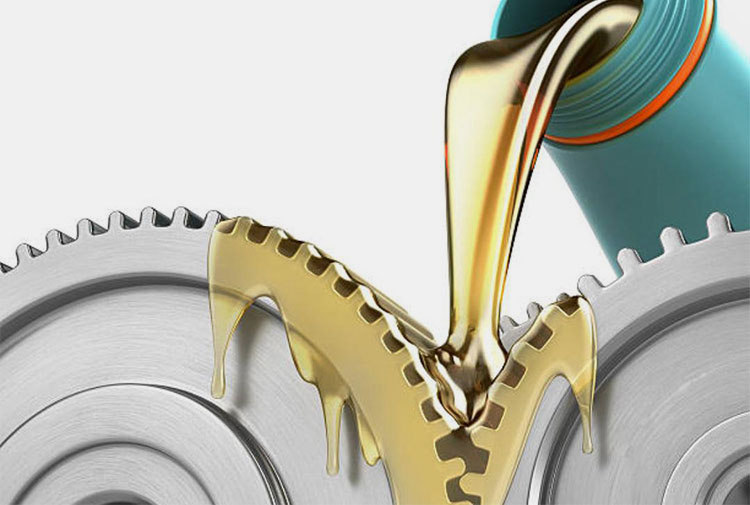
        The transmission part and key parts such as bearings of the ampoule labeling machine need to be lubricated regularly to reduce wear and friction. Recommended lubricating oil or grease should be used and lubricated according to the manufacturer’s recommendations.

        For example, the transmission chain of the active labeling motor should be checked once a month and adjusted appropriately. After adjustment, lubricating oil should be added immediately to ensure rust prevention and lubrication.

        (3) Regular inspection

        Regular-inspection

        Regular Inspection - Sourced: scottco.com

        Before starting work, the power supply, label tape, sensors of the ampoule labeling machine should be checked to ensure that the equipment can operate normally. Regularly inspect the electrical system, including wires, cables, motors, and controllers, to ensure that they are in good working condition.

        Conclusion

        The ampoule labeling machine, owing to its myriad advantages, has found widespread adoption across numerous industries. Upon reading this article, you have gained valuable insights about ampoule labeling machine. If you require further clarification, please do not hesitate to reach out to Allpack at your earliest convenience.

        Don't forget to share this post!

        CONTACT US

        Tell us your raw material and project budget to get quotations within 24 hours.

        WhatsApp Us: +86 181 6426 8586

        Invalid Email
        Invalid Number

        Ampoule Labeling Machine:The Complete FAQ Guide In 2025 Read More »

        Shrink-Wrapping-Machine

        Top 40 Global Shrink Wrapping Machine Suppliers in 2025

        Top 40 Global Shrink Wrapping Machine Suppliers in 2025

        Shrink wrapping machines have significant advantages in improving packaging efficiency, improving product appearance, adapting to various product packaging needs, and intelligent operation. These advantages make shrink wrapping machines an indispensable and important equipment in the field of modern production packaging.

        There are numerous suppliers of shrink wrapping machines located all over the world. Do you think it’s very difficult to choose a suitable supplier? Do you know any well-known shrink wrapping suppliers?

        Next, I will introduce you to the top 40 global shrink wrapping machine suppliers in 2024.

        Rank Supplier Location
        1 Texwrap USA
        2 NVENIA USA
        3 Tripack USA
        4 Maripak USA
        5 Allpack China
        6 Conflex USA
        7 Douglas Machine USA
        8 ZOLLER Inc. USA
        9 Omega TMM USA
        10 U.S. Packaging & Wrapping LLC. USA
        11 Delkor Systems USA
        12 Polypack USA
        13 MULTIVAC Germany
        14 Webomatic Germany
        15 Kallfass Germany
        16 Pester pac automation Germany
        17 SMI S.p.A. Germany
        18 Robopac Italy
        19 Atlanta packaging Italy
        20 Minipack®-torre Italy
        21 ISG PACK Italy
        22 Zambelli Packaging Italy
        23 Dm Packaging Group Italy
        24 OCME Italy
        25 Crawford Packaging Canada
        26 Redpack Packaging Machinery UK
        27 Gertex Solutions Canada
        28 PlexPack Canada
        29 ULMA Packaging Spain
        30 Thimon. France
        31 IBARAKISEIKI Japan
        32 Venus Packaging Australia
        33 Messersi Packaging Italy
        34 Helmut Diebold GmbH & Co. Germany
        35 MSK Covertech Group Germany
        36 Omnia Della Toffola Italy
        37 Artema Pack Italy
        38 B&B Verpackungstechnik GmbH Germany
        39 Astrolift New Zealand
        40 Tetra Pak Sweden

        LOGO-50

        Headquarter: USA

        Texwrap background:

        Texwrap stands out in the market with its professional packaging technology and innovative products. The company is committed to providing customers with comprehensive services including shrink wrap, bundling, and e-commerce packaging solutions.

        These solutions aim to help customers reduce operating costs, improve production efficiency, and meet constantly changing market demands.

        Key products:

        TLS-Series-L-Sealers

        TLS Series L-Sealers

        Recommend Reason

        • Texwrap is committed to becoming a leader in the field of packaging solutions, providing customers with more efficient, reliable, and environmentally friendly packaging solutions through continuous technological innovation and product optimization.
        • The company adheres to the concept of “customer-centric”and is committed to meeting the diverse needs of customers and promoting the sustainable development of the entire industry.

        Headquarter: USA

        NVENIA background:

        Nvenia

        NVENIA is a company specializing in the manufacturing of packaging machinery, belonging to the Duravant Group. The company is committed to providing integrated primary, secondary, and terminal packaging solutions with quality, durability, and innovation at their core.

        NVENIA provides various types of packaging machinery equipment, such as bag sealing machines, bag stitching machines, box packaging machines, pallet packaging machines, conveyor lines, shrink packaging machines, etc.

        Key products:

        Automatic Shrink Wrap Machine

        Automatic Shrink Wrap Machine

        Recommend Reason

        • NVENIA is positioned in the high-end packaging market, committed to providing customers with high-quality, durable, and innovative packaging solutions.
        • With years of industry experience and technological accumulation, NVENIA has significant competitive advantages in the field of packaging equipment.
        • Its products have performed outstandingly in terms of performance, efficiency, stability, and reliability, winning the trust and praise of a large number of customers.

        Headquarter: USA

        Tripack background:

        Tripack

        Tripack, a family-owned and operated enterprise, prides itself on delivering unparalleled quality and exceptional customer service.

        As a pioneering manufacturer of shrink sleeve labeling equipment, the company leverages the state-of-the-art machinery to provide comprehensive labeling and packaging solutions within our daily production operations.

        Key products:

        FT-300

        FT-300

        Recommend Reason

        • Tripack stands as a trusted partner for brand owners and contract manufacturers, ensuring the uninterrupted flow of their products from conception to market.
        • The company’s sales team has decades of sales experience and is able to provide professional consulting and solutions to customers.

        Headquarter: USA

        Maripak background:

        Maripak

        Maripak is an influential enterprise in the field of packaging machinery. The company focuses on providing various packaging solutions, including but not limited to shrink wrap machines, bagging machines, etc.

        Maripak's products are widely used in multiple industries, such as food and beverage, pharmaceuticals, cosmetics, etc., to meet the packaging needs of different customers.

        Key products:

        Impack-40

        Impack 40

        Recommend Reason

        • The shrink packaging machine provided by Maripak is a highly automated equipment that can greatly improve packaging efficiency and overall performance of the production line.
        • These devices are designed and manufactured with a focus on stability and reliability to ensure efficient and consistent performance over long periods of operation.
        • Whether it’s glass bottles, foam, paper boxes, or other products of various shapes and materials, Maripak’s shrink packaging machine can provide suitable packaging solutions.

        Headquarter: China

        Allpack background:

        Allpack offers a comprehensive, one-stop solution tailored to the pharmaceutical, food processing, chemical, and electronic industries, among others. The company supplies not just the most appropriate design concepts and premium-quality machinery, but also expert consulting services to ensure the clients’ complete satisfaction.

        With a global footprint, Allpack’s packaging machinery has been successfully exported to diverse markets across Europe, the Americas, Latin America, South Asia, the Middle East, and Africa.

        Key products:

        ALLPACK-Heat-Shrink-Wrapping-Machine

        ALLPACK Heat Shrink Wrapping Machine

        Recommend Reason

        • With excellent product quality, advanced technological level, and comprehensive customer service, ALLPACK has become one of the world’s leading manufacturers of packaging technology and logistics transportation packaging equipment.
        • ALLPACK has gained widespread recognition in multiple industry sectors and established long-term partnerships with numerous well-known enterprises.
        • The company can provide personalized packaging solutions and customized packaging products according to the specific needs of customers.

        Headquarter: USA

        Conflex background:

        Conflex

        Conflex is a company with significant influence in the field of packaging machinery, particularly in the area of shrink wrap machines. The company was founded in 1988 and is located in USA.

        Since its establishment, Conflex has rapidly developed into one of the largest suppliers of L-type automatic sealing and shrinking packaging machines in the United States, thanks to its continuous innovation in technology and ability to meet diverse customer needs.

        Key products:

        CW-SERIES

        CW SERIES

        E-250

        E-250

        Recommend Reason

        • Conflex’s shrink packaging machine combines pneumatic components and mechanical devices, and is controlled by PLC and other peripheral circuits, achieving a high degree of automation operation.
        • These devices are able to flexibly meet the packaging needs of products of different shapes, sizes, and materials, providing a variety of packaging forms and solutions.
        • Conflex’s shrink packaging machine performs excellently in terms of packaging speed and efficiency, greatly improving the overall performance of the production line.

        7.Douglas Machine

        Douglas-Machine-logo

        Headquarter: USA

        Douglas Machine background:

        Douglas-Machine

        Douglas Machine is headquartered in Alexandria, Minnesota, USA and is an employee owned company. The company has over 50 years of industry experience and focuses on providing customers with high-quality automatic packaging solutions for cardboard, corrugated and shrink film.

        Douglas Machine has installed over 7000 machines in more than 30 countries/regions, and its products are widely used in various industries, including the design and manufacturing of luggage, pallet packaging, cardboard boxes, and sleeves.

        Key products:

        VS Series

        VS Series

        OPTX

        OPTX

        Recommend Reason

        • Douglas Machine is renowned for its high-quality products that have been carefully designed and manufactured to ensure efficient and stable performance over long periods of operation.
        • Douglas' shrink wrap machine is a highly automated device that can significantly improve packaging efficiency and overall production line performance.
        • Douglas Machine continuously introduces new technologies and innovates to ensure its products maintain a leading position in the market.

        Headquarter: USA

        ZOLLER Inc background:

        Zoller

        ZOLLER was founded by Alfred Zoller in 1945 with the aim of introducing efficient and cost-effective manufacturing equipment for the cutting industry.

        After 75 years of development, the ZOLLER family business has grown into a global enterprise, and its third generation is continuing ZOLLER’s glory and going global. At present, ZOLLER Inc. has 110 employees in its factories in the United States and plans to further expand in the future to meet market demand.

        Key products:

        powerShrink-400

        PowerShrink 400/600

        Recommend Reason

        • ZOLLER has always been committed to technological innovation and constantly launches new products that meet market demand.
        • ZOLLER’s products and services cover multiple regions around the world, including the United States, China, India, and Japan.
        • ZOLLER has successfully obtained the relevant certifications of ISO 9001, ISO 14001, and VDA 6.4, which embody the diligent spirit in ZOLLER’s quality philosophy and the sustainable development concept in the company's environmental management.

        Headquarter: USA

        Omega TMM background:

        Omega-TMM

        Omega TMM is headquartered in New York State, USA, with a strong research and development team, excellent manufacturing capabilities, and a professional technical service team.

        Omega TMM is committed to providing customers with professional solutions for tool pre adjustment, tool measurement, tool inspection, and tool digital management. By integrating advanced equipment and information technology such as tool presetters, robots, intelligent tool cabinets, and digital tool management software, Omega TMM can provide customers with a complete tool cycle solution from CNC tool design and selection to machine networking and data acquisition.

        Key products:

        Shrinkset-Pro

        Shrinkset-Pro

        Recommend Reason

        • Omega TMM’s global sales and service network covers North America, Europe, and Asia.
        • The company is committed to providing advanced technology and products to global customers, helping them with more cost-effective manufacturing processes, improving management levels, and producing higher quality products.
        • All products of Omega TMM undergo strict quality control to ensure that every device meets the highest standards.

        10.U.S. Packaging

        U.S. Packaging & Wrapping LLC logo

        Headquarter: USA

        U.S. Packaging & Wrapping LLC background:

        U.S.-Packaging-&-Wrapping-LLC

        S. Packaging&Wrapping LLCwas founded in 2001, focusing on packaging and wrapping services. These types of companies typically provide various packaging materials, packaging solutions, and packaging and packaging services to meet the needs of different industries, such as retail, logistics, manufacturing, etc.

        Key products:

        Portable-L-Bar-Shrink-Wrap-Sealer

        Portable L Bar Shrink Wrap Sealer

        Recommend Reason

        • The company designs and produces customized packaging solutions based on the specific needs of customers, ensuring safe transportation of products and enhancing brand image.
        • Provide professional consultation on packaging and logistics to customers, help optimize packaging processes, reduce costs, and improve efficiency.
        • Provide on-site or remote packaging and packing services to ensure that products are packaged according to prescribed standards and methods, in order to reduce damage during transportation.

        11.Delkor Systems

        Delkor-Systems-logo

        Headquarter: USA

        Delkor Systems background:

        Delkor-Systems

        Delkor Systems focuses on the design and manufacturing of packaging systems, providing customized packaging solutions for various industries.

        With nearly 40 years of experience, Delkor’s packaging equipment meets today’s rapidly changing market demands with its high flexibility and consistency, as well as a wide product line that includes various advanced packaging equipment and system integration services.

        Key products:

        SPOT-PAK MACHINE

        SPOT-PAK MACHINE

        Recommend Reason

        • Delkor is renowned for its continuous innovation technology, which integrates patented technology and intelligent machine technology to improve packaging efficiency and quality.
        • Delkor’s packaging equipment is highly flexible and can adapt to the packaging needs of products of different shapes, sizes, and weights.
        • The company provides machine maintenance, parts supply, and equipment training services to ensure that customers can fully utilize their packaging equipment.

        Headquarter: USA

        Polypack background:

        Polypack

        Polypack is mainly engaged in the production and sales of packaging materials, especially in the field of plastic packaging, with rich experience and innovative capabilities. The company has earned a good reputation in the industry for its high-quality products and excellent services.

        Polypack produces various plastic packaging bags, envelopes, films, etc., which are widely used in commercial, industrial, agricultural and other fields.

        Key products:

        Shrink Bundling Machine

        Shrink Bundling Machine

        Recommend Reason

        • The company provides customized packaging solutions to meet the special needs of different customers.
        • With its strong research and development capabilities and market insights, the company is in a leading position in the industry, enjoying a high market share and brand influence.

        Headquarter: Germany

        MULTIVAC background:

        MULTIVA was founded in 1961 and is a globally renowned leader in comprehensive system solutions for processing, packaging, labeling, printing, testing, and robotic arms.

        Multiva has approximately 6,600 employees worldwide, with over 2,200 employees at the headquarters in Germany. The company has 87 subsidiaries and branches worldwide, with operations in over 140 countries and regions.

        Key products:

        Shrink Tanks

        Shrink Tanks

        Recommend Reason

        • The company holds a leading position in the global hot forming packaging machine market, with at least 60% of the hot forming stretch film packaging machines sold coming from MULTIVAC
        • The product is widely used in multiple industries such as food, medical, industrial products, consumer goods, and finance
        • The company relies on world leading packaging technology and rich project experience to continuously launch new products and technologies, setting new standards for the industry.

        Headquarter: Germany

        Webomatic background:

        Webomatic

        Webomatic offers a variety of packaging machinery, including but not limited to packaging machinery for food, disposable medical supplies, and electrical components. These machines have the characteristics of high efficiency and precision, which can meet the packaging needs of different industries.

        The company owns internationally registered trademarks and provides products and services globally, demonstrating its strong international competitiveness and market influence.

        Key products:

        Shrinking-ST-40

        Shrinking ST 40

        Recommend Reason

        • Webomatic has a wide customer base worldwide and its products are exported to multiple countries and regions.
        • Webomatic has a strong technical research and development team and advanced production equipment, which can continuously launch new products that meet market demand.
        • The company focuses on technological innovation and product research and development, committed to providing customers with more efficient, intelligent, and environmentally friendly mechanical equipment solutions.

        Headquarter: Germany

        Kallfass background

        Kallfass

        Kallmass has a history of over 50 years, specializing in the design and sales of shrink packaging machines, with rich experience and professional knowledge in the field of shrink packaging machines. Each Kallmass heat shrink packaging machine contains a wealth of professional knowledge and industry experience in system solutions.

        As a well-established packaging machinery company in Germany, Kallmass holds an important position in the global packaging machinery market with its rich industry experience, professional system solutions, and wide range of application areas.

        Key products:

        Universa 500 Servo C

        Universa 500 Servo C

        Recommend Reason

        • Kallmass has representative offices in various economic centers around the world, and its products are sold worldwide
        • The company not only provides high-quality packaging machinery, but also offers professional technical support and after-sales service to customers, ensuring that they can fully utilize the equipment and improve production efficiency.
        • Kallmass can provide efficient and reliable packaging solutions to help customers improve product quality and market competitiveness.

        Headquarter: Germany

        Pester pac automation background:

        Pester pac automation was founded in 1888 and is a technology pioneer and market leader with significant influence in the field of post packaging in the pharmaceutical and cosmetics industries.

        Pester PAC Automation has 8 independent sales and service companies and 35 representatives in 80 countries, forming a strong dynamic network.

        Key products:

        PEWO-pack 450 D20 + therm

        PEWO-pack 450 D20 + therm

        Recommend Reason

        • Pester machines are renowned for their exceptional quality, outstanding performance, and economical lifecycle cost.
        • The company focuses on human-machine intelligent interaction, providing a simple and intuitive operating interface and powerful monitoring functions.
        • The company provides customized engineering and turnkey solutions to meet customers' personalized needs.

        Headquarter: Germany

        SMI S.p.A. background:

        smigroup

        As one of the major manufacturers of shrink packaging machine systems in the global market, SMI S.p.A. has strong research and development and production capabilities, providing high-quality shrink packaging solutions for numerous industries.

        SMI S.p.A. focuses on the research and development, production, and sales of shrink packaging machine systems, and its products are widely used in various industries such as food, beverages, cosmetics, and pharmaceuticals.

        Key products:

        SHRINK WRAPPERS – IN-LINE INFEED

        SHRINK WRAPPERS – IN-LINE INFEED

        Recommend Reason

        • The company is committed to helping customers improve production efficiency and reduce operating costs through innovative technology and high-quality services.
        • The company’s products integrate intelligent control technology to achieve automated operation and remote monitoring, reduce manual intervention, and improve production flexibility and safety.
        • SMI S.p.A. provides customized services, designing and manufacturing shrink packaging machine systems that meet customer requirements based on their specific needs and production line characteristics.

        Headquarter: Italy

        Robopac background:

        Robopacusa

        Robopac provides a range of packaging solutions, from semi-automatic packaging machines to automatic packaging machines, heat shrink film packaging machines, and boxing machines.

        Robopac excels in designing customized solutions with high technological content, seamlessly integrating products from every business unit within Aetna Group and creating significant added value.

        Key products:

        DIMAC-LASER

        DIMAC LASER 20 PPM

        Recommend Reason

        • Robopac collaborates with multiple well-known companies to provide advanced packaging solutions to help customers improve production line speed and achieve robotization.
        • Robopac provides assistance and maintenance worldwide to ensure that customers can enjoy comprehensive and professional after-sales service.

        19.Atlanta packaging

        Atlanta-packaging-logo

        Headquarter: Italy

        Atlanta Packaging background:

        Atlanta-Packaging

        Atlanta Packaging was founded in Bologna, Italy in 2001, which is the core area of automation machines in the global packaging industry.

        Atlanta Packaging provides a variety of solutions and services for the post production packaging industry, ranging from semi-automatic winding machines to fully automatic winding machines, heat shrink film packaging machines, and carton wrapping machines.

        Key products:

        Ambra

        Ambra

        Recommend Reason

        • Atlanta Packaging continuously drives industry technological innovation and progress, providing customers with more efficient, intelligent, and environmentally friendly packaging solutions.
        • Atlanta Packaging’s products and services are distributed worldwide, with over 15000 customers using its machines
        • The company has an experienced professional technical team that can provide timely and effective technical support and after-sales service to customers

        20.Minipack®-torre

        Minipack-logo

        Headquarter: Italy

        Minipack®-torre background:

        Minipack®-torre

        Minipack®-torre is a company dedicated to the research and production of packaging equipment, occupying an important position in the packaging industry with its advanced technology and excellent product quality. The company is committed to providing customers with efficient, reliable, and intelligent packaging solutions to meet the needs of different industries.

        Minipack’s product line is extensive, including vacuum packaging machines, shrink packaging machines, strapping machines, sealing machines, and more

        Key products:

        Shrink wrap machines with chamber

        Shrink Wrap Machines With Chamber

        Automatic heat shrink wrap machines

        Automatic Heat Shrink Wrap Machines

        Recommend Reason

        • Minipack’s packaging equipment adopts advanced technology and design, which can achieve efficient and fast packaging operations and improve production efficiency.
        • The company focuses on product quality and stability, and all equipment undergoes strict quality control and testing to ensure stable performance during long-term use.
        • Minipack’s packaging equipment has strong adaptability and can be customized and adjusted according to the characteristics of different industries and products to meet the personalized needs of customers.

        Headquarter: Italy

        ISG PACK background:

        ISG PACK focuses on providing various solutions and services for the packaging industry in the later stages of production lines. Its product line may include various packaging equipment such as automatic tape wrapping machines,and heat shrink packaging systems to meet the packaging needs of different customers.

        ISG PACK’s products are widely used in multiple industries and fields, such as food, beverages, pharmaceuticals, electronics, logistics, etc. The high efficiency, reliability, and intelligence of its equipment enable customers to improve production efficiency, reduce operating costs, and meet diverse packaging needs.

        Key products:

        Shrink wrapping machine Easy Sealer 85

        Shrink Wrapping Machine Easy Sealer 85

        Recommend Reason

        • ISG PACK is committed to technological innovation and product development, constantly introducing new products and solutions that meet market demands.
        • Its high-quality products and services have won the trust and praise of customers, establishing a good brand image for the company in the market.
        • The company also actively participates in industry exchanges and cooperation, establishing good cooperative relationships with multiple well-known enterprises and institutions to jointly promote the development and progress of the packaging industry.

        22.Zambelli Packaging

        Zambelli-logo

        Headquarter: Italy

        Zambelli Packaging background:

        Zambelli Packaging has been focusing on the research and production of packaging machinery since 1969, with a long industry history and rich experience. The company is committed to providing comprehensive packaging solutions for multiple industries, including but not limited to beverages, food, pet food, coffee, home and personal care products, etc.

        Zambelli Packaging offers a variety of packaging machinery, including shrink wrap machines, boxing machines, carton forming machines, intermittent motion boxing machines, continuous motion boxing machines, aisle distributors, picking and placing robots, palletizing robots, and terminal packaging machinery.

        Key products:

        LFT Film only shrink wrap machine

        Lft Film Only Shrink Wrap Machine

        Recommend Reason

        • The company promotes the advancement of packaging machinery technology through continuous research and development.
        • Zambelli Packaging provides a one-stop service from design, manufacturing, assembly to installation, technical documentation, after-sales service, and spare parts upgrades.
        • Zambelli Packaging occupies an important position in the global packaging machinery market, and its products are widely used in multiple industries and fields.

        23.Dm Packaging Group

        Dm Packaging Group logo

        Headquarter: Italy

        Dm Packaging Group Background:

        Dm Packaging Group S.r.l.

        As a manufacturer in the field of packaging equipment, DM Packaging Group has certain technical strength and production capabilities, and can provide high-quality packaging equipment solutions.

        The company operates globally and maintains cooperative relationships with clients from multiple countries and regions, demonstrating strong international operational capabilities.

        Key products:

        automatic-shrink-wrap-machine

        Automatic Shrink Wrap Machine

        Recommend Reason

        • The company can provide personalized packaging solutions and customized packaging products according to the specific needs of customers.
        • The company's packaging machinery and packaging lines have the characteristic of high efficiency, which can significantly improve customers' production efficiency.
        • The company is committed to sustainable development and produces packaging products mostly made of recyclable materials that meet environmental requirements.

        Headquarter: Italy

        OCME background:

        OCME is headquartered in Italy and is a company with a long history and profound technological heritage. The company focuses on providing advanced automation and packaging solutions to global customers, and its products are widely used in multiple industries such as food, beverages, pharmaceuticals, cosmetics, etc.

        OCME has strong technical capabilities in the fields of automation and packaging machinery. The company has a research and development team composed of industry experts and senior engineers, dedicated to the development and innovation of new technologies and products.

        Key products:

        VEGA-HT

        VEGA HT

        Recommend Reason

        • With its outstanding product quality and excellent customer service, OCME has won widespread recognition and praise in the global market.
        • OCME adheres to the corporate philosophy of "innovation, quality, and service" and is committed to providing customers with the highest quality products and services.
        • OCME also actively fulfills its social responsibility, pays attention to environmental protection and sustainable development, and contributes to promoting social progress.

        25.Crawford Packaging

        Crawford-Packaging-logo

        Headquarter: Canada

        Crawford Packaging background:

        Crawford-Packaging

        Crawford Packaging, as one of the leading companies in the packaging industry, has earned a good reputation in the market for its high-quality products and services. The company is committed to providing customers with comprehensive packaging solutions to meet the packaging needs of different industries and scenarios.

        Crawford Packaging's business scope mainly includes automated e-commerce packaging, ultra-high barrier shrink packaging, high-performance stretch film, and industrial shrink packaging machines.

        Key products:

        Automatic Form-Fill-Seal Shrink Wrapper

        Automatic Form-Fill-Seal Shrink Wrapper

        Recommend Reason

        • Crawford Packaging has a high market position and strong competitiveness in the packaging industry.
        • The company focuses on technological innovation and product research and development, constantly launching new products and solutions that meet market demand.
        • Its products enjoy a good reputation and wide recognition in the market.

        26.Redpack Packaging

        Redpack-Packaging-Machinery-logo

        Headquarter: UK

        Redpack Packaging Machinery background:

        Redpack Packaging Machinery

        Redpack Packaging Machinery focuses on the research and development, production, and sales of packaging machinery, committed to providing efficient and reliable packaging solutions for global customers.

        Redpack Packaging Machinery has a wide range of products, including automatic sealing machines, shrink packaging machines, flow packaging machines, horizontal packaging machines, vertical packaging machines to meet the diverse needs of different customers.

        Key products:

        Hts – Shrink Wrap

        Hts – Shrink Wrap

        Recommend Reason

        • Redpack Packaging Machinery enjoys a high reputation and position in the market.
        • The company focuses on technological innovation and product research and development, constantly launching new products that meet market demand to meet customers’ requirements for packaging machinery performance, efficiency, stability, and other aspects.
        • The company has also established a comprehensive after-sales service system to provide customers with all-round technical support and solutions.

        27.Gertex Solutions

        Gertex-Solutions-logo

        Headquarter: Canada

        Gertex Solutions background

        Gertex-Solutions

        Gertex Solutions is a leading provider of customized packaging materials, products, and services in North America. The company is committed to providing customers with innovative packaging solutions to meet their needs in packaging, transportation, and industrial equipment.

        Through its comprehensive product line and services, Gertex Solutions helps businesses improve packaging efficiency, reduce costs, and enhance market competitiveness.

        Key products:

        Shrink-Wrapper

        Shrink Wrapper

        Recommend Reason

        • Gertex Solutions has high competitiveness in the packaging materials and services market.
        • The company has won the trust and praise of many customers with its professional advantages in customized packaging solutions, packaging equipment automation, and packaging consulting and services.
        • The company also focuses on sustainable development, providing environmentally friendly packaging materials and solutions to help customers reduce their carbon footprint and enhance their brand image.

        Headquarter: Canada

        PlexPack background:

        PlexPack

        PlexPack is a company with significant influence in the fields of packaging materials, equipment, and services.

        PlexPack focuses on providing high-quality packaging materials, such as verifiable pouches, sterile packaging materials, etc., which have a wide range of applications in industries such as healthcare, pharmaceuticals, nutrition, and dentistry.

        Key products:

        Shrink-Tunnel

        Shrink Tunnel

        Recommend Reason

        • The company has the most comprehensive material processing and related equipment, which can meet the diverse needs of customers.
        • The company’s sales team has over 50 years of sales experience and is able to provide professional consulting and solutions to customers.
        • Astrolite is committed to honesty, integrity, and respect in all transactions with customers, suppliers, and employees, earning widespread trust and praise.

        29.ULMA Packaging

        ULMA-Packaging-logo

        Headquarter: Spain

        ULMA Packaging background:

        ULMA-Packaging

        ULMA Packaging was founded in 1961 and is committed to providing a variety of packaging solutions to meet the needs of different customers.

        ULMA Packaging’s solutions are widely used in multiple industries, including but not limited to food, healthcare, pharmaceuticals, and more. Its packaging system can ensure the safety and hygiene of products, while improving production efficiency and reducing costs.

        Key products:

        L-sealer-shrink-machine-SL-300

        L sealer shrink machine SL 300

        Recommend Reason

        • ULMA Packaging has advanced packaging technology and equipment, which can provide customers with efficient and reliable packaging solutions.
        • The company focuses on customer needs and provides customized packaging solutions to meet the unique needs of different customers.
        • ULMA Packaging has multiple branches and service networks worldwide, providing customers with timely and professional technical support and services.

        Headquarter: France

        Thimon background:

        Thimon was born in the heart of the French Alps and as a family business, it has been serving customers for over 50 years.

        Thimon was one of the first companies to create pallet packaging machines in the 1970s, and since then, its mission has been to provide customers with the most suitable solutions to simplify their business activities.

        Key products:

        DRA-PAL 7000 SHRINK FULL-WEB WRAPPING MACHINE

        DRA-PAL 7000 SHRINK FULL-WEB WRAPPING MACHINE

        Recommend Reason

        • With rich experience in the packaging field and mastery of various packaging technologies, Thimon is able to identify and meet emerging customer needs, and jointly design and manufacture future machines.
        • Thimon also designs logistics solutions to optimize the path of palletized goods to pallet packaging machines, up to the customer's logistics area.
        • Thimon’s packaging technology enables high-speed and efficient packaging operations, improving production efficiency.

        Headquarter: Japan

        IBARAKISEIKI background:

        IBARAKISEIKI

        IBARAKISEIKI focuses on the research and development, production, and sales of packaging machinery, committed to providing customers with efficient and reliable packaging solutions.

        As a well-known brand in the packaging machinery industry, IBARAKISEIKI enjoys a high reputation worldwide, and its products and services are widely used in multiple industries such as food, medicine, and chemicals.

        Key products:

        FSP-1561N-S

        FSP-1561N-S

        Recommend Reason

        • BARAKISEIKI continuously innovates and develops products in the field of packaging machinery to meet the ever-changing demands of the market.
        • Provide comprehensive customer service, including pre-sales consultation, after-sales technical support, and maintenance, to ensure that customers receive timely and effective assistance during use.
        • IBARAKISEIKI’s packaging machinery is made of high-quality materials and advanced processes, with good stability and durability, ensuring long-term stable operation.

        32.Venus Packaging

        Venus-Packaging-logo

        Headquarter: Australia

        Venus Packaging background:

        Venus-Packaging

        Founded in Melbourne, Australia, in 1959, Venus Packaging is a renowned manufacturer and supplier of comprehensive packaging solutions tailored to diverse industries.

        The company boasts an extensive product portfolio encompassing tapes, sealers, twines, netting, and a myriad of other packaging essentials, all designed to cater to the unique needs of sealing, securing, and safeguarding goods.

        Key products:

        Venus-Uni-VS76

        Venus Uni VS76

        Recommend Reason

        • The company’s commitment to quality and innovation has made it a trusted partner for businesses both locally and globally.
        • Venus Packaging also offers comprehensive sales service support, including technical assistance, repairs, and spare parts, ensuring seamless integration and ongoing operational efficiency for its clients.
        • With a strong international presence, Venus Packaging’s products are readily available in countries such as the USA, UK, Malaysia, New Zealand, Hong Kong, and numerous others, making it a truly global player in the packaging solutions industry.

        33.Messersi Packaging 

        Messersi-Packaging-logo

        Headquarter: Italy

        Messersi Packaging background:

        Messersi-Packaging

        Since its establishment, Messersi Packaging has accumulated over forty years of industry experience, focusing on providing comprehensive packaging solutions and systems for industrial production, distribution, and logistics.

        The company also provides complete packaging line solutions, from the selection of packaging materials to the configuration of packaging machinery, to the optimization of packaging processes, providing customers with one-stop services.

        Key products:

        SH51 Combined shrink hooding machine

        Sh51 Combined Shrink Hooding Machine

        Recommend Reason

        • The company can provide personalized packaging solutions and customized packaging products according to the specific needs of customers.
        • The company’s packaging machinery and packaging lines have the characteristic of high efficiency, which can significantly improve customers' production efficiency.
        • The company is committed to sustainable development and produces packaging products mostly made of recyclable materials that meet environmental requirements.

        34.Helmut Diebold GmbH

        Helmut-Diebold-GmbH-&-Co.-logo

        Headquarter: Germany

        Helmut Diebold GmbH & Co. Background:

        Helmut-Diebold-GmbH-&-Co.

        Helmut Diebold GmbH&Co. is a company dedicated to producing high-quality industrial equipment and tools, with products widely used in various fields such as mechanical processing and automated production lines.

        The company has won the trust and praise of global customers with its excellent product quality and advanced technological level. Its products have a wide range of application foundations in fields such as mechanical processing and automated production lines, and have been recognized and trusted by many well-known enterprises.

        Key products:

        SHRINK-UNIT-US-1100-HORIZONTAL

        SHRINK UNIT US 1100 HORIZONTAL

        Recommend Reason

        • The company can provide personalized packaging solutions and customized packaging products according to the specific needs of customers.
        • The company also has a high-quality R&D team and a complete production system, which can ensure that the quality and performance of products reach the international advanced level.
        • The company is committed to producing environmentally friendly and energy-saving products, and has taken multiple measures to reduce carbon emissions and energy consumption during the production process.

        Headquarter: Germany

        MSK Covertech Group background:

        MSK-Covertech-Group

        MSK Covertech Group has established a good brand image in the fields of packaging technology and logistics transportation packaging equipment with its strong technical strength, rich product line, and excellent market performance.

        With outstanding product quality, advanced technology, and comprehensive customer service, MSK Covertech Group has become one of the world's leading manufacturers of packaging technology and logistics transportation packaging equipment.

        Key products:

        Hood Shrink Wrap Machine MSK Paratech

        Hood Shrink Wrap Machine MSK Paratech

        Recommend Reason

        • MSK Covertech Group focuses on continuous innovation in systems and software, improving product performance and efficiency through advanced technological means.
        • MSK can provide personalized packaging and logistics solutions tailored to the characteristics of different industries and products, ensuring that customers receive the best possible results.
        • MSK has gained widespread recognition in multiple industry sectors and has established long-term partnerships with numerous well-known enterprises.

        36.Omnia Della Toffola

        Omnia-Della-Toffola-LOGO

        Headquarter: Italy

        Omnia Della Toffola background:

        Omnia-Della-Toffola

        Omnia Della Toffola was founded in the 1960s and stands as a global pioneer in designing and constructing cutting-edge technological solutions for every facet of the winemaking journey.

        This unwavering dedication is mirrored in the exceptional expertise and achievements of its diverse divisions, encompassing Food and Beverages, Bottling and Packaging, Dairy, Water Treatment, Chemicals, and Pharmaceuticals.

        Key products:

        shrink-wrapping-machine

        Shrink Wrapping Machine

        Recommend Reason

        • This formidable industrial conglomerate has consistently grounded its approach in the tripod of quality, unparalleled service, and unparalleled versatility.
        • The companyhas been synonymous with leadership and stewardship within the company and the broader group, embodying a steadfast commitment to continuity and excellence.

        Headquarter: Italy

        Artema Pack background:

        Artema-Pack

        Artema Pack focuses on the research and development, production, and sales of packaging machinery, especially equipment related to pallet forming, automatic packaging, and winding packing. These devices have a wide range of applications in various industries such as food, beverage, chemical, and pharmaceutical.

        Artema Pack’s products are renowned for their efficiency, stability, and ease of operation. These devices can significantly improve the automation level of production lines, reduce labor costs, while ensuring packaging quality and meeting the needs of modern industrial production.

        Key products:

        SHRINK-WRAPPING MACHINE

        SHRINK-WRAPPING MACHINE

        Recommend Reason

        • Artema Pack has strong technical capabilities in the field of packaging machinery and is able to continuously introduce new products and technological solutions that meet market demands.
        • The company’s products are renowned for their efficiency, stability, and ease of operation.
        • Artema Pack focuses on customer service and may provide customers with comprehensive support from pre-sales consultation, solution design, installation and debugging to after-sales service.

        Headquarter: Germany

        B&B Verpackungstechnik GmbH background:

        B&B Verpackungstechnik GmbH

        B&B Verpackungstechnik GmbH focuses on the research and development, production, and sales of packaging technology, which may involve multiple aspects such as packaging machinery and packaging materials.

        B&B Verpackungstechnik GmbH has strong technical capabilities and is able to continuously launch innovative products to meet the constantly changing market and customer needs.

        Key products:

        Shrink-Tunel-ST

        Shrink Tunel ST

        Recommend Reason

        • The company focuses on product quality and after-sales service, committed to providing customers with high-quality products and comprehensive solutions.
        • With the continuous development of the packaging industry, B&B Verpackungstechnik GmbH is expected to maintain its market position and continuously expand its market share.
        • The company has a high level of recognition and reputation in the industry, and its brand has become a symbol of customer trust.

        Headquarter: New Zealand

        Astrolift background:

        Astrolift

        Astrolift was founded in 2006, mainly engaged in the manufacturing of forklifts and logistics handling equipment, as well as forklift parts manufacturing. The company is committed to importing or producing high standard equipment from global suppliers in New Zealand to meet customer needs.

        Astrolite not only serves large enterprises, but also actively provides solutions for family businesses, becoming a trusted partner for various businesses in New Zealand.

        Key products:

        L-Bar-Sealer-Semi-Auto

        L-Bar Sealer Semi-Auto

        Recommend Reason

        • Astrolite has the most comprehensive material handling and related equipment in New Zealand, which can meet the diverse needs of customers.
        • The company's products are imported from global suppliers or produced to high standards in New Zealand, ensuring the quality and performance of the products.
        • The company’s sales team has over 50 years of sales experience and is able to provide professional consulting and solutions to customers.

        Headquarter: Sweden

        Tetra Pak Background:

        Tetra-Pak

        Tetra Pak was founded in 1951 in Lund, Sweden. Tetra Pak is a leading global provider of food processing and packaging solutions, specializing in providing complete packaging systems for liquid foods such as milk, juice, beverages.

        The company has over 23,000 employees (data may vary over time). Tetra Pak has multiple sales companies, packaging material production plants, and packaging system assembly plants worldwide, with products marketed in over 170 countries and regions.

        Key products:

        Tetra-Pak®-Shrink-Wrapper-40-Speed

        Tetra Pak® Shrink Wrapper 40 Speed

        Recommend Reason

        • Tetra Pak not only provides packaging systems, but also focuses on the research and production of packaging materials, as well as the optimization of distribution systems.
        • The packaging materials are carefully designed to ensure the safety, freshness, and ease of carrying of the food.
        • Tetra Pak has over 5,000 technology patents and continues to invest significant resources in research and innovation.

        Conclusion:

        Shrink wrapping machines are popular in many industries due to its advantages, including improving packaging efficiency and product appearance. The top 40 global shrink wrapping machine suppliers in 2024 will give your assistance in choosing a suitable supplier. If you have more questions, you can contact to Allpack.

        Don't forget to share this post!

        CONTACT US

        Tell us your raw material and project budget to get quotations within 24 hours.

        WhatsApp Us: +86 181 6426 8586

        Invalid Email
        Invalid Number

        Top 40 Global Shrink Wrapping Machine Suppliers in 2025 Read More »
        Quality Control-6

        Quality Control VS Quality Assurance

        Quality Control VS Quality Assurance

        Do you struggle to produce quality products? Do you have difficulty identifying the defects in your product? Are you having trouble differentiating quality control and quality assurance? What comes first-quality control or quality assurance? You are not the only person having these queries.

        To achieve the highest quality standards, both quality control and quality assurance have an integral role. These quality approaches have significance in the realm of quality processing. Neither is optional and one cannot achieve quality control without quality assurance and vice versa. A healthy balance of both the activities assures effectiveness of the quality management system.

        In this blog post, we will probe deep into the complexities of quality control and quality assurance and discuss the key differences between these approaches. Let’s have a read to know all the answers regarding this pivotal quality management tool.

          Add a header to begin generating the table of contents

          1.What is quality control?

          quality control

          Quality Control- Picture Courtesy: Innopharma Technical Services

          It is a methodical approach employed in various industrial settings to distribute standardized goods or services. It incorporates systematic procedures and measures to ensure that the product or service being created fulfills a business’s preset threshold for quality.

          In the quality control process, testing and inspection are carried out to ensure the product satisfies the demand for quality. It can be considered a fine-tuning inspector, responsible for thorough checking of every batch and making sure that goods meet precise requirements.

          Quality control also identifies the faults in the product and fixes these issues before products are delivered to the market. It ensures that no substandard goods get to the buyer. Moreover, it verifies that rules are followed during product manufacturing.

          This quality control checking is performed by going through a comprehensive checklist, which directs product tests, such as design, features, dimensions, color, texture, appearance, working, barcodes, information labeling, and packing.

          2.What is quality assurance?

          quality assurance

          Quality Assurance- Picture Courtesy: Source of Asia

          Quality control is an orderly approach used by different manufacturing sectors to ensure that preset quality constraints are sustained and fulfilled. Rather than, inspecting faults in the final product, its objective is to boost the accuracy and precision of the manufacturing and designing process to prevent weaknesses in the product.

          It ensures that goods are perfect from the beginning. It is a broad-spectrum activity employed throughout the whole production operation to assure goods are created “right first time”.

          It shapes the entire manufacturing process and includes rules, techniques, and processes founded and upheld by the business to guarantee the quality of its goods and services is constantly perfect and conforming to organizational and global regulations. It aims to perfect the development process.

          3.Quality Control VS Quality Assurance: What do you know about history?

          Quality Control VS Quality Assurance

          History- Picture Courtesy: ISO TRACKING

          Whether utilizing a tool, product or performing any experiment; its quality defines its excellence. So the concept of quality related to studies and performance has been hooked to industrial settings since early times. When quality control and quality assurance came into play the roles are described below:

          Quality Control- 1920s

          In the 1920th, quality control was implemented in industrial practices that era was known as the Industrial Revolution and better methodologies were developed to ensure better quality. The primary aim was to meet the correct and precise criteria for the final product to produce quality and consistent batches.

          Quality Assurance- 1950s

          To ensure the product’s quality, in 1950s the systematic establishment of procedures and relevant documentation was highlighted and focused included in quality assurance. Quality assurance meant to verify the primary functions of the industrial procedures and framework assuring that they’re up to the mark.

          4.Quality Control VS Quality Assurance: What is primary focus?

          Primary focus

          Primary focus

          Quality Control (QC)

          Quality control is usually considered a reactive process and is implemented in response to a developed product or service. It reacts by detecting and fine-tuning remaining errors or flaws in the final product. The quality control team notifies the development team to make modifications to the product because it has defects.

          Quality control aims to check and detect weaknesses and imperfections in the end product before it is distributed in the market. Using quality control activities, inspectors discover and give precedence to remaining flaws.

          Quality Assurance (QA)

          On the other hand, quality assurance is a proactive activity. It incorporates vital guardrails to keep the manufacturing process on track and ensure the product is manufactured under pre-defined quality rules.

          Organizations constantly establish and refine their quality assurance procedures to enhance the quality of the manufacturing process. It builds the foundation to decrease product flaws from the start and impacts the working of developers and operators.

          The objective of quality assurance is to prevent errors or bugs from being incorporated into the product. It guarantees product quality by ensuring the production process complies with established standards and protocols.

          5.Quality Control VS Quality Assurance: What skills do you need?

          Skills

          Skills- Picture Courtesy: Catalyst Life Science

          For balancing quality management, different key skills are required for quality control and quality assurance. See below to learn about technical skills.

          Quality Control (QC)

          To be a quality control analyst, you must know technical skills like operating various instruments, data preparations, and interpretation. It includes testing on raw materials, testing the prepared products, and laboratory assays. The major instruments included are HPLC, spectrometry, microscopy, pH meter, density, etc. to assess the minor deviation from the desirable goals and record the data.

          Quality Assurance (QA)

          In quality assurance, you must know the preparation and running of the audit relying on international regulatory guidelines. For example, ISO, FDA, cGMP, etc. hence ensuring that your system is adhering to the right path. The skills required are extensive knowledge of quality assurance measurements, running computer software, quality management, communications, preparation and maintaining the documentation and SOPs of industrial setups.

          6.Quality Control VS Quality Assurance: Where it can work?

          Operational sectors

          Operational sectors- Picture Courtesy: News Medical

          Every manufacturing industry that is more concerned with its quality and assurance discipline is associated with quality control and quality assurance practices. For example:

          Quality Control (QC)

          In the manufacturing sector where you need to ensure that the formulated medicines or products to confirm that they are without any defects or errors before it is delivered for marketing. The quality control testing is considered a significant tool for its measurement and documentation.

          It can work with the manufacturing of medicines, cosmetics, food, beverages, nutraceuticals, herbal, veterinary, etc. sectors to monitor and ensure the presence of defects as well as ensure a uniform delivery of the produced batches.

          Quality Assurance (QA)

          Quality assurance is never ignored when there’s quality control. It is mainly implemented in order to inspect the sustainable methodologies of quality control departments. Therefore, quality assurance is required in developing and monitoring the processing implementation in manufacturing, packaging, laboratories, healthcare, food, medicines, software, and various related industries to improve the user satisfaction.

          7.Quality Control VS Quality Assurance: How to get started?

          Method Onset

          Method Onset

          Quality Control (QC)

          Quality control only starts when there is a manufactured good or developed service to inspect and test. It can take place before and after the product's first release, usually at the last stages of manufacturing. It happens within a shorter time frame.

          Quality Assurance (QA)

          In contrast, quality assurance processes transpire during the entire fabrication process, from preparation to implementation. It is a continuous process rather than a single stage, taking place at every stage of production to authenticate and enforce the product quality. It starts before production and is consistently implemented while the product is being manufactured.

          8.Quality Control VS Quality Assurance: How it can work?

          Workflow

          Workflow

          Quality Control (QC)

          One of the main distinguishers between quality control and quality assurance is their core on execution. Quality control typically concentrates on the service or commodity being produced. It inspects and fixes errors or problems that persist after development. It assesses the result of the making process.

          Quality control principally involves testing and inspecting teams of the organization. Generally, a smaller team consisting of individuals, who can carry out tests is engaged in quality control. It has dedicated personnel, responsible for final product inspection.

          There are the following working phases involved in quality control processing.

          Working phases of QC

          Working phases of QC

          Raw Materials Testing

          Before manufacturing of any drug, you should know that the raw ingredients used are compliant to the quality standards and don’t possess any unwanted microbial or foreign contaminants. For that basic tests are performed by QC.

          Process Test

          Once you get that the raw materials are the best fit for manufacturing the product, the next step is process testing which involves testing in processed product to ensure the drug to be formed will be compliant to all essential specifications.

          Final Product Testing

          The finished product is now again sent to quality control test to ensure that it meets all elementary standards set for your product. If they are corrected, so the batch is considered as passed and sent to the final procedures. Quality control has the right to reject the batch if it doesn’t meet the criteria required for drug final stages so it can’t be released for sale.

          Quality Assurance (QA)

          Conversely, the focus of quality assurance lies on the processes and practices to uphold the quality standard during development and design. It is associated with the creation and upholding of methodical designing processes to guarantee constant quality in the product.

          However, quality assurance is primarily an organization-wide activity, it encompasses every member of the company from the marketing to the development side, from planning to the design team. It involves top executives as well as the frontline workforce. It is cross-functional, involving all the teams and departments of the company.

          There are the following basic phases involved with QA practices

          Phases of QA practices

          Phases of QA practices

          Data Gathering

          The primary working steps of QA is to establish quality goals and specified standards based on user’s needs under best practices and gather the data.

          Inspecting Quality Control & Problem Trend Analysis

          QA receives the data from QC to identify the pattern of defects and underlying issues related to the deviation and inspect the quality of the performance.

          Process Identification

          This is the main step where QA establishes the quality procedure related to all activities and instrumentation used in the industry and specifies the policies for production activities. Also, the mapping out the steps involved in manufacturing and production setups involved in raw materials, bulk, and finished products with assessment and identification closely.

          Process Analysis

          To monitor and assess the procedures followed in quality control for its entire work cycle and implementation of tools such as QMS or quality control management for tracing the services.

          This is the prime task of QA to conduct the training and create SOPs for personnel to ensure the best possible services.

          Measuring the Quality & Process Improvement

          Regular consideration of quality performance with the help of key performance indicators or KPIs. Conduct and identification of those risk issues that could affect the operational procedures and quality of the product. Also, it develops the corrective and preventive actions or CAPA to minimize the non-conformities.

          Compliance, Documentation & Reviewing the QA Practice

          Conduct and plan the internal audit and assess the quality system via inspecting the reviews. This is the responsibility of quality assurance to maintain the documentation, review files, updating or regulate the changes via inspecting the procedures and audit.

          9.Quality Control VS Quality Assurance: How to prepare documentation?

          Documentation

          Documentation

          For the preparation of the documents, the quality control and quality assurance testing are done on the following parameters, such as, tests, assessments of raw materials, finished products, and instruments. For example:

          Quality Control (QC)

          When performing quality control testing, you need to prepare the check sheets and manage and filling the control chart such as histogram, Pareto chart, stratification, and scattering diagrams for estimating the results and deviation.

          Also, SOPs, test reports with deviation logs etc. are the documentation prepared when you’re performing the QC test. Quality control includes procedures to complete the testing of the finished products, such as product sampling, beta or canary testing, defect inspection, and amendment.

          Quality Assurance (QA)

          This is relatively a broad subject that encompasses with various management systems, for instance, sourcing, planning, documentation, skill enhancement, product certification, audits, supply chain management, design inspection, and ongoing improvements.

          It also consists of the creation and implementation of Standard Operating Procedures or SOPs, pieces of training,  preparation of audit reports, monitoring checklists of the quality control unit, a compilation of records, and assessment of quality documentation that must specified with international regulatory guidelines including inspecting quality control, risk management, manuals. 

          10.Quality Control VS Quality Assurance: What is the time frame?

          Time Impact

          Time Impact

          Quality control has an instant effect but is a more time-consuming and lengthy process as it involves testing the batches in its entire process life to ensure the product is free of faults before it reaches the hands of consumers.

          Quality Assurance (QA) involves planning, processing, documentation and inspection to minimize the errors or downtime of the operational flow therefore, the time frame seems to be less than QC.  Thus, it has a long-term effect on the entire manufacturing process and organization, as it is involved in the continuous improvement of product quality standards.

          11.What are the Certification of Quality Control and Quality Assurance?

          Certifications of quality control and quality assurance

          Certifications of quality control and quality assurance- Picture Courtesy: NACPT Pharma College

          There are several lists of certifications associated with QC and QA related to its specific roles, for example:

          American Society for Quality (ASQ) certification

          For quality, the ASQ offers certain certificates and training that are required by industries in quality management. For example:

          • Certificate of Quality Process Analyst or CQPA: this is the special certificate that supports the quality of workers and operational protocols.
          • Food Safety and Quality Auditor or CFSQA: it offers auditing of food, inspecting and ensuring the safety mechanism.
          • Manager of Quality Organization Excellence or CMQ/OE: it is the certificate ensuring the strategy planning, processing, and leadership.
          • Certificate of Quality Engineering: it is required to ensure that the workflow or control system is compliant with regulatory requirements.
          • Certificate of Calibration Technician or CCT: is required to ensure the equipment is maintained, calibrated, and repaired.
          • Software Quality Engineer or CSQE: it is mainly emphasized with software working principles and operational practices with assuring quality throughout the lifecycle of processing by the help of testing and verifications.

          12.What Comes First: Quality Control or Quality Assurance?

          Quality Assurance Onset

          Quality Assurance Onset

          Quality assurance usually comes before quality control in the quality management process. The former is comprised of planning, designing, and incorporating mechanisms to satisfy quality standards. Quality assurance usually takes place from the beginning of manufacturing of the product, whereas, quality control is implemented after the development of the product.

          Nevertheless, quality assurance processes happen during the complete product or service lifecycle from pre-planning and manufacturing through distribution and post-retailing. Quality control executes periodic procedures in the lifespan. It occurs at certain points in the product development cycle to validate product quality.

          13.Is Quality Control Higher Than Quality Assurance?

          Quality Control VS Quality Assurance-2

          Quality Control VS Quality Assurance

          Both quality control and quality assurance work under the broader umbrella of quality management systems. The latter unifies quality control and quality assurance for quality management. However, quality control is not higher or more important than quality assurance, and vice versa

          Quality assurance covers every facet of maintaining and improving quality, comprising the execution of quality control procedures. Although quality control can be viewed as a component of the general quality assurance framework, quality control is a separate activity with a specific goal and outcome that is solely focused on inspecting faults in the end product instead of improving process quality.

          14.Can A Business Have Quality Control Without Quality Assurance or Vice Versa?

          Incorporation of Quality Control

          Incorporation of Quality Control

          No, it is not feasible to have quality control without quality assurance or vice versa because both are essential in maintaining quality standards. Integration of both activities is vital in having a balanced quality management system.

          Both these processes complement each other and are reliant on each other to be effective. Without effectual quality assurance, quality control will be flooded with errors and flaws, several of which will remain uncorrected and go into the hands of customers.

          Conversely, without thorough quality control, the company cannot test the work efficiency of its latest product and determine if it is well-received by clients.

          15.The Key Differences Chart

          Points Quality Control Quality Assurance
          History Established in the industrial revolution in the 1920s. Implemented in the 1950s to maintain documentation and policies.
          Primary Focus Reactive as well as detect flaws and errors. This is proactive ensuring the process goes without errors.
          Skills Testing, instrumentation, analysis of data, interpretation. Such as HPLC, spectrometry, density testing etc. Maintaining documentation, software, and communication.
          Operational Sectors Pharmaceuticals, foods, nutraceuticals, chemicals, R&D etc. Broad applications in healthcare, manufacturing, packaging, clinical etc.
          Onset From raw materials to its finished product. Begins with the initial steps of production till its marketing.
          Work steps Inspection, testing, and final records. The maintenance, consistency and improvement of the workflow.
          Documentation Spreadsheets, charts, log and bar diagrams etc. Preparation of SOPs, audit record, reporting, etc.
          Time Frame Lengthy process but immediate results. Continuous processing and have a longer impact.

          Conclusion

          In simple terms, quality control and quality assurance, are fundamental in delivering the highest-quality good or service to the customer. They both achieve quality goals, ultimately helping to deliver business success. Quality assurance establishes the basis for quality and prevents things from straying the quality standard path while quality control checks that the foundation has been constructed rightly and measures the efficiency of the product. The former improves the product, whereas, the latter fixes the issues in the final product. Together, they strive to consistently manufacture top-quality products. Still confused about these activities, then contact Allpack customer care to get a quick response to your queries.

          Don't forget to share this post!

          CONTACT US

          Tell us your raw material and project budget to get quotations within 24 hours.

          WhatsApp Us: +86 181 6426 8586

          Invalid Email
          Invalid Number

          Quality Control VS Quality Assurance Read More »

          GMP

          What Is The Difference Between GMP And cGMP In Pharmaceutical Industry?

          What Is The Difference Between GMP And cGMP In Pharmaceutical Industry?

          Have you found the secret to get the real reliable and qualified products on market shelf? Yes! You should check products’ GMP and cGMP standard in purchase. Your pharmaceutical products with the two standard are seen as more reliable and efficient.

          If you are in the pharmaceutical or food industry, you may have a deeper knowledge of the two common used standard: GMP and cGMP. The two standards makes the strict regulation of products in the relative fields. What is your feeling when selecting the medicines in pharmacy? Are you paying the extra concern on the two standard in your purchasing? If you have no idea, you may read this post.

          What is the difference between GMP and cGMP in pharmaceutical industry? What is GMP and cGMP? What are their purpose? How to conform the two standard? What are their key components for the compliance? The so many questions can all be solved in this post.

            Add a header to begin generating the table of contents

            1.What Is GMP And cGMP?

            GMP And CGMP

            GMP And cGMP-Sourced: tainstruments

            GMP and cGMP are two standards which are majorly used in pharmaceutical, food and such fields to make the relative regulation for the qualified and efficient manufacturing.

            GMP which refers to Good Manufacturing Practice is a set of standard which helps to regulate the quality pf products. This standard is general and flexible and focus main on the quality issue like sanitation, equipment verification, process validation and so on. It is stable and usually won’t change according to newest standard.

            cGMP refers to Current Good Manufacturing Practice. This standard combines the GMP with the new technology. It urges the updating and advancement of technology and practice. These practices help improve the quality, manufacturing efficiency and precise. It is strict and dynamic which helps the advancement of industry.

            2.Why GMP and cGMPAre Important In Pharmaceutical Industry?

            Why GMP and cGMP are important in pharmaceutical industry? Have you ever wondered this question. GMP and cGMP help much in protecting the profits of both customers and manufacturers.

            Prevent quality problem

            Prevent quality problem

            Prevent Quality Problem-Sourced: technologynetworks

            The conforming of GMP and cGMP makes the strict requirements on the production of medicines and other products. Your medical raw material has the identity, quality, purity and so many things adhere to the standard. And in the manufacturing process, you should also prove sanitation, personnel qualification and so on according to the standard.

            The two standard has the great considering and requiring about the products’ quality. And you may see the great contribution of them in preventing the quality problem.

            Protect customers

            Protect customers

            Protect Customers-Sourced: entrepreneur

            GMP and cGMP standard set the strict manufacturing process, and can prevent the contamination, mixing and other errors of products. The more reliable products help the protecting of customer’s right and profit. The products with the two certification are seen as more reliable and careful.

            Improve efficiency

            Improve efficiency

            Improve Efficiency-Sourced:rickhoff

            The conforming of GMP and cGMP standard can avoid the risks of making errors and improve the manufacturing efficiency. The strict following of the two standard can save you much trouble in the complex manufacturing process.The higher efficiency of course makes your business more profitable.

            Increase market access

            Increase market access

            Increase Market Access-Sourced:superdisty

            For many country and location, the products which don’t conform to GMP and cGMP is hard to get in. The broader sale channel is your first step to get your products worldwide sale. To expand your sale channels and make your products better sale, it is essential to conform to the two standard.

            3.What Is The Difference Between GMPAnd cGMP In Pharmaceutical Industry?

            What is the difference between GMP and cGMP in pharmaceutical industry. You may have found the difference in new technology application. But there are more differences between these two.

            GMP VS CGMP

            GMP VS cGMP-Sourced:spectrumchemical

            Difference GMP cGMP
            Technique updating


            GMP paid much attention on making the standard manufacturing process. It usually has no request on new technology adapting. The technical updating usually came for regulation updating. cGMP seeks to the manufacturing process with the newest technique applied. That required the more frequent technique updating of machine and manufacturing process. In pharmaceutical field, the cGMP standard can be found in the advanced equipment, process and so on in medical production.
            Quality


            The two standards both aim to produce the high qualified products. GMP standard helps the fulfillment the minimum quality standard and follow the appropriate guideline. cGMP standard makes the products with less deviation and stricter requirement according to newest regulation. For pharmaceutical industry, the strict requirements on dosage and processing can be better regulated on cGMP. But the GMP standard is also available in this field.
            Cost


            GMP can make your business cost-effective compliance as it makes the minimum investment in standard compliance compared with cGMP. cGMP costs more compared with GMP as it applied the cutting-edge technology and machines. The products of cGMP experience more tests and stricter process and seeks to ensure the suitable application of new products. For pharmaceutical industry, the one which has cGMP standard obviously costs more compared the one with GMP standard.
            Regulatory compliance


            GMP has a more general and flexible regulation which allowed manufacturers follow the regulation according to the manufacturer’s specific need. cGMP has a strict requirement in adhering the new standard and technology. Pharmaceutical industry has a more strict process, as it makes the precise and careful adjustment of human body. The cGMP is then more suit the strict pharmaceutical field.
            Current standard In current standard, GMP paid much attention on products’ quality, purity and safety. In current standard, cGMP focused on newest regulation, and sticks to make products conform to newest standard, need and technique.

            4.What Industry Can GMP And cGMP Be Applied?

            Application field

            Application Field-Sourced:brandcrowd

            What industry can GMP and cGMP be applied? Can they be applied to all industries? Of course not, here are the common industry GMP and cGMP be applied. Both GMP and cGMP are widely applied in pharmaceutical, food, cosmetic and many other field. But in the field with fast evolution, cGMP takes a more important position.

            Pharmaceutical industry

            Pharmaceutical industry

            Pharmaceutical Industry-Sourced:proventainternational

            GMP and cGMP are widely used in pharmaceutical field and you may find the critical position of cGMP as it make the medicine with the newest technology. The great quality and effect of various medicine and supplementary products can be satisfied from this two standard.

            Cosmetic industry

            Cosmetic industry

            Cosmetic Industry-Sourced:ecolab

            Every cosmetic industry has the responsibility to make the safe, qualified and efficient cosmetic products. GMP and cGMP prove the fluent manufacturing of the products and also prove the profit of customers. Nowadays, more and more cosmetic products get the GMP and cGMP standard to make better service for customers.

            Food industry

            Food industry

            Food industry-Sourced:brinknews

            GMP and cGMP ensure the good sanitation and reliable manufacturing process. The two standards make sure safe and quality of food products. Food affects human health greatly and the two standards are so essential in food industry. The food products which conform GMP and cGMP standard is more safe and has more chance to enter more markets.

            Medical device industry

            Medical device industry

            Medical Device Industry-Sourced:plantemoran

            The medical devices with GMP and cGMP standard are seen as reliable and qualified. The two standards have the strict regulation on the material, manufacturing and so many parts which concern the quality and efficiency of medical device. The device with the two certificates are sold well in market.

            Biotechnology industry

            Biotechnology industry

            Biotechnology Industry-Sourced:svitla

            You may find the biotechnology products in many fields and the biotechnology medicines are its one represent. It applied living cells and cell relative material to make research and produce the biotechnology products. The high accuracy and profession of this industry need the GMP and cGMP as conduct standard.

            Dietary supplements industry

            Dietary supplements industry

            Dietary Supplements Industry-Sourced:herohealth

            Dietary supplements industry provides the essential supplementary products like vitamin A, vitamin B, mineral and so on. The supplementary products, to be effective and safe, should follow the strict manufacturing process which is regulated by GMP and cGMP standard.

            5.What Does GMP and cGMP Cover?

            Do you know the key components of GMP and cGMP compliance? Do you know what GMP and cGMP cover? There are five components for the GMP and cGMP compliance and you should pay attention to it for the good manufacturing and certificate.

            Personnel

            Personnel

            Personnel-Sourced:gesrepair

            You should have your workers and employees trained and qualified. They should learn the essential knowledge and skill for the safe and efficient operation. For some essential position, the personnel should get the qualification and certificates.

            GMP and cGMP have strict examination on this part to ensure your workers be capable of providing the safe and reliable manufacturing process.

            Premises

            Premises

            Premises-Sourced:shutterstock

            Premise concerns your factory and later maintaining about manufacturing location. GMP and cGMP have strict inspection on your premises location, size, layout, temperature control, sanitation and so on. The premises takes an important position in GMP and cGMP as it is the base for product manufacturing.

            Equipment

            Equipment

            Equipment-Sourced:techniwaterjet

            How about your equipment? Are they in the right condition? Are they maintained well? Do you choose the suitable one for your manufacturing? These are all the concerns about GMP and cGMP standard. For cGMP, your equipment should also be the current one and cutting edge type.

            Documentation

            Documentation

            Documentation-Sourced:whatfix

            Documentation refers to the comprehensive recording of batch, standard operating procedures, quality control and so on. The documentation should cover precise manufacturing activities. Documentation proves the strict and precise manufacturing of every process. It is the prove of some complex product manufacturing as it records every step and has strait requirements.

            Production and process controls

            Production and processs controls

            Production And Process Controls-Sourced:pacific-research

            For qualified products, its manufacturing process should be consistent, qualified and controlled. This check cover the whole production process and test for the whole production. It proves the fluent, accurate and efficient manufacturing process. It covers the manufacturing process as well as the mechanism for dealing with emergency and so on.

            6.How To GetGMP And cGMP Standard?

            GMP and cGMP make so much for ensuring the qualified products and protecting customer’s profits. But do you know how to get the certification? The certification is not that complex and difficult. Here is the precise processing for getting GMP and cGMP standard.

            Make the preparation according to requirement

            Make the preparation according to requirement

            Make The Preparation According To Requirement-Sourced:meinorder

            You should have a deep understanding of GMP and cGMP standard and make the comprehensive preparation of all its requirements. Your documents, personnel, equipment, quality control, potential risk, emergency mechanism and so on. Every requirement in GMP and cGMP standard should be studied and you should make the corresponding preparation for it.

            Apply to corresponding agency

            Apply To Corresponding Agency

            Apply To Corresponding Agency-Sourced:kayla-collins

            The applying process is similar and you should first find the corresponding agency. You may find the represent agency like FDA, EMA and WHO. All of them are  professional and authoritative. Contact the one according to your business need and you may apply it on your website.

            Auditor checks and evaluates

            Auditor checks and evaluates

            Auditor Checks And Evaluates-Sourced:medium

            When the day comes, auditor from agency you contact will come to your factory and give your business the careful and serious check. The auditors will evaluate your every parts and check your according to the actual situation. They will compare your manufacturing state with the requirements on standard.

            Get your feedback

            Get your feedback

            Get Your Feedback-Sourced:moravek

            If you meet all your conditions, you can then get your GMP or cGMP certificates. Its validity period is three years. After three years, you may follow the updating standard to get another check. And if you failed to meet the condition, you have the second chance to get another audits after improvement.

            7.GMP VS cGMP: Documenting Processes And Procedures

            The documenting of GMP and cGMP is not that difficult. Here is the documenting processed and procedures for you to take into serious consideration.

            Documenting Processes and Procedures

            Documenting Processes And Procedures-Sourced:vadim

            Create a standard documenting procedure. You should make sure your documents of GMP and cGMP be rational and scientific for later check.

            Sign all records as required. Your documentation is valid only with right signature and non-digital comments in permanent ink.

            Record should be validated by designated person who carried out the process. The professional personnel ensures the profession and accuracy of whole process.

            Be objective and give your content with descriptive word. The subjective or emotional word may give the wrong lead and leave unscientific impact.

            Conform to officialreview and approval process which guaranteed accuracy and compliance.

            Make sure your have copy of documentation. And protect your documentation from fire, blood or other disaster.

            Your documentation should be reviewed and updated regularly to ensure the timeliness.

            8.Which One You Should Conform,GMP Or cGMP?

            What you should conform, GMP of cGMP? Have you ever wondered this questions. If you have only one choice and have confuse in this part. You should go on now.

            According to your business focus

            According to your business focus

            According To Your Business Focus-Sourced:freepik

            What is your business focus? Are you tend to develop your business from the high tech or good quality. If you tend to follow the fist one, you should get your cGMP which sticks to advanced processing and technique, while for the second, you may get GMP.

            According to your budget

            According to your budget

            According To Your Budget-Sourced:cppr

            Your budget in some way decides your standard selection. The cGMP has high request on your machine and equipment’s timeliness. Your machine, equipment, manufacturing process and technology should all update according to time. This of course is a big cost. You may save a lot for GMP certificate applying.

            According to products

            According to products

            According To Products-Sourced:hostinger

            What is your products’ selling point? Great quality of advanced tech. If your products search for good quality, you may choose the GMP certificate.

            What industry you are? Food, pharmaceutical, medical device or other. Both of the two standard can be applied in the industry, but for pharmaceutical industry, you would better apply the cGMP as it is more strict and its high request on advanced tech is more suitable for the pharmaceutical industry.

            9.What Regulatory Authorities Oversee GMP and cGMP

            What regulatory authorities oversee GMP and cGMP? There is no specific organization which oversees GMP and CGMO worldwide. Each country has the specific organization for GMP and cGMP overseeing.

            USA

            FDA

            FDA-Sourced:github

            FDA has full mane as The Food and Drug Administration. It ensures the quality of products in pharmaceutical, food and such industry.

            Europe

            EMA

            EMA-Sourced:worldvectorlogo

            EMA has its full name as The European Medicine Agency. This organization takes the full control of overseeing the standard work of medicine manufacturing and so on in Europe.

            China

            NMPA

            NMPA-Sourced:english.nmpa.gov

            NMPA has the full name as National Medical Products Administration in China. This regulatory agency takes full control of GMP and cGMP standard regulation for Chinese factories.

            Canada

            Health Canada

            Health Canada-Sourced:regdesk

            The good manufacturing practice of Canada is oversaw by the organization: Health Canada. This organization manages the inspection work on medical products in Canada.

            India

            FSSAI

            FSSAI-Sourced:logotyp

            The standard on safety and other in India is oversaw by FSSAI which has the full name as Food Safety and Standards Authority. For Indian factories, the GMP and cGMP standard come from this agency.

            10.Are There Specific Regions Or Countries Where cGMPIs Required, Or Is It a Global Standard?

            global CGMP

            cGMP-Sourced:dcatvci

            Where cGMP is required? Is it a global standard or it is just a standard required in specific regions? cGMP has its full name as Current Good Manufacturing Practice which is applied in many countries and regions. It is a world standard as WHO applied it to over 100 countries.

            For specific region like USA, EU, China and so on, they applied the cGMP standard of course. And they has their own regulatory agency for cGMP standard regulation and testing. You may find FDA, EMA, NMPA and so on as the known agency.

            11.What Other Good Practices Besides GMP Are There?

            Besides the GMP and cGMP as the good practice, there are also other standard for various further and specific regulation. Here are some example.

            GCP

            GCP

            GCP-Sourced:revivalresearch

            GCP has the full name as Good Clinical Practice which helps to guarantee the results of clinical trail. It makes sure the trial is safe and qualified.

            GDP

            GDP

            GDP-Sourced:gxp-training

            GDP has the full name as Good Distribution Practice which focused on the quality and integrity of medicines in its distribution.

            GLP

            GLP

            GLP-Sourced:pubs.acs

            GLP has the full name as Good Laboratory Practice which made standard for the standard in pharmaceutical or other laboratory.

            GVP

            GVP

            GVP-Sourced:bgosoftware

            GVP has the full name as Good Pharmacovigilance Practice which is used for the good performance of medicine monitoring and producing. They are a set of measures that help ensure that pharmaceutical companies are constantly checking their products and informing the public about any new information they learn.

            GHP

            GHP

            GHP-Sourced:iqs-ltd

            GHP has the full name as Good Hygiene Practice which made the strict standard for the food hygiene systems. It ensures the production of safe and suitable food

            SOP

            SOP

            SOP-Sourced:cimatri

            SOP has the full name as Standard Operating Procedure which is applied to many different industries for efficient, qualified and uniform production.

            Conclusion

            What is the difference between GMP and cGMP in pharmaceutical industry? After reading this post, you may have a comprehensive understanding of the two different standard and can thus make a better decision for your later applying. If you have any question about this post, do not hesitate and contact us now!

            Don't forget to share this post!

            CONTACT US

            Tell us your raw material and project budget to get quotations within 24 hours.

            WhatsApp Us: +86 181 6426 8586

            Invalid Email
            Invalid Number

            What Is The Difference Between GMP And cGMP In Pharmaceutical Industry? Read More »

            Blister Packaging And Four-Sided Sealing Packaging

            What Is The Difference Between Blister Packaging And Four-Sided Sealing Packaging?

            What Is The Difference Between Blister Packaging And Four-Sided Sealing Packaging?

            Whether in the production of medicines or the packaging of daily necessities, blister packaging and four-sided sealing packaging are two important packaging methods. Whether in the pharmaceutical industry, food industry, hardware industry, etc., they can be seen.

            Difference-Between-Blister-Packaging-And-Four-Sided-Sealing-Packaging

            Difference Between Blister Packaging And Four-Sided Sealing Packaging-sourced: pharmaworks

            In addition, due to their high cost-effectiveness, use of cheap raw materials and high production efficiency, they are also suitable for consumer goods such as electronic products, toys and tools. This post will explain in detail the difference between blister packaging and four-sided sealing packaging and their characteristics. Let’s take a try now!

              Add a header to begin generating the table of contents

              1.What Is Blister Packaging And Four-Sided Sealing Packaging?

              Blister packaging and four-sided sealing packaging are both forms of unit dose packaging that use heat-sealed materials to package different products.

              Blister Packaging

              Blister-Packaging

              Blister Packaging-sourced: howtobuypackaging

              Blister packaging refers to a packaging method that uses a transparent plastic shell made mainly of PVC or polypropylene and is sealed with a heat-sealed lid. It can be adhered to a blister card, a double-sided card, or just slid onto a card. Blister packaging is commonly used for packaging of tablets, capsules, food, hardware, and electronics to protect them from moisture, contamination, and tampering.

              Four-Sided Sealing Packaging

              Four-Sided-Sealing-Packaging

              Four-Sided Sealing Packaging-sourced: gloex

              The four-sided sealing packaging is also called a flat bag or pouch. It can seal all four sides around the product to package the product. This packaging method is suitable for single-serving packaging and packaging granular sugar, flour products, and pills, etc. It can also be used for sheet products such as facial masks, rapid test kits, and facial masks.

              2.What Are The Applications For Blister Packaging And Four-Sided Sealing Packaging?

              Blister packaging are widely used in different products, such as:

              Pharmaceuticals

              Pharmaceuticals

              Pharmaceuticals-sourced: pharmaworks

              Blister packaging is often used for unit dose packaging of capsules or tablets. The special material it uses can be used to block water vapor and protect capsules and tablets from light and oxygen, thereby extending the shelf life of medicines;

              Food

              Food

              Food-sourced: slgfoods

              Various dairy products, meat products, fresh fruits and vegetables that require good preservation effects may use blister packaging to help keep food fresh.

              Consumer Goods

              Consumer-Goods

              Consumer Goods-sourced: szblisterpackaging

              Blister packaging can be used to package a wide variety of consumer goods, mainly including toys, hardware, electronic products, toothbrushes, etc. For example, packaging electronic watches between cardboard and transparent plastic can protect them from damage during transportation and facilitate display;

              Cosmetics

              Cosmetics

              Cosmetics-sourced: panicplastics

              Blister packaging can be used to package various skin care products, such as lipstick, sunscreen, hand cream, eye cream, essence, serum, etc. It is convenient for display and can protect against dosage pressure.

              The four-sided sealing packaging can be used for a variety of products, including:

              Food

              Food-1

              Food-sourced: landpack

              All kinds of snacks, candies, coffee, granulated sugar, flour products, frozen foods, meal sets and ready-to-eat foods can be packaged in four-sided sealing packaging.

              Medical

              Medical

              Medical-sourced: Dynarex

              All kinds of medicines, such as capsules, tablets, oral liquids, external plasters, etc. can use four-sided sealing packaging. In addition, various medical tools, such as scalpels, injections, needles, surgical instruments, masks, etc. can use four-sided sealing packaging.

              Beverages

              Beverages

              Beverages-sourced: flistaa

              All kinds of juices, carbonated drinks, water, instant soups and other liquids can use four-sided sealing packaging.

              Household Daily Chemical Products

              Household-Daily-Chemical-Products

              Household Daily Chemical Products-sourced: amcor

              Shampoo, liquid soap, detergent, disinfectant and other semi-liquid products can use four-sided sealing packaging.

              Others

              Others

              Others-sourced: gozenpackaging

              Pills, and pet food can also use four-sided sealing packaging.

              3.What Is The Difference Between Blister Packaging And Four-Sided Sealing Packaging?

              Blister packaging and four-sided sealing packaging are different in the following ways:

              Items Blister Packaging Four-sided Sealing Packaging
              Samples Blister-Packaging

              Blister Packaging-sourced: clamshell-packaging

              Four-sided-Sealing-Packaging-2

              Four-sided Sealing Packaging-sourced: worldepack


              Descriptions l Refers to a packaging method that uses a transparent plastic shell made mainly of PVC or polypropylene and is sealed with a heat-sealed lid. l Seal all four sides around the product to package the product.
              Materials l Typically made of hard, clear plastic, such as PVC or polypropylene, aluminum foil, laminated aluminum foil, or paperboard. l Usually made of plastics, paper, metal, laminated film, etc.
              Purpose l Blister packaging is commonly used for pharmaceutical products, such as tablets and capsules, to protect them from moisture, light and air. l Four-sided sealing packaging is commonly used for sheet products such as facial masks, face shields and rapid test kits.
              Tamper Protection l Once the card and cover of the blister pack are separated, they will be damaged, which can prevent tampering; l The four-sided sealing packaging cannot be restored once it is torn;
              Packaging Types There are many types of blister packagings, including: face seal blister, clamshell, thermoformed blister, trapped blister, blister cards, blister packs. The four-sided sealing packagings include quad seal bags, 4 side fin seal sachets, 4 side seal pouches.

              4.What Are The Advantages And Disadvantages of Blister Packaging And Four-Sided Sealing Packaging?

              The advantages and disadvantages of blister packaging include:

              Advantages-and-Disadvantages-of-Blister-Packaging

              Advantages and Disadvantages of Blister Packaging-sourced: leakpack

              Advantages Blister Packaging
              Individual Packaging It provides an economical solution for single-dose drugs.

              Each capsule or tablet can be placed in a separate cavity, which can maintain the quality of the drug and the integrity of the remaining dose.

              Maintaining Product Integrity The film and lidding materials used in blister packaging can help the product isolate moisture, oxygen and light.

              Prevent external contaminants from penetrating and prevent solar radiation from changing the integrity of the drug.

              Tamper Protection Blister packaging has tamper-proof function to protect the safety of the drug.
              Visibility of Product Blister packaging is usually used for retail products.

              The transparent material it uses makes it easy for you to see the product, thus arousing your desire to consume.

              Suitable For Various Products Blister Packaging is suitable for various products that are too large or have strange shapes.
              Disadvantages Blister Packaging
              Environmental Unfriendly The non-biodegradable plastic material used in blister packaging is difficult to recycle.
              High Cost Blister packaging is more expensive than other packaging options. It requires special equipment and materials to make and package.
              Air Trapped There are more air trapped in the blister packagings.
              Children-resistant It is more children-resistant than the four-sided sealing packaging.

              Four-sided sealing packaging has several advantages and disadvantages, including:

              Advantages-and-Disadvantages-of-Four-sided-Sealing-Packaging

              Advantages and Disadvantages of Four-sided Sealing Packaging: leakpack

              Advantages Four-sided Sealing Packaging
              Good Protection Four-sided sealing packaging protects products from moisture, oxygen and light.

              Helps products maintain freshness and quality.

              Structural Integrity Four-sided sealing packaging can provide a stable and strong structure for products.

              Offers you convenient packaging and transportation.

              Package Security Four-sided sealing packaging can provide good anti-leakage security.
              Easy Access With a tearing hole, it can be easily opened and closed.
              Brand Recognition Convenient for brand printing related information to improve brand awareness.
              Product Presentation Provides a fashionable appearance and is convenient for display.
              Economical Storage and Transportation Four-sided sealing packaging can be economical for storage and transportation.
              Disadvantages Four-sided Sealing Packaging
              Small Content Volume The internal volume of four-sided sealing packaging is relatively small.
              Low Space Utilization The entire perimeter is tightly sealed, and the space utilization rate in the bag is low.

              Not suitable for large-sized products.

              Takes More Space Compare with the blister packaging, the four-sided sealing packaging takes more space.
              Not Friendly to Elderly People It is difficult for elderly people or people with finger arthritis to use.
              Easy to be Damaged The four-sided sealing packaging is easier to be damaged.

              5.What Materials Are Used For Blister Packaging And Four-Sided Sealing Packaging?

              The blister packaging is usually made of a combination of plastic and aluminum foil. Its materials mainly include:

              Materials Images Blister Packaging Material Description
              Aluminum Foil Aluminum-Foil

              Aluminum Foil-sourced: rottaprint

              Aluminum foil is a material specially used by blister packaging to package medicines.

              It is easy to tear and has strong barrier properties.

              It is non-toxic, corrosion-resistant, heat-resistant and moisture-proof.

              Laminated Aluminum Foil Laminated-Aluminum-Foil

              Laminated Aluminum Foil-sourced: wisenano

              Laminated aluminum foil is mainly made of aluminum, PVC and polyamide or polyester film and other materials.

              It mainly adopts cold forming process.

              It not only eliminates water vapor permeability, but also can store medicines with long life.

              Plastic Plastic

              Plastic-sourced: packlahoma

              Plastic blister packaging is mainly made of polyvinyl chloride (PVC), polyvinylidene chloride (PVDC) or composite materials.

              It has good waterproof, steam-proof and light-proof barrier properties.

              It is usually used as packaging for hardware, cosmetics, and daily necessities.

              Paperboard Paperboard

              Paperboard-sourced: carmex

              Paperboard blister packaging is mainly made by coating paperboard with a water-based heat-seal coating.

              It is an excellent environmentally friendly material.

              Four-sided sealing packaging, also known as 4-side sealed bags. It can be made of a variety of materials:

              Materials Images Four-sided Sealing Packaging Description
              Plastic Plastic-1

              Plastic-sourced: lankerpack

              Four-sided sealing packaging commonly used plastic materials include: polyethylene (PE), polypropylene (PP) and polyvinyl chloride (PVC);
              Paper Paper

              Paper-sourced: packingmachine

              Four-sided sealing packaging use paper to package food.

              It is safer and recyclable.

              By adding other materials, the strength, hardness and printability of the packaging can be increased.

              Metal Metal

              Metal-sourced: shutter

              Metal bags can be used to package products that need to be oxygen-proof or moisture-proof, such as coffee and tea.

              Aluminum foil can also be used to package sheet products such as masks and rapid test kits.

              Laminated Film Laminated-Film

              Laminated Film-sourced: pouchesbags

              Four-sided sealing packaging often uses laminated film to package medicines, medical products, nutritional products, household chemicals, food, etc.

              6.What The Machines Can Be Applied For Blister Packaging And Four-Sided Sealing Packaging?

              To fulfill your high and stable production needs, there are blister packaging machine and four-sided sealing packaging machine for your use.

              Items Blister Packaging Machine
              Images

              ALLPACK-Blister-Packaging-MachineALLPACK Blister Packaging Machine

              Product Samples Product-Samples

              Product Samples-sourced: implasticfree

              Description Blister packaging machine can create blister packs to package pills, capsules, injections, vials, syringes, meals, cosmetics, toys, hardware, etc. It can be used in many industries, including pharmaceutical, cosmetics, and food, etc.
              Working Process Blister packaging machine includes multiple stations that can complete the process of forming, feeding, sealing, embossing, perforation, and punching.


              Types of Blister Packaging Machine Manual blister packaging machine, semi-automatic blister packaging machine, fully automatic blister packaging machine.

              Different four-sided sealing packaging machine may offer you different functions:

              Items Four-Sided Sealing Packaging Machine
              Images Four-Sided-Sealing-Packaging-Machine

              Four-Sided Sealing Packaging Machine-sourced: jochamp

              Product Samples Product-Samples-1

              Product Samples-sourced: lankerpack

              Description The four-sided sealing packaging machine, also called as sachet packing machine, is a small sachet packaging machine. It is able to pack various products in compact square or rectangular bags.
              Working Process The working process of four-sided sealing packaging machine involves product loading, film feeding, product adjustment, sealing, labeling, etc.
              Types of Blister Packaging Machine There are plenty types of four-sided sealing packaging machine, including vertical four-sided sealing packaging machine, horizontal four-sided sealing packaging machine, sachet four-sided sealing packaging machine, and multi-lane four-sided sealing packaging.

              7.What Are The Process Of Blister Packaging And Four-Sided Sealing Packaging?

              The process of blister packaging can be either hot or cold formed:

              Process-of-Blister-Packaging

              Process of Blister Packaging-sourced: rhysley

              Forming

              Thermoforming of plastic films such as PVC or cold forming of laminated aluminum films into blister boards. All formed blister boards have formed cavities on them to facilitate the encapsulation of tablets and capsules.

              Product Loading

              Before performing the product loading, you need to consider the batch size like types of products and characteristics, blister design like types of barrier, and the loading way like manual feeding, semi-automatic feeding, or universal automatic feeding, etc.

              Sealing

              Control the appropriate temperature and use a thermal coating to properly seal the base and sealing material together through pressure and temperature.

              Coding

              Important information such as product batch number, manufacturing date, expiration date, MRP and weight are printed on the package.

              Perforation

              Punch a row of small holes or tears in (paper/plastic/aluminum) so that the user can easily tear the tears when using it.

              Cutting

              The last step of blister packaging is cutting. The blades on the equipment can separate the connected products from each other to facilitate the subsequent boxing.

              The process of four-sided sealing packaging:

              Process of Four-Sided Sealing Packaging-sourced: landpac

              Film Unwinding

              Loading a roll of film into the four-sided sealing packaging machine, and Unwind the film and guide the film through the machine. Watch out for tearing or misalignment of the film.

              Printing and Coding

              Print product-related information on the film in advance, such as a barcode or expiration date, product batch number, manufacturing date, etc.

              Forming

              The film is neatly folded into shape using a forming ring or forming plate to facilitate subsequent heat sealing and cutting. When folding the film, you need to confirm that the forming ring or plate is correctly installed and that the bag size and shape are neat and uniform.

              Product Filling

              Depending on your own materials, different filling systems can be used to quantitatively load the product into the formed bag. For filling powder products, you can use an auger filler. For filling liquid products, you can use a piston filler.

              Sealing

              The machine heats the sealing blade to the appropriate temperature and then applies heat and pressure to the edges of the bag. The quadrilateral bag is hermetically sealed.

              Cutting

              The sealed bag is cut along the edges and then packaged. You need to pay attention to whether the bag has clean and accurate cut edges.

              Conclusion:

              After knowing all about the differences between blister packaging and four-sided sealing packaging through this post, you may know how to choose the blister packaging and four-sided sealing packaging and also the blister packaging machine and four-sided sealing packaging machines. If there are more you want to know, please contact us now!

              Don't forget to share this post!

              CONTACT US

              Tell us your raw material and project budget to get quotations within 24 hours.

              WhatsApp Us: +86 181 6426 8586

              Invalid Email
              Invalid Number

              What Is The Difference Between Blister Packaging And Four-Sided Sealing Packaging? Read More »

              Types Of Mixer In Pharmaceutical Industry

              Types Of Mixer In Pharmaceutical Industry

              Types Of Mixer In Pharmaceutical Industry

              Are you planning to take an initiative of pharmaceutical manufacturing? What kind of dosage do you want to work on? Is it solid dosage form like capsules, tablets, and pills, or liquid dosage form such as syrups, injection water and vaccines? Well, in any case you will surely need a mixer to get done with the inevitable step of the production which is mixing or blending. So, we are here to address your concerns regarding the Types Of Mixer In Pharmaceutical Industry.

              Mixer

              There are wide range of mixer types which you will find in pharmaceutical industry, however, you may get confused when suddenly presented to these all at once. Thus, for your convenience and clear understanding, we have explained Types Of Mixer In Pharmaceutical Industry in this review. So, go through it and get all what you are waiting for!

                Add a header to begin generating the table of contents

                1.What Is Meant By Pharmaceutical Mixer?

                Meant By Pharmaceutical Mixer

                Allpack- CH Series Horizontal Tanker Typed Mixer

                Pharmaceutical industry revolves around the manufacturing of drugs in all its forms encompassing solid dosage form, liquid dosage form and other therapeutic agents for external use like ointment. As we know that anything we use or consume on daily basis is made up of several components, so, how can pharmaceuticals skip these elements? Definitely they are made up of different ingredients.

                Now, these ingredients vary from adhesive powder to free-flowing granules and viscous liquids. What here significant is to know that these materials need to be well mixed in order to create a uniform and homogeneous mixture for which pharmaceutical mixer is utilized.

                Tablets and powder in spoons

                Tablets and powder in spoons-Picture Courtesy: coherentmarketinsights.com

                This equipment is designed keeping in view the sensitivity, flow, particle size, and other characteristics of various pharmaceutical materials. In addition to it, its automation and enhanced safety level has made it inevitable for production in pharmaceutical industry.

                Before going into the detail of types of mixer in pharmaceutical industry, let's know some basic facts about it!

                Functions of Pharmaceutical Mixer

                Unlike conventional mixers, which we use in our homes to replace manual whisking and stirring for mixing few substances, pharmaceutical mixer performs diverse functions. These functions are the prerequisites for effective drug formation and delivery. Some of the important uses of pharmaceutical mixer include:

                Mixing:Mixing simply refers to the uniform distribution of various solid particles such as powder, granules, or pellets.

                Blending:It refers to the preparation of single mixture which is obtained by mixing solid and liquid substances. Thus, no particle can be identified being distinct from another rather the end solution is homogeneous.

                Granulation:Pharmaceutical mixer can also perform the function of granulation by employing fluidization technique. It simply involves the supply of liquid in form of spray or gas to small particulates, which resultantly join together to form granules.

                Emulsification:Emulsification is the formation of an emulsion by the dispersion of two immiscible liquids. This process is carried out by special pharmaceutical mixer which break down the structural properties of liquids in order to avoid their separation.

                Homogenization:Pharmaceutical mixer may also be employed for the important task of making a homogeneous solution by mixing together miscible liquids under controlled temperature.

                Deagglomeration:Apart from other uses, pharmaceutical mixer is also useful to discharge the duty of breaking down large agglomerates of powders or granules. It is easily done by tumbler mixers.

                Common Mixing Combination

                Common Mixing Combination

                Various viscous formulation- Picture Courtesy: Fenty Beauty

                Pharmaceutical mixers usually process the combination of two or more substances to get a uniform mixture such as active ingredients and excipients. In this way, three types of combinations are frequently employed by pharmaceutical industry through the use of mixers. These are as follows:

                Solid-solid mixing:Such type of mixing combination only includes dry powders or granules which are thoroughly to processed. Tumbler mixers and convective mixers are the common pharmaceutical mixers utilized for free flowing and cohesive substances respectively.

                Solid-liquid mixing:Solid-liquid is another mixing combination which is being practiced in pharmaceutical industry with the help of relevant mixers such as paddle mixer and plow mixer etc. For such formulation, fluidization method is used to modify the structural properties of powders by applying binders and other constituents.

                Liquid-liquid mixing:Liquid-liquid mixing involves the homogenization and emulsification of various types of miscible and immiscible liquids. As most of the liquid formulation for making ointments, gels, and therapeutic creams are viscous, so, heavy-duty mixers with rotating impellers are used to deal with thick materials.

                2.Types Of Mixer In Pharmaceutical Industry- For Solid-Solid Mixing?

                It is quite interesting to know about the types of mixers in pharmaceutical industry especially for solid-solid mixing as it is the most commonly used method for drug delivery. For instance, tablets, capsules, pills, and instant water mixers are all made from powders or granules which require accurate mixing. Now, the type of mixer for solid-solid mixing depends upon their flow properties such as:

                Free Flowing Particles

                Free Flowing Particles

                Various medicine powders & granules

                Free flowing particles are those dry constituents which flows easily without sticking to each other. They are also prone to quick mixing when exposed to shaking. Thus, tumbler mixers are designed to mix substances with easy flowability.

                Tumbler Mixers

                Tumbler mixers are the most popular mixers being employed to deal with free flowing powders and granules. These equipment follow the principal of tumbling where the vessel, in which material is loaded, continuously rotate or move in order to segregate and combine the inside content. Simultaneously, uniform mixture is achieved without any use of heat, liquid, or agitators.

                Benefits:

                By avoiding use of heat and moisture, tumbler mixers provide safe way of mixing for sensitive ingredients.

                The absence of agitators enables them to maintain the original structure of particles throughout mixing by reducing the chances of size minimization.

                Tumbler mixers are extremely effective in uniform particle distribution.

                Limitations:

                Such type of mixers cannot process fine and cohesive substances.

                They have limitation of difficult way of material feeding which is frequently done manually.

                Application

                Tumbler mixers are suitable to deal with all kinds of non-adhesive powders, granules, and pellets in pharmaceutical preparations of solid dosage form and other sectors such as food, detergent industry, and chemical industry etc.

                Types:

                There are multiple types of tumbler mixers, each with unique features, which can be employed for solid-solid mixing. These are described below:

                V Mixer

                V Mixer

                Allpack- Model CH-V Series High Efficiency Mixer

                V mixer is one of the popular types of tumbler mixers which is characterized by its V shape body. The vessel depicts twin shell being joined at a single point, making a V shape. With precise structure and unique design, V mixer follows convenient way for mixing powders. Its revolution causes the material to move away and toward the center, resulting in segregation and unification of the content. Moreover, it provides a hygienic way for ingredients mixing by eliminating the chances of cross-contamination.

                Double Cone Mixer

                Double Cone Mixer

                Allpack- Model W Series Double Taper-shaped Mixer

                Double cone mixer is an astonishing equipment with vessel resembling double cone; one at the top and other at the bottom. It provides large room for material and support gentle mixing so as to maintain the delicacy of ingredients. The content gets easily mixed when continuously face falling through vessel rotation. Similarly, it consume less energy and is ideal for fragile products such as baby food mixing, protein powder, and pharmaceutical granules.

                Stirring Mixer

                Stirring Mixer

                Allpack- CW series stirring type Mixer

                Stirring mixer is designed with distinct structure which facilitate the stirring of materials having different composition. During the process, content is kept tumbling due to the rotation and structure of stirring vessel. The consequent gravitational force keep moving the material which results in formation of homogeneous mixture. This feature of the mixer make it suitable for the processing of fine particulates with minimal sticky properties.

                Octagonal Mixer

                Another significant type of tumbler mixer is octagonal mixer which has special features of large capacity, steady tumbling, and octagon shape shell. Similarly, during rotation, the content laying inside undergo complex patterns, ensuring that all the particles are uniformly mixed. In this way, the octagonal mixer is considered as stronger than other sibling mixers.

                Bin Blender

                Bin Blender

                Allpack- DTH Series Post Bin Blender

                Bin Blender is a special form of free-fall blender. It is has mechanically driven detachable bin inside with material is loaded for uniform mixing. The shape of the bin vary according to the user choice and it is easily movable. Moreover, bin blender is effective in mixing which in turn reduce time spent. It also eliminates the content segregation and provide protection against air-borne cross-contamination.

                2D Mixer

                2D Mixer

                Allpack- Model EYH Series 2D Movement Mixer

                2D mixer is two dimensional mixer which is available in multiple capacities. The mixer can be easily distinguished by all the other tumbling mixer on its working basis which is regulated by a blending cylinder and swing frame. When the cylinder rotates, 2D mixer drum swing in right and left direction. This movement cause the material to get mixed in a quite effective way.

                3D Mixer

                3D Mixer

                Allpack- SBH-10 three-dimensional swing mixer

                3D mixer has more complex specifications due to its three dimensional mixing and specialized structure. The material for mixing face simultaneous rolling, horizontal movement, and vibration as the bin start rotating. Thus, in a very short time span, extremely uniform and homogeneous mixture is prepared.

                Cohesive Particles

                Cohesive Particles

                Cohesive & fine powder flowing from bottle pores- Picture Courtesy: vogue.com

                Cohesive particles simply means all the dry powder ingredients which are either too fine to flow easily or they are sticky in nature. As a result, they are often affected by the creation of lumps. In pharmaceutical industry, it is one of the critical tasks to make sure concerned dosage is prepared from accurate volume of uniform particulates. Thus, non free flowing particles are mixed by using convective mixers.

                Convective Mixers

                Unlike tumbler mixers, which follow the principal of tumbling or vessel rotation for material mixing, convective mixers are equipment with stationary shells. These shells can be horizontal or vertical and the mixing process is carried out by the blades or screws attached inside the mixers. Convective mixers are durable equipment made from quality stainless steel with often large size shells to accommodate material.

                Benefits:

                • Offers high mixing speed with sharp rotating impellers and short cycle time.
                • Convective mixers are useful for size minimization of particles.
                • They are multipurpose mixers as can be used for deagglomeration and removal of solid lumps.

                Limitations:

                • Not suitable for fragile, heat sensitive, and standard size particles.
                • Occupy more space due to large body.

                Application

                Convective mixer is a good choice for hard and cohesive substances with poor flowability. These mixers are ideal for enhancing the efficiency of mixing in medium to large scale nutraceutical, veterinary, healthcare and food industry.

                Types:

                Convective mixers can be further categorized into two types according to their structure and mixing specifications. These include:

                Ribbon Mixer

                Ribbon Mixer

                Allpack- WLDH horizontal bin mixer

                Ribbon mixer is a machine designed to mix diverse powders uniformly. It has U-shaped horizontal shell inside which dual, sharp stainless steel ribbons are located. These ribbons play instrumental role in the precise mixing during operation. The cross mixing of outer and inner mixing towards the edges and center results in the formation of perfect mixture. Hence, it gives you smoothly finished mixture with less time and energy consumption. Moreover, it is suitable for pharmaceutical, condiments, and agrochemical products.

                Conical Screw Mixer

                Conical Screw Mixer

                Allpack- DLH Series Cone Mixer

                Conical screw mixer is another equipment that belongs to the class of convective mixers. It has vertical cone-shaped structure inside which a screw agitator is fixed. Although, the shell of the conical screw mixer has small capacity of material holding, however, it is fast in mixing different types of ingredients by rotating screw in the center and orbiting around the periphery. It is safe for friable and heat-sensitive constituents.

                Paddle Mixer

                Paddle Mixer

                Horizontal paddle blender powder mixer-Picture Courtesy: permix-mixer.com

                Paddle mixer is another form of convective mixer which is employed to accomplish the task of solid-solid mixing. The mixer come in various shapes and sizes such as cylinder or horizontal. It features paddles which helps in the mixing of products by continuous rotation. The design of paddle is simple and it is cost-effective. In addition to it, the speed of the mixer ranges from 20 to 200 revolutions per minute.

                3.Types Of Mixer In Pharmaceutical Industry- For Solid-liquid Mixing?

                Apart from solid-solid mixing, pharmaceutical processing also involves the preparation of solutions which are obtained by using both the solids and liquids collectively. This phenomenon is referred to as blending in which solid material is diffused into liquids or small amount of liquid is added into solid for compact particles formation.

                Similarly, the mixers employed for carrying out this function are also different from that of solid-solid mixers. They are of different types depending upon the level each substance is taken. So, let's understand these mixers!

                Plow Mixer

                Plow Mixer

                Ploughshare mixer- Picture Courtesy: tiermax.ca

                Plow mixer is an innovative machine developed to deal with solid-liquid mixing. It can perform multiple tasks of granulation, fine mixing, emulsification, and suspension etc. Plow mixer generate high mixing accuracy by fluidizing the solid particles and producing desired results. It is often desirable for chopping hard and heavy ingredients. Similarly, by using its advanced machinery, plow mixer can work with great efficiency and excellence that it can be used in pharmaceutical, construction, and cosmetic industries.

                Double Shaft Mixer

                Double Shaft Mixer

                WZL Double Shaft Mixer- Picture Courtesy: Shengli

                Double shaft mixer is also a type of fluidized mixer which is capable to process solid-liquid combinations. It can better deal with the production of granules as well as slurry of solid particles in fluids. As the name indicates, this type of mixer has double shafts on opposite direction which increase the mixing process during operation. The rapid movement of shafts also result in heat generation that helps in producing a uniform mixture.

                4.Types Of Mixer In Pharmaceutical Industry- For Liquid-Liquid Mixing?

                After discussing in detail about mixers for solid-solid and solid-liquid combinations, now it is time to shed some light on liquid-liquid mixing. As we are familiar with the products like essential oil, syrups, and surgical spirit, these liquids are produced in pharmaceutical industry after thorough processing. It involves the major step of mixing different liquids for which two types of mixers are used:

                Axial Flow Impeller Mixer

                Axial Flow Impeller Mixer

                Axial Flow Impellers- Picture Courtesy: postmixing.com

                Axial flow impeller mixer is a kind of liquid-liquid mixing equipment. It uses axial flow impellers to create top to bottom motion in the tank. In this way, the pressure is generated by the mixing of water and solid particles are uniformly mixed as the impeller do not allow them to settle at the bottom. Axial flow impeller mixer is suitable for solid-liquid suspension with low energy consumption and simple working procedure.

                Radial Flow Impeller Mixer

                Radial Flow Impeller Mixer

                Various radial impellers- Picture Courtesy: postmixing.com

                Radial flow impeller mixer is used for single or multi-phase applications. In such mixers, impeller is designed in 4-6 blades. It produces radial flow pattern, as a a result of which the fluids move perpendicular to the impeller. Radial flow impeller mixer is suitable for gas-liquid mass transfer.

                5.Types Of Mixer In Pharmaceutical Industry- For Viscous Material?

                There are some types of mixers in pharmaceutical industry which are specifically designed to deal with highly viscous materials because mixing these substances with normal mixers can ruin the formulation as well as may cause serious damage to the machine. Thus, special mixers such as planetary mixer, rotary stator motor, and emulsifying mixer are brought into the field. These are described below:

                Cream dispensing over finger

                Cream dispensing over finger- Picture Courtesy: NutraGlow

                Planetary Mixer

                Planetary mixer

                Planetary mixer- Picture Courtesy: empiresuppliesonline.co.uk

                Planetary mixer is named after its mixing action which greatly resemble the way planets move in solar system. It has heavy-duty machinery with a mixing bowl, scrapper, and rotating beaters, and a base for material loading. The rotating agitators move in a planetary motion to create a uniform emulsion. It is ideal for viscous and sticky emulsion such as creams, ointments, gels, and shampoo etc.

                Rotary Stator Mixer

                Rotary Stator Mixer

                The VRS Rotor Stator Mixer- Picture Courtesy: schold.com

                Rotary stator mixer is a multipurpose mixer designed for efficient dispersing, emulsify, homogenize, and mixing of thick fluids and solid particles. The mixer constitute a durable rotary stator blade with integrated stand and power system. While mixing, the rotary stator blade reduce the size of granules and particles, if any, and form a homogeneous solution. Such type of mixer is good for pharmaceutical pastes, coatings, and liquid medication.

                Emulsifying Mixer

                Emulsifying Mixer

                Allpack- APKZRJ Up Homogenizer Vacuum Emulsifying Mixer

                Emulsifying mixer is yet another type of mixer created for high matrix viscosity. It is made up of stainless steel with a vacuum pot for material mixing above which heavy-duty impeller with multiple blades is located. In emulsifying mixer, other pots are also attached for holding liquids such as oil and water. These mixers are ideal for preparing thick slurries and homogenizers in pharmaceutical, nutraceutical, cosmetic, and food industries.

                6.Types Of Mixer In Pharmaceutical Industry- How To Pick The Best One?

                In order to choose the best compatible pharmaceutical mixer, it is significant to consider some of the important factors which are enumerated below:

                Mixing Combination

                Mixing Combination

                Liquid slurry mixing- Picture Courtesy: fluidhandlingpro.com

                First, you should figure out what kind of mixing combination you are running or about to work on in future. Once you have determined this, it will be easy for you to draw a line among range of mixers and choose for you the desirable one. For instance, you need to determine whether you want to deal with solid-solid mixing, solid-liquid mixing, liquid-liquid mixing, or viscous material mixing.

                Material Properties

                After determining mixing combination, just deep delve into the material flow properties, viscosity, and sensitivity. It will further broaden your knowledge about the products at hand and selecting the most compatible equipment.

                Production Efficiency

                Production Efficiency

                Liquid-solid mixing

                Another significant thing to look for is to consider your current production volume. It will help you in choosing the right mixer because each type of mixer come in different speed ratio. So, you can opt for efficient one if dealing with large production volume.

                Mixer Capacity

                Pharmaceutical mixers are available in different capacities especially those use for powder and granules mixing. Thus, you should be very careful in selecting the mixer with vessel of desired capacity or else the overloading will cause mixer failure.

                7.Types Of Mixer In Pharmaceutical Industry- What Are The Future Prospects?

                Operator standing along pharmaceutical mixer

                Operator standing along pharmaceutical mixer- Picture Courtesy: amixon.com

                The use of mixers is becoming undeniable not only in pharmaceutical industry but other fields as well such as food sector, beauty care industry, and chemical industry etc. Similarly, the material used for mixing has also seen variety and the growing customer demand for effective products is pushing manufacturers to automate their production lines.

                In such a scenario, the importance of different types of mixers in pharmaceutical industry is growing. These mixers are going to dominate the market as a result of which it is expected that further improvement in the automation level, efficiency, and quality performance of the mixers will be enhanced.

                Conclusion

                To conclude, Types Of Mixer In Pharmaceutical Industry are numerous and they are of prime importance in mixing range of solid, liquid, and viscous materials. Knowing about each mixer is crucial to understand the purpose and working process. It is also helpful in making a vigilant choice during your selection. We hope you have understood the above explanation in a well manner. Still, if you have any query or you want to purchase a mixer. Then feel free to contact us. We will address your concerns and make sure to provide you with cutting edge solution!

                Don't forget to share this post!

                CONTACT US

                Tell us your raw material and project budget to get quotations within 24 hours.

                WhatsApp Us: +86 181 6426 8586

                Invalid Email
                Invalid Number

                Types Of Mixer In Pharmaceutical Industry Read More »

                Paddle Blender VS Ribbon Blender

                Paddle Blender VS Ribbon Blender: What Is The Different?

                Paddle Blender VS Ribbon Blender: What Is The Different?

                In the world of industrial manufacturing, the blending process can’t be ignored! Side by side, the major options such as paddle blender and ribbon blender are also considered popular tools due to versatility and efficiency.

                Both of them possess distinctive properties and are suitable for various uses. In this article, paddle blender VS ribbon blender: what is the difference, you are going to explore the key variations between these two equipment.

                Let’s start it!

                  Add a header to begin generating the table of contents

                  1.What is a paddle blender?

                  paddle blender

                  Paddle Blender- Picture Courtesy: PreMix

                  A paddle blender is a subcategory of connective mixer, whose name is derived from the shape of its impeller, which is in the paddle form. A paddle blender is also called a mass mixer or non-gravity blender. It performs mixing by the agitation of the materials. It is composed of a stationary container and an automatically rotating impeller.

                  In this type of blender, the mixing intensity is very high, resulting in the suspension of the material in the air and the formation of a turbulent mix. It creates a fluidized zone for effectively mixing the raw feed.

                  2.What is a ribbon blender?

                  ribbon blender

                  Ribbon Blender- Picture Courtesy: GIMAT srl

                  A ribbon blender is a well-renowned mixer, commonly used in industrial settings. Its role is well-established for mixing dry powders, granules, and low-moisture pastes. It has one to three mobile agitators, also known as ribbons, for scattering the materials in the blend. These ribbons rotate back and forth to intermingle the mixture.

                  The ribbon blender has a straightforward and durable construction and is best for mixing dry particles with decent blending efficiency.

                  It is a smart-sized industrial equipment and has inner and outer helical ribbons to disperse feed both in inward and outward directions for smooth mixing.

                  3.Paddle Blender VS Ribbon Blender: What Is the Different?

                  Paddle and ribbon blenders are increasingly utilized in the manufacturing unit for attaining the ideal mixing effect. Each blender type has its specific set of advantages and the differences between paddle and ribbon blender lies in its design, working, and applications. Let’s discuss their differences in selecting a suitable blender for specific applications.

                  Design

                  Design

                  Paddle Blender Design

                  A paddle blender is a substitute for a ribbon blender because its design is quite identical to that of the latter. The main mixing vessel in this machine is a cylindrical U-shaped vessel.

                  It has a centrally fixed agitator, that has several shafts having radial arms. Multiple short paddles are mounted on these radial arms. These paddles are responsible for agitating the material in the mixing drum.

                  They are typically arranged in the V or star-shaped configuration. The rotation speed of the paddle blender is provided by the transmission line (motor and drive system). At the bottom portion, a discharge gate or vent is present to allow complete offloading of products.

                  Ribbon Blender Design

                  Ribbon Blender Design

                  Ribbon blender has a U-shaped shell or trough, either in the horizontal or vertical orientation. An agitator shaft is located centrally inside the mixing vessel. This shaft has mounted helical blades, slanting in various directions, and bears resemblance to metal ribbons. The design of this blender is similar to that of stands of DNA due to its helical blades.

                  The ribbon blades come in two parts- outer and inner. Outer and inner helical blades are effective in mixing materials in counteracting directions. It is also powered by a motor, gearbox, and coupling. A sealed discharge valve is located at the bottom end to prevent material leakage during operation.

                  This blending machine is built to accommodate accurate gap tolerances in the walls of the mixing vessel. Moreover, in some cases, it is even engineered with soft material wipers that prevent product accumulation on the edges.

                  Working

                  Paddle Blender Working

                  Paddle Blender Working

                  The laminar flow of different materials, either solid or semi-solid is produced by the paddles fixed on agitators. It has a connective mixing mechanism, which occurs with the loading of materials from the top inlet port. Upon loading, the paddles force the feed in radial and tangential directions. Unlike the ribbon blender, there is no axial movement of paddles lest blades are pitched.

                  Blades have a larger surface area when compared with the container, so they are easily rotated near the walls of the mixing vessel for even mixing. With the rotation of the shaft and paddles, the materials are lifted and fall, causing a fluidized mixing bed, thus ensuring contact of every particle with the other. This leads to uniform blends, preventing clumps and inconsistencies.

                  The materials after thorough blending are removed from the discharge port- customized with different types of valves.

                  Ribbon Blender Working

                  Ribbon Blender Working

                  The working principle of the ribbon blender is based on connective mixing. It works on the triple-action approach. The double helical construction of the agitator, consisting of inner and outer ribbon blades, moves in reverse directions. This counter-action movement is integral in achieving successful mixing efficiency.

                  The outer blade is constructed to transfer feed from the edges of the mixing trough to the center, whereas, the inner ribbon has a role in the movement of particles from the middle to opposite edges of the mixing vessel. These opposite inclinations and directions of helical ribbons create a consistent convection flow and shear mixing.

                  The blades move axially and radially and are responsible for cutting, rolling, and rotation. The product mixture is unloaded from the discharge spout or vent present at the bottom of a ribbon blender.

                  Types

                  The paddle blender is available in several different types, for instance:

                  Types of Paddle Blender Based on Configuration

                  Vertical Paddle Blender

                  Vertical Paddle Blender

                  Vertical Paddle Blender

                  The mixing trough in this type of paddle blender is typically cylindrical and vertical. Moreover, this vessel is designed in a vertical configuration. Therefore, the materials are moved from the bottom to the top direction for homogenous mixing.

                  It has a central vertical shaft furnished with blades. It occupies a smaller space but more headroom. It is ideal for smaller batches due to its smaller capacity.

                  Horizontal Paddle Blender

                  Horizontal Paddle Blender

                  Horizontal Paddle Blender- Picture Courtesy: Habrotek

                   In this type of paddle blender, the mixing vessel has a U shape and is designed in a horizontal configuration. It has a horizontally attached shaft that accommodates different paddles. The movement of feed in the horizontal paddle blender is in the lateral and radial directions.

                  It has a higher footprint but could be installed in rooms having low ceilings. It can process larger batches.

                  Types of Paddle Blenders Based on Design

                  Single-Shaft Paddle Blender

                  Single-Shaft Paddle Blender

                  Single-Shaft Paddle Blender- Picture Courtesy: Fragola Spa

                  It consists of a single shaft that runs along the length of the mixing vessel. It is the core component of the single-shaft paddle blender and paddles are fixed at particular angles around it. The shaft is connected to a drive system that provides the necessary mechanical energy for rotation.

                  The function of paddles is to raise and fold the mixture within the mixing trough, thus generating a tumbling action for consistent mixing. It requires more time to accomplish smooth mixing.

                  Double-Shaft Paddle Blender

                  Double-Shaft Paddle Blender

                  Double-Shaft Paddle Blender- Picture Courtesy: IDAH

                  It constitutes two parallel horizontal shafts; each is supported by paddles. These paddles present at two shafts rotate in opposing directions, consequently producing an intermeshing feat that improves the mixing efficiency.  It is larger than a single-shaft paddle blender because it is fitted with a double shaft.

                  Mixing action is rapid because of intermeshing action. Moreover, it performs more intense mixing, attaining a high rate of homogeneity.

                  There is diversity in the types of ribbon blender, for instance:

                  Types of Ribbon Blender Based on Configuration

                  Vertical Ribbon Blender

                  Vertical Ribbon Blender

                  Vertical Ribbon Blender- Picture Courtesy: PreMix

                  It has a vertically located mixing vessel and a middle vertical shaft. There are numerous helical ribbons found on the central shaft. The materials are pushed to the top, ultimately cascading down, producing a smooth mixing action. It occupies less ground space but more headroom.

                  Gravity assists in the working of a vertical ribbon blender. A consistent blend of light and fine materials is obtained due to this blender. However, it has a smaller working capacity.

                  Horizontal Ribbon Blender

                  Horizontal Ribbon Blender

                  Horizontal Ribbon Blender- Picture Courtesy: GIMAT Srl

                  This type of ribbon blender has a horizontal configuration with a horizontally tailored mixing vessel. It has a horizontal shaft with helical ribbons. These ribbons relocate feed in all directions from bottom to top and left to right. This leads to back-and-forth blending.

                  It needs more floor space for installation but less floor height. It has a larger mixing capacity and is routinely utilized in continuous or batch processing.

                  Types of Ribbon Blenders Based on Design

                  Single Ribbon Blender

                  Single Ribbon Blender

                  Single Ribbon Blender- Picture Courtesy: WAM Inc.

                  This blending machine features only one helical ribbon supported on the middle shaft. This ribbon rotates inside the mixing trough and shifts feed in a single direction, normally propelling it towards the edge of the vessel,  and resulting in the tumbling and folding of materials.

                  It is ideal for basic mixing jobs but it is harder to achieve complete blending of materials with different densities. Its single-direction rotation might result in a less uniform mixture.

                  Double Ribbon Blender

                  Double Ribbon Blender

                  Double Ribbon Blender- Picture Courtesy; Cybernetik

                  It is comprised of two helical ribbons- outer and inner- fixed on the core shaft. These ribbons spin in an opposing way, with the outer ribbon transferring materials in the direction of the discharge port, while the inner ribbon conveys feed in the reverse direction. This produces more intricate and effective mixing action, resulting in even and swift mixing.

                  It is a standard mixing option for most of the industrial mixes. Its bi-directional spinning offers quicker and more consistent mixing.

                  Triple Ribbon Blender

                  Triple Ribbon Blender

                  Triple Ribbon Blender- Picture Courtesy: MIXSYS

                  This type of ribbon blender is equipped with three helical ribbons- one inner, one in the middle, and one at the outer end, each having different rotational directions. These ribbons are positioned in such a way as to boost the contact of materials and ribbons for efficient mixing.

                  Triple ribbon blender provides the most complicated and absolute mixing among three ribbon blender designs. These ribbons spin in numerous directions, increasing the mixing performance and minimizing dead spots. It is very suitable for blending particles with varying densities.

                  Suitable for types of materials

                  Abrasive Powders

                  Abrasive Powders- Picture Courtesy: Kennametal

                  A paddle blender is usually used for mixing friable feed and mixing small batches with 15% of the total mixing capacity. Paddle agitators can easily process abrasive feed more capably than the ribbon blender. It is ideal for processing heavy-duty applications, for instance, wet materials (soups, batters, pastes) and heavy metals.

                  Its design and impellers are particularly customized to process viscous and pasty-like feed efficiently. The paddle blender is excellent for blending fragile and rough formulations because of its gentler movement of paddle-style agitation.

                  Free-flowing Powders

                  Free-flowing Powders- Picture Courtesy: Fresh Fruit Turkey

                  A ribbon blender is normally used for mixing low- and medium-duty feed, such as free-flowing and dry materials. It has long-twisting ribbons that are a great choice for getting rid of larger agglomerates and clumps. Its helical ribbon screws spin at a particular angle, making it a perfect fit for effective mixing of dry components.

                  It cannot mix small batches of materials effectively because, in its mixing tank, dead spots are developed, thus leading to incomplete and uneven mixing of some portions of smaller batches and also product segregation.

                  In the ribbon blender, the ribbon agitator construction causes pinching points near the periphery of mixing tank walls, as a result of delicate mixture compresses. However, the paddle impeller has a smaller surface area at the edge and offers delicate blending action with minimal heat.

                  Heat Transfer

                  Heat Transfer by Paddle Blender

                  Heat Transfer by Paddle Blender- Picture Courtesy: Elrich Machine

                  Heat transfer is much superior in the paddle blender than the ribbon blender. Its enclosed cylindrical design and sealed topside have a larger surface area for heat transfer, which improves its mixing efficiency if heat transfer is needed for the desired blending performance.

                  In contrast, heat transfer is also an issue in the ribbon blender, especially if product heating is needed, because of its open gap in the upper portion and empty spaces between the mixture and the top of the mixing vessel, which makes it inefficient in heat transfer during mixing.

                  Loading of Feed

                  Loading of Feed in Ribbon Blender

                  Loading of Feed in Ribbon Blender- Picture Courtesy: Chemical Processing

                  One of the major limitations of the paddle blender is that it is not efficient in loading larger loads directly into the mixing vessel because of its cylindrical type shape and typically requires larger conveyors for introducing the feed into the mixing trough.

                  On the other hand, the bulk batch of raw materials is directly fed into the mixing vessel in the ribbon blender because of its wide open top and U-shaped trough. Hence, it does not need conveying for loading materials.

                  Speed

                  Speed of Ribbon Blender

                  Speed of Ribbon Blender- Picture Courtesy: ROSS Mixers

                  The paddle blender is capable of rotating at high speed, making it suitable for mixing products that require quick mixing.

                  Ribbon blender usually works at a slow speed, which is perfect for processing fragile items. The paddle blender has a short mixing cycle because of its faster tip speed than the ribbon blender.

                  Maintenance

                  Maintenance of Ribbon Blender

                  Maintenance of Ribbon Blender- Picture Courtesy: Chemical Processing

                  When the maintenance features of the paddle and ribbon blender are compared, it is discovered that the paddle blender is easier to maintain because of its design construction. It is convenient to readjust and reposition the paddle blades. Thus, less effort is required in cleaning the paddle blender between batches.

                  However, more time is required for cleaning and maintaining the ribbon blender machine. Ribbon blades are difficult to reposition and disengage because they run across the entire length of the mixing vessel. Manufacturers face more trouble in cleaning the ribbon blender between the blades, as products tend to stick between the helical ribbons.

                  Conclusion

                  In conclusion, both paddle and ribbon blenders are widely popular blending machines in the market and have their fair share of merits and demerits. The paddle blender stands out in the efficient mixing and blending of cohesive and abrasive materials. Conversely, the ribbon blender is perfect for mixing dry powders and granules. By learning about the remarkable features of each blender, businesses can opt for the superior solution that not only fulfills the precise mixing demands but also attains top-notch blending mixture in the manufacturing industry. To select which blender is most suited to your productions, contact our leading experts. We, Allpack have years of experience in powder blending and can offer you cutting-edge solutions that will exceed your expectations.

                  Don't forget to share this post!

                  CONTACT US

                  Tell us your raw material and project budget to get quotations within 24 hours.

                  WhatsApp Us: +86 181 6426 8586

                  Invalid Email
                  Invalid Number

                  Paddle Blender VS Ribbon Blender: What Is The Different? Read More »

                  Ribbon Mixer-6

                  Ribbon Mixer: The Complete FAQ Guide in 2025

                  Ribbon Mixer: The Complete FAQ Guide in 2025

                  Are you trying to get your manufacturing process to produce a flawlessly homogenous blend? Are you unsure if ribbon mixers are the best option for your requirements despite having heard about them? What are the most important things to consider when running or maintaining a ribbon mixer? You're not the only one if these queries seem familiar to you.

                  Ribbon Mixer

                  Ribbon mixer is an essential element in many different industries, particularly food, chemical, medicine, and engineering. Their main job is to combine ingredients into a homogenous mixture so that the finished result is consistent. The ribbon mixer provides an effective and dependable option for mixing powders, grains, or pastes.

                  Still, there can be a lot of queries regarding the use, upkeep, and operation of this equipment for people unfamiliar with it or considering its purchase.

                  This comprehensive FAQ guide is designed to address your most significant inquiries and assist you in managing the complexities of ribbon mixers, providing you with the clarity and confidence you need to make insightful decisions. So, let’s start the journey together!

                    Add a header to begin generating the table of contents

                    1.What is a Ribbon Mixer?

                    a Ribbon Mixer

                    Ribbon Mixer

                    A ribbon mixer is a kind of industrial blending apparatus used to combine powders, granulates, and occasionally pastes into a uniform slurry. The device comprises a revolving stirrer with ribbon-like rotors and an inclined U-shaped pan.

                    The rotors have a spiral arrangement with one set pushing the materials in one way while the other set in a counter route. This counter-directory movement guarantees a sheer blending of ingredients.

                    Due to efficiently processing huge material volumes and producing homogenous blends, ribbon mixers are frequently employed in multiple industrial sectors, including food, medical care, chemicals, and construction.

                    2.What Key Benefits Can a Ribbon Mixer Provide to Your Business?

                    Ribbon mixer is a vital element in the majority of industrial production lines. It offers several key benefits that help in many aspects of growing a business. Some of the benefits of ribbon mixers are described below:

                    Uniform Mixing

                    Ribbon mixers offer unparalleled homogeneity in quick time. By continually transferring ingredients in various directions, the combating ribbons enable complete mixing, reducing dead patches and guaranteeing a consistent blend.

                    Uniform Mixing
                    Versatility

                    The flexibility and versatility of ribbon mixers allow them to handle multiple types of materials, like powders, granules, pellets, and pastes. The device is ideal for several applications and therefore, widely employed across industries.

                    Versatility
                    Efficient Performance

                    Ribbon mixers are renowned for their effectiveness in swiftly and efficiently combining ingredients. Because of the ribbon agitator's rapid stirring cycle, operations are shortened and manufacturing output is increased.

                    Efficient Performance
                    Maintenance Ease

                    The advanced versions of ribbon mixers have straightforward structures. This feature provides companies with the ease of cleaning and maintenance of the device. In industries like food and medical care, hygienic equipment is critical and therefore it must be regularly maintained.

                    Maintenance Ease
                    Scalability

                    Ribbon mixers come in various designs, sizes, and configurations. These varied structural arrangements make them scalable to varied manufacturing facilities. Businesses may choose the mixer type that best meets their specific production needs because of this versatility, regardless of the size of their business.

                    Scalability

                    3.What is the Role of a Ribbon Mixer in Various Industries?

                    The ribbon mixer offers incredible benefits, including versatility and mixing uniformity. These features have made it a popular choice for several industrial applications. The major industrial sectors utilizing ribbon mixers for several applications are:

                    Pharmaceutical Industry

                    Pharmaceutical Industry

                    Applications of the Ribbon Mixer in the Pharmaceutical Industry

                    Ribbon mixers are employed in the pharmaceutical industry to unify various powdered and granulated substances for the production of tablets, capsules, and other dosage forms. The device offers the unparalleled homogeneity required for consistent dosing and potency of medicinal goods.

                    Food Processing Industry

                    Food Processing Industry

                    Applications of the Ribbon Mixer in the Food Processing Industry

                    The ribbon mixer is extensively used in the food processing industry for blending various ingredients, like tea, coffee, flour, sugar, condiments, instant drinks, and dough. Ribbon mixers are an ideal alternative for preserving the quality and consistency of food products due to their consistent and efficient melding capabilities.

                    Agricultural and Chemical Industry

                    Agricultural and Chemical Industry

                    Applications of the Ribbon Mixer in the Agricultural & Chemical Industry

                    The versatility of ribbon mixers allows them to mix various chemical compounds, from small powders to thicker mixtures. Various powdered and granulated chemicals, such as fertilizers, detergents, dyes, and pigments, are blended in ribbon mixers.

                    Cosmetics Industry

                    Cosmetics Industry

                    Applications of the Ribbon Mixer in the Cosmetics Industry

                    Several cosmetic and personal care items are gently and uniformly blended in ribbon mixers to get the desired texture and quality. These items include face powders, eye shades, talcum, and other cosmetic materials.

                    Construction Industry

                    Construction Industry

                    Applications of the Ribbon Mixer in the Construction Industry

                    In the development sector, ribbon mixers are utilized to combine dry supplies including grouting compound, mortar, plaster, and limestone. Ribbon mixers are appropriate for processing hefty and rough building supplies due to their strong architecture and high-capacity blending capabilities. They support the maintenance of a uniform mix, which is necessary for the building elements' strong foundation.

                    4.What Are the Key Functional Components of a Ribbon Mixer?

                    The ribbon mixer has a straightforward structural design. The key components of a ribbon mixer are discussed below:

                    Components of a Ribbon Mixer

                    Components of a Ribbon Mixer

                    Components Description
                    Inlet It is the entry point, typically positioned at the top, where a material is fed into the device. It can be tailored with a dust cover. Some devices have more than one inlet to speed up the process, assisting in multiple component entries.
                    Agitator/Helix It is the central mixing part of the ribbon mixer, comprising a shank with ribbon-like rotors arranged in a helical or spiral pattern. The rotors are designed such that their two sets push the material in opposing directions, ensuring homogenous blending. The agitators are of various designs based on the device model or particular application.
                    Outlet/Pneumatic Valve The outlet is the exit point where the material blend gets discharged from the device. It is usually located at the bottom to expedite the discharge. In certain device models, a pneumatic valve is present that regulates the outlet’s opening and closing. The valve can be operated manually or mechanically.
                    Trough/Pan It is the chamber of the device where materials get mixed. It is shaped to facilitate the blending. The typical designs of pans are U-shape or W-shape, allowing the agitator to rotate effectively.
                    Gearbox It is the electrical part that joins the motor and agitator rod. It modulates the motor's speed and torque to the appropriate values required for efficient mixing. The gearbox ensures the optimal rotating speed of the shank for uniform mixing.
                    Motor Ribbon mixers are powered by motors, which provide the agitator with the necessary rotational force. The motor’s power efficiency varies with different device models, designed for specific materials and processing volumes.
                    Elevated Base A structural support that lifts the device above the ground, giving it stability. It eases the ingredient’s feed and discharge of the finished product from the exit.
                    Structure/Body The device’s structure is usually made of highly durable stainless steel to ensure its greater life expectancy and maintenance ease.

                    5.What Are the Required Conditions For a Ribbon Mixer?

                    Required Conditions for a Ribbon Mixer

                    Required Conditions for a Ribbon Mixer

                    Ribbon mixers need particular parameters about the combined substances, the working set, and the device specifications to guarantee maximum effectiveness and productivity. The following are the required conditions for efficient working:

                    • Ribbon mixer requires a clean, dry, and vented space for operation to prevent contamination.
                    • A smooth and stable floor space is also essential.
                    • An uninterrupted power supply is critical to achieve the desired results.
                    • Materials with similar bulk density values will form a uniform blend.
                    • The ribbon mixer works best with materials having low to moderate moisture content. Highly moisture substances will result in clumping, leading to difficulty in the process.
                    • The basin/pan should be filled or loaded with the material up to 40-70% for consistent outcomes.
                    • The mixing duration should be carefully regulated to get the desired homogeneity.
                    • The agitator’s speed must be controlled based on the material type. Usually, faster speeds are preferred for dry substances while gentle mixing is required for sensitive constituents.
                    • Installing effective dust control measures is essential for maintaining a clean environment.

                    6.What is the Operational Principle of the Ribbon Mixer?

                    The operational principle of a ribbon mixer is based on its efficient blending properties using a spiral agitator that unifies the material in a stainless steel pan. The distinctive structure and movements of ribbon blades guarantee the meticulous blending of constituents via combined effects of convective and shear blending.

                    Blending Mechanism

                    Blending Mechanism

                    The two combined blending forces established in the ribbon mixer assist in the formation of a consistent blend:

                    Convective Blending

                    The rotary motion of the agitator results in the upright and sideways movements of the material within the pan. This convective action enables the mass movement of the ingredients, making different parts of the blend effectively adhere.

                    Shear Blending

                    The close gaps between the blades and the pan walls develop a shearing action, forcing the item against the wall. This crushing force guarantees that small fragments are dispersed uniformly throughout the blend by dissolving lumps.

                    Blending Process

                    Blending Process

                    Material Loading

                    Materials are loaded into the device through an inlet positioned atop. Different constituents are added simultaneously or sequentially as per the formulation guidelines. The material level within the pan is usually maintained at 40-70% to guarantee effective blending.

                    Agitation

                    The device is then turned ‘ON’ and the motor starts moving the agitator blades via the gearbox at the regulated pace, creating a uniform mix.

                    Blend Discharge

                    Once the desired homogeneity is achieved, the blend is discharged from the pan through an outlet typically placed at the bottom. For batch-to-batch uniformity and simplicity of maintenance, the outlet's layout permits full basin drainage with the least amount of sediment.

                    7.What Types of Ribbon Mixers Are Available?

                    Ribbon mixers are available in different configurational designs to satisfy certain processing demands. Here are the primary types of ribbon mixers based on orientation:

                    Horizontal Ribbon Mixer

                    Horizontal Ribbon Mixer

                    Horizontal Ribbon Mixer

                    It is the most frequently employed type of ribbon mixer, consisting of a horizontally structured pan/basin. The pan contains a horizontal agitator with spiral blades.

                    Product feeding and discharging are made simple by the horizontal arrangement. An agitator consisting of a single or double helical ribbon that revolves on the horizontal plane can be installed on the basin.

                    This kind of configuration ensures an effective blending process and is ideal equipment for mixing powders, granules, and pastes.

                    Vertical Ribbon Mixer

                    Vertical Ribbon Mixer

                    Vertical Ribbon Mixer

                    The vertical ribbon mixer has a vertically aligned barrel-shaped or conical pan, containing a vertical ribbon-bladed agitator.

                    This type of structural design is suitable for limited factory space or requiring a gentle blending operation. The vertical agitator forces the material to move in an upright direction. The gentle mixing provided by this equipment is helpful for sensitive and thermos-labile materials.

                    8.What maintenance tips are required to improve the efficiency of the ribbon mixer?

                    efficiency of the ribbon mixer

                    Ribbon Mixer Maintenance

                    It is crucial to regularly maintain the ribbon mixer for its long life expectancy and efficient performance. Here you will find some key maintenance tips for the ribbon mixer:

                    Cleaning:Routine cleaning of the ribbon mixer is essential to avoid residue accumulation within the pan and optimize the ribbon blades' performance for a long period.

                    Lubrication:Properly grease the dynamic parts of the ribbon mixer, such as the shaft, motor, and gearbox, to enhance efficiency and reduce abrasiveness.

                    Inspection:Organize periodic inspections of the device. Check for any damaged, torn, or fractured components. Immediately replace the impaired components to ensure optimal performance and maintain efficiency.

                    Alignment Validation:Remember to validate the alignment position of the agitator and blades to protect the blades and walls of the pan from being damaged.

                    9.What Are the Frequently Encountered Problems while Using a Ribbon Mixer and How to Resolve Them?

                    A ribbon mixer may present certain problems during its operation that impact product quality, equipment life expectancy, or mixing effectiveness. The following are some common issues with utilizing a ribbon mixer along with solutions:

                    Inconsistent Mixing

                    Inconsistent Mixing

                    Inconsistent Mixing

                    Ineffective mixing can cause components to be distributed unevenly, affecting the quality of the finished product. Inappropriate feeding, an ineffective agitator pace, or variations in the material's density and particle size are frequently the root causes of this problem.

                    Solution: Ensure appropriate feeding of materials. Regulate the agitator’s pace according to the material properties. Pre-sieve the materials to get uniform density and particle-sized ingredients.

                    Sticking of Materials to Different Components

                    Sticking of Materials to Different Components

                    Sticking of Materials to Trough & Ribbon Blades

                    Materials may stick to the trough walls or the ribbon agitator, which can cause contamination, less effective blending, and challenging cleaning. The possible causes include inadequate agitator speed, lack of maintenance, or damaged pan or blades.

                    Solution: Adjust the mixing time and agitator speed to the desired level. Conduct routine maintenance of the device. Consider immediate replacement of the damaged parts.

                    Overheating of Electrical Components

                    Overheating of Electrical Components

                    Overheating of Electrical Components

                    If the electrical components, such as the motor or gearbox, are overheating, it may be due to continuous operation, overloading, or lack of lubrication. It can cause lowered efficiency and ultimate breakdown.

                    Solution: Don't operate the mixer at unreasonably high rates or overload it. Ensure well-operated environmental conditions for the mixer, including proper ventilation. Regularly lubricate the dynamic parts of the device.

                    Material Leakage

                    Material Leakage

                    Material Leakage from the Device

                    The material may leak from the equipment. It can occur from the discharge points, sealing areas, or any other location. It may result in material loss and possible contamination.

                    Solution: Inspect and repair or replace the impaired seals and pneumatic valves. Make sure all the device parts are properly aligned.

                    10.What Factors Should You Consider While Purchasing a Ribbon Mixer?

                    While Purchasing a Ribbon Mixer

                    It is crucial to consider several things before purchasing a ribbon mixer to ensure it fulfills your demands and improves your manufacturing workflow. These are the important things to think about:

                    Characteristics of Materials

                    Characteristics of Materials

                    Characteristics of Materials – Picture Courtesy: Syntegon

                    You should know what kinds of materials you want to process. Opt for the device model that specifically meets your material properties and can efficiently process them. Different materials have different characteristics and require unique mixing parameters.

                    Budget

                    Budget

                    Budget

                    Assess your budget and device purchasing, operational, and maintenance expenses. Consider the device that is affordable yet efficiently processes various substances.

                    Device Capacity

                    Device Capacity

                    Device Capacity

                    Ascertain the dimensions of every batch that you plan to blend. Ribbon mixers are available in a variety of sizes, from little laboratory models to massive industrial models. Select a mixer that can handle the batch size you intend to process effectively.

                    Device Construction

                    Device Construction

                    Device Construction

                    The ribbon mixer’s design and construction largely influence the performance and efficiency of the device. Select the mixer that suits your material characteristics and blending needs. Moreover, the construction should also be compatible with your product. Stainless steel ribbon mixers are usually preferred for their durability, cleaning ease, and corrosion resistance properties.

                    Customization

                    Customization

                    Customization

                    A ribbon mixer with customized features is ideal for purchase. It allows you to process different materials effectively according to your needs. Long-term value may be achieved with a flexible mixer that can accommodate a larger capacity or a variety of materials.

                    Conclusion

                    To conclude, a ribbon mixer is an indispensable piece of equipment across various industries, including food and medical care. It offers remarkable benefits, like versatility, homogenous blending, and product consistency. The value it offers to businesses has a greater impact on business growth. There are numerous models and configurational designs available on the market. Selecting an effective ribbon mixer that can satisfy your production demands is essential. So, you need the right place where you can get assistance and information regarding this incredible device. Allpack is a reputed and trusted manufacturing company, offering high-quality equipment. Feel free to contact us!

                    Don't forget to share this post!

                    CONTACT US

                    Tell us your raw material and project budget to get quotations within 24 hours.

                    WhatsApp Us: +86 181 6426 8586

                    Invalid Email
                    Invalid Number

                    Ribbon Mixer: The Complete FAQ Guide in 2025 Read More »
                    Scroll to Top