Honey Manufacturing

Honey Manufacturing: The Complete FAQ Guide In 2025

Honey Manufacturing: The Complete FAQ Guide In 2025

Have you ever thought about how the shiny golden honey in your jar is manufactured? Behind this, there is honey manufacturing process. It is the step-by-step process of extraction, cleaning, processing, and packaging. One of the important things that is strictly followed is the safety of food regulations. Because of this, demand of clean honey is at the peak.

Honey can be stored for years; providing a long shelf-time. In honey manufacturing process, not only modern technology of food processing is used, but a mixture of both traditional and modern technology is used. People prefer a hygienic and chemical-free sweetener; honey.

If you are beekeeper or want to start business and searching for a guide about honey manufacturing, you are on the right spot. This FAQ guide will shower you with information about honey manufacturing. However, let’s explore it.

    Add a header to begin generating the table of contents

    1.What do you know about honey manufacturing?
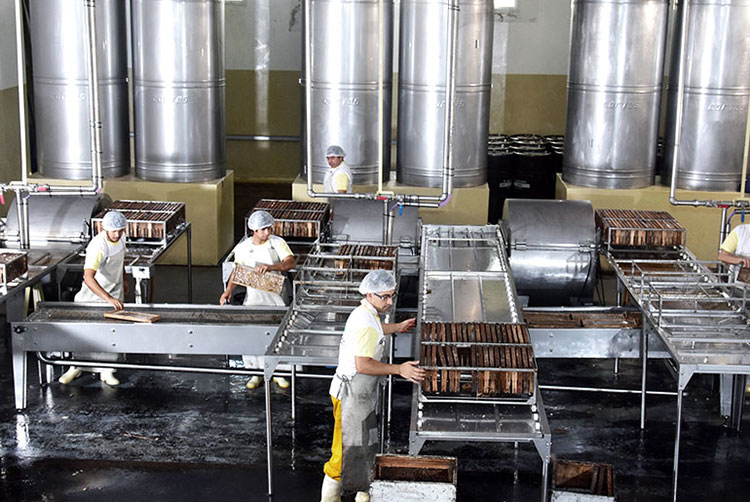
    honey manufacturing

    Honey manufacturing-Picture courtesy: apicoladanangie.com

    Honey manufacturing is a process of extract the raw honey and transformed the golden honey in a clean and moisture-controlled bottles. This process is using advanced technology using sensors, sterile packaging and eco-friendly machines that make the honey standing on your shelf. The manufacturing begins with collecting the delicious bee nectar from flowers and stores in honeycombs.

    When these combs are loaded with honey, the beekeeper take these combs to the industry where equipments are used to extract, purified, clean and packaged. The nature sweet treasure is gone through several careful steps to make it possible for you to enjoy your breakfast.

    2.Enlist the benefits of honey manufacturing process?

    One might think that the honey is extracted from the beehives and directly poured into the jars but this is not the case. It has to go through various steps. From this one can get numerous benefits. Below are the benefits you can get from honey manufacturing process.

    Shelf line
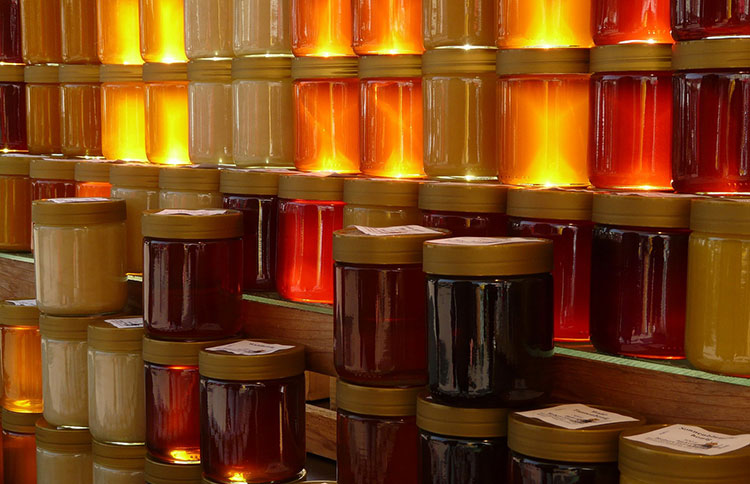
    Shelf line

    Shelf line-Picture courtesy: difford’sguide.com

    One of the benefits you can get from the honey manufacturing is the longer shelf line of honey. You can store honey for months or even to years, with out getting rinsed and remain fresh as it is extracted lately. This is because the manufacturers during honey manufacturing check the moisture level and controlled it to keep it stable. A clean and air tight sealing also control the moisture level. If moisture of raw honey from beehives are not controlled, it gets fermented.

    Good taste and texture
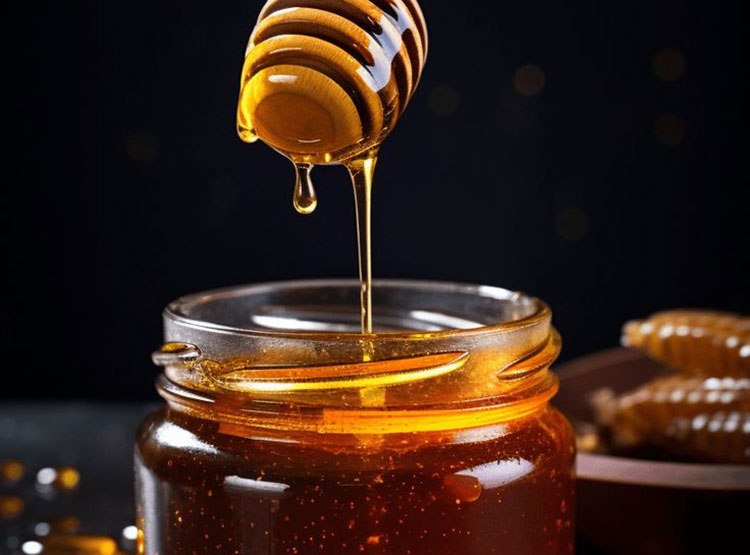
    Good taste and texture

    Good taste and texture

    Are the taste of honey get change? No, it’s sweet taste remains the same. The honey manufacturing process uses the methods to purify the honey that maintain the good taste of honey. Have you seen the balanced viscosity and smooth textured honey? This process uses the heat and removes waxes to give a honey smooth texture. You can use the honey over the bread or in a tea without getting afraid of lumpy and runny honey.

    Clean honey
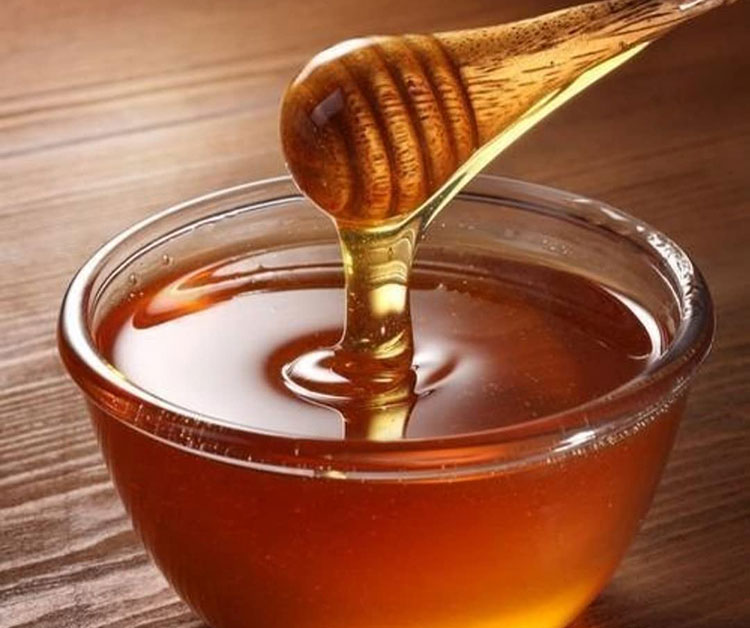
    Clean honey

    Clean honey

    You may have seen the raw honey contains wax and honeycombs pieces and you can not gather strength to serve it to the guests. But don’t worry, you don’t have to be ashamed now. Because by honey manufacturing, all these debris are removed by filtration. You get a clean, free of impurities and contamination honey.

    Hygienic packaging
    Hygienic packaging

    Hygienic packaging-Picture courtesy: paramountglobal.com

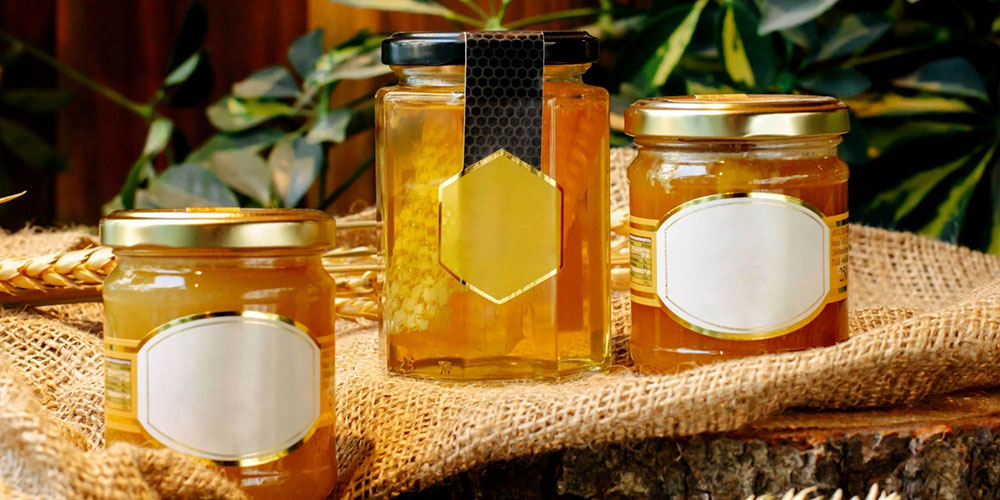
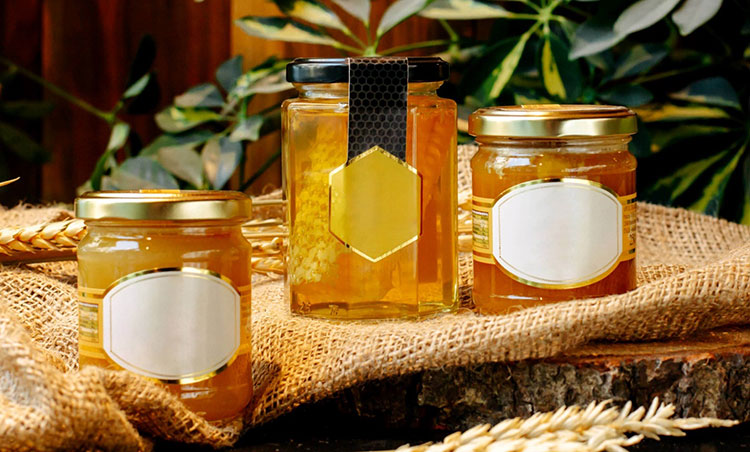
    You can get proper sealed honey from the markets. This is done by honey manufacturing process. Honey comes in various outstanding packaging options such as squeeze bottles, pouches and safe jars. These are air tight, tamper proof, and germs free sealed. Due to their attractive packaging, they can be exported.

    Waste utilization

    Waste utilization

    Waste utilization-Picture courtesy: mielimperial.com

    Sometimes, the waste produced or remain after the whole process can be use in one way or other. Same, the wastes such as wax, pieces of bee comb and propolis that are collected by filtration of honey are, often, reused. But, how to reuse? The manufacturer uses the modern methods to form different products such as lip balms, candles, product wraps etc.

    Product variety
    Product variety

    Product variety-Picture courtesy: beeculture.com

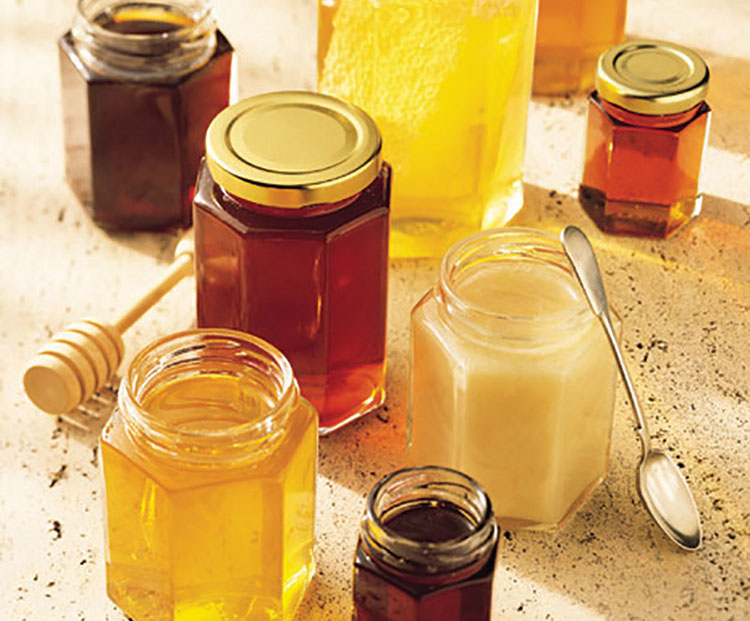
    You might have seen different colored and flavored honey on the market shelves. Behind variety of honey, there is honey manufacturing process. You can get a flavored honey, cream honey, and honey blended with fruits. Therefore, you can buy honey according to your taste, diet, and recipe need. A flavored honey can be made by infuse the natural ingredients with honey, best suitable for recipe.

    Open business opportunities
    Open business opportunities

    Open business opportunity-picture courtesy: heritagebeefarm.com

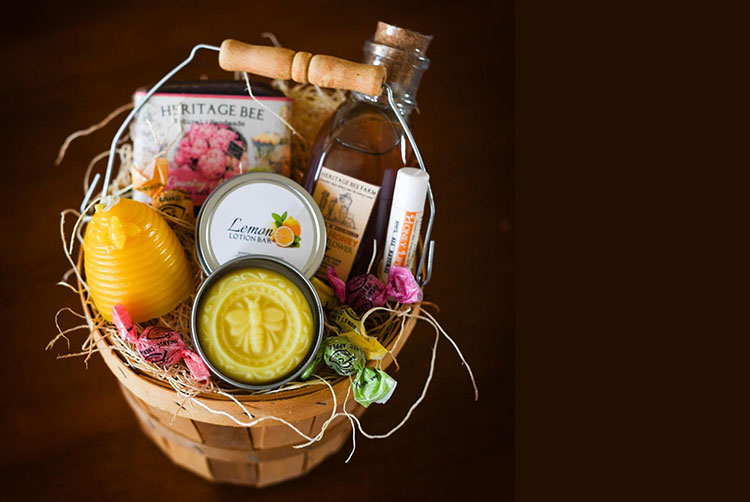
    Another benefits you can get is open business opportunities by using honey in various ways, beyond honey production. Honey is used to make candies, soaps (cosmetic products) and other products that uses honey. It can also use in honey-based beverages and medicinal supplements.

    3.What are the necessary steps involved in honey manufacturing?

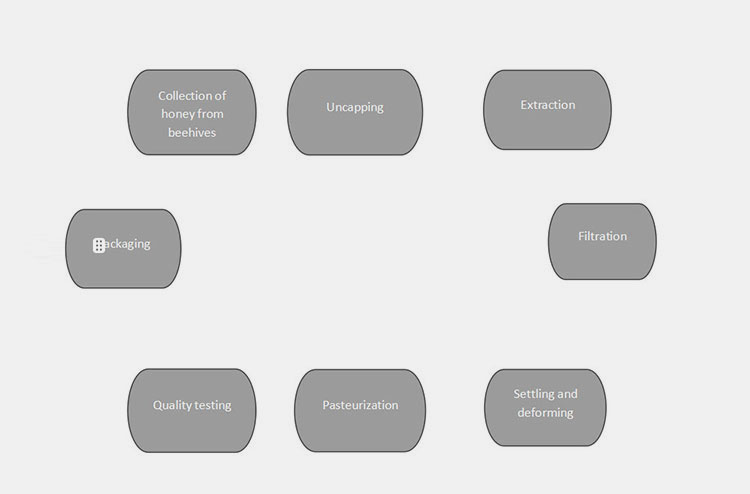
    There are several steps involved in honey manufacturing. Here are the important steps below.
    steps involved in honey manufacturing

    Collection of honey from beehives

    Collection of honey from beehives

    Collection of honey from beehives-Picture courtesy: beespartners.com

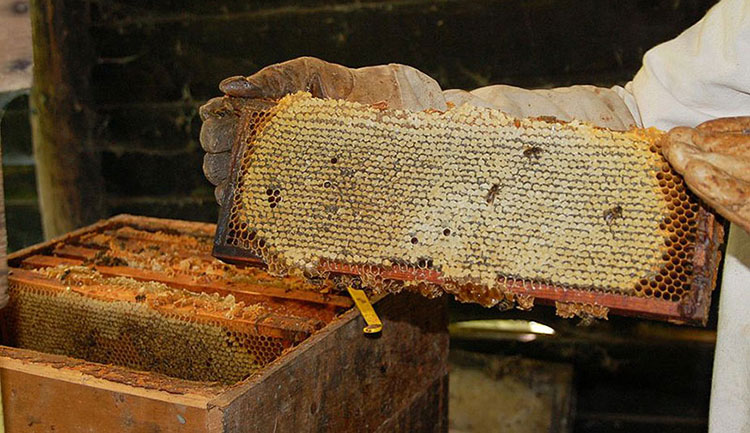
    The first step begins with harvesting honey from hives. This is done when cells are 80% capped with honey. Beekeepers remove the frames from beehives. These frames have cells that are filled with honey with sealing over the top. Without harming bees, frames are transferred to the processing plant.

    Uncapping

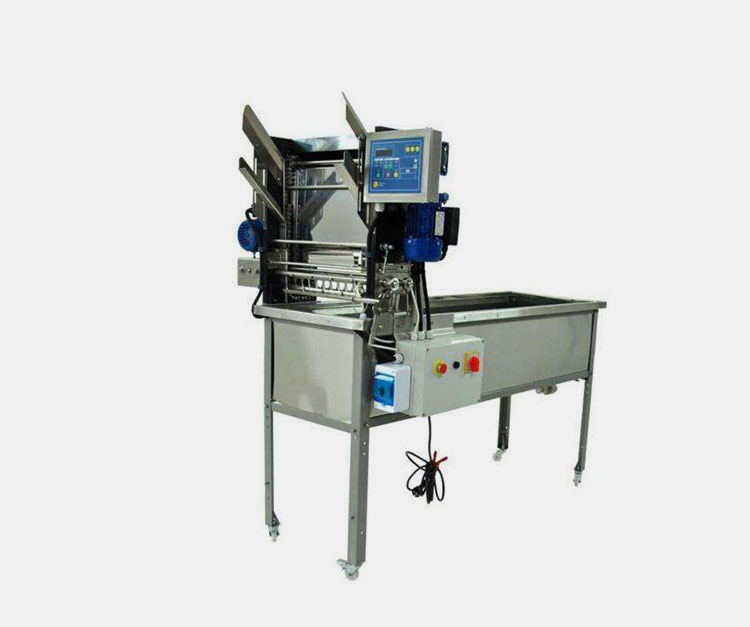
    In uncapping process, the sealed cells are uncapped or removed in order to make honey flow for the onwards process. What’s next? An automated uncapping machine is used to remove the wax seal from the comb. This machine contains blades and knives that are heated to 35 centigrade to efficiently cut the capping.

    Extraction
    Extraction

    Extraction-Picture courtesy: bee professor

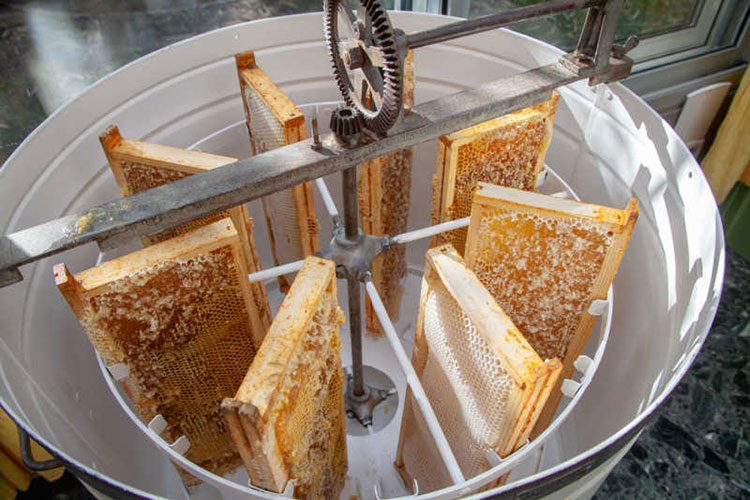
    For extraction honey from the combs, an automated extractor is used. An uncapped frames are loaded in a stainless-steel tank of extractor that spin them by using a centrifugal force to extract honey from comb.

    These machines can handle large quantity of frames. In colder places, heated extractors are used to heat the frames to easily extract honey from combs. Honey is drained into tank for further process.

    Filtration

    Honey is passed through filters to remove the pollen, was and if any remaining bee parts. Filters like diatomaceous earth filters are used to get a clean and clear honey.

    Settling and deforming

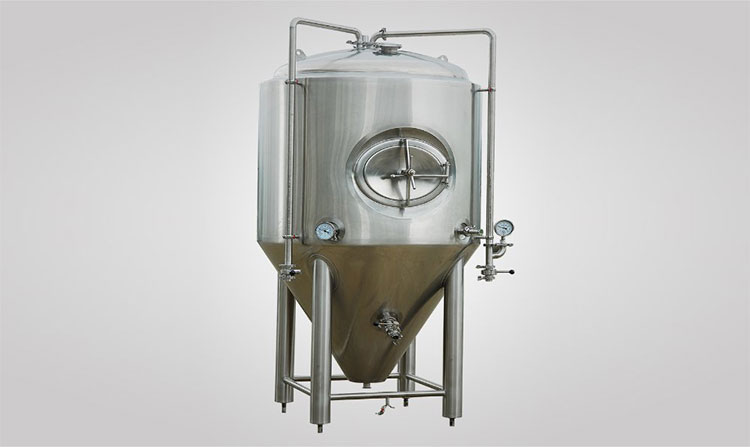
    The already filtered honey is allowed to settle in large tank. This is left for 3 to 4 days in which fine particles and air bubbles come to the top surface and form foam, which is removed.

    This is done either manually or mechanically.

    Pasteurization
    Pasteurization

    Pasteurization-Picture courtesy: mydadshoney.com

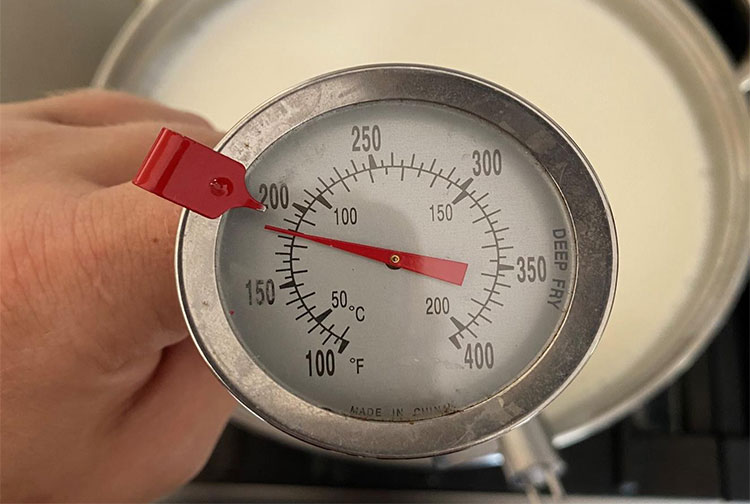
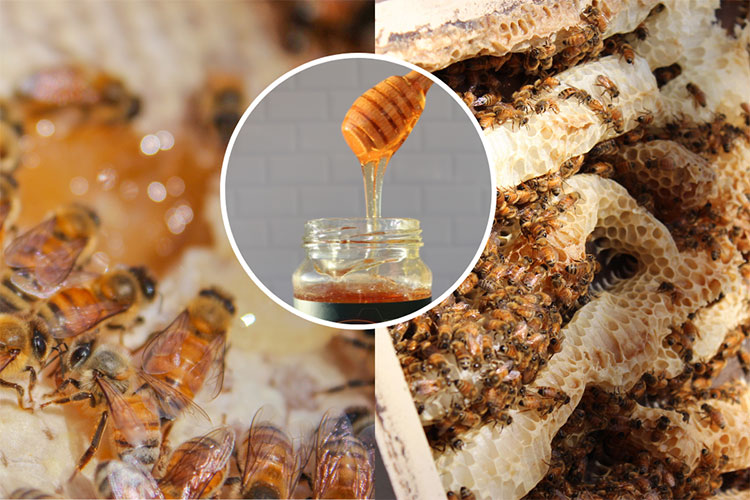
    This step is optional and use for commercial products. Pasteurization is done for at least 30 minutes and 145 Fahrenheit to kill any microbes that can cause fermentation. This step is performed with care because overheating can degrade the enzymes and nutrients in honey.

    Quality testing

    During the process, quality tests are done.

    • Firstly, to check the contamination or moisture level, refractometer is used for this purpose.
    • The color, viscosity, and HMF level are checked.
    • Adulteration is checked via NMR spectroscopy.

    Packaging
    Packaging

    Packaging

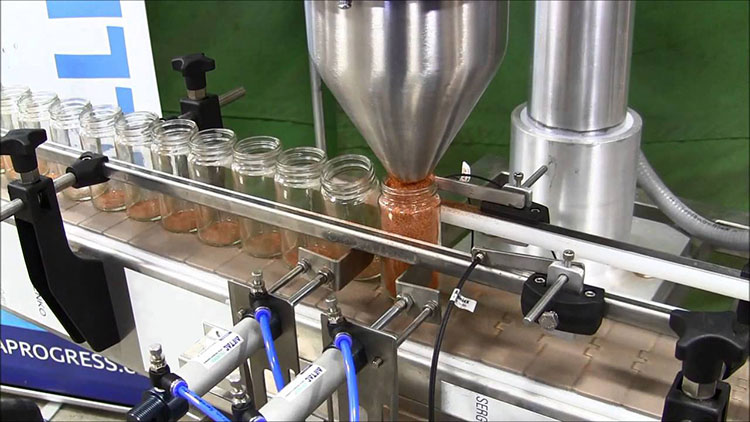
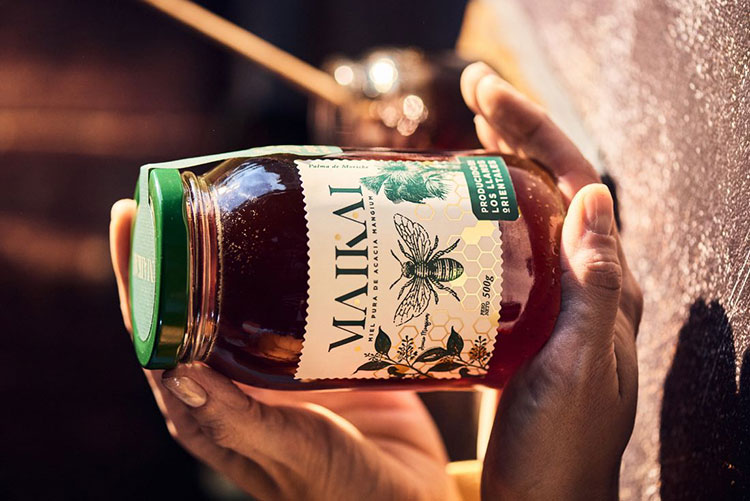
    The final step is here where honey is precisely and accurate dispense into the desired packaging materials and styles. By using capping machine, jars are sealed. Labelling is done automatically where required information like batch number, honey origin, floral source etc. are applied.

    4.Describe the equipment’s involved in honey manufacturing?

    Followings are the equipments involved in honey manufacturing.

    Uncapping machine
    Uncapping machine

    Uncapping machine

    There is layer on beehive that seals the honey comb. Uncapping machine is designed to remove the bee wax that seals the honey inside the comb cells. This uses the heat knives or roller to slice off the wax caps.

    Different models of this machine can handle different size and shapes of frame.

    Extractor
    Extractor

    Extractor

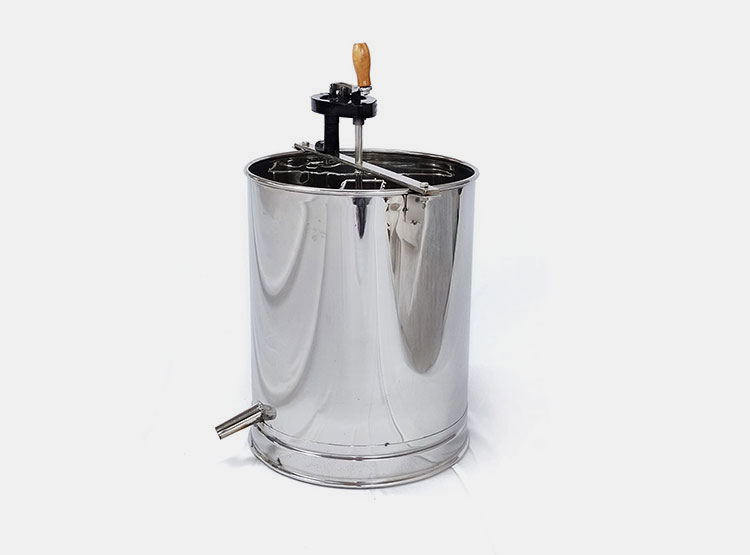
    As you can assume from its name, it extracts the honey from the honeycombs. Extractor uses a centrifugal force to spin the frames to extract the honey. It can hold various frames. Honey stores at the bottom of extractor, from here honey flows to the collection tank.

    This process is carefully done, to prevent the comb structure, which you can reuse for bees.

    Dehumidifier
    Dehumidifier

    Dehumidifier-Picture courtesy: foodtechprocess.com

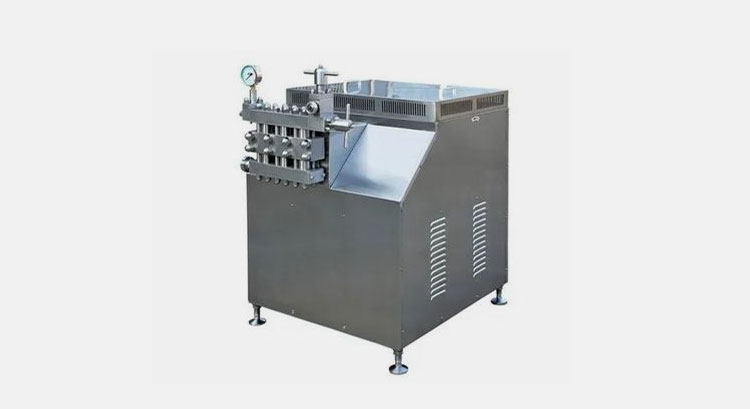
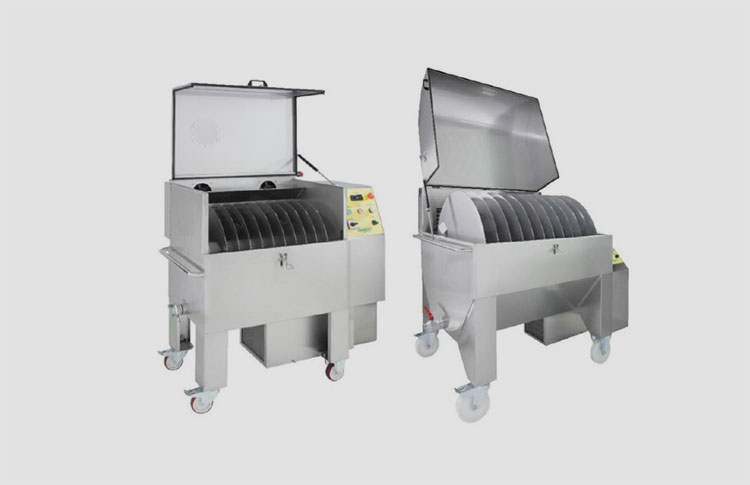
    High moisture level in honey can spoil or ferment it. So, a specialized machine known as dehumidifier is used. This is designed to remove the water content from the honey to 18%. most of the dehumidifier uses the vacuum evaporator to remove the moisture without heating the honey.

    This is effective as the enzymes, antioxidants or nutrients remain preserved.

    Pasteurizer
    Pasteurizer

    Honey pasteurizer-Picture courtesy: directindustry.com

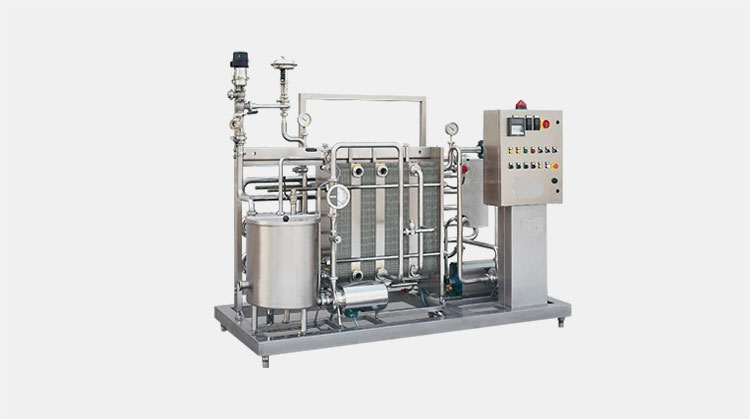
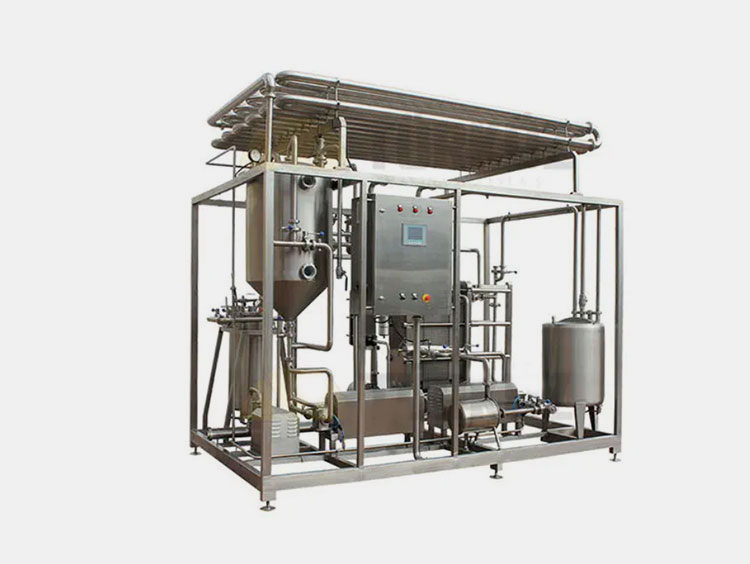
    Some of the honey is pasteurize depends on what is it using for. Heat is provided to honey to kill germs or microbes to prevent honey from any future fermentation and crystallization.

    Plate heat exchanger and immersion heater is used for heating honey, for 15 to 30 minutes with 140-149 Fahrenheit. What about overheating? There are thermometer and digital control system that manages the overheating.

    Filling machine

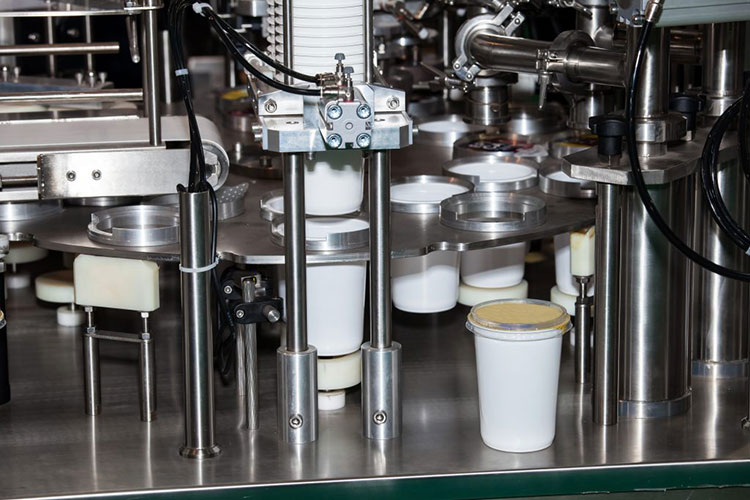
    Filling machine is used to dispense honey in different packaging materials. It accurately fills without overfilling or underfilling the jars, ensures the consistent and efficient handling. Here are the following types of filling machine.

    Gravity filling machine
    Gravity filling machine

    Gravity filling machine-Picture courtesy: makwell.com

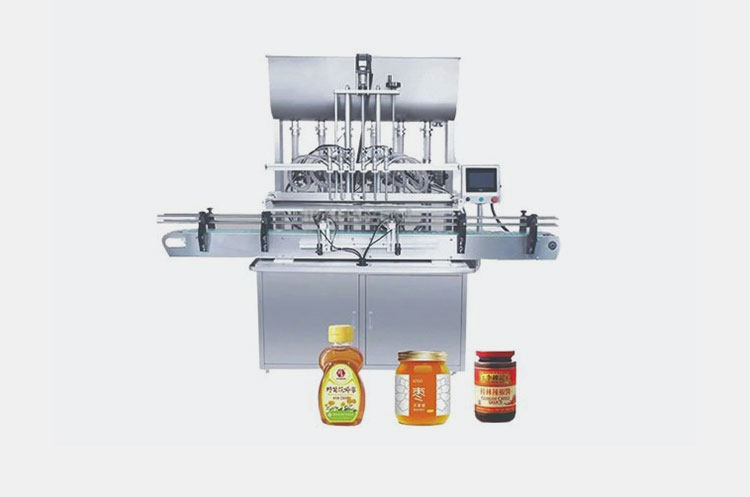
    In this type of filling machine, gravity is used to fill honey from tank into bottles or jars. These machines are highly accurate and precise, and it makes sure that honey flows in direction of gravity.

    What about its working? A hopper is filled with honey, then, it is passed to the filling nozzle. Jars are placed beneath the nozzle and filled by using gravity.

    Piston filling machine
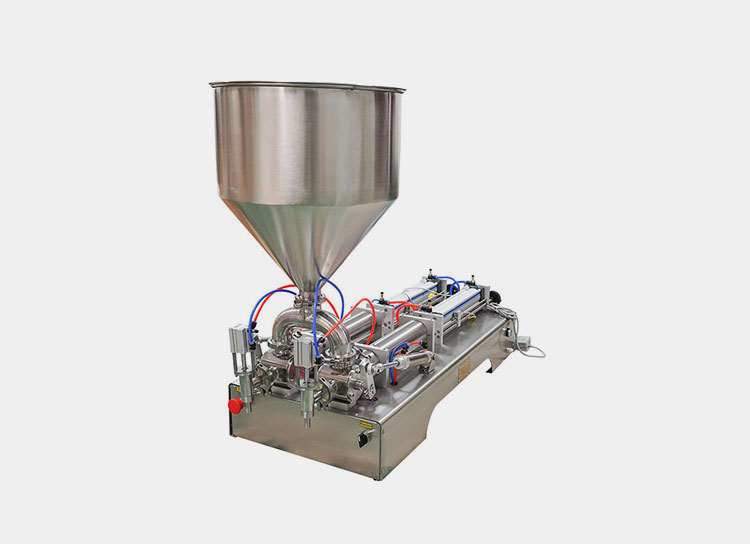
    Piston filling machine

    Piston filling machine-Picture courtesy: beesequipment.com

    As the name indicates, piston is used to fill containers from honey. It is ideal for thick substance. Piston pulls the honey into chamber. It, then, push the honey from nozzle into the jars.

    This machine is ideal for thick honey and best for both small- and large-scale industries.

    Vacuum filling machine
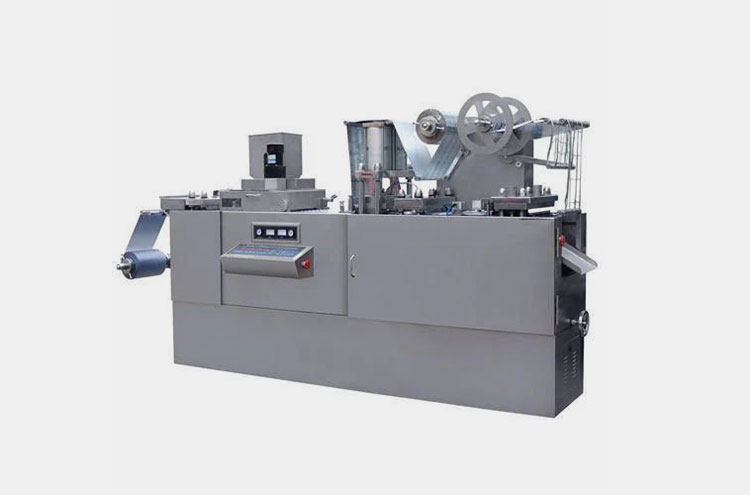
    Vacuum filling machine

    Vacuum filling machine

    Here, to reduce the internal pressure, vacuum is created. The, honey is put in the container until reaches the pre-designed level. This ensures the consistent filling.

    Pump filling machine
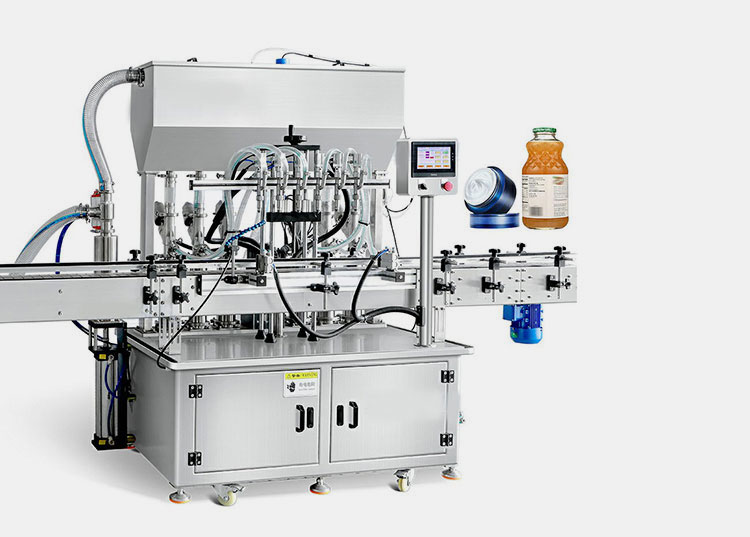
    Pump filling machine

    Piston filling machine

    This machine offers high accuracy and speed. It uses pump to push honey into the container.

    Capping machine
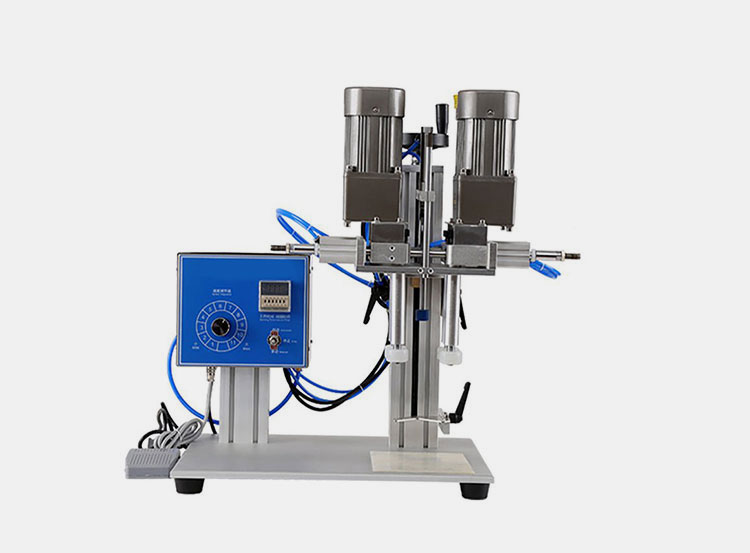
    Capping machine

    Capping machine-Picture courtesy: ceclemachine.com

    To maintain freshness and prevent honey contamination is prerequisite. For this purpose, a machine know as capping machine is used. It is designed to place caps on the jars or bottles to give them air-tight closure. This ensures good quality of products.

    But a question may pop in your mind that how it capped the bottles? So, the filled bottles or jars are moved to the capping station. By using capping feeder, caps are placed over the bottles and torque system is applied to secure air tight capping.

    Labelling machine
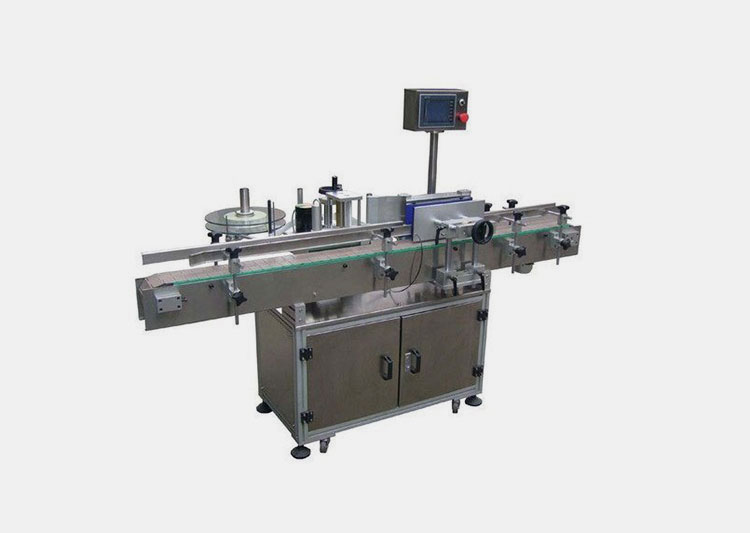
    Labelling machine

    Labelling machine

    Labelling machine is used to label containers. You may read the labeling of honey jars or bottles to check its origin or other information. Therefore, labeling is done to make sure that customers know the basic information about the product.

    Here, by conveyor system, containers are loaded in machine. Labels are used from the rolls and stick to the containers using a roller arms.

    5.What kinds of packaging material are handled to package honey in honey manufacturing?

    Packaging is important to safe honey, along with this, it adds attraction to the already golden honey. It is packed in different packaging materials to keep it fresh and easy for use.  Here are the following packaging materials that are handled during honey manufacturing.

    Plastic bottles
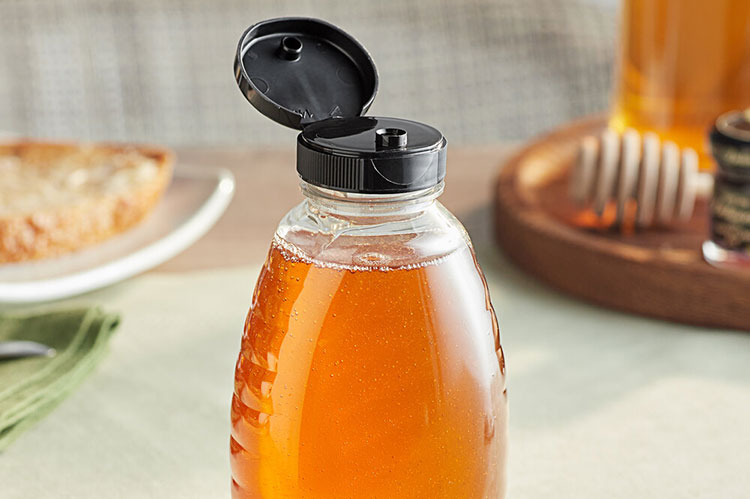
    Plastic bottles

    Plastic bottles

    One of the packaging materials to pack honey is plastic bottles. They are made of PET that are cost effective, and easy to use and light weighted bottles. These often come in squeezable bottles which make it easy for you to dispense the required amount of honey. In some cases, a person is in hurry and pouring honey from the jars creates mess. In this situation, a squeezable plastic bottle comes handy.

    Metal tins
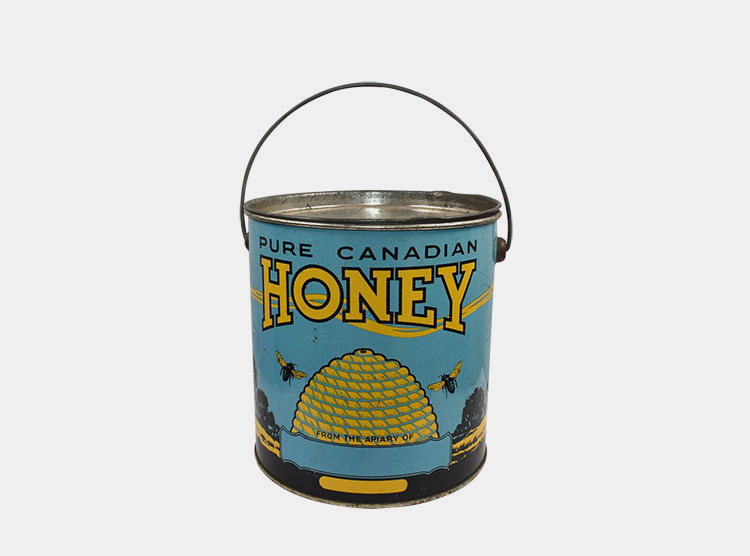
    Metal tins

    Metal tins-Picture courtesy: ebay.com

    These are often used to store bulk honey. These are durable and best for shipping or export. Provides long term storage and preserve honey from air and moisture. You can give a tin of honey as gift because it has a fancy and stylish.

    Glass jars
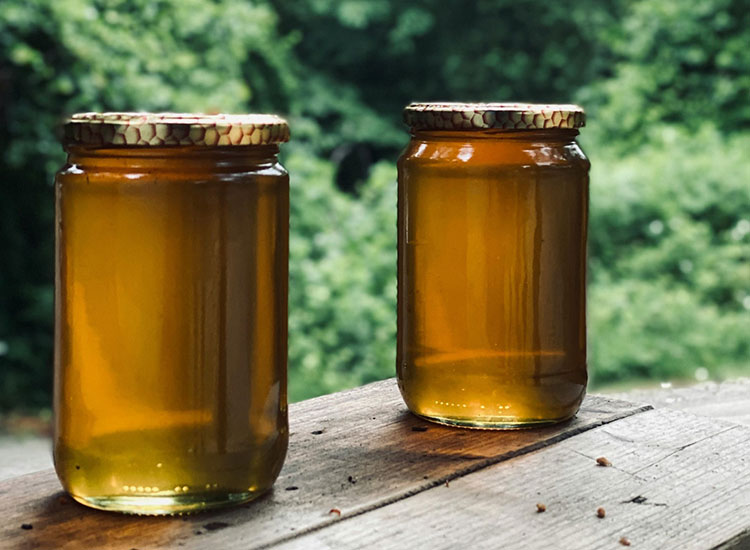
    Glass jars

    Glass jars

    Are you looking for something that can’t affect honey taste and color? Then, glass jars are best option for you. Glass jars are used to package honey. These are non-reactive, chemical free, and durable that can not affect any change in taste, freshness and color. A customer can see the honey from outside due to its transparent appearance. Although they are heavier but it adds elegancy to your shelves.

    Sachets and pouches

    Sachets and pouches

    Sachets and pouches

    Honey is packed in sachets and pouches. These are travel-friendly and single-use. If you don’t want to carry jar or bottle then these flexible and light-weighted sachets are the best option. Coffee, hotels, in bags etc. have these honey pouches or sachets.

    6.What kinds of honey are made in honey manufacturing?
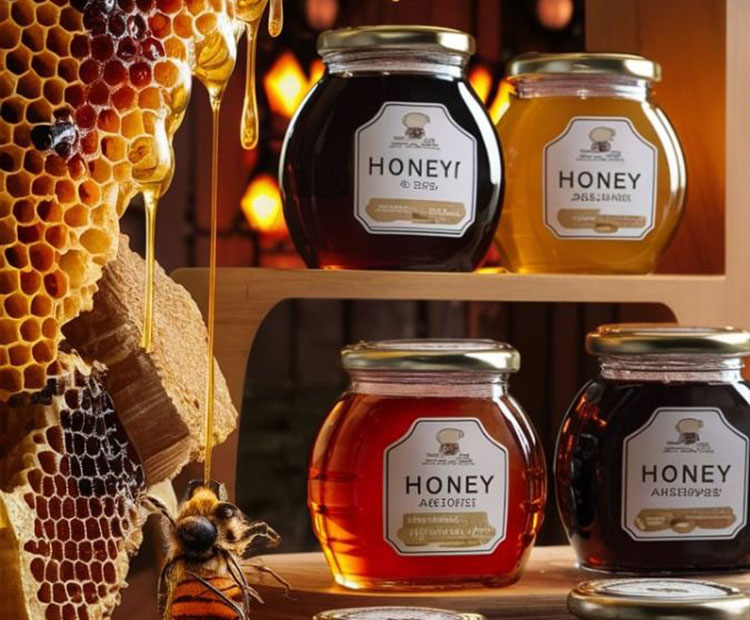
    Kinds of honey

    Kinds of honey

    You might think there is only one kind of honey but this is not correct. Do you know there are different kinds of honey?  Depending on the process, harvesting method and floral source, there are different types of honey with their unique texture, benefits, and color. What are you waiting for? Let’s get started.

    Organic honey
    Organic honey

    Organic honey

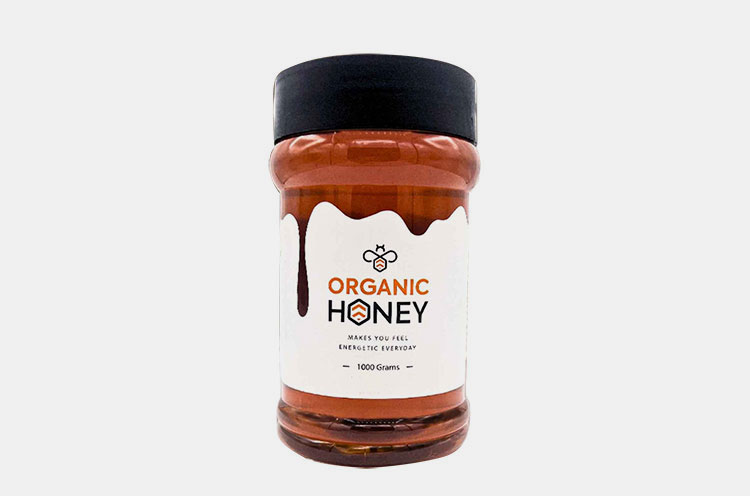
    Organic means chemical free. Are you worried about your health? Then this organic honey is best suited. It is made from the organically grown plant nectar and the chemicals, pesticides, and any other additives are not used by beekeeper. The most important thing is that bees are not given any antibiotics and beehives are made of natural materials.

    Do any chemicals use in packaging of organic honey? No, to maintain its freshness and stability, no chemical and heat is used.

    Raw honey
    Raw honey

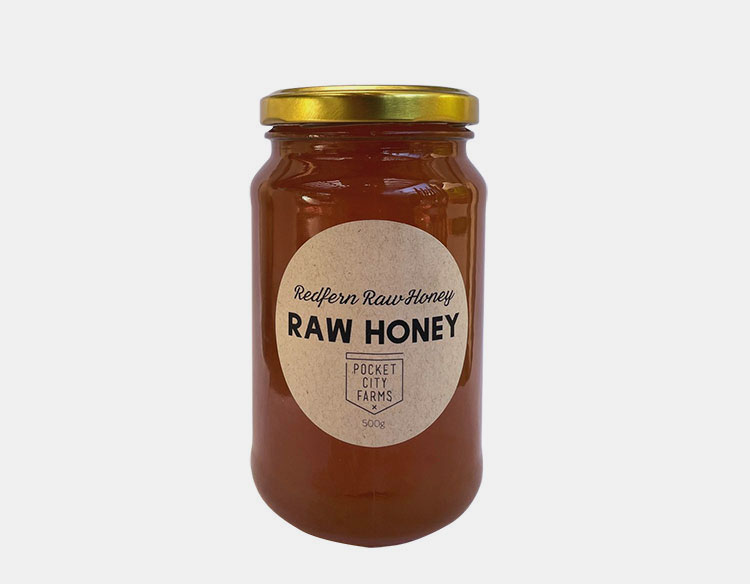
    Raw honey-Picture courtesy: pocketcityfarms.com

    Another honey that are handled in a honey manufacturing is the raw honey. You get all the enzymes, nutrients and antioxidant. To make raw honey, honeycombs frames are taken from the beehives. By using a centrifugal extractor, honey is extracted. No heat is used to preserve the enzymes, nutrients and their antibacterial qualities. Debris are removed by straining the honey.

    The whole process is done with great care and under controlled environment to preserve its flavor and nature.

    Creamed honey
    Creamed honey

    Creamed honey

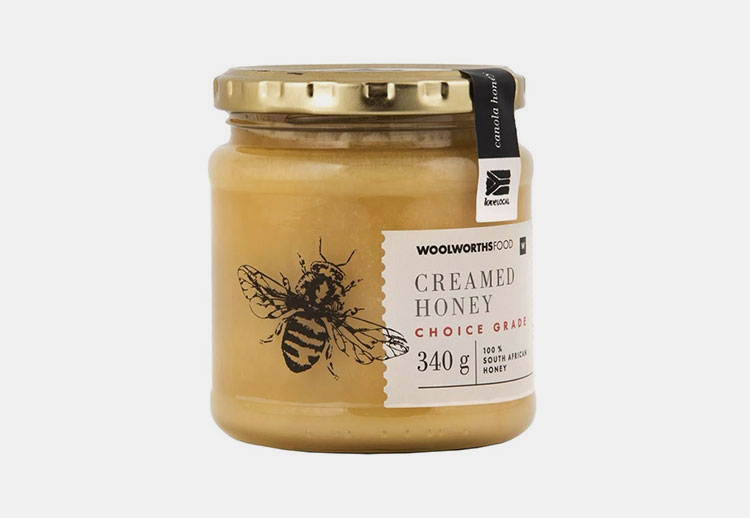
    Honey is processes in honey manufacturing to get creamed honey. Most of the people get cranky by the stick nature of honey. But you don’t have to worry. Creamed honey is not sticky but is like butter.

    Crystallization process is used to crystal honey to give a spreadable texture to it. To make a creamed honey, raw honey is taken, then a small amount of finely crystalized honey, a seed, is taken as a template and added in a raw honey. Both are mixed uniformly and stored in a cooled environment. This gives a honey a crystalized nature. When all the process is done, it is ready for packaging.

    Infused honey
    Infused honey

    Infused honey

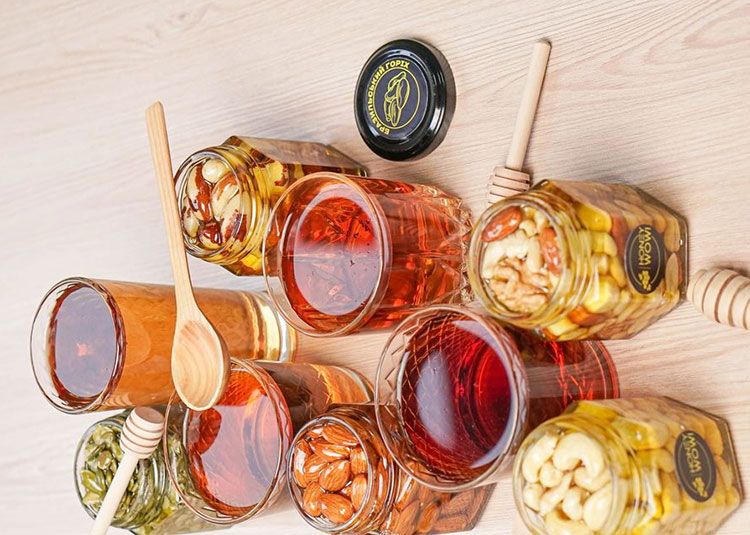
    Infused honey is made with infusion of different ingredients such as herbs, spices, fruits etc. These are actually infused with raw honey. The ingredients in raw honey are left for days to blend its flavor. They are filtered to remove any solid particles from the mixture.

    Multifloral honey
    Multifloral honey

    Multifloral honey-Picture courtesy: daaliearthfoods.com

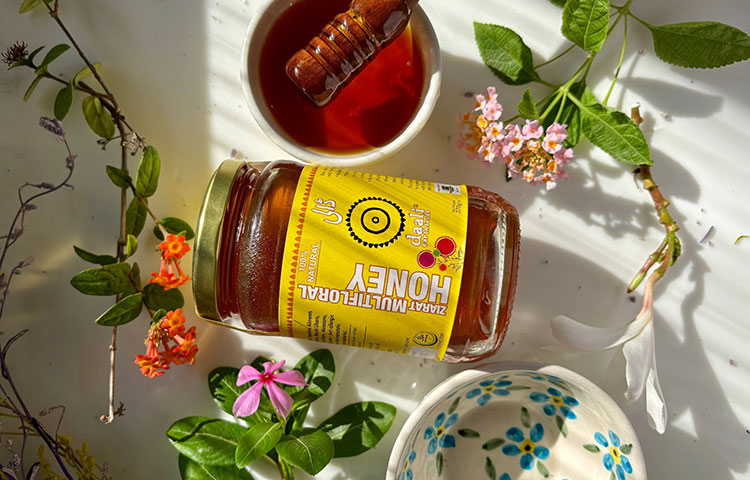
    This kind of honey is made by nectar of different types of flowers. If you talk about the taste, it varies depends on the region climate, vegetation and other factors. It has an amazing taste with affordable price. As it is made from nectar of different flowers so it contains mixture of enzymes, antioxidants and nutrients.

    Multifloral honey had many benefits for health.

    7.What is the difference between regular and organic honey manufacturing?
    Regular honey and organic honey

    Regular honey and organic honey

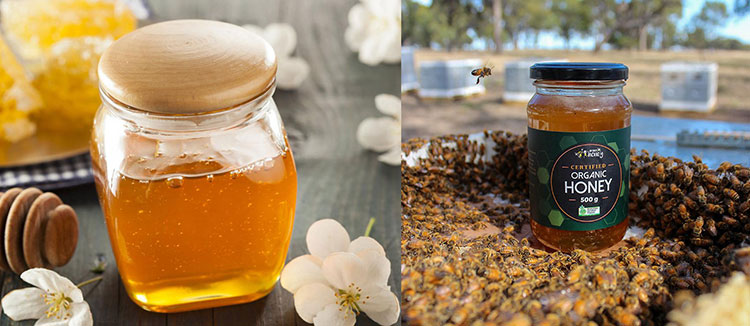
    As you might think that both are honey. So, there will be no difference. But this is not the case. There are differences between both. However, let’s get started to know.


    Difference


     Regular honey


    Organic honey

    Beekeeping Beehives are rearing near the place where there is contamination, pesticides, fertilizers, no organic place. Beehives are located in organic, free of any pesticides, and other chemical areas.
     

    Extraction method


    This type of honey is finely processed and heated at high temperature. So, the enzymes and nutrients get degraded. It is gently heated and not filtered to retain its natural pollen, nutrients and enzymes.
    Floral source


    Bees are forged in a place where the bees collect nectar from plants that are treated with pesticides and other chemicals. Here, bees are forges in a place where there is no use of chemical for plants. Hence, bees collect nectar from pesticides free plants.
    Wax material Wax made of chemicals may use. This includes chemicals in the honey. In organic honey, no chemical wax is used for hives. A natural and organic wax is used for hives.

    8.What are the challenges that can be confronted in honey manufacturing?

    Challenges

    Challenges-Picture courtesy: rexben. medium

    There are many challenges that can be face in honey manufacturing. These affects the efficiency and quality of honey. Followings are the challenges that are confronted in a honey manufacturing.


    Challenges


    Quality assurance


    Some of the industries use the liquid sugar to increase the weight of honey. There is the risk of adulteration. Sometimes, the honey is contaminated from microbes, pesticides and other contaminated materials, if bees are bearded in the polluted areas.
    Degradation There are enzymes, antioxidants and nutrients in honey. But by excess heat, these may get degraded. Therefore, its quality gets crap.
    Fermentation risk There are some levels of moisture in honey but if moisture increase from the required moisture, there is high risk of getting it fermented. It causes the honey bad in taste, smell and can leads a packaging material leak.
    Crystallization It is normal that in cooler place, honey may become crystal. But in industries, it becomes a big deal when gets crystalized. Clogging pipes, rejected batches, or delayed bottling are all due to honey crystallization (at large tanks, premature crystallization occurs)
    Cross-contamination risks Honey has a sticky nature. After every batch, its cleaning maintenance is necessary. However, not cleaning is the challenge that is faced during honey manufacturing.

    The remaining honey on the machineries attract insects, promotes cross-contamination and promote microbial growth.

    Waste management During honey manufacturing, wastes like wax, foam, extra water and leftover honey are produced. These wastes can create cleanliness or sanitation issues if not managed properly.

    9.Do you know the innovations in honey manufacturing in 2025?

    In 2025, numerous technological advancements are done to ensure the effective, sustainable and productive honey processing. This technology can empower beekeepers to comply with demand. Are you curious what these innovations are? Let’s explore them.

    Automated honey processing
    Automated honey processing

    Automated honey processing-Picture courtesy: foodtechprocess.com

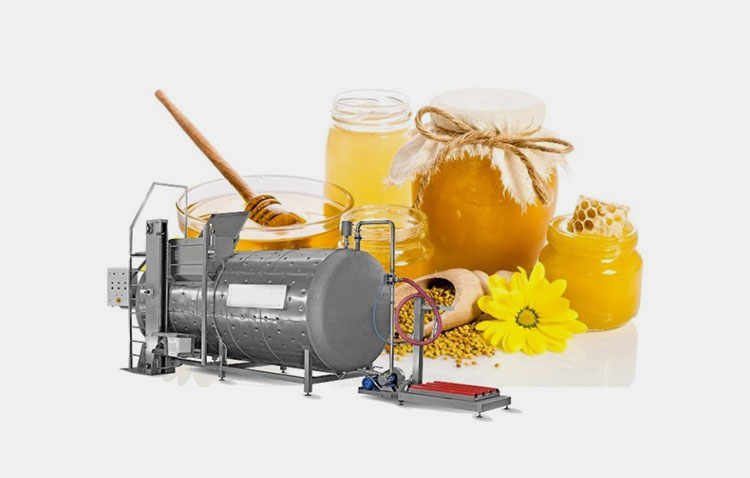
    One of the important innovations regarding this is the automated honey processing. Honey is extracted from the combs by automated extractor systems. This efficiently extract honey without damaging the hive structure.

    To uncapping the hive and to handle the honey the process, there are robotic arms and laser uncapping system. This not only ensures hygienic management but also reduce the labor costs and less chances of human intervention.

    AI-based adulteration detection
    AI-based adulteration detection

    AI-based adulteration detection-Picture courtesy: phys.org.com

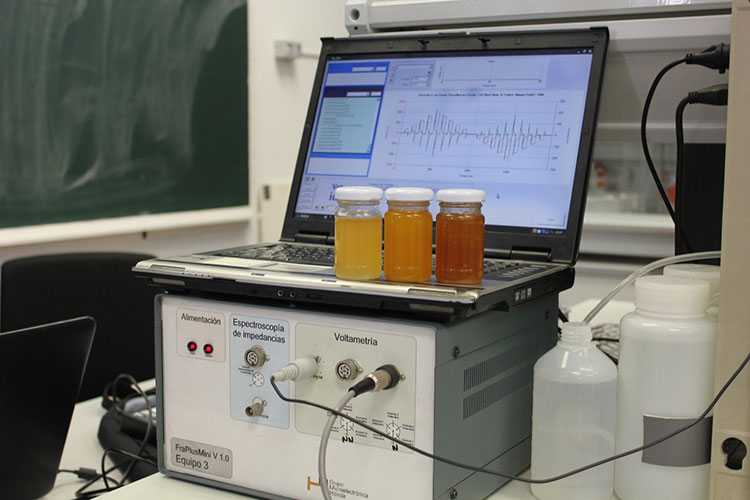
    Honey purity is very necessary. A small percentage of impurity can result in many problems in honey such as fermentation. Manufacturers are turning to the AI-based detectors that detect the impurities, chemicals, and adulterants with accuracy by creating their thermal images. This ensures the quality of honey and customer’s trust.

    Smart beekeeping
    Smart beekeeping

    Smart beekeeping-Picture courtesy: planetbee.org.com

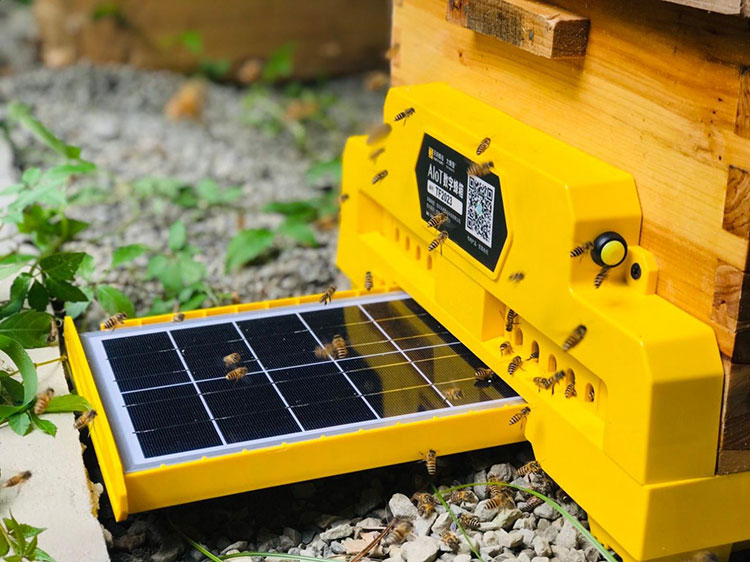
    In rearing bees, there are chances of their colony death, increase or decrease in moisture or temperature. But technological innovation has minimized these problems. The automated monitoring system checks the temperature, bees’ activity, hive weight, moisture and other factors. This precise beekeeping increases the honey production.

    Sustainable practices

    Sustainable practices

    Sustainable practices-Picture courtesy: milkwood.net.com

    Sustainability is the key to the honey production innovations. Biodegradable hive materials, minimal use of non-biodegradable materials, and also making honey in farms that encourage a green and balanced ecosystem. Manufacturers are also investing in solar based programs to make honey production more eco-friendly.

    Robotic packaging

    A clean and germs free packaging is the key requirement in producing a high-quality product. An innovation of robotic handling of bottling and sealing of honey in different size and shapes of packaging materials is done that ensures no material wastage, precise dosing and batch consistency.

    10.What are the quality control measures in honey manufacturing?

    Quality control measures is necessary to make your product standard high by providing safety and compliance with food regulatory authority. Followings are the quality control measures in honey manufacturing.

    Contamination test
    Contamination test

    Contamination test-Picture courtesy: bootlegbiology.com

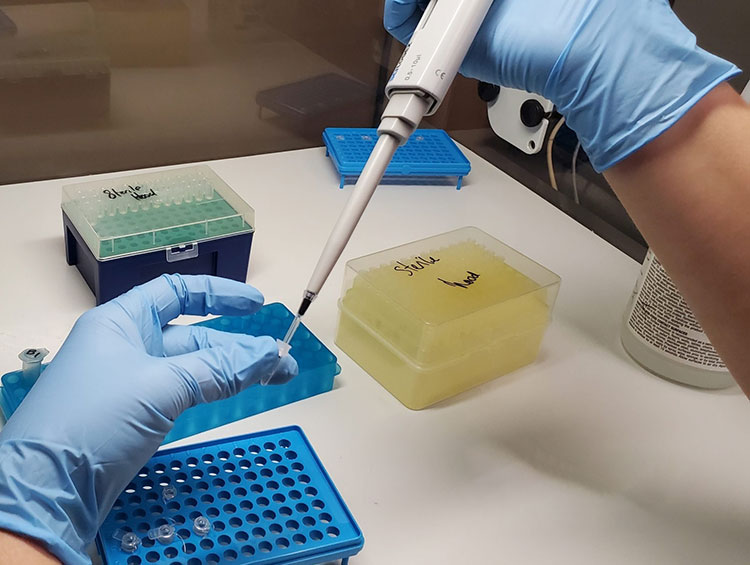
    Honey testing from contamination is important as you may have to export it, and if rinsed, the brand image can deteriorate globally. However, honey must be tested for the microbes, any heavy metals, pesticides and other antibiotics by conducting residue analysis and lab culture.

    Moisture testing
    Moisture testing

    Moisture testing

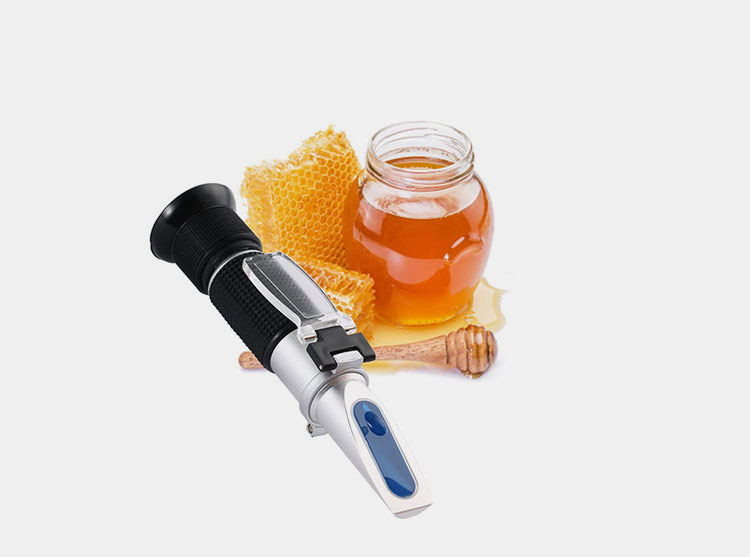
    To maintain moisture content is necessary because moisture can ferment or spoil the honey if its level is high; more than 18% water content. So, refractometer must be used to regularly check honey and prevent it from fermentation.

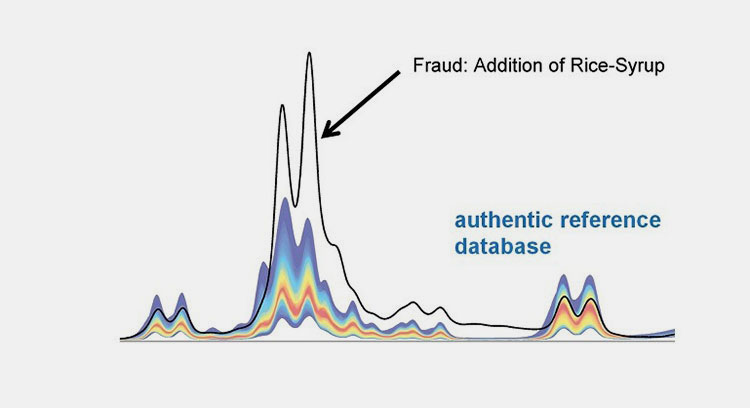
    Adulteration test
    Adulteration test

    Adulteration test-Picture courtesy: news-medical.net

    To test purity of the honey, adulteration test is conducted. Some of the manufacturers add water, sugar syrup to increase weight of honey. Therefore, tests like HMF and NMR is done to ensure no foreign materials are added.

    Batch record

    Keeping records can help you to solve the problems arise during or later in the process and also can build a trust connection with the customers. So, keeping the harvesting date, floral origin, lab results and other information is important.

    Origin verification
    Pollen test

    Pollen test-Picture courtesy: fifebeekeepers.com

    To label the information on the containers, origin of honey is necessary, that is the basic information customers looking for. Therefore, the pollen tests are conducted by which you can know its origin both botanical and geographical.

    Conclusion

    To conclude this FAQ guide, you came to know that world has come to the brink of technological innovation even in honey manufacturing, technology is used; from traditional beekeeping to the packaging. Every step is chained with clean, safe, innovative equipments, and careful testing. If you are dealing with any kind of honey, no step or testing can be ignored, a little negligence can waste your entire batch and will not comply with food safety. If you are looking for any kind of machinery, then you are welcome to this website where you can contact and buy a high-quality machine.

    Don't forget to share this post!

    CONTACT US

    Tell us your raw material and project budget to get quotations within 24 hours.

    WhatsApp Us: +86 156 0710 8630

    Invalid Email
    Invalid Number

    Honey Manufacturing: The Complete FAQ Guide In 2025 Read More »
    Chicken Seasoning Powder Packaging

    Chicken Seasoning Powder Packaging: The Complete FAQ Guide in 2025

    Chicken Seasoning Powder Packaging: The Complete FAQ Guide in 2025

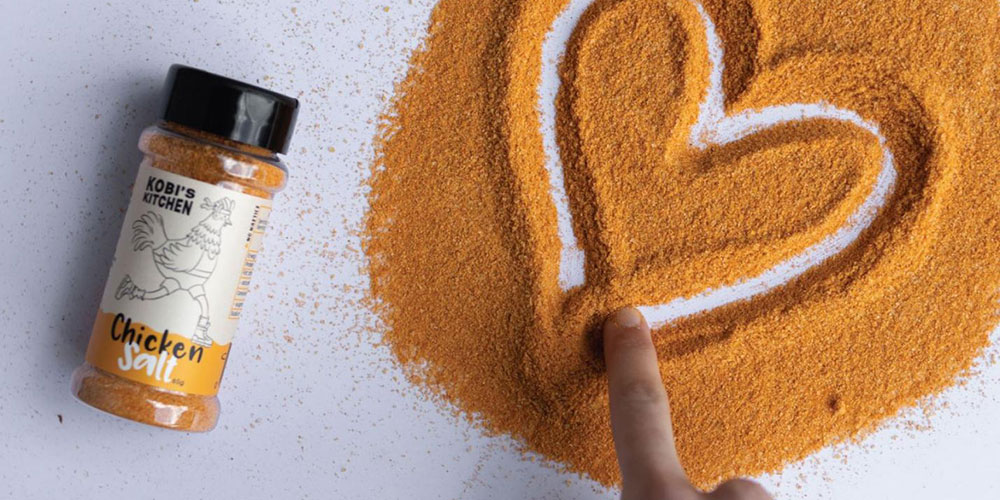
    When a company decides to launch or scale a food product, most of the attention is given to flavor, sourcing, and pricing.  However, one element that is often overlooked that has an impact on success is packaging. Especially, chicken seasoning powder packaging isn’t just about filling the spice into a pouch, sachet, or jar; it’s a blend of science, design, and machinery.

    Every step in the packaging process has a direct impact on your product’s shelf life, safety, and sales. If you are starting the manufacturing of chicken seasoning powder, examining the process of packaging is not optional but crucial. In this guide, we will disclose everything you need to be familiar with to make an informed decision.

      Add a header to begin generating the table of contents

      1.What is meant by chicken seasoning powder packaging?

      chicken seasoning powder packaging

      Chicken Seasoning Powder Packaging

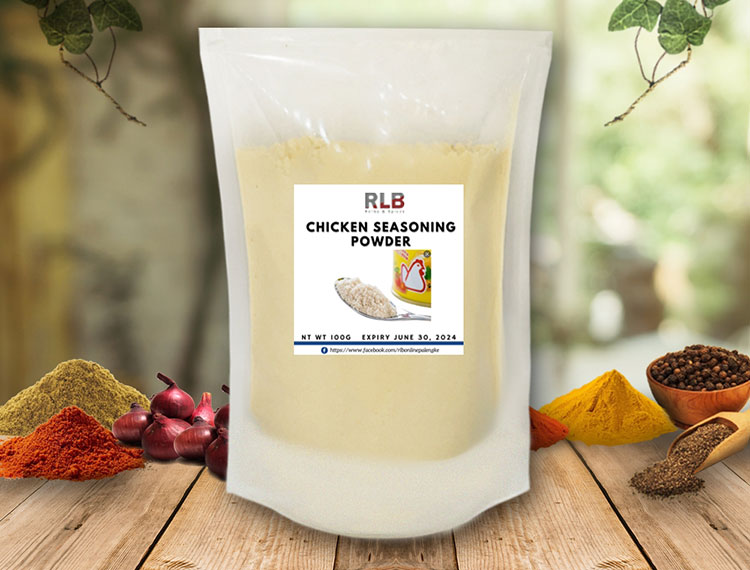
      The chicken seasoning powder packaging is a process and materials used to pack and preserve chicken-flavored seasoning. The chicken seasoning powder is a blend of spices to enhance the flavor of food with a chicken-like taste.

      According to Food Packaging: Principles and Practice by Gordon L. Robertson, proper packaging is responsible for protecting the seasoning from environmental factors and ensures consumer compliance.

      2.Why is chicken seasoning powder packaging important?

      chicken seasoning powder packaging important

      Benefits of Packaging- Picture Courtesy: Unilever Food Solutions

      The chicken seasoning powder packaging provides benefits to the food sector and consumers. Let’s reveal them:

      Preserves Aroma and Flavor

      Chicken Seasoning Enhances the food's aroma

      Chicken Seasoning Enhances the food's aroma.

      Proper packaging protects powder from deterioration, preserving the taste and aroma of the product.

      Prolonged shelf Life

      Prolong Stability

      Prolong Stability

      When you use packaging material with barrier properties, it protects the product against microbial contamination, maintaining the stability for a long time (extending shelf life).

      Customer compliance

      Resealable Packaging

      Resealable Packaging

      It offers easy-to-use packaging solutions, such as resealable pouches and sachets, to improve usability and portion control.

      Safety of the Product

      Sealed Packaging Necessary During Transportation

      Sealed Packaging Necessary During Transportation

      Hygienic and properly sealed packaging minimizes the risk of contamination and maintains product integrity during transit and storage.

      Identification

      Identification

      Packaging Gives Attractive Appearance.

      Attractive packaging helps the product to capture the consumer's attention on shelves, providing a distinct identity in the market.

      3.Do you know the step-by-step process for chicken seasoning powder packaging?

      The chicken seasoning powder packaging involves a standardized procedure in the food sector. Here is the step-by-step procedure to understand how it takes place:

      Step # 1: Cleaning and Sieving of Raw Materials

      Raw Material for Chicken Seasoning Powder

      Raw Material for Chicken Seasoning Powder- Picture Courtesy: Choco Coorg Spice

      The received raw materials first pass through a sieving machine to achieve uniform particle size and to remove any impurities.

      Step# 2: Grinding, Blending, and Sieving

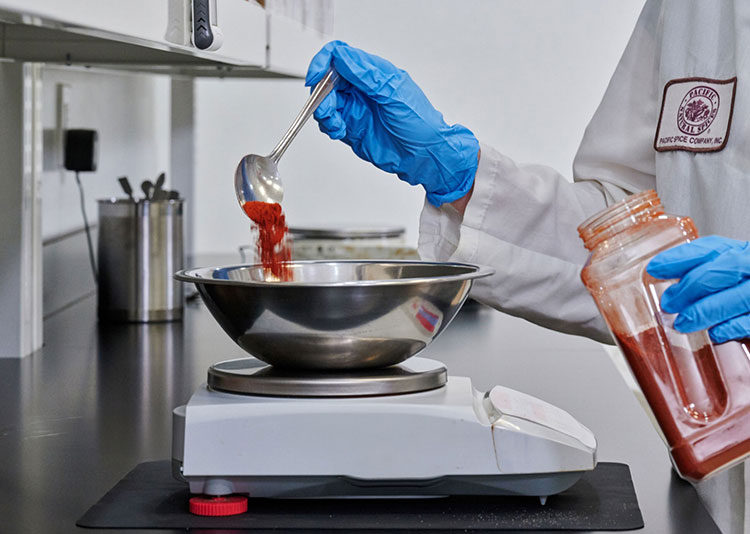
      Weighing of Raw Material

      Weighing of Raw Material- Picture Courtesy: Pacific Spice Company

      In the case of whole spices, milling or pulverization is performed to convert raw spices into fine powder. This step involves accurately measuring and thoroughly mixing all the spices and flavors to create a uniform blend of chicken seasoning powder. After that, they are passed through a sieving machine to remove lumps and any foreign particles.

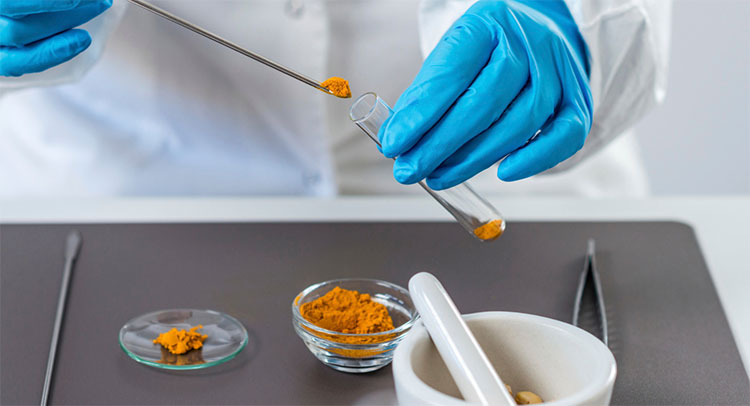
      Step # 3: Quality Inspection

      Quality Checks

      Quality Checks- Picture Courtesy: Merieux NutriScience

      Quality control testing is performed to check for particle size, microbiological contamination, taste, aroma, and uniformity

      Step # 4: Dehumidification

      Drying of Chicken Seasoning Powder

      Drying of Chicken Seasoning Powder- Picture Courtesy: Humiscope

      Drying is required if high moisture content is found. This step improves shelf life.

      Step# 5: Filling into Containers

      Filling of Weighed Powder into Containers

      Filling of Weighed Powder into Containers

      The formulated powder is precisely measured according to the desired packaging size. Then it’s filled through an automatic filling machine. The weighed powder is dispensed into pre-formed packaging, which may be sachets, pouches, or bottles.

      Step# 6: Sealing and Labeling

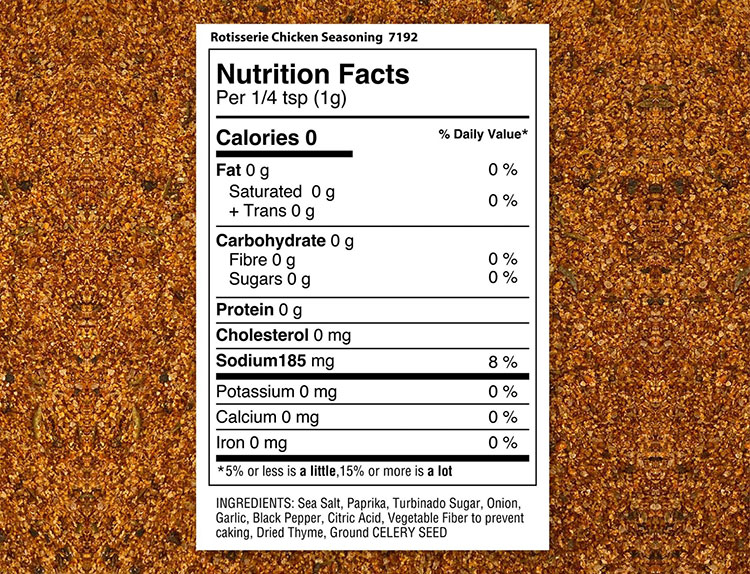
      Labeling Includes Nutritional Facts

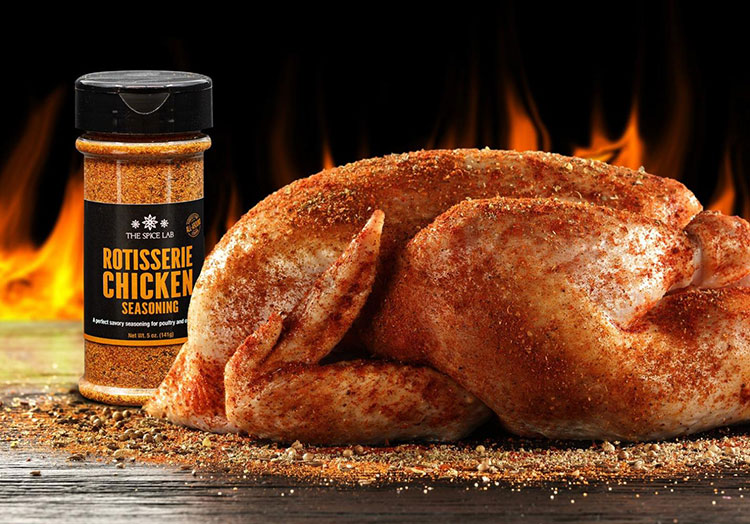
      Labeling Includes Nutritional Facts- Picture Courtesy: The Spice Lab

      Then, the filled packs are sealed properly via heat-sealing or vacuum-sealing machines. The packaging is then labeled with the names of ingredients, nutritional facts, expiry date, and storage conditions.

      Step# 7: Secondary Packaging

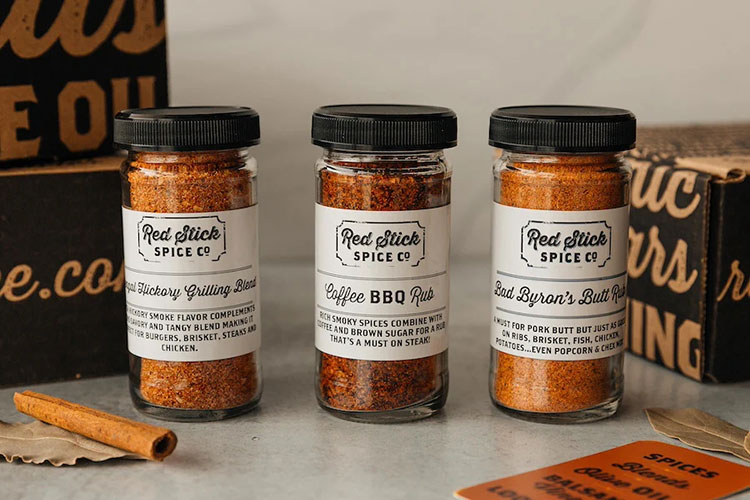
      Packed into Boxes

      Packed into Boxes- Picture Courtesy: Red Stick Spice

      These final sealed and labeled packs are packed into cartons or boxes for bulk handling and distribution.

      Step # 8: Final Inspection

      Quality Inspection

      Quality Inspection- Picture Courtesy: Pacific Spice Company

      This step involves a visual test for proper sealing, weight, and correct labeling. Random sampling is done for final product testing.

      4.What machines are commonly used for chicken seasoning powder packaging?

      Packaging Equipment

      Packaging Equipment

      In the food sector, hygienic and efficient chicken seasoning powder packaging is achieved by employing multiple types of machinery at different stages of the packaging process. The selection of machines is dependent upon the flow properties of the chicken seasoning powder, the required packaging format, and the production scale.

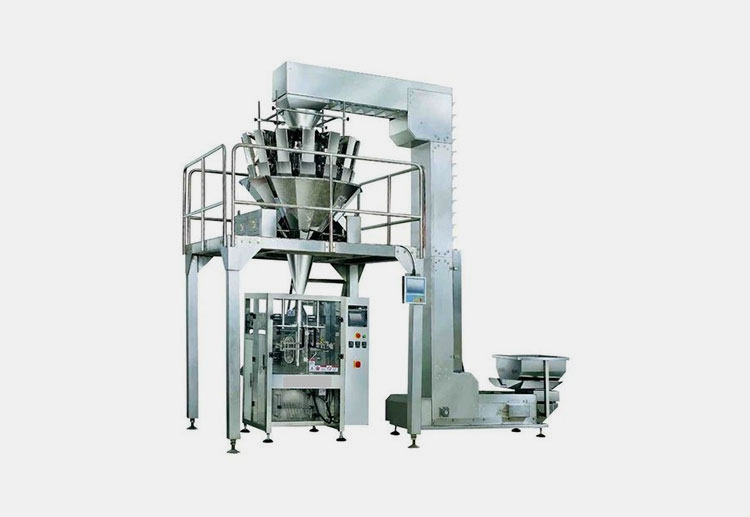
      Vertical Form Fill Seal (VFFS) Machine

      VFFS for Filling- Picture Courtesy

      VFFS for Filling- Picture Courtesy: Propac Industrial

      In these machines, bags are formed from a roll of film and then filled with product. The bags are sealed vertically.  All steps are done in one continuous process.

      Auger Filers Machine

      Auger Filers Machine

      High-Speed Chicken Seasoning Powder Packaging

      These machines filled the powder precisely by using a rotating screw mechanism. They are ideal for chicken seasoning powder as they facilitate the filling of non-free-flowing powders.

      Stick Packs and Sachet Machine

      Stick Packs and Sachet Machine

      Stick Pack Machine- Picture Courtesy: Suthar Pack Tech

      These machines are commonly used for producing single-time use stick packs or sachets. They are suitable for both free-flowing and non-free-flowing powders. They cut and seal the film into small stick packs or sachets while simultaneously filling the powder.

      Bottle and Jar Filling Machine

      Bottle and Jar Filling Machine

      Jar Filling Equipment for Chicken Seasoning Powder Packaging

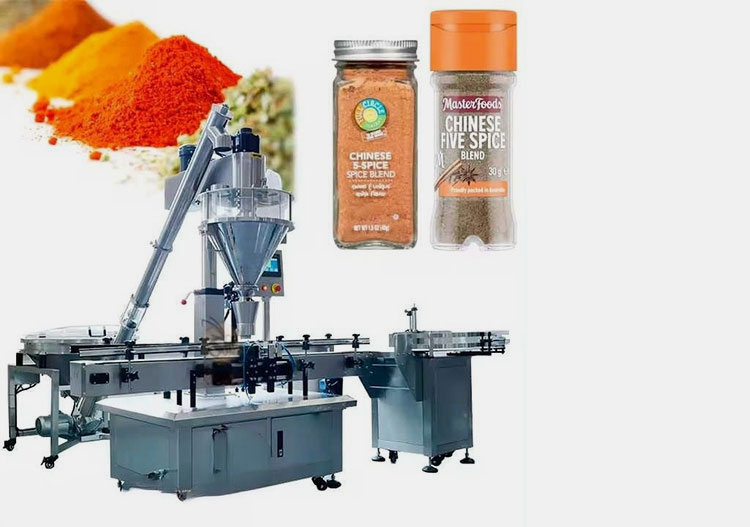
      These automatic filling lines efficiently handle filling, capping, and labeling of powders packaged in rigid containers. The system is adaptable to various container sizes.

      Rotary Premade Pouch Packaging Machine

      Filling Equipment for Preformed Pouches

      Filling Equipment for Preformed Pouches

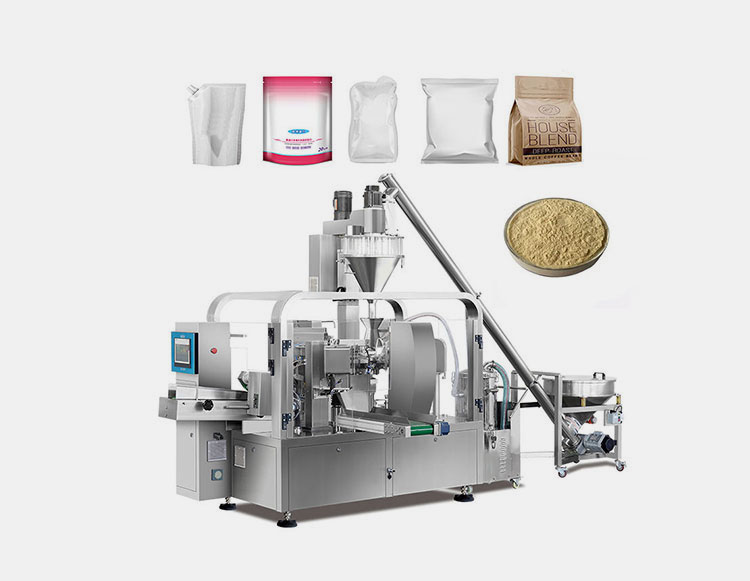
      These machines fill the chicken seasoning powder into preformed pouches. They support a wide range of packaging formats and sizes according to products and market needs.

      Multihead Weighers

      The Multiple Head Features Offer Quick Operations

      The Multiple Head Features Offer Quick Operations

      These machines are used to accurately and quickly weigh chicken seasoning powder before packaging. Multiple weigh heads ensure a consistent and uniform filling, even during high-speed operations.

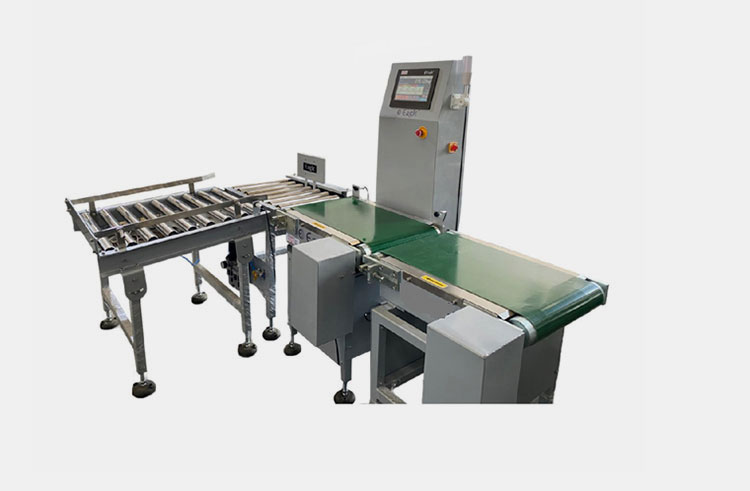
      Check Weighers

      Check Weigher System

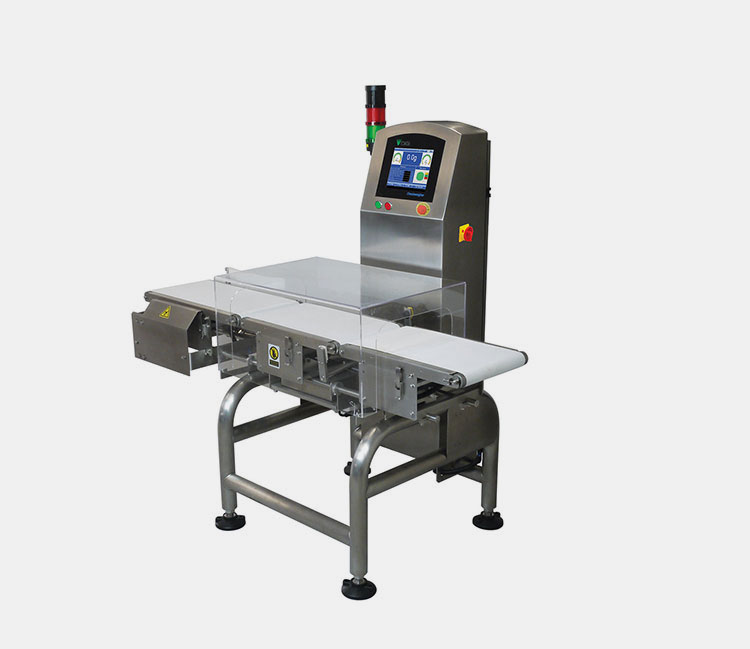
      Check Weigher System- Picture Courtesy: E.G. Kantawalla

      These machines are part of the post-packaging operation.  They verify the weight of each package, ensuring that the packaging meets the specified weight ranges. They reject those packages that don’t meet the required weight range.

      5.Is it possible for one machine to handle different formats (sachets, pouches, and jars) for chicken seasoning powder packaging?

      Jar Packaging

      Jar Packaging

      Modern packaging machines are designed with adaptability, enabling users to fill chicken seasoning powder in different packaging sizes and shapes with one machine.  The following are the features that enable multiple-format packaging in machines:

      The machine must contain a modular design that allows quick changeovers, hence minimizing downtime and improving productivity.

      The machine should be equipped with an advanced control system like PLC, allowing real-time monitoring and easy adjustments according to the desired format.

      Some machines offer customized parts for different container shapes and sizes.

      6.What are the most suitable materials for chicken seasoning powder packaging?

      Packaging Material Types

      Packaging Material Types

      The following are the most suitable materials for chicken seasoning powder packaging based on industry insights and general practices. Let’s explore these options:

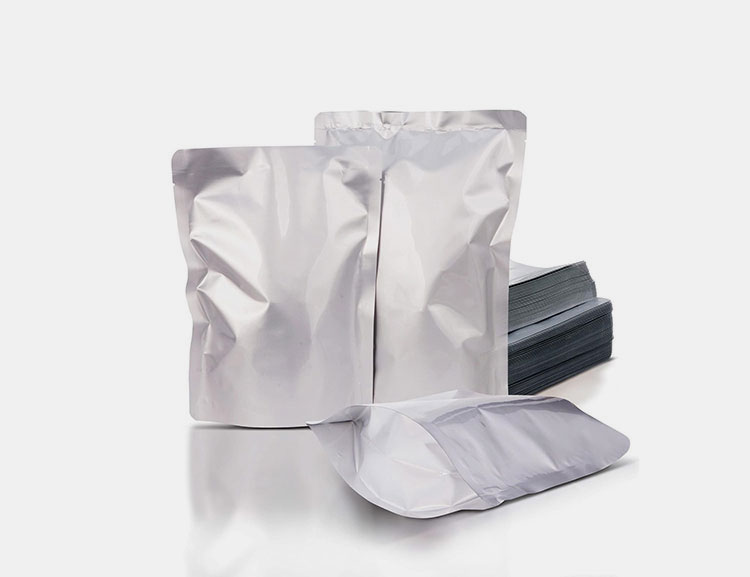
      Aluminum Foil Laminates

      Laminated Packaging

      Laminated Packaging

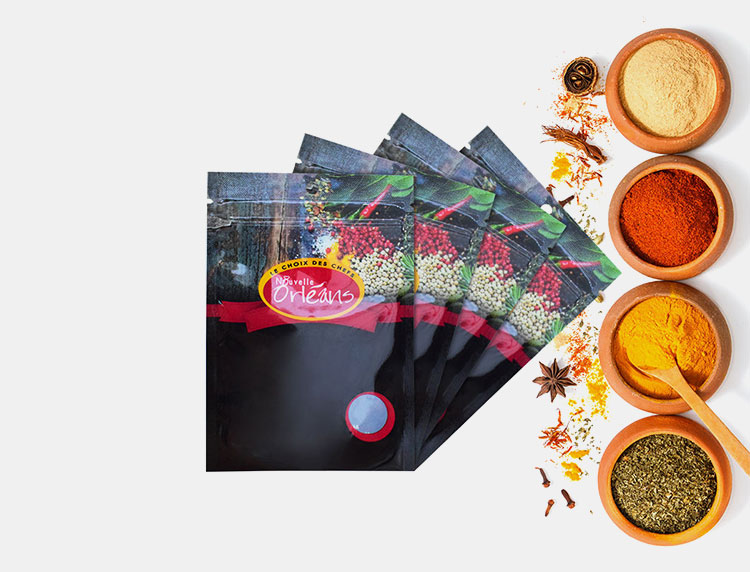
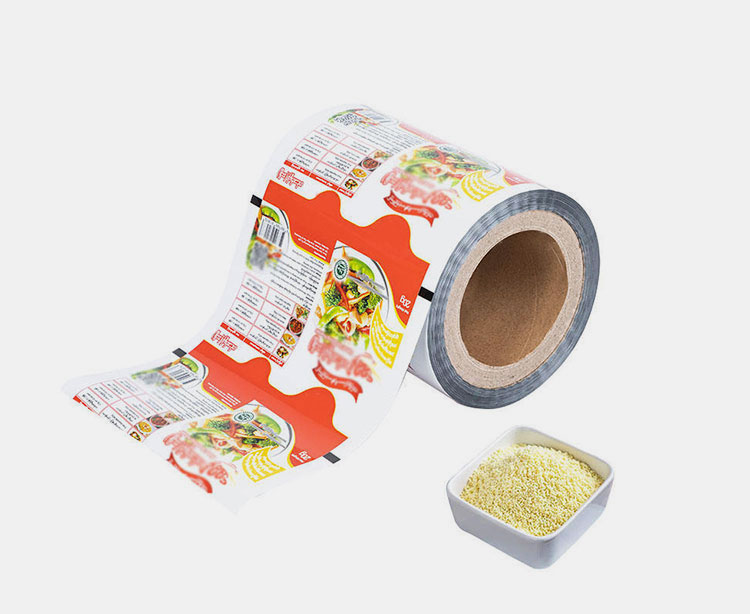
      This is the most renowned choice as it has barrier properties against moisture, light, and oxygen. It is most commonly used in multilayer composite packaging, often combined with polyethylene or propylene to improve durability and provide secure sealing.

      Biaxially Oriented Polypropylene (BOPP), Oriented Polypropylene (OPP), and Polyethylene Terephthalate (PET) Films

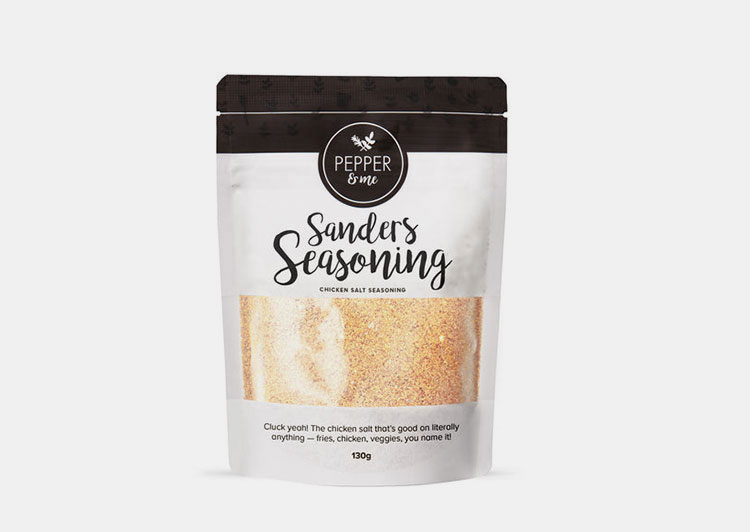
      Transparent Chicken Seasoning Powder Packaging

      Transparent Chicken Seasoning Powder Packaging- Picture Courtesy: PEPPER & Me

      These films are transparent, durable, and moisture-resistant, which makes them ideal for chicken seasoning powder packaging. They are also used in multi-layer laminates to improve barrier properties. PET is specifically preferred for those packaging that demands visibility with protection.

      Kraft Paper with Inner Linings

      Kraft Packaging

      Kraft Packaging

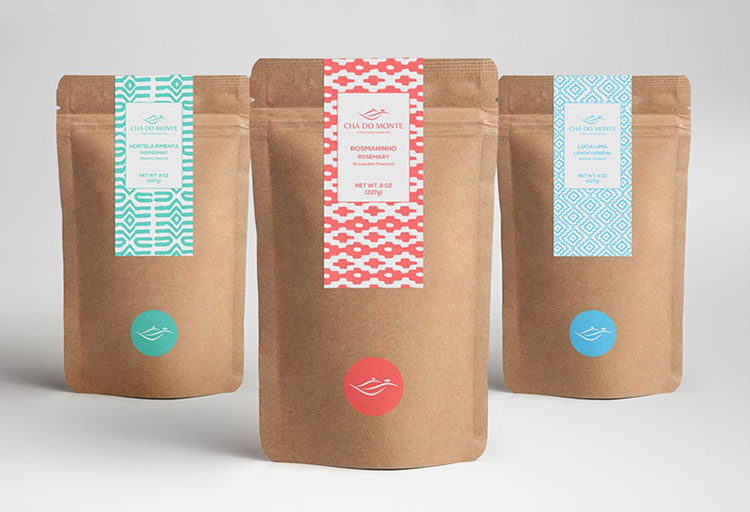
      These types of product packaging are the best option when consumers are environmentally conscious.  Since these are eco-friendly and offer biodegradability and recyclability. These papers are combined with the inner lining of aluminum foil or PE to provide sufficient barrier properties when packaged chicken seasoning.

      Glass and Metal Packaging

      Glass Jar Premium Packaging

      Glass Jar Premium Packaging- Picture Courtesy: The Oil Tree

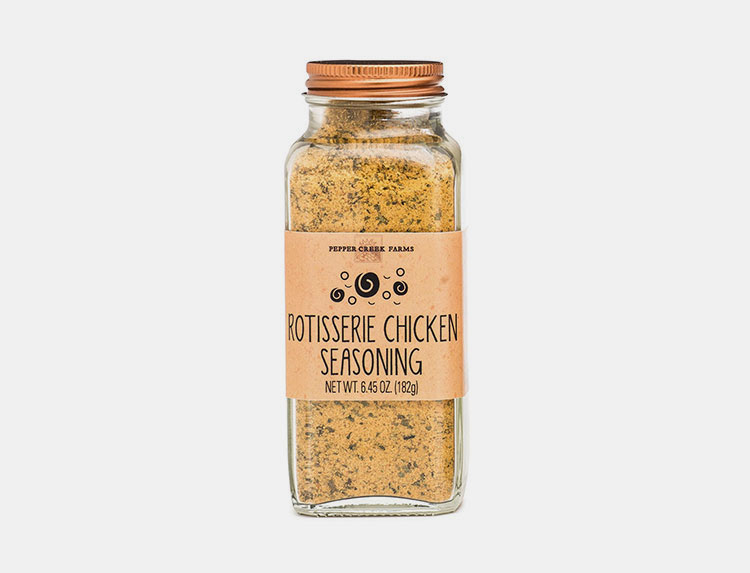
      These are the most traditional packaging options available in the market. Glass jars and metal tins both provide adequate protection against moisture and air. Glass jars are chemically inert and provide a premium appearance, while metal tins are durable and offer superior barrier properties.  Their weight and high transportation costs are the limiting factors.

      Plastic Shaker Jars

      Shaker Jars-1

      Shaker Jars- Picture Courtesy: The Spice Lab

      These packages use BPA-free plastic containers with shaker lids. The packaging allows controlled dispensing of chicken seasoning powder.

      7.Is vacuum packaging suitable for chicken seasoning powder packaging?

      Vacuum Sealed Packaging

      Vacuum Sealed Packaging

      The answer is, yes! It’s particularly useful in extending the shelf life and preserving the flavor of chicken seasoning powder.  According to Robertson (Food Packaging: Principles and Practice) and Han (Innovations in Food Packaging), excludes air from packaging, especially oxygen, significantly reduces the chances of oxidation, moisture uptake, and microbial growth.

      This advantage of vacuum packaging is particularly important for the spice products like chicken seasoning powder, which can cause loss of aroma, color, and flavor. Additionally, it improves barrier properties, which maintains product freshness and prolongs its shelf life proving it an effective option for spice packaging.

      8.How do you ensure accurate weighing in chicken seasoning powder packaging?

      In-line Check Weigher

      In-line Check Weigher- Picture Courtesy: Wedderburn

      Accurate weighing of the product is important to maintain product consistency, meet labeling regulations, and minimize material waste. The following steps taken during the packaging can ensure accurate filling of the product:

      Use multi-head or auger filling machines for precise weighing and filling of the powder. These machines dispense the accurate amount of powder automatically without human error.
      The manufacturer must ensure regular calibration of the weighing system with a certified test weight to ensure accuracy.
      The in-line check weighers are integrated into the packaging line to inspect the weight of each package. These weighers automatically reject overweight and underweight items.
      Make sure temperature and humidity levels are controlled during the process, which prevents powder clumping and fluctuations in weight reading.

      9.How do you ensure leak-proof chicken seasoning powder packaging?

      Leak-Proof Packaging

      Leak-Proof Packaging

      The following measures should be taken to ensure leak-proof packaging for the sake of product integrity, preventing contamination, and enhancing shelf life.

      High-Barrier Packaging Materials

      Laminated Film Packaging

      Laminated Film Packaging

      Use laminated films such as PET, aluminum foil, which provides an excellent barrier against moisture and oxygen.

      Heat Sealing Technology

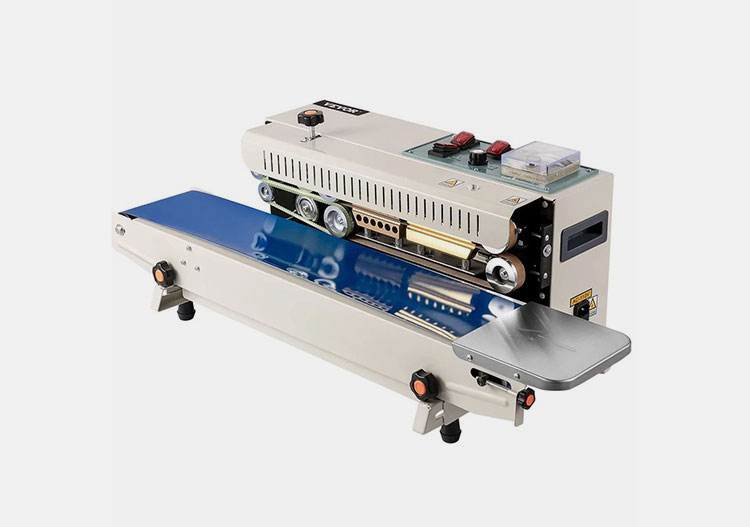
      Heat-Sealing Machine

      Heat-Sealing Machine

      Used automated heat-sealing machines. These machines ensure strong airtight sealing on sachets and pouches for leak-proof packaging.

      Seal Integrity Inspection

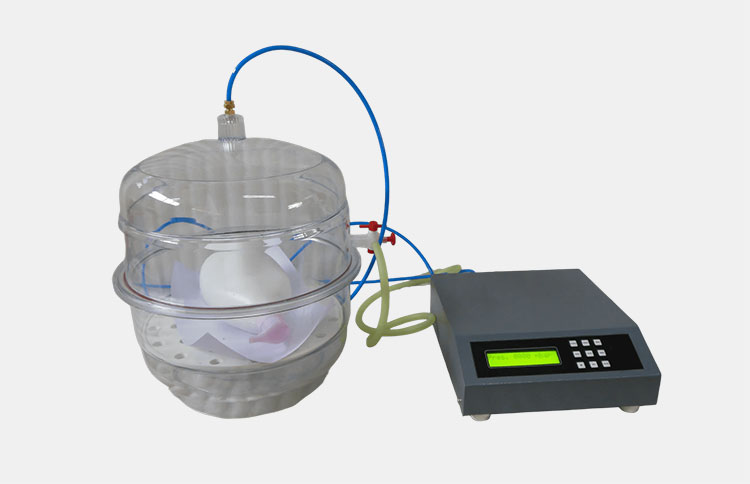
      Vacuum Leakage Tester

      Vacuum Leakage Tester- Picture Courtesy: Pack Test

      Some of the quality tests, such as vacuum leak tests, bubble emission tests, or dye penetration methods, are used to inspect any weak or compromised seals.

      Proper Filling

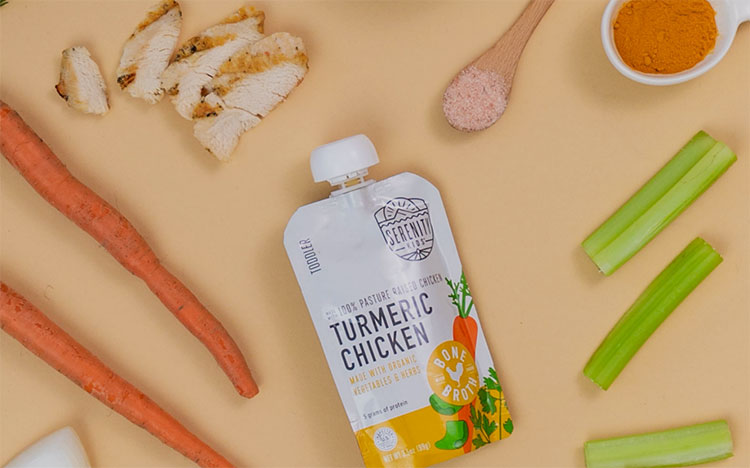
      Accurate Filling

      Accurate Filling- Picture Courtesy: Serenity Kids

      Ensure proper filling system since overfilling or improper alignment during filling can affect seal integrity.

      10.What is the best option for small-scale chicken seasoning powder packaging?

      Small-Scale Packaging Equipment

      Small-Scale Packaging Equipment

      The best option for small packaging is to use semi-automatic machines, which are user-friendly, affordable. These are ideal for small-scale production. For small settings, use an impulse or foot-operated sealer for tight, leak-proof sealing. Small-scale setup allows adjustment of pack sizes according to different market demands.

      11.How is air expelled from pouches during chicken seasoning powder packaging?

      Methods to Expel Air from the Pouches

      Methods to Expel Air from the Pouches

      The expulsion of air from chicken seasoning powder packages is necessary to ensure the product remains dry, flavorful, and fresh throughout its shelf life. The following measures can be taken to expel air from a chicken seasoning powder packaging:

      Vacuum Packaging

      Vacuum Pouches

      Vacuum Pouches- Picture Courtesy: Kinderway Packaging

      As discussed earlier, vacuum packaging is the most effective method to remove air from the pouch before sealing. It prevents oxidation and maintains the freshness of the product.

      Modified Atmosphere Packaging (MAP)

      MAP Machine

      MAP Machine

      This method, also known as nitrogen flushing. It involves replacing of air with inert nitrogen gas.

      Manual Air Pressing

      Air Expulsion preserves

      Air Expulsion preserves the freshness of chicken seasoning powder- Picture Courtesy: Elephantrunk

      This method applies to small-scale operations. Air is removed by manual pressing or a simple roller before heat sealing, although it’s the least efficient and reliable method.

      Secure Sealing with Barrier Films

      Sealing Along with Barrier Films

      Sealing Along with Barrier Films

      Air can be removed even without a complete vacuuming, by using high-barrier films with tight sealing helps to reduce residual air and extend the product’s shelf life.

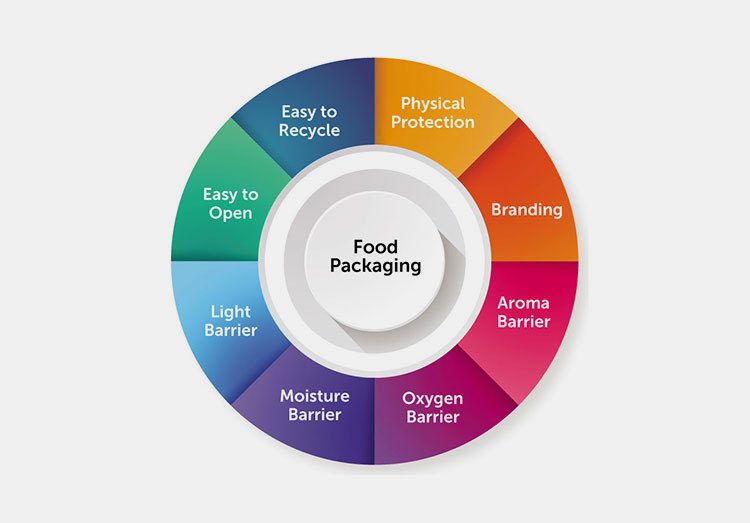
      12.How do barrier properties affect the packaging performance in chicken seasoning powder packaging?

      Properties of Barrier Packaging

      Properties of Barrier Packaging- Picture Courtesy: Nichrome India Ltd.

      Let’s discuss the importance of barrier properties on packaging performance:

      • It provides moisture resistance by preventing the absorption of humidity. Thus, minimize clumping of the powder.
      • It provides an oxidation barrier, preserving the strong aroma, flavor, color, and nutritional value.
      • Opaque or UV-resistant materials help protect the light-sensitive ingredients from light-induced degradation.
      • It reduces microbial growth and enhances food safety.

      13.What do you know about ideal labeling information for chicken seasoning powder packaging?

      ideal labeling information

      Labeling of Chicken Seasoning Powder Packaging- Picture Courtesy: Graphic Design Australia

      Labeling information and storage conditions are important for consumer and product safety. Below is some key information that should be mentioned on chicken seasoning powder packaging:

      Name of the Product

      Product Name on Packaging

      Product Name on Packaging- Picture Courtesy: Graphic Design Australia

      The packaging should mention “chicken seasoning powder” and include a more specific name if it contains a blend like “spicy chicken seasoning powder.”

      Ingredient List

      Mention Ingredients

      Mention Ingredients- Picture Courtesy: Chef’s Play

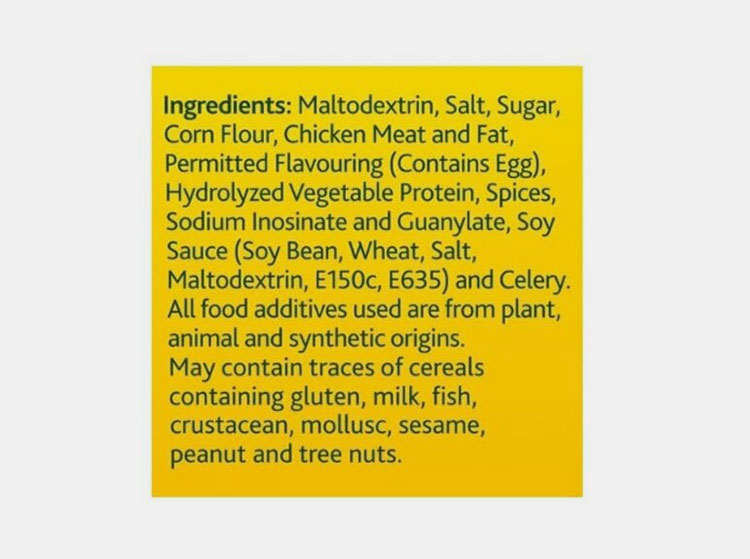
      It should contain a list of all ingredients in descending order by weight. Such as spices (e.g., salt, onion powder, garlic), flavor enhancers (such as MSG), and preservatives.

      Net weight

      Net Weight of the Product

      Net Weight of the Product

      Accurately mention the amount of product in grams or ounces.

      Manufacturer name

      Manufacturer Name of Chicken Seasoning Powder

      Manufacturer Name of Chicken Seasoning Powder

      Labeling must include the name and address of the manufacturer or distributor.

      Shelf Life and Batch Information

      Shelf Life of Chicken Seasoning Powder

      Shelf Life of Chicken Seasoning Powder

      It includes the manufacturing date and the best-before date. It should contain a batch number for traceability in case of quality control or recall.

      Storage Conditions

      Storage Instruction

      Storage Instruction- Picture Courtesy: GoSupps

      It includes clear information about temperature, protection from humidity, light, and oxygen.

      Allergen Warning

      Declaration of Allergens

      Declaration of Allergens- Picture Courtesy: Asetena Pa

      Mention if the product contains any allergens or is manufactured in premises that handle allergens such as soy, wheat, or milk.

      Regulatory Symbols

      Include Regulatory Information

      Include Regulatory Information

      It includes regulatory symbols to indicate halal, organic, or kosher on the basis of certification.

      14.How does chicken seasoning powder packaging impact shelf life?

      Prolonged Freshness

      Prolonged Freshness- Picture Courtesy: LIKEHOTKETO

      The proper packaging plays an important role in extending the shelf life of chicken seasoning powder. Let’s discuss how it works:

      Moisture Barrier
      Good packaging prevents moisture from entering the pack, thus stopping clumping, spoilage, and microbial contamination. Moisture Barrier

      Aluminum Foil Pack

      Protection from Oxygen
      When the product is exposed to oxygen, it causes fat oxidation and loss of flavor. The secure packaging extends the freshness. Protection from Oxygen

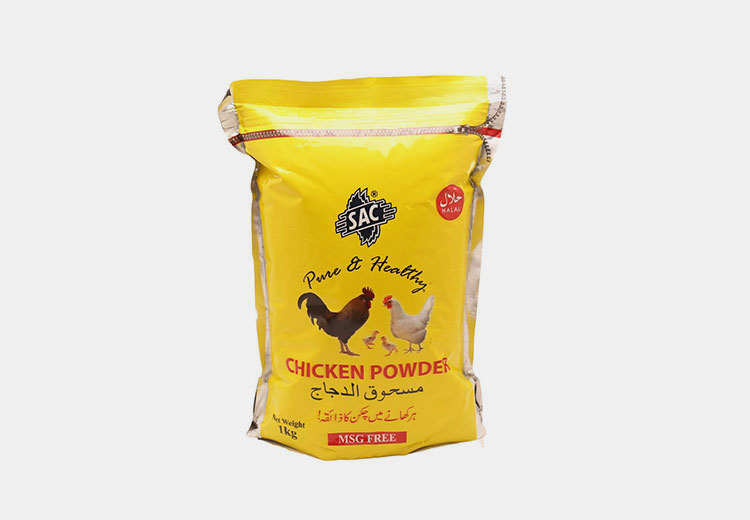
      Packaging Prevents Oxidation- Picture Courtesy: SAC Herbal

      Light Resistance
      UV-resistant packaging is used to protect the product from damage caused by light. Light Resistance

      Packaging Resists Light- Picture Courtesy: My Electric Bites

      Aroma Retention
      Proper sealing of the product locked the strong aroma of the seasoning, preserving its sensory appeal. Aroma Retention

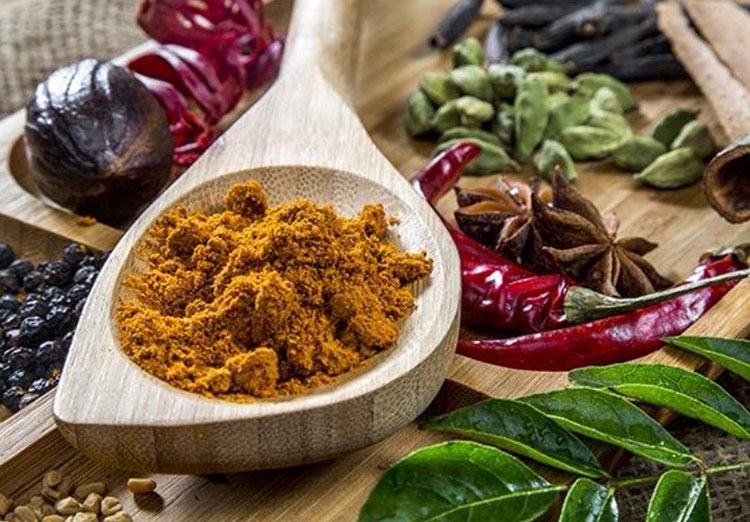
      Strong Aroma- Picture Courtesy: Epicurious

      Prevents Physical Damage
      Durable packaging keeps the product intact, prevents damage like crushing or tearing. Prevents Physical Damage

      Durable Packaging

      Quality Material
      High-barrier materials like foil laminates of multi-layered plastic instead of basic plastic or paper greatly improve shelf stability. Quality Material

      Multi-Layered Plastic Packaging

      Packaging Atmosphere
      Modified atmosphere packaging, such as nitrogen flushing, removes oxygen and further helps extend shelf life. Packaging Atmosphere

      Nitrogen Flushing- Picture Courtesy: Solos Polymers

      Storage Instructions
      Labeling details about storage on the packaging instructs the user to preserve the product longer. Storage Instructions

      Clear Storage Instructions- Picture Courtesy: TedPack

      Conclusion

      The choice of the right packaging material and technique for chicken seasoning powder packaging directly affects the product freshness, customer satisfaction, and brand reputation. ALLPACK offers you advanced, high-quality machines like automatic powder filling machines, vertical form-fill-seal (VFFS) machines, and auger fillers for a smooth packaging process. With their innovative packaging solutions, companies can meet the industry standards.

      Don't forget to share this post!

      CONTACT US

      Tell us your raw material and project budget to get quotations within 24 hours.

      WhatsApp Us: +86 156 0710 8630

      Invalid Email
      Invalid Number

      Chicken Seasoning Powder Packaging: The Complete FAQ Guide in 2025 Read More »

      Mixing-Material

      What Is The Effect Between Mixing Material And Agitator Blade Speed During Wet Granulation?

      What Is The Effect Between Mixing Material And Agitator Blade Speed During Wet Granulation?

      Have you ever wondered what actually occurs within a high shear mixer granulator during wet granulation process when powders interact with liquid binders and the blades start turning?

      What if the speed of those blades determine the perfect granule size and shape and a failed batch?

      In pharmaceutical, chemical and seasoning industry, the wet granulation is not just a mixing, the proper equilibrium of material mixing, forces and timing is the important factor. But in what way does the material type influence the speed of agitator blades? Could the particle size, moisture content and texture of the initial material influence the outcome?  And what is the role of shear force in the formation of granules? Grasping this relationship is not just technical but it is also important for consistent product quality and process efficiency.

      Let’s explore the science that underpins it.

        Add a header to begin generating the table of contents

        1.Do you know about wet granulation?

        wet granulation

        Granulation-Picture courtesy: foodfeedfinechemicals.glatt.com

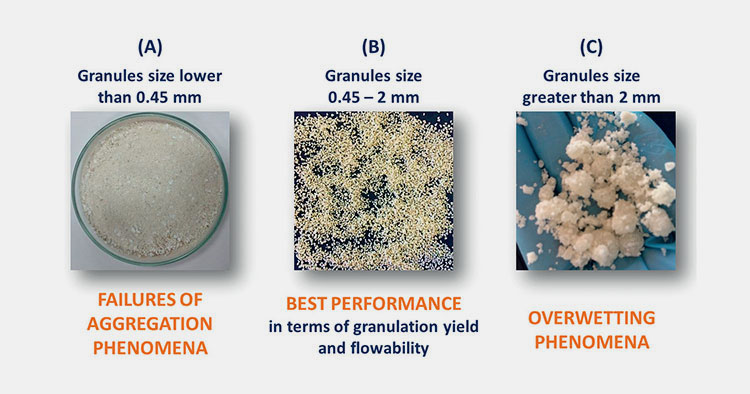
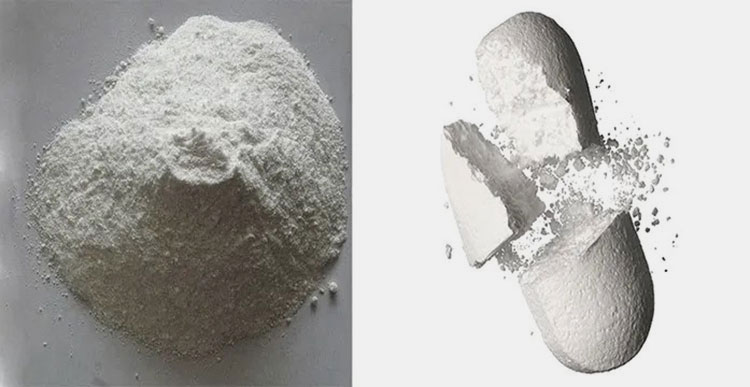
        Wet granulation is a process in which liquid solution as a binder is add into the powder to form granules. The formation of granules ensure the flow ability, compressibility and flow rate. Especially when making tablets, capsules, seasoning powder or powder chemicals.

        Wet granulation is widely used in pharmaceutical, chemical, cosmetic and in food (seasoning powder) industries.

        2.Can you differentiate wet granulation and dry granulation?

        Wet and dry granulation

        Wet and dry granulation-1

        Wet and dry granulation-Picture courtesy: ipharmachine.com

        There is some difference between wet granulation and dry granulation. Let’s dive into them.

        Wet granulation Dry granulation
        What’s the basic idea? In wet granulation, liquid as a binder is used for powder particles to stick together and form granules. In dry granulation, the powders are press together using a presser or roller to stick powder together. In this, no water or any liquid is used.
        When to use? You can use wet granulation procedure if the raw materials you use can handle heat and moisture. By this, you can get strong and nice granulation. You can use dry granulation if the raw materials are sensitive to heat and moisture and often degrade upon contact with moisture. It is simpler procedure because it does not need drying step.
        Equipment involved It needs mixer, granulator and dryer for drying purpose. It is bit time consuming process. It needs an equipment like roller compactor. This procedure is quicker and cost-effective.
        Final granules The final granules result from wet granulation is uniform, strong and easily compressed to form tablets, cubes etc. The final granules formed from dry granulation is irregular in shape and weak in strength but for some materials, it goes well.

        3.What is the effect between mixing material and agitator blade speed during wet granulation?

        When you are doing wet granulation, the mixing material and agitator blade speed affect how your granules turn out! Here is some of the affect when you change the blade speed.

        Granule size

        Granule size

        Granule size

        If the agitator blade is spinning too slow then the powder may not mixed well. The consequence of this will end up of varying size granules. Some granules will be small, some large and some moderate, you will not get an even sized powder granules.

        If the blade is spinning too fast, then the powder will be too much broken down into thin, fine particles and you will not get nice, solid granules.

        Granule strength

        Granule strength

        Granule strength

        If the blade spinning at moderate to high speed, then it will mix and form a granules with compact and stronger structure.

        If the blade is spinning too fast, then it will break every particle into very small, fine particles because the blade will crush every particle and makes them weak.

        Binder mixing

        Binder mixing

        Binder mixing

        In wet granulation, the liquid binder solution interact with powder. If the agitator blade is moving too slow, then it will not spread the binder evenly in the powder mixture which results in weak granules formation.

        Granule formation

        Granule formation

        A high speed (not too fast) blade will mix binder evenly in the powder, which will end up in good granules formation.

        Granulation time

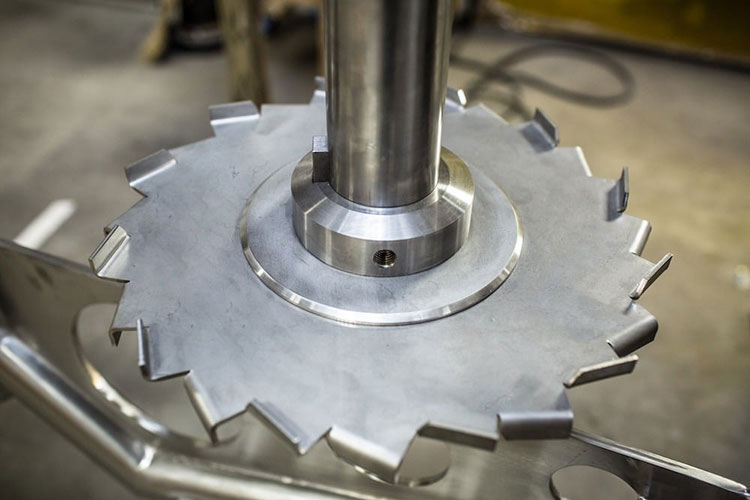
        Blade-Picture courtesy

        Blade-Picture courtesy: mxdprocess.com

        You have to give time to materials for proper mixing and granules formation, so give them time. Some powders need slower time for mixing and ending up in strong and nice granules formation.

        Granules

        Granules

        4.What types of raw material influence the effectiveness of wet granulation?

        You must be handled various powders in wet granulation. Some powders are easy to handle while others need special attention. Not all raw powder behaves the same while handling the wet granulation. Here is how different raw materials influence the effectiveness of wet granulation.

        Powder flowability

        Powder flowability

        Imagine a powder that flows easily e.g. salt, then it mixes with binder easily and forms a beautiful granules while if the powder is sticky, then the binder solution may not mix well and ends up in uneven or clumpy granules formation.
        Particle size and shape

        Particle size and shape

        If the raw materials you use for wet granulation is of small size, then the fine particles will absorb more binders and as a consequences, too sticky or too wet granulation form.

        If large size or irregular raw materials use, then it will absorb more binder and result in large smooth granulation.

        Moisture sensitivity

        Moisture sensitivity

        Some materials absorb moisture by binder solution and form fine granules but others are sensitive to moisture.  When it interact with water, it may degrade and lose their properties.
        Solubility

        Solubility

        While handling different raw materials, you must be conscious about the solubility factor. Some materials easily soluble in water and form sticky granules and required a lot of time for their drying.

        Some raw materials are not easily soluble in water and they can easily be controlled.

        Compressibility

        Compressibility

        If your material have more compressibility or if you can compress them easily, then it will result in nice granule formation.

        If you are using the powder that are not compressible then you will need more binder solution for them to ends up in wet granule formation.

        Binder compatibility

        Binder compatibility

        Picture courtesy:lfatabletpresses.com

        It is crucial for binder compatibility with the powder. If the binder solution is well mixed with the powder/ raw material then it will ends up in beautiful, smooth granulation.

        5.How do the choice of binders respond to various mixing speed during wet granulation?

        In wet granulation, binders are like a glue that stick with powder for granules formation. How this binder works? It not only rely on the type of binder you use but also depends upon the speed upon which it mix with powder. Let’s take a closer look!

        Thin (low viscosity) binders

        low viscosity

        Granule size-Picture courtesy: intechopen.com

        If the binder you are using is thin or of low viscosity, then it will quickly and easily mix with powder.

        Now, let talk about this type of binder mixing speed. At low speed, low viscosity binders may not reach to all particle and ends up with rough and uneven granulation.

        If mix at moderate speed, the less viscous binders will uniformly coat all the particles and will form nice granulation. So, moderate speed is perfect for them.

        At high speed, the thin binders will easily and over-distribute over the powder particles. This will create over-wetting and results in lump or sticky granules formation.

        Thick ( high viscosity binders)

        high viscosity binders

        Binder-Picture courtesy- pharmaeducation.net

        if thick or high viscosity binders like gelatin and starch paste etc. are used as a binder then it will not easily flow but the granules formed by thick binders may results in stronger granulation.

        Now, let’s talk about their speed of mixing.

        If high viscous binders are mixed at slow speed, then they will stay at one place and results in clump or hard core granule formation.

        If the binder is really thick and mix at moderate speed and for longer time, then it can work but still can leave patches.

        The mixing of such binders at high speed is ideal for best granules formation.

        The energy used in breakdown of thick binders making them thin and then uniformly distribute it throughout the powder. This results in nice granules formation.

        Powdered binders

        Powdered binders

        Powdered binder

        These binders are first mixed with powdered and then spraying it with little liquid. This will activate the powdered binders. When they get hydrated then they swell and helps particles to stick with them

        If the mixing of dry binder is at low slow, then it may not properly and evenly distribute. When water hits it then it may leads to poor activation and patchy granules will form.

        At moderate speed, dry binders are properly mixed and when liquid hits them, they activate. This results in good granulation.

        At very high speed, rapid hydration and over-wetting will result. The high speed will break apart the granules due to excess mechanical force.

        6.What happens when the blade speed is too high for a moisture-sensitive material during wet granulation?

        For understanding the concept, let’s assume making a dough with delicate flour, and mixer is spinning with high speed. What would you expect? Off course mess will create.

        Same is the case with wet granulation. If you are using moisture-sensitive materials and blade is spinning with high speed, then few things can go wrong:

        Overheating

        Overheating

        Over-heating

        Due to high spinning of blades, friction create and leads to heat. Due to high heat production and moisture content due to binder, some of the materials degrade and lose their properties. This can create messy granules instead of forming nice granules.

        Over-wetting

        When your machine blades are spinning at high speed, it pushes the binder into the powder with high speed. Some materials don’t like moisture but high speed blade trap too much liquid within them. This creates soft and wet granules, which may leads to fall apart later.

        Granule breakdown

        Granule breakdown

        Granules

        If the blade speed is high, then it means high mechanical force. The blade break the fragile and brittle materials into small pieces. This can ends up in more fine powder and very little amount of solid granules.

        Uneven granulation

        Uneven granulation

        Uneven granulation

        For wet granulation, even distribution of binder in the powder is most crucial for moisture-sensitive materials. If the blade is spinning at high speed, then it might hit the binder harder and can miss other part. This can result in inconsistent size and quality of the granules.

        7.What are the signs that the blade speed is too low for effective wet granulation?

        Granulator with impeller blade

        Granulator with impeller blade

        If the agitator blade is moving too slowly, the binder and powder don’t get enough energy to mix together and that causes several issues you can actually feel and see.

        Here are the signs to watch for:

        Poor binder distribution By too low blade speed, the binder solution may not evenly distribute among the powder. So, the consequence is to weak granules formation surrounded by dry powders.
        Weak and crumbly granules The granules formed by too slow blade spinning are weak and fall apart when touched. The reason behind your weak granules are powder particles not sticking together well.
        Longer granulation time You may add more binders thinking it is too dry but the real problem is with blade speed. It takes way too longer to reach to their right consistency.
        Sticky buildup on equipment The binder may not spread well within the powder due to too low speed of blade. This can cause the binder stick to the equipment as well as to the blade. This can leads to more product lose and then headache in cleaning process.

        8.How does temperature rise due to high speed mixing affect material properties during wet granulation?

        For understanding the concept of temperature rise and material properties, let’s imagine running a hand mixer in a bowl for long period of time, it starts up to warm up. Right? Same happens in wet granulation process.

        When you mix powder at very high speed, the heat generates and that heat is absorbed by the materials you want to form granules. That temperature rise can really cause troubles. Here’s what might happen:

        Moisture loss

        Moisture loss

        Well coated granules-Picture courtesy: gmpinsiders.com

        The high speed blade spinning generate a heat. This heat evaporates the binder solution leading to less coating of powder particles. The less coated particles results in dry and rough granules formation.

        Material degradation

        Granules formation

        Granules formation

        Some material you used for wet granulation are heat and moisture sensitive. The high temperature cause a degradation and hence, change the chemical nature of ingredients. This too can affect the granule formation.

        Stickiness and lumping

        Clumpy granules

        Clumpy granules

        The heat generated by high speed blade can make your binder and raw materials melty and sticky. This can results in clumpy granule formation and lots of powder materials stick to the equipment.

        Change in flow and compressibility

        Flowability of granules

        Flowability of granules-Picture courtesy: suntralisfoods.com

        High heat can change the flow of your powder or granules. They may become more compacted and reduce the nice flow ability of the finished granules.

        9.What are the effects of over-granulation caused by excessive blade speed?

        Wet granulation-1

        Wet granulation-Picture courtesy: quadro-mpt.com

        Imagine you are mixing cookie dough for a long time and also too hard, it will not results in nice dough instead you will ends up in sticky mess.

        When the blade speed is too high and for a long period of time, it does not just mix. It overdoes it. The binder spreads too fast, then mix too fast and results in too big granules, too wet and too sticky. Following are the points that you may see!

        You may get oversized, wet and sticky granules which takes a lot of time during drying. They don’t get dry well and results in fall apart.

        Over-granulated materials are usually sticky and uneven that does not usually flow nicely. This can cause uneven weight tablet production because the less-flow-able are not easily compressed in to shapes.

        The bigger granules hold a lot of moisture, so they have extended drying time.

        More binder wastage occur because for granulation, they need a lot of binders that not only mix but also goes deeply into the powder particles.

        10.What is the effect of mixing material on blade speed during wet granulation in different industries?

        Wet granulation is used in many industries but the types of raw materials you are using (its moisture and heat sensitivity, texture, stickiness etc.) and the blade spinning /speed you use must be carefully balanced. Let’s explore how these industries caring about the balance:

        Pharmaceutical industry

        Pharmaceutical industry

        Pharmaceutical industry-Picture courtesy: gmpinsiders.com

        In pharmaceutical industries, the types of material used (heat and moisture sensitive) and blade speed matters a lot for the consistent granule formation. It is widely used for making tablets and capsules etc. and you must make sure that every shape have equal drug content for its effectiveness and safety.

        Food industry

        Food industry

        Food industry

        In food industry, wet granulation is used for instant mixes, cubes and nutrient blend. The ingredients used in seasoning powder vary from proteins, starches and carbohydrates that react differently to moisture and speed. Make sure to coat every seasoning powder with the binder solution so, consumers can taste every spoon of food.

        Chemical industry

        Chemical industry

        Chemical industry

        Some chemicals used in chemical industry may be reactive and volatile, they require precise control of mixing and granulation. The wet granulation procedure require for detergents making, catalysts and pigments etc. formation.

        Agriculture industry

        Granulated fertilizer

        Granulated fertilizer

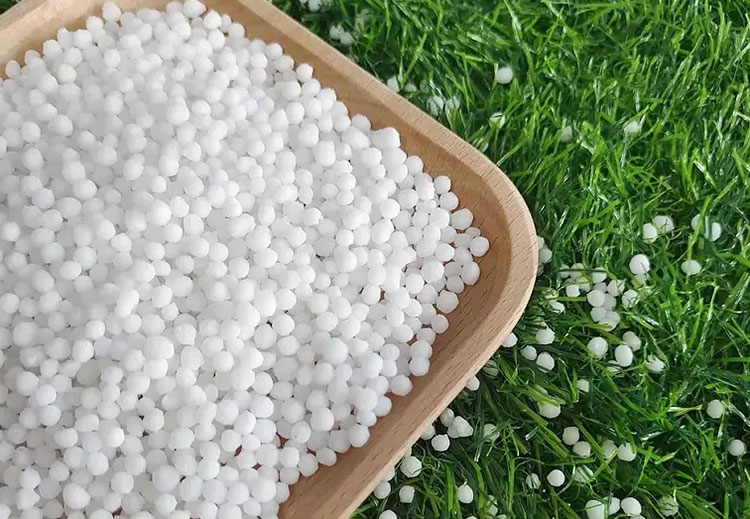
        Agriculture industry use wet granulation for fertilizers making and dry pesticides. A urea based fertilizer needs moderate blade speed to create uniform granules formation, that are not too hard that don’t dissolve or not too dusty granules that blow away.

        Makeup and cosmetic industry

        Makeup and cosmetic industry

        Makeup and cosmetic industry

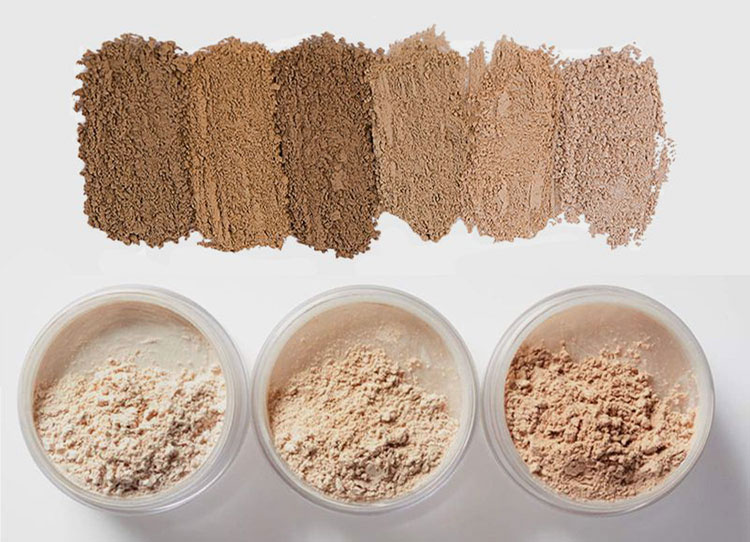
        In cosmetic industry, you make sure to produce smooth, light, press able and evenly colored granules.  That beautiful granules will come in exist when the mixing material properties (like softness, moisture-sensitive, and oiliness) are matched with the right blade speed.

        11.What role does particle size distribution play in the interaction with blade speed during wet granulation?

        Particle size in granulation

        Particle size in granulation

        The distribution of particle size greatly impact on the material performance at various impeller (blade) speeds during the wet granulation process. Here is how their interaction with blade influence the granulation process.

        Granule growth dynamics:

        When there is uniform mixing of small and large particles, then the larger particles interlocked and results in good granule formation. If the blade speed of impeller in a granulator increases, then the interaction between particles increases and hence, more particles interact and ends up in uniform and compact granule formation.

        Effects on porosity and strength:

        When you use larger particles then they make a granules that are less porous. Less porosity means they have less gaps inside. When these granules interact with high speed blade then shearing force press them even tighter. This makes the granules stronger.

        Shear sensitivity:

        The impact of blade speed depends widely on the types of binder used and on the particle size. If the coarse particles are used then the shear force makes them larger and stronger granules. But when fine particles are used then shear force and binder makes over granulation and makes the weak granules and break apart.

        Flow pattern changes:

        When the impeller blade speed is high, then process called the “roping” happens. In this process, when the wide range of particles and coarse particles interact then the chances of particles sticking together increases. This results in nice and uniform granule formation.

        Conclusion:

        During wet granulation, the effect of blade speed and material nature plays an important role in granules formation. If the blade speed is too high for moisture sensitive ingredients then too wet or damaged granules are formed. If blade speed is too low, then the particles are not come together and ends up in dry granules and fall part in pieces. The type of binder used also matters a lot in wet granulation procedure. The raw materials and blade speed plays a crucial role on the impact of finished granule formation. The balance between the powder, binder and impeller blade speed is highly used in different industries like pharmaceutical industry, food industry chemical industry, agricultural industry and cosmetic industry.

        Don't forget to share this post!

        CONTACT US

        Tell us your raw material and project budget to get quotations within 24 hours.

        WhatsApp Us: +86 156 0710 8630

        Invalid Email
        Invalid Number

        What Is The Effect Between Mixing Material And Agitator Blade Speed During Wet Granulation? Read More »

        Agricultural Chemical Packaging

        Agricultural Chemical Packaging: The Complete FAQ Guide in 2025

        Agricultural Chemical Packaging: The Complete FAQ Guide in 2025

        Have you ever considered how agrochemicals, like herbicides, pesticides, and fertilizers, reach us in optimal condition, ready to protect crops and increase yield? The answer lies in agricultural chemical packaging, which plays a crucial part in the safe storage, transportation, and handling of these products.

        If you don’t ensure proper packaging, chemicals could leak, contaminate, degrade, and, most importantly, pose serious hazards to humans, animals, and the environment. Various techniques and materials designs are used in agricultural chemical packaging to maintain the product's integrity while reducing environmental hazards.

        Modern agricultural chemical packaging involves flexible packaging options that withstand chemical interactions. With the increasing demand for sustainability, the industry is switching toward biodegradable packaging, smart tracking systems, and tamper-evident designs.

        This article is a comprehensive guide to help you understand the key aspects addressing the most important questions about agricultural chemical packaging. Let's dive into:

          Add a header to begin generating the table of contents

          1.What’s meant by agricultural chemical packaging?

          agricultural chemical packaging

          Agricultural Chemical Packaging- Picture Courtesy: Filltech Packaging Machines

          Agricultural chemical packaging refers to materials and methods designed to preserves the chemical’s integrity, safe storage, safe transportation, and application of agricultural chemicals.

          The advanced packaging solutions provide stability to agrochemical products by protecting them from environmental factors that could compromise their chemical composition. These factors include moisture, air, and sunlight.

          Proper chemical packaging is necessary to ensure safe handling, avoid spills or exposure during the packaging process and to meet the regulatory standards to prevent health hazards.

          2.Why is agricultural chemical packaging important in the agriculture industry?

          Agrochemicals Packaging-1

          Significance of Agrochemicals Packaging

          In an agriculture field agricultural chemical packaging is important since crop productivity directly impacts global food production and supply. These packaging containers are responsible for maintaining the compound’s effectiveness and the safety of the workers during the agriculture process.

          Stability

          Stability

          Agrochemicals Stability- Picture Courtesy: Omega

          One of the important aspects of these packaging materials is the preservation of the chemicals’ potency and stability. Since agrochemicals are sensitive to sunlight, air, or moisture. The agricultural chemical packaging offers UV-resistant coatings or moisture barriers (desiccants) to maintain the effectiveness and integrity of these products,

          User’s Safety

          Safety

          Safety of Workers from Agrochemicals

          The agrochemicals, especially in powdered form, can impose health hazards, so the safety of individuals working in agriculture fields is a priority. The précised packaging securely contains these products with tamper-evident and child-resistant caps, reducing the risk of accidental exposure, spillage, or poisoning. Proper labeling prevents improper use by farmers and workers.

          Environmental Safety

          Environmental Safety

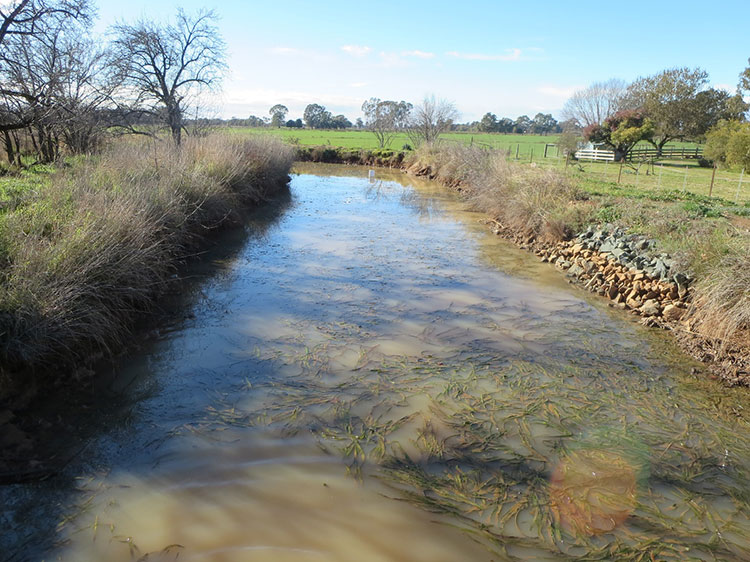
          Pesticides Harm Drinking Water- Picture Courtesy: Friends of Earth Melbourne

          Utilizing leak-proof and biodegradable packaging solutions reduces the possibility of chemical spillage and minimizes pollution, thereby protecting soil, water bodies, and surrounding environments.

          Optimized Storage and Transport

          Compact Storage of Chemicals

          Compact Storage of Chemicals

          Optimized agricultural packaging provides compact and space-saving solutions, allowing improved stacking and storage in warehouses or farms.  The durable and lightweight packaging solutions reduce waste, safe handling, and transportation while minimizing costs.

          Regulatory Conformance

          Regulatory Conformance

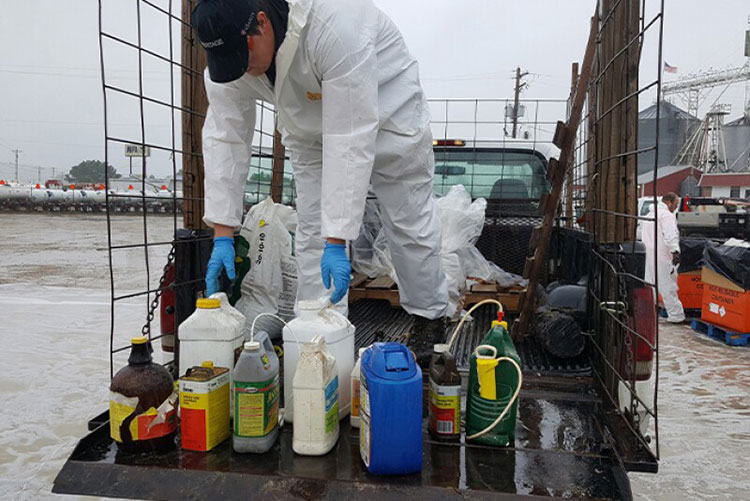
          Proper Disposal of Agricultural Chemical Containers-  Picture Courtesy AG WEB

          When agricultural chemical packaging adheres to international safety and environmental standards set by organizations such as FAO (Food and Agriculture Organization) and ISO (International Organization for Standardization), it ensures safe use, storage, and disposal.

          3.What do you know about the types of agricultural chemical packaging?

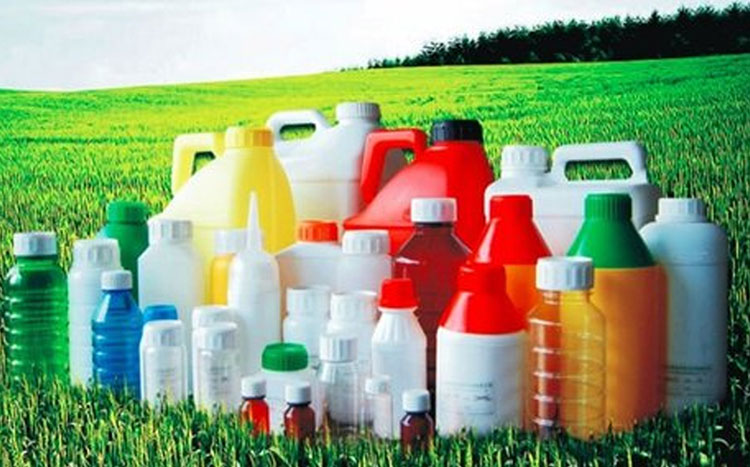
          Varity of Agricultural Chemical Packaging

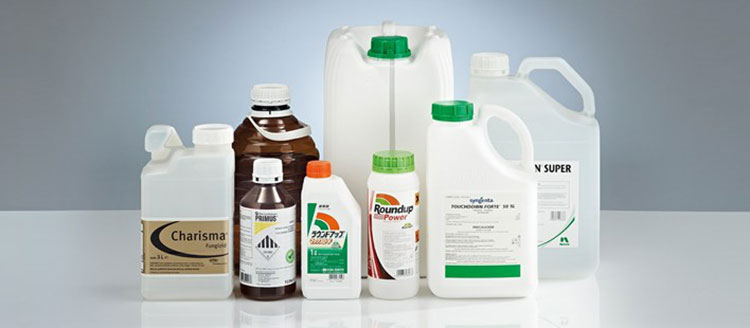
          Varity of Agricultural Chemical Packaging- Picture Courtesy: United Caps

          Various packaging solutions exist in the market, which can be selected based on the nature of chemicals (such as powder, liquid, or granules), regulatory conditions, and sustainability.

          These are the various types of agricultural chemical packaging:

          Plastic Containers

          HDPE Plastic Containers for Agrochemicals

          HDPE Plastic Containers for Agrochemicals

          These containers are widely used for liquid chemicals because they are lightweight, strong, and non-corrosive. The commonly used material is high-density polyethylene (HDPE).

          Drums and Barrels

          Agrochemical-Drums

          Agrochemical Drums

          These large-capacity plastic or metal drums are suitable for storing and transporting large volumes of liquid chemicals. They ensure safety by preventing accidental spills.

          Sacks and Bags

          Agricultural Bag

          Agricultural Bag

          Sacks and bags are suitable for solid or powder agrochemicals. They are commonly made from woven propylene or multi-layered materials, which give strength and resistance to tearing.

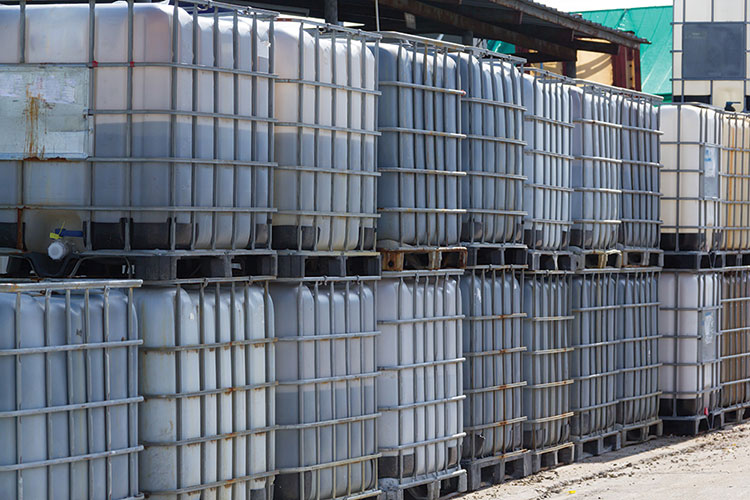
          Intermediate Bulk Containers (IBC)

          IBC for Bulk Storage

          IBC for Bulk Storage

           Intermediate bulk containers are ideal for transporting and storing bulk quantities of liquid and powder. They are reusable and durable, reduce waste, and are suitable for long-term storage.

          Pouches and Sachets

          Fertilizer Pouch

          Fertilizer Pouch

          Some industries often use pouches or sachets for small quantities of agrochemicals. These are lightweight, convenient, and provide accurate dosing.

          Water-Soluble Packaging

          Water Soluble Packaging Film

          Water Soluble Packaging Film- Picture Courtesy: Polyva

          These are good options when precise applications and doses are required. These packs dissolve in water, reducing exposure during handling.

          Aerosol Containers

          Aerosol Spray

          Aerosol Spray

          Due to its controlled spray application, aerosol containers are often used for pesticide formulation. One thing that should be considered when using these cans is that they require specialized disposal.

          Biodegradable Packaging

          Eco-Friendly Packaging

          Eco-Friendly Packaging- Picture Courtesy: Arka Packaging

          Some agrochemical industries are now using biodegradable or recyclable materials to align with the emerging focus on sustainability.

          4.What equipment is used for agricultural chemical packaging?

          Agricultural Chemical Filling

          Agricultural Chemical Filling- Picture Courtesy: KWT Machine Systems

          Investing in the right equipment is essential for protecting agricultural chemicals, minimizing health risks, and optimizing production. Advanced automation improved consistency and accelerated the process.  Let’s discuss the types of equipment utilized for different agricultural chemical packaging:

          Bottle Filling Machine

          Bottle Filling Machine for Various Containers

          Bottle Filling Machine for Various Containers- Picture Courtesy: PACK’R

          The bottle-filling machine is designed for accurately dispensing liquid agrochemicals into plastic or glass bottles while preventing spills, leakage, and accidental exposure. The machine can be semi-automatic or fully automatic. The equipment often has features of an automatic capping and labeling system.

          The bottle filling machines are of various types that can be chosen according to chemical properties and production needs, such as:

          Gravity Bottle Filling Machine

          Automatic Gravity Bottle Filling Equipment

          Automatic Gravity Bottle Filling Equipment- Picture Courtesy: APACKS

          This machine deals with chemical liquids with free-flowing properties and less viscosity. These time-based automatic filling machines use the volumetric time gravity filling method and fill the bottles with precise volume. These are best for non-foaming liquids.

          Piston Bottle Filling Machine

          Automatic Piston Bottle Filling Equipment

          Automatic Piston Bottle Filling Equipment with Six head Filling

          This machine is widely used for filling high-viscosity viscous liquid agrochemicals, such as concentrated fertilizers. The emulsion and suspension form liquids can be filled. These machines offer volumetric filling, having a piston to push and dispense liquid chemicals into the bottles. They fill the bottles with precise volume, even for denser liquid chemicals.

          Overflow Bottle Filling Machine

          Automatic Overflow Bottle Filling Equipment

          Automatic Overflow Bottle Filling Equipment- Picture Courtesy: ACCUTEK

          Some agrochemicals are foamy, and they require visually consistent fill levels. The overflow bottle filling machines provide uniform fill levels regardless of slight variations in volume. Once the bottle is filled at a desired level, excess product overflows back to the reservoir.

          These machines have control of the pressure pump speed to reduce foam. Commonly used for transparent bottle packaging of agrochemicals for a neat appearance.

          Peristaltic Pump Bottle Filling Machine

          Automatic Peristaltic Pump Bottle Filling Equipment

          Automatic Peristaltic Pump Bottle Filling Equipment- Picture Courtesy: N.K. Industries

          These machines are best suited for corrosive and sensitive agrochemical solutions. The benefit of these machines is that they provide highly precise filling of agrochemicals, even in very small volumes. The machine pumps liquid by using flexible tube and rollers.

          Servo-Driven Bottle Filling Machine

          Servo-Driven Bottle Filling Equipment

          Servo-Driven Bottle Filling Equipment

          These machines use servo motors for highly-precise volumetric filling of liquid. The machine is highly programmable and adjustable, handling various liquid viscosities, including aqueous, foamy, and semi-viscous solutions.

          Drums and IBC Filling Machine

          Semi-Automatic Drum Filling Machine

          Semi-Automatic Drum Filling Machine

          These machines come in semi-automatic and fully-automatic options, ensuring accurate filling of large-capacity drums and IBCs for storing liquid agrochemicals. They are often used in agrochemical industries to fill the bulk liquid of fertilizers and pesticides. Multiple options are available, depending on production needs, liquid viscosity, and required level of automation.

          Weight-Based Filling Machine

          Automatic Weighing

          Automatic Weighing-Based Filling Equipment for IBSs and Drums

          These machines fill drums and IBCs by placing them on a weighing platform, the liquid is dispensed into the containers according to the desired weight. The sensors track the filling process and stop the flow automatically when the target weight is achieved. Various models come with foam-controlling nozzles to prevent splashing in case of foamy agrochemicals.

          Automatic Filling Lines

          Fully Automatic Filling System for Drums and IBCs

          Fully Automatic Filling System for Drums and IBCs- Picture Courtesy: Aicrov

          These fully automatic systems are ideal for large-scale agrochemical production requiring high-speed operation. These filling lines integrate conveyors, sensors, and programmable filling units.

          The containers travel on the conveyor belt to the filling station, where sensors adjust the filling nozzle by sensing the container size. These filling lines use a volumetric or weighing mechanism to dispense a predetermined volume of liquid. After filling, the nozzle withdraws, and the container proceeds to the next stage for capping and sealing.

          Semi- Automatic Pump Based Filling machine

          Semi-Automatic Filling Equipment

          Semi-Automatic Filling Equipment- Picture Courtesy: AF Advantech

          These machines are ideal for moderate production volumes and provide a cost-effective and efficient solution. The operator manually positions the drum or IBC under the filling nozzle, where the pump dispenses the liquid. Filling is manually controlled or automatically stopped via sensors once the desired volume is reached.

          Pouch and Sachet Filling Machine

          Automatic Pouch Filling

          Automatic Pouch Filling

          Multiple options are available for filling liquid or powdered agrochemicals into small, single-use sachets or pouches. The choice depends on the desired packaging (i.e., sachets or pre-made pouches), speed, and dosing.

          Vertical Form Fill Seal (VFFS) Machines

          Pouch and Sachet Filling

          VFFS Equipment or Pouch and Sachet Filling- Picture Courtesy: UNIFIELD FLEX

          VFFS equipment is ideal for filling agrochemicals with high-speed operation and less material wastage. The forming of sachets or pouches, filling, and sealing of sachets take place in a single process.

          In a vertical filling system, a continuous film roll forms pouches or sachets, accurately fills them with agrochemicals, and seals them automatically.

          Horizontal Pouch Filling Equipment

          Automatic Horizontal Pouch Filling Equipment

          AIPAK Automatic Horizontal Pouch Filling Equipment

          These machines accurately fill pre-made pouches, including stand-up, spouted, and flat pouches. The empty pouch is picked up by the machine, filled with the product, and then sealed tightly to avoid leakage.

          Bag Filling Machines

          Weighing and Bagging Machine

          Automatic Bag Filling Machine

          Automatic Bag Filling Machine- Picture Courtesy: Tinsley Company

          These machines are designed for filling and packaging powdered agrochemicals, including fertilizers, pesticides, and soil conditioners. The bags are made of paper, plastic, or woven material.  These machines use net or gross weighing systems for accurate filling. The machines work for multiple bag types, including open-mouth, valve, and bulk bags. The machine offers accurate weight distribution and robust packaging.

          Double Scale Net Weigher Bagger

          Double Scale Net Weighing and Bagging Machine

          Double Scale Net Weighing and Bagging Machine

          The equipment is suitable for bulk product packaging. It provides precise weighing and filling, ensuring accuracy in product quantity and preventing under-filling or overfilling. These are crucial for maintaining consistency while meeting regulatory standards.

          The machine weighed the product before filling it into the bag using a pre-weighing hopper. This machine offers high-speed operation by weighing the next batch while the previous one is being filled.

          Aerosol can Filling Machine

          Aerosol Can Filling Equipment

          Aerosol Can Filling Equipment

          These machines are used to fill pressurized pesticide sprays in aerosol metal cans. The aerosol can fill is accomplished by filling the liquid pesticide formulation into metal cans by an aerosol filling machine. After that, pressurized gas (such as nitrogen, propane, or butane) is injected by a propellant injection machine to create the aerosol spray effect.

          5.How does agricultural chemical packaging take place?

          Steps of Agricultural Chemical Packaging

          Steps of Agricultural Chemical Packaging

          The agricultural chemical packaging is a process designed to ensure secure containment and handling of agrochemicals. Let’s discuss how the process takes place in the agriculture industries:

          Step # 1: Formulation

          Agrochemical Formulation Development

          Agrochemical Formulation Development- Picture Courtesy: ChemLinked

          First you have to developed correct formulation and perform quality checks to verifies chemical composition for consistency, effectiveness, and stability before packaging.

          Step # 2: Material Selection

          Packaging Selection According to Chemical Form

          Packaging Selection According to Chemical Form.

          Then you have to select the right packaging material according to chemical types.

          You can choose plastic or glass bottles, drums, and IBCs for liquid agrochemicals.

          Opt for plastic, paper, or woven bags packaging for powder or granule agrochemicals.

          You have to select pressurized metal cans for aerosol.

          Step # 3: Filling

          Bottles Are Filling with Agrochemicals

          Bottles Are Filling with Agrochemicals

          The agrochemicals are filled into containers using advanced filling machines. There are multiple options for each chemical type, and they are selected accordingly. For liquid chemical filling, you can select gravity, piston, and volumetric filling machines according to the chemical properties of the liquid.

          While, for powder chemical filling, auger or weighing-based bagging machines are best suited. Aerosol chemical filling is performed by aerosol filling machines that fill liquid chemicals followed by propellant injection to develop gas pressure.

          After filling the containers, they are capped, sealed tightly, and labeled with details including chemical composition, hazard symbols, handling, storage conditions, and disposal method.

          Step # 4: Secondary Packaging

          Reusable Secondary Packaging for Agrochemicals

          Reusable Secondary Packaging for Agrochemicals- Picture Courtesy: Packaging Strategies

          The agrochemical packed containers are then packed in cartons, shrink-wrapped, or cased for bulk transport and storage.

          Step # 5: Final Inspection

          Quality Inspection- Picture Courtesy

          Quality Inspection- Picture Courtesy: Paramount Global

          You have to assure that each batch has passed through quality inspection for leak testing, weight verification, and seal integrity to ensure safety standards are met.

          Step # 6: Storage

          Warehouse for Agrochemicals Storage

          Warehouse for Agrochemicals Storage- Picture Courtesy: Royal Chemicals

          The packaged products are stored in a regulated warehouse under controlled temperature and ventilation before transportation. Avoid unauthorized access to storage areas.

          6.What are the latest advancements in sustainable agricultural chemical packaging?

          Emphasis on Circular Economy

          Emphasis on Circular Economy- Picture Courtesy: MDPI

          Have you ever thought how sustainable and eco-friendly agricultural chemical packaging significantly helps to minimize environmental effects and promote sustainable practices? Let’s discuss some of the measure developments:

          Biodegradable Packaging

          Biodegradable Packaging

          Biodegradable Packaging- Picture Courtesy: Magzter

          Do you know the conventional plastic materials used in agricultural chemical packaging (such as petrochemical-derived plastics) result in an environment where they persist for centuries? Therefore, agrochemical industries are shifting to biodegradable materials from renewable sources, such as the most favored bioplastic, polylactic acid (PLA). These materials reduce pollution and help to create a circular bioeconomy by decomposing naturally.

          Recyclable Packaging

          Sustainable Packaging

          Sustainable Packaging- Picture Courtesy: Packing Pigeon

          The U.S. Environmental Protection Agency (EPA) emphasizes sustainable materials management to minimize environmental harm. They emphasized lightweight or efficient packaging materials to reduce waste generation and encourage recycling, keeping packaging materials out of landfills.

          Nanotechnology

          Eco-friendly Pest Control Management

          Eco-friendly Pest Control Management- Picture Courtesy: Gumtree Traps

           We all are aware that nanotechnology is rapidly emerging across various industries. Nanotechnology provides environmentally safe solutions for agricultural pest management. Extensive research is focused on replacing chemical pesticides, including developing pheromone-loaded nanostructures encapsulated by graphene oxide for pest control management.

          7.What are the important regulations governing agricultural chemical packaging?

          Regulated Agrochemical Packaging

          Regulated Agrochemical Packaging- Picture Courtesy: Farmonaut

          Agricultural chemical packaging is strictly regulated locally and globally to ensure user safety, environmental protection, and compliance with international standards. Some of the important regulatory bodies governing the agricultural chemical packaging are discussed below:

          Environmental Protection Agency (EPA) – FIFRA (USA)

          Ensures child-resistant and tamper-evident packaging with proper hazard labeling and a safe disposal method.

          Food and Agriculture Organization (FAO)

          Sets global guidelines for durability, leak-resistant packaging, and proper labeling to prevent environmental harm. 

          European Union (EU) – CLP Regulations

          Standardizes hazard symbols and risk labeling for user safety.

          United Nations (UN) – Transport & Safety Regulations

          Set guidelines on safe transport standards to prevent leaks and exposure.

          ISO Standards (International Organization for Standardization)

          ISO 16103 promotes recyclable and reusable packaging.

          ISO 14001 promotes sustainable packaging materials and production processes.

          Hazardous Materials Regulations (HMR) – U.S. Department of Transportation (DOT)

          HMR controls safe agricultural chemical packaging, labeling, and transportation to avoid spillage and contamination.

          Global Harmonized System (GHS) of Classification and Labeling of Chemicals

          The GHS harmonizes chemical labeling and classification worldwide to ensure clear communication of hazards for safer handling and use.

          8.Do you know about safety measures that should be followed for agricultural chemical packaging?

          Safety Measures for Agrochemicals Packaging

          Safety Measures for Agrochemicals Packaging- Picture Courtesy: NOBOWA

          As we discussed earlier, many organizations worldwide provide strict guidelines for the secure packaging, handling, storage, and disposal of chemicals. By following certain safety measures, you can ensure secure agricultural chemical packaging. Let’s explore them:

          Approved Packaging Materials

          HDPE Packaging for Agrochemicals

          HDPE Packaging for Agrochemicals

           The manufacturer should use that packaging be made of strong, unbreakable, leak-proof, and non-corrosive material, such as high-density polyethylene (HDPE), which is resistant to degradation.

          Hazard Communication

          Packaging with Proper Labeling

          Packaging with Proper Labeling- Picture Courtesy: ResearchGate

          The manufacturer should ensure that the packaging contains proper labeling, including chemical composition, hazard warnings, handling instructions, and correct disposal methods Color-coded labels and pictograms make it easier to identify hazards for safe handling.

          Child-Resistant & Tamper-Evident Seals

          Tamper-Evident Packaging

          Tamper-Evident Packaging- Picture Courtesy: Industrial Packaging

          The manufacturer must use child-resistant and tamper-evident seals to prevent accidental exposure and unauthorized access.

          Safe Storage

          Optimized Storage Conditions for Agrochemicals

          Optimized Storage Conditions for Agrochemicals- Picture Courtesy: Citrus Industry

          The chemicals must be kept in cool, dry, and well-ventilated areas and away from heat and direct sunlight. Containers must be kept upright and securely closed to avoid leaks and contamination. chemicals must be kept in their original well-labeled containers.

          Disposal Protocols

          Triple-Rinsing of Agro Containers

          Triple-Rinsing of Agro Containers- Picture Courtesy: ACRC

          The containers should be disposed of according to EPA and FAO guidelines to minimize soil and water contamination. It’s instructed to use the triple rinsing method for empty containers and participate in the recycling program.

          Transport Regulation Compliance

          Packaging Compliance with UN Guidelines for Transportation

          Packaging Compliance with UN Guidelines for Transportation

          Hazardous chemicals packaging must comply with UN Recommendations for Transport of Dangerous Goods for safe transit. Spill-proof secondary containments further prevent leaks during transportation.

          9.Why is labeling important for agricultural chemical packaging?

          Significance of Labeling of Agricultural Chemical Packaging

          Significance of Labeling of Agricultural Chemical Packaging- Picture Courtesy: Cropia

          Labeling is an important part of agricultural chemical packaging; therefore, regulatory bodies establish strict guidelines to harmonize labeling for hazardous chemicals. Here are some important points that highlight the importance of labeling in agricultural chemical packaging.

          Instructions for Handling

          Usage Instructions on Label

          Usage Instructions on Label- Picture Courtesy: Ohioline

          Proper labeling provides instructions for the safe handling, mixing, and application of agricultural chemicals. It also helps the user to take the necessary precautions to prevent contamination and health risks.

          Hazards Warnings

          Proper Labeling of Hazardous Chemicals

          Proper Labeling of Hazardous Chemicals

          Standardized pictograms, single words, and hazard statements are used to alert users of potential risk. Hence, it prevents accidental exposure, poisoning, and misuse of these chemicals.

          Provided Emergency Response

          Safe Disposal of Agrochemical Containers

          Safe Disposal of Agrochemical Containers

          Labels contain first-aid measures and emergency contact numbers for accidental exposure management. It contains information on spill management and safe disposal protocols.

          Guides Proper Storage

          Instruction for Storage on Label

          Instruction for Storage on Label- Picture Courtesy: Ohioline

          Labels contain proper storage conditions that help maintain chemical effectiveness and prevent deterioration.

          Prevents Counterfeiting

          Counterfeit Identification

          Counterfeit Identification- Picture Courtesy: Authentic Vision

          By using unique identification codes and security features on labels, one can easily differentiate between original products and counterfeits. It helps to prevent the sale of unauthorized agricultural chemicals.

          10.Do you know the proper disposal and recycling guidelines for agricultural chemical packaging?

          Disposal of Empty Containers

          Disposal of Empty Containers- Picture courtesy: Farm Progress

          Do you know what happens to empty agricultural chemical containers once they’re used? If you don’t follow the proper disposal method, it can lead to pollution and cause potential health risks. That’s why it’s necessary to follow proper guidelines for the disposal and recycling of agricultural chemical packaging.

          Triple-Rinsing Method

          Steps of Triple-Rinsed Method

          Steps of Triple-Rinsed Method- Picture Courtesy: Binghamton University

          The empty containers should be triple rinsed with a solvent (water, acetone, etc.) to remove chemical residues then remove the label, and a blue “triple-rinsed” sticker should be affixed. Rinse water should be kept for the next agrochemical application to reduce waste. This method makes the container safe for disposal and recycling.

          Recycling Program

          Recycling of Agrochemical Containers

          Recycling of Agrochemical Containers- Picture Courtesy: Clanfarms

          The user can participate in recycling program offers by many countries where they accept properly cleaned agrochemical containers. In that way, recycled plastic can be re-utilized for non-food-related products.

          Disposal Protocol for Non-Recyclable Containers

          Avoid Burning of Containers

          Avoid Burning of Containers

          Local guidelines for the disposal of hazardous waste should be followed in case of non-recyclable containers. To prevent re-use for food or water storage, containers should be punctured or crushed. Don’t burn or bury containers because it can lead to poisonous emissions and soil contamination.

          Disposal of Bulk Containers

          Bulk Containers

          Bulk Containers- Picture Courtesy: Storemasta Blog

          The empty bulk containers should be sent back to manufacturers if they are returnable so that they can use them for re-use or recycling.

          11.What do you know about the best practices for handling and storing agricultural chemical packaging?

          Labeled Storage Area

          Labeled Storage Area- Picture Courtesy: Citrus Industry

          The following are some of the best practices for handling and storing agricultural chemical packaging to avoid any consequences:

          Keep in proper storage conditions.
          Always store it away from food, water sources, and livestock.
          The storage area should be secured and labeled and should restrict unauthorized access.
          Keep the containers in an upright position and properly sealed.
          Always keep secondary containment trays for extra protection from accidental spills.
          Carefully read and follow the instructions on the label about handling, storage, and disposal.
          Before handling containers, wear protective gear, including gloves, a mask, and goggles.
          Always store different agrochemicals separately from each other to prevent cross-contamination.
          In case of flammable chemicals, keep them away from oxidizers and combustible materials.
          Always check containers for leaks, corrosion, or damage before use.
          In case of damaged or expired containers, dispose of them according to standard guidelines.
          Always maintain emergency safety measures in the storage area, like equipping them with spill kits, fire extinguishers, and first-aid supplies.

          Conclusion

          Agricultural chemical packaging demands secure containment of chemicals inside the container without deterioration, spillage and contamination while meeting the international standards. ALLPACK offers you advanced packaging machinery, including bag weighing and filling, liquid bottle filling, and pouch and sachet filling machines that improve efficiency and secure handling of agrochemicals. With ALLPACK packaging solutions, the manufacturer can enhance durability, efficiency, and safety in agricultural chemical packaging.

          Don't forget to share this post!

          CONTACT US

          Tell us your raw material and project budget to get quotations within 24 hours.

          WhatsApp Us: +86 156 0710 8630

          Invalid Email
          Invalid Number

          Agricultural Chemical Packaging: The Complete FAQ Guide in 2025 Read More »

          Dry Animal Food

          Dry Animal Food Packaging: The Complete FAQ Guide in 2025

          Dry Animal Food Packaging: The Complete FAQ Guide in 2025

          In today’s world, due to increasing trend of keeping luxury pet, the demand of safe dry animal food packaging got high in market. Now animal lovers look for food which packed with considering safety and also sustainability. We also see shoppers show interest in paying more for more sustainable and convenient features like easy in handling and zipper seals for keeping food fresh till last scoop.

          Now you are curious to know how your animal dry food packed and sealed? What are cutting edge technology, equipment and procedures are used in dry animal food packaging? How your pet or animal food makes their way to market shelves?

          Either you are looking for suitable dry animal food packing or either you are animal lover you have many questions in mind related to suitable packaging? which material is suitable for animal dry food packaging. We got you, without any further delay let’s begin this topic.

            Add a header to begin generating the table of contents

            1.What is Dry Animal Food Packaging?

            Dry Animal

            Dry Animal Food Packaging- Picture Courtesy: Pet Food Processing

            Dry animal food packaging is an effective way to enclosed animal food like biscuit, kibble and other food item in a protective layer to enhances food nutritional value or quality, extend its shelf life and taste. Animal food packaging act as barrier which protects food from external factors like moisture, air and light that may compromises food freshness and nutritional value of food.

            Dry animal food refers to the product in which moisture content is reduced. Most of the dry animal food contains only 6-10% of moisture and rest of the food is dry matter. Due to low moisture content, it helps in prevention of fungal and bacterial contamination.

            2.Why Do You Need Dry Animal Food Packaging?

            In today world, consumer prefer easy to go packaging of animal food which is handy to use with maintaining high quality and freshness of food. In this manner, dry animal food packaging has become staple for all animal lovers and keeper. In this topic, you will learn how dry animal food packaging is benefitting consumers as well as manufacturers.

            Maintaining safety and quality of food

            quality of food

            Maintaining Safety and Quality of Food – Picture Courtesy: Ouma Flexible Packaging

            These animal dry food packaging comes in different zipper, slider and resealable bag which maintain the quality and safety of food. These packaging prevent any contamination and damage ensuring quality and safe product for consumers. Dry food packaging with resealable option enhances customer trust on brand.

            Extending shelf life of food

            Extending shelf life of food

            Extending Shelf Life of Food- Picture Courtesy: Pooch & Mutt

            Dry animal food packaging kept food fresh for longer period which extend the shelf life of animal food. Most of the dry animal food contain mineral and fats which are vulnerable to oxidation, if not packed properly. So these dry food packaging creates a barrier from external environment like moisture and light, reducing spoilage and enhancing shelf life.

            Improving brand representation

            Improving brand representation

            Improving Brand Representation

            It is noticed that dry animal food packaging is the key for customer attention. Designing and color combination plays an important role in brand representation and creating customer memory. Dry animal food packaging with exceptional brand designing make the product stand out in crowd.

            Communicating product information

            Communicating product information

            Communicating Product Information

            Animal food packaging also helps to communicate product information to consumer. Nowadays people are more concerned about what type of food, they are buying for animal and from where dry animal food is sourced. These animal food packaging label help buyer in selecting right product on basis their demand and nutritional value needed for their animal.

            Sustainability and eco-friendly

            Sustainability and eco-friendly

            Sustainability and Eco-friendly- Picture Courtesy: ProAmpac

            In today’s world, people are looking for sustainable and ecofriendly products. So different manufacturer comes with sustainable and ecofriendly option for dry animal food packaging like in paper bag and recyclable plastic which are easily degradable and environment friendly.

            Ease of handling and storage

            Ease of handling and storage

            Ease of Handling and Storage- Picture Courtesy: Packaging Europe

            Dry animal food packaging comes in different sizes and specification. They also come with handle which ease the handling for consumer as well they are easily stackable and can be stored easily.

            3.How Different Industries Incorporating Dry Animal Food Packaging In Their Practices?

            Dry animal food packaging has vast implementation in other industries. Other industries also adapted this packaging due its durability to with stand moisture and preventing damage to the product. Here you will see some major industries which are incorporating dry animal food packaging.

            Food industry

            Food industry

            Food Industry- Picture Credit: Food Engineering

            In food industry, dry animal food packaging vastly use to store different food items like cereals, snacks, baking supplies like flour and sugar etc. This food packaging kept the food fresh and improves shelf life of food. Cereals, chips and nuts are also kept in resealable packaging which is similar to dry animal food packaging.

            Agriculture industry

            Agriculture industry

            Agriculture Industry

            We have seen an increasing demand of dry animal food packaging in agricultural industry because it will keep fertilizers and seed fresh and enhances performance of fertilizers. It protects product from moisture and contamination.

            Nutraceutical and herbal industry

            Nutraceutical and herbal industry

            Nutraceutical and Herbal Industry- Picture Courtesy: Stab Branding

            Due to evolving industries, there is huge application of dry animal food packaging in herbal and nutraceutical products. Some herbal powder products are moisture sensitive and form clumps when come in contact with moisture. This packaging is great way to enhance stability and quality of herbal product.

            Similarly, they also come with resealable option like in animal food packaging, which makes it convenient to reuse and keeping product quality same throughout the bag.

            Chemical industry

            Chemical industry

            Chemical Industry- Picture Credit: CarePac

            In chemical industry, many cleaning agents like detergent are pack in same packaging like dry animal food packaging. Detergents are packed in these packaging to prevent moisture contact and product damage.

            Construction industry

            Construction industry

            Construction industry- Picture Courtesy: Construction Kenya

            In construction industry, dry animal food packaging is vastly used to pack cement, plaster and building materials. These reinforced packaging prevent moisture contact and hence preventing construction material as most of the building material are solidifies if nor packed and sealed properly.

            4.What are Step by Step Process Involved in Dry Animal Food Packaging?

            The process of dry animal food packaging involve series of step by step process which ensure accuracy and quality of packaging. In this topic, you will learn how your animal food are packed with high efficiency and accuracy.

            For bags and pouches packaging

            Selecting and preparing packaging material

            Selecting and preparing packaging material

            Selecting and Preparing Packaging Material- Picture Courtesy: Viking Masek

            First step is to select packaging material for dry animal food packaging which best fit with your requirement. Many option are available like paper, plastic or even jars. After selecting material, you need to prepare or aligned material with your packaging machine.

            If you select plastic or paper, it comes in big film roll. You need to unwind the film roll with the help of unwinding device and places in packaging machine for further packaging process.

            Printing information

            Printing information

            Printing Information

            In second step of animal food packaging, film is passed through printing machine which print desired information or specification which installed in machine. It includes product name, company logo, nutritional table value, weight and other specification. Printing on film is done by thermal or ink-jet type printer.

            Pouches or bag formation

            Pouches or bag formation

            Pouches or Bag Formation- Picture Credit: Viking Masek

            In third step, film is roll around vertical or horizontal tubes which take the shape of bag and the sides or bottom of bag is sealed by sealing machine. Now pouches are ready for filling of animal food.

            Filling of bags and sealing

            Filling of bags and sealing

            Filling of Bag and Sealing

            In this step, bag is precisely filled animal food during animal food packaging. This is an automated process which ensure accurate amount of animal food is filled in each bag as well maintaining quality of food.

            After bags are filled sealing machine sealed the opening of bag ensuring bag is complete air tight close so that dry animal food is not contaminated or spoil during storage.

            Discharging of bags or pouches

            Discharging of bags or pouches

            Discharging of Bags or Pouches- Picture Courtesy: Viking Masek

            After bag are filled and sealed, a sharp jaw cutting blade in sealing machine comes forward and cut the bag. When the sealing machine jaw open bag drop on conveyer belt from where it is transported to distribution unit.

            For jars and glass containers packaging

            Feeding and positioning jar

            Discharging of bags or pouches

            Feeding and positioning Jars- Picture Courtesy: C-Trak Conveyors

            Clean jars are placed manually on conveyer belt or placed by automated machine which pick jar and placed on conveyer belt. The jar filling machine makes sure that jars are accurately positioned and accurately placed filling nozzle.

            Product feeding in hopper

            Product feeding in hopper

            Product Feeding in Hopper- Picture Courtesy: Agf.nl

            At feeding station, hoppers or storage bin are loaded with dry animal food like biscuits or kibbles. After that jars are moved below vibratory feeder which regulate easy dry animal food flow without clogging. It also weighed the ingredient and make sure each jar receives accurate quantity.

            Automatic filling of jars

            Automatic filling of jars

            Automatic Filling of Jars- Picture Courtesy: Landpack Packaging Machinery

            At this stage, set amount of dry animal food is precisely dispensed in each jar with the help of nozzles which ensure accurate filling. Some machine installed vibration movement in conveyer belt which reduce air gap and settle food.

            Sealing and capping

            Sealing and capping

            Sealing and Capping of Jars- Picture Courtesy: CWM Automation

            This the last step in dry animal food packaging in jars. First caps are sorted and placed on filled jars. Caps are either screwed tightly or pressed on place depending on the jars opening. Some jars are sealed with aluminum foil and then capped.

            Labeling and Distribution

            At final stage, after capping jars are moved to labelling station. Jars are label with installed specification depending on manufacturing requirement.

            5.What Kind of Equipment Used in Dry Animal Food Packaging?

            Dry animal food packaging involve number of equipment which efficiently packed food with greater production outcome. Let’s discuss few of important equipment which are involved in process.

            Premade pouch packaging machine

            Premade pouch packaging machine

            Premade Pouch Packaging Machine

            This machine is a best choice for packing animal food in pouches of any texture and consistency. These machines are capable of filling pouches of different sizes and shapes. This machine can fill 60-100 pouches in a minute with great accuracy.

            Premade pouch packaging machine is also capable to fill pouches with resealable options which is convenient to open and use.

            Working principle

            In this instrument, premade pouches are loaded in bag magazine from where gripper picked pouches one by one. Then they are moved to filling station where they first open by inflating air. Now these inflated pouches are filled with animal food through volumetric filler which precisely fill accurate amount in each bag. Sealing station sealed opening of pouches.

            Horizontal form fill and seal machine (HFFS)

            Horizontal form fill and seal machine

            Horizontal Form Fill and Seal Machine- Picture Courtesy: Lenis Machine Inc.

            Horizontal form fill and seal machine is a versatile equipment used to pack dry animal food. It works in horizontal direction and suitable for heavier animal food packaging which may damage by vertical filling. This equipment also helps in cost cutting which was spend on premade pouches.

            Working principle

            This equipment work by unwinding packaging film and then fold it. Then this film is loaded on folding belt from where it moves to forming station. At forming station, it takes shape of bag and animal food is filled through conveyer belt at filling station.

            When bags are filled, they are moved to sealing station where sides of bags are fused together to create air tight dry animal food packaging.

            Vertical Form Fill and Seal Machine (VFFS)

            Vertical Form Fill and Seal Machine

            Vertical Form Fill and Seal Machine

            Vertical form fill and seal machine is most commonly used equipment in animal food packaging. It is a versatile equipment and can work with wide range of animal food whether it is dry treat, curries for animal or seeds for exotic birds. It is equipped advance technology and efficient sensors for quick packaging.

            Working principle

            In vertical form film machine, film roll is unwounded and loaded on film conveyer belt from where it reaches forming station. At forming station, film is wrap around vertical forming tubes creating shape of bag. Vertical sealing jaws closed sides and bottom layer of package.

            Then filling station fill the animal feed in bags and sealed the opening. At the end stage, cutter cut the edges of two bags.

            Flow wrapping machine

            Flow wrapping machine

            Flow Wrapping Machine

            This machine designed with compaction and high tech sensor which precisely accelerate product on conveyer belt result accurate packaging. Flow wrapping machine is economical and durable option. It is used for packaging large animal food like cereal bars, candies and biscuits.

            Working principle

            Its process start by placing film roll in unwinding device which unwind film, after unwinding film roll is moved to form tubes. The product is placed on conveyer at consecutive distance. The gripper place product on film which then fold around the product and edges are sealed by sealing machine.

            Jar filling and sealing machine

            Jar filling and sealing machine

            Aipak Jar Filling and Sealing Machine- Picture Courtesy: Aipak

            Jar filling and sealing machine is a highly automated which can efficiently fill animal dry food in jars like animal snack, candies and animal sweet treats. It can efficiently fill, cap and label variety of products in jar.

            Working principle

            The process start with aligning jars on conveyer belt which is then carried to filling station. On filling station, jars placed below filling hoppers which precisely fill jars with accurate amount. Then jars are moved to sealing and capping station. Now jars are closed with cap and tightly sealed to ensure freshness and quality of animal food.

            6.What Is the Shelf Life of Dry Animal Food Packaging?

            Dry Animal Food Packaging

            Shelf Life of Dry Animal Food Packaging-  Picture Courtesy: All About Feed

            Shelf life is an assurance of product by manufacturer that within the define period, the packaging will keep the dry animal food safe from microbial contamination and external factor like moisture, and pest contamination.

            Shelf life of dry animal food packaging depend on many factors like materials used in dry animal food packaging, contamination from environmental factor, storage condition, type of closure option used and expiry mentioned on the product etc.

            Shelf life of dry animal food packaging is same as mentioned expiry date on animal food package. The usual expiry of dry animal food is 1-2 years, when packed. After opening the packaging, the animal food should be consumed with in 1 and half a month to avoid loss of quality.

            7.What Kind Packaging Material Is Suitable for Dry Animal Food Packaging?

            Packaging material for dry animal food packaging plays crucial role in effective packaging outcome. Nowadays with evolving technology a lot packaging material are available but few common packaging materials are discussed below.

            Plastics

            Plastics

            Plastic-Picture Courtesy Best Suppliers

            Plastic is widely use material in animal dry food packaging because it can protect animal food from moisture, oxidation and keep the food fresh for longer period. These plastic bags come with resealable zipper option which extent the freshness till last scoop.

            Most commonly used plastic material are propylene (PE), polyethylene (PP) and polyethylene terephthalate (PET). It can use to make pouches, bags and tray and can be molded in desired shape and design.

            Paper 

            Paper

            Paper Material –Picture Courtesy: BowePack

            Paper material for food packing is more economical as compare with other packaging material. Dry animal food is usually packed in paper and it is also great eco-friendly option. Animal lovers who are looking for sustainable option in dry animal food packaging, paper is preferable choice for them.

            Integrated material

            Integrated material

            Integrated Material- Picture Courtesy: Pet Food Processing

            Integrated material is a combination of different substance include paper, plastic and metal layer due to this combination it is the most superior material and also environmental friendly as its biodegradable.

            It is designed to provide maximum protection against moisture, heat and air. On the other hand, these materials are lightweight and cost effective in transportation.

            Glass

            Glass

            Glass Containers- Picture Courtesy: TechBullion

            Nowadays people love to keep luxury pet. So, the manufacturer also comes up with luxury packaging in glass containers and it gives packaging a fancy touch. These glass jar also airtight so an effective way in keeping freshness of dry animal food packaging for longer period.

            8.Which Information is Provided Over Dry Animal Food Packaging?

            Over Dry Animal Food Packaging

            Information Provided Over Dry Animal Food Packaging - Picture Courtesy: Otosection

            Information provided on the dry animal food packaging vary from manufacturer to manufacturer. But, these are the most common specification which are mention on almost all animal food packaging.

            Product name is most important in dry animal food packaging and manufacturer uses catchy names so they can stand out in crowd.

            Brand name and logo is crucial for consumer because most of the time customer may forget the name of product but they remember logo or brand of packaging.

            Ingredient list is important for animal lover because customers are keen to know what is added in their animal food and from where raw material is sourced in their animal food. A clean ingredient list is a win-win situation for manufacturer.

            Nutritional value table is important for consumer to select product depending on requirement of their animal. Like vitamin and mineral and growth stimulating factors and their quantities will help consumer to select their desired product.

            Mentioning shelf life make product safe for consumer. So they know in how much their animal can consume this food.

            Storage condition is crucial for maintaining quality and safety animal food.

            It is mandatory to mention allergen warning on packaging. So animal lover know which product is safe for their animal.

            9.What are Common Problems Encounter During Dry Animal Food Packaging and Their Possible Solutions?

            We know animal food packaging industry is growing faster but few problems still encountered by manufacturers. Let’s discuss common problem and their expert solution.

            Oxidation of dry animal food

            Oxidation of dry animal food

            Oxidation of Dry Animal Food –Picture Courtesy: Dogster

            Dry animal food is high in fat content so they are prone to oxidation leading to change in color and taste of animal food. It may lead losing efficacy of animal food or mold formation.

            Solution

            To overcome this problem, manufacturer must select oxygen-barrier material with multi-layer packaging, vacuum condition is used to ensure air tight packaging is done to protect dry animal food from oxidation.

            Labelling Error

            Labelling Error

            Labelling Error – Picture Courtesy: OAL

            Improper labelling like missing ingredient, nutritional value or expiry date is not clear will lead to regulation issues and brand will lose customer satisfaction.

            Solution

            Manufacturer must use automated labeling machine which eliminate human error. Other than that you must quality check label before package. To build customer satisfaction or over regulatory issues make sure transparency in listing ingredient and possible allergens warning.

            Packaging equipment malfunction

            Packaging equipment malfunction

            Packaging equipment malfunction- Picture Courtesy: Native Pet

            These automated packaging equipment working continuously encounter malfunction which result in delays and errors.

            Solution

            Equipment require timely inspection and regular maintenance for efficient performance. Identifying problem before it escalates, will save from major problem and delays. You should invest in reliable and quality packaging equipment to ensure good and dry animal food packaging.

            Spoilage from moisture content

            Spoilage from moisture content

            Spoilage from Moisture Content-Picture Courtesy: Kohepet

            Moisture exposure in dry animal food packaging is major challenge for manufacturer. Moisture can cause mold formation, spoilage and alteration of taste of dry animal food. It may hinder with the shelf life and nutritional value of animal food.

            Solution

            This problem can be easily overcome by using multi-layer packaging or moisture barrier packaging. You can also reduce this problem by using desiccant like silica gel, which can absorb moisture content and prevent spoilage of dry animal food.

            Conclusion

            Dry animal food packaging ensure quality and safe food for animals. It also plays crucial role in providing information related to ingredients and nutritional value of animal food, which is beneficial for consumer to select right dry animal food depending on their animal needs. In This article, you learned about benefit of dry animal food packaging, material used or different equipment used for dry animal food packaging. Still you are confused about dry animal food packaging material, you are encouraged to contact our AIPAK team any time.

            Don't forget to share this post!

            CONTACT US

            Tell us your raw material and project budget to get quotations within 24 hours.

            WhatsApp Us: +86 156 0710 8630

            Invalid Email
            Invalid Number

            Dry Animal Food Packaging: The Complete FAQ Guide in 2025 Read More »

            Pet Food Packaging Equipment

            Pet Food Packaging Equipment: The Complete FAQ Guide In 2025

            Pet Food Packaging Equipment: The Complete FAQ Guide In 2025

            Do you have any idea that pet food has become a vital part of current society? Pets are becoming like family members. The need for fine quality and healthful pet food is surprisingly increasing day by day.

            To preserve the nutritious value of pet food, good packaging is required. Different kinds of materials are used to package pet foods. Pet food packaging obligates for an efficient equipment to assure the safety and quality of pet food.

            Pet Food

            Pets Are Becoming Like Family Member-Picture Courtesy: KSL NewsRadio

            Do you have any idea that pet food has become a vital part of current society? Pets are becoming like family members. The need for fine quality and healthful pet food is surprisingly increasing day by day.

            To preserve the nutritious value of pet food, good packaging is required. Different kinds of materials are used to package pet foods. Pet food packaging obligates for an efficient equipment to assure the safety and quality of pet food.

            Either you are a small-scale manufacturer or large scale producer, choosing suitable packaging equipment will have a long term impact on your production. This will assure you a high quality product that meets mandatory standards.

            This guide offers answers to all commonly asked questions about pet food packaging equipment to help you make well informed decisions.

            Either you are a small-scale manufacturer or large scale producer, choosing suitable packaging equipment will have a long term impact on your production. This will assure you a high quality product that meets mandatory standards.

            This guide offers answers to all commonly asked questions about pet food packaging equipment to help you make well informed decisions.

              Add a header to begin generating the table of contents

              1.What do you know about pet food packaging equipment?

              pet food packaging

              Premium Quality Pet Food-Picture Courtesy: Printpack

              Pet food packaging equipment is specialized machinery planned to package pet food items with care and effectiveness. These machines hold a diversity of packaging arrangements like pouches, bags, cans and containers while establishing the product originality, purity and durability.

              There is no doubt that pet food industry is achieving vigorous growth now days. Pet owners demand premium quality of pet food for their pets. A good packaging guarantees the stability and originality of food product. High quality packaging equipment has become crucial to get desirable pet food packaging.

              2.What are the benefits of pet food packaging equipment?

              pet food packaging equipment

              Unique Style Pet Food Packaging-Picture Courtesy: Lovely Package

              Pet food packaging equipment ensures good quality and safety of pet food, which is demanded by both manufacturer and pet owners.

              Investing in efficiently working equipment has a long term impact on pet food industry and this could increase the growth to many folds. There are several benefits of pet food packaging equipment, stated below:

              Efficient production:

              Efficient production

              A Range Of High Quality Pet Food-Picture Courtesy: Cats.Com

              Pet food packing equipment offers established production with high speed and profound quality. This equipment has low labor cost with high productivity rate. It also assures the reduce chances of human errors.

              Increased product safety and hygiene:

              safety and hygiene

              Air-Tight Pet Food Packaging

              Pet food packaging equipment establishes remarkable safety and hygiene of pet food product. It prevents contamination caused by human contact, physical and chemical reactions. It provides air-tight and tamper-proofed packaging. Due to this property, the furnished product possesses increased durability.

              Uniform quality:

              Uniform quality

              Accurately Sealed And Labeled Pet Food-Picture Courtesy: DJANGO

              Pet food packaging equipment ensures uniform quality of pet food. It packages pet food with great accuracy of amount and then sealed and labelled it according to mandatory standards.

              Cost effective:

              Cost effective

              Low Cost, Biodegradable Pet Food Packaging-Picture Courtesy: Wolfworthy.Co.Uk

              Pet food packaging equipment carries out operation efficiently. This result in low expenditure, reduce waste production but high productivity.

              Versatility:

              Versatility

              Dehydrated Pet Food-Picture Courtesy: The Honest Kitchen

              Pet food packaging equipment has profound versatility inside it. It can holds different kinds of packaging like bags, pouches, cans etc. It packages various pet food sizes and formats such as wet, dry, treats etc. with precision.

              Sustainability:

              Sustainability

              Nature-Friendly Pet Food Packaging-Picture Courtesy: City Dog Expert

              Pet food packaging equipment offers sustainable pet food products. This promotes nature-friendly practices. Recyclable and biodegradable pet food packaging material is used by equipment. Precise measuring and sealing also serves as an addition in sustainability of equipment.

              Submission with industry regulations:

              industry regulations

              Pet Food Label-Picture Courtesy: Vecteezy

              Pet food packaging equipment secures that the packaging must be similar to the industry safety standards. It delivers complete nutritional information, expiry date and barcode by well-aimed labeling.

              Easy to handle and maintain: 

              handle and maintain

              handle and maintain-1

              Easy To Handle And Maintain-Picture Courtesy: Training Tale, NRTC Automation

              To your surprise, despite of giving so much efficiency in every step of packaging, pet food packaging equipment is very easy to handle and maintain. It is user-friendly, has touch screen interfaces, automated controls for elementary operation. Pre-programmed system permits rapid adjustments for various packaging types. Basic training is required to operate the equipment.

              This equipment is constructed with stainless steel. It causes less chemical reaction between pet food and stainless steel and maintains quality of product.

              3.What kind of packaging can be used by pet food packaging equipment?

              Different Kinds Of Packaging Material

              Different Kinds Of Packaging Material-Picture Courtesy: City Of Oklahoma City

              Different kinds of packaging can be used pet food packaging equipment. The consumption depends upon product needs and characteristics. Types of packaging are further classified according to format and material.

              Pouch:

              Type of pouch Appearance Information
              Stand-up pouch: Stand-up pouc

              Picture Courtesy: Vista Print.ie

              It possesses a level base design with edged at the top. The flat bottom of pouch allows it to stand upright on stock shelves. It offers top quality custom printing for visibility of brand. It is flexible packaging, widely consumed to package dry and wet pet food due to usefulness and durability.
              Quad-seal pouch Quad-seal pouch

              Picture Courtesy: Law Print & Packaging

              It contains four vertical seals (one on each corner), which shaped it like a box. This helps to hold greater amount of dry pet food like kibble, treats and rigid structure aids to take less place on shelves. It is counted as premium flexible packaging due to its high stability and sturdiness. It offers wide front and side panels for top quality branding.
              Flat-bottom pouch: Flat-bottom pouch

              Picture Courtesy: Pet Food Packaging

              It counts as best choice for keeping greater amount of pet food as it possesses great space at the bottom. It owns five sides that permit better display of brand details, which catches the attention of consumers
              Side-gusset pouch: Side-gusset pouch

              Picture Courtesy: Tripod Thai Packaging

              As the name shows, this type of pet food packaging consists of two folded sides. Upon filling, these side gussets swell and form a cylindrical shape. At the same time it does not has a level base so it cannot stand on stock shelves. This structure of pouch allows holding less amount of pet food due to restricted space.
              Spout pouch: Spout pouch

              Picture Courtesy: Wiz Packaging

              This pouch has spout-like seal for convenience in drawing pet food. It is available with a cap, has the choice of resealing after use. It is consumed to package wet and semi-wet pet food such as gravies, curries etc.

              Carton boxes:

              Carton boxes

              Carton Boxes Of Pet Food-Picture Courtesy: Vital Essentials

              These are rectangular and square shaped and come into formation by utilizing cardboard or paperboard. Dry pet food items like biscuits, treats, small snacks are commonly packaged in carton boxes. These are used for huge packaging and also contain other pet food containers for the purpose of storage and shipment.

              Cans:

              Cans

              Canned Pet Food-Picture Courtesy: Royal Canin Canada

              These are formed from utilizing metals like aluminum and tin, which construct them sturdy and durable. Such containers are used for wet pet food like purees, curries etc.

              Jars:

              Jars

              Pet Food Jars-Picture Courtesy: Human & Pet Human & Pets

              These are cylindrical-shaped containers, commonly formed by sturdy plastic and glass. Less often glass is also used by manufacturers for premium quality packaging. Dry and wet pet foods are packed in them. These containers show greater product display because of being transparent.

              Trays:

              Trays

              Pet Food Tray-Picture Courtesy: Encore Pet Food

              These are formed by aluminum foil and are shallow in nature. These containers possess resealable closure so that it can be closed after consumption of food item. These are considered best to package single-sleeve or portion-control packaging.

              4.What materials can be used by pet food packaging equipment?

              A vast variety of material is used to pack pet food according to product needs and consumer’s demand. All materials carry their own pros and cons and are preferred on the basis of necessity.

              Aluminum:

              Aluminum

              Aluminum Tray Used To Package Pet Food-Picture Courtesy: Constantia Flexible

              This material is strong, rigid and adaptable metal, commonly used to form cans and foil pouches. This metal can keep wet or semi-wet pet food items like gravies etc. Aluminum offers a strong barrier against environmental factors.

              Plastic:

              Plastic

              Pet Food Packaging Made From Plastic-Picture Courtesy: Packaging Design Archive

              Huge range of plastics such as PET, HDPE, LDPE and PP are utilized to create pet food packaging. HDPE and LDPE are mostly used to make bottles and jars. Transparent bags and flexible pouches are produced by using PET and LDPE. There are different properties of different plastics; however, they occasionally build air-tight and damp-proof packaging.

              Glass:

              Glass

              Pet Food Jars-Picture Courtesy: Etsy

              For the purpose of forming premium quality pet food packaging, glass is commonly used by manufacturers. Jars and bottles are produced by glass, which serve as a non-reactive and air-tight packaging for pet food. It also provides clear display of pet food.

              Card board or paperboard:

              paperboard

              Paper-Made Pet Food Packaging-Picture Courtesy: www.geise.com.do

              Fold-able cartons or boxes are made from cardboard or paperboard. This type of material proves to be vigorous and durable and helps in printing tremendous vibrant graphics.

              Laminates:

              Laminates

              Laminated Packaging Of Pet Food-Picture Courtesy: Umaras

              It is produced by multi-layered plastic or paper. This material counts as a vital part of flexible pet food packaging. It possesses many benefits including even and glossy finish, increase compactness and reluctant impenetrable barrier.

              Compostable materials:

              Compostable materials

              Sustainable Pet Food Packaging-Picture Courtesy: Fleetful

              These materials are designed to cleave down in to natural things by the action of microorganism. Mostly paper is used to produce them. These are introduced to be consumed in place of plastic packaging material and serve as a nature-friendly material.

              Biodegradable plastics:

              Biodegradable plastics

              Biodegradable Pet Food Packaging-Picture Courtesy: Scrumbles

              This kind of plastic is comprised of combined layers of paper and bioplastic, which is derived from corn starch, seaweed and potato. This nature of product helps it to get decompose by the action of microorganism. This is used in place of plastic material and due to having eco-friendly characteristic; it is often utilized to make pet food pouches.

              5.Whatare the types of pet food packaging equipment?

              Automated pet food packaging equipment guarantees various advantages that includes high efficiency, cost effectiveness and enhanced product quality. There is various kind of pet food packaging equipment. The type of pet food and preferable packaging method defines the choice of equipment.

              Vertical form-fill and seal (VFFS) machine:

              seal (VFFS)

              Vertical Form Fill And Seal Machine-Picture Courtesy: Propac Industrial

              Vertical form fill and seal machine is aimed to package pet food by forming bags or pouches from a leveled roll of film. It is a commonly used pet food packaging equipment. The machine is assembled vertically which is space-saving and also the flow of material is assisted by gravity which keeps operation continuous and efficient. It can accommodate both kind of pet food either dry (kibble, treats) or wet (gravies etc.), which makes it a preferred choice.

              Working principle:

              First of all, a roll of film is supplied to the machine, where unwinding of film roll takes place.

              After that film roll is dragged down to the forming tube, where formation of pouch takes place. The bottom of pouch is made and sealed by using heat.

              Pet food is then filled in to formed pouch by utilizing auger-filling mechanism, in which large amount of pet food is loaded in to hopper and then it is moved towards filling station and forced in to pouch.

              After filling of pouch, upper part of it is sealed by using heat or pressure, making sure that the pouch is enclosed properly.

              Horizontal form-fill and seal machine:

              seal machine

              Horizontal Form-Fill And Seal Machine-Picture Courtesy: SA Packaging Machinery

              Horizontal form fill seal machine is a specialized machine to fill and seal pet food products in horizontal way. This machine is used for pet food packaging on large-scale as speed of operation is very high plus vast amount of pet food can be packaged.

              Horizontal form fill seal machine has great advantages. It is very versatile and flexible equipment. It can hold a variety of packaging types and sizes. It is cost effective and provides precise outcome with far rapid speed.

              Working principle:

              A flat roll of film is supplied, where it is unwound and subjected horizontally in to the machine.

              After that film is moved forward to form pouches by the help of set of rollers.

              Once the pouch is formed, it is taken to filling station by help of conveyors, where it is filled with pet food.

              After filling, pouched is sealed by using heat or pressure.&nbsp

              Flow wrapping machine:

              Flow wrapping machine

              Flow Wrapping Machine-Picture Courtesy: Jochamp

              Flow wrapping machine is a specialized machine used to wrap pet food into a flexible film either plastic or aluminum foil and forming a sealed bag with one side open.

              This type of machine provides such packaging which preserves the originality of dry pet food like treats and reduces the risk of contamination. It has various benefits. We can customize packaging size in it and get high quality production.

              Working principle:

              Roll of packaging film (plastic or aluminum foil) is introduced in to the machine, where it is unwound and subjected to area of wrapping.

              Pet food is loaded into machine by the help of conveyor belt and is moved into flow wrapping area in horizontal-form.

              Pet food must be positioned properly on conveyor before wrapping and it is assured by using product positioning system.

              The film is wrapped around pet food (dry) leaving one side open by the aid of rollers. The film is then sealed by using heat or pressure sealing.

              Pre-made pouch fill and seal packaging machine:

              seal packaging machine

              Pre-Made Pouch Fill And Seal Packaging Machine-Picture Courtesy: DP-Pack Process Packaging

              Pre-made pouch fill and seal packaging machines are used to fill and seal pre-formed pouches, usually used for premium pet food. You can package different types of pet food like wet or dry as per needed. These machines are getting popularity as being simple to use, space saving and yield high quality results.

              Working principle:

              Pre-made pouches of different materials are subjected on to a conveyor.

              A set of mechanical grippers is used to open pouches and then moved it towards filling station where it is filled with pet food.

              Once the pouch is filled, it is sealed by using heat or pressure sealers.

              Can/Jar/Bottle filling and sealing machine

              Bottle filling and sealing machine

              Can Filling And Sealing Machine-Picture Courtesy: LiDLi

              This machine is commonly used to package wet pet food in to jars, cans or bottles. The filling mechanism involved in this machine is volumetric or weight filling. This machine assures a precise filling of pet food.

              Working principle:

              Large amount of pet food is subjected into hopper, from where it is moved to filling stations.

              Cans are placed below filling nozzles by the help of conveyor and then it is filled with accurate amount of pet food by using specially designed filling nozzles unit.

              After filling, cans are introduced to sealing units where capping is done accordingly.

              6.What other equipment can be combined with pet food packaging equipment?

              Pet food labelling plays a vital role in establishing strong stability of pet food. For this purpose we consider labeling machines as key part of pet food packaging equipment. A pet food label must be comprised of name of product, weight or volume, list of ingredients, nutritional value, guidelines about feeding, manufacturer information and expiry date

              For the purpose of proper storage of pet food, palletizing machines are used. It makes packaging process more convenient and efficient.

              Labeling machine:

              Labeling machine

              Labeling machine-picture courtesy: Diagraph

              This machine is necessary for guaranteeing that the pet food is competent with regulatory standards. It makes sure that the product looks attractive and recognizable to consumer.

              It is used to apply labels to different packaging types like can, pouch, bottle, bag etc. which delivers all information about the product needed by consumer.

              Working principle:

              The desirable packaging type either it may be pouch, can or bottle is subjected to conveyor, from where it is taken to labeling station. Sensor is installed to check alignment of containers.

              Unwinding of labels takes place by the help of rollers and then these labels are moved forward for application

              Label is applied to the product by different mechanisms either it is by implementing pressure or by wrapping label around the product using heat or wet glue.

              Inspection system is installed to be ensured about adhesion of label to the product.

              7.What is the difference between dry pet food packaging equipment and wet pet food packaging equipment?

              Different varieties of pet food are available in the market. This all depends upon the choice of pet-owner to buy pet food according to their pet’s fondness. Pet food comes either in dry or wet form, requires packaging equipment according to its nature.

              Dry And Wet Pet Food

              Dry And Wet Pet Food-Picture Courtesy- Tufts Your Dog

              The pet food packaging equipment employed to package dry pet food and wet pet food varies on the basis of some factors which are listed below:

                Dry pet food packaging equipment Wet pet food packaging equipment
              Application Ø This equipment is used to package dry pet food like kibbles, treat etc. Ø This equipment is used to package wet pet food like curries, gravies etc.
              Procedure Ø Main steps involved in packaging of dry pet food are filling, bagging and sealing of food product Ø Main steps involved in packaging of wet pet food are filling, sealing and sterilization
              Main equipment Ø Commonly used equipment are pre-made pouch fill and seal packaging machine, flow wrapping machine, VFFS and HFFS Ø Commonly used equipment are pre-made pouch fill and seal packaging machine, can filling and sealing machine, VFFS and HFFS
              Packaging type Ø Packaging type preferable for it, includes bags and pouches, bulk sacks Ø Packaging type preferable for it, includes cans, plastic trays, pouches
              Sealing option Ø Sealing is performed by heat sealing or zip-lock application Ø Sealing is performed by can seaming, tray sealing etc.
              Sterilization Ø Sterilization is not required due to zero presence of moisture content Ø Sterilization is necessary to prevent contamination caused by presence of moisture content
              Speed Ø This equipment works mostly on high speed and are cost-effective Ø This equipment works slower due to steps of sterilization involved in it. Hence these are complex and expensive.

              8.What measures can be taken to maintain pet food packaging equipment?

              Maintenance of pet food packaging equipment is essential for securing competency, quality and stability of product according to regulatory standards. The approach behind maintaining equipment is discussed below:

              Deep cleaning:

              Deep cleaning

              Cleaning Of Conveyor System-Picture Courtesy: Stock-Adobe.com

              Removal of product particles, dust and waste matter from conveyors, sealing bars and filling nozzles must be carried out on daily basis.

              Areas that are susceptible to get contaminated must be cleaned deeply as per required.

              Utilize such cleaners that are approved for use in food processing environment to disinfect the packaging equipment and prevent growth of bacteria.

              Lubrication:

              Lubrication

              Lubrication Of Moving Parts-Picture Courtesy: Micro-Lube

              Apply such lubricants that are approved for use in food processing environment on moving parts like conveyor belts, bearings, and motors to avoid wear. This application must be carried out on daily basis.

              Calibration of equipment:

              Calibration of equipment

              Calibration Of Pet Food Equipment To Maintain Quality Of Operation-Picture Courtesy: Upkeep

              Look over belts, gears, and seals for cracks and degradation, restoring them before failure.

              Assure the calibration of weighing scales and filling nozzles to maintain the uniform packaging weight.

              Regulate the temperatures of sealer and alignments of blade to avoid packaging defects.

              Sensors and controls: Inspect sensors, programmable logic controllers (PLCs) and control panels to achieve responsiveness and accuracy.

              Check hoses, valves and connections for any kind of leakage and genuine pressure levels.

              Check competency to standard regulations:

              standard regulations

              Educating Staff About Packaging Equipment-Picture Courtesy: Elimpo

              Act in accordance with recommended maintenance schedule of manufacturer for belts, motors, and bearings. Retain a log of maintenance activities to trace patterns and predict part replacements.

              Educate staff on right maintenance procedures and lockout/tag out (LOTO) protocols.

              Assure compliance with food safety regulations like FDA, GMP, HACCP for production of pet food.

              9.How to elaborate about technical problems and solutions of pet food packaging equipment?

              Pet food packaging equipment marks a key role in securing product originality, durability and competency with industry regulations. Sometimes technical problems can be faced by manufacturer which affects the overall quality of product. Some technical issues and their expected solutions are listed below:

              Machine downtime:

              Machine downtime

              Downtime Is Time When Equipment Is Not Available For Use-Picture Courtesy: Global Electronic Services

              Causes:

              Downtime of machine is happened because of:

              Packaging material gets stuck due to disarrangement of film foil, poor quality packaging material and fault in control system.

              Electrical issues could be due to improper wiring, damaged sensors, changes in power and inappropriate software updates.

              Solution:

              Make proper alignment of film foil, use good quality packaging material and calibrate control system.

              Inspect electrical system, make replacements where needed, keep software updated.

              Incorrect weighing and filling:

              Incorrect weighing and filling

              Inaccurate Weighing Of Product-Picture Courtesy: Awm Limited

              Causes:

              Inaccurate weighing and filling is prompted by:

              Defective weigh sensors or load cells.

              Product choking in filling cells.

              Solution:

              Calibration of weighing system.

              Deep cleaning and right alignment of filling system.

              Poor sealing quality:

              Poor sealing quality

              Mouldy Pet Food Due To Poor Sealing Quality-Picture Courtesy: The Mail

              Causes:

              Poor sealing quality is inspired by:

              Presence of contaminants on sealing surface.

              Unsuitable temperature settings.

              Wear and tear of sealing jaws.

              Solution:&nbsp

              Cleaning of sealing surface.

              Adjustment of sealing temperature.

              Altering worn-out parts.

              Labeling errors:

              Labeling errors

              Pet Food Label

              Causes:

              Labeling errors are arisen because of:

              Sensors deranged in labeling system.

              Inaccurate pulling of label roll.

              Presence of dirt resulting in defected adhesion of label.

              Solution:

              Calibrate labelling machine.

              Overheating of equipment:

              Overheating of equipment

              Make a schedule for operating equipment-picture courtesy: K-flex packaging

              Causes:

              Overheating of equipment is generated due to:

              Working of equipment for extended hours without break.

              Poor ventilation system.

              Overheating of mechanical or electrical components.

              Solution:

              Make a schedule for operating equipment.

              Calibrate ventilation systems, mechanical and electrical components.

              Conclusion:

              Pet food equipment is a key component in securing the quality, efficiency and safety of pet food industry. In order to get increase in production and to fulfill consumer’s demand for original & safe food and to apply nature-friendly implications. It’s necessary to install automated pet food packaging equipment.Spending on high efficient equipment results in robust growth of pet food industry and it also builds strong trust of pet owners on manufacturers. If you want to learn about pet food packaging equipment, you can contact AIPAK at any time.

              Don't forget to share this post!

              CONTACT US

              Tell us your raw material and project budget to get quotations within 24 hours.

              WhatsApp Us: +86 156 0710 8630

              Invalid Email
              Invalid Number

              Pet Food Packaging Equipment: The Complete FAQ Guide In 2025 Read More »
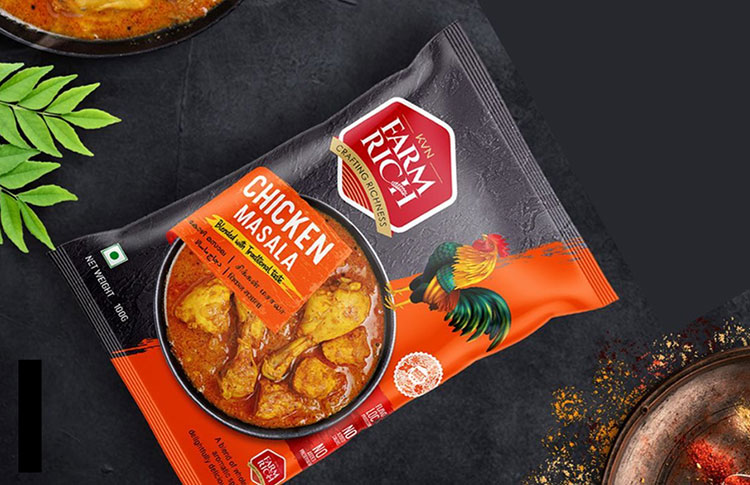
              Shampoo Manufacturing-6

              Shampoo Manufacturing: The Complete FAQ Guide 2025

              Shampoo Manufacturing: The Complete FAQ Guide 2025

              Are you curios about Manufacturing of shampoo? Do you know shampoo manufacturing comprises of specialized set of manufacturing protocol?

              Shampoo is an essential hair care product purposely created for hair cleansing. They are used to remove extra sebum (natural oil) from hair without damaging hair. Shampoo manufacturing is not just about mixing and blending different ingredients. It comprises of precise blend of ingredient, advance equipment and series of testing measures to meet the consumer demand and expectation for safety.

              Shampoo Manufacturing

              Shampoo Manufacturing: The Complete FAQ Guide

              This FAQ guide about shampoo manufacturing is created to educate manufacturer as well as general public about science and innovation behind this process. Let’s start this topic.

                Add a header to begin generating the table of contents

                1.What is shampoo manufacturing?

                shampoo

                Shampoo Manufacturing

                Shampoo is specialized cleansing agent in which water is mixed with surfactant and other additive that will bind with water insoluble substance in scalp and rinse off without leaving residue which is not easily washed by water only.

                Shampoo manufacturing compasses of several steps that transforms high quality raw material to final product which you see in super markets. It includes batch mixing quality assessment and final packaging in bottles. Each and every step require precise attention to meet the required quality and consistency in shampoo manufacturing.

                There are different kinds of shampoo manufactured like medicated, anti- dandruff, dry shampoo, shampoo bar and many more with the evaluation of market trend and consumer demand.

                2.How shampoo manufacturing is beneficial to manufacturer?

                Shampoo manufacturing is beneficial in many ways to manufacturer. It shows promising fast pace production and filling of shampoo in record time. Now without further delay look into remarkable benefit of shampoo manufacturing.

                Product quality

                Product quality

                Product Quality-Picture Courtesy: Health

                Shampoo manufacturing is automated process which means very less number of people required for monitoring and controlling the process that reduces chances of contamination. This way it increases quality and efficacy of final product.

                Maintaining consistency

                Maintaining consistency

                Maintaining Consistency-Picture Courtesy: Health

                Maintaining consistency is crucial step for any manufacturer to retain its market presence. Shampoo manufacturing is automated process and high accuracy equipment are used which ensure perfect mixing and blending resulting in consistent texture and accuracy in each batch.

                Reduce labor cost

                Reduce labor cost

                Reduces Labor Cost-Picture Courtesy: Levapack

                Shampoo manufacturing is highly efficient process and use of automated machine which result in labor cost. Due to automation, very less number of are required in process and high tech machine perform task repetitively with greater speed. This way need of manual labor reduces.

                Increase production efficiency

                Increase production efficiency

                Increase Production Efficiency

                Shampoo manufacturing continuously produce large quantities at high speed due to automated machine with minimal use of manual labor. This process reduces production time and allows manufacturer to meet increasing demands of customer.

                Minimal wastage product

                Minimal wastage product

                Minimal Wastage of Product

                Shampoo manufacturing follows automatic principle so every bottle gets adequate amount and no bottle is missed or overfilled. Accurate amount of ingredient mixed, blend and filled without any error. Shampoo manufacturing greatly reduces waste.

                3.What are the primary ingredients used in shampoo manufacturing?

                Shampoo manufacturing is a complex process in which various ingredients are carefully mixed together to create an effective product which can cleanse scalp with nourishing and conditioning catering specific hair concern. Let’s look into each ingredient that you find in typical shampoo.

                Deionized water

                Deionized water

                Deionized Water

                Most important ingredient in shampoo manufacturing is water as it is 70-80% of total shampoo and act as transport medium for blending and mixing of other additives. But the water used in shampoo manufacturing is not an ordinary tap water, it is deionized water.

                Deionized water, is the water from which all mineral like calcium, sodium and magnesium, and other impurities are removed through deionization process. Why it is important to use deionize water? Because it free from all minerals, increasing its compatibility with other ingredients and all impurities are removed which reduce chances of microbial contamination and enhances its performance.

                Surfactant

                Surfactant in Shampoo Manufacturing

                Surfactant in Shampoo Manufacturing

                Surfactant are major cleaning agent in shampoo. It is added to aid foaming in shampoo manufacturing resulting in washing of dirt, oil and residue of hair care product on scalp. There are two different types of surfactant used in shampoo manufacturing

                • Primary surfactant
                • Secondary surfactant

                Let’s discuss in detail function of each surfactant and how they are different from each other?

                Primary surfactant

                Primary Surfactant

                Primary Surfactant- Picture Courtesy: Pharma Excipients

                Primary surfactant is main cleaning agent and they are mainly responsible for removing dirt, sebum and debris from scalp. They exert best foaming property and easily rinse off from hair without leaving residue. They easily mix with oil so remove dirt that are not washable with water.

                Most commonly used primary surfactant are sodium lauryl sulphate (SLS) and sodium laureth sulphate(SLES) due to their lathering ability and, easy mixing of oil in water.

                Seconadary surfactant

                Secondary Surfactant

                Secondary Surfactant –Picture Courtesy: Formula Botanica

                Secondary surfactant is also known as co-surfactant. They are added to enhance overall performance of shampoo and other properties like mildness, conditioning, nourishing content and viscosity depending on customer demand. These effects are restored by combined effect of both or by only secondary surfactant properties.

                Some of secondary surfactant used depending on manufacturer requirement are, cocamidopropyl betaine(CAPB) used for milder preparation and gives conditioning effects to hair, cocamidopropylamine oxide(CAO) added for stabilizing and enhancing foaming property, and alkyl polyglycoside are used as eco-friendly choice because it is easily biodegradable, and still gives good foaming and cleaning effect.

                Thickeners

                Thickener

                Thickener – Picture Courtesy: Cosmetic Ingredient

                Thickeners are added in shampoo for various reason, although thickeners do not impart any role in cleaning and foaming properties of shampoo. Thickeners are added to enhance product stability hence providing even distribution of other ingredient.

                Thickeners also facilitate in maintaining viscosity of shampoo. If shampoo is too thin it will run down from your hair and if it is too thick it will not easily spread or penetrate in hair. Appropriate thickness also gives product luxurious feel and enjoyable to use for consumer.

                Shampoo manufacturing with desired viscosity provide consumer better overall experience and effectiveness. There are so many options available for thickeners used in shampoo manufacturing like xanthan gum, guar gum, hydroxyethyl cellulose, carbomer and many more depending on manufacturer requirement.

                Conditioning agent

                Conditioning agent

                Conditioning Agent- Picture Courtesy: Radici Hair Studio

                We all know that main function of shampoo is to clean and remove dirt oil. But due to evolving market trend and consumer demand of shampoo with other additional benefit like conditioning, nourishing and repairing of hair are gaining popularity.

                Incorporating conditioning agent in shampoo enhances overall performance by providing protection, nourishment and give smooth texture to hair. It makes hair silky and detangle which are easily manageable and give smooth look to hairs.

                There is some common conditioning agent which you find in most of commercial shampoo manufacturing are silicones which include dimethicone, natural oils like coconut oil and argan oil and fatty alcohols like stearyl and cetyl alcohol.

                Preservatives

                Preservative

                Preservative

                Preservatives are crucial component in shampoo manufacturing. Preservative are added in formulation to extend shelf life and prevent contamination from microbial growth like mould and fungi. It is also needed to make sure the product is equally effective and safe to use till mentioned expiry.

                Few examples that are frequently use are potassium sorbate and sodium benzoate etc. You have to keep in mind few factors while selecting preservative like pH level, composition of product and desired shelf life.

                Fragrance and colorant

                Fragrance and colorant

                Fragrance and Colorant-Picture Courtesy: On Line Hair Depot

                Fragrance and colorant doesn’t add any advantage to product performance. It is added to give eye appealing look for user experience. fragrance help to build customer loyalty and enhances product market demand. Fragrance and colorant used may be derived for natural resources or synthetic.

                It is also considered while adding colorant that it is evenly dispersed in formulation which is achieved by different dispersion technique and advance equipment.

                pH adjuster

                pH adjuster

                pH Adjuster- Picture Courtesy: Cosmetic Formulator

                pH is an important factor in maintaining stability and performance of shampoo.  Desirable pH for shampoo is 4.5-6.5.

                What pH adjuster do? It can increase and decrease pH of shampoo. If pH is too high it makes hair dry and brittle, while very low pH can irritate scalp.

                In most of shampoo manufacturing, citric acid and lactic acid and sodium hydroxide is used as pH adjuster. It is also critical that pH adjuster is also compatible with other ingredient and do not cause any adverse effect

                Humectant

                Humectant

                Humectant- Picture Courtesy: Gisou

                Humectant is essential ingredient in shampoo that retain moisture and prevent over dryness in hair. It also restores hydration level in hair which is damage from over stripping of natural oil by surfactants.

                Most shampoo manufacturer add glycerin, sorbitol and propylene glycol as humectant in their formulation to make hair soft and manageable.

                4.What is the step by step process in shampoo manufacturing?

                Shampoo manufacturing is a time taken process involve multiple steps which you need to strictly monitor so you get consistent and quality product every time. Here is the more detailed breakdown of each steps.

                Selecting and preparing raw ingredient

                Selecting and preparing Raw ingredients

                Selecting and preparing Raw ingredients- Picture Courtesy: Roam and Thrive

                Selecting raw ingredient is crucial step in manufacturing consistent and quality product. Selecting ingredients starts from choosing right surfactant which is important for cleansing to other additive ingredient which is added for specific hair benefits.

                After selecting perfect ingredients process start by preparing and pre dissolving solid ingredient like some surfactant and thickener that are solid are dissolve in deionized water to ease incorporation in mixture.

                Other ingredients are added in specific sequence like secondary ingredient and conditioning agent are added after base is prepared. This step avoids any premature reaction.

                Mixing and blending

                Mixing and blending

                Mixing and Blending in Shampoo Manufacturing-Picture Courtesy: TY Cosmetic

                In second phase, ingredients are mixed in large mixing tank in a specific manner. Mixing and blending is critical step in shampoo manufacturing because it ensures that you will get perfect consistency in every batch.

                This purpose is served by using different agitators and high-shear mixer which ensure thoroughly mixing of ingredients. The duration and speed of mixing is also play important role in achieving uniformity in mixture.

                Heating and cooling

                Heating and cooling

                Heating and Cooling

                This process is incorporated because certain ingredient required specific temperature to dissolve or activate. Heating assist dissolution of certain ingredients like thickeners and it also facilitate emulsification.

                After that temperature is cooled down to introduce heat-sensitive ingredients like fragrance, preservative and coloring agent without affecting its performance.

                Homogenization

                Homogenization

                Homogenization

                Finally, mixture is passed through homogenization process to ensure uniformity throughout the mixtures. This purpose is best served by homogenizer. In this step mixture is mixed at high speed which lead to reduced particle size creating consistent and smooth texture of shampoo.

                Homogenization is most important step in shampoo manufacturing for achieving desired texture and all ingredients are evenly distributed throughout the mixture.

                Quality checking

                Quality checking

                Quality Checking- Picture courtesy: Jochamp

                Quality testing is done for different parameters to check whether the product up to desired quality and competency. Each batch undergoes rigorous testing for pH, stability and viscosity. pH range which is considered ideal for shampoo that does not irritate scalp is 5-7. This initial testing process determine how much pH need to adjust

                Same goes with other parameters like viscosity is determined and adjust according to requirement. Batch is also checked for product stability and this step ensure shelf life of shampoo after packaging and reduced chances of layering and separation.

                Filling and packaging

                Filling and packaging

                Filling and packaging- Picture Courtesy: Makwell

                After batch is thoroughly checked for quality, the shampoo mixture is moved to filling area. First appropriate container is selected for filling then bottles are placed in automated filling machine which fill bottles with precise quantity of shampoo. These machine are calibrated to fill each bottle with exact amount.

                After filling, bottles are closed and sealed to prevent leakage and contamination. Seals may vary from simple screw cap to pump dispenser. These automated machine reduce labor cost and make production faster.

                5.What kind of machinery frequently used in shampoo manufacturing?

                In production line of shampoo manufacturing some of important equipment are used to make process effortless, faster and cost effective without compromising quality and efficacy of final product. Some major machinery which can see in every shampoo manufacturing are described below.

                Mixing Tanks

                Mixing tanks are large stainless steel container which are used to mix large batches of surfactant and other ingredient in water to make uniform mixtures. These tanks usually include agitator and high-shear mixer that ensure even mixing and stirring. Let’s describe each mixer individually.

                Agitator

                Agitator

                Agitator Mixer –Picture Courtesy: Haosh

                Agitator are specialized equipment placed in mixing tank which ensure uniformity in shampoo mixture inside the tank. This equipment is frequently used in shampoo manufacturing.

                The basic principle of agitator based on rotating impeller induce flow and shear force imparting homogenization of one or two ingredients. This equipment ensures uniformity throughout the mixture and maintain consistency in shampoo manufacturing.

                High-shear mixer

                High-shear mixer

                High-Shear Mixer-Picture Courtesy: Tetra Pak

                High shear mixers can break up clumps and used to emulsify, homogenize, disperse and dissolve immiscible mixture. Tighter particle size ensures consistency, uniformity and optimal performance of your final product.

                High shear mixer revolves around the concept of shear force. The mixer consists of a rotor that rotates at high speed within a stationary stator. The constantly moving rotor create centrifugal force while the stator remain stationary creating shear force resulting in reduced particle size and leading to evenly dispersed mixture.

                Vaccuum emulsifier mixer

                Vacuum Emulsifier Mixer

                Vacuum Emulsifier Mixer- Picture Courtesy: Pharmaceutical Machinery

                The vacuum emulsifier mixer tends to mix immiscible liquid by reducing surface tension between liquid. It also disperses, homogenize, aspirate very viscous ingredients making them easier to blend and mix.

                Vacuum emulsifier work on basic principle shear disperse force. It worked by heating water or oil based in separate container then they are suck into emulsifying pot, where they quickly dispersed and emulsified by high shear impeller blade making mixture homogenized. As emulsifier is in vacuum condition it removes all air bubble which are produced during mixing liquid making your shampoo shinier and homogenized.

                Filling machine

                The filling machine is used to fill accurate amount in tubes. There are so many filling machines. Let’s talk about them in detail.

                Automatic shampoo filling machine

                Automatic shampoo filling machine

                Automatic Filling Machine

                Filling machine is integrated automated machine which used to fill shampoo bottles with precision and accurate consistency minimizing wastage and spilling of shampoo.

                The basic principle of filling machine is consisting of conveyer belt which automatically hold bottles by itself and carrying it to filling nozzles that fill each bottle with desired amount which was pre-set in the filling machine. The correct integration and speed is crucial in filling machine for accurate filling and increase production rate.

                Semi-automatic shampoo filling machine

                Semi-automatic shampoo filling machine

                Semi-Automatic Shampoo Filling Machine

                Semi-automatic machine is another type of machine used in shampoo filling process. It is cheaper and convenient to use.

                The main principle of semi-automatic machine is you need to place bottles on holder and machine fills in automatically. It has multiple heads you fill number of bottles at a time. It is good low scale production because of cheaper value as compared to automatic machine.

                Manual shampoo filling machine

                Manual shampoo filling machine

                Manual Shampoo Filling Machine

                Manual filling machine work on simple process you need to put bottle below nozzle and pulls the lever but you need to adjust volume by close monitoring. This equipment needed undivided attention to overcome spilling and wastage. It is cheaper version easy to use and clean.

                Capping machine

                Capping machine

                Capping Machine

                After completion of shampoo filling process, bottles are tightly closed by caps to avoid spilling and contamination of product.

                Capping are also done by automated machine in which bottle is sent from filling unit to sealing or capping unit through conveyer belt where automated machines sealed the mouth of bottles with caps and preserving its efficacy and freshness. These machine reduces manual labor as well increasing production rate.

                6.How different industries incorporating shampoo manufacturing in their practices?

                Nowadays shampoo manufacturing is greatly expanded and used in various larger industries in formation of different product such as:

                Pharmaceutical industry

                Pharmaceutical industry

                Pharmaceutical Industry-Picture Courtesy: EZO

                In pharmaceutical industries various ointment, medicated cream and lotions are also prepared through same process of shampoo manufacturing. Such as mixing and blending of solid in liquid phase, homogenizing the mixture, heating and cooling etc., all above mention procedure are also used in manufacturing pharmaceutical grade product.

                Food industry

                Food industry

                Food Industry-Picture Courtesy: The Sun

                There is huge application of shampoo manufacturing process in food industry. Nowadays you used different sauces like ketchup, mayonnaise and different seasoning; they are also produced with same process. Shampoo blending, mixing, filling and packaging machines are used in food industry as well.

                Chemical industry

                Chemical industry

                Chemical Industry-Picture Courtesy: Royal Talens

                In chemical industry product like hair dyes, paint, cleaner, polishes, water and oil colors are prepared through same process used in shampoo manufacturing. Some related equipment is also used for effective production in chemical industry.

                Veterinary Industry

                Veterinary Industry

                Veterinary Industry-Picture Courtesy: The Independent

                In previous time there is no proper hygiene product available for pets so it quite difficult to treat take care of them. Now due to emerging demand we see lots of veterinary grooming products. There we see another application of shampoo manufacturing process; pets shampoo and body wash are formed with same process.

                Cosmetic industry

                Cosmetic industry

                Cosmetic Industry

                Cosmetic industry is a diverse field in which many products are manufactured through same process which are used in shampoo manufacturing. Like BB creams, foundation and lip product used same process and even some equipment are also same.

                7.What is the expiration of shampoo manufacturing product?

                Shelf Life of Shampoo

                Shelf Life of Shampoo-Picture Courtesy: Function

                After manufacturing, Shampoo may last up to 2 to four year if unopened. But if opened it may not last more than 6months to 2 years. This extended shelf life is achieved by adding preservative and stabilizer in formulation.

                It helps in inhibiting microbial growth, balance pH under desired range and preserving integrity of ingredient. But natural shampoo has shorter shelf life as compared synthetic shampoo. Because natural preservative is less potent than man made.

                In cosmetic product expiry date are not mentioned they are calculated on the basis manufacturing or either from opening container mention I above picture.

                8.What are the common challenges manufacturer faces in shampoo manufacturing?

                Some of common challenges in shampoo manufacturing and provide solution to overcome the challenges

                Inappropriate mixing 

                Inappropriate mixing

                Inappropriate Mixing-Picture Courtesy: TY Cosmetic

                Inappropriate mixing challenge occur due to many factors. Mixer may not be properly design to mixing the shampoo ingredients this may lead to inconsistencies in shampoo formulation.

                Solution

                Manufacturer may follow the proper mixing protocols. Sensor monitoring to enable proper mixing and calibrate different parameters to stable the accuracy of shampoo.

                Foaming during shampoo manufacturing

                Foaming during shampoo manufacturing

                Foam Formation

                Another major challenge face in shampoo manufacturing is formation of foam during manufacturing. Due to this filling operation inaccuracy may occur which may lead to effect the product foaming.

                Solution

                Use of anti-foaming agent may control the foaming formation. Stable mixing speed and thermal control may also control the excess foam formation

                Disintegration of Equipment

                Disintegration of Equipment

                Equipment Disintegration

                Ingredients of shampoo is erosive in nature like detergent and surfactant due to this it can damage the equipment.

                Solution

                To control the equipment disintegration, use of stainless steel and some protecting material or maintenance of equipment may increase the life span of equipment

                Leakage

                Leakage

                Leakage-Picture courtesy: PhotoDune

                Leakage in shampoo manufacturing plant may lead wastage of product and increase the chances of contamination. It also greatly impacts production rate of shampoo manufacturing plant.

                Solution

                Sealed all the machinery part in which shampoo manufacture this may control the leakage and hence decrease wastage of product.

                Machine Sterilization

                Sterilization of shampoo machine may control contamination. Cleaning of equipment all parts may further enhance the hygiene and reduce contamination

                Conclusion

                Shampoo is an essential product for hair care hygiene. In this article we have deeply learned science and innovation behind this unique process. Understanding the complex process of shampoo manufacturing equips business people with insight to produce high quality shampoo product.  This guide gives you strong in depth knowledge to excel in manufacturing and ensuring product meet both set standard and customer satisfaction. For more business seeker advice, you can contact our expert team of customer services. Our dedicated team will give solution to your problem.

                Don't forget to share this post!

                CONTACT US

                Tell us your raw material and project budget to get quotations within 24 hours.

                WhatsApp Us: +86 156 0710 8630

                Invalid Email
                Invalid Number

                Shampoo Manufacturing: The Complete FAQ Guide 2025 Read More »

                Spice Manufacturing Process

                Spice Manufacturing Process: The Complete FAQ Guide In 2025

                Spice Manufacturing Process: The Complete FAQ Guide In 2025

                From Asia to the world who is unfamiliar with the term "Spices"? Of course, no one! Where spices are known for pungent flavors and vibrant colors, their manufacturing process is often taken for granted. This is the reason why quality of spices is compromised. To solve this issue, we have explained in detail about Spice Manufacturing Process in this FAQ guide.

                Spice Manufacturing Process

                Before starting a business, it is always important to take a look into the Spice Manufacturing Process which involves several steps. Similarly, these steps are carried out with the help of sophisticated technology in the form of machines on an industrial level. Thus, knowing about these areas can help you to become a successful manufacturer in the Spice market. For clear understanding just go through this piece of writing!

                  Add a header to begin generating the table of contents

                  1.What Is Meant By Spice?

                  Various powder spices

                  Various powder spices in bowls- Picture Courtesy: allrecipes.com

                  Spice can be simply described as a substance used to add flavor, color, and aroma to food. Spices are of various types and there are different numbers of spices available today. The common examples include pepper, chilli, cinnamon, and ginger etc.

                  Spices are also termed as seasonings or condiments due to their specific use in cuisine and other foods like pasta, noodles, and salads. Spices may also be used for the preservation of food and that's the reason why people across the globe are using their favorite condiments for making their dishes tastier and appetizing.

                  Apart from this, you may find spices in different forms such as granules, powder, and in whole and liquid form. These forms are helpful in the use of spices on a daily basis.

                  2.Spice Manufacturing Process- A Brief History?

                  Globe made with spices

                  Globe made with spices- Picture Courtesy: foodinsight.org

                  The history of spices show an exciting journey from their unfamiliar discovery in ancient times to the known variety in modern age. Its beginning has been noted 6 million years ago when early humans used to wrap meat in leaves. Gradually, they found the taste of food more pleasant and aromatic.

                  Early Egyptian, Chinese, and Mesopotamian civilizations played instrumental role in documenting the medicinal benefits and other uses of leaves, however, unable to distinguish between herbs and spices. With passing time, spices became famous for their advantages especially after the discovery of Indian spices.

                  Similar to spices exploration, its manufacturing process also evolves from using as fresh leaves and flowers to drying, crushing, and roasting. The same method is now followed on industrial level with the use of machines and advanced technology for enhanced efficiency.

                  3.Spice Manufacturing Process- Is It Worth It?

                  Well, the answer to asked question is not straight forward rather requires one to first deeply look into the importance of spices itself. Although, we may take spices as ingredients used in food only, however, its benefits falls beyond the area.

                  Various spices in bottles

                  Various spices in bottles mccormickscienceinstitute.com

                  Firstly, the use of spices in food is rising on global level due to internet which is helping people in the promotion of their local cuisine. This in turn generate a demand for spices manufacturing which is an opportunity for entrepreneurs and businesspersons.

                  Secondly, spices such as turmeric, ginger, and cinnamon are popularly used for medicinal and beauty related products. It directly shows the expansion of spices benefits in fields beyond food industry.

                  Thirdly and lastly, being spiritual beings humans cannot avoid the religious practices which also involves use of certain spices. So, what we get from these facts is the rapidly growing significance of spices which is creating a room for economic development through cultivation, manufacturing, and packaging of spices.

                  Overall, spice manufacturing process is as necessary as other products manufacturing. However, it is always important to pay special attention to market trends, quality

                  4.Spice Manufacturing Process- The Major Steps Involved?

                  Spice manufacturing process involves several steps which is obligatory for the production of high quality spices. Let's explore these steps one by one!

                  Ingredients Collection

                  Ingredients Collection

                  Whole spices

                  Whole spices- Picture Courtesy: thegardenrecipe.com

                  Before starting spice manufacturing process, it is important to know that spices are of different types which depends upon their usage. For instance some spices are mixture of multiple ingredients like curry powder, chilli powder, and parika while others are only composed of single ingredient like fennel seeds, turmeric, and cumin.

                  Now, it is clear that during spice manufacturing you will need to have these ingredients at your hand which is available in raw form. So, make sure to aquire all the necessary ingredients for your specific spice mixture.

                  Cleaning Step

                  Cleaning Step

                  Ginger washing in machine

                  Once you have gathered all the required ingredients, undergo them through cleaning step to remove out impurities. For this, you can use automatic washing machine for plants and herbs.

                  Drying

                  Drying

                  Chili drying- Picture Courtesy: dryingplant.com

                  After cleaning comes the drying phase which is one of the crucial steps during spice manufacturing process. The reason for its importance is that the essence of spices gets increased with drying it also prevents bacteria from poisoning spices. Therefore, sophisticated machines should be used to reduce the moisture content while taking care of temperature as different spices require different level of moisture. For instance, mace needs 6% of moisture and chillies need 12%.

                  Roasting

                  Coriander seeds roasting

                  Coriander seeds roasting- Picture Courtesy: Excell Packs

                  Moving forward, the dried ingredients are roasted to bring out the color and aroma. However, it is crucial to carry out this step in controlled environment with required temperature and limited heat, so, that the originality of substances could be well retained.

                  Grading

                  Upon roasting, your next task will be to grade the ingredients on the basis of their size, weight, and volume. It can help you deal with the grinding process or else the process may get messy.

                  Grinding

                  Spices grinding

                  Spices grinding- Picture Courtesy: holar.com.

                  After grading, spices are grinded by using heavy-duty industrial grade grinding machines. Depending upon the hardness of ingredients, different machines are available with sharp blades which can effectively and efficiently break down whole spices into powder form.

                  Sieving

                  Turmeric sieving

                  Turmeric sieving- Picture Courtesy: dahanmachine.com

                  Another step is sieving during which grinded spices are passed through a sieving machine. It helps ensure the segregation of particles based upon their size thereby maintaining consistency during production which is key for quality manufacturing.

                  Mixing

                  Spices blending process

                  Spices blending process-Picture Courtesy: sampackindia.com

                  Mixing is the final step of spice manufacturing process where intended spices are thoroughly blended to get the desired spice mixture. For large scale production, industrial mixers are used which automatically carry out mixing in an enclosed ad hygienic environment.

                  Packaging

                  Spices bottling

                  Spices bottling- Picture Courtesy: JDA Progress Canada

                  Packaging is the last but most eminent phase which must be done carefully. For this purpose, spices are loaded in packaging machines which then precisely deposit accurate volume into desired packages such as bottles, jars, and bags.

                  5.Spice Manufacturing Process- Equipment Needed?

                  With advancements in technology, now it is quite easy to conduct spice manufacturing process without any human harm and product loss. This is possible with innovative machines produced for carrying out every single step of spice manufacturing. These machines are listed below:

                  Spice Washing Machine

                  Auto Fresh Ginger

                  Auto Fresh Ginger/Turmeric Washing Machine Stainless Steel- Picture Courtesy: juiceprocessline.com

                  Spice washing machine is an efficacious machine employed to wash out different types of whole spices such as turmeric, ginger, and chillies. It is made up of corrosion resistant stainless steel with washing and tumbling system. The machine effectively clean out spices by passing them through clean water and tumbling to remove out all the impurities.

                  Drying Machine

                  Tray Dryer Stainless Steel Spice Drying Machine

                  Tray Dryer Stainless Steel Spice Drying Machine

                  Drying machine is another equipment you will need to conduct spice manufacturing process. It is an electric machine with heat system that can effectively reduce the moisture content of your spices to desired level. The machine has trays over which spices are spread. It has adjustable heat system to support customized drying as different spices have diverse drying needs.

                  Roasting Machine

                  Roasting Machine

                  Spices roasting machine DCCZ7-15 roaster- Picture Courtesy: chchike.com

                  Roasting machine is an excellent machine designed with advanced feature to facilitate pollution free roasting of various spices. The machine has robust structure with sustainable electromagnetic source for heat generation. The main body of machine is made up of 304 stainless steel followed by other components including a removable feeding hopper, electric cabinet, control unit, cover, and roasting chamber.

                  Grinding Machine

                  Herb Grinding Machine

                  Allpack Herb Grinding Machine DLF-70S

                  Grinding machine is another important machine needed for spice manufacturing process. It has fully automatic system to process whole spices and turn into into fine powder or coarse particles as intended. The machine is made up of several components including main frame, control panel, feeding station, outlet, and grinding unit. It can be simply operated by fixing the speed of grinding and time for each cycle after which it automatically finish the processing.

                  Screening Machine

                  High Efficient Screening Machine

                  Allpack- ZS Series High Efficient Screening Machine

                  Screening machine is also known as grading or sieving machine which is designed to process powders and granules. It is essential for the sieving and grading of spices. This multifunctional equipment has a precise structure with quality stainless steel. It consists of multiple perforated plates through which spices are passed for sieving. It works automatically through the principle of vibration.

                  Powder Mixer

                  CH-V Series High Efficiency Mixer

                  Allpack- Model CH-V Series High Efficiency Mixer

                  Powder mixer is inevitable for spice manufacturing process. This powder mixer by Allpack has special V shape structure which is fully automatic in its functioning. The machine has stainless steel bin with dual feeding inlets on upper side followed by separate discharge unit in lower side. The bin rotate in 90° which helps in the homogeneous mixing of different powder spices.

                  Pouch Packaging Machine

                  premade pouch filling machine

                  Allpack APK-210Z series premade pouch filling machine

                  Pouch packaging machine is designed for packing spices into various flexible packages such as sachets, stick packs, and doypacks. This premade pouch filling machine by Allpack is a wonderful solution that can process different types of flexible packages. The machine offers convenient operation where packages are formed from flat film, filled with precise volume of spice, and then tightly sealed.

                  Powder Filling Machine

                  Automatic Powder Filling Machine

                  Allpack- Single Head Automatic Powder Filling Machine

                  Powder filling machine is a specialized equipment tailored with astonishing features to fulfill the packaging of powder spices. It has auger filling mechanism for the accurate measurement of spices and stainless steel nozzles to discharge the weighed spices into bottles and jars. The process simply involves loading hopper with bulk powder spices and feeding bottles into machine. Similarly, it pours the spices into bottles which are then discharge from another end.

                  6.Spice Manufacturing Process- Various Packaging Options?

                  Packaging is the most important phase during spice manufacturing process which helps in the preservation of their quality, aroma, and taste. Thus, various options are now available to secure the richness of spices and help them reach to the awaited consumers. Let's know some of the popularly used packaging types!

                  Bottle Packaging

                  Various bottles of spices

                  Various bottles of spices- Picture Courtesy: colaveco.com

                  Bottles are frequently used for storing various types of spices due to their enhanced protection and safety. These bottles vary from plastic to glass bottles and are often transparent to clearly display for the customers which is laying inside. Bottle packaging is best option for spices as they attract consumers.

                  Pouch Packaging

                  Various pouches of spices

                  Various pouches of spices- Picture Courtesy: fiverr.com

                  Pouch packaging refers to the packaging of spices in flexible bags like stand-up pouches and doypacks. They are cost-effective and easy-to-use therapy deducting packaging costs.

                  Carton Packaging

                  Tumeric powder carton pack

                  Tumeric powder carton pack- Picture Courtesy: designsagar.com

                  Carton packaging is also popularly used to deliver spices. For such packaging, firstly spices are packed in aluminum or plastic pouches which are then enclosed in cartons. In this way, both the security of spices and marketing of brand are easily achieved.

                  Sachet Packaging

                  Various sachets of spices

                  Various sachets of spices- Picture Courtesy: designsagar.com

                  Spices can also be delivered in flat bags like sachets which are usually used for delivering single serving and small amount of spices. These sachets have three or four sides sealed which also looks beautiful when laying on the shelves of market.

                  Jar Packaging

                  Various jars of spices

                  Various jars of spices- Picture Courtesy: glassnow.com

                  Traditionally, jars were famous for their use of storing spices as they have exceptional safety against moisture and bacteria. Today, many reputable suppliers used to deliver spices in glass jars.

                  Tin Packaging

                  Various spices in tins

                  Various spices in tins- Picture Courtesy: tropicasem.sn

                  Although tin packaging is rarely used for spices, however, it is still practiced in some Western countries. Steel tins are effective to preserve the freshness of spices and they are also recyclable.

                  7.Spice Manufacturing Process- What Is The Importance Of Quality Control?

                  The importance of quality control can never be denied when it comes to spice manufacturing process. In fact, the growing demand for spices has also raised the concerns regarding their quality. Thus, international community has brought up certain rules for spices manufacturing whose adherence show the reliability of companies. Let's know these guidelines in a bit detail!

                  Quality inspection in spice manufacturing process

                  Quality inspection in spice manufacturing process- Picture Courtesy: hudsontraders.com

                  International Organization for Standardization (ISO)

                  ISO has different standards for maintaining the quality of spices and the preservatives used. For instance,  ISO 67.220 deals with spices, condiments, and food additives, while as, ISO 948:1980 covers sampling of spices.

                  Good Manufacturing Practices (GMP)

                  GMP has special guidelines for safe production of spices which were renewed in 2023. Some of the notable rules include use of GMP certified machines and conducting spices manufacturing in hygienic environment.

                  Conformate European (CE)

                  CE represents the collective will of European Union regarding food and non-food products manufacturing which also include spices production.

                  Food and Drugs Administration (FDA)

                  Food and Drugs Administration is United States's agency for the production and processing of medicinal and food products. For this reason, it is essential to follow the established guidelines by FDA.

                  8.Spice Manufacturing Process- Factors To Consider?

                  Spice manufacturing process revolves around several aspects each requiring full attention. So, you must be careful in paying attention to these important factors which are provided as under:

                  Source of Raw Material

                  Source of Raw Material

                  Various raw spices- Picture Courtesy: amazingfoodanddrink.com

                  The foremost thing to look for is the source of raw material. It is crucial to confirm whether the raw ingredients taken are fresh and obtained from safe sources. For this, you should have trustable supplier with proper certification.

                  Machines Used

                  W Series Double Taper-shaped Mixer

                  Allpack- Model W Series Double Taper-shaped Mixer

                  Spice manufacturing process is almost impossible without machines. Therefore, make sure you have adequate knowledge about each machine required for it and select machines by keeping in mind their automation level, energy consumption, and automation level.

                  Production Methods

                  Although, spices are produced through the use of machines, however, it is you who determine which step should be done prior and which one should be later. So, be careful in adopting globally recognized and accepted methods.

                  Packaging

                  Chili powder bottle

                  Chili powder bottle- Picture Courtesy: designsagar.com

                  Packaging is essential in retaining the originality of spices, therefore, you need to be very careful in selecting the most suitable option. For this, you may look towards your budget and market trends.

                  Quality Compliance

                  Quality icon

                  Quality icon- Picture Courtesy: mddionline.com

                  Your products are known by their quality which is itself dependent upon the marks issued by quality standards. So, make sure to comply international as well as local quality standards for getting global recognition.

                  Conclusion

                  To put in a nutshell, Spice Manufacturing Process is a long lasting procedure where multiple machines are needed to carry out each step. Along with this, right method also play a significant role in getting all the things done. In addition to it, packaging is considered important for the quality retention of produced spices. So, overall we may summarize that this complicated phenomenon require thorough consideration of several aspects. Besides, we hope you have got the desired information about spice manufacturing process. If you have any query or you are interested in purchasing necessary equipment then you can simply contact us through our website!

                  Don't forget to share this post!

                  CONTACT US

                  Tell us your raw material and project budget to get quotations within 24 hours.

                  WhatsApp Us: +86 156 0710 8630

                  Invalid Email
                  Invalid Number

                  Spice Manufacturing Process: The Complete FAQ Guide In 2025 Read More »
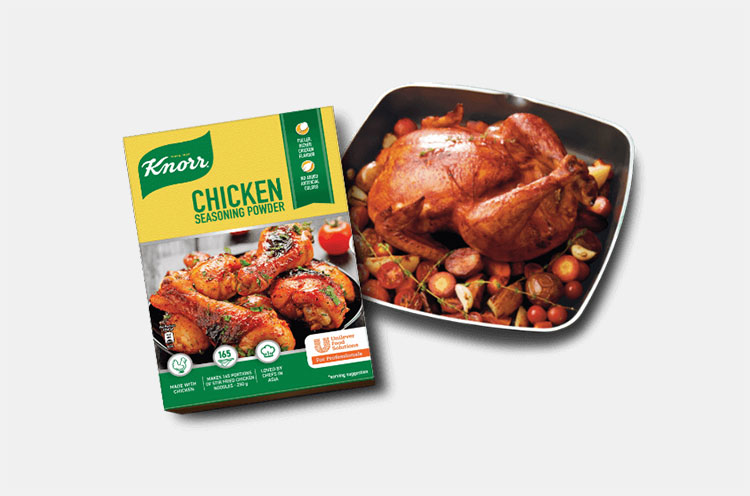
                  Yogurt Manufacturing Process-6

                  Yogurt Manufacturing Process: The Complete FAQ Guide in 2025

                  Yogurt Manufacturing Process: The Complete FAQ Guide in 2025

                  Do you know yogurt is constant breakfast essential which is a go to option for every age group? Do you wonder how these nutritional packets of yogurt make to your breakfast table? Yogurts are consumed ever day by millions of people around the world. Yogurt packed with probiotic and essential nutrients are produced by the fermentation of milk transforming it into delicious dairy product.

                  Yogurt manufacturing process

                  This FAQ guide give you in depth knowledge about yogurt manufacturing process, equipment used in this process, different types of yogurt and their uses in different industry. What is the innovation and science behind this process? Let’s begin this topic with commonly asked questions and their expert answers.

                    Add a header to begin generating the table of contents

                    1.What is the yogurt manufacturing process?

                    the yogurt manufacturing process

                    Yogurt Manufacturing Process- Picture Courtesy: Dairy Processing

                    The yogurt manufacturing process is a series of step that involve changing of milk component at turning it into commercial yogurt which you consume daily. This involves high temperature around 90⁰C for specific culturing period and may vary from manufacturer to manufacturer.

                    Milk and other dairy products are consumed from ancient time but need of fermentation arises from Middle Eastern times. Through this process, they extend the shelf life of milk and reduce spoilage of milk.

                    During milk processing and further yogurt manufacturing causes physiochemical changes that effect flavor and texture of yogurt while standardize process developed which provides desirable textural and flavor characteristics.

                    2.What are the raw ingredients used in the yogurt manufacturing process?

                    Raw Ingredients in Yogurt Manufacturing Process

                    Raw Ingredients in Yogurt Manufacturing Process- Picture Courtesy: Little Green Dot

                    Yogurt is dairy product which is produced through culturing process of one or more microorganism culture which contain bacteria like streptococcus thermophilus and lactobacillus bulgaricus which are key factor for converting milk lactose into lactic acid and help in curdling of milk. Few other ingredients are also added to support whole process. Let’s unfold each ingredient for you in detail.

                    Selection of good quality milk

                    Good Quality of Milk

                    Good Quality of Milk- Picture Courtesy:  UCLA Health

                    Most of the commercial yogurt which you consumed are manufactured from cow and buffalo milk. The fat content of cow milk, depending on breed and diet ranges from 3-3.5 gm per 100 ml of milk and this content may be change by separation or addition of cream depending on the required texture of yogurt, taste and consumer demand.

                    The usual desirable range of fat in yogurt is lies in between 1.0-4-.5 gm per 100ml. However, most important factor in cow milk is solid-non-fat (SNF) which varies from 8.5-9.0 gm. /ml containing around 4.5 g lactose and 3.3g protein.

                    All raw dairy ingredient material should be selected for high bacteriological quality. Mastitis milk, rancid milk and milk containing antibiotic and sanitizing chemical residue cannot be used for yogurt manufacturing process.

                    Starter culture

                    Starter culture

                    Bacterial Culture for Yogurt Manufacturing Process- Picture Courtesy: Cultured Food Life

                    The starter culture is critical ingredient in yogurt manufacturing process. The starter culture comprises of one microorganism or may be a mixed culture comprises of two or more microorganisms. The culture is responsible to convert milk sugar (lactose) into lactic acid so that milk become sour (fermented).

                    This time taken process required 5hours at a maintained temperature of 45⁰C or more time required at lower temperature for the production of lactic acid, if frozen yogurt concentrate culture is used. There is different starter culture available but most commonly used starter culture in commercial yogurt manufacturing are streptococcus thermophilus (ST) and lactobacillus bulgaricus (LB). These bacteria are ultimately responsible for flavor and aroma of final product.

                    The milk protein coagulates or curdles due to drop in pH which is carried out by starter culture. The streptococci are responsible for lowering pH to 5-5.5 and lactobacillus further reduced pH to 3.8-4.4. These two bacteria are considered safe to use in food and an absence of pathogenicity.

                    Stabilizer

                    Stabilizer

                    Stabilizer – Picture Courtesy: Virasmart.co

                    Stabilizers are the excipients which are used to give smooth texture, firmness and consistency to yogurt. Stabilizer is also helpful in reducing wheying of yogurt during storage. You need to keep in mind few things while choosing a good stabilizer, it is will not affect taste or flavor of yogurt and also work at standardize low pH. Most of the commercial yogurt manufacturer used gelatin as stabilizer. Some plant source stabilizers are also used like carrageenans and guar.

                    Gelatin is the first choice of stabilizer in yogurt manufacturing process because it gives shiny gel appearance to yogurt which melts in mouth. But, it is preferred in frozen yogurt because its activity is temperature dependent and can be denatured at high temperature loosing texture and firmness. There are few other options of stabilizer which are used in yogurt like starch and caboxymethylcellulose.

                    Sweetener

                    Sweetener

                    Sweetener - Picture Courtesy: Ragus sugar

                    Sweeteners are added to give pleasant taste and mask acidic flavor in yogurt. It is noticed that high amount of sweetener greatly influences flavor or taste of yogurt. In almost every commercial yogurt, sucrose is used as sweetener. Sucrose may be added in dry, granulated and in form of crystal containing not more than 67% sucrose. Liquid sweeteners are used in large scale yogurt production settings for less problematic in handling.

                    Most commonly used sweeteners in yogurt production are sucrose, corn syrup or honey are added to overcome the acidic taste and produce firmer texture. Since sugar increase osmotic pressure of milk base, addition of excessive sweetener (>10gm/100ml) before fermentation inhibit the starter culture activity. Due to this reason sugar are added with fruit to stirred yogurt just before filling.

                    Most of the commercial yogurt you find in markets are comprises of lactose around 4.06%, galactose 1.85% and glucose estimated around 0.05% with pH of 4.40. Some manufacturer used artificial sweeteners as well on customer demand who are concerned about lower calorie content.

                    Flavoring agent

                    Flavoring agent

                    Flavoring agent- Picture Courtesy: Thrillist

                    The flavoring agent are specifically selected on the basis of market demand depending on consumer need. Flavoring agent used in yogurt are commonly added in the form fruit blend. The amount of flavoring blend you find in yogurt is mostly around 10-20 % and is approved by regulating food authority for safe use. They are added in yogurt to give eye appealing appearance and flavor closet to actual fruit. But there are few things which you need to look while choosing fruit blend.

                    • Fruit blend does not alter the flavor and color of yogurt, when added.
                    • The pH of yogurt is not altered due to fruit blend or their pH is balancing with each other.
                    • Fruit blend must be carefully checked for microbial content, otherwise it leads to spoilage of yogurt.
                    • The fruit blend is easily mixed in yogurt and dose not separate in storage.

                    Fruit flavor vary depending on the season of the year like different fruit are available in different time of the year. Mostly flavor of yogurt which are liked all over world are strawberry, raspberry, cherry, mango, apricot, peach, plum and pineapple etc.

                    Frozen fruit, canned and dried fruit are added as fruit blend in yogurt production. Fruit base pH is also important in balancing fruit flavor and color. Yogurt is refrigerated or stored at optimum temperature for flavor and color retention, and for extended shelf life.

                    3.What steps are involved in yogurt manufacturing process?

                    It will give you idea about steps involved in yogurt manufacturing process. It involves steps from milking animal to treating and processing till packaging.  Come along and you will learn step by step process.

                    Initial treatment of milk

                    Initial treatment of milk

                    Initial Treatment and Milking- picture Courtesy: Tetra pack

                    When milk arrived at plant it undergoes clarification process to remove bacteria and other solid impurities because bacterial growth can be occurring during milking and transportation, as it takes time long as days. The level of bacterial growth depends upon the hygiene during milking, temperature and storage period. Spoilage of milk with bacteria causes lactic acid fermentation.

                    Afterward, mild heating process is performed known as thermalization at temperature of 60-69⁰C for 20-30 seconds to kill most of vegetative microorganism or partial inactivation of some enzyme. After thermalization, milk is cooled 4-5⁰C or incorporated with micro floras to control growth of bacteria.

                    Standardization of milk components

                    Standardization of milk components

                    Centrifugal Separator and Milk Standardization- Picture Courtesy:  Tetra pack

                    The second step in yogurt manufacturing process is standardization of milk. Standardization is performed to remove almost all the fat and solid-non-fat content. The fat content for yogurt is adjusted to range from 0.1-10% depending on consumer demand.

                    Standardization is performed in continuous manner and accomplished by separator. You need a separator to remove cream and sediment from milk at the same time.  To achieve desired fat level, standardization of milk done by removing fat in form of cream leaving skim milk, then mixing both in desired ratio to obtain desired consistency and texture. Because fat content greatly influences characteristics of yogurt, increasing fat content can increase consistency and viscosity of yogurt.

                    The term standardization is also referred to SNF (solid-non-fat) content. SNF content in yogurt manufacturing is ranges from 9-16%. It is noticed that fat and SNF content in milk impact fermentation, an increase in fat and SNF content in milk increases the fermentation process duration.

                    Pasteurization

                    Pasteurization

                    Pasteurization- Picture Courtesy: Wikipedia

                    It is a process of heating at very high temperature around 71⁰C and holding it for shorter period before cooling. This step is crucial in yogurt manufacturing. During this process, it destroys most of the pathogen, vegetative bacteria, yeast and mold. Additionally, it denatured several enzymes without altering flavor of yogurt. It also aids in denaturing wheying protein which results in yogurt of good consistency and firmness.  This process is also known as High temperature short term pasteurization (HTST).

                    Pathogens that grow during bad hygiene practice can be killed with heat treatment ensuring processed milk is safe for consumption. Most commonly high temperature pasteurization is used in yogurt manufacturing process.

                    Homogenization

                    Homogenization

                    Homogenization of milk –Picture Courtesy: Milk-ed

                    After pasteurization, milk is passed through fourth step of homogenization. In this process, at high pressure molecule size is reduced to prevent wheying off (separation of fat layer and aqueous phase). You have to apply high pressure or high frequency. In this shear stress and due to temperature gradient cavitation occur that contributes to homogenization process.

                    Homogenization best occur at temperature more than 37⁰C. This process is conducted at two stages. At first stage pressure of 2000psi is to subjected to reduce fat globule diameter from 2-10µm to 0.1-1 µm and in second step, 500 psi pressure applied to break cluster of globule inhibiting creaming of milk.

                    Homogenizing prevents creaming and wheying off, give whiter appearance and enhance textural development of yogurt.

                    Fermentation and cooling:

                    Fermentation in Yogurt Manufacturing Process

                    Fermentation in Yogurt Manufacturing Process-Picture Courtesy: The simple little life

                    Fermentation is carried out after homogenization at the maintained temperature of 40-45⁰C and combination of lactobacillus bulgaricus and streptococcus thermophilus is added as starter culture in the same amount.

                    When the desired pH is reached, microorganism starts its activity leading fermentation till required pH and acidity is reached. Addition of high level starter culture will lead to loss in texture and aroma of finished yogurt. The optimum amount of starter culture added should be 1-2% or may be increased to 4-5% if the sugar content is high (10-11%).

                    After fermentation is completed yogurt is immediately cooled to stop further bacterial activity. It is done in two phases. In first phase Yogurt temperature is decreased to 10⁰C resulting low consistency coagulum. In second cooling phase, the coagulum temperature decreases rapidly to 5⁰C (storage temperature) with increased viscosity.

                    Packaging

                    Packaging

                    Yogurt Packaging Machine-Picture Courtesy: Waldner

                    After inoculation, milk is filled in carton for incubation. Once the cartons are filled, you need to heat sealed with aluminum foil and transfer to incubation room to at 42⁰C. The optimum growth temperature for starter culture is 35-50⁰C. If you incubated for long time so there are higher chances of post process acidifying. You must be cautious to avoid yogurt from turning sour and bitter.

                    After incubation yogurt is set at 15-20⁰C and chilled at >5⁰C. Ready for final distribution.

                    4.What equipment is used in the process of yogurt manufacturing process?

                    Do you know how equipment work and lined in yogurt manufacturing process? Here you find all details about yogurt production equipment. Let’s get into it.

                    Centrifugal separator

                    Centrifugal separator

                    Centrifugal Separator-Picture Courtesy: Synelco

                    Centrifugal separator is used to separate cream and skimmed milk from whole milk. Cream and skim milk have different densities so under the influence of gravity, they are separated. This process is done to get desired level fat on consumer demand.

                    Working principle

                    It worked on principle of centrifugal force. It creates rotating force which throw away heavy particle to the side from there they are collected in the bottom of separator chamber and solid free liquid is collected from the top inlet of separator.

                    Mixers

                    There are different types of mixer used in yogurt manufacturing process. The mixer is used at different steps to mix homogenously thick and viscous liquid like for adding milk powder in yogurt, adding fruit purees and other additive.

                    a-Gentle In-line mixer

                    In-line Mixer

                    In-line Mixer – Picture Courtesy: Indag

                    Gentle in-line mixer is used to mixed product with high shear sensitive. In-line mixer is used to add fruit puree, fruit pieces, fruit syrup in yogurt. It is crucial for product which are sensitive to high shear. It is gently mixed with paddle mixing.

                    Working principle

                    In in-line mixer rotor used suction rotation which create mixing of ingredient with the help of centrifugal force. Due to force they are pushed to the wall and again sucked to the center which create milling action and give homogenous evenly distributed mixture.

                    b-Solid-liquid in-line mixer

                    Solid-Liquid In-Line Mixer

                    Solid-Liquid In-Line Mixer -Picture Courtesy: Indag

                    Solid-liquid in-line mixer is used to mix dry ingredient like dry milk powder or dry fruit mixes where fruits are added in chunks. It will provide continuous homogenous mixing.

                    Working principle

                    It works on same principle like in-line mixer to use centrifugal force but it works on high shear and without disturbing texture and consistency of liquid ingredient. Its rotor suck ingredient to center and producing milling action and reducing particles size as well resulting in uniform mixture.

                    Pasteurizer

                    Pasteurizer

                    Milk Pasteurizer –Picture Courtesy: Agico

                    Pasteurizer is device used to heat milk to destroy harmful bacteria and maintain the quality of milk and cool milk at desired temperature. It is stainless steel container which maintained temperature.

                    Working principle

                    Pasteurizer work by heating raw milk in large container with the help of steam or heat. After that milk is hold in pasteurizer for few time to kill all microorganism. After heating is complete, milk is immediately cooled to desired temperature to inhibit spoilage and bacterial growth.

                    Homogenizer

                    Homogenizer

                    Homogenizer –Picture Courtesy: Ajjo

                    Homogenizer used in yogurt manufacturing process to maintain consistency and quality of milk. This equipment reduces the size of fat globule resulting in uniform texture.  This process will increase viscosity of milk and help in stable yogurt production.

                    Working Principle

                    Homogenizer are operated high pressure in piston create pressure and pressurized milk is pass through very small orifice. Exerted pressure causes fat globule to shrink and dispersed in small sizes. This help in more uniform structure resulted in stable and consistent texture in yogurt.

                    Fermenter

                    Fermenter

                    Fermenter Tank- Picture courtesy: Tiantai Brewtech

                    Fermenter is sterilized and enclosed large tank which is used for control growth of microorganism. They provide consistent temperature across mixture and ensure even distribution.

                    Working principle

                    In a fermenter, nutrition rich medium is provided at controlled temperature and pH for introduction of cell culture. Fermenter is equipped with sensor and control system to monitor pH, mixing and temperature. Product is fermented till desired result. Agitator are installed for proper mixing and even temperature across culture.

                    Filling and packaging machine

                    Yogurt Filling and Packaging Machine

                    Yogurt Filling and Packaging Machine-Picture Courtesy: Lom Tech

                    Yogurt filling and packaging machine fill yogurt in cups and seal them. This machine help in accurate cup filling with maintain product hygiene. Filling machine are designed in this manner so they can handle different shapes and sizes of cups

                    Working Principle

                    The machine consists of conveyer belt which hold cup and nozzles which are connected to storage tank of yogurt through pipelines. The nozzles filled cup with pre-set capacity standard for each cup. When yogurt filling is completed, it enters sealing section, where plastic caps or heated sealing is done depending on packaging types.

                    5.How different industries use the yogurt manufacturing process?

                    There are many industries which use the same process and machinery which are used in yogurt manufacturing process. Here you will learn application of yogurt manufacturing process in other industries.

                    Cosmetic industry

                    Cosmetic industry

                    Cosmetic Industry-Picture Courtesy: Earth.org

                    Some cosmetic industry uses the by-product of yogurt (whey). It is used in different skincare product like cream, face mask, body yogurt and moisturizer. Lactic acid which is produced in yogurt manufacturing is used for gentle exfoliation and hydration. Some hair care industry also incorporated yogurt in hair product like hair mask, shampoo and conditioners. They also use same equipment high shear mixer and homogenizer which is used in yogurt production.

                    Pharmaceutical industry

                    Pharmaceutical Industry

                    Pharmaceutical Industry-Picture Courtesy: Dezan shira & associate

                    Yogurt culture is used in pharmaceutical industry to improve gut health because it contains live bacteria. These cultures are used in producing probiotics in capsule, powder and liquid form to improve digestion and immunity booster. Due to innovation these culture is also used as supplements for immunity and digestion. Here you see another application of yogurt manufacturing process.

                    Textile industry

                    Textile Industry

                    Textile Industry- Picture courtesy: Camachem

                    Due increase in demand of sustainable and environment friendly product, lactic acid which is produced in yogurt manufacturing is used for dyeing of natural fiber like cotton and silk. This gives more sustainable and bio-based dyeing instead using harsh chemical. This way helps some consumer which are allergic to some chemical which are used in dying process.

                    Veterinary industry

                    Veterinary Industry

                    Veterinary Industry

                    In veterinary industry, yogurt manufacturing is helpful because by-product of it used as feed for livestock because they contain micro flora so it enhances food digestibility and gut health. Whey protein concentrate is also incorporated in feed to increase protein content in livestock especially in cattle and poultry. So it enhances livestock growth and health.

                    6.What are the factors that affect the quality of yogurt manufacturing process?

                    Yogurt is fermented milk product in yogurt manufacturing process. During manufacturing many factors influence yogurt consistency and texture. Let’s get into this topic so you get idea about what you have to consider during yogurt manufacturing process.

                    Content of protein in yogurt

                    Content of protein in yogurt

                    Protein Content in Yogurt Manufacturing Process-Picture Courtesy: BBC

                    Protein content is really important in maintaining rheological and physical properties of final product in yogurt manufacturing process. If you increase protein content, it enhances gel firmness and decreases syneresis in yogurt. It is advisable to limit protein content ratio as it will effect flavor of yogurt.

                    Fat percentage in yogurt

                    Fat percentage in yogurt

                    Fat Percentage in Yogurt- Picture courtesy: Baladna

                    Fat percentage in yogurt greatly impact mouthfeel and creamier texture of yogurt. The desirable percentage of fat in yogurt is 0.5%-3.5%, value greater and lower can impact texture. Nowadays manufacturer done great work on acquiring good texture with low fat content due to health concern.

                    Impact of starter culture

                    Impact of starter culture

                    Impact of Starter Culture

                    The use of contamination free starter culture with a required activity is crucial in yogurt manufacturing process. Starter culture is capable of fermenting lactose in lactic acid. This optimum state of activity in starter culture is obtained by providing optimum temperature and incubation time. The activity and type of starter culture has great impact on the flavor and quality of yogurt. So the activity of starter culture must be maintained for consistent texture of final product in yogurt manufacturing process.

                    Stabilizer effect yogurt texture

                    Stabilizer effect yogurt texture

                    Stabilizer Effect Texture in Yogurt Manufacturing Process-Picture Courtesy: Dairy Foods Magazine

                    Stabilizer are hydrophilic colloid that will bind water and prevent wheying off. It gives yogurt smooth texture. Quantity of stabilizer added must closely monitored because if you add excess it will give yogurt rubbery texture leading to hard solid mass. So optimum quantity is need for smooth and creamy texture yogurt.

                    Effect of heat treatment

                    Effect of heat treatment

                    Effect of Temperature on Yogurt Manufacturing Process-Picture Courtesy: Ecency

                    Temperature is crucial in yogurt manufacturing process. Milk is heated to reduce microbial load, Increasing yogurt texture, stability and consistency. If you over heated milk it will denature all enzyme and bacteria resulting thick consistency, pale color and unstability.

                    It is noticed that heating process increase medium value for starter culture and other lactic acid bacteria. But excessive heating will lead to denatured all organism leading to decolored and off flavor yogurt.

                    7.What are the challenges commonly encountered during yogurt manufacturing process?

                    There are few problems which you face during yogurt manufacturing process. But here you will get solution for these commonly encountered challenges.

                    Yogurt become granular during fermentation

                    Yogurt become granular during fermentation

                    Granular Yogurt-Picture Courtesy: Brod & Tylor

                    At times manufacturer set high temperature during fermentation to speed up the process. It is applicable to some extent but we have seen by increasing temperature culture ferment lactose in lactic acid faster which can shock dairy protein resulted in granular texture.

                    Solution

                    If problem is created due to high fermentation temperature. Then you have to lower incubation temperature. By decreasing fermentation temperature culture produce lactic acid at slower rate resulting in less chances of disturbing dairy protein. If you are facing granular texture in yogurt, try lower temperature setting with same culture you will be amazed by result.

                    Yogurt is too sour

                    Yogurt is too sour

                    Yogurt is too Sour – Picture Courtesy: How to eat this

                    This problem mostly you faced when pH got too low and make your yogurt sour. Why this problem happens? You need consider breaking pH of yogurt (at pH where yogurt is fermented). It usually happens when you break pH at 4.3 and pH goes down during cooling and packaging process turning yogurt sour.

                    Solution

                    The solution is simply to raise break pH to 4.6-4.7 so pH does not get lower down from desired pH during cooling and packaging. You can also control this problem by cooling yogurt immediately or using mild culture which does not produce acid, when yogurt is break.

                    Texture of yogurt is too thin

                    Texture of yogurt is too thin

                    Texture of Yogurt is Runny-Picture Courtesy: The Paupered Chef

                    It happens when yogurt is over stirred after fermentation leading to thin and less viscous texture of yogurt before entering final packaging. Consider that when desired pH reached, avoid over-stirring at every step of processing.

                    Solution

                    Minimize agitation of yogurt during filling process. This can be done by stirring at interval and decreasing shear of mixing tank. When product is waiting to be filled in container avoid too much stirring.

                    Conclusion

                    Yogurt is semi-solid fermented product produced by culturing dairy product with one or more microorganism. Yogurt also flavored and ingredient specific depending market trend and consumer demand. Here you understand complete science behind yogurt manufacturing process, equipment and factors you need to keep in mind while yogurt production. However, to meet consumer demand of desirable flavor and texture in yogurt required quality practice to ensure you get same texture and maximum quality product with safety. For further information about yogurt manufacturing process, you are encouraged to contact our service team.

                    Don't forget to share this post!

                    CONTACT US

                    Tell us your raw material and project budget to get quotations within 24 hours.

                    WhatsApp Us: +86 156 0710 8630

                    Invalid Email
                    Invalid Number

                    Yogurt Manufacturing Process: The Complete FAQ Guide in 2025 Read More »

                    Aluminium Tube Packaging

                    Aluminium Tube Packaging: The Complete FAQ Guide In 2025

                    Aluminium Tube Packaging: The Complete FAQ Guide In 2025

                    What is the first choice for packing semi-solid formulation? Every company select aluminium tube packaging as an ideal agent to pack their products. This can be due to the various fascinating reasons which ultimately offer you the safety and security of dosage.

                    It plays a critical role and yet promising too. In this article, you’re going to explore important details related to aluminium tube packaging. We promise, that if you are from the healthcare industry or associated, by the end of the topic, you will be able to make the right decision about packaging and equipment utilized in attaining the perfect solution. So have a look at the below discussion.

                      Add a header to begin generating the table of contents

                      1.What is aluminium tube packaging?

                      tube packaging

                      Pharmaceutical tube packaging- Picture courtesy: Pharmaceutical tube

                      This is the ultimate solution where various semi solid preparations related to the pharmaceutical industry are taken place.

                      However, this route of packaging is known as the most conventional way and still used. Quite amazing to described that there is various new mode of packaging are introduced but none- of them are able to beat the aluminium tube packaging. The prime reason behind it is that easy to store, carrying, and apply.

                      They are present in various sizes, diameters, and lengths and all are depending on the different purposes and materials to be stored. Not only in pharma, but there are various sectors that frequently uses aluminium tubes for its product storing and packing tasks. You are just needed to squeeze a little and it gives the desirable product’s quantity.

                      2.Why businesses pay attention to aluminium tube packaging?

                      Pharmaceutical tubes

                      Pharmaceutical tubes

                      A great solution against tampering

                      Original product packaging

                      Original product packaging- Picture courtesy: toptube

                      One of the prime objectives behind aluminium tube packaging is that it gives you a high level of security. In many cases, pharma products can be counterfeited. You can keep the integrity of your product by applying this mode of packaging and your customers pick and use the product with excellent satisfaction.

                      Your product safety from physical factors

                      Extra protective barrier

                      Extra protective barrier- Picture courtesy: HD barrier

                      You must know that aluminium tubes have featured with an impermeable layer. This means that it resists the entry of external physical or environmental factors to penetrate inside. So it is simply performing the function of a barrier. Therefore, various formulations are now saved whether it is normal, medicated or non-medicated preparation.

                      No progression of microbes

                      No microbes

                      No microbes- Picture courtesy: Pharmaceutical tube

                      The aluminium tube manufacturing takes place to keep contaminants or microbial factors away from your product. Moreover, it is pretty common that if you alter the physical and chemical properties of the packaging it results in either oxidation which results in rancidity of the formulation or direct progression of microorganisms. The aluminium tubes act as a shielding layer that stops the air or oxygen molecules and airtight packaging blocks bacterial progression. It directly allows your product to stay longer and fresh.

                      Easy dispensing and carry on product

                      Easy to carry

                      Easy to carry

                      Aluminium tube manufacturing is not just meant for clinical or hospital-side applications. But it is required to you for daily time and life usages. It ensures easy management and offers flexible carry on from one place to another by simply keeping it in your bags, purse, or whatever pouches you use for medicine storage. This is simple, light in weight, and made up by considering all your needs making it the most demanding item.

                      Accurate and perfect dose dispensing

                      Accurate dispensing

                      Accurate dispensing- Picture courtesy: Justkraft

                      Your formulation drawing is now so accurate and easy with an aluminium tube. It makes you to not worry about spilling or splashing of the formulation. All in all, your product during manufacturing and application is based on control releasing and associated with no risk or wastage. Even an inexperienced person can withdraw the required concentration of the tube formulation without need for any support or tool.

                      3.What are the types of aluminium tube packaging?

                      These tubes are not confined to a single category, but it is composed of two major types. For example:

                      Rigid aluminium tube packaging

                      Rigid aluminium tube packaging

                      Rigid aluminium tube- Picture courtesy: Linhardt

                      These are also known as a hard tube. They are quite rigid in the structure and not able to press or squeeze. It is mainly used for those products that are solid, stable, and firm in presentation. For example, various tablets such as effervescent tablets are commonly packed in rigid or hard aluminium tubes. These tubes are mainly known for its high durability and protection. It gives physical excellent barrier properties between product and external conditions.

                      Collapsible aluminium tube packaging

                      Collapsible aluminium tube packaging

                      Collapsible aluminium tube packaging- Picture courtesy: Trend hunter

                      These are flexible and squeezable types of aluminium tube packaging where most often semi-solid products are packed. You can pick the tiny or required amount of squeezing the bottom of the tube. It is mainly known for anti-wastage properties as you can get whatever you want to draw without leakage or over spill.

                      4.What areas require aluminium tube packaging?

                      With so many specialized properties, aluminium tube packaging is required in broad industrial sectors and related areas. In industrial settings, promising quality is always maintained with these packaging options. Let's see where this leading choice is preferably opted.

                      Pharmaceutical and medical industry

                      Pharmaceutical and medical industry

                      Pharmaceutical industry- Picture courtesy: pharmaceuticaltubes

                      The aluminium tube packaging provides you with excellent protective effects. It is prioritized in pharmaceutical sectors because it gives you greater hygiene and formulation safety. Today, various ointments, balms, topical creams, lotions, gels, and pastes are dispensed in them.

                      Cosmetics industry

                      Cosmetics industry

                      Cosmetic industry- Picture courtesy:  blueskysolutionuk

                      It was always found challenging for cosmetic industry to get an ideal solution for their products' packaging. Therefore, delicate and way more sensitive formulation is always acquired with aluminium tube packaging. This is because it is known as a golden standard storing offer for cosmetics products. So cosmetic and personal care items have mostly come in these packaging materials.

                      Food Industry

                      Food Industry

                      Food industry- Picture courtesy: perfektup

                      Food preservation and packaging are always significantly concerned with freshness, aroma, durability and sustaining their flavors. The aluminium tube packaging is therefore known as good way to ensure food products are stored in a high shielding layer of barriers and it does not affect the properties of your perishable item.

                      Personal hygiene industry

                      Personal hygiene industry

                      Personal hygiene- Picture courtesy: Three bamboos

                      Whether it is your haircare, skincare, oral hygiene, etc. the personal hygiene manufacturing selects aluminium tube packaging for its high-quality solutions and rates. It is well well-recognized mode of packaging with a tremendous safety record across the globe. In this industry, mainly collapsible or soft aluminium tube packaging are chosen for products to squeeze and get the formulation you have prepared.

                      Chemical Industry

                      Chemical Industry

                      Chemical industry- Picture courtesy: Jarsking

                      Chemicals are hard to touch, they are corrosive in nature. The aluminium tube packaging gives a high level of security to you. It is anti-leak and anti-wastage in characteristic. You can get small or exact amount of chemicals packed in it. There are various organic, inorganic, neutral salts, or various semi-solid substances packed in them such as hydrogen peroxide bases, bleaches, paints, watercolors, oil paints, etc.

                      Construction industry

                      Construction industry

                      Construction industry- Picture courtesy: montebellopkg

                      Almost every industry related to construction or manufacturing household items uses aluminium tube packaging for filling and packing products. This is because it gives high strength and safety and is present in various diverse sizes. So, it is not impossible to get tubes with various capacities storage options. For example, adhesives, shining pastes, cleaners, lubricants etc.

                      5.How aluminium tube packaging is made?

                      Making of aluminium tube packaging

                      Making of aluminium tube packaging

                      STEP 1: Aluminium Slug

                      Aluminium Slug

                      You can start the process of aluminium tube packaging with aluminium blocks or slugs. These slugs are about a size of a coin. They are damp into slugging container with the incorporation of lubricating powder known as a zinc stearate. You can now close the container which keeps spinning constantly to mix the lubricant all over the slug, followed by another spinning machine that helps in the orientation of the blocks to move for the stamping process.
                      STEP 2: Stamping

                      Stamping

                      This step is also known as a ‘forming press’ where some extent of temperature and greater force is applied over the slug to extrude the layer. This is followed by its setting into a die to mold in the form of a tube. The machine is capable of exerting the pressure up to 200 tons and the amount of slug passed through it as noticed approximately 150 per minute. Now the aligned number of tubes for the next step.
                      STEP 3: Annealing & Trimming

                      Trimming

                      Trimming-1

                      The trimming machine is meant to cut and sharpen the tube when it passes through sync rollers.

                      The top of the neck is trimmed with the help of stationery blades of the machine. It ultimately makes the neck of tube safe till you use. Moreover, small and thin layer of the seal is left that you can pierce before application.  During the stamping some parts of the tube is indeed not in an ideal and suitable shape. Therefore, further corrections are achieved from this process. It is mainly providing heat to some extent, and it ensures that the tubes are entirely smooth and finished. After achieving the final shape, the tubes are cooled down and simultaneously sent to the next step.

                      STEP 5: Internal Coating & Primer

                      Primer

                      To create a barrier between aluminium and the product contact, the coating spray is applied inside the surface. It is done by using protective lacquer or primer and ensuring a promising interior. So, when you fill the tubes with a product, you will be pretty assured that your ingredients or product is stable and safe by inert nature of the inside surface.
                      STEP 6: Printing

                      Printing

                      Now the tubes go for cleaning, by this step, if any sticky or unwanted particle is present over the tube’s surface is removed. With the help of a printing machine. The prepared tubes are printed and improved with the application of attractive graphics and critical details along with brand name etc.
                      STEP 7: Cleaning and Capping

                      Cleaning and Capping

                      The tube surface is cleaned and secured by application of closures. All tubes are oriented and checked. The faulty tubes are sent to the rejection unit, and non-damaged tubes are now ready for filling with desirable products.

                      6.What are the machines used for aluminium tube packaging?

                      The machine used in the aluminium tube packaging production line is detailed below:

                      Semi-automatic aluminium tube packaging machine

                      semi automatic aluminium tube packaging machine

                      AIPAK semi automatic aluminium tube packaging machine

                      This is an ideal machine for you if you’re associated with small or limited batches production. The machine gives you an affordable solution to offer professional packaging. This unit is designed with hi-tech features that give you accurate filling along with sealing of the formulation without requiring so much time and energy.

                      You just need to position the empty tubes in the holder, remaining the task will be performed by the machine itself.

                      Automatic aluminium tube packaging machine

                      automatic aluminium tube packaging machine

                      AIPAK automatic aluminium tube packaging machine

                      This machine is preferably selected by various large industries related to medicine, cosmetic, chemical, etc. where day to day production demands is controlled by it. The unit gives you three amazing working options including filling the formulation along with sealing, and batch embossing.

                      The surprising thing is that it doesn’t involve human intervention except loading of empty tubes. The machine acts as a leader to control the entire operating tasks itself. Now you can enjoy carefree working if automatic option is installed at your facility.

                      Cartoning machine

                      aluminium tube cartoning machine

                      AIPAK aluminium tube cartoning machine

                      This is an automatic option without which the aluminium tube packaging process is incomplete. You can load the flat bunch of cartons or cards in the feeding magazine of the machine.

                      The machine is capable of picking the flat cards and folding them to form a carton of loaded specifications in. By utilizing a photoelectric eye detector, the presence of an empty carton is identified and filled aluminium tubes are position in it followed by the folding and closing of the carton.

                      Due to the high-tech mechanism, the machine forms the carton by utilizing the hot melt glue or can by using other ways such as spraying glue methodology. The overall, aluminium tube packaging by the end of the production line would be the same as you find on the store’s shelves.

                      7.What are the common aluminium tube packaging head styles?

                      Based on your product, its requirements to be dispensed and flowability, you can select the options for its packaging styles. We have enlisted the diverse range of head styles present in aluminium tube packaging.

                      Style Description Image
                      Flip top This is the commonly used and best-known standard style used for head security. It allows you to flip up and pick the formulation and flip down. So easy! You can see this style in regular uses of tubes of toothpaste, balms, lip gloss, etc. Flip top
                      Twisted Top Another conventional and very popular head style for aluminium tube packaging is the twisted top. You can dispense the product on the go once you twist the cap and tear the sealing. Twisted Top
                      Dome Most often, the aluminium tube packaging offers this style where small and smooth dome heads present a beautiful and aesthetic appearance to your product. Various cosmetic and personal care products are today facilitated with dome head styles. Dome
                      Lotion pump style This is a very handy and user-friendly style where you can flip off the cap and press the pump to get your product. For example, various topical creams, lotions, gels, etc. are acquired with this head style. Lotion pump style
                      Spray style They are also known as an atomizer head, which produces aerosol molecules upon pressing the head. This is a luxury style allowing you to enjoy formulation in a greater pressure from its nozzle best fit in aluminium tube packaging. Spray style
                      Pinpoint Various tubes used for dispensing of ophthalmic preparation available in gels, pastes, ointment form are packed in pinpoint heads that ensure precise and accurate quantity of product when you need. Pinpoint

                      8.What are products filled with aluminium tube packaging?

                      There are unlimited products that are packed by using these options. However, we can’t discuss all of them. Nonetheless, we have highlighted some very important and popular formulation that use regularly implemented aluminium tube packaging.

                      Toothpastes

                      Toothpastes

                      Toothpaste- Picture courtesy: Colgate

                      This is the product that starts your day. You just squeeze a little and freshness releases in the form of paste. They are packed with high confidence in aluminium tube packaging that ensures toothpaste are preserved longer and offers you potent properties. This is included with herbal toothpastes, ayurvedic toothpastes, etc. where herbal and potent extracts are combined to produce therapeutic effects.

                      Pain relief tubes

                      Pain relief tubes

                      Pain relieving tubes- Picture courtesy: montebellopkg

                      The pain or body aches are mainly deal with painkiller topical formulation. This is mainly used to relieve your discomfort. The aluminium tube packaging in this case not only acts as your bodyguard but ensures simple and easy application.

                      Ointments

                      Ointments

                      Aluminium ointment tube packaging

                      Whether medicated or non-medicated, the basic category of the ointment products is mainly filled in aluminium tube packaging. This is included with products related to skin related ailments such as dermatitis, burns, infections, and wounds. This packaging acts as a solution to give a stable and potent medicine.

                      Hair dye tubes

                      Hair dye tubes

                      Hair colors

                      You can’t ignore aluminium tube packaging when it comes to getting accurate concentration of hair dyes. The high barrier properties let it allow you to store sensitive and delicate hair dyes in an airtight packaging seal.

                      Creams

                      Creams

                      Cream

                      When it comes to talk about medicated creams, they are mainly designed to treat problems like eczema, and fungal problems, producing soothing effects to your skin. These are often present in aluminium tube packaging. Similarly in this way, various creams used for beauty purposes are formulated in a way that must be packed in an air-tight packaging are also maintained in them till the end user.

                      Gels

                      Gels

                      Gel- Picture courtesy: NSI Australia

                      There are many types of gel formulations are significantly packed in aluminium tube packaging to produce rapid application wherever it is required. It is also included with skincare gels such as retinol gel, dark circle removing gels, etc. However, various ophthalmic gels are also packed in using the same mode and materials of packaging across the globe.

                      Condiments and sauces

                      Condiments and sauces

                      Condiments and sauces- Picture courtesy: Tubettificio Perfektüp

                      This is one of the advanced ways of meeting your demand by packaging food products like tomato ketchups, mayonnaise, butter, creams, mustard paste, etc. in the form of aluminium tube packaging. It is considered a highly concerning mode of packaging as it practically benefits sectors like air travel, hotels, hospitals, and homes.

                      9.What is the expiry of aluminium tube packaging?

                      The expiry date of aluminium tube packaging

                      The expiry date of aluminium tube packaging- Picture courtesy: EPL Packaging

                      The aluminium tube, itself does not have any shelf life. It has high durability and long-lasting effects. Therefore, nothing can break or melt its surface. Yes, the materials packed in it are considered as so safe and it offers a high shelf life which is based on type to type and properties of the formulation.

                      For instance, if you store food products in them, its shelf life would be different. Many food products range with a shelf life of 1 to 2 years. This means, that if you store your food items in aluminium tubes packaging, it promises you to offer shelf life and preservation of food till 24 months.

                      However, in the case of cosmetics, the scenario would be changed. If you store creams, gels, masks, etc. They are mainly stable for 2 to 3 years or more. It is all depending upon your storing conditions. However, the packaging itself gives you anti-moisture, anti-UV, and anti-microbial protection that is absolutely safe for your products.

                      In the case of chemicals or products related to oral or personal hygiene, the aluminium tube packaging shelf life is observed even more. It is noticed that your product under a controlled or favorable environment is stable for 3 to 4 years.

                      10.What are the sizes used for aluminium tube packaging?

                      Aluminium tube packaging sizes

                      Aluminium tube packaging sizes- Picture courtesy: perfeckup

                      Aluminium tube packaging sizes-1

                      Diameter(mm)

                      Length (mm)

                      Capacity (ml)

                      Size of round tube
                        13 Ø 16 Ø 19 Ø 22 Ø 25 Ø 30 Ø 35 Ø 38

                      Ø

                      40 Ø 45 Ø 50 Ø 60 Ø
                      3 ml 45
                      5 ml 61 45 40
                      10 ml 73 55 48
                      15 ml 101 75 65 55
                      20 ml 95 81 67
                      25 ml 115 95 78 65
                      30 ml 108 89 74
                      35 ml 122 100 81
                      40 ml 110 88 71
                      45 ml 120 96 77
                      50 ml 130 105 82 78
                      60 ml 120 95 88 85
                      70 ml 110 98 93
                      80 ml 120 109 103 86
                      90 ml 130 117 112 94
                      100 ml 142 127 120 105
                      120 ml 147 140 124 101
                      150 ml 166 140 121
                      180 ml 166 159 138 111
                      200 ml 173 148 120
                      220 ml 160 131
                      240 ml 170 141
                      250 ml 175 146
                      300 ml 165
                      350 ml 185
                      400 ml 210

                      The aluminium tube packaging size chart courtesy: Auber cosmetic tube solution

                      The above chart illustrates the size of aluminium tubes including their sealing width. This is the most used size chart that is depending on the size and number of materials can be packed. The larger the diameter, more would be ideal space to accommodate your formulation.

                      The small size aluminium tubes are mainly used for storing small and concentrated products such as adhesives, serums etc. The larger diameters are mainly considered with a range of 25 mm to 35 mm and are mainly used in food, pharma, and cosmetic applications.

                      11.Is aluminium tube packaging contributing to sustainability? How are they recycled?

                      Sustainability

                      Sustainability- Picture courtesy: somewang

                      Indeed yes, the aluminium tube packaging is significantly known as an ecofriendly substance. Therefore, it is mostly known that the primary and first choice of many manufacturers. See below how they contribute to sustainability.

                      Collection In various regions of the world, aluminium tubes are gathered or collected in specified location, and this can be achieved by a recycling campaign. Once collected the unwanted materials are removed.
                      Cleaning The aluminium tubes are ground and turned to small pieces that will help and eases the melting process.
                      Melting The small particles of aluminium are now heated and melted by utilization of high temperatures. In this phase, the molten materials are cleaned again by passing through molds and dies to eliminate unwanted residues or particles present and turned back to old shape. For instance, aluminium block, slug, etc.
                      Ready to form a new product Now aluminium is ready to reuse and in this way to not only conserves energy, and materials, but also promotes sustainability.

                      12.What are the issues that affect the formation of aluminium tube packaging?

                      The aluminium tube packaging is a beautiful and interesting thing! It is all about the game of your mind and machines to craft your thoughts into reality. But there are some commonly happening issues that can suddenly drip the flow of the production line. We know, this can be so annoying. Let’s discuss the commonly happening problems with solutions.

                      Spillage and Leakage

                      Spillage and Leakage

                      Aluminium tube packaging testing- picture courtesy: packtest

                      This problem is like anyone can expect. Your packaging can face this issue anytime and anywhere. The real goal is to deal with it to avoid and fix the issue by identifying the main culprit.

                      Solution

                      There might be an overflow of the formulation in the tubes. Therefore, the filling nozzles start leaking the product. Moreover, it is suggested that the product must be filled optimizing the setting of tube size with your machine. Moreover, we would recommend passing your tubes for quality check where certain tests such as the leak test which is known as the ‘tube burst test’ will ensure that your aluminium tube packaging is great and will resist to pressure for a long time.

                      Inaccurate packaging

                      Inaccurate packaging

                      Inaccurate packaging

                      For every manufacturer, the inaccuracy, or inconsistency is nothing but a nightmare. Your tubes are filled with inaccurate levels of the product that could directly lead to the withdrawal of entire batches.

                      Solution

                      There could be three reasons, and these reasons are easy to tackle. First of all, you can assess the viscosity of the materials to be filled in the tubes. By knowing the option, you can pick the right type of filler machine. For example, piston filler, pressure filler, gravity filler, etc. all are based on your product needs and its flowability.

                      Secondly, check and calibrate the machine setting. This could be the main reason most of the time which causes inconsistencies. Thirdly, checking the obstruction in the filling nozzle, or associated parts of the unit, side by side with daily maintenance can be helpful in eliminating these issues and ensuring smooth operation.

                      Poor Sealing

                      Poor Sealing

                      Aluminium tube sealing- picture courtesy: the whole packaging

                      The aluminium tube packaging sealing can be weakened sometimes, and it not only causes the product loss but also affects your brand image.

                      Solution

                      Just don’t worry in this case, it mostly happens if the machine settings are not properly adjusted. That’s why we mostly suggest that to run a test before going for final production. Check the sealers or sealing bars' temperature.

                      Sometimes, too much high temperatures can get you in trouble by weakening the sealing bond between the layer of aluminium tubes. The most common suggested sealing temperature lies approximately 160 °C which melts the layer and is folded and crimped by using the machine that ensures that sealing is promisingly done.

                      13.How to get an ideal aluminium tube packaging?

                      When it comes to getting an ideal aluminium tube packaging, you should look for certain factors that directly impacts on the production.

                      Understand your formulation

                      Understand your formulation

                      Formulation

                      The aluminium tube packaging comes in a variety of styles, and each of them offers you certain specifications and packaging benefits. It is all dependent on your formulation types. For example, flip-up top of the aluminium tube packaging is highly ideal if your product is regularly used and needs fast application, and so on. Therefore, understanding your formulation texture and types would be the first and foremost step to getting an ideal option.

                      Embrace your packaging with vibrant prints

                      Embrace your packaging with vibrant prints

                      Innovative prints- Picture courtesy: Three bamboo

                      We all love to get products with beautiful prints and packaging. Why not choose this option to improve and boost your product? Today, digital graphics and prints are quite revolutionized and give you tremendous and fast results. So go for it when it comes to labelling your aluminium tube packaging. This technology indeed gives an appearance without extra expenditure.

                      Size selection of packaging

                      Size selection of packaging

                      Aluminium tube sizes- Picture courtesy: Montebello packaging

                      Determine the volume, production size, and dimensions you need that fulfil the packaging requirements of our formulation. This may be does not count in aesthetics but yes it gives great quality value to your brand. For small and delicate formulations, mostly smaller tubes are used for large formulations such as masks, and adhesives, comparatively larger sizes are recommended. See above our most commonly used sizes in aluminium tube packaging.

                      Conclusion

                      After reading the article on ‘aluminium tube packaging’, now you will be able to distinguish the primary factors related to aluminium tube packaging. It includes with types, styles, manufacturing, filling, and so on. Remember, choosing the right machine and determining your needs can all together bring an ideal result. This mode of packaging not only offers formulation integrity but also ensuring anti-tampering properties. Looking for a solution that gives you efficient and packaging meant for boosting your business? Do contact our team now! You will be served with friendly and fruitful guidance related to your project and supporting a series of machines in an affordable price range.

                      Don't forget to share this post!

                      CONTACT US

                      Tell us your raw material and project budget to get quotations within 24 hours.

                      WhatsApp Us: +86 156 0710 8630

                      Invalid Email
                      Invalid Number

                      Aluminium Tube Packaging: The Complete FAQ Guide In 2025 Read More »
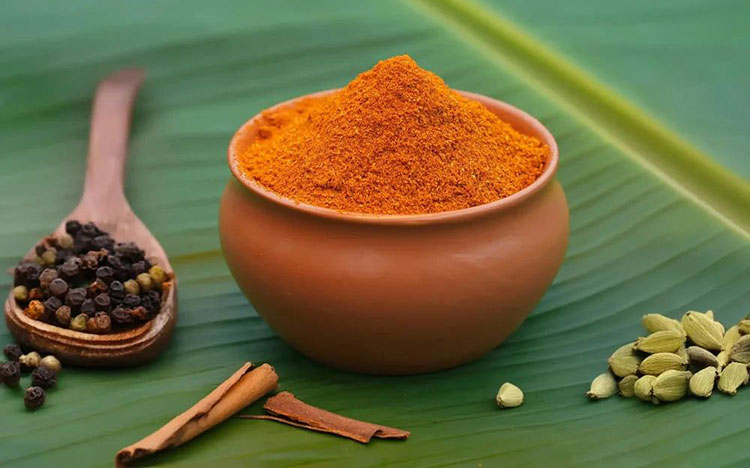
                      Scroll to Top