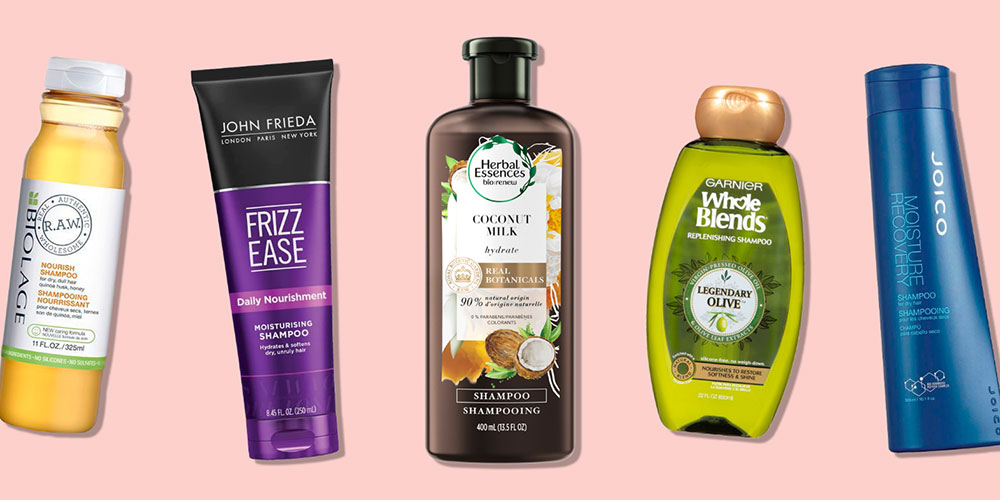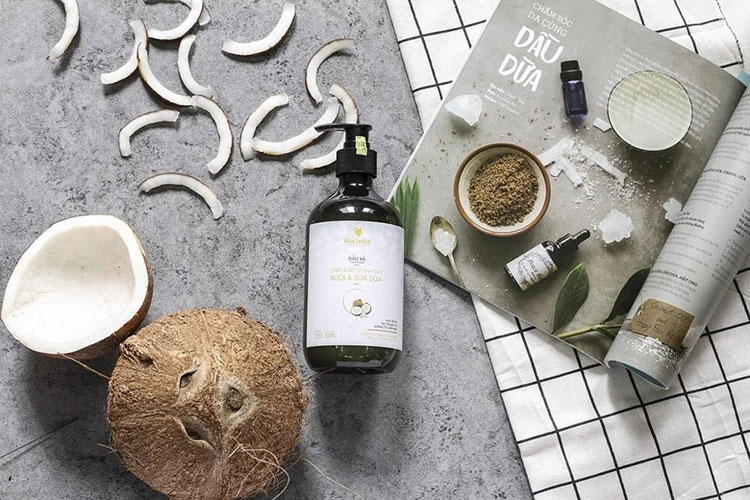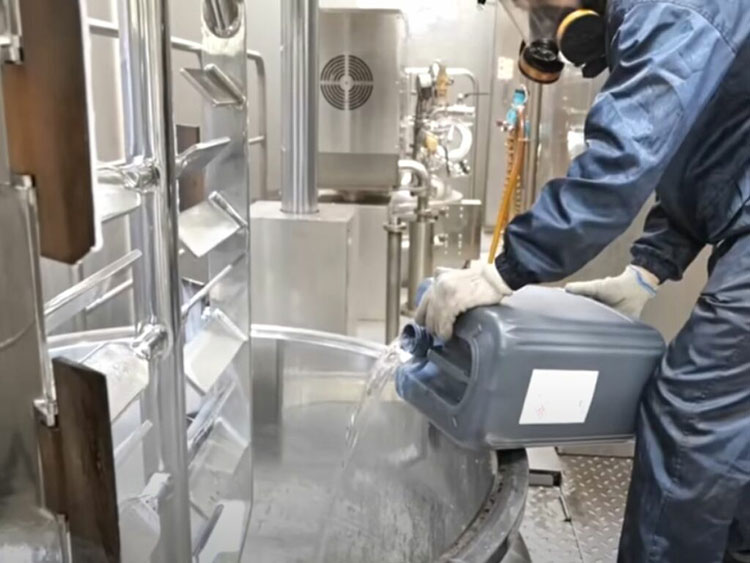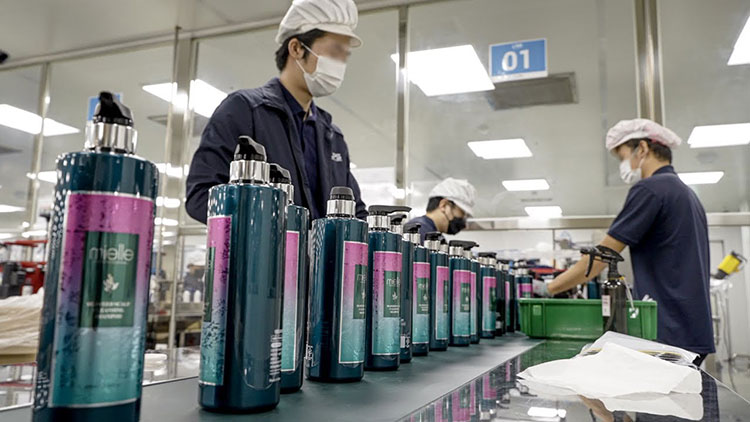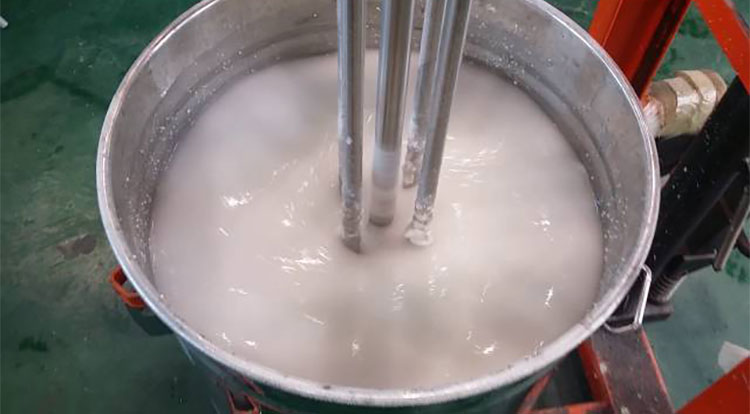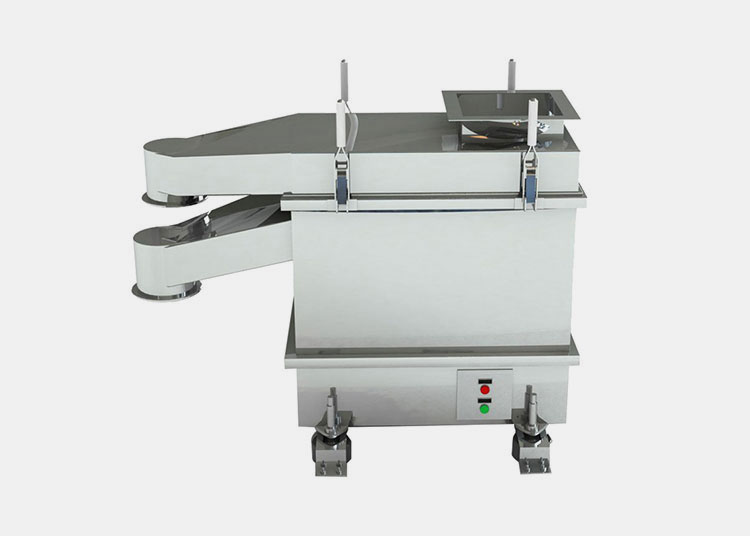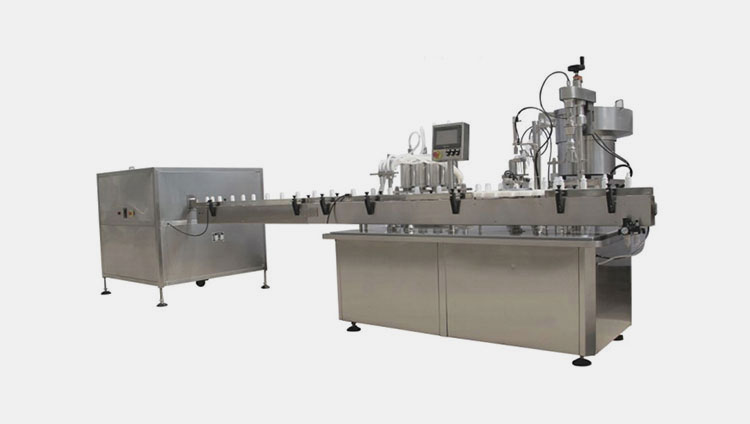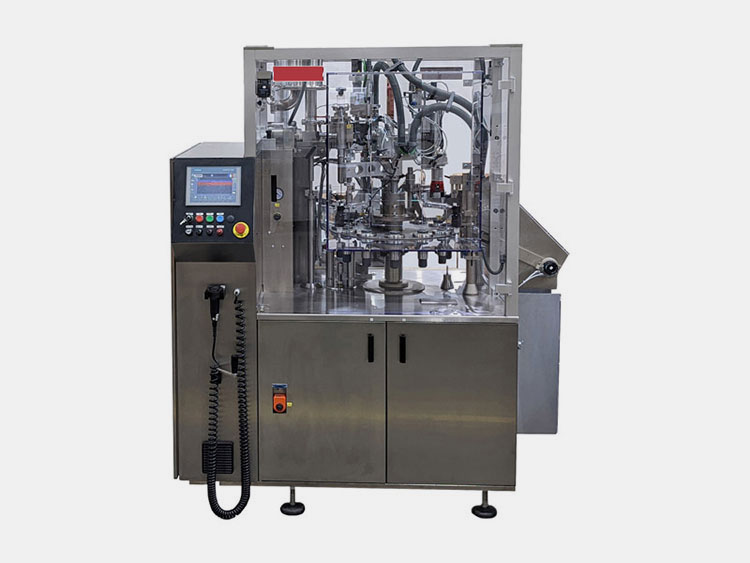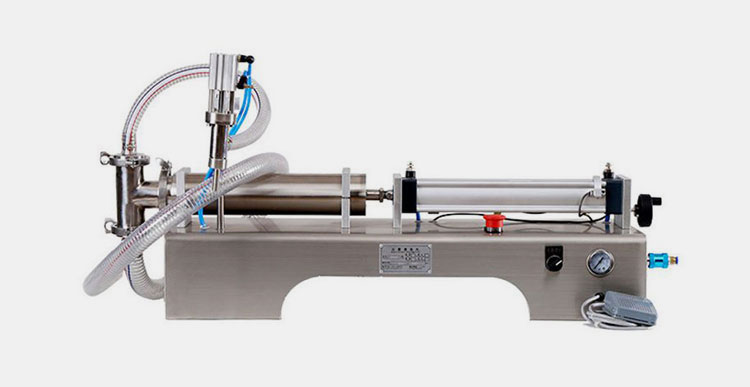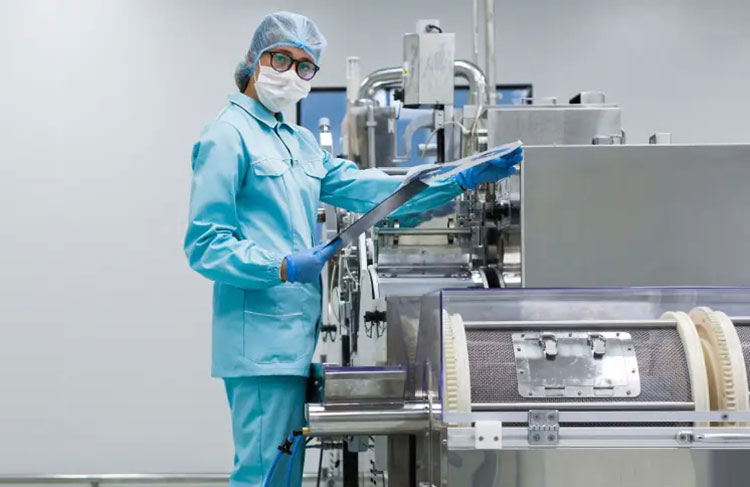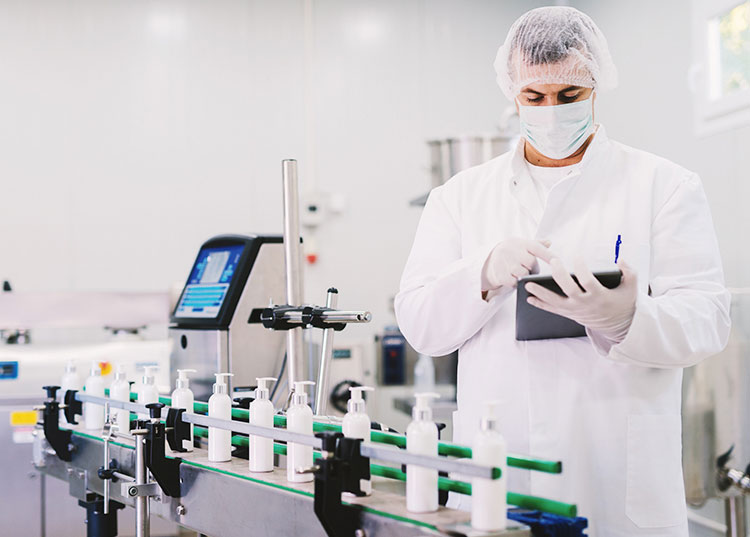
Shampoo Manufacturing-6

Shampoo Manufacturing: The Complete FAQ Guide 2025

Shampoo Manufacturing: The Complete FAQ Guide 2025

Are you curios about Manufacturing of shampoo? Do you know shampoo manufacturing comprises of specialized set of manufacturing protocol?

Shampoo is an essential hair care product purposely created for hair cleansing. They are used to remove extra sebum (natural oil) from hair without damaging hair. Shampoo manufacturing is not just about mixing and blending different ingredients. It comprises of precise blend of ingredient, advance equipment and series of testing measures to meet the consumer demand and expectation for safety.

Shampoo Manufacturing

Shampoo Manufacturing: The Complete FAQ Guide

This FAQ guide about shampoo manufacturing is created to educate manufacturer as well as general public about science and innovation behind this process. Let’s start this topic.

    Add a header to begin generating the table of contents

    1.What is shampoo manufacturing?

    shampoo

    Shampoo Manufacturing

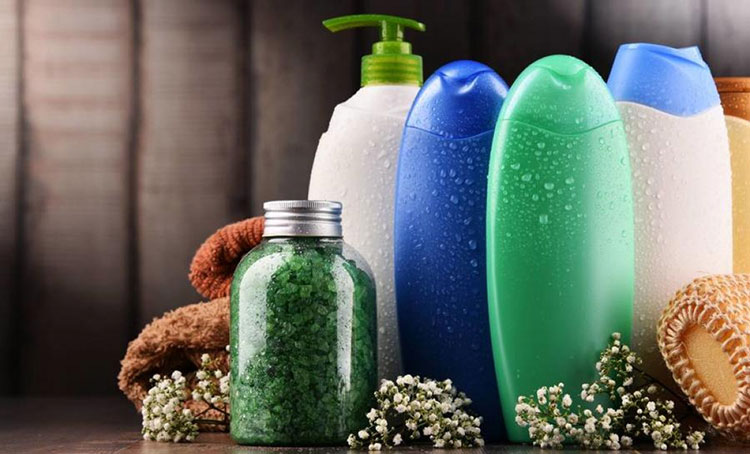
    Shampoo is specialized cleansing agent in which water is mixed with surfactant and other additive that will bind with water insoluble substance in scalp and rinse off without leaving residue which is not easily washed by water only.

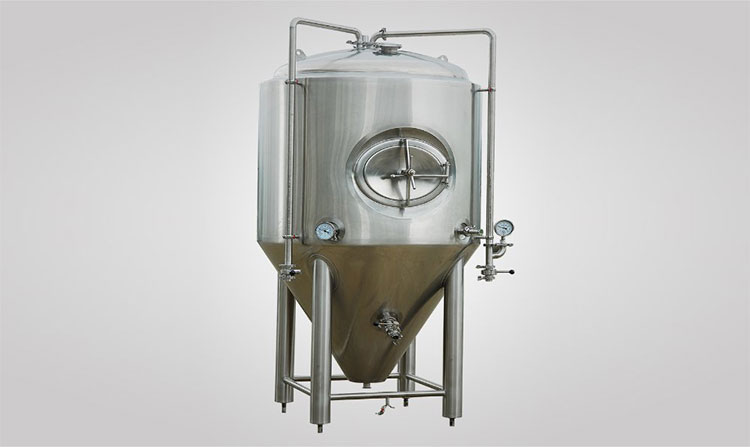
    Shampoo manufacturing compasses of several steps that transforms high quality raw material to final product which you see in super markets. It includes batch mixing quality assessment and final packaging in bottles. Each and every step require precise attention to meet the required quality and consistency in shampoo manufacturing.

    There are different kinds of shampoo manufactured like medicated, anti- dandruff, dry shampoo, shampoo bar and many more with the evaluation of market trend and consumer demand.

    2.How shampoo manufacturing is beneficial to manufacturer?

    Shampoo manufacturing is beneficial in many ways to manufacturer. It shows promising fast pace production and filling of shampoo in record time. Now without further delay look into remarkable benefit of shampoo manufacturing.

    Product quality

    Product quality

    Product Quality-Picture Courtesy: Health

    Shampoo manufacturing is automated process which means very less number of people required for monitoring and controlling the process that reduces chances of contamination. This way it increases quality and efficacy of final product.

    Maintaining consistency

    Maintaining consistency

    Maintaining Consistency-Picture Courtesy: Health

    Maintaining consistency is crucial step for any manufacturer to retain its market presence. Shampoo manufacturing is automated process and high accuracy equipment are used which ensure perfect mixing and blending resulting in consistent texture and accuracy in each batch.

    Reduce labor cost

    Reduce labor cost

    Reduces Labor Cost-Picture Courtesy: Levapack

    Shampoo manufacturing is highly efficient process and use of automated machine which result in labor cost. Due to automation, very less number of are required in process and high tech machine perform task repetitively with greater speed. This way need of manual labor reduces.

    Increase production efficiency

    Increase production efficiency

    Increase Production Efficiency

    Shampoo manufacturing continuously produce large quantities at high speed due to automated machine with minimal use of manual labor. This process reduces production time and allows manufacturer to meet increasing demands of customer.

    Minimal wastage product

    Minimal wastage product

    Minimal Wastage of Product

    Shampoo manufacturing follows automatic principle so every bottle gets adequate amount and no bottle is missed or overfilled. Accurate amount of ingredient mixed, blend and filled without any error. Shampoo manufacturing greatly reduces waste.

    3.What are the primary ingredients used in shampoo manufacturing?

    Shampoo manufacturing is a complex process in which various ingredients are carefully mixed together to create an effective product which can cleanse scalp with nourishing and conditioning catering specific hair concern. Let’s look into each ingredient that you find in typical shampoo.

    Deionized water

    Deionized water

    Deionized Water

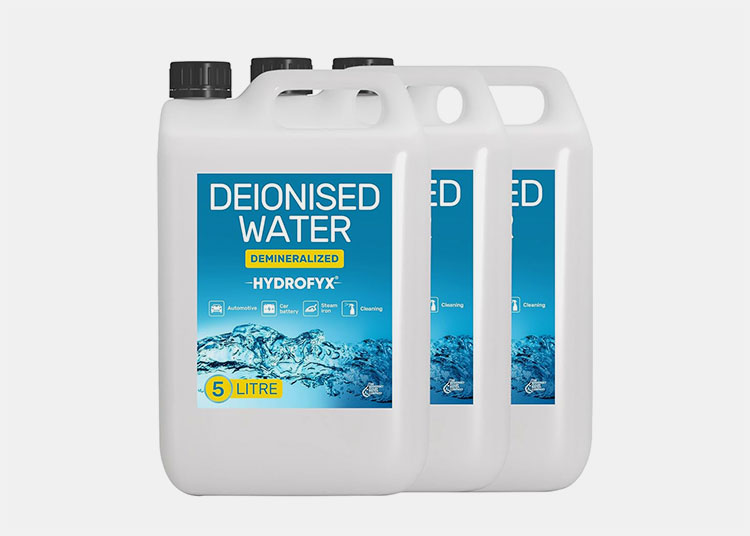
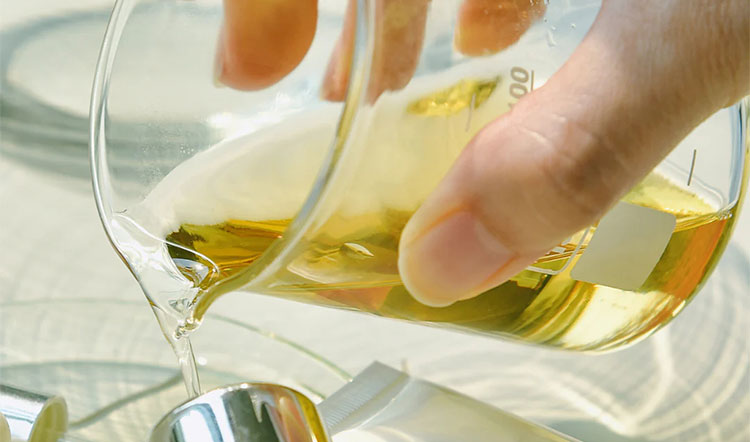
    Most important ingredient in shampoo manufacturing is water as it is 70-80% of total shampoo and act as transport medium for blending and mixing of other additives. But the water used in shampoo manufacturing is not an ordinary tap water, it is deionized water.

    Deionized water, is the water from which all mineral like calcium, sodium and magnesium, and other impurities are removed through deionization process. Why it is important to use deionize water? Because it free from all minerals, increasing its compatibility with other ingredients and all impurities are removed which reduce chances of microbial contamination and enhances its performance.

    Surfactant

    Surfactant in Shampoo Manufacturing

    Surfactant in Shampoo Manufacturing

    Surfactant are major cleaning agent in shampoo. It is added to aid foaming in shampoo manufacturing resulting in washing of dirt, oil and residue of hair care product on scalp. There are two different types of surfactant used in shampoo manufacturing

    • Primary surfactant
    • Secondary surfactant

    Let’s discuss in detail function of each surfactant and how they are different from each other?

    Primary surfactant

    Primary Surfactant

    Primary Surfactant- Picture Courtesy: Pharma Excipients

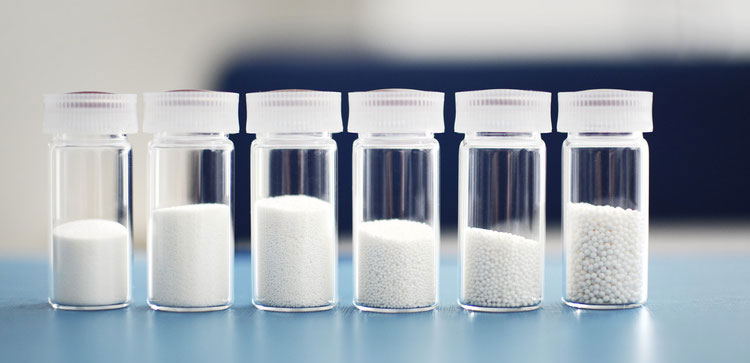
    Primary surfactant is main cleaning agent and they are mainly responsible for removing dirt, sebum and debris from scalp. They exert best foaming property and easily rinse off from hair without leaving residue. They easily mix with oil so remove dirt that are not washable with water.

    Most commonly used primary surfactant are sodium lauryl sulphate (SLS) and sodium laureth sulphate(SLES) due to their lathering ability and, easy mixing of oil in water.

    Seconadary surfactant

    Secondary Surfactant

    Secondary Surfactant –Picture Courtesy: Formula Botanica

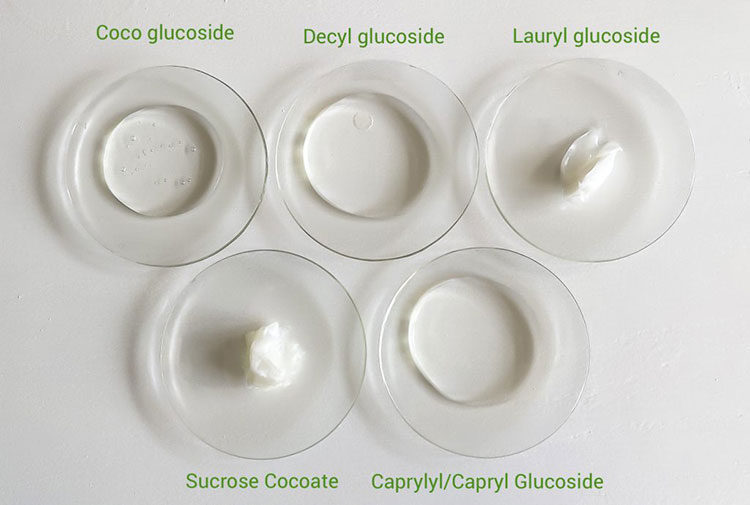
    Secondary surfactant is also known as co-surfactant. They are added to enhance overall performance of shampoo and other properties like mildness, conditioning, nourishing content and viscosity depending on customer demand. These effects are restored by combined effect of both or by only secondary surfactant properties.

    Some of secondary surfactant used depending on manufacturer requirement are, cocamidopropyl betaine(CAPB) used for milder preparation and gives conditioning effects to hair, cocamidopropylamine oxide(CAO) added for stabilizing and enhancing foaming property, and alkyl polyglycoside are used as eco-friendly choice because it is easily biodegradable, and still gives good foaming and cleaning effect.

    Thickeners

    Thickener

    Thickener – Picture Courtesy: Cosmetic Ingredient

    Thickeners are added in shampoo for various reason, although thickeners do not impart any role in cleaning and foaming properties of shampoo. Thickeners are added to enhance product stability hence providing even distribution of other ingredient.

    Thickeners also facilitate in maintaining viscosity of shampoo. If shampoo is too thin it will run down from your hair and if it is too thick it will not easily spread or penetrate in hair. Appropriate thickness also gives product luxurious feel and enjoyable to use for consumer.

    Shampoo manufacturing with desired viscosity provide consumer better overall experience and effectiveness. There are so many options available for thickeners used in shampoo manufacturing like xanthan gum, guar gum, hydroxyethyl cellulose, carbomer and many more depending on manufacturer requirement.

    Conditioning agent

    Conditioning agent

    Conditioning Agent- Picture Courtesy: Radici Hair Studio

    We all know that main function of shampoo is to clean and remove dirt oil. But due to evolving market trend and consumer demand of shampoo with other additional benefit like conditioning, nourishing and repairing of hair are gaining popularity.

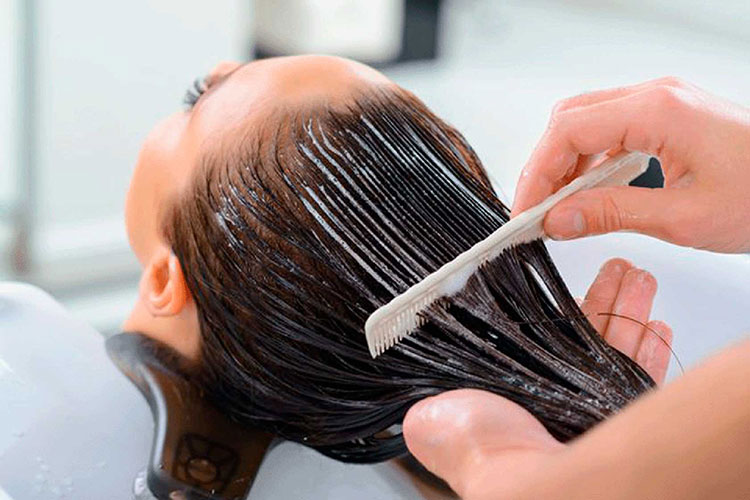
    Incorporating conditioning agent in shampoo enhances overall performance by providing protection, nourishment and give smooth texture to hair. It makes hair silky and detangle which are easily manageable and give smooth look to hairs.

    There is some common conditioning agent which you find in most of commercial shampoo manufacturing are silicones which include dimethicone, natural oils like coconut oil and argan oil and fatty alcohols like stearyl and cetyl alcohol.

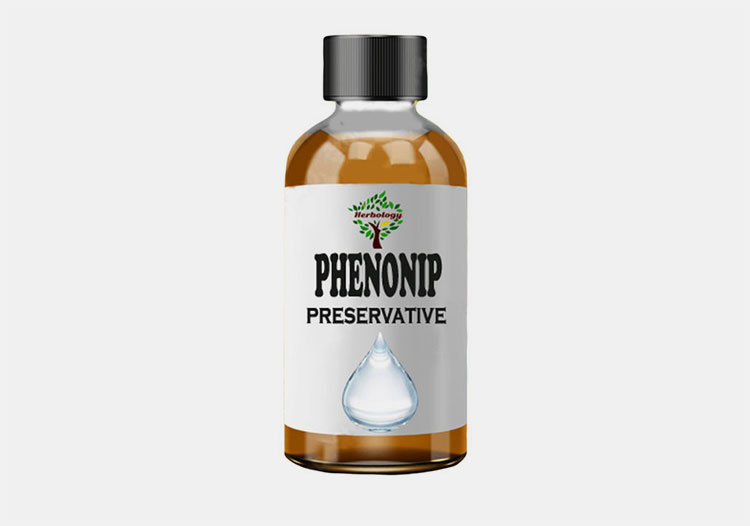
    Preservatives

    Preservative

    Preservative

    Preservatives are crucial component in shampoo manufacturing. Preservative are added in formulation to extend shelf life and prevent contamination from microbial growth like mould and fungi. It is also needed to make sure the product is equally effective and safe to use till mentioned expiry.

    Few examples that are frequently use are potassium sorbate and sodium benzoate etc. You have to keep in mind few factors while selecting preservative like pH level, composition of product and desired shelf life.

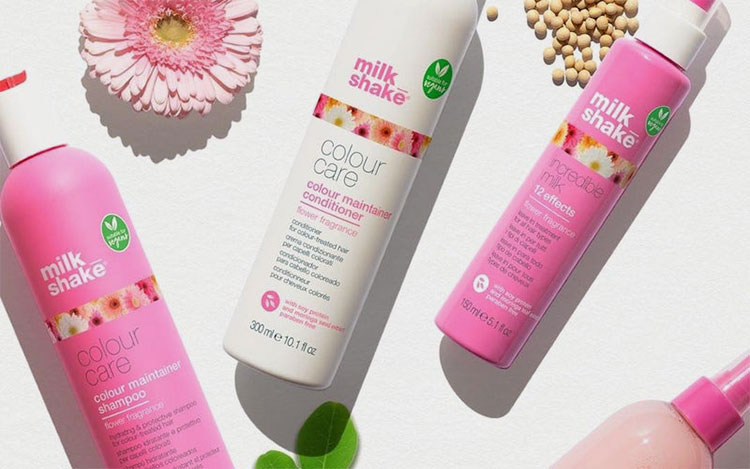
    Fragrance and colorant

    Fragrance and colorant

    Fragrance and Colorant-Picture Courtesy: On Line Hair Depot

    Fragrance and colorant doesn’t add any advantage to product performance. It is added to give eye appealing look for user experience. fragrance help to build customer loyalty and enhances product market demand. Fragrance and colorant used may be derived for natural resources or synthetic.

    It is also considered while adding colorant that it is evenly dispersed in formulation which is achieved by different dispersion technique and advance equipment.

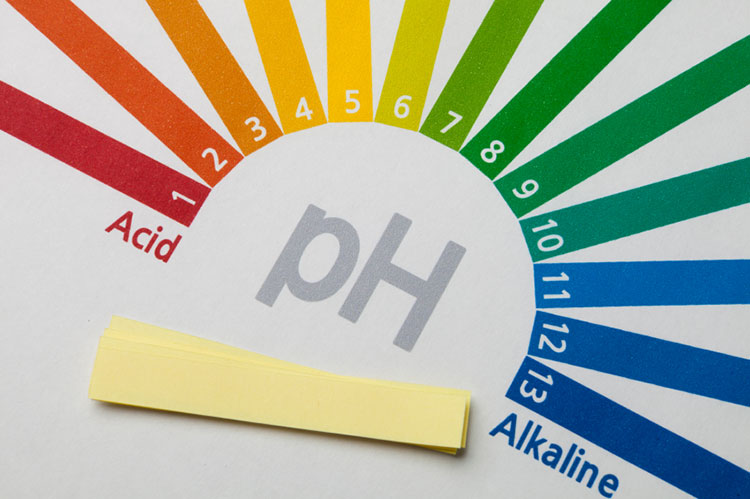
    pH adjuster

    pH adjuster

    pH Adjuster- Picture Courtesy: Cosmetic Formulator

    pH is an important factor in maintaining stability and performance of shampoo.  Desirable pH for shampoo is 4.5-6.5.

    What pH adjuster do? It can increase and decrease pH of shampoo. If pH is too high it makes hair dry and brittle, while very low pH can irritate scalp.

    In most of shampoo manufacturing, citric acid and lactic acid and sodium hydroxide is used as pH adjuster. It is also critical that pH adjuster is also compatible with other ingredient and do not cause any adverse effect

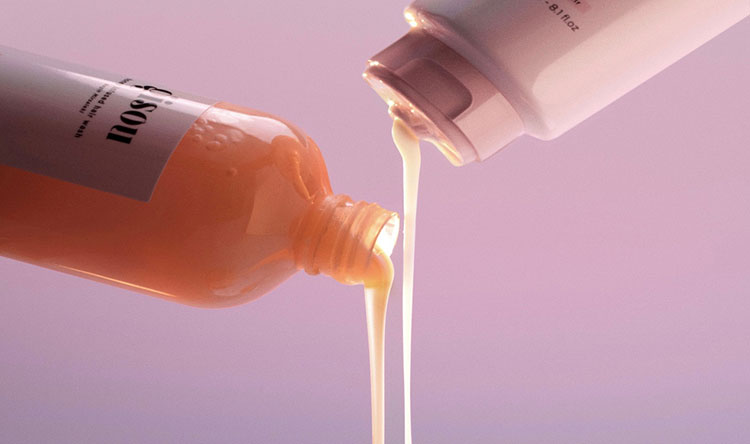
    Humectant

    Humectant

    Humectant- Picture Courtesy: Gisou

    Humectant is essential ingredient in shampoo that retain moisture and prevent over dryness in hair. It also restores hydration level in hair which is damage from over stripping of natural oil by surfactants.

    Most shampoo manufacturer add glycerin, sorbitol and propylene glycol as humectant in their formulation to make hair soft and manageable.

    4.What is the step by step process in shampoo manufacturing?

    Shampoo manufacturing is a time taken process involve multiple steps which you need to strictly monitor so you get consistent and quality product every time. Here is the more detailed breakdown of each steps.

    Selecting and preparing raw ingredient

    Selecting and preparing Raw ingredients

    Selecting and preparing Raw ingredients- Picture Courtesy: Roam and Thrive

    Selecting raw ingredient is crucial step in manufacturing consistent and quality product. Selecting ingredients starts from choosing right surfactant which is important for cleansing to other additive ingredient which is added for specific hair benefits.

    After selecting perfect ingredients process start by preparing and pre dissolving solid ingredient like some surfactant and thickener that are solid are dissolve in deionized water to ease incorporation in mixture.

    Other ingredients are added in specific sequence like secondary ingredient and conditioning agent are added after base is prepared. This step avoids any premature reaction.

    Mixing and blending

    Mixing and blending

    Mixing and Blending in Shampoo Manufacturing-Picture Courtesy: TY Cosmetic

    In second phase, ingredients are mixed in large mixing tank in a specific manner. Mixing and blending is critical step in shampoo manufacturing because it ensures that you will get perfect consistency in every batch.

    This purpose is served by using different agitators and high-shear mixer which ensure thoroughly mixing of ingredients. The duration and speed of mixing is also play important role in achieving uniformity in mixture.

    Heating and cooling

    Heating and cooling

    Heating and Cooling

    This process is incorporated because certain ingredient required specific temperature to dissolve or activate. Heating assist dissolution of certain ingredients like thickeners and it also facilitate emulsification.

    After that temperature is cooled down to introduce heat-sensitive ingredients like fragrance, preservative and coloring agent without affecting its performance.

    Homogenization

    Homogenization

    Homogenization

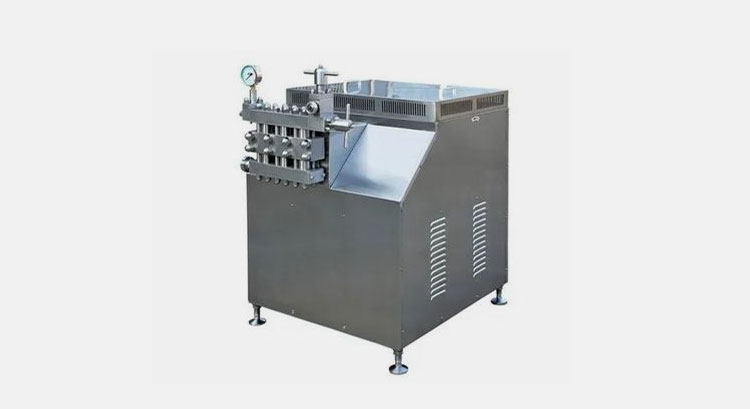
    Finally, mixture is passed through homogenization process to ensure uniformity throughout the mixtures. This purpose is best served by homogenizer. In this step mixture is mixed at high speed which lead to reduced particle size creating consistent and smooth texture of shampoo.

    Homogenization is most important step in shampoo manufacturing for achieving desired texture and all ingredients are evenly distributed throughout the mixture.

    Quality checking

    Quality checking

    Quality Checking- Picture courtesy: Jochamp

    Quality testing is done for different parameters to check whether the product up to desired quality and competency. Each batch undergoes rigorous testing for pH, stability and viscosity. pH range which is considered ideal for shampoo that does not irritate scalp is 5-7. This initial testing process determine how much pH need to adjust

    Same goes with other parameters like viscosity is determined and adjust according to requirement. Batch is also checked for product stability and this step ensure shelf life of shampoo after packaging and reduced chances of layering and separation.

    Filling and packaging

    Filling and packaging

    Filling and packaging- Picture Courtesy: Makwell

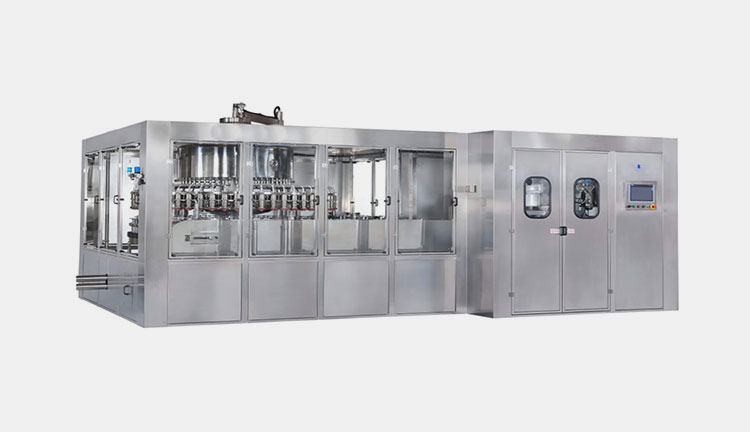
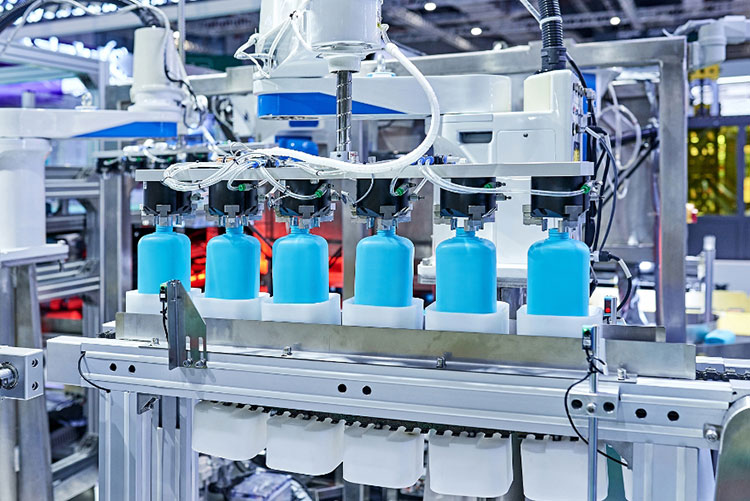
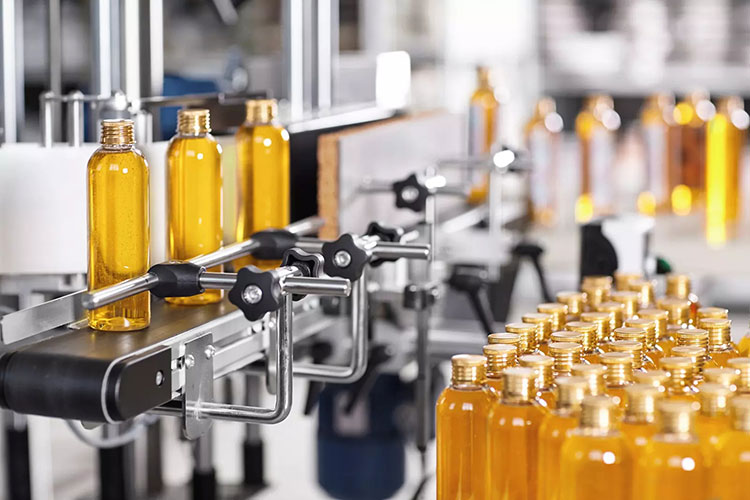
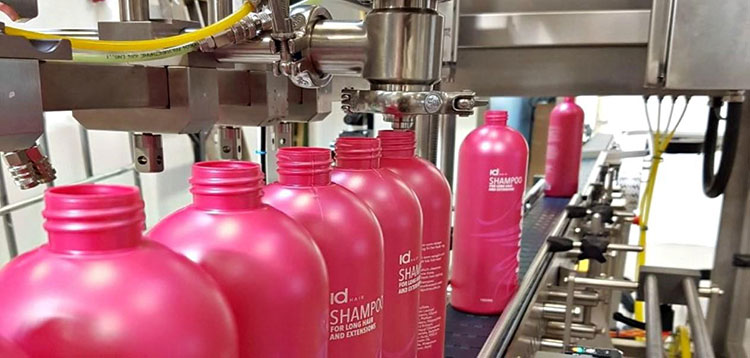
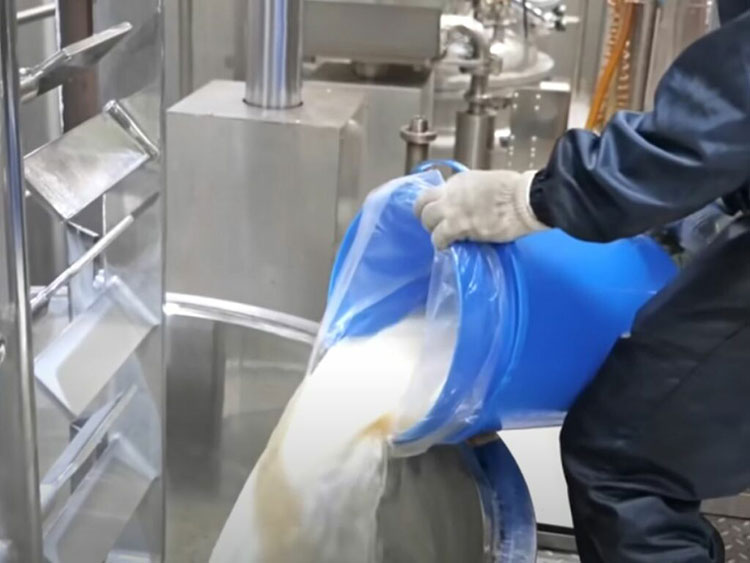
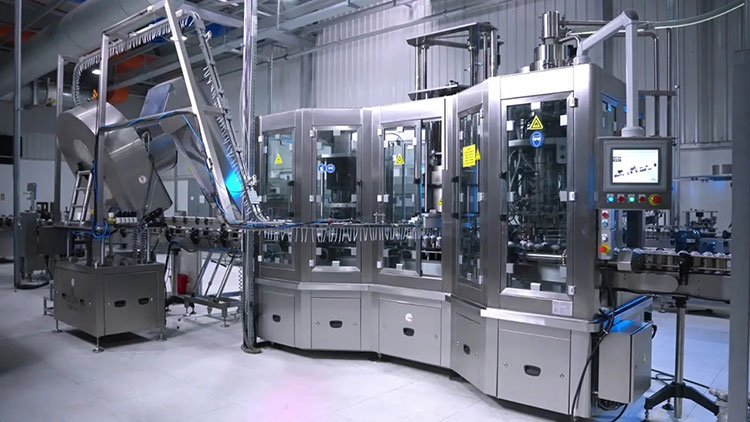
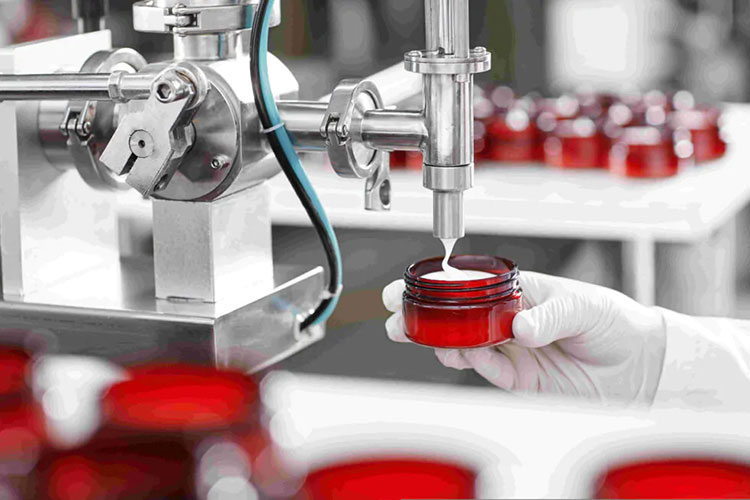
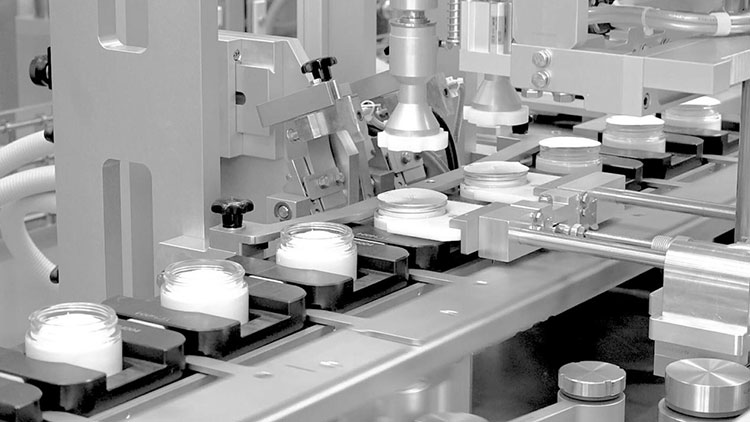
    After batch is thoroughly checked for quality, the shampoo mixture is moved to filling area. First appropriate container is selected for filling then bottles are placed in automated filling machine which fill bottles with precise quantity of shampoo. These machine are calibrated to fill each bottle with exact amount.

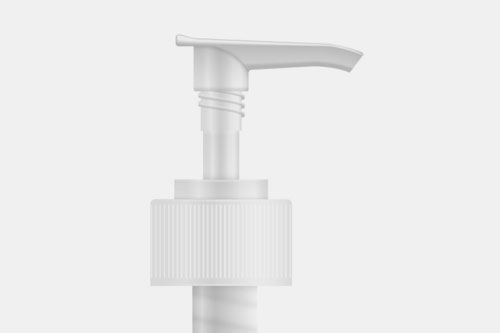
    After filling, bottles are closed and sealed to prevent leakage and contamination. Seals may vary from simple screw cap to pump dispenser. These automated machine reduce labor cost and make production faster.

    5.What kind of machinery frequently used in shampoo manufacturing?

    In production line of shampoo manufacturing some of important equipment are used to make process effortless, faster and cost effective without compromising quality and efficacy of final product. Some major machinery which can see in every shampoo manufacturing are described below.

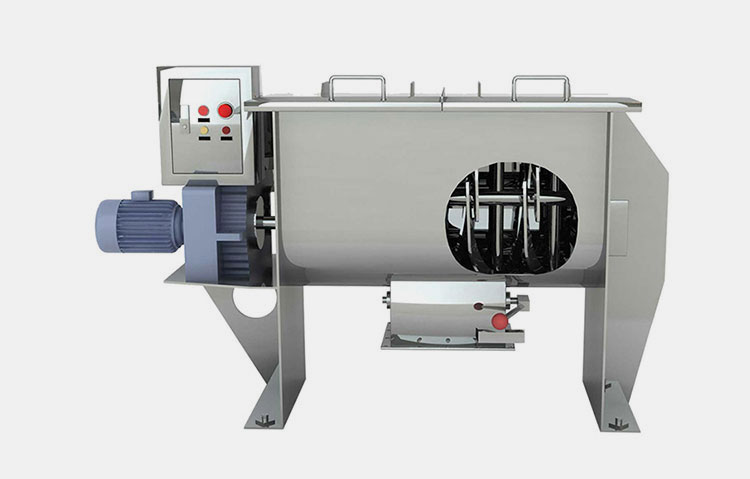
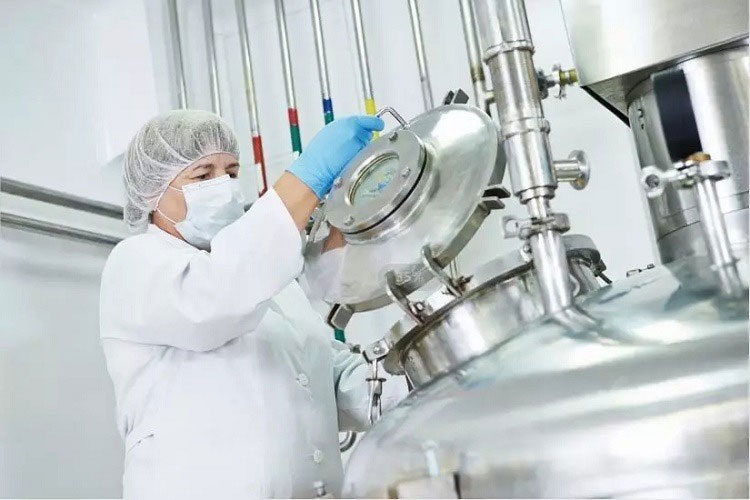
    Mixing Tanks

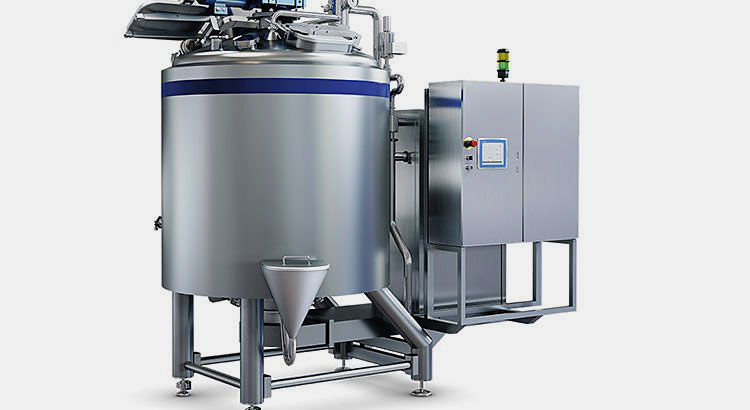
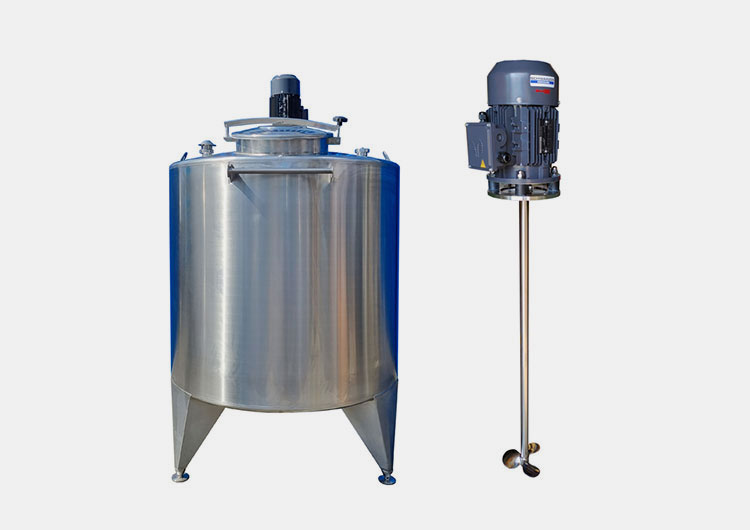
    Mixing tanks are large stainless steel container which are used to mix large batches of surfactant and other ingredient in water to make uniform mixtures. These tanks usually include agitator and high-shear mixer that ensure even mixing and stirring. Let’s describe each mixer individually.

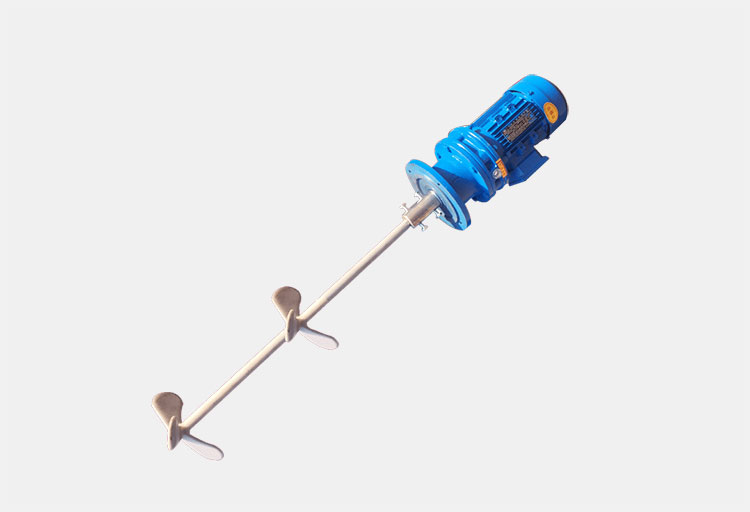
    Agitator

    Agitator

    Agitator Mixer –Picture Courtesy: Haosh

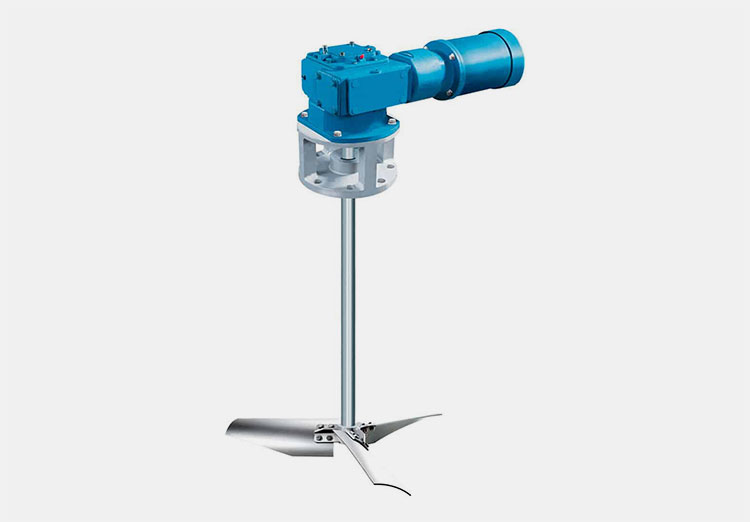
    Agitator are specialized equipment placed in mixing tank which ensure uniformity in shampoo mixture inside the tank. This equipment is frequently used in shampoo manufacturing.

    The basic principle of agitator based on rotating impeller induce flow and shear force imparting homogenization of one or two ingredients. This equipment ensures uniformity throughout the mixture and maintain consistency in shampoo manufacturing.

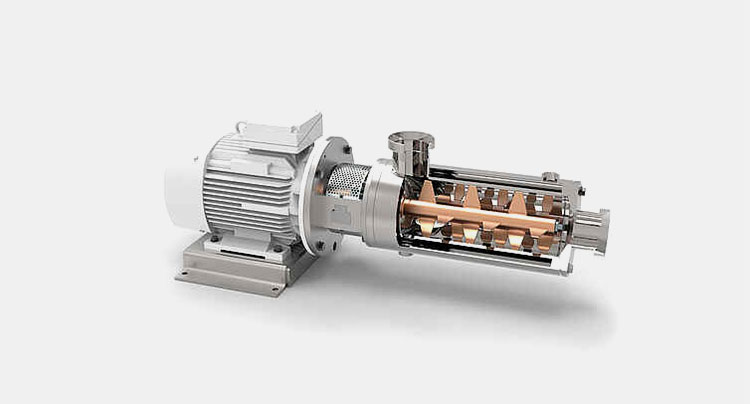
    High-shear mixer

    High-shear mixer

    High-Shear Mixer-Picture Courtesy: Tetra Pak

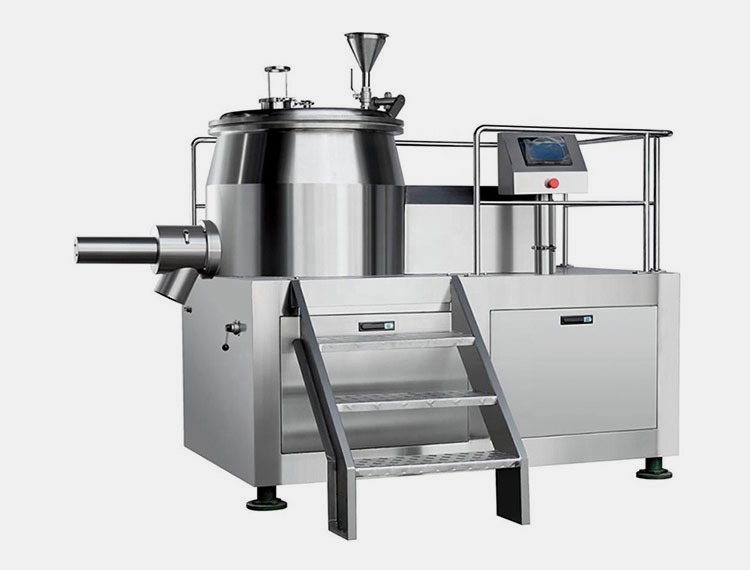
    High shear mixers can break up clumps and used to emulsify, homogenize, disperse and dissolve immiscible mixture. Tighter particle size ensures consistency, uniformity and optimal performance of your final product.

    High shear mixer revolves around the concept of shear force. The mixer consists of a rotor that rotates at high speed within a stationary stator. The constantly moving rotor create centrifugal force while the stator remain stationary creating shear force resulting in reduced particle size and leading to evenly dispersed mixture.

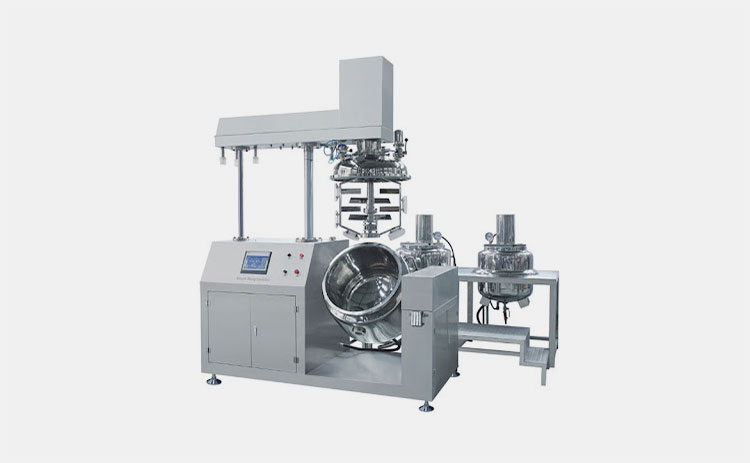
    Vaccuum emulsifier mixer

    Vacuum Emulsifier Mixer

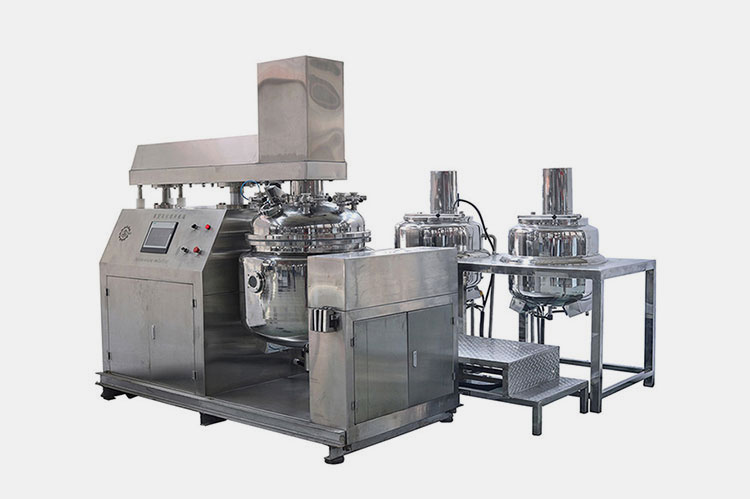
    Vacuum Emulsifier Mixer- Picture Courtesy: Pharmaceutical Machinery

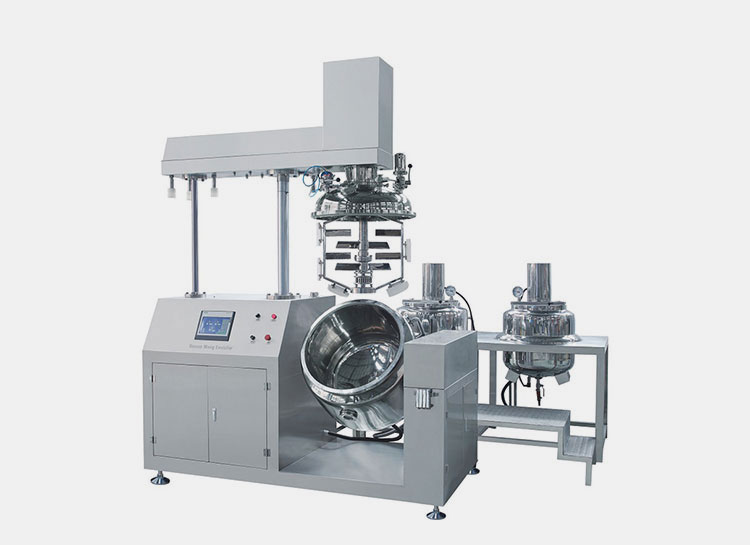
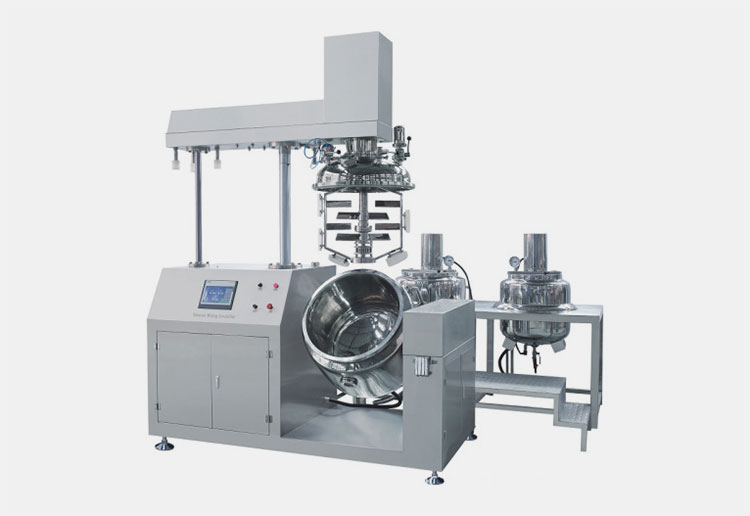
    The vacuum emulsifier mixer tends to mix immiscible liquid by reducing surface tension between liquid. It also disperses, homogenize, aspirate very viscous ingredients making them easier to blend and mix.

    Vacuum emulsifier work on basic principle shear disperse force. It worked by heating water or oil based in separate container then they are suck into emulsifying pot, where they quickly dispersed and emulsified by high shear impeller blade making mixture homogenized. As emulsifier is in vacuum condition it removes all air bubble which are produced during mixing liquid making your shampoo shinier and homogenized.

    Filling machine

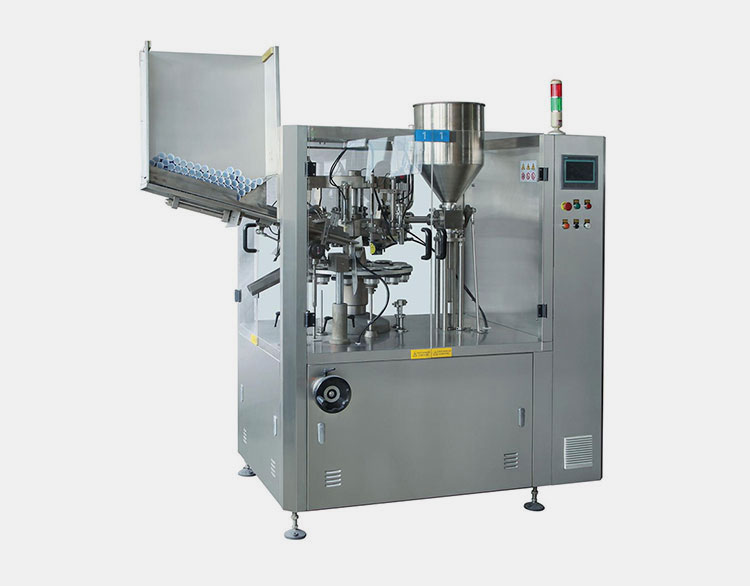
    The filling machine is used to fill accurate amount in tubes. There are so many filling machines. Let’s talk about them in detail.

    Automatic shampoo filling machine

    Automatic shampoo filling machine

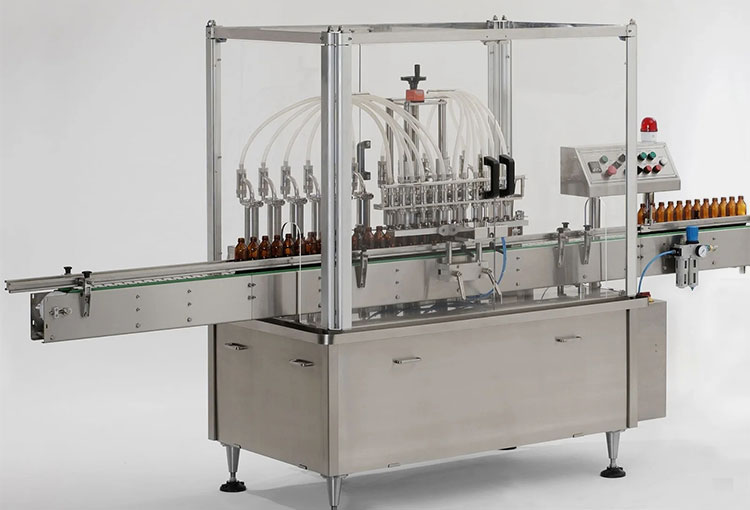
    Automatic Filling Machine

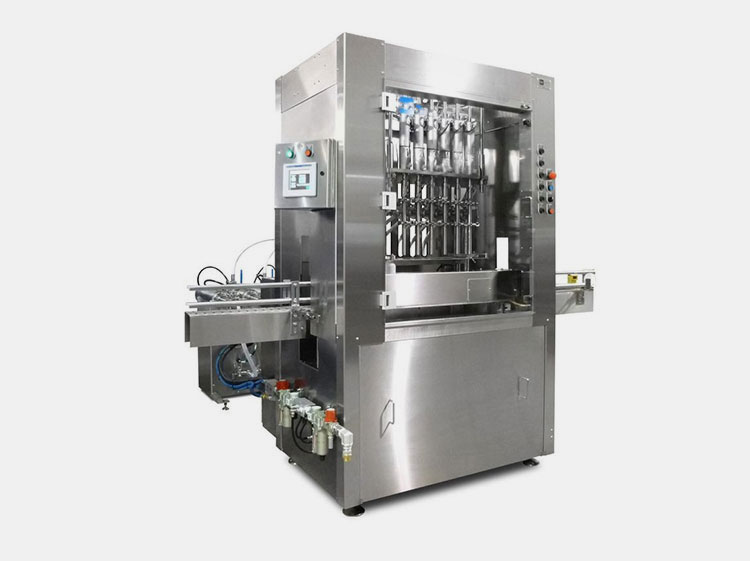
    Filling machine is integrated automated machine which used to fill shampoo bottles with precision and accurate consistency minimizing wastage and spilling of shampoo.

    The basic principle of filling machine is consisting of conveyer belt which automatically hold bottles by itself and carrying it to filling nozzles that fill each bottle with desired amount which was pre-set in the filling machine. The correct integration and speed is crucial in filling machine for accurate filling and increase production rate.

    Semi-automatic shampoo filling machine

    Semi-automatic shampoo filling machine

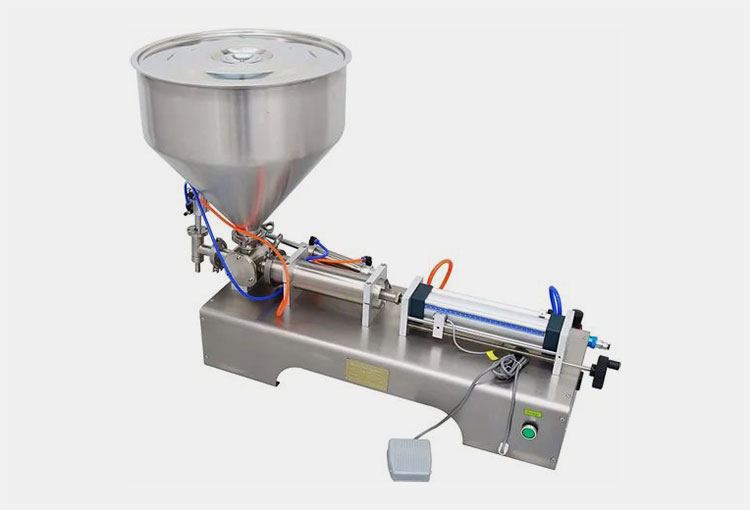
    Semi-Automatic Shampoo Filling Machine

    Semi-automatic machine is another type of machine used in shampoo filling process. It is cheaper and convenient to use.

    The main principle of semi-automatic machine is you need to place bottles on holder and machine fills in automatically. It has multiple heads you fill number of bottles at a time. It is good low scale production because of cheaper value as compared to automatic machine.

    Manual shampoo filling machine

    Manual shampoo filling machine

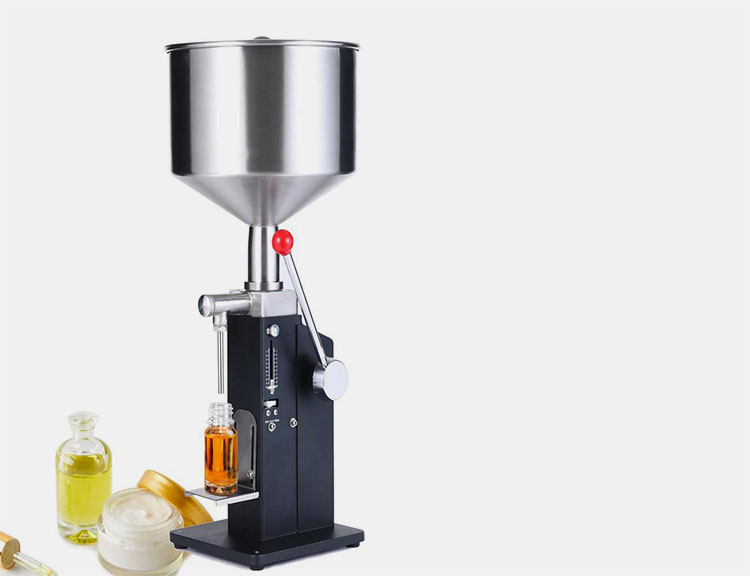
    Manual Shampoo Filling Machine

    Manual filling machine work on simple process you need to put bottle below nozzle and pulls the lever but you need to adjust volume by close monitoring. This equipment needed undivided attention to overcome spilling and wastage. It is cheaper version easy to use and clean.

    Capping machine

    Capping machine

    Capping Machine

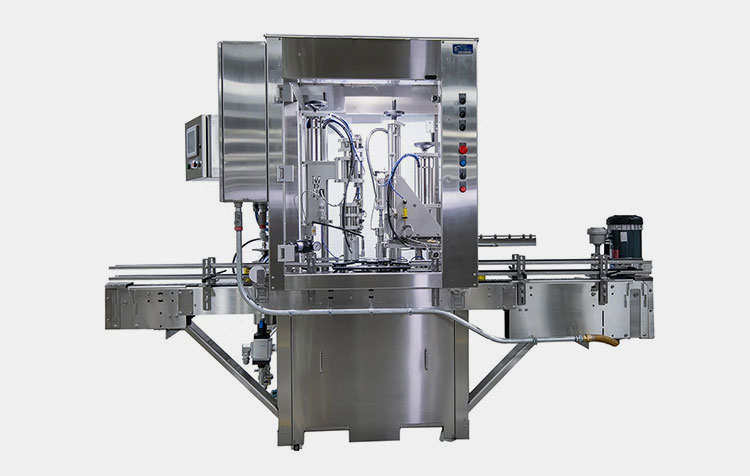
    After completion of shampoo filling process, bottles are tightly closed by caps to avoid spilling and contamination of product.

    Capping are also done by automated machine in which bottle is sent from filling unit to sealing or capping unit through conveyer belt where automated machines sealed the mouth of bottles with caps and preserving its efficacy and freshness. These machine reduces manual labor as well increasing production rate.

    6.How different industries incorporating shampoo manufacturing in their practices?

    Nowadays shampoo manufacturing is greatly expanded and used in various larger industries in formation of different product such as:

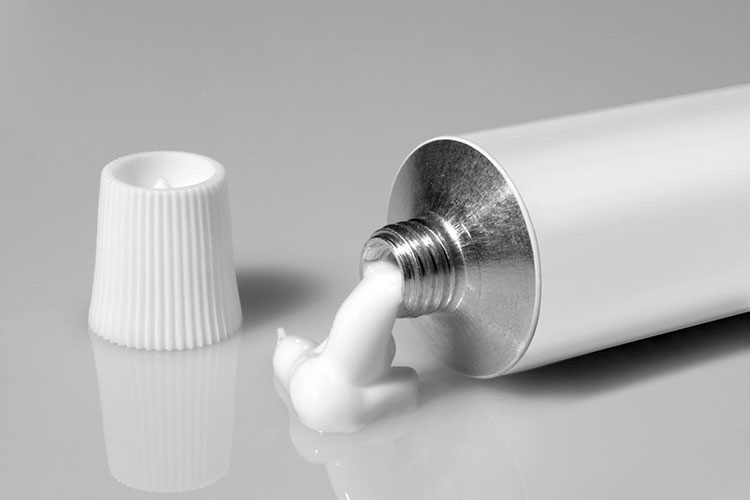
    Pharmaceutical industry

    Pharmaceutical industry

    Pharmaceutical Industry-Picture Courtesy: EZO

    In pharmaceutical industries various ointment, medicated cream and lotions are also prepared through same process of shampoo manufacturing. Such as mixing and blending of solid in liquid phase, homogenizing the mixture, heating and cooling etc., all above mention procedure are also used in manufacturing pharmaceutical grade product.

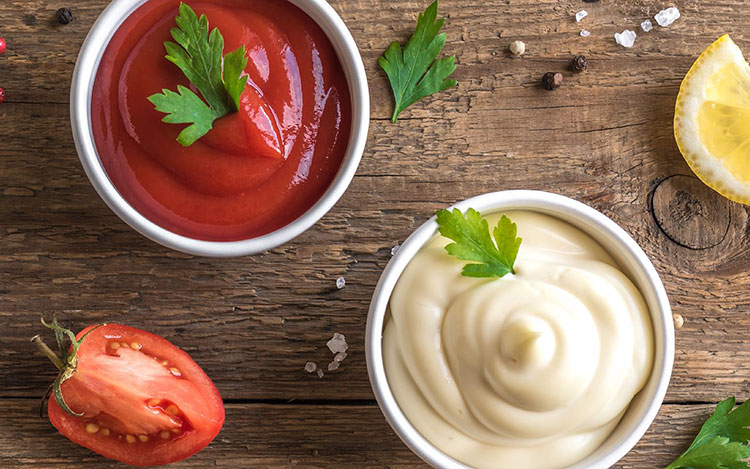
    Food industry

    Food industry

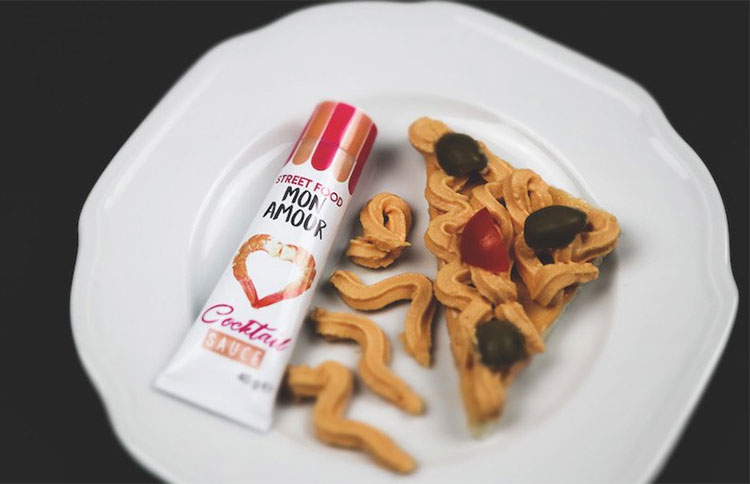
    Food Industry-Picture Courtesy: The Sun

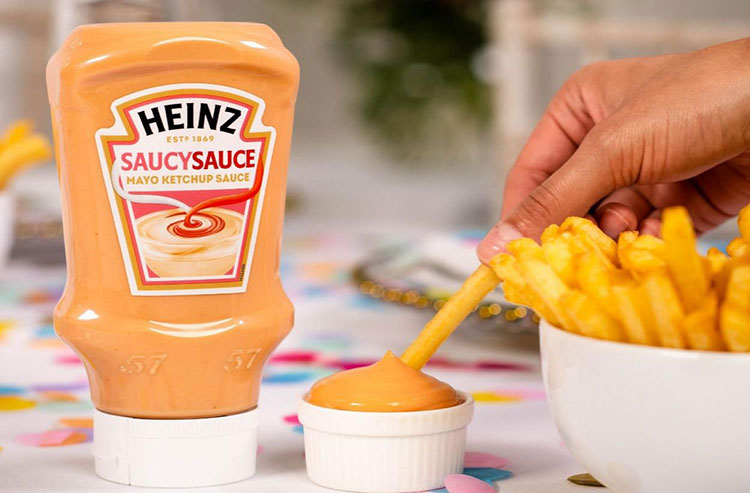
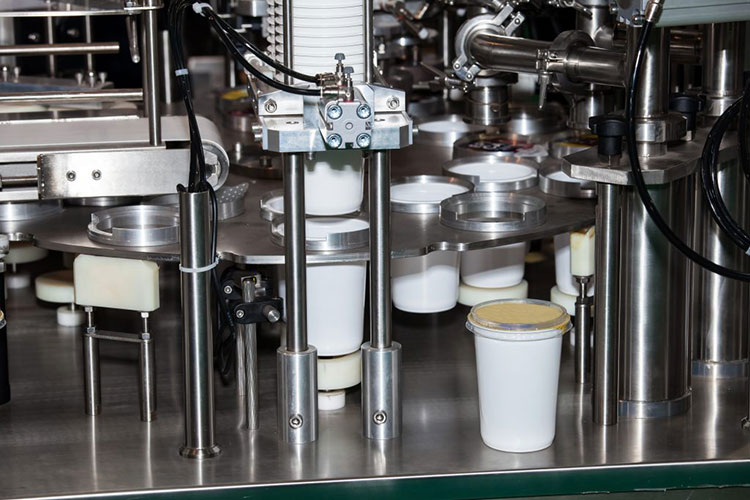
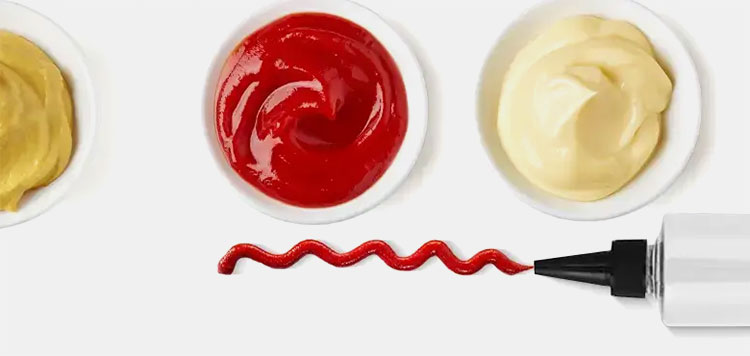
    There is huge application of shampoo manufacturing process in food industry. Nowadays you used different sauces like ketchup, mayonnaise and different seasoning; they are also produced with same process. Shampoo blending, mixing, filling and packaging machines are used in food industry as well.

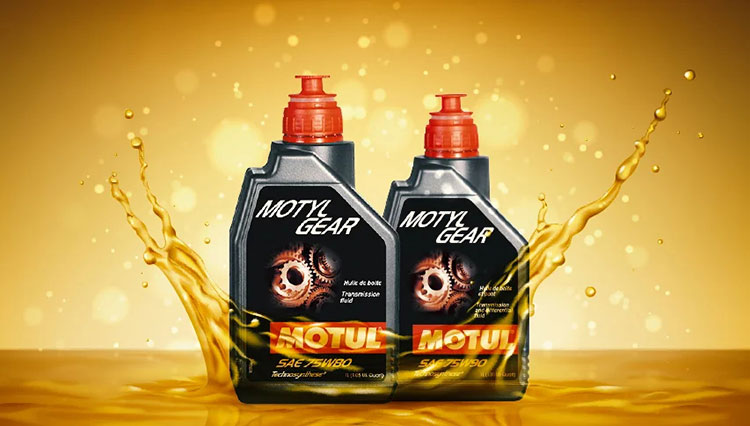
    Chemical industry

    Chemical industry

    Chemical Industry-Picture Courtesy: Royal Talens

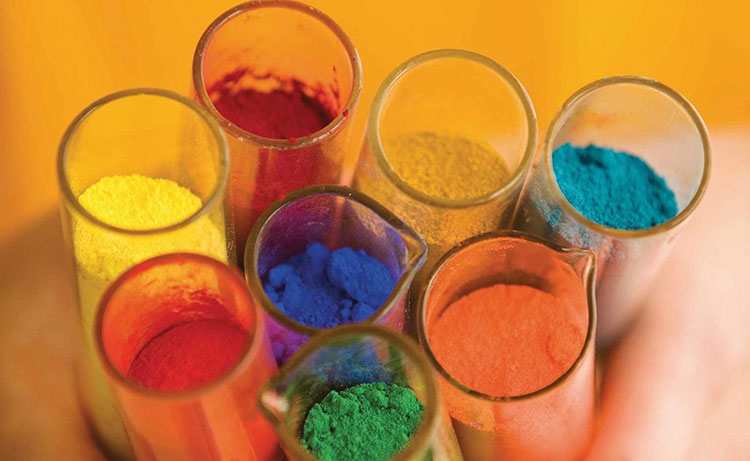
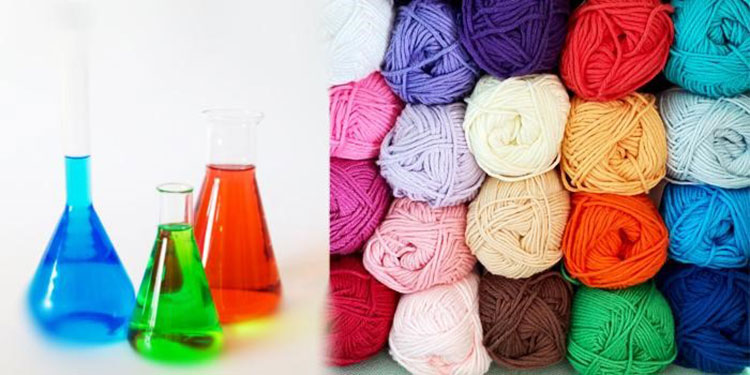
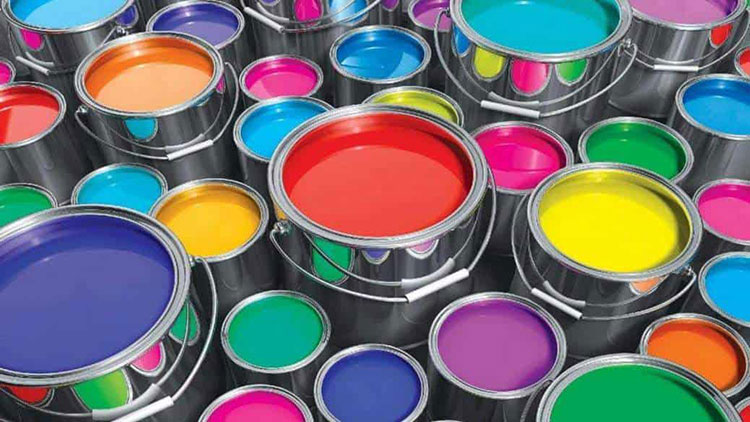
    In chemical industry product like hair dyes, paint, cleaner, polishes, water and oil colors are prepared through same process used in shampoo manufacturing. Some related equipment is also used for effective production in chemical industry.

    Veterinary Industry

    Veterinary Industry

    Veterinary Industry-Picture Courtesy: The Independent

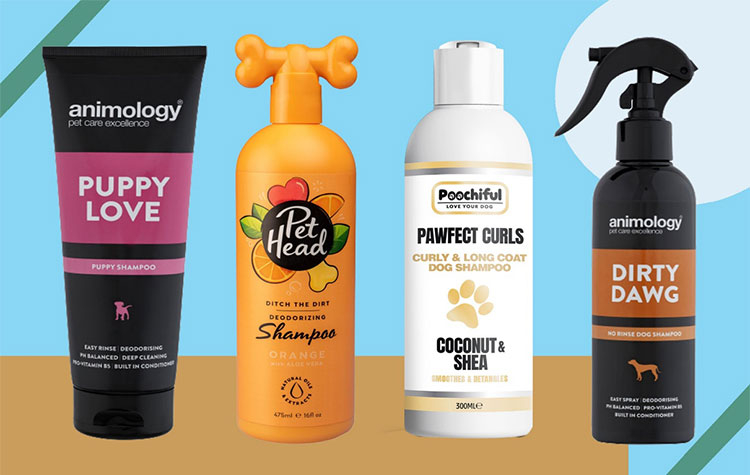
    In previous time there is no proper hygiene product available for pets so it quite difficult to treat take care of them. Now due to emerging demand we see lots of veterinary grooming products. There we see another application of shampoo manufacturing process; pets shampoo and body wash are formed with same process.

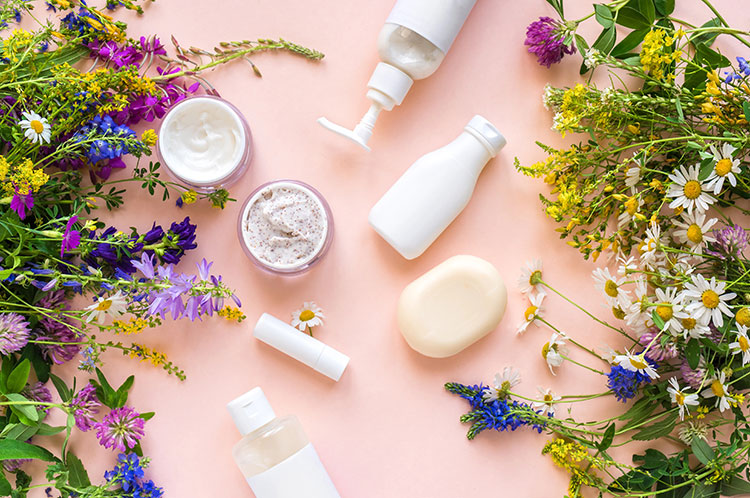
    Cosmetic industry

    Cosmetic industry

    Cosmetic Industry

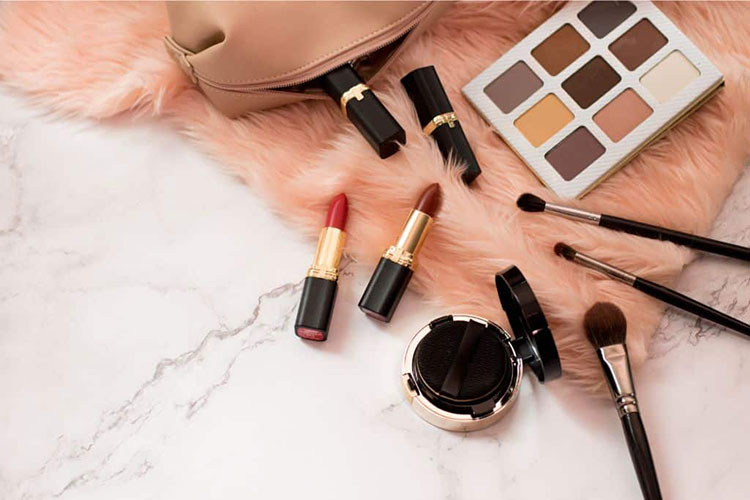
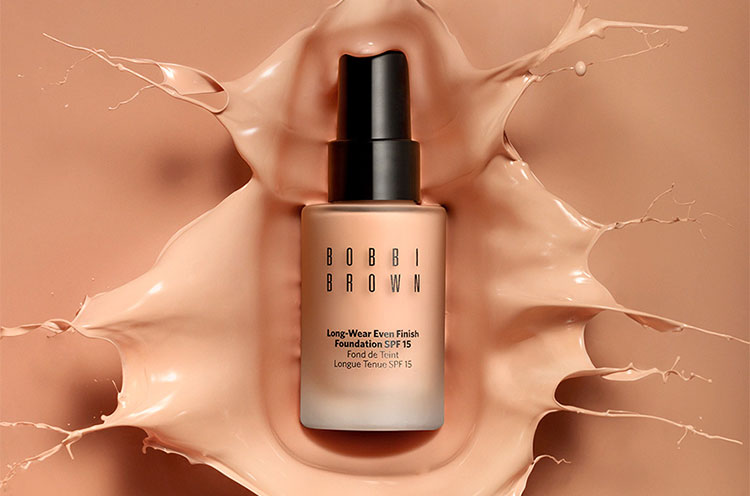
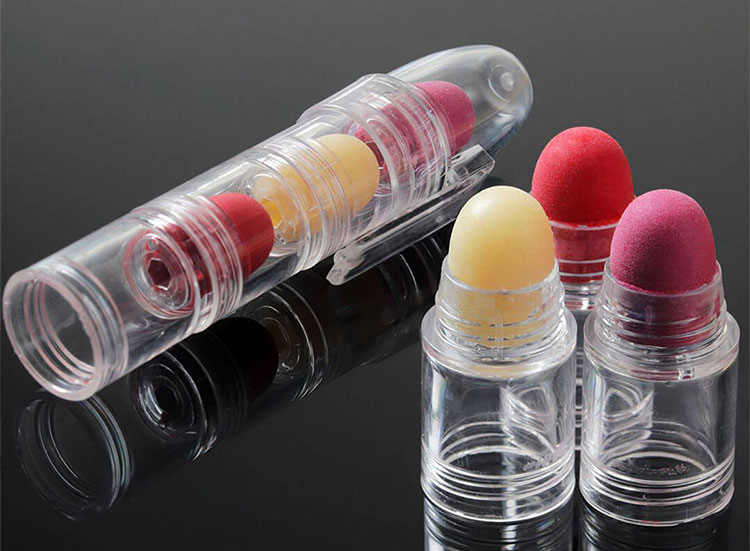
    Cosmetic industry is a diverse field in which many products are manufactured through same process which are used in shampoo manufacturing. Like BB creams, foundation and lip product used same process and even some equipment are also same.

    7.What is the expiration of shampoo manufacturing product?

    Shelf Life of Shampoo

    Shelf Life of Shampoo-Picture Courtesy: Function

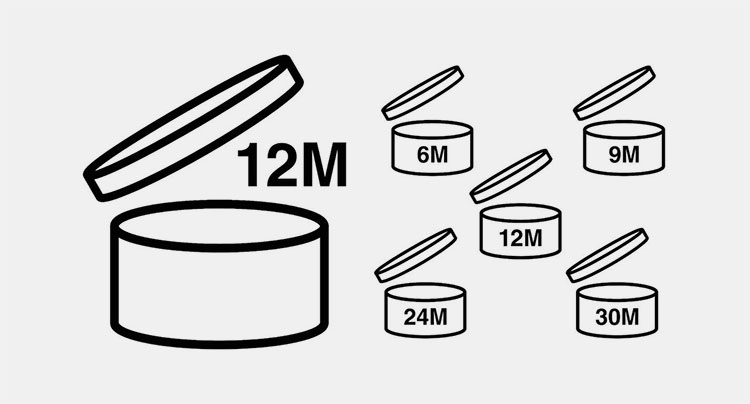
    After manufacturing, Shampoo may last up to 2 to four year if unopened. But if opened it may not last more than 6months to 2 years. This extended shelf life is achieved by adding preservative and stabilizer in formulation.

    It helps in inhibiting microbial growth, balance pH under desired range and preserving integrity of ingredient. But natural shampoo has shorter shelf life as compared synthetic shampoo. Because natural preservative is less potent than man made.

    In cosmetic product expiry date are not mentioned they are calculated on the basis manufacturing or either from opening container mention I above picture.

    8.What are the common challenges manufacturer faces in shampoo manufacturing?

    Some of common challenges in shampoo manufacturing and provide solution to overcome the challenges

    Inappropriate mixing 

    Inappropriate mixing

    Inappropriate Mixing-Picture Courtesy: TY Cosmetic

    Inappropriate mixing challenge occur due to many factors. Mixer may not be properly design to mixing the shampoo ingredients this may lead to inconsistencies in shampoo formulation.

    Solution

    Manufacturer may follow the proper mixing protocols. Sensor monitoring to enable proper mixing and calibrate different parameters to stable the accuracy of shampoo.

    Foaming during shampoo manufacturing

    Foaming during shampoo manufacturing

    Foam Formation

    Another major challenge face in shampoo manufacturing is formation of foam during manufacturing. Due to this filling operation inaccuracy may occur which may lead to effect the product foaming.

    Solution

    Use of anti-foaming agent may control the foaming formation. Stable mixing speed and thermal control may also control the excess foam formation

    Disintegration of Equipment

    Disintegration of Equipment

    Equipment Disintegration

    Ingredients of shampoo is erosive in nature like detergent and surfactant due to this it can damage the equipment.

    Solution

    To control the equipment disintegration, use of stainless steel and some protecting material or maintenance of equipment may increase the life span of equipment

    Leakage

    Leakage

    Leakage-Picture courtesy: PhotoDune

    Leakage in shampoo manufacturing plant may lead wastage of product and increase the chances of contamination. It also greatly impacts production rate of shampoo manufacturing plant.

    Solution

    Sealed all the machinery part in which shampoo manufacture this may control the leakage and hence decrease wastage of product.

    Machine Sterilization

    Sterilization of shampoo machine may control contamination. Cleaning of equipment all parts may further enhance the hygiene and reduce contamination

    Conclusion

    Shampoo is an essential product for hair care hygiene. In this article we have deeply learned science and innovation behind this unique process. Understanding the complex process of shampoo manufacturing equips business people with insight to produce high quality shampoo product.  This guide gives you strong in depth knowledge to excel in manufacturing and ensuring product meet both set standard and customer satisfaction. For more business seeker advice, you can contact our expert team of customer services. Our dedicated team will give solution to your problem.

    Don't forget to share this post!

    CONTACT US

    Tell us your raw material and project budget to get quotations within 24 hours.

    WhatsApp Us: +86 181 7101 8586

    Invalid Email
    Invalid Number

    Shampoo Manufacturing: The Complete FAQ Guide 2025 Read More »

    Spice Manufacturing Process

    Spice Manufacturing Process: The Complete FAQ Guide In 2025

    Spice Manufacturing Process: The Complete FAQ Guide In 2025

    From Asia to the world who is unfamiliar with the term "Spices"? Of course, no one! Where spices are known for pungent flavors and vibrant colors, their manufacturing process is often taken for granted. This is the reason why quality of spices is compromised. To solve this issue, we have explained in detail about Spice Manufacturing Process in this FAQ guide.

    Spice Manufacturing Process

    Before starting a business, it is always important to take a look into the Spice Manufacturing Process which involves several steps. Similarly, these steps are carried out with the help of sophisticated technology in the form of machines on an industrial level. Thus, knowing about these areas can help you to become a successful manufacturer in the Spice market. For clear understanding just go through this piece of writing!

      Add a header to begin generating the table of contents

      1.What Is Meant By Spice?

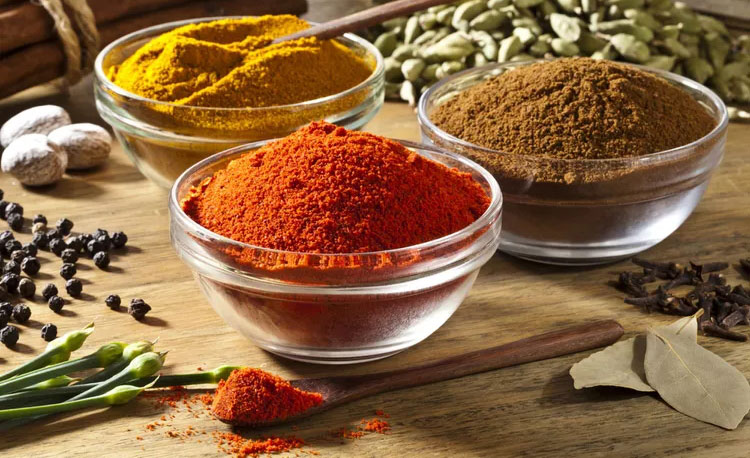
      Various powder spices

      Various powder spices in bowls- Picture Courtesy: allrecipes.com

      Spice can be simply described as a substance used to add flavor, color, and aroma to food. Spices are of various types and there are different numbers of spices available today. The common examples include pepper, chilli, cinnamon, and ginger etc.

      Spices are also termed as seasonings or condiments due to their specific use in cuisine and other foods like pasta, noodles, and salads. Spices may also be used for the preservation of food and that's the reason why people across the globe are using their favorite condiments for making their dishes tastier and appetizing.

      Apart from this, you may find spices in different forms such as granules, powder, and in whole and liquid form. These forms are helpful in the use of spices on a daily basis.

      2.Spice Manufacturing Process- A Brief History?

      Globe made with spices

      Globe made with spices- Picture Courtesy: foodinsight.org

      The history of spices show an exciting journey from their unfamiliar discovery in ancient times to the known variety in modern age. Its beginning has been noted 6 million years ago when early humans used to wrap meat in leaves. Gradually, they found the taste of food more pleasant and aromatic.

      Early Egyptian, Chinese, and Mesopotamian civilizations played instrumental role in documenting the medicinal benefits and other uses of leaves, however, unable to distinguish between herbs and spices. With passing time, spices became famous for their advantages especially after the discovery of Indian spices.

      Similar to spices exploration, its manufacturing process also evolves from using as fresh leaves and flowers to drying, crushing, and roasting. The same method is now followed on industrial level with the use of machines and advanced technology for enhanced efficiency.

      3.Spice Manufacturing Process- Is It Worth It?

      Well, the answer to asked question is not straight forward rather requires one to first deeply look into the importance of spices itself. Although, we may take spices as ingredients used in food only, however, its benefits falls beyond the area.

      Various spices in bottles

      Various spices in bottles mccormickscienceinstitute.com

      Firstly, the use of spices in food is rising on global level due to internet which is helping people in the promotion of their local cuisine. This in turn generate a demand for spices manufacturing which is an opportunity for entrepreneurs and businesspersons.

      Secondly, spices such as turmeric, ginger, and cinnamon are popularly used for medicinal and beauty related products. It directly shows the expansion of spices benefits in fields beyond food industry.

      Thirdly and lastly, being spiritual beings humans cannot avoid the religious practices which also involves use of certain spices. So, what we get from these facts is the rapidly growing significance of spices which is creating a room for economic development through cultivation, manufacturing, and packaging of spices.

      Overall, spice manufacturing process is as necessary as other products manufacturing. However, it is always important to pay special attention to market trends, quality

      4.Spice Manufacturing Process- The Major Steps Involved?

      Spice manufacturing process involves several steps which is obligatory for the production of high quality spices. Let's explore these steps one by one!

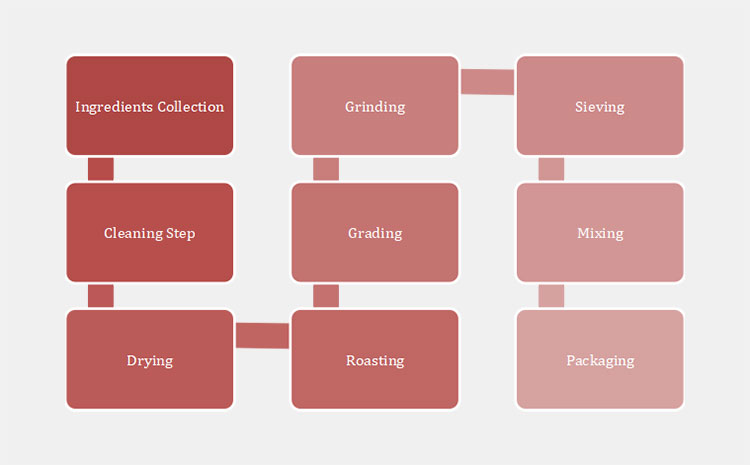
      Ingredients Collection

      Ingredients Collection

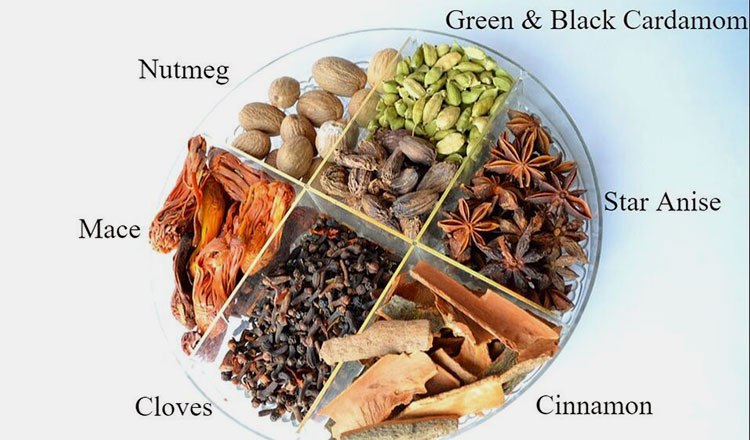
      Whole spices

      Whole spices- Picture Courtesy: thegardenrecipe.com

      Before starting spice manufacturing process, it is important to know that spices are of different types which depends upon their usage. For instance some spices are mixture of multiple ingredients like curry powder, chilli powder, and parika while others are only composed of single ingredient like fennel seeds, turmeric, and cumin.

      Now, it is clear that during spice manufacturing you will need to have these ingredients at your hand which is available in raw form. So, make sure to aquire all the necessary ingredients for your specific spice mixture.

      Cleaning Step

      Cleaning Step

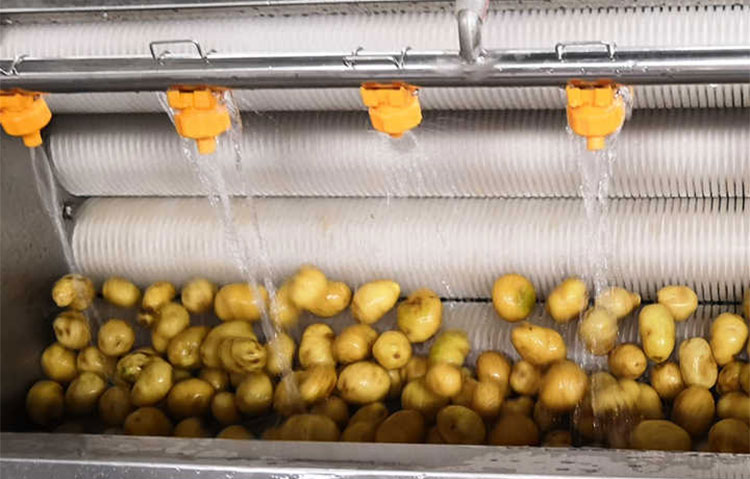
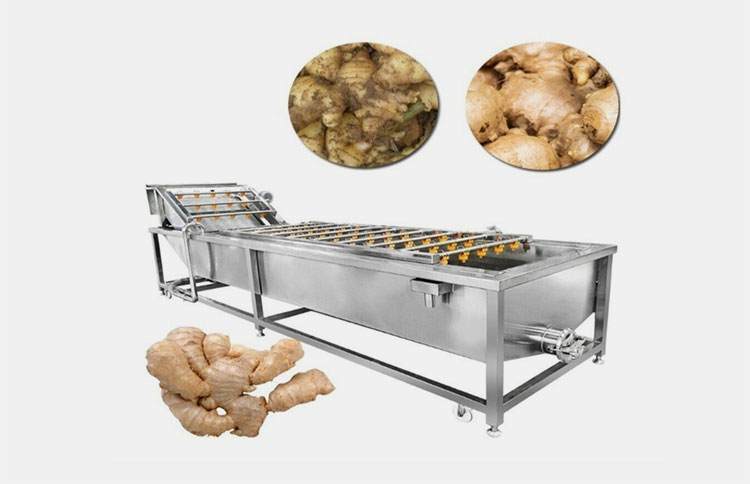
      Ginger washing in machine

      Once you have gathered all the required ingredients, undergo them through cleaning step to remove out impurities. For this, you can use automatic washing machine for plants and herbs.

      Drying

      Drying

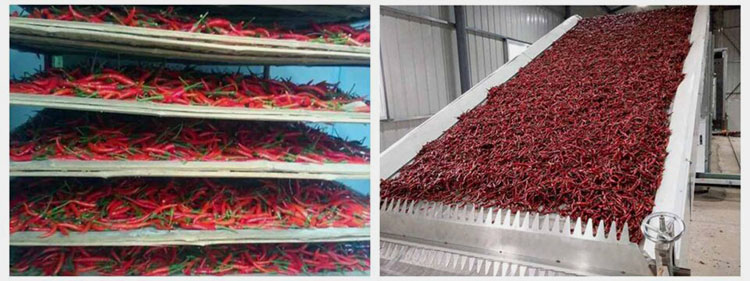
      Chili drying- Picture Courtesy: dryingplant.com

      After cleaning comes the drying phase which is one of the crucial steps during spice manufacturing process. The reason for its importance is that the essence of spices gets increased with drying it also prevents bacteria from poisoning spices. Therefore, sophisticated machines should be used to reduce the moisture content while taking care of temperature as different spices require different level of moisture. For instance, mace needs 6% of moisture and chillies need 12%.

      Roasting

      Coriander seeds roasting

      Coriander seeds roasting- Picture Courtesy: Excell Packs

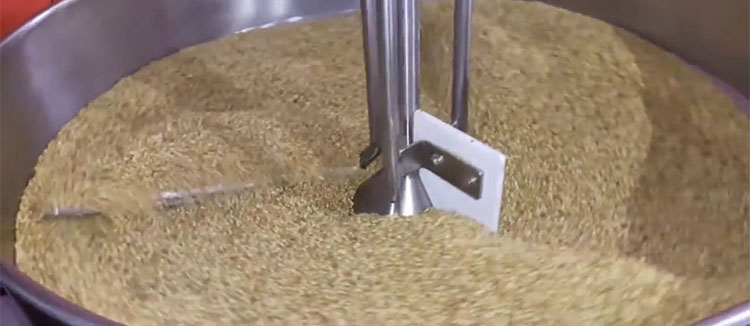
      Moving forward, the dried ingredients are roasted to bring out the color and aroma. However, it is crucial to carry out this step in controlled environment with required temperature and limited heat, so, that the originality of substances could be well retained.

      Grading

      Upon roasting, your next task will be to grade the ingredients on the basis of their size, weight, and volume. It can help you deal with the grinding process or else the process may get messy.

      Grinding

      Spices grinding

      Spices grinding- Picture Courtesy: holar.com.

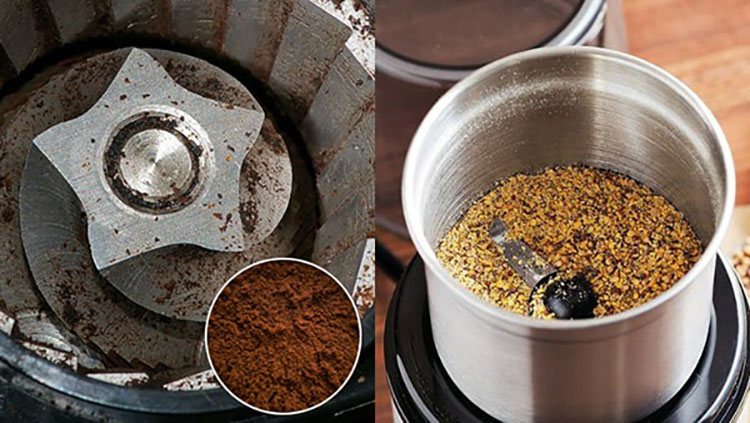
      After grading, spices are grinded by using heavy-duty industrial grade grinding machines. Depending upon the hardness of ingredients, different machines are available with sharp blades which can effectively and efficiently break down whole spices into powder form.

      Sieving

      Turmeric sieving

      Turmeric sieving- Picture Courtesy: dahanmachine.com

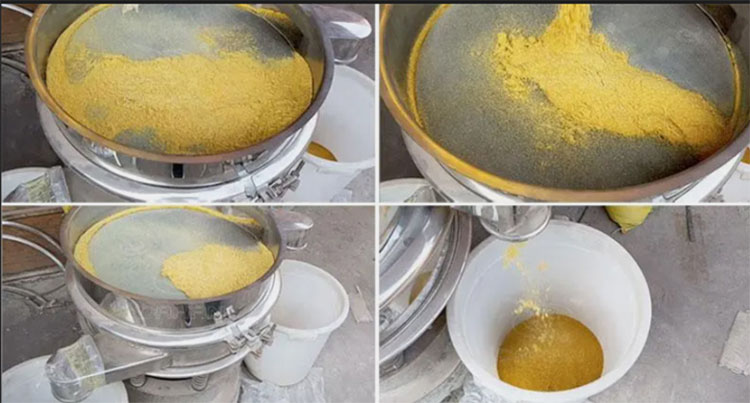
      Another step is sieving during which grinded spices are passed through a sieving machine. It helps ensure the segregation of particles based upon their size thereby maintaining consistency during production which is key for quality manufacturing.

      Mixing

      Spices blending process

      Spices blending process-Picture Courtesy: sampackindia.com

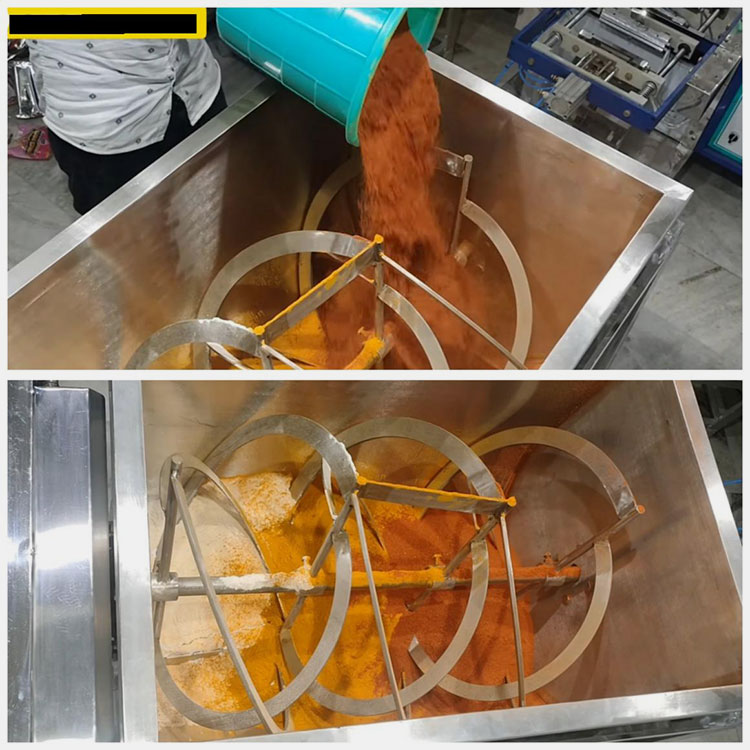
      Mixing is the final step of spice manufacturing process where intended spices are thoroughly blended to get the desired spice mixture. For large scale production, industrial mixers are used which automatically carry out mixing in an enclosed ad hygienic environment.

      Packaging

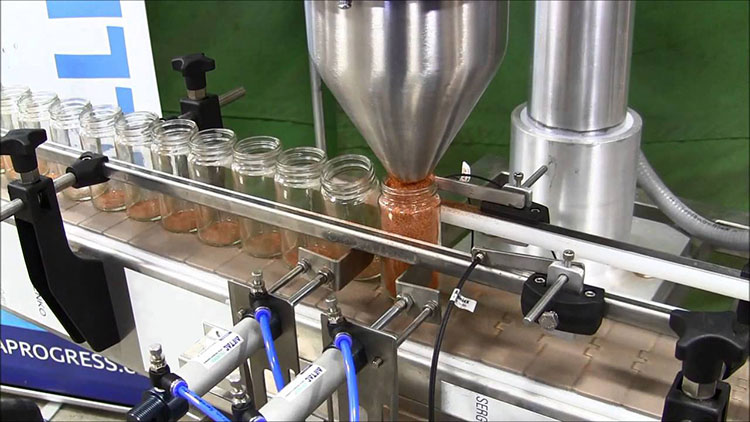
      Spices bottling

      Spices bottling- Picture Courtesy: JDA Progress Canada

      Packaging is the last but most eminent phase which must be done carefully. For this purpose, spices are loaded in packaging machines which then precisely deposit accurate volume into desired packages such as bottles, jars, and bags.

      5.Spice Manufacturing Process- Equipment Needed?

      With advancements in technology, now it is quite easy to conduct spice manufacturing process without any human harm and product loss. This is possible with innovative machines produced for carrying out every single step of spice manufacturing. These machines are listed below:

      Spice Washing Machine

      Auto Fresh Ginger

      Auto Fresh Ginger/Turmeric Washing Machine Stainless Steel- Picture Courtesy: juiceprocessline.com

      Spice washing machine is an efficacious machine employed to wash out different types of whole spices such as turmeric, ginger, and chillies. It is made up of corrosion resistant stainless steel with washing and tumbling system. The machine effectively clean out spices by passing them through clean water and tumbling to remove out all the impurities.

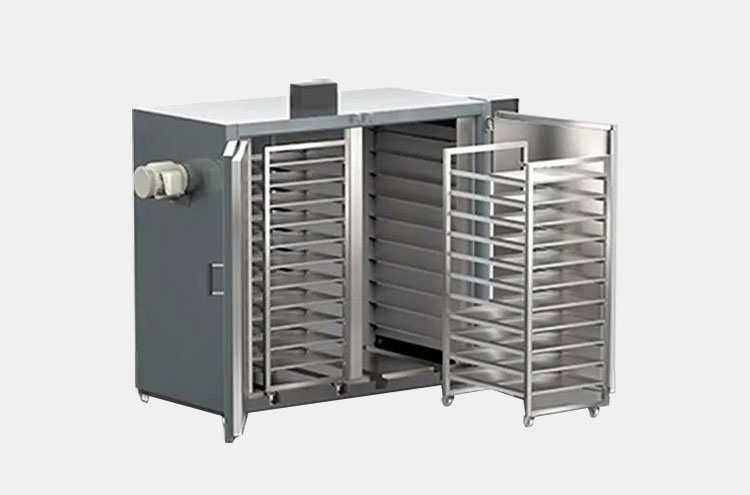
      Drying Machine

      Tray Dryer Stainless Steel Spice Drying Machine

      Tray Dryer Stainless Steel Spice Drying Machine

      Drying machine is another equipment you will need to conduct spice manufacturing process. It is an electric machine with heat system that can effectively reduce the moisture content of your spices to desired level. The machine has trays over which spices are spread. It has adjustable heat system to support customized drying as different spices have diverse drying needs.

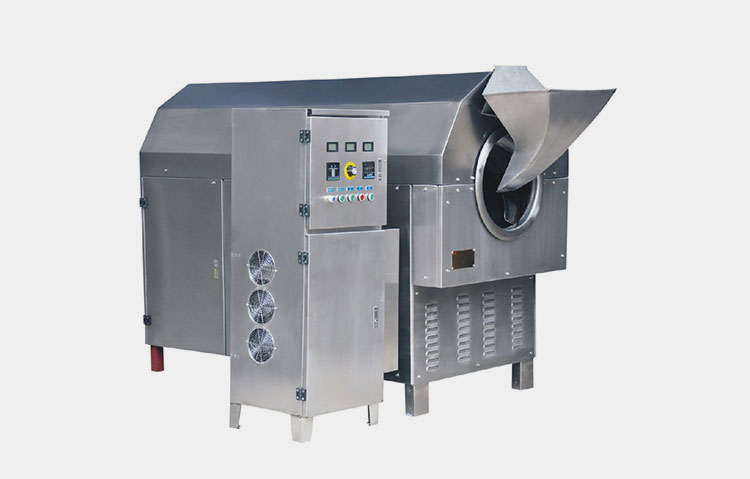
      Roasting Machine

      Roasting Machine

      Spices roasting machine DCCZ7-15 roaster- Picture Courtesy: chchike.com

      Roasting machine is an excellent machine designed with advanced feature to facilitate pollution free roasting of various spices. The machine has robust structure with sustainable electromagnetic source for heat generation. The main body of machine is made up of 304 stainless steel followed by other components including a removable feeding hopper, electric cabinet, control unit, cover, and roasting chamber.

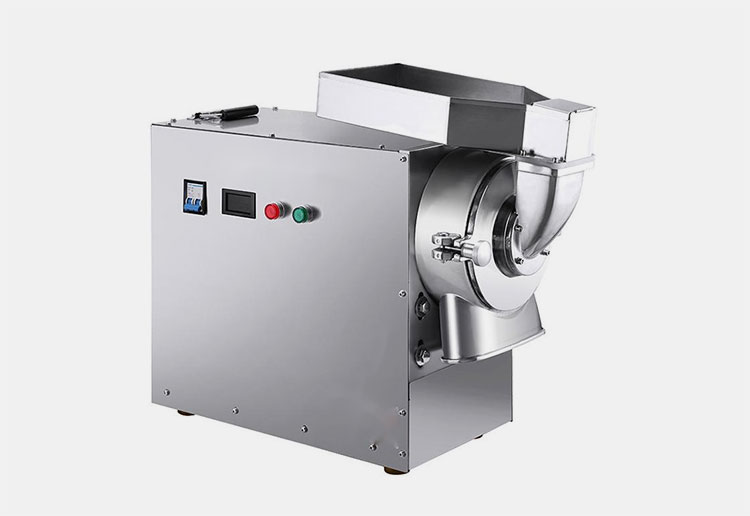
      Grinding Machine

      Herb Grinding Machine

      Allpack Herb Grinding Machine DLF-70S

      Grinding machine is another important machine needed for spice manufacturing process. It has fully automatic system to process whole spices and turn into into fine powder or coarse particles as intended. The machine is made up of several components including main frame, control panel, feeding station, outlet, and grinding unit. It can be simply operated by fixing the speed of grinding and time for each cycle after which it automatically finish the processing.

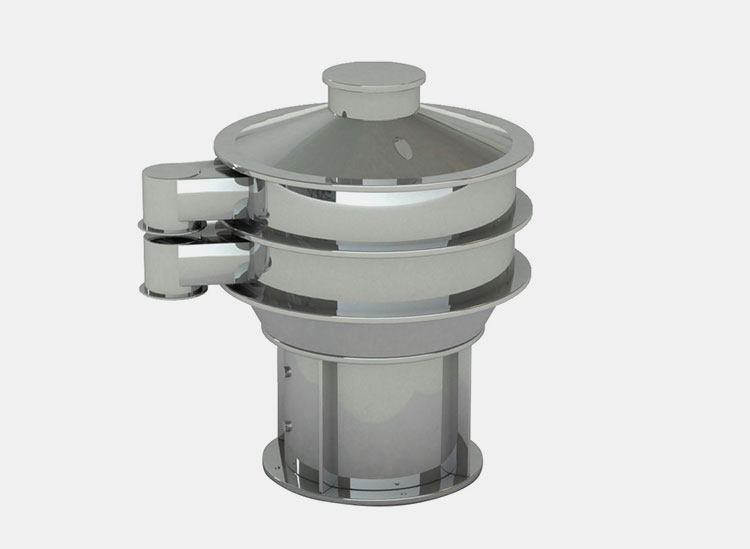
      Screening Machine

      High Efficient Screening Machine

      Allpack- ZS Series High Efficient Screening Machine

      Screening machine is also known as grading or sieving machine which is designed to process powders and granules. It is essential for the sieving and grading of spices. This multifunctional equipment has a precise structure with quality stainless steel. It consists of multiple perforated plates through which spices are passed for sieving. It works automatically through the principle of vibration.

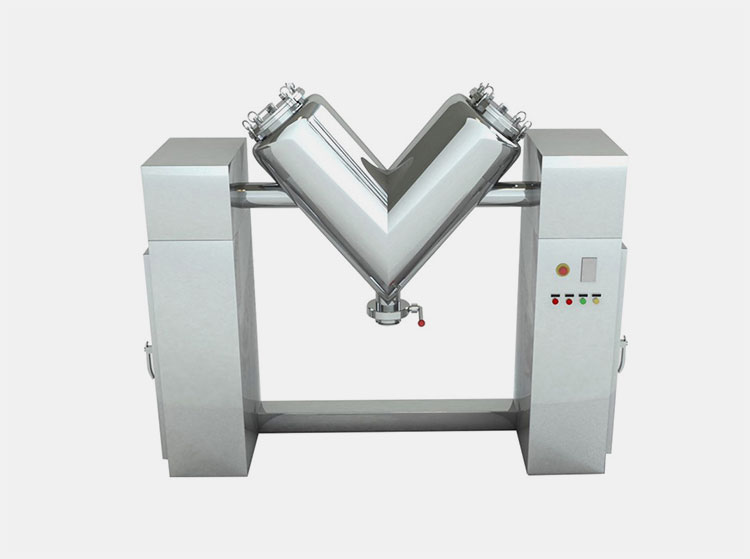
      Powder Mixer

      CH-V Series High Efficiency Mixer

      Allpack- Model CH-V Series High Efficiency Mixer

      Powder mixer is inevitable for spice manufacturing process. This powder mixer by Allpack has special V shape structure which is fully automatic in its functioning. The machine has stainless steel bin with dual feeding inlets on upper side followed by separate discharge unit in lower side. The bin rotate in 90° which helps in the homogeneous mixing of different powder spices.

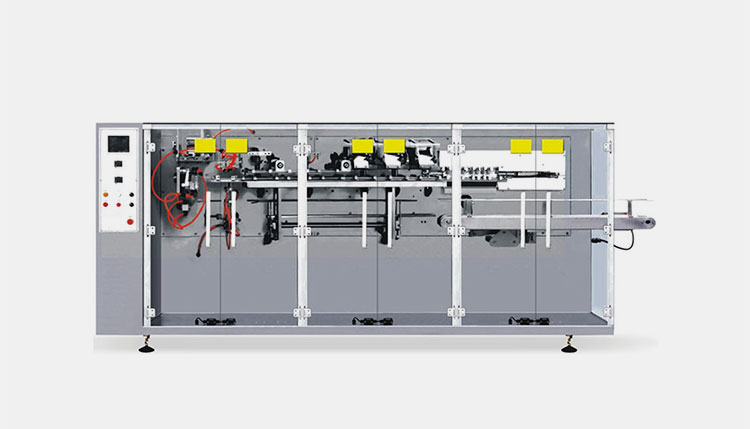
      Pouch Packaging Machine

      premade pouch filling machine

      Allpack APK-210Z series premade pouch filling machine

      Pouch packaging machine is designed for packing spices into various flexible packages such as sachets, stick packs, and doypacks. This premade pouch filling machine by Allpack is a wonderful solution that can process different types of flexible packages. The machine offers convenient operation where packages are formed from flat film, filled with precise volume of spice, and then tightly sealed.

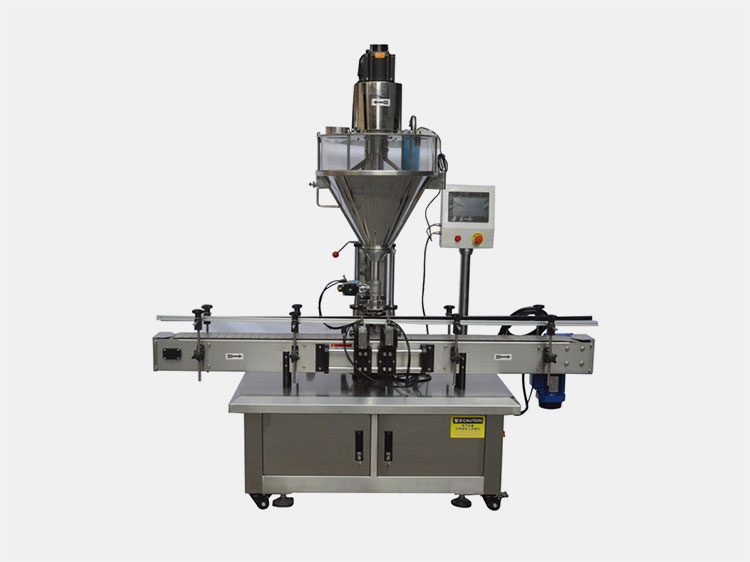
      Powder Filling Machine

      Automatic Powder Filling Machine

      Allpack- Single Head Automatic Powder Filling Machine

      Powder filling machine is a specialized equipment tailored with astonishing features to fulfill the packaging of powder spices. It has auger filling mechanism for the accurate measurement of spices and stainless steel nozzles to discharge the weighed spices into bottles and jars. The process simply involves loading hopper with bulk powder spices and feeding bottles into machine. Similarly, it pours the spices into bottles which are then discharge from another end.

      6.Spice Manufacturing Process- Various Packaging Options?

      Packaging is the most important phase during spice manufacturing process which helps in the preservation of their quality, aroma, and taste. Thus, various options are now available to secure the richness of spices and help them reach to the awaited consumers. Let's know some of the popularly used packaging types!

      Bottle Packaging

      Various bottles of spices

      Various bottles of spices- Picture Courtesy: colaveco.com

      Bottles are frequently used for storing various types of spices due to their enhanced protection and safety. These bottles vary from plastic to glass bottles and are often transparent to clearly display for the customers which is laying inside. Bottle packaging is best option for spices as they attract consumers.

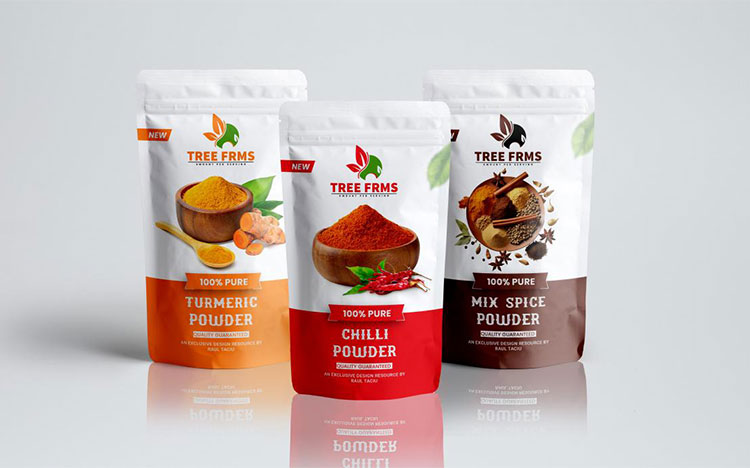
      Pouch Packaging

      Various pouches of spices

      Various pouches of spices- Picture Courtesy: fiverr.com

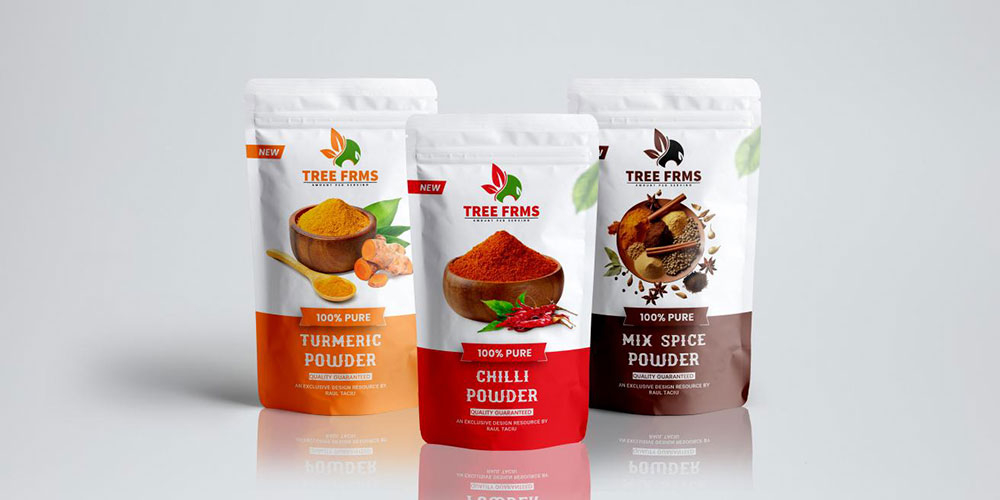
      Pouch packaging refers to the packaging of spices in flexible bags like stand-up pouches and doypacks. They are cost-effective and easy-to-use therapy deducting packaging costs.

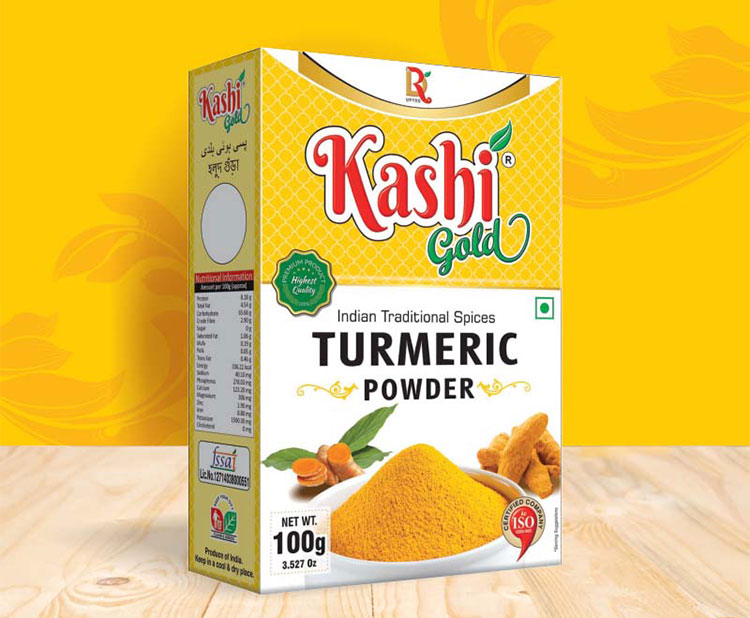
      Carton Packaging

      Tumeric powder carton pack

      Tumeric powder carton pack- Picture Courtesy: designsagar.com

      Carton packaging is also popularly used to deliver spices. For such packaging, firstly spices are packed in aluminum or plastic pouches which are then enclosed in cartons. In this way, both the security of spices and marketing of brand are easily achieved.

      Sachet Packaging

      Various sachets of spices

      Various sachets of spices- Picture Courtesy: designsagar.com

      Spices can also be delivered in flat bags like sachets which are usually used for delivering single serving and small amount of spices. These sachets have three or four sides sealed which also looks beautiful when laying on the shelves of market.

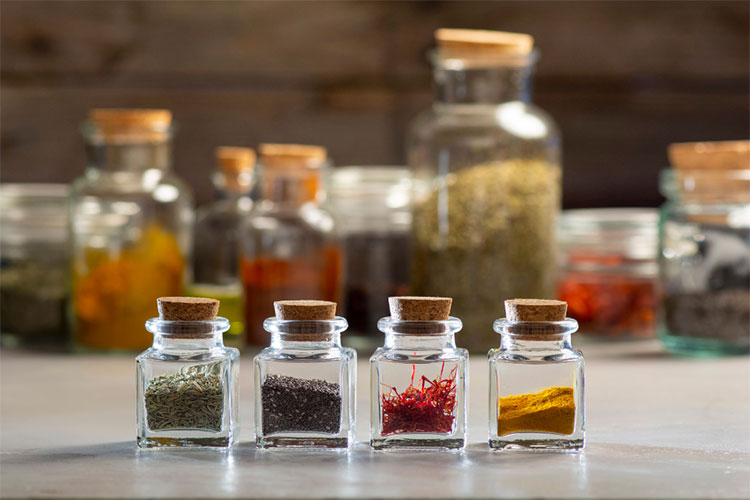
      Jar Packaging

      Various jars of spices

      Various jars of spices- Picture Courtesy: glassnow.com

      Traditionally, jars were famous for their use of storing spices as they have exceptional safety against moisture and bacteria. Today, many reputable suppliers used to deliver spices in glass jars.

      Tin Packaging

      Various spices in tins

      Various spices in tins- Picture Courtesy: tropicasem.sn

      Although tin packaging is rarely used for spices, however, it is still practiced in some Western countries. Steel tins are effective to preserve the freshness of spices and they are also recyclable.

      7.Spice Manufacturing Process- What Is The Importance Of Quality Control?

      The importance of quality control can never be denied when it comes to spice manufacturing process. In fact, the growing demand for spices has also raised the concerns regarding their quality. Thus, international community has brought up certain rules for spices manufacturing whose adherence show the reliability of companies. Let's know these guidelines in a bit detail!

      Quality inspection in spice manufacturing process

      Quality inspection in spice manufacturing process- Picture Courtesy: hudsontraders.com

      International Organization for Standardization (ISO)

      ISO has different standards for maintaining the quality of spices and the preservatives used. For instance,  ISO 67.220 deals with spices, condiments, and food additives, while as, ISO 948:1980 covers sampling of spices.

      Good Manufacturing Practices (GMP)

      GMP has special guidelines for safe production of spices which were renewed in 2023. Some of the notable rules include use of GMP certified machines and conducting spices manufacturing in hygienic environment.

      Conformate European (CE)

      CE represents the collective will of European Union regarding food and non-food products manufacturing which also include spices production.

      Food and Drugs Administration (FDA)

      Food and Drugs Administration is United States's agency for the production and processing of medicinal and food products. For this reason, it is essential to follow the established guidelines by FDA.

      8.Spice Manufacturing Process- Factors To Consider?

      Spice manufacturing process revolves around several aspects each requiring full attention. So, you must be careful in paying attention to these important factors which are provided as under:

      Source of Raw Material

      Source of Raw Material

      Various raw spices- Picture Courtesy: amazingfoodanddrink.com

      The foremost thing to look for is the source of raw material. It is crucial to confirm whether the raw ingredients taken are fresh and obtained from safe sources. For this, you should have trustable supplier with proper certification.

      Machines Used

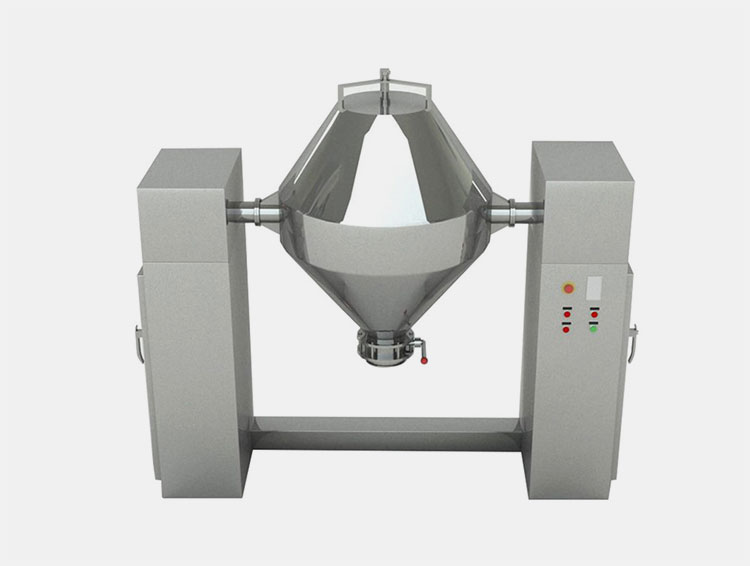
      W Series Double Taper-shaped Mixer

      Allpack- Model W Series Double Taper-shaped Mixer

      Spice manufacturing process is almost impossible without machines. Therefore, make sure you have adequate knowledge about each machine required for it and select machines by keeping in mind their automation level, energy consumption, and automation level.

      Production Methods

      Although, spices are produced through the use of machines, however, it is you who determine which step should be done prior and which one should be later. So, be careful in adopting globally recognized and accepted methods.

      Packaging

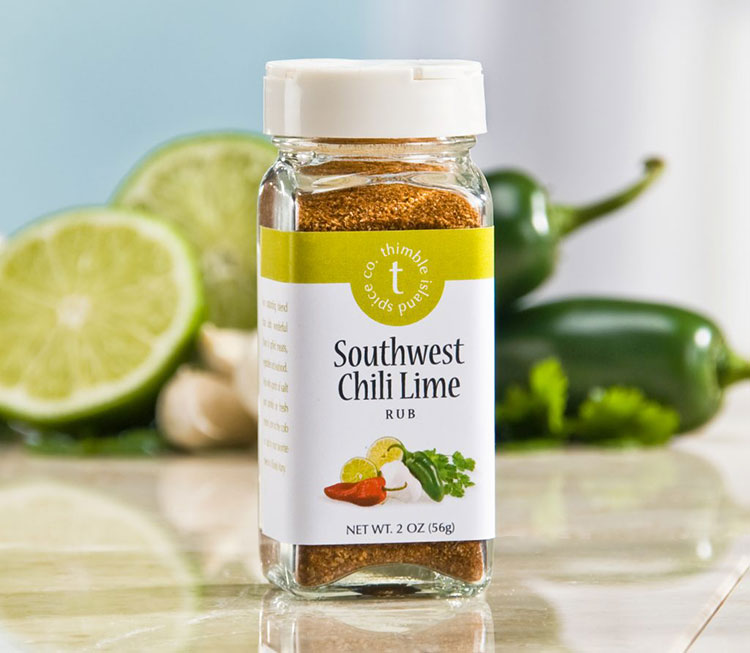
      Chili powder bottle

      Chili powder bottle- Picture Courtesy: designsagar.com

      Packaging is essential in retaining the originality of spices, therefore, you need to be very careful in selecting the most suitable option. For this, you may look towards your budget and market trends.

      Quality Compliance

      Quality icon

      Quality icon- Picture Courtesy: mddionline.com

      Your products are known by their quality which is itself dependent upon the marks issued by quality standards. So, make sure to comply international as well as local quality standards for getting global recognition.

      Conclusion

      To put in a nutshell, Spice Manufacturing Process is a long lasting procedure where multiple machines are needed to carry out each step. Along with this, right method also play a significant role in getting all the things done. In addition to it, packaging is considered important for the quality retention of produced spices. So, overall we may summarize that this complicated phenomenon require thorough consideration of several aspects. Besides, we hope you have got the desired information about spice manufacturing process. If you have any query or you are interested in purchasing necessary equipment then you can simply contact us through our website!

      Don't forget to share this post!

      CONTACT US

      Tell us your raw material and project budget to get quotations within 24 hours.

      WhatsApp Us: +86 181 7101 8586

      Invalid Email
      Invalid Number

      Spice Manufacturing Process: The Complete FAQ Guide In 2025 Read More »

      Yogurt Manufacturing Process-6

      Yogurt Manufacturing Process: The Complete FAQ Guide in 2025

      Yogurt Manufacturing Process: The Complete FAQ Guide in 2025

      Do you know yogurt is constant breakfast essential which is a go to option for every age group? Do you wonder how these nutritional packets of yogurt make to your breakfast table? Yogurts are consumed ever day by millions of people around the world. Yogurt packed with probiotic and essential nutrients are produced by the fermentation of milk transforming it into delicious dairy product.

      Yogurt manufacturing process

      This FAQ guide give you in depth knowledge about yogurt manufacturing process, equipment used in this process, different types of yogurt and their uses in different industry. What is the innovation and science behind this process? Let’s begin this topic with commonly asked questions and their expert answers.

        Add a header to begin generating the table of contents

        1.What is the yogurt manufacturing process?

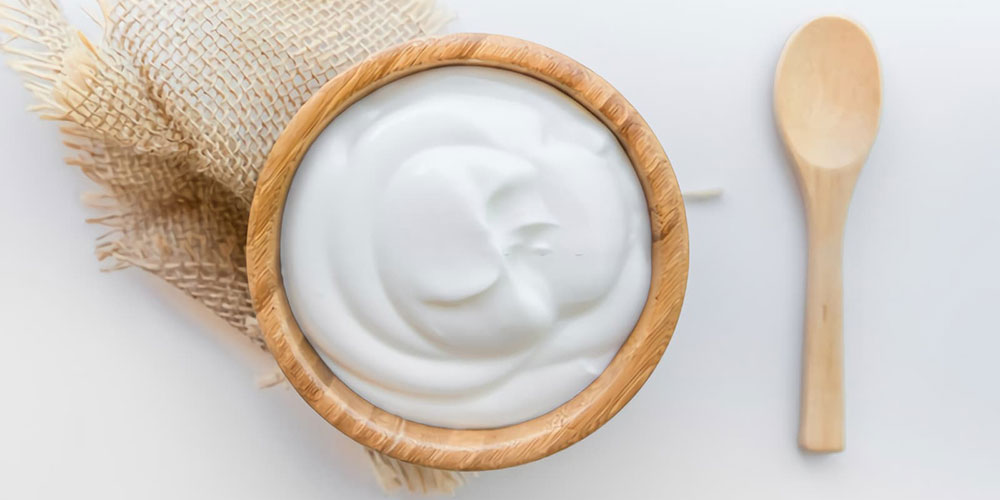
        the yogurt manufacturing process

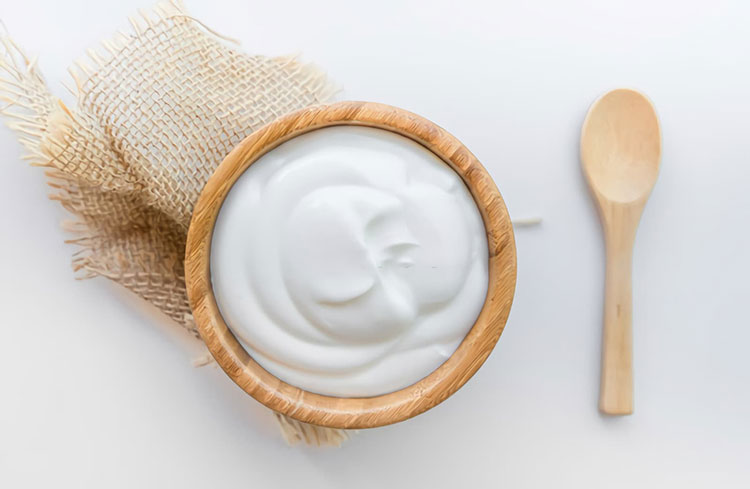
        Yogurt Manufacturing Process- Picture Courtesy: Dairy Processing

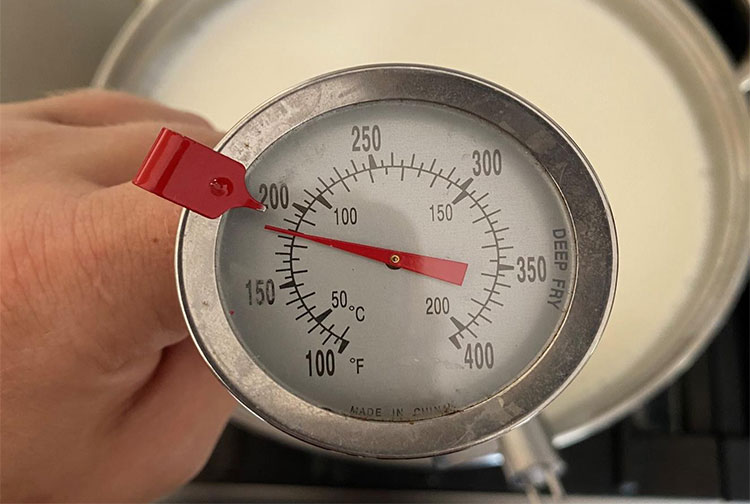
        The yogurt manufacturing process is a series of step that involve changing of milk component at turning it into commercial yogurt which you consume daily. This involves high temperature around 90⁰C for specific culturing period and may vary from manufacturer to manufacturer.

        Milk and other dairy products are consumed from ancient time but need of fermentation arises from Middle Eastern times. Through this process, they extend the shelf life of milk and reduce spoilage of milk.

        During milk processing and further yogurt manufacturing causes physiochemical changes that effect flavor and texture of yogurt while standardize process developed which provides desirable textural and flavor characteristics.

        2.What are the raw ingredients used in the yogurt manufacturing process?

        Raw Ingredients in Yogurt Manufacturing Process

        Raw Ingredients in Yogurt Manufacturing Process- Picture Courtesy: Little Green Dot

        Yogurt is dairy product which is produced through culturing process of one or more microorganism culture which contain bacteria like streptococcus thermophilus and lactobacillus bulgaricus which are key factor for converting milk lactose into lactic acid and help in curdling of milk. Few other ingredients are also added to support whole process. Let’s unfold each ingredient for you in detail.

        Selection of good quality milk

        Good Quality of Milk

        Good Quality of Milk- Picture Courtesy:  UCLA Health

        Most of the commercial yogurt which you consumed are manufactured from cow and buffalo milk. The fat content of cow milk, depending on breed and diet ranges from 3-3.5 gm per 100 ml of milk and this content may be change by separation or addition of cream depending on the required texture of yogurt, taste and consumer demand.

        The usual desirable range of fat in yogurt is lies in between 1.0-4-.5 gm per 100ml. However, most important factor in cow milk is solid-non-fat (SNF) which varies from 8.5-9.0 gm. /ml containing around 4.5 g lactose and 3.3g protein.

        All raw dairy ingredient material should be selected for high bacteriological quality. Mastitis milk, rancid milk and milk containing antibiotic and sanitizing chemical residue cannot be used for yogurt manufacturing process.

        Starter culture

        Starter culture

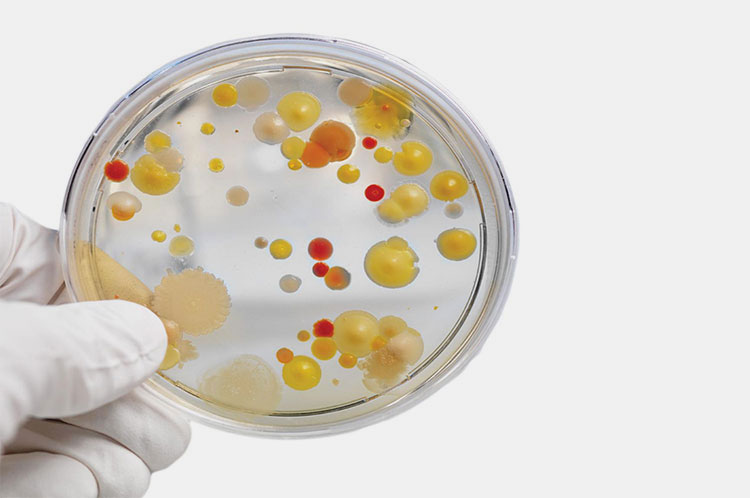
        Bacterial Culture for Yogurt Manufacturing Process- Picture Courtesy: Cultured Food Life

        The starter culture is critical ingredient in yogurt manufacturing process. The starter culture comprises of one microorganism or may be a mixed culture comprises of two or more microorganisms. The culture is responsible to convert milk sugar (lactose) into lactic acid so that milk become sour (fermented).

        This time taken process required 5hours at a maintained temperature of 45⁰C or more time required at lower temperature for the production of lactic acid, if frozen yogurt concentrate culture is used. There is different starter culture available but most commonly used starter culture in commercial yogurt manufacturing are streptococcus thermophilus (ST) and lactobacillus bulgaricus (LB). These bacteria are ultimately responsible for flavor and aroma of final product.

        The milk protein coagulates or curdles due to drop in pH which is carried out by starter culture. The streptococci are responsible for lowering pH to 5-5.5 and lactobacillus further reduced pH to 3.8-4.4. These two bacteria are considered safe to use in food and an absence of pathogenicity.

        Stabilizer

        Stabilizer

        Stabilizer – Picture Courtesy: Virasmart.co

        Stabilizers are the excipients which are used to give smooth texture, firmness and consistency to yogurt. Stabilizer is also helpful in reducing wheying of yogurt during storage. You need to keep in mind few things while choosing a good stabilizer, it is will not affect taste or flavor of yogurt and also work at standardize low pH. Most of the commercial yogurt manufacturer used gelatin as stabilizer. Some plant source stabilizers are also used like carrageenans and guar.

        Gelatin is the first choice of stabilizer in yogurt manufacturing process because it gives shiny gel appearance to yogurt which melts in mouth. But, it is preferred in frozen yogurt because its activity is temperature dependent and can be denatured at high temperature loosing texture and firmness. There are few other options of stabilizer which are used in yogurt like starch and caboxymethylcellulose.

        Sweetener

        Sweetener

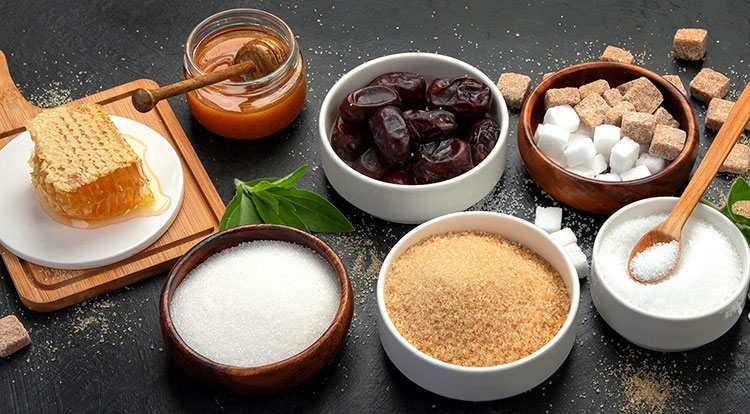
        Sweetener - Picture Courtesy: Ragus sugar

        Sweeteners are added to give pleasant taste and mask acidic flavor in yogurt. It is noticed that high amount of sweetener greatly influences flavor or taste of yogurt. In almost every commercial yogurt, sucrose is used as sweetener. Sucrose may be added in dry, granulated and in form of crystal containing not more than 67% sucrose. Liquid sweeteners are used in large scale yogurt production settings for less problematic in handling.

        Most commonly used sweeteners in yogurt production are sucrose, corn syrup or honey are added to overcome the acidic taste and produce firmer texture. Since sugar increase osmotic pressure of milk base, addition of excessive sweetener (>10gm/100ml) before fermentation inhibit the starter culture activity. Due to this reason sugar are added with fruit to stirred yogurt just before filling.

        Most of the commercial yogurt you find in markets are comprises of lactose around 4.06%, galactose 1.85% and glucose estimated around 0.05% with pH of 4.40. Some manufacturer used artificial sweeteners as well on customer demand who are concerned about lower calorie content.

        Flavoring agent

        Flavoring agent

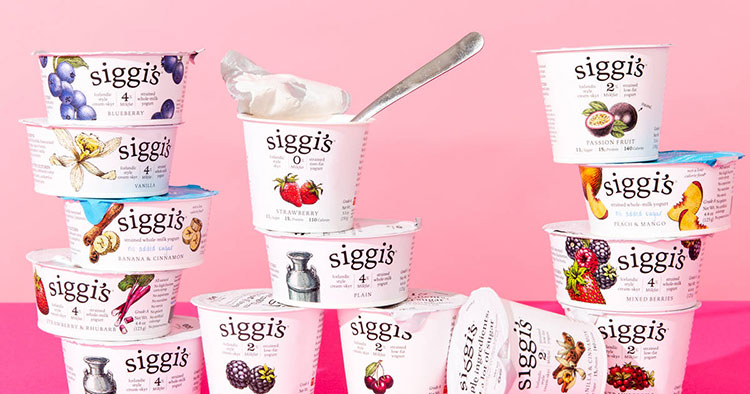
        Flavoring agent- Picture Courtesy: Thrillist

        The flavoring agent are specifically selected on the basis of market demand depending on consumer need. Flavoring agent used in yogurt are commonly added in the form fruit blend. The amount of flavoring blend you find in yogurt is mostly around 10-20 % and is approved by regulating food authority for safe use. They are added in yogurt to give eye appealing appearance and flavor closet to actual fruit. But there are few things which you need to look while choosing fruit blend.

        • Fruit blend does not alter the flavor and color of yogurt, when added.
        • The pH of yogurt is not altered due to fruit blend or their pH is balancing with each other.
        • Fruit blend must be carefully checked for microbial content, otherwise it leads to spoilage of yogurt.
        • The fruit blend is easily mixed in yogurt and dose not separate in storage.

        Fruit flavor vary depending on the season of the year like different fruit are available in different time of the year. Mostly flavor of yogurt which are liked all over world are strawberry, raspberry, cherry, mango, apricot, peach, plum and pineapple etc.

        Frozen fruit, canned and dried fruit are added as fruit blend in yogurt production. Fruit base pH is also important in balancing fruit flavor and color. Yogurt is refrigerated or stored at optimum temperature for flavor and color retention, and for extended shelf life.

        3.What steps are involved in yogurt manufacturing process?

        It will give you idea about steps involved in yogurt manufacturing process. It involves steps from milking animal to treating and processing till packaging.  Come along and you will learn step by step process.

        Initial treatment of milk

        Initial treatment of milk

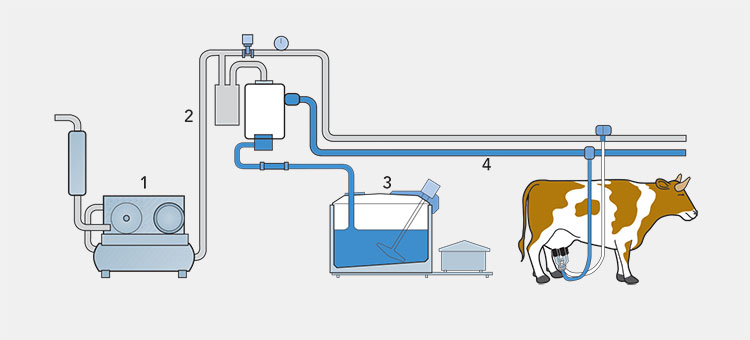
        Initial Treatment and Milking- picture Courtesy: Tetra pack

        When milk arrived at plant it undergoes clarification process to remove bacteria and other solid impurities because bacterial growth can be occurring during milking and transportation, as it takes time long as days. The level of bacterial growth depends upon the hygiene during milking, temperature and storage period. Spoilage of milk with bacteria causes lactic acid fermentation.

        Afterward, mild heating process is performed known as thermalization at temperature of 60-69⁰C for 20-30 seconds to kill most of vegetative microorganism or partial inactivation of some enzyme. After thermalization, milk is cooled 4-5⁰C or incorporated with micro floras to control growth of bacteria.

        Standardization of milk components

        Standardization of milk components

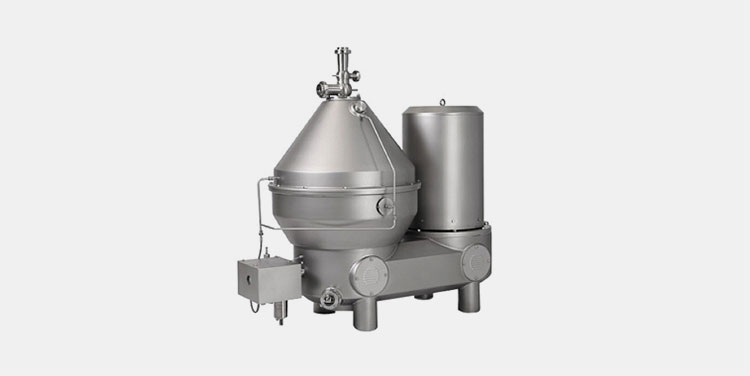
        Centrifugal Separator and Milk Standardization- Picture Courtesy:  Tetra pack

        The second step in yogurt manufacturing process is standardization of milk. Standardization is performed to remove almost all the fat and solid-non-fat content. The fat content for yogurt is adjusted to range from 0.1-10% depending on consumer demand.

        Standardization is performed in continuous manner and accomplished by separator. You need a separator to remove cream and sediment from milk at the same time.  To achieve desired fat level, standardization of milk done by removing fat in form of cream leaving skim milk, then mixing both in desired ratio to obtain desired consistency and texture. Because fat content greatly influences characteristics of yogurt, increasing fat content can increase consistency and viscosity of yogurt.

        The term standardization is also referred to SNF (solid-non-fat) content. SNF content in yogurt manufacturing is ranges from 9-16%. It is noticed that fat and SNF content in milk impact fermentation, an increase in fat and SNF content in milk increases the fermentation process duration.

        Pasteurization

        Pasteurization

        Pasteurization- Picture Courtesy: Wikipedia

        It is a process of heating at very high temperature around 71⁰C and holding it for shorter period before cooling. This step is crucial in yogurt manufacturing. During this process, it destroys most of the pathogen, vegetative bacteria, yeast and mold. Additionally, it denatured several enzymes without altering flavor of yogurt. It also aids in denaturing wheying protein which results in yogurt of good consistency and firmness.  This process is also known as High temperature short term pasteurization (HTST).

        Pathogens that grow during bad hygiene practice can be killed with heat treatment ensuring processed milk is safe for consumption. Most commonly high temperature pasteurization is used in yogurt manufacturing process.

        Homogenization

        Homogenization

        Homogenization of milk –Picture Courtesy: Milk-ed

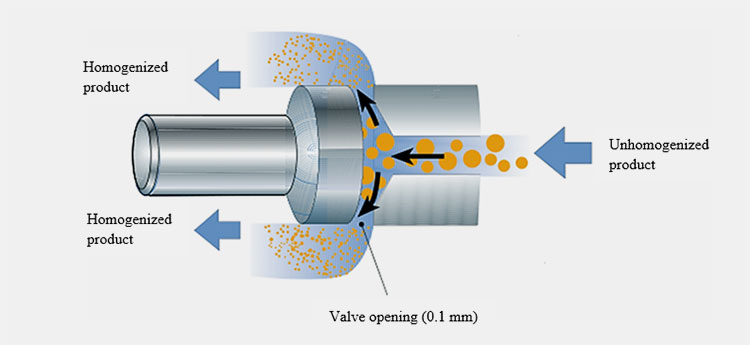
        After pasteurization, milk is passed through fourth step of homogenization. In this process, at high pressure molecule size is reduced to prevent wheying off (separation of fat layer and aqueous phase). You have to apply high pressure or high frequency. In this shear stress and due to temperature gradient cavitation occur that contributes to homogenization process.

        Homogenization best occur at temperature more than 37⁰C. This process is conducted at two stages. At first stage pressure of 2000psi is to subjected to reduce fat globule diameter from 2-10µm to 0.1-1 µm and in second step, 500 psi pressure applied to break cluster of globule inhibiting creaming of milk.

        Homogenizing prevents creaming and wheying off, give whiter appearance and enhance textural development of yogurt.

        Fermentation and cooling:

        Fermentation in Yogurt Manufacturing Process

        Fermentation in Yogurt Manufacturing Process-Picture Courtesy: The simple little life

        Fermentation is carried out after homogenization at the maintained temperature of 40-45⁰C and combination of lactobacillus bulgaricus and streptococcus thermophilus is added as starter culture in the same amount.

        When the desired pH is reached, microorganism starts its activity leading fermentation till required pH and acidity is reached. Addition of high level starter culture will lead to loss in texture and aroma of finished yogurt. The optimum amount of starter culture added should be 1-2% or may be increased to 4-5% if the sugar content is high (10-11%).

        After fermentation is completed yogurt is immediately cooled to stop further bacterial activity. It is done in two phases. In first phase Yogurt temperature is decreased to 10⁰C resulting low consistency coagulum. In second cooling phase, the coagulum temperature decreases rapidly to 5⁰C (storage temperature) with increased viscosity.

        Packaging

        Packaging

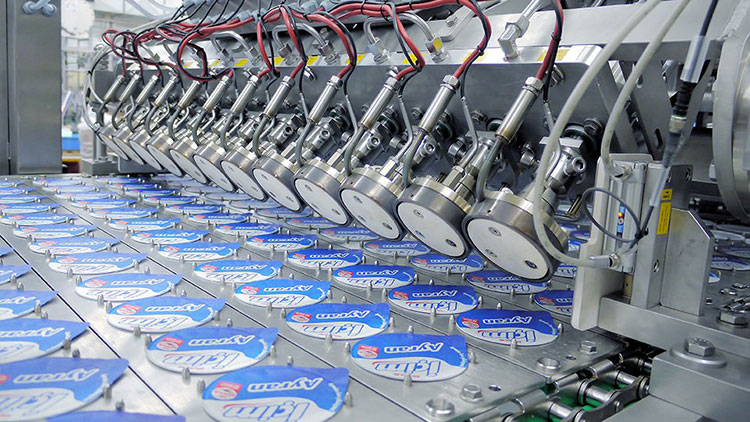
        Yogurt Packaging Machine-Picture Courtesy: Waldner

        After inoculation, milk is filled in carton for incubation. Once the cartons are filled, you need to heat sealed with aluminum foil and transfer to incubation room to at 42⁰C. The optimum growth temperature for starter culture is 35-50⁰C. If you incubated for long time so there are higher chances of post process acidifying. You must be cautious to avoid yogurt from turning sour and bitter.

        After incubation yogurt is set at 15-20⁰C and chilled at >5⁰C. Ready for final distribution.

        4.What equipment is used in the process of yogurt manufacturing process?

        Do you know how equipment work and lined in yogurt manufacturing process? Here you find all details about yogurt production equipment. Let’s get into it.

        Centrifugal separator

        Centrifugal separator

        Centrifugal Separator-Picture Courtesy: Synelco

        Centrifugal separator is used to separate cream and skimmed milk from whole milk. Cream and skim milk have different densities so under the influence of gravity, they are separated. This process is done to get desired level fat on consumer demand.

        Working principle

        It worked on principle of centrifugal force. It creates rotating force which throw away heavy particle to the side from there they are collected in the bottom of separator chamber and solid free liquid is collected from the top inlet of separator.

        Mixers

        There are different types of mixer used in yogurt manufacturing process. The mixer is used at different steps to mix homogenously thick and viscous liquid like for adding milk powder in yogurt, adding fruit purees and other additive.

        a-Gentle In-line mixer

        In-line Mixer

        In-line Mixer – Picture Courtesy: Indag

        Gentle in-line mixer is used to mixed product with high shear sensitive. In-line mixer is used to add fruit puree, fruit pieces, fruit syrup in yogurt. It is crucial for product which are sensitive to high shear. It is gently mixed with paddle mixing.

        Working principle

        In in-line mixer rotor used suction rotation which create mixing of ingredient with the help of centrifugal force. Due to force they are pushed to the wall and again sucked to the center which create milling action and give homogenous evenly distributed mixture.

        b-Solid-liquid in-line mixer

        Solid-Liquid In-Line Mixer

        Solid-Liquid In-Line Mixer -Picture Courtesy: Indag

        Solid-liquid in-line mixer is used to mix dry ingredient like dry milk powder or dry fruit mixes where fruits are added in chunks. It will provide continuous homogenous mixing.

        Working principle

        It works on same principle like in-line mixer to use centrifugal force but it works on high shear and without disturbing texture and consistency of liquid ingredient. Its rotor suck ingredient to center and producing milling action and reducing particles size as well resulting in uniform mixture.

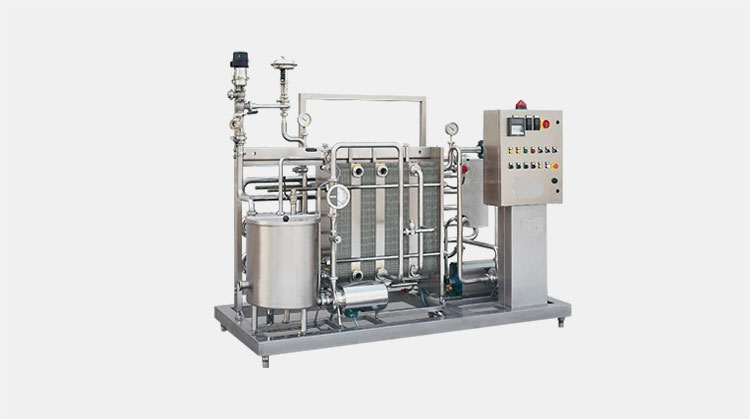
        Pasteurizer

        Pasteurizer

        Milk Pasteurizer –Picture Courtesy: Agico

        Pasteurizer is device used to heat milk to destroy harmful bacteria and maintain the quality of milk and cool milk at desired temperature. It is stainless steel container which maintained temperature.

        Working principle

        Pasteurizer work by heating raw milk in large container with the help of steam or heat. After that milk is hold in pasteurizer for few time to kill all microorganism. After heating is complete, milk is immediately cooled to desired temperature to inhibit spoilage and bacterial growth.

        Homogenizer

        Homogenizer

        Homogenizer –Picture Courtesy: Ajjo

        Homogenizer used in yogurt manufacturing process to maintain consistency and quality of milk. This equipment reduces the size of fat globule resulting in uniform texture.  This process will increase viscosity of milk and help in stable yogurt production.

        Working Principle

        Homogenizer are operated high pressure in piston create pressure and pressurized milk is pass through very small orifice. Exerted pressure causes fat globule to shrink and dispersed in small sizes. This help in more uniform structure resulted in stable and consistent texture in yogurt.

        Fermenter

        Fermenter

        Fermenter Tank- Picture courtesy: Tiantai Brewtech

        Fermenter is sterilized and enclosed large tank which is used for control growth of microorganism. They provide consistent temperature across mixture and ensure even distribution.

        Working principle

        In a fermenter, nutrition rich medium is provided at controlled temperature and pH for introduction of cell culture. Fermenter is equipped with sensor and control system to monitor pH, mixing and temperature. Product is fermented till desired result. Agitator are installed for proper mixing and even temperature across culture.

        Filling and packaging machine

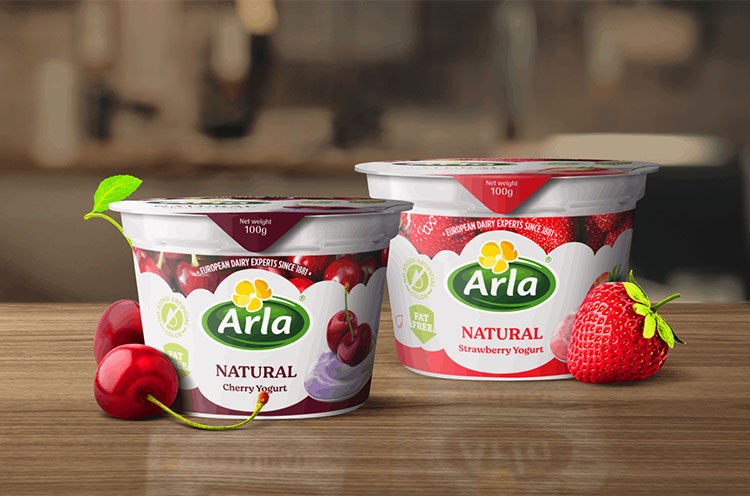
        Yogurt Filling and Packaging Machine

        Yogurt Filling and Packaging Machine-Picture Courtesy: Lom Tech

        Yogurt filling and packaging machine fill yogurt in cups and seal them. This machine help in accurate cup filling with maintain product hygiene. Filling machine are designed in this manner so they can handle different shapes and sizes of cups

        Working Principle

        The machine consists of conveyer belt which hold cup and nozzles which are connected to storage tank of yogurt through pipelines. The nozzles filled cup with pre-set capacity standard for each cup. When yogurt filling is completed, it enters sealing section, where plastic caps or heated sealing is done depending on packaging types.

        5.How different industries use the yogurt manufacturing process?

        There are many industries which use the same process and machinery which are used in yogurt manufacturing process. Here you will learn application of yogurt manufacturing process in other industries.

        Cosmetic industry

        Cosmetic industry

        Cosmetic Industry-Picture Courtesy: Earth.org

        Some cosmetic industry uses the by-product of yogurt (whey). It is used in different skincare product like cream, face mask, body yogurt and moisturizer. Lactic acid which is produced in yogurt manufacturing is used for gentle exfoliation and hydration. Some hair care industry also incorporated yogurt in hair product like hair mask, shampoo and conditioners. They also use same equipment high shear mixer and homogenizer which is used in yogurt production.

        Pharmaceutical industry

        Pharmaceutical Industry

        Pharmaceutical Industry-Picture Courtesy: Dezan shira & associate

        Yogurt culture is used in pharmaceutical industry to improve gut health because it contains live bacteria. These cultures are used in producing probiotics in capsule, powder and liquid form to improve digestion and immunity booster. Due to innovation these culture is also used as supplements for immunity and digestion. Here you see another application of yogurt manufacturing process.

        Textile industry

        Textile Industry

        Textile Industry- Picture courtesy: Camachem

        Due increase in demand of sustainable and environment friendly product, lactic acid which is produced in yogurt manufacturing is used for dyeing of natural fiber like cotton and silk. This gives more sustainable and bio-based dyeing instead using harsh chemical. This way helps some consumer which are allergic to some chemical which are used in dying process.

        Veterinary industry

        Veterinary Industry

        Veterinary Industry

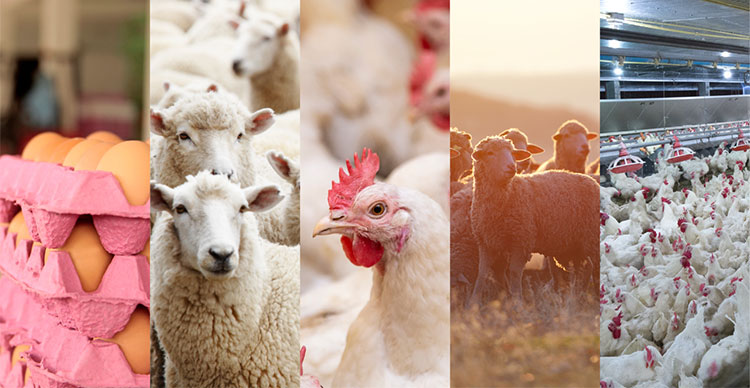
        In veterinary industry, yogurt manufacturing is helpful because by-product of it used as feed for livestock because they contain micro flora so it enhances food digestibility and gut health. Whey protein concentrate is also incorporated in feed to increase protein content in livestock especially in cattle and poultry. So it enhances livestock growth and health.

        6.What are the factors that affect the quality of yogurt manufacturing process?

        Yogurt is fermented milk product in yogurt manufacturing process. During manufacturing many factors influence yogurt consistency and texture. Let’s get into this topic so you get idea about what you have to consider during yogurt manufacturing process.

        Content of protein in yogurt

        Content of protein in yogurt

        Protein Content in Yogurt Manufacturing Process-Picture Courtesy: BBC

        Protein content is really important in maintaining rheological and physical properties of final product in yogurt manufacturing process. If you increase protein content, it enhances gel firmness and decreases syneresis in yogurt. It is advisable to limit protein content ratio as it will effect flavor of yogurt.

        Fat percentage in yogurt

        Fat percentage in yogurt

        Fat Percentage in Yogurt- Picture courtesy: Baladna

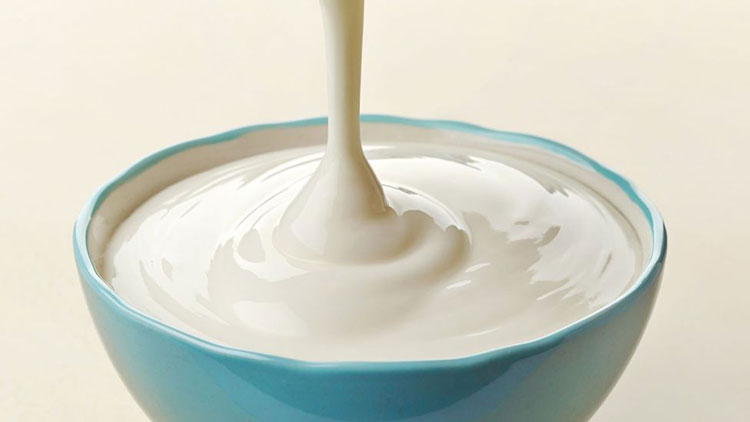
        Fat percentage in yogurt greatly impact mouthfeel and creamier texture of yogurt. The desirable percentage of fat in yogurt is 0.5%-3.5%, value greater and lower can impact texture. Nowadays manufacturer done great work on acquiring good texture with low fat content due to health concern.

        Impact of starter culture

        Impact of starter culture

        Impact of Starter Culture

        The use of contamination free starter culture with a required activity is crucial in yogurt manufacturing process. Starter culture is capable of fermenting lactose in lactic acid. This optimum state of activity in starter culture is obtained by providing optimum temperature and incubation time. The activity and type of starter culture has great impact on the flavor and quality of yogurt. So the activity of starter culture must be maintained for consistent texture of final product in yogurt manufacturing process.

        Stabilizer effect yogurt texture

        Stabilizer effect yogurt texture

        Stabilizer Effect Texture in Yogurt Manufacturing Process-Picture Courtesy: Dairy Foods Magazine

        Stabilizer are hydrophilic colloid that will bind water and prevent wheying off. It gives yogurt smooth texture. Quantity of stabilizer added must closely monitored because if you add excess it will give yogurt rubbery texture leading to hard solid mass. So optimum quantity is need for smooth and creamy texture yogurt.

        Effect of heat treatment

        Effect of heat treatment

        Effect of Temperature on Yogurt Manufacturing Process-Picture Courtesy: Ecency

        Temperature is crucial in yogurt manufacturing process. Milk is heated to reduce microbial load, Increasing yogurt texture, stability and consistency. If you over heated milk it will denature all enzyme and bacteria resulting thick consistency, pale color and unstability.

        It is noticed that heating process increase medium value for starter culture and other lactic acid bacteria. But excessive heating will lead to denatured all organism leading to decolored and off flavor yogurt.

        7.What are the challenges commonly encountered during yogurt manufacturing process?

        There are few problems which you face during yogurt manufacturing process. But here you will get solution for these commonly encountered challenges.

        Yogurt become granular during fermentation

        Yogurt become granular during fermentation

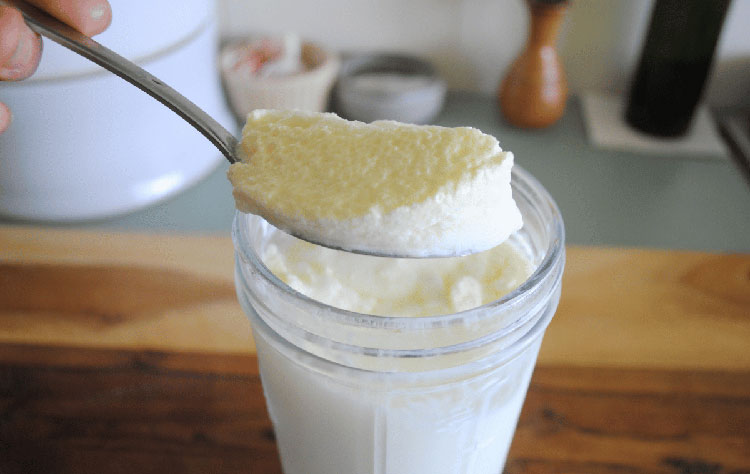
        Granular Yogurt-Picture Courtesy: Brod & Tylor

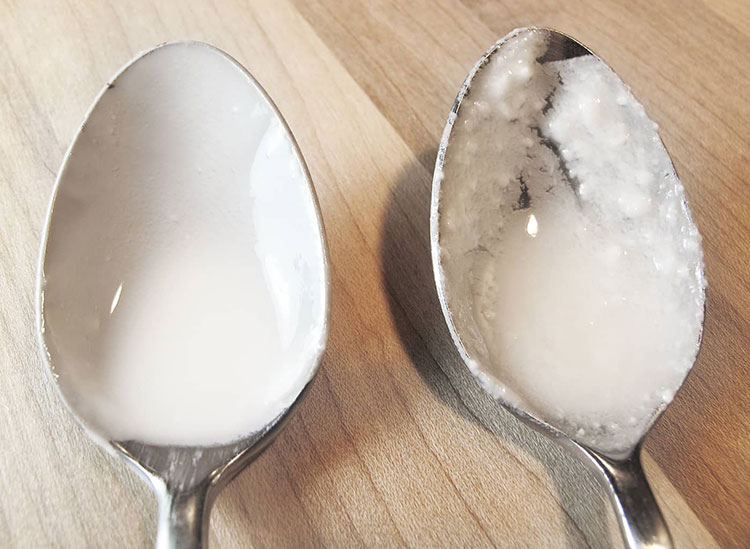
        At times manufacturer set high temperature during fermentation to speed up the process. It is applicable to some extent but we have seen by increasing temperature culture ferment lactose in lactic acid faster which can shock dairy protein resulted in granular texture.

        Solution

        If problem is created due to high fermentation temperature. Then you have to lower incubation temperature. By decreasing fermentation temperature culture produce lactic acid at slower rate resulting in less chances of disturbing dairy protein. If you are facing granular texture in yogurt, try lower temperature setting with same culture you will be amazed by result.

        Yogurt is too sour

        Yogurt is too sour

        Yogurt is too Sour – Picture Courtesy: How to eat this

        This problem mostly you faced when pH got too low and make your yogurt sour. Why this problem happens? You need consider breaking pH of yogurt (at pH where yogurt is fermented). It usually happens when you break pH at 4.3 and pH goes down during cooling and packaging process turning yogurt sour.

        Solution

        The solution is simply to raise break pH to 4.6-4.7 so pH does not get lower down from desired pH during cooling and packaging. You can also control this problem by cooling yogurt immediately or using mild culture which does not produce acid, when yogurt is break.

        Texture of yogurt is too thin

        Texture of yogurt is too thin

        Texture of Yogurt is Runny-Picture Courtesy: The Paupered Chef

        It happens when yogurt is over stirred after fermentation leading to thin and less viscous texture of yogurt before entering final packaging. Consider that when desired pH reached, avoid over-stirring at every step of processing.

        Solution

        Minimize agitation of yogurt during filling process. This can be done by stirring at interval and decreasing shear of mixing tank. When product is waiting to be filled in container avoid too much stirring.

        Conclusion

        Yogurt is semi-solid fermented product produced by culturing dairy product with one or more microorganism. Yogurt also flavored and ingredient specific depending market trend and consumer demand. Here you understand complete science behind yogurt manufacturing process, equipment and factors you need to keep in mind while yogurt production. However, to meet consumer demand of desirable flavor and texture in yogurt required quality practice to ensure you get same texture and maximum quality product with safety. For further information about yogurt manufacturing process, you are encouraged to contact our service team.

        Don't forget to share this post!

        CONTACT US

        Tell us your raw material and project budget to get quotations within 24 hours.

        WhatsApp Us: +86 181 7101 8586

        Invalid Email
        Invalid Number

        Yogurt Manufacturing Process: The Complete FAQ Guide in 2025 Read More »

        Aluminium Tube Packaging

        Aluminium Tube Packaging: The Complete FAQ Guide In 2025

        Aluminium Tube Packaging: The Complete FAQ Guide In 2025

        What is the first choice for packing semi-solid formulation? Every company select aluminium tube packaging as an ideal agent to pack their products. This can be due to the various fascinating reasons which ultimately offer you the safety and security of dosage.

        It plays a critical role and yet promising too. In this article, you’re going to explore important details related to aluminium tube packaging. We promise, that if you are from the healthcare industry or associated, by the end of the topic, you will be able to make the right decision about packaging and equipment utilized in attaining the perfect solution. So have a look at the below discussion.

          Add a header to begin generating the table of contents

          1.What is aluminium tube packaging?

          tube packaging

          Pharmaceutical tube packaging- Picture courtesy: Pharmaceutical tube

          This is the ultimate solution where various semi solid preparations related to the pharmaceutical industry are taken place.

          However, this route of packaging is known as the most conventional way and still used. Quite amazing to described that there is various new mode of packaging are introduced but none- of them are able to beat the aluminium tube packaging. The prime reason behind it is that easy to store, carrying, and apply.

          They are present in various sizes, diameters, and lengths and all are depending on the different purposes and materials to be stored. Not only in pharma, but there are various sectors that frequently uses aluminium tubes for its product storing and packing tasks. You are just needed to squeeze a little and it gives the desirable product’s quantity.

          2.Why businesses pay attention to aluminium tube packaging?

          Pharmaceutical tubes

          Pharmaceutical tubes

          A great solution against tampering

          Original product packaging

          Original product packaging- Picture courtesy: toptube

          One of the prime objectives behind aluminium tube packaging is that it gives you a high level of security. In many cases, pharma products can be counterfeited. You can keep the integrity of your product by applying this mode of packaging and your customers pick and use the product with excellent satisfaction.

          Your product safety from physical factors

          Extra protective barrier

          Extra protective barrier- Picture courtesy: HD barrier

          You must know that aluminium tubes have featured with an impermeable layer. This means that it resists the entry of external physical or environmental factors to penetrate inside. So it is simply performing the function of a barrier. Therefore, various formulations are now saved whether it is normal, medicated or non-medicated preparation.

          No progression of microbes

          No microbes

          No microbes- Picture courtesy: Pharmaceutical tube

          The aluminium tube manufacturing takes place to keep contaminants or microbial factors away from your product. Moreover, it is pretty common that if you alter the physical and chemical properties of the packaging it results in either oxidation which results in rancidity of the formulation or direct progression of microorganisms. The aluminium tubes act as a shielding layer that stops the air or oxygen molecules and airtight packaging blocks bacterial progression. It directly allows your product to stay longer and fresh.

          Easy dispensing and carry on product

          Easy to carry

          Easy to carry

          Aluminium tube manufacturing is not just meant for clinical or hospital-side applications. But it is required to you for daily time and life usages. It ensures easy management and offers flexible carry on from one place to another by simply keeping it in your bags, purse, or whatever pouches you use for medicine storage. This is simple, light in weight, and made up by considering all your needs making it the most demanding item.

          Accurate and perfect dose dispensing

          Accurate dispensing

          Accurate dispensing- Picture courtesy: Justkraft

          Your formulation drawing is now so accurate and easy with an aluminium tube. It makes you to not worry about spilling or splashing of the formulation. All in all, your product during manufacturing and application is based on control releasing and associated with no risk or wastage. Even an inexperienced person can withdraw the required concentration of the tube formulation without need for any support or tool.

          3.What are the types of aluminium tube packaging?

          These tubes are not confined to a single category, but it is composed of two major types. For example:

          Rigid aluminium tube packaging

          Rigid aluminium tube packaging

          Rigid aluminium tube- Picture courtesy: Linhardt

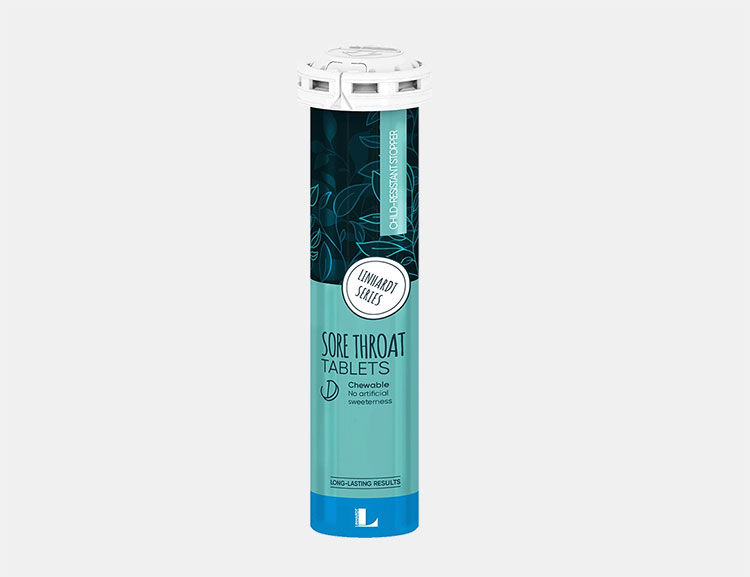
          These are also known as a hard tube. They are quite rigid in the structure and not able to press or squeeze. It is mainly used for those products that are solid, stable, and firm in presentation. For example, various tablets such as effervescent tablets are commonly packed in rigid or hard aluminium tubes. These tubes are mainly known for its high durability and protection. It gives physical excellent barrier properties between product and external conditions.

          Collapsible aluminium tube packaging

          Collapsible aluminium tube packaging

          Collapsible aluminium tube packaging- Picture courtesy: Trend hunter

          These are flexible and squeezable types of aluminium tube packaging where most often semi-solid products are packed. You can pick the tiny or required amount of squeezing the bottom of the tube. It is mainly known for anti-wastage properties as you can get whatever you want to draw without leakage or over spill.

          4.What areas require aluminium tube packaging?

          With so many specialized properties, aluminium tube packaging is required in broad industrial sectors and related areas. In industrial settings, promising quality is always maintained with these packaging options. Let's see where this leading choice is preferably opted.

          Pharmaceutical and medical industry

          Pharmaceutical and medical industry

          Pharmaceutical industry- Picture courtesy: pharmaceuticaltubes

          The aluminium tube packaging provides you with excellent protective effects. It is prioritized in pharmaceutical sectors because it gives you greater hygiene and formulation safety. Today, various ointments, balms, topical creams, lotions, gels, and pastes are dispensed in them.

          Cosmetics industry

          Cosmetics industry

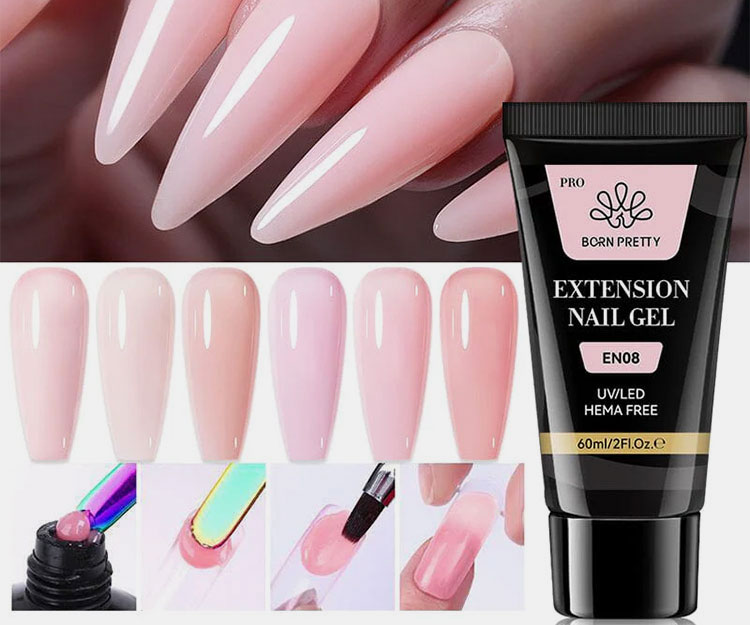
          Cosmetic industry- Picture courtesy:  blueskysolutionuk

          It was always found challenging for cosmetic industry to get an ideal solution for their products' packaging. Therefore, delicate and way more sensitive formulation is always acquired with aluminium tube packaging. This is because it is known as a golden standard storing offer for cosmetics products. So cosmetic and personal care items have mostly come in these packaging materials.

          Food Industry

          Food Industry

          Food industry- Picture courtesy: perfektup

          Food preservation and packaging are always significantly concerned with freshness, aroma, durability and sustaining their flavors. The aluminium tube packaging is therefore known as good way to ensure food products are stored in a high shielding layer of barriers and it does not affect the properties of your perishable item.

          Personal hygiene industry

          Personal hygiene industry

          Personal hygiene- Picture courtesy: Three bamboos

          Whether it is your haircare, skincare, oral hygiene, etc. the personal hygiene manufacturing selects aluminium tube packaging for its high-quality solutions and rates. It is well well-recognized mode of packaging with a tremendous safety record across the globe. In this industry, mainly collapsible or soft aluminium tube packaging are chosen for products to squeeze and get the formulation you have prepared.

          Chemical Industry

          Chemical Industry

          Chemical industry- Picture courtesy: Jarsking

          Chemicals are hard to touch, they are corrosive in nature. The aluminium tube packaging gives a high level of security to you. It is anti-leak and anti-wastage in characteristic. You can get small or exact amount of chemicals packed in it. There are various organic, inorganic, neutral salts, or various semi-solid substances packed in them such as hydrogen peroxide bases, bleaches, paints, watercolors, oil paints, etc.

          Construction industry

          Construction industry

          Construction industry- Picture courtesy: montebellopkg

          Almost every industry related to construction or manufacturing household items uses aluminium tube packaging for filling and packing products. This is because it gives high strength and safety and is present in various diverse sizes. So, it is not impossible to get tubes with various capacities storage options. For example, adhesives, shining pastes, cleaners, lubricants etc.

          5.How aluminium tube packaging is made?

          Making of aluminium tube packaging

          Making of aluminium tube packaging

          STEP 1: Aluminium Slug

          Aluminium Slug

          You can start the process of aluminium tube packaging with aluminium blocks or slugs. These slugs are about a size of a coin. They are damp into slugging container with the incorporation of lubricating powder known as a zinc stearate. You can now close the container which keeps spinning constantly to mix the lubricant all over the slug, followed by another spinning machine that helps in the orientation of the blocks to move for the stamping process.
          STEP 2: Stamping

          Stamping

          This step is also known as a ‘forming press’ where some extent of temperature and greater force is applied over the slug to extrude the layer. This is followed by its setting into a die to mold in the form of a tube. The machine is capable of exerting the pressure up to 200 tons and the amount of slug passed through it as noticed approximately 150 per minute. Now the aligned number of tubes for the next step.
          STEP 3: Annealing & Trimming

          Trimming

          Trimming-1

          The trimming machine is meant to cut and sharpen the tube when it passes through sync rollers.

          The top of the neck is trimmed with the help of stationery blades of the machine. It ultimately makes the neck of tube safe till you use. Moreover, small and thin layer of the seal is left that you can pierce before application.  During the stamping some parts of the tube is indeed not in an ideal and suitable shape. Therefore, further corrections are achieved from this process. It is mainly providing heat to some extent, and it ensures that the tubes are entirely smooth and finished. After achieving the final shape, the tubes are cooled down and simultaneously sent to the next step.

          STEP 5: Internal Coating & Primer

          Primer

          To create a barrier between aluminium and the product contact, the coating spray is applied inside the surface. It is done by using protective lacquer or primer and ensuring a promising interior. So, when you fill the tubes with a product, you will be pretty assured that your ingredients or product is stable and safe by inert nature of the inside surface.
          STEP 6: Printing

          Printing

          Now the tubes go for cleaning, by this step, if any sticky or unwanted particle is present over the tube’s surface is removed. With the help of a printing machine. The prepared tubes are printed and improved with the application of attractive graphics and critical details along with brand name etc.
          STEP 7: Cleaning and Capping

          Cleaning and Capping

          The tube surface is cleaned and secured by application of closures. All tubes are oriented and checked. The faulty tubes are sent to the rejection unit, and non-damaged tubes are now ready for filling with desirable products.

          6.What are the machines used for aluminium tube packaging?

          The machine used in the aluminium tube packaging production line is detailed below:

          Semi-automatic aluminium tube packaging machine

          semi automatic aluminium tube packaging machine

          AIPAK semi automatic aluminium tube packaging machine

          This is an ideal machine for you if you’re associated with small or limited batches production. The machine gives you an affordable solution to offer professional packaging. This unit is designed with hi-tech features that give you accurate filling along with sealing of the formulation without requiring so much time and energy.

          You just need to position the empty tubes in the holder, remaining the task will be performed by the machine itself.

          Automatic aluminium tube packaging machine

          automatic aluminium tube packaging machine

          AIPAK automatic aluminium tube packaging machine

          This machine is preferably selected by various large industries related to medicine, cosmetic, chemical, etc. where day to day production demands is controlled by it. The unit gives you three amazing working options including filling the formulation along with sealing, and batch embossing.

          The surprising thing is that it doesn’t involve human intervention except loading of empty tubes. The machine acts as a leader to control the entire operating tasks itself. Now you can enjoy carefree working if automatic option is installed at your facility.

          Cartoning machine

          aluminium tube cartoning machine

          AIPAK aluminium tube cartoning machine

          This is an automatic option without which the aluminium tube packaging process is incomplete. You can load the flat bunch of cartons or cards in the feeding magazine of the machine.

          The machine is capable of picking the flat cards and folding them to form a carton of loaded specifications in. By utilizing a photoelectric eye detector, the presence of an empty carton is identified and filled aluminium tubes are position in it followed by the folding and closing of the carton.

          Due to the high-tech mechanism, the machine forms the carton by utilizing the hot melt glue or can by using other ways such as spraying glue methodology. The overall, aluminium tube packaging by the end of the production line would be the same as you find on the store’s shelves.

          7.What are the common aluminium tube packaging head styles?

          Based on your product, its requirements to be dispensed and flowability, you can select the options for its packaging styles. We have enlisted the diverse range of head styles present in aluminium tube packaging.

          Style Description Image
          Flip top This is the commonly used and best-known standard style used for head security. It allows you to flip up and pick the formulation and flip down. So easy! You can see this style in regular uses of tubes of toothpaste, balms, lip gloss, etc. Flip top
          Twisted Top Another conventional and very popular head style for aluminium tube packaging is the twisted top. You can dispense the product on the go once you twist the cap and tear the sealing. Twisted Top
          Dome Most often, the aluminium tube packaging offers this style where small and smooth dome heads present a beautiful and aesthetic appearance to your product. Various cosmetic and personal care products are today facilitated with dome head styles. Dome
          Lotion pump style This is a very handy and user-friendly style where you can flip off the cap and press the pump to get your product. For example, various topical creams, lotions, gels, etc. are acquired with this head style. Lotion pump style
          Spray style They are also known as an atomizer head, which produces aerosol molecules upon pressing the head. This is a luxury style allowing you to enjoy formulation in a greater pressure from its nozzle best fit in aluminium tube packaging. Spray style
          Pinpoint Various tubes used for dispensing of ophthalmic preparation available in gels, pastes, ointment form are packed in pinpoint heads that ensure precise and accurate quantity of product when you need. Pinpoint

          8.What are products filled with aluminium tube packaging?

          There are unlimited products that are packed by using these options. However, we can’t discuss all of them. Nonetheless, we have highlighted some very important and popular formulation that use regularly implemented aluminium tube packaging.

          Toothpastes

          Toothpastes

          Toothpaste- Picture courtesy: Colgate

          This is the product that starts your day. You just squeeze a little and freshness releases in the form of paste. They are packed with high confidence in aluminium tube packaging that ensures toothpaste are preserved longer and offers you potent properties. This is included with herbal toothpastes, ayurvedic toothpastes, etc. where herbal and potent extracts are combined to produce therapeutic effects.

          Pain relief tubes

          Pain relief tubes

          Pain relieving tubes- Picture courtesy: montebellopkg

          The pain or body aches are mainly deal with painkiller topical formulation. This is mainly used to relieve your discomfort. The aluminium tube packaging in this case not only acts as your bodyguard but ensures simple and easy application.

          Ointments

          Ointments

          Aluminium ointment tube packaging

          Whether medicated or non-medicated, the basic category of the ointment products is mainly filled in aluminium tube packaging. This is included with products related to skin related ailments such as dermatitis, burns, infections, and wounds. This packaging acts as a solution to give a stable and potent medicine.

          Hair dye tubes

          Hair dye tubes

          Hair colors

          You can’t ignore aluminium tube packaging when it comes to getting accurate concentration of hair dyes. The high barrier properties let it allow you to store sensitive and delicate hair dyes in an airtight packaging seal.

          Creams

          Creams

          Cream

          When it comes to talk about medicated creams, they are mainly designed to treat problems like eczema, and fungal problems, producing soothing effects to your skin. These are often present in aluminium tube packaging. Similarly in this way, various creams used for beauty purposes are formulated in a way that must be packed in an air-tight packaging are also maintained in them till the end user.

          Gels

          Gels

          Gel- Picture courtesy: NSI Australia

          There are many types of gel formulations are significantly packed in aluminium tube packaging to produce rapid application wherever it is required. It is also included with skincare gels such as retinol gel, dark circle removing gels, etc. However, various ophthalmic gels are also packed in using the same mode and materials of packaging across the globe.

          Condiments and sauces

          Condiments and sauces

          Condiments and sauces- Picture courtesy: Tubettificio Perfektüp

          This is one of the advanced ways of meeting your demand by packaging food products like tomato ketchups, mayonnaise, butter, creams, mustard paste, etc. in the form of aluminium tube packaging. It is considered a highly concerning mode of packaging as it practically benefits sectors like air travel, hotels, hospitals, and homes.

          9.What is the expiry of aluminium tube packaging?

          The expiry date of aluminium tube packaging

          The expiry date of aluminium tube packaging- Picture courtesy: EPL Packaging

          The aluminium tube, itself does not have any shelf life. It has high durability and long-lasting effects. Therefore, nothing can break or melt its surface. Yes, the materials packed in it are considered as so safe and it offers a high shelf life which is based on type to type and properties of the formulation.

          For instance, if you store food products in them, its shelf life would be different. Many food products range with a shelf life of 1 to 2 years. This means, that if you store your food items in aluminium tubes packaging, it promises you to offer shelf life and preservation of food till 24 months.

          However, in the case of cosmetics, the scenario would be changed. If you store creams, gels, masks, etc. They are mainly stable for 2 to 3 years or more. It is all depending upon your storing conditions. However, the packaging itself gives you anti-moisture, anti-UV, and anti-microbial protection that is absolutely safe for your products.

          In the case of chemicals or products related to oral or personal hygiene, the aluminium tube packaging shelf life is observed even more. It is noticed that your product under a controlled or favorable environment is stable for 3 to 4 years.

          10.What are the sizes used for aluminium tube packaging?

          Aluminium tube packaging sizes

          Aluminium tube packaging sizes- Picture courtesy: perfeckup

          Aluminium tube packaging sizes-1

          Diameter(mm)

          Length (mm)

          Capacity (ml)

          Size of round tube
            13 Ø 16 Ø 19 Ø 22 Ø 25 Ø 30 Ø 35 Ø 38

          Ø

          40 Ø 45 Ø 50 Ø 60 Ø
          3 ml 45
          5 ml 61 45 40
          10 ml 73 55 48
          15 ml 101 75 65 55
          20 ml 95 81 67
          25 ml 115 95 78 65
          30 ml 108 89 74
          35 ml 122 100 81
          40 ml 110 88 71
          45 ml 120 96 77
          50 ml 130 105 82 78
          60 ml 120 95 88 85
          70 ml 110 98 93
          80 ml 120 109 103 86
          90 ml 130 117 112 94
          100 ml 142 127 120 105
          120 ml 147 140 124 101
          150 ml 166 140 121
          180 ml 166 159 138 111
          200 ml 173 148 120
          220 ml 160 131
          240 ml 170 141
          250 ml 175 146
          300 ml 165
          350 ml 185
          400 ml 210

          The aluminium tube packaging size chart courtesy: Auber cosmetic tube solution

          The above chart illustrates the size of aluminium tubes including their sealing width. This is the most used size chart that is depending on the size and number of materials can be packed. The larger the diameter, more would be ideal space to accommodate your formulation.

          The small size aluminium tubes are mainly used for storing small and concentrated products such as adhesives, serums etc. The larger diameters are mainly considered with a range of 25 mm to 35 mm and are mainly used in food, pharma, and cosmetic applications.

          11.Is aluminium tube packaging contributing to sustainability? How are they recycled?

          Sustainability

          Sustainability- Picture courtesy: somewang

          Indeed yes, the aluminium tube packaging is significantly known as an ecofriendly substance. Therefore, it is mostly known that the primary and first choice of many manufacturers. See below how they contribute to sustainability.

          Collection In various regions of the world, aluminium tubes are gathered or collected in specified location, and this can be achieved by a recycling campaign. Once collected the unwanted materials are removed.
          Cleaning The aluminium tubes are ground and turned to small pieces that will help and eases the melting process.
          Melting The small particles of aluminium are now heated and melted by utilization of high temperatures. In this phase, the molten materials are cleaned again by passing through molds and dies to eliminate unwanted residues or particles present and turned back to old shape. For instance, aluminium block, slug, etc.
          Ready to form a new product Now aluminium is ready to reuse and in this way to not only conserves energy, and materials, but also promotes sustainability.

          12.What are the issues that affect the formation of aluminium tube packaging?

          The aluminium tube packaging is a beautiful and interesting thing! It is all about the game of your mind and machines to craft your thoughts into reality. But there are some commonly happening issues that can suddenly drip the flow of the production line. We know, this can be so annoying. Let’s discuss the commonly happening problems with solutions.

          Spillage and Leakage

          Spillage and Leakage

          Aluminium tube packaging testing- picture courtesy: packtest

          This problem is like anyone can expect. Your packaging can face this issue anytime and anywhere. The real goal is to deal with it to avoid and fix the issue by identifying the main culprit.

          Solution

          There might be an overflow of the formulation in the tubes. Therefore, the filling nozzles start leaking the product. Moreover, it is suggested that the product must be filled optimizing the setting of tube size with your machine. Moreover, we would recommend passing your tubes for quality check where certain tests such as the leak test which is known as the ‘tube burst test’ will ensure that your aluminium tube packaging is great and will resist to pressure for a long time.

          Inaccurate packaging

          Inaccurate packaging

          Inaccurate packaging

          For every manufacturer, the inaccuracy, or inconsistency is nothing but a nightmare. Your tubes are filled with inaccurate levels of the product that could directly lead to the withdrawal of entire batches.

          Solution

          There could be three reasons, and these reasons are easy to tackle. First of all, you can assess the viscosity of the materials to be filled in the tubes. By knowing the option, you can pick the right type of filler machine. For example, piston filler, pressure filler, gravity filler, etc. all are based on your product needs and its flowability.

          Secondly, check and calibrate the machine setting. This could be the main reason most of the time which causes inconsistencies. Thirdly, checking the obstruction in the filling nozzle, or associated parts of the unit, side by side with daily maintenance can be helpful in eliminating these issues and ensuring smooth operation.

          Poor Sealing

          Poor Sealing

          Aluminium tube sealing- picture courtesy: the whole packaging

          The aluminium tube packaging sealing can be weakened sometimes, and it not only causes the product loss but also affects your brand image.

          Solution

          Just don’t worry in this case, it mostly happens if the machine settings are not properly adjusted. That’s why we mostly suggest that to run a test before going for final production. Check the sealers or sealing bars' temperature.

          Sometimes, too much high temperatures can get you in trouble by weakening the sealing bond between the layer of aluminium tubes. The most common suggested sealing temperature lies approximately 160 °C which melts the layer and is folded and crimped by using the machine that ensures that sealing is promisingly done.

          13.How to get an ideal aluminium tube packaging?

          When it comes to getting an ideal aluminium tube packaging, you should look for certain factors that directly impacts on the production.

          Understand your formulation

          Understand your formulation

          Formulation

          The aluminium tube packaging comes in a variety of styles, and each of them offers you certain specifications and packaging benefits. It is all dependent on your formulation types. For example, flip-up top of the aluminium tube packaging is highly ideal if your product is regularly used and needs fast application, and so on. Therefore, understanding your formulation texture and types would be the first and foremost step to getting an ideal option.

          Embrace your packaging with vibrant prints

          Embrace your packaging with vibrant prints

          Innovative prints- Picture courtesy: Three bamboo

          We all love to get products with beautiful prints and packaging. Why not choose this option to improve and boost your product? Today, digital graphics and prints are quite revolutionized and give you tremendous and fast results. So go for it when it comes to labelling your aluminium tube packaging. This technology indeed gives an appearance without extra expenditure.

          Size selection of packaging

          Size selection of packaging

          Aluminium tube sizes- Picture courtesy: Montebello packaging

          Determine the volume, production size, and dimensions you need that fulfil the packaging requirements of our formulation. This may be does not count in aesthetics but yes it gives great quality value to your brand. For small and delicate formulations, mostly smaller tubes are used for large formulations such as masks, and adhesives, comparatively larger sizes are recommended. See above our most commonly used sizes in aluminium tube packaging.

          Conclusion

          After reading the article on ‘aluminium tube packaging’, now you will be able to distinguish the primary factors related to aluminium tube packaging. It includes with types, styles, manufacturing, filling, and so on. Remember, choosing the right machine and determining your needs can all together bring an ideal result. This mode of packaging not only offers formulation integrity but also ensuring anti-tampering properties. Looking for a solution that gives you efficient and packaging meant for boosting your business? Do contact our team now! You will be served with friendly and fruitful guidance related to your project and supporting a series of machines in an affordable price range.

          Don't forget to share this post!

          CONTACT US

          Tell us your raw material and project budget to get quotations within 24 hours.

          WhatsApp Us: +86 181 7101 8586

          Invalid Email
          Invalid Number

          Aluminium Tube Packaging: The Complete FAQ Guide In 2025 Read More »

          Aerosol Manufacturing Process-9

          Aerosol Manufacturing Process: The Complete FAQ Guide in 2025

          Aerosol Manufacturing Process: The Complete FAQ Guide in 2025

          The aerosol manufacturing process is intricate and covers a broad range of steps. To start an aerosol manufacturing unit one should know how these aerosols are fabricated, through this systematic process.

          The aerosol manufacturing process has its significance, for creating essential and everyday use products like sprays, forms, and mist. It has applications in the areas of personal use products and industrial ones.

          This article will cover all the basics and give you an extensive guide to the aerosol manufacturing process, answering all the possible questions that may arise in your mind. Let’s explore the answers.

            Add a header to begin generating the table of contents

            1.What are the aerosols called in the aerosol manufacturing process?

            Aerosol manufacturing process

            Aerosol manufacturing process

            The aerosols used in the aerosol manufacturing process are suspensions of liquid or solid (Active ingredient) into gas. Is it amazing how these tiny particles suspended in gas could allow the work to be done efficiently? Like painting, cleaning, protecting some sort of material, or lubrication.

            The aerosol manufacturing process developed the aerosol products in pressurized containers.  The active ingredients are released as suspension of particles in the air. The product is dispensed in the form of sprays, foams, gels, etc.

            2.What are the main components of the aerosol manufacturing process?

            Components of Aerosol Manufacturing Process

            Components of Aerosol Manufacturing Process- Picture Courtesy: Mosil Lubricants

            So some ingredients are the key components in the aerosol manufacturing process. Let’s discuss them one by one:

            Propellants

            Do you know the reason behind the dispersion of active ingredients in the state of fine globules in the container? It’s the propellants that keep them in this form by creating pressure inside the can and providing even coverage.

            Product Concentrate

            It includes the combination of the following ingredients to formulate the product. It may be a solution, suspension, semisolid, emulsion, or powder:

            Active ingredients

            we add active ingredients to provide the primary function of the formulation in the aerosol manufacturing process. That might be cleaning, painting, therapeutic function, or coating.

            Solvents

            It acts as the medium for active ingredients to dissolve and create a stable solution. And gives a uniform dispersion after the administration.

            Stabilizers

            These are the reasons for the stability of the formulation and the shelf life.

            Aromatic agents

            They are scent additives including natural essential oils or synthetic aromatic compounds

            Aerosol containers

            These are made of plastic or metal cans. Used for the distribution of the liquid into mist or fog.

            Valve and actuator

            It defines the state in which the product is released which varies according to the type of valve, actuator, and spout mechanism. The actuator is used when the product is desired to be released in the form of mist. The spout is used when the discharge of the product is another form than mist.

            3.What are the propellants and the different types used in the aerosol manufacturing process?

            Propellants

            Propellants- Picture Courtesy: FEA

            The term propellant is used for any substance that gives motion to another substance or object upon expansion. So its role in the aerosol manufacturing process is quite obvious, works as a stimulant for the product to come out of the can when someone presses the actuator.

            It has 3 functions:

            • Pressurization
            • Product Release
            • Emptying the can

            Below are the different types of propellants that can be used in the aerosol manufacturing process. These are selected based on the desired particle size, vapor pressure, and solubility:

            Compressed Gases

            Contact Lens Cleaning Solution

            Contact Lens Cleaning Solution

            The compressed gases are used as propellants to dispense the product as a wet spray or solid stream. These are filled above the solution of the product in headspace. Common examples are nitrogen, carbon dioxide, and regular air.

            These gases are inert. They don’t have an ozone depletion effect and neither cause global warming. Therefore, considered safer than hydrocarbons for the environment. Ointments, aqueous antiseptic and germicidal aerosols, and contact lens cleaner saline solution are some examples where these propellants are used.

            In some products these propellants have shelf life restrictions as well as carbon dioxide affect climate change than other propellants. The containers with high pressure can blow up if they face high temperatures or any physical harm

            Liquefied Gases

            Air Fresheners

            Air Fresheners

            The liquefied gases as propellants used to dispense the product in the form of fine mist or foam.  They are inert and less toxic.  Common examples are butane, isobutene, and propane.  Food-grade packaging material, air fresheners, and perfumes are some examples of where these propellants are used.

            Some of them harm the environment even though they provide effective dispensing of the product. For example, butane can easily catch fire and cause an explosive environment upon leakage in a small area.

            4.How is the aerosol manufacturing process performed, and what are the principle steps of it?

            Aerosol Manufacturing Process-1

            Aerosol Manufacturing Process- Picture Courtesy: School Science

            As we mentioned earlier it is an intricate process. There are several steps involved in the aerosol manufacturing process. Let’s start to discuss them systematically:

            Step # 1: Formulation Development

            Insecticide Spray

            Insecticide Spray- Picture Courtesy: Honeywell

            The all process starts from the selection of active ingredients intended for specific purposes. Like paint aerosol, deodorant aerosol, or insecticide aerosol. Other than active ingredients, the formulation also consists of solvents, stabilizers, preservatives, emulsifiers, colorants, and aromatic agents.

            After the selection of formulation ingredients, precise calculations are carried out. The software is used to model formulations and then perform physical tests to ensure standards are met before moving to the next step.

            The accurate formulation of the product ensures the effectiveness, performance, and safety of the final product.

            Step # 2: Mixing and Blending

            Paint Spray Aerosol Manufacturing Process

            Paint Spray Aerosol Manufacturing Process

            The mixing step is carried out in large-scale mixing vessels or tanks. These mixers have advanced systems for mixing a broad spectrum of ingredients, like powder or viscous liquids with flexibility.

            During mixing, temperature regulation is very important as we know that some ingredients require cool temperature treatment while some require heating to create and maintain the desired consistency of the product. It can be achieved via temperature-controlled vessels.

            In some formulations, waxes are used like in hair sprays or paints. These waxes have to be melted before incorporating in other ingredients. Likewise, some ingredients need to be added earlier while others are added at different levels of mixing to maintain the stability of the final product.

            For the assurance of the right amount of ingredients added at the right time, automated systems are utilized. At this step, tests are performed for quality control of vital parameters. After achieving the required consistency, the mixture is filtered out to remove any impurities added during this step. After that, the mixture is brought to the filling machine.

            Step # 3: Filling of Cans

            Filling of Cans

            Cans Filling Process- Picture Courtesy: Aerofil

            It is an automated process that involves the transfer of the formulated and blended product into the cans during the aerosol manufacturing process. It has different steps as follows

            Cans cleaning and integrity test

            Cans Preparation

            Cans Preparation- Picture Courtesy: Aerofil

            The cans are cleaned thoroughly to remove any impurities that can cause contamination. Metal cans are cleaned through steam or air jets. Plastic or glass cans are cleaned by washing.

            Also, the integrity of the can is tested before and after the filling of the product to ensure that there is no damage or defects.

            Filling of the Product

            Product Filling

            Product Filling

            The automated machines fill the liquid products with equal and right amounts into the prepared cans. The speed of the filling machine is adjusted according to the production scale. A clean and contaminated-free environment should be maintained during the filling process.

            Keeping Headspace

            Headspace for Propellant Filling

            Headspace for Propellant Filling- Picture Courtesy: Research Gate

            The headspace is crucial for the injection of the propellant in the coming step. So therefore care should be taken to avoid filling cans to the brim.

            Step # 4: Injection of the Propellant

            Propellant Filling Machine

            Propellant Filling Machine

            The propellant injecting machines are utilized to inject the propellant into the cans. This step is delicate one that an accurate amount of propellant should be injected. Because this step has an influence on the functionality of the final product. If the propellant is added in excess, it will over-pressurize the cans.

            The injected propellant occupied the place of air in the headspace of the cans and built the right pressure to discharge the product.

            Step # 5 Assembly of Valve and Actuator

            Assembly of Valve and Actuator

            Assembly of Valve and Actuator- Picture Courtesy: FEA

            This process is fully automated and the machines put the valve components together in the right order. The components of the valve include the valve cup, stem, and spring. When you press the actuator, the stem moves, and then the spring returns the stem in its place after every use.

            After the assembly of the valve, the actuator (outer part) is brought into place. After you press the actuator the product will release.

            5.What are the key pieces of equipment in the aerosol manufacturing process?

            Key Equipment

            Key Equipment

            The secret behind the simplicity of the spray can is the intricate components and techniques. Let’s discuss the key pieces of equipment that make the aerosol manufacturing process seamless.

            Mixing Vessels

            Homogenizer Vacuum Emulsifying Mixer

            AIPAK Up Homogenizer Vacuum Emulsifying Mixer

            The selection of mixing tanks and vessels depends on the formulation and production needs. For example, high-shear mixers, propeller mixers, or turbine mixers.

            Jacketed mixing tanks can be used for the formulations that need a temperature control system. As it will adjust the heating and cooling of the contents according to the desired temperature condition during the process.

            For the formulations where deaeration is desirable or to avoid air incorporation, vacuum mixing vessels are the first choice.

            Aerosol Filling Machine and Propellant injecting system

            Aerosol Filling Machine

            Aerosol Filling Machine- Picture Courtesy: R&R

            The aerosol filling machine is a crucial piece of equipment in the aerosol manufacturing process. It can be semi-automatic or fully automatic. Selection depends on the desired production outcomes.

            Automatic filling machines include rotary filling machines, inline filling machines, and bag-on-valve filling machines.

            The key functions of the aerosol filling machine in the aerosol manufacturing process include:

            • Filling of the product
            • Crimping (secures the valve to the container and provides airtight sealing).
            • Propellant injection
            • Leak testing (the pressure testing equipment used to check if the  cans are sealed properly or have sufficient pressure before packaging)

            Rotary Filling Machines

            Rotary Aerosol Filling Machine

            Rotary Aerosol Filling Machine- Picture Courtesy: R.A Jones

            It requires minimal manual interventions. It uses a rotating mechanism that rotates the containers through the different stations including filling, crimping, and gas stations. It provides high-speed production.

            Inline Filling Machine

            Inline Filling Machine

            Inline Filling Machine-Picture Courtesy: MBC

            The containers are aligned automatically in a straight line for the filling process. The machine performs filling, crimping and propellant injection in a sequence as the container moves along the production line. It provides medium to large-scale production.

            Bag-On-Valve Filling Machine (BOV)

            BOV Filling Machine

            BOV Filling Machine-Picture Courtesy: MBC

            It is suitable for a bag-on-valve system. It is a specifically designed barrier packing system where the product is separated from propellants by a flexible bag. Commonly applied for pharmaceuticals, cosmetic, and food-graded aerosol manufacturing process.

            It uses eco-friendly gases like nitrogen or air instead of flammable propellants. Since the product is separated from propellants, it prevents contamination and oxidation of the product. Therefore increases the shelf life and the product is applied in its purest form.

            The can of the product can be sprayed in any direction. It offers up to 99% of the product consumption.

            Valve Inserting Machine

            Valve Inserting Machine

            Valves Insertion- Picture Courtesy: MBC

            It assembles valve components and puts them accurately in place.

            Actuator Assembling Machine

            Actuator Assembling Machine

            Actuator Placement- Picture Courtesy: R&R

            It accurately attaches the actuator to the valve for accurate dispensing.

            Capping Machine

            Capping Machine

            Aerosol Capping- Picture Courtesy: Aerosol Filling

            Caps or lids are placed on the container by the capping machine for protection during storage and transport.

            Quality Control Equipment

            Quality Control Equipment

            Leak Test Detectors- Picture Courtesy: R&R

            Other tools are also attached for quality control of the product like leak test, particle size analyzer, etc.

            Packaging Machine

            Packaging Machine

            Label Packaging- Picture Curtesy: DPI

            These machines organize and label the product cans. It gives assurance that these cans are safe during transportation.

            6.What types of aerosols are manufactured through the aerosol manufacturing process and how are they categorized?

            Categories in The Aerosol Manufacturing Process

            Categories in The Aerosol Manufacturing Process- Picture Courtesy: Envasadoxiomara

            There are two types of aerosols manufactured through the aerosol manufacturing process. They are categorized based on the formulation.

            Water Based Formula

            Water Based Formula

            Water-based Aerosol Paint-Picture Courtesy: Motolow Blog

            These include emulsion and dispersion formulation. The product is contained in lined or double-lined cans (e.g. phenolic resins, epoxy linings). If any effective corrosion inhibitor is incorporated, then unlined containers can be used. Commonly used propellants in the aerosol manufacturing process of aqueous products are hydrocarbons, nitrogen, dimethyl ether, and hydrofluorocarbons.

            Carbon dioxide is the only one among the propellants that can’t be used in aqueous formulations of the aerosol manufacturing process. The reason is that it forms carbonic acid in an aqueous environment, causing the corrosion of cans and affecting the physical features of the product.

            Solvent-Based Formula

            Solvent-Based Formula

            Solvent-based Aerosol Paint

            Oil-in-water emulsions are solvent base formulations in the aerosol manufacturing process. Unlined cans are used as most of the solvents can easily dissolve the coating of the inner wall.

            When there is a moisture content of more than 0.1 % in the product concentrate, then you will have to add corrosion inhibitors. Sometimes moisture content less than 0.1 % would become the reason for the corrosion.

            Hydrocarbons, a mixture of hydrocarbons and hydrofluorocarbons are widely used propellants. These formulations required a higher content of liquefied gas propellant to completely expel the product from the can.

            7.Which industries benefit from the aerosol manufacturing process?

            Wide Scope of the Aerosol Manufacturing Process

            Wide Scope of the Aerosol Manufacturing Process

            The aerosol manufacturing process is not only limited to creating spray cans, but it has transformed the way products are delivered across a wide range of industries. It’s everywhere whether it’s the manufacturing of life-saving asthma inhalers in health sectors or the room air fresheners and perfumes of the perfumery industry.

            In short, it offers convenience, precise application, and improved product stability. Let's explore the industrial sector that benefits from it.

            Pharmaceuticals and Health Care

            Pharmaceuticals and Health Care

            Spray Bandages-Picture Courtesy: CN Shining

            The aerosol manufacturing process has benefited the pharmaceutical and healthcare sectors all over the world for many years.  This innovative technology played a crucial role in the well-being of millions of people through:

            • Metered dose inhalers (treatment of asthma and chronic obstructive pulmonary disease).
            • Aerosol coolants (for coolness and hydration of skin).
            • Aerosol disinfectants (for prevention of bacterial and fungal infection).
            • Aerosols anesthetics (to provide local relief from pain, itching from minor burns, minor cuts, and insect stings).
            • Aerosol bandages (for protection of injuries and to prevent infections).

            Culinary Sector

            Culinary Sector

            Whipped Cream- Picture Courtesy: Debic

            The aerosol manufacturing process offers the production of a wide range of food products. Following are the products found in the market are the results of the aerosol manufacturing process:

            • Whipped cream
            • Mustard
            • Salad dressing
            • Cooking oil
            • Icing
            • Colorants
            • Ketchup
            • Coffee powders
            • Cheese spreads
            • Chocolate

            Safety and Emergency Sector

            Safety and Emergency Sector

            Horn Aerosols- Picture Courtesy: Boss Horn

            The aerosol manufacturing process manufactures horn aerosols. It is designed to create very loud noises for various emergency reasons:

            • Fire safety
            • Boat safety
            • Fog warnings
            • Evacuations

            Entertainment and Novel Products Sector

            Entertainment and Novel Products Sector

            Silly Strings Spray

            You all have seen at parties and festive occasions the silly strings that sprayed colorful string in a liquid form from cans.  And the air horns at the sports events. These products are manufactured through the aerosol manufacturing process.

            Household Care Sectors

            Household Care Sectors

            Air Fresheners

            The aerosol manufacturing process contributes to the manufacturing of a variety of aerosol products. These products aid in cleaning and maintenance of the home.

            • Air fresheners (for pleasant odors as well as to disinfect the air)
            • Windows cleaning sprays (cleans the glass surfaces without leaving streaks on them).
            • Bathroom aerosol cleaning sprays (remove hard water stains from bathtubs, sinks, and tiles).
            • Kitchen degreaser aerosol sprays (aid in removing grease and stains from kitchen surfaces, stove, and exhaust hoods).
            • Multi-surface cleaners (these can clean countertops, furniture, and other hard surfaces).
            • Polishing aerosol products (protect and make the surface shine of furniture, houseplants, and wooden floors).
            • Aerosol starches (provide a neat appearance to ironed clothes)
            • Insecticides and herbicides (to control insect infestation and weeds).

            Personal and Beauty Care Sector

            Personal and Beauty Care Sector

            Hydrating Spray

            There is a broad range of products available in the market that are manufactured through the aerosol manufacturing process.

            • hair and styling sprays
            • cream foundations
            • gel toothpaste
            • hydrating creams
            • skin whitening and tanning lotions
            • sun protection creams
            • thermal waters
            • dry shampoos
            • deodorants
            • shaving foam

            Automobile and Hydraulic Care and Maintenance Sector

            Anti-fog Spray

            Anti-fog Spray

            There are many products available in the market for cleaning and maintenance of automobiles that utilize the aerosol manufacturing process.

            • Engine cleaners
            • Tyre cleaners
            • Dashboard and console cleaners
            • De-icer
            • Anti-fog
            • Tyre inflators
            • Adhesives
            • Lubricants
            • Paints

            8.How many types of metal containers are used in the aerosol manufacturing process? What are the criteria for their selection based on the formulation?

            Containers for Aerosol Manufacturing Process

            Containers for Aerosol Manufacturing Process

            There are mainly 3 types of containers used in the aerosol manufacturing process based on type of the formulation.

            Unlined Metal Container

            Unlined Metal Container

            Unlined Metal Container- Picture Courtesy: Illing Packaging

            It’s more suitable for solvent-based product concentrates. As well as for the water-based concentrates that incorporate the corrosion inhibitor.

            Lined Metal Container

            Lined containers for Water

            Lined containers for Water-Based Concentrates-Picture Courtesy: MTN

            It’s suitable for water-based formulations. As far as the solvent-based formulation is concerned, their solvents usually dissolve the lining of these cans.

            If more than 19% of the dimethyl ether is used in water-based applications, then you should add an effective corrosion inhibitor. Since DME penetrates the lining of the can and damages the tine plate.

            Double-lined container

            Aerosol Spray

            Aerosol Spray- Picture Courtesy: Curie

            It’s used for the water-based formulation where extra corrosion protection is desirable. The inner lining of the metal container is coated with phenolic resin, urethane, or epoxy before the container is made.

            9.How many types of containers are available for the aerosol manufacturing process based on the material used?

            Aerosol Containers

            Aerosol Containers- Picture courtesy: Curie

            There are a variety of options of the containers for the aerosol manufacturing process. You can pick among them according to your product requirements.

            Tin Plated Steel Container

            Tin Platted

            Tin Platted

            Comparatively inexpensive and lightweight containers. These containers are fabricated only by coating iron with tins. So they have a high potential for corrosion by water-based applications. These containers are mainly suitable for solvent-based applications.

            Aluminum Container

            Aluminum Container

            Aluminum Container- Picture Courtesy: Packmedia

            They are highly resistant to erosion caused by fluid concentration. These containers are widely used in the aerosol manufacturing process as aerosol cans. These containers feature one unit for the bottom and center areas while the covering is attached to the internal surface,

            Glass Container

            Glass Containers

            Glass Containers

            These containers are quite fragile. They are more suitable for products with low concentrations of propellants and low pressure.

            Plastic Container

            Plastic Container

            Plastic Container- Picture Courtesy: PT

            These types of containers are used for the aerosol manufacturing process due to their light weight, durability, and corrosion resistance. These are frequently used for cosmetic and home cleaning products.

            They are more permeable to vapors and atmospheric air and cause oxidative degradation of the formulation. For this reason, they are often used as the outer covering of glass containers to avoid breakage.

            10.What quality control tests are performed during the aerosol manufacturing process?

            Quality Control Test

            Quality Control Test- Picture Courtesy: Bude

            For the safety and effectiveness of the product, quality control tests in the aerosol manufacturing process are performed.

            Leakage

            This test is necessary to check any leakage in the aerosol can seal to keep the product pressure and to ensure shelf life.

            Pressure

            Every can is tested for the measurement of pressure inside of it. To make sure that pressure is within its safe limit and has sufficient spray force.

            Uniform Dispersion

            You should be assured that the active ingredient is uniformly distributed in the product. as well as the product is released optimally and at the same rate from each can.

            Valve Functionality

            It should be checked to ensure that the valve works smoothly when pressed.

            Weight variation

            It should be performed to make sure that each can contain an equal amount of product as well as propellant.  It assures consists of the filling process.

            11.What are the regulatory standards for the aerosol manufacturing process?

            Regulatory Requirements

            Regulatory Requirements- Picture Courtesy: Aviation Times

            For the safety of consumers, environmental protection, and compliance, the aerosol manufacturing process is governed by strict regulations.

            Proper Labelling

            It is required to ensure that the label bears the correct details as required by the law. Such as product ingredients, usage instructions, safety precautions (e.g., flammability, or toxicity hazards)

            Environmental Regulations

            You comply with the law that aims at minimizing the effects of the aerosol manufacturing process on the environment. Such as limiting the use of volatile organic compounds (VOCs), and prohibition or limitation of ozone-depletion substances like chlorofluorocarbons.

            Health and Safety Standards

            You must follow the health and safety standards to provide a safe environment during the aerosol manufacturing process. And also ensures that the final product is safe and according to standards for consumer use.

            International Trade Guidelines

            you should ensure that products meet the local and international standards for cross-border import and export. It includes proper documentation and trade compliance.

            12.What environmental challenges occur in the aerosol manufacturing process? How are sustainability practices addressing these challenges?

            Sustainability Concerns

            Sustainability Concerns- Picture Courtesy: Aerobal

            Environmental Challenges Sustainability Practices
            The use of volatile organic compounds contributes to environmental pollution and smog formation. Formulating the products with low VOCs or replacing them with eco-friendly propellants. For instance, compressed gases.
            The usage of some harmful propellants causes ozone depletion. Such as chlorofluorocarbons. Replace them with ozone-safe alternatives like hydrocarbons or CO2
            Non-recyclable aerosol cans can lead to landfill accumulation. Promoting the use of recyclable packaging materials like aluminum and steel. And implementing the proper recycling practices.
            High energy consumption during the aerosol manufacturing process results in increased carbon emissions. Implementing energy-efficient machinery and manufacturing process.
            Chemical spills and improper disposal of them can contaminate the water and soil. Treating wastewater and sticking firmly to the handling protocols for hazardous materials.
            Transportation of pressurized containers contributes to the greenhouse gas emissions. Optimization of transportation logistics and using vehicles with low emissions.
            Extensive use of non-renewable materials like aluminum and steel causes the natural resources depletion. Encouraging sustainable sources of raw materials and exploring biodegradable packaging options.

            Conclusion

            The aerosol manufacturing process has a wide scope in the delivery of products with convenience and effectiveness. We have covered all the areas of interest regarding it. We have tried to explore all the relevant guidelines for anyone who wants to start a setup for the aerosol manufacturing process or to buy any machinery for it. Furthermore, if you are looking for efficient equipment for the aerosol manufacturing process, Allpack gives you the best solution. Contact us for any further assistance.

            Don't forget to share this post!

            CONTACT US

            Tell us your raw material and project budget to get quotations within 24 hours.

            WhatsApp Us: +86 181 7101 8586

            Invalid Email
            Invalid Number

            Aerosol Manufacturing Process: The Complete FAQ Guide in 2025 Read More »

            Viscosity of Cream and Lotion

            Viscosity of Cream and Lotion: What Do You Know?

            Viscosity of Cream and Lotion: What Do You Know?

            What is viscosity? What is the difference of viscosity in cream and lotion? Why some liquids behave differently despite having same purpose or use? This is due to viscosity which makes them different on the basis of their texture and performance. Viscosity of cream and lotion play important role in maintaining consistency of product.

            Cream

            Viscosity of Cream and Lotion: What do you know? – Picture Courtesy: Freepik

            Viscosity is defined as the resistance of fluid to flow or internal fraction. This article will help you understand the complex principle of viscosity and also answer some common question that comes up in your mind. Let’s start this topic with frequently asked questions and their expert’s answer.

              Add a header to begin generating the table of contents

              1.What is viscosity of cream and lotion what do you know?

              viscosity of cream

              Viscosity of cream and lotion-Picture Courtesy: Block Party

              Viscosity of cream and lotion is the measure of fluid to deform under sheer stress. It is perceived as flow behavior or resistance of pouring. Viscosity describes a fluid internal resistance to flow or also defined as measure of a fluid friction.

              The basic principle of viscosity of cream and lotion is describes as: When a layer of liquid moves on the surface or another layer of the same liquid, the particles tend to oppose the movements resulting in developing a resisting force in liquid which is called Viscosity.

              Viscosity of the cream and lotion is the effective factor to determine properties, consistency and stability.

              Viscosity of cream and lotion will help you in selecting product or medium for medicinal purpose. Lotion are less viscous, more water content, easily spreadable and are preferable for hairy skin like scalp that’s why many scalp shampoo are lotion.

              On the other hand, creams are more viscous, thick and suitable for dry skin because it create heavy barrier and keep skin hydrated and remain on skin for longer time.

              2.How viscosity is measured using different apparatus in cream and lotion?

              measured

              Measuring viscosity of cream and lotion Picture Courtesy: Byrdie

              Viscosity is measured to quantify product flow behavior properties. It also effective in making decision for selecting mixing process and filling containers for the product as well as stability during storage, transportation till consumer use . In R&D labs specialized instruments are used to measure viscosity of cream and lotion are called “Rheometer” and “Viscometer”.

              There are various method of measuring viscosity depending on the type of liquid and the circumstances. It involves different ways of measuring viscosity from simple ones involves counting each drop from thin tube or the complex one with specialized instrument with automatic recording.

              Types of Viscometer

              There are various methods used to measure viscosity of creams and liquids. These methods ensure consistency, stability and quality product. A viscometer is used to measure viscosity of cream and lotion. Let’s discuss in details each method and instrument used.

              Capillary Viscometer

              Capillary Viscometer

              Capillary Viscometer- Picture Courtesy: Ubuy Jordan

              This method of measurement, define as time required for fluid to pass through a thin tube (capillary tube) whose diameter and length is already known. Then the time taken by fluid is compared by standardize fluid (usually water) whose viscosity is already known.

              There are two types capillary viscometer.

              a- Ostwald’s Viscometer

              Viscometer

              Ostwald’s Viscometer

              Ostwald’s viscometer also known as U-tube viscometer. It measures the viscosity of liquid with known density.

              Working Principle

              The tube is filled with fluid through arm 1 up to bulk A, the liquid sucked through arm 2 till upper C mark and then allow fall from bulk B till lower mark C and time is noted and compared standard liquid which water.

              b- Ubbelohde Suspended Level Viscometer

              Ubbelohde Viscometer

              Ubbelohde Viscometer

              It is the modified form of Ostwald’s Viscometer. It also works on same principle but with few differences.

              Working Principle

              There is a third vertical tube which is attached to the bulb below the capillary part. The liquid is filled through third arm in the quantity sufficient to fill the bulb in left arm. Rest the process is same U-shaped viscometer.

              This viscometer is beneficial because it is simple in handling, inexpensive and portable.

              Falling Ball Viscometer

              Falling Ball Viscometer

              Falling Ball Viscometer- Picture Courtesy: Helago-cz.com

              Working Principle

              It consists of a tube containing thick viscous liquid. A sphere is descend through the tube placed at specific angle, time taken by sphere to cross between two marks determine its viscosity. The time in which sphere is dropped is determined its viscosity.

              It is a high speed device and gives precise result but requires high maintenance.

              Rising Ball Viscometer

              Rising Ball Viscometer

              Rising Sphere Viscometer- Picture Courtesy: Direct industry

              It is another falling ball viscometer and also known as Rheometer.

              Working Principle

              In this method, a stainless sphere or glass sphere is suspended in viscous liquid which is hung by a wire is lifted through the material at very low speed.

              Rotational Viscometer

              Rotational Viscometer

              Rotational Viscometer – Picture Courtesy: DTC web shop

              In this viscometer one surface is stationary and one part is rotating by an external drive.

              Working Principle

              A rotational viscometer works on the principle that the force required rotating an object submerged in viscous liquid, indicate viscosity of the fluid.

              3.What are the different ranges of viscosities and ingredient used in cream and lotion?

              Viscosity of Cream

              Viscosity of cream depends upon the type of cream like either it is hand cream or body cream. But mostly viscosity of cream ranges from 36000 to 9500 cP (cp = Centipoise is the unit to measure viscosity). The basic ingredients used in formulation of cream are:

              Humectant:They draw water and help to retain moisture in skin. Most commonly humectants are glycerin, lanolin and honey.

              Liquid Oil:They are used as natural moisturizer and help to prevent water loss by creating protective barrier on skin.

              Solid Oil (Butter):They are used for their specific benefit like keeping skin hydrated for longer period. Some of solid oils are used cocoa butter, Shea butter etc.

              Thickener: Thickener is used to increase viscosity and to give desired consistency to cream. Like stearic acid and cetyl alcohol.

              Emulsifier:They are added to make homogenous mixture of oil and water. Prevent separation of components.

              Below table give you insight about percentage of each ingredient used in cream:

              Ratio Ingredients
              60 % Water
              3% Humectant
              12% Liquid Oil
              15% Solid Oil ( Butter)
              3% Thickener
              7% Emulsifier

              Viscosity of Lotion

              Viscosity of lotion depends on many factors but most important factor is ingredients used in lotion. Most of the ingredients are same as cream which we discuss above but they differ in percentages or quantity. Viscosity of lotion varies depending upon purpose and usage but mostly it lies between 2000 to 5000 cP. Let’s see table to get idea about quantity of ingredients.

              Ratio Ingredients
              80% Water
              4% Humectant
              10% Liquid Oil
              2% Thickener
              4% Emulsifier

              As you also notices that water content is more in lotion as compared to cream. On the other hand, butter and thickener is less in lotion that’s why lotion is less viscous than cream and more liquidy. These differences in viscosity make them different product unless they are used for same purpose.

              4.What factors affect viscosity of cream and lotion?

              There are a lot of factor which affect the viscosity of cream and lotion. It help user to decide how store product and which more suitable to use. I will describe you some basic factors which greatly impact the viscosity of cream and lotion.

              Temperature Influencing Viscosity of Cream and Lotion

              Watery Lotion due to inappropriate storage temperature

              Watery Lotion due to inappropriate storage temperature- Picture Courtesy: Clare Henney

              Temperature significantly impact viscosity of cream and lotion. As the temperature rises, viscosity of lotion and cream decreases because molecule gain kinetic energy and move more rapidly as a result in reducing intermolecular force which alter the viscosity.

              You also observed cream and lotion in winter are thick in consistency while the same product loses its consistency in summer and become bit watery.

              Composition of  Cream and Lotion

              Composition of Cream and Lotion

              Composition of Cream and Lotion- Picture Courtesy: Palmer’s

              The component used in cream and lotion significantly alters viscosity of product. For example what kind of thickening agent is used because good choice of thickener increases viscosity? Like Carbomers and xanthan gum give desired consistency and maintain viscosity of cream and lotion. Balanced addition of humectant is also considered because excess solvent will decrease viscosity of cream and lotion. It will be helpful for different manufacturing industry while making cream and lotion.

              Pressure influence on Viscosity of Cream and Lotion

              Effect of Pressure on viscosity of cream and lotion

              Effect of Pressure on viscosity of cream and lotion- Picture courtesy: Happy Skin

              Pressure also plays an important role in viscosity of cream but its effect is different from temperature. Increase in pressure cause slight rise in viscosity because molecules are pushed closer and leading to increase in intermolecular force. However this impact is quite small as compared to the impact of temperature.

              5.What equipment is induced to get desirable viscosity of cream and lotion?

              There are various mixing equipment are used depending upon the viscosity of cream and lotion. Selecting right equipment is really important for desirable viscosity of cream and lotion. In this section I will tell you about some basic equipment which is really important.

              For high to medium viscous cream helical-ribbon and high shear mixer are used. On the other hand, for low viscous lotion propeller mixer and impeller mixer are used.

              Equipment for Mixing High Viscous Cream

              Helical-Ribbon Mixer

              Helical-Ribbon Mixer

              Helical-Ribbon Mixer- Picture Courtesy: Unique Mixer

              It consists of helical shaped ribbon construction which is ideal for homogenizing any kind of powder and suitable for homogenizing thick viscous creams.

              Working Principle

              Ribbon mixer work on the principle of shuffle movement that consists of two parts on central shaft. The mixing medium consists of inner or outer helical ribbon structure that designed to move inward or outward both. The outer helical pull the material from side to middle of cylinder and internal helical push back material on side. This back forth folding movement creates a mixing pattern.

              High Shear Mixer:

              High Shear Mixer for viscous cream

              High Shear Mixer for viscous cream – Picture Courtesy: Boss go

              The high shear mixer balances mixing intensity for medium viscous creams without excessive consumption of energy. This mixer insures uniform viscosity by evenly mixing and distribution of ingredients in creams.

              Working Principle

              High shear mixer revolves around the concept of shear force. The mixer consists of a rotor that rotates at high speed within a stationary stator. The constantly moving rotor create centrifugal force while the stator remain stationary creating shear force resulting in reduced particle size and leading to evenly dispersed mixture.

              Equipment for Mixing Low Viscous Lotion:

              Propeller Mixer

              Propeller Mixer

              Propeller Mixer – Picture Courtesy: SRT-Mischer.ce

              Propeller mixer work on the principle of shearing force which facilitate blending low viscosity lotion by circulating fluid in both axial and radial direction.

              Working Principle

              Propeller mixer creates rotational thrust resulting in mixing of low viscosity lotion.

              Turbine Mixer

              Turbine Mixer

              Turbine Mixer – Picture Courtesy: Direct Industry

              Turbine mixer is a mechanical device used to mix low viscosity fluids like lotion.

              Working Principle

              Turbine mixer creates turbulent movement of liquid due to combination of centrifugal and rotational force. These movement cause effective mixing of low viscosity lotion

              6.What are the best packaging option in different viscosity of cream and lotion?

              There are many options of packaging available for cream and lotion depending on the viscosity, consistency and ease of use. Some frequently used options are:

              Wide Mouth Jars

              Wide Mouth containers

              Wide Mouth containers

              Viscosity of cream and lotion greatly impact choice of container because thick viscous cream is easily scoops out from wide mouth jars. Its help in taking out last amount out jars so reducing waste of product. Better option for creams with chunks of fruit etc.

              Pump Bottles

              Pump bottles

              Pump bottles – Picture courtesy: Sanle plastic

              These are suitable packaging for low or thin viscosity cream and lotion. It enable control over the amount dispensed, reducing waste and ensuring right amount is applied. It is also convenient to use and can easily be handled by one hand.

              Collapsible Tube Container

              Tubes Containers

              Tubes Containers – Picture Courtesy: India Mart

              Collapsible tube containers are preferred for lotion and medium viscous cream. It is portable to use even creams are easily squeezable from these tubes. It protects product from air and contamination therefore protecting product from degradation and contamination.

              Conclusion

              Viscosity of cream and lotion is an essential aspect in determining effectiveness and which product best suits you.  In this article, we discuss about instrument and packaging container used depending on the viscosity of cream and lotion. We also understand the factors which need to be maintained for desirable viscosity of cream and lotion and the mixing equipment which are crucial for this step. However, if you need more information about viscosity of cream and lotion, then you are encouraged to contact our information service center at Allpack.

              Don't forget to share this post!

              CONTACT US

              Tell us your raw material and project budget to get quotations within 24 hours.

              WhatsApp Us: +86 181 7101 8586

              Invalid Email
              Invalid Number

              Viscosity of Cream and Lotion: What Do You Know? Read More »

              Equipment For Making Cosmetics

              How To Make Attar: The Complete FAQ Guide In 2025

              How To Make Attar: The Complete FAQ Guide In 2025

              The use of attar is far beyond mere a fragrance rather it is also popularly used as a remedy to certain aliments including stress relief and body pains. It is also considered sacred due to religious beliefs which is why the question How To Make Attar become a significant one for the relevant people and attar manufacturing companies.

              Attar

              That's why, we have come up with a complete FAQ guide to let you know the tools and methods for making attar. It will also cover the myriad of benefits attar possess, what are its storage requirements along with shelf life, and most importantly quality regulations for its safety. So, don't make any delay and start exploring it!

                Add a header to begin generating the table of contents

                1.What Is Meant By Attar?

                Meant By Attar

                Rose attar presentation idea- Picture Courtesy: 9pedia.com

                Attar is an essential oil with intense fragrance frequently used as a perfume. It is also known as ittar and is derived from various botanicals such as flowers, spices, and herbs. The use of attar is not confined to perfume but can be also used for medicinal purposes.

                There are different types of attars based on their bodily effects such as warm attars and cool attars. The former are used in winters to give warm sensation, while as, the letter are used in hot sunny days. Some of the common examples of attar include jasmine, rose, and lavender.

                Apart from this, attars have substantial benefits and their production include certain ingredients along with machines and proper process. These all aspects will be covered in the upcoming questions.

                2.What Are The Benefits Of Attar?

                Attars are loaded with natural extracts which is why they are well known for their benefits. Let's know some of these advantages in a bit detail!

                Suitable for Skin

                Suitable for Skin

                Woman applying attar on mam hand

                Unlike modern perfumes, attars do not contain alcohol rather derived from pure natural ingredients. They do not cause allergies, irritation, or breathing problem thus are suitable for all types of skin especially sensitive skins.

                Cost-effective

                Cost-effective

                Various attar bottles in box- Picture Courtesy: attarkannauj.com

                You might get surprised after knowing the fact that despite having numerous qualities, attars are still cost-effective than other alcohol based perfumes available in market. So, it is affordable for everyone to have their favorite attar.

                Improve Mood

                Improve Mood

                Woman sniffing Attar- Picture Courtesy: attarwholesale.com

                Attars are popular for their therapeutic properties which helps in improving overall mood through relaxation and stress relief. Moreover, attars are particularly used for aromatherapy.

                Cultural Benefits

                Cultural Benefits

                Attars representing wedding culture- Picture Courtesy: thearomatherapyshop.com

                Attars are considered valuable in various religions and are often used for self purification. Similarly, certain types of attars are used by the their adherents which promote cultural connectivity and sense of belongingness.

                Long Lasting Effects

                Everyone wants to feel the scent at least for 24 hours after application. It is easily possible with the use of attars which have long-lasting effects.

                3.How To Make Attar- The Ingredients Required?

                Certain ingredients are necessary for making attar. These vary from flowers to essential oil and water etc. Description of each ingredient is provided below:

                Flowers

                Flowers

                Various fresh flowers- Picture Courtesy: bouqs.com

                Flowers are inevitable for the production of attar. The real aroma and fragrance is extracted from various flowers. Each flower encases a specific scent such as rose give soft and romantic aroma, while as, lotus is rich in sweetness. Similarly, jasmine is known for its exotic touch. There are numerous other flowers which can be used for making attar due to their specific aroma.

                Herbs

                Herbs

                Various herbs in bowls- Picture Courtesy: naturopathy.ie

                In addition to flowers, herbs play an important role in enhancing the essence of attars. For this reason, various herbs are used during attar production. Some of the common examples include saffron, tuberose, patchouli, and vetiver. They give the attars additional properties such as hotness, coolness, and musky etc.

                Woods

                Woods

                Sandal wood presentation idea- Picture Courtesy: houseofhealth.co.nz

                For making attar, you will also need to have certain kinds of woods like sandal wood, cedarwood, and agar wood. The reason behind using such woods is that your attars largely depends upon them for making the scent more stronger and deeper that stays for long. Similarly, these woods are also helpful in providing the base oil for attars.

                Spices

                Spices

                Various spices- Picture Courtesy: iStock

                You might get surprised after reading the term spices as an ingredient for making attar. But yes! It is true! Spices are considered valuable for creating a unique scent. This can be better understand by looking towards the fact that cinnamon brings warmth to your attar, while as, clove evoke the deep feelings of comfort. Both of these ingredients are popular spices.

                Water

                Water

                Water drop falling in water- Picture Courtesy: bitlanders.com

                Water is a primary ingredient needed for the making of attar. You should take clean and fresh water for use. It is required for extracting the fragrance and essential oil from flowers and woods through distillation process.

                4.How To Make Attar- Step By Step Process?

                The making process of attar is based on several steps which must be carried out responsibly. Here, we have explained these for you in simple words:

                Ingredients Collection Phase

                Ingredients Collection Phase

                Collection of raw materials for Attar- Picture Courtesy: abposters.com

                The first step is carefully gathering all the necessary ingredients required such as flowers, spices, herbs, woods, and clean water. Make sure the raw material is freshly harvested, so, best possible fragrance and oil can be extracted.

                Extraction Phase

                Extraction Phase

                Steam distillation process- Picture Courtesy: research gate

                Now, the second phase involves extraction of scent from flowers and other materials. For this purpose, two such methods are popularly used naming hydro distillation and steam distillation.

                In hydro distillation, raw materials are submerged in water and boiled till the scent and oil is extracted through vapors. It is suitable for sensitive flowers whose fragrance may get damaged if exposed to severe temperature.

                In contrast, steam distillation involves the flow of steam across the flowers. This heat helps in extracting out the essential oil and scent from raw materials. This extracted oil and scent is then transferred to condenser for further processing.

                Condensation & Separation Phase

                In this phase, the steam and vapors are passed through condensation process as a result of which they are turned into water and oil. Moving forward, water and oil are separated to provide you with the pure extraction in form of attar.

                Base Oil Preparation Phase

                Here, base oil preparation take place which is considered important to enhance the richness and lifetime of attar. For this purpose, sandalwood and vetiver are used for getting natural carrier oil.

                Mixing & Infusion Phase

                Once, the base oil is prepared, it is well mixed with the essential oil or mixture extracted from flowers. Similarly, both are blended and harmonized by settling down the oils. For this, right temperature and time should be given.

                Attar Maturation Phase

                Attar maturation refers to the aging of attar which means to make the attar more strong in order to realize its full potential. This process may take days or even months.

                Filtration & Bottling Phase

                Filtration & Bottling Phase

                Various attar bottles

                The last stage include filtration of produced attar, so as, to remove out all the impurities from attar. Once filtered, the attar is safely bottled into beautiful shape bottles.

                5.What Are The Machines For Making Attar?

                There are several machines used for the making of attar. They are described below:

                Perfume Making Machine

                Perfume Making Machine

                500L 1000L perfume making machine

                Perfume making machine is an equipment which is designed for the production of attar. It consists of various parts including a heating tank, pneumatic motor, compressor, filtration system, control panel, and main frame etc. The body of the machine is made up of quality stainless steel which is fully resistant to bacterial growth and corrosion. It simply extract the essence from flowers for making attar and process it through filtration system to remove out impurities.

                Essential Oil Distillation Machine

                Essential Oil Distillation Machine

                Essential Oil Distillation Machine

                Essential oil distillation machine is another important equipment you can use for extracting the essential oil from flowers and woods etc., for making attar. It has several components including main heating kettle, condensation system, filtration mechanism, and control system. It follows simple steps for carrying out the attar making by boiling the flowers in water whose vapors are then passed through condensation and separation phase. Finally, pure and natural attar is obtained.

                6.What Quality Standards And Regulations Should Be Met While Making Attar?

                It is necessary that attars made on industrial level should be of high quality with all the ingredients taken are from safe sources and the machine being used are also certified by international quality standards. In this way, some of the prominent quality standards include:

                GMP quality standard icon

                GMP quality standard icon- Picture Courtesy: angstromtechnology.com

                International Organization for Standardization (ISO)

                ISO is the top most quality standard which ensures the quality control for making attars. It provides regulations regarding environmental safety, quality management as well as the safety of workforce. Thus, attars must be made while adhering to the rules established by ISO.

                Good Manufacturing Practices (GMP)

                Good Manufacturing Practices is another significant standard that should be met by the manufacturer of attar in their production facility in order to make sure that the practices adopted for attar making are safe. Similarly, the equipment used are also clean and safe.

                International Fragrance Association Standards (IFRA)

                International Fragrance Association Standards represents the set of boundaries for creation of quality fragrances of all types including attars. In this way, it deals with the careful testing and assessment of fragrances being made.

                7.What Is The Storage Requirements Of Attar And Its Shelf Life?

                Attars are very sensitive due to their purity and natural state. That's why, they need proper storage condition along with suitable temperature for long shelf life. So, let's explore these requirements!

                Dark attar bottle

                Dark attar bottle

                • Place your attar in cool and dry place by avoiding contact with direct sunlight. It will protect the oil from degradation and enhance the lifespan of attars.
                • If possible, make sure to pack your produced attars in dark bottles which can be of glass, mud, or wood. It will help in maintaining the originality of attars.
                • Once packed, the bottles must be checked if sealed tightly or else the strength of aroma may decrease over time.
                • Another most important thing to look for attar storage is the right temperature. They must be kept in place where temperature is stable. The ideal temperature for attar storing attars is between 15-22 C°.

                Shelf Life

                Shelf Life

                Attars in shelves- Picture Courtesy: asmaperfume.com

                Just hold your horses! As we are going to disclose a fact that might shock you. Curious to know about it? Well, you must be! It is actually about the shelf life of attars which even research has proven that the life of attars is much more extensive than the traditional perfumes which last for few months or years.

                However, the case is totally different with attars which can last for decades due to their original and natural state. One of the major reasons is absence of chemicals and alcohol which prevents the evaporation of atomic compounds.

                8.Factors To Consider When Making Attar?

                When making attar, it is wise to consider some of the essential factors which will make sure attars more desired and enticing. Some of these factors are as follows:

                Combination of Ingredients

                Shelf Life-1

                Roses surrounding attar bottle- Picture Courtesy: kannaujattar.com

                As we have mentioned earlier about the various ingredients used in making attars, it will be now clear to you that attar is not an extraction of single flower rather combination of materials which also include spices, herbs, and woods. Thus, it is necessary to have knowledge about each material you're using and make a combination that suits your choice like floral, woody, or musky etc.

                Extraction Method

                Distillation or extraction method is the core step of your attar making process. It must be selected responsibly. For instance, if you are dealing with sensitive materials then hydro distillation method is a good option. In contrast, for rough materials like sandalwood you can go for steam distillation to extract the essential oil in a more better way.

                Quality of Materials

                Quality of Materials

                Quality icon- Picture Courtesy: blog.gembaacademy.com

                It is very important to have those materials for making attar which are freshly harvested. Old or spoiled flowers are going to ruin the finished product. So, make sure you have considered this factor when making attar.

                Material Ratio

                Material Ratio

                Cloves- Picture Courtesy: mccormickscienceinstitute.com

                As attars are often obtained from mixing the original extraction of plants with that of base oil, it is pertinent to take care of the ratio of both the compounds. Otherwise, you may not be able to get the perfect mixture.

                Conclusion

                To summarize, we hope have got your answer to the most important question How To Make Attar. Although, the process of making attar is quite simple with quite limited ingredients required for production, however, it still needs to be carried out carefully. In this way, you should consider the quality, ratio, and combination of ingredients taken. Apart from this, attar is the name for freshness, recalling of memories, and cultural connectivity. So, why not become a successful businessperson in this field? Off course, you should think about it. If you have similar intentions, don't forget that machines are inevitable for this purpose for which Allpack is always there. For further information visit our website!

                Don't forget to share this post!

                CONTACT US

                Tell us your raw material and project budget to get quotations within 24 hours.

                WhatsApp Us: +86 181 7101 8586

                Invalid Email
                Invalid Number

                How To Make Attar: The Complete FAQ Guide In 2025 Read More »
                Equipment For Making Cosmetics

                Equipment For Making Cosmetics: The Complete FAQ Guide In 2025

                Equipment For Making Cosmetics: The Complete FAQ Guide In 2025

                It seems like you are a cosmetics manufacturer and looking forward for relevant equipment. Isn't it? Probably yes! Well, cosmetic industry is on rise due to its global demand which is why spending on its manufacturing for quality production can potentially generate high profit. In this way, one of the primary requirements is to have Equipment For Making Cosmetics.

                Cosmetics

                Did you have any idea about the equipment needed? Or are you new in the field and finding it difficult? In any case, there is no need to worry as we are here to provide you with a detailed FAQ guide which is going to end all of your queries. So, stay tuned and know about the list, uses, features, and handling requirements of equipment for making cosmetics!

                  Add a header to begin generating the table of contents

                  1.What Are The Equipment For Making Cosmetics?

                  Various lipsticks

                  Various lipsticks- Picture Courtesy: gienicos.com

                  The use of cosmetics is no exception in our daily life! Starting from cleaning to beautification of hair, face, and nails, we continuously use beauty care products. These products vary from liquid shampoo to semi-solid creams, gaseous perfumes and solid soap bars.

                  As the physical properties and essence of these cosmetics vary from one another, different machines are used for their production. These equipment undertake all the steps from preparing raw material till their transformation into finished products.

                  In this way, the common equipment used for making cosmetics include crushing machine, emulsifying mixers, moulding tools, compression machine, and filling machine. You will know these equipment in detail in the upcoming questions.

                  2.Why Equipment For Making Cosmetics Are Important?

                  Cosmetic filling into jar

                  Cosmetic filling into jar- Picture Courtesy: unilogo.com.pl

                  As we know, that cosmetics are used on regular basis in form of moisturizer, oil, and lip balm etc., they are in direct contact with our skin and hair which are very sensitive. In this way, it is very important that high quality and safe equipment are used which preserve the originality and delicacy of the produced products.

                  Similarly, cosmetics are usually available in powder, liquid, or semi-solid form. These structural forms needs to be well processed under required condition and time period. Thus, it is only possible when necessary equipment like emulsifiers, mixers, and compaction machines for cosmetics are durable and automated.

                  3.Enlist Some Of The Major Equipment For Making Cosmetics?

                  There are multiple equipment used for making cosmetics. Some of the frequently used apparatuses include:

                  Vacuum Emulsifying Mixer

                  Vacuum Emulsifying Mixer

                  Allpack APKZRJ Bottom Homogenizer Vacuum Emulsifying Mixer

                  Vacuum emulsifying mixer is one of the important equipment used for making cosmetics. It is suitable for the emulsification of various semi-solid cosmetic products such as lotion, ointment, sunscreen, toothpaste, and gel etc. The machine is made up of a water tank, oil tank, main tank, and main frame. It works on the principle of mixing together solid content with gradual inclusion of water and oil. During the process, agitator keep mixing the formula which result in the creation of a homogeneous emulsion.

                  High Shear Mixing Granulator

                  High Shear Mixing Granulator

                  Allpack HLSG Series High Speed Wet Mixing Granulator

                  High shear mixing granulator is another equipment necessary for making cosmetics. The machine is highly durable made with stainless steel body which is corrosion resistant. It is primarily used to make granules from powder by mixing powders with liquid solvent. It functions by adding the liquid solution into filled pot during operation. The continuous movement of agitator and and blade produce uniform shape granules. It is perfect for solid cosmetics including face powder, glitters, shimmer, and highlighter.

                  Fluid Bed Dryer

                  Fluid Bed Dryer

                  Allpack FG-60 fluid bed drier

                  Fluid bed dryer is an efficacious machine used for the drying of powders and granules. It has precise body with simple operation based on the principle of fluidization where a hot air passed through the material filled perforated bed. The particles flow into air like fluid inside the chamber. Consequently, drying of the substances occur. This equipment is highly effective and required for the drying of various cosmetic products such as loose powder, compact powder, makeup dyes, and bleach powder etc.

                  Bin Mixer

                  Bin Mixer

                  Allpack Model CH-VI Forced-Type Mixer

                  Bin mixer refers to an extremely intelligent machine designed to mix or blend powdery or granules type materials. It consists of a revolving bin attached to the main frame with other parts comprising control panel, electric cabinet, and universal wheels. It supports the mixing of two or more types of substances by revolving the bin. The continuous back and forth movement of particles in the bin lead to the formation of uniform particles distribution. Hence, it is best suitable for the mixing of dry cosmetic powders like eyeshadow, glitters, and blush etc.

                  Laboratory Mixer

                  Laboratory Mixer

                  Laboratory mixer- Picture Courtesy: silverson.com

                  Laboratory mixer is another advanced equipment included in the list of equipment for making cosmetics. It is a compact solution employed for the mixing and dispersion of various liquid solutions along with solid material which are immiscible. It uses high pressure force and special design agitator and stirrer to mix the materials. It is ideal for making oil based solutions, raw material extraction for cosmetics, and glycerin etc.

                  Cooking Kettle

                  Cooking Kettle

                  Cooking kettle Metos Viking- Picture Courtesy: metos.com

                  Cosmetics such as soaps, nail polish, creams, and lotions require proper temperature for making. In this way, cooking kettle which is made from quality stainless steel provide the required temperature and ensure uniform mixing with the help of turbo mixers and agitators. The kettle is tailored to match specific requirements regarding temperature and automation making it widely applicable to numerous products.

                  Storage Tank

                  Storage Tank

                  Industrial storage tanks- Picture Courtesy: aske.in

                  Storage tank is designed to facilitate the storage of liquid cosmetics at suitable temperature condition. As there is high chance of corrosion which may degrade the quality of products, storage tank is constructed with 304 and 316 stainless steel. The capacity of storage tank vary from 500L to 30,000L. Similarly, the specifications such as stirring, jacket system, and insulation mechanism make it more rigorous for maintaining optimal temperature.

                  Lipstick Molding Machine

                  Lipstick Molding Machine

                  CRLA20 Lipstick molding machine with silicon molds (20 ppm)- Picture Courtesy: citus-kalix.fr

                  Lipstick molding machine is another excellent equipment used for making cosmetics such as lipstick, lip balm, highlighter stick, and foundation stick etc. The machine is highly advanced in its construction with automatic technology to safely carry out the molding of lipstick in silicone molds. It easily changes the parts with changing format and have simple cleaning requirements.

                  Cosmetic Powder Press Machine

                  Cosmetic Powder Press Machine

                  5HP Semi-Auto Cosmetic Compact Eyeshadow Foundation Powder Press Machine- Picture Courtesy: gienicos.com

                  Cosmetic powder press machine is another most significant equipment developed to press face powder, blush powder, and eyeshadows in compact form. It is made up of several components comprising main frame, hopper, pan loading system, control panel, pressing device, and electric cabinet etc. It works by unloading the pan and placing it under filling head from where precise amount of powder is poured into pan and then compressed with pressure.

                  Universal Crusher

                  Universal Crusher

                  Allpack B Series Universal Crusher

                  Universal crusher is used for crushing material into powder and granules. In cosmetics manufacturing, it plays crucial role by breaking down the large pieces of dyes and other objects into powder. It has simple construction with easy working principles where objects are loaded in the hopper, passed through the crusher, and discharged from the outlet. This machine can also be used for foodstuff, chemical, and pharmaceutical manufacturing.

                  Vibrating Sifter Machine

                  Vibrating Sifter Machine

                  Allpack ZS Series Vibrating Rectangular Screening Machine

                  Vibrating sifter machine is another valuable machine to be included in the equipment for making cosmetics. It is an advanced solution to replace the traditional method of sieving powders and liquids. As for as cosmetics are concerned, so, most of the time particles are dense or viscous making their further processing a difficult task. Thus, a vibrating sifter machine can perfectly sift the material and end their lumps. It is best suitable for eyeshadow and face powder.

                  Spray Filling Machine Production Line

                  Spray Filling Machine Production Line

                  AIPAK Spray Filling Machine Production Line

                  Spray filling machine production line is high automation equipment designed to safely fill spray and perfumes into containers. It consists of a bottle unscrambler, bottle feeder, spray filling machine, and bottle capping machine. The operation is carried out in a synchronized way where bottles are unscrambled, fed to the filling machine, spray is filled into bottles, and then the filled bottles are capped. Hence, the enclosed spray filling is achieved with no danger from environment.

                  Mascara & Lip Gloss Filling Machine

                  Lip Gloss Filling Machine

                  KM503 Mascara and lip-gloss filling machine (40 ppm)- Picture Courtesy: citus-kalix.fr

                  Mascara and lip gloss filling machine is a specialized machine in filling mascara and lip gloss. It is well qualified to deal with various viscosities and cosmetics such as concealer, liquid lipstick, and skin corrector etc. The machine come in various capacities for loading material and support different types of containers with varying sizes and shapes. It simply works by taking material from hopper into the filling nozzles, accurately weighing it, and precisely depositing into the bottles. The machine then cap the filled bottles tightly.

                  Cosmetics Filling Machine

                  Cosmetics Filling Machine

                  Allpack Pneumatic Filling machine Cosmetics

                  Cosmetic filling machine is used for the filling of liquid and semi-solid cosmetics such as creams, lotion, and shampoo etc., in bottles and jars. The machine effectively measure the exact volume to be filled and dispense it into bottles. It uses pneumatic technology for filling cosmetics. It is available in semi-automatic and automatic system to fulfill your diverse needs.

                  Cosmetic Tube Filling Machine

                  Cosmetic Tube Filling Machine

                  Allpack NF-80 Automatic Al Aluminum/Plastic Soft Tube Filling and Sealing Machine Lotion

                  Cosmetic tube filling machine is other such significant equipment used for the filling of ointment, facial cream, face mask, moisturizer, and hair gel etc. It is characterized by durable structure made up of stainless steel body, material hopper, working chamber, and control system. It undertakes the process in a single run with tube unloading from magazine, its placement over mold, material filling, tube sealing, embossing and trimming etc.

                  4.What Are The Key Features Of Equipment For Making Cosmetics?

                  Equipment for making cosmetics have essential features. These are shared by almost all these machines in common which are explained below:

                  Compact Design

                  Compact Design

                  Allpack compact design WLDH- Horizontal ribbon Mixer

                  From vacuum emulsifying mixer to vibrating sifter machine and spray filling machine, every equipment for making cosmetics has compact structure. They are robust and at the same time easy to mobilize and place anywhere needed.

                  High Automation

                  High Automation

                  Cosmetic Filling Machines Filling Closing groninger- Picture Courtesy: wfoqfashion.shop

                  Automation is the key for high production and effective performance of machines which is present in almost all of the equipment for making cosmetics. They are standalone machines that function smoothly and automatically once started. Similarly, they fulfill the production output aims of manufacturers.

                  Convenient Operation

                  Convenient Operation

                  Operator placing lid over emulsifying mixer- Picture Courtesy: yekeey.com

                  For every machine used for manufacturing, the convenience in operation means a lot. The same concept apply to equipment for making cosmetics. They come up with attached devices for controlling and operation such as touch screen and control panel. Thus, less human intervention is recorded while operating the machine.

                  Quality Compliance

                  Quality Compliance

                  Quality icon- Picture Courtesy: Adobe Stock

                  The quality of heavy-duty machines like equipment for making cosmetics is necessary which is why you will find these machines with compliance to important quality standards like ISO,GMP, and FDA. They are made while using recommended 304 and 316 stainless steel along with other quality parts.

                  Versatility

                  As mentioned above, equipment for making cosmetics are highly automatic and meant for carrying out heavy-duty work. In this way, each machine offers flexibility and is versatile enough to be upgraded and integrated with other machines.

                  5.What Are The Uses Of Equipment For Making Cosmetics?

                  When it comes to discuss the uses of equipment for making cosmetics, there are multiple fields where we found these machines being used. Some of these applications are enumerated below:

                  Beauty Care Industry

                  Beauty Care Industry

                  Various beauty care products- Picture Courtesy: wfoqfashion.shop

                  Well, beauty care industry is on the top of the list where equipment for making cosmetics are needed. They are used for making face powder, eyeshadow, lipstick, and shampoo etc. The common examples include pulverizer, filling machine, powder compression machine, and emulsifier machine.

                  Food Industry

                  Food Industry

                  Ketchup & mayonnaise in bowl- Picture Courtesy: menshealth.com

                  Another major application of equipment for making cosmetics is food industry. These machines are used for producing products like ketchup, sauces, coffee powder, beverages, and pet food etc.

                  Pharmaceutical Industry

                  Pharmaceutical Industry

                  Ointment releasing from tube- Picture Courtesy: making.com

                  Pharmaceutical industry has a key concern for the production of medicines, ointments, and syrups etc., which is the safe and hygienic environment. Now, this enclosed environment is better provided by equipment for making cosmetics such as stainless steel high shear mixer, vibrating sifter machine, and filling machine etc.

                  Daily Chemical Industry

                  Daily Chemical Industry

                  Various forms of detergent- Picture Courtesy: oakvalleyappliance.com

                  These equipment are also useful in daily chemical industry for the production and processing of detergent powder, liquid cleaning agent, and chlorine tablets. They are safe and protected against pollution, corrosion, and environmental moisture.

                  Lubrication Industry

                  Lubrication Industry

                  Lubrication oil bottles- Picture Courtesy: motulindia.com

                  Equipment for making cosmetics are also useful in lubrication industry. They are utilized for making lubrication oil, greases, and lubricant spray etc.

                  6.Explain The Cleaning And Handling Requirements Of Equipment For Making Cosmetics?

                  Cleaning of the equipment for making cosmetics is so necessary as all the associated products are in direct contact with human skin. In this way, it is very important to disinfect your machines on regular basis and also conduct their proper maintenance. The below mentioned guidelines will help you:

                  Operator maintaining machine

                  Operator maintaining machine- Picture Courtesy: orchidlifesciences.com

                  Cleaning

                  Once the machine is done with working task, power it off and disassemble the removable parts like hopper, filling nozzles, sifting tray, and mixing bowl etc.

                  Use a clean cloth to remove out all the dirt and residues which is left on machine parts.

                  Now, you may use different cleaning methods such as immersion cleaning, jet cleaning, brushing, or ultrasonic cleaning etc.

                  Always remember to use recommended detergent agents whether powder or liquid form.

                  Maintenance

                  • Conduct visual inspection of your equipment for making cosmetics by checking their different parts for wear and tear. Pay special attention to seals and gaskets due to their proclivity to corrosion.
                  • Carry out functionality test during operation and examine if the various parts are working effectively.
                  • Lubricate the moving parts of machines with right type of lubrication oil or grease otherwise it can damage the parts.
                  • Keep updating the software of machines and calibrate them with right tools and instruments required.

                  7.Factors To Consider When Buying Equipment For Making Cosmetics?

                  When buying equipment for making cosmetics, it is essential to consider some of the important factors which are as follows:

                  Production Level

                  Production Level

                  Operator making a checklist- Picture Courtesy: pharmafranchisecompanies.com

                  First and foremost thing you need to look for is your production level. Determine where you are standing. Are you new to the field with requirement of medium scale production? Or are you intending to purchase full fledged automatic equipment for large scale industry? Answering these questions will simply let you know to take a wise decision.

                  Overall Cost

                  Overall Cost

                  Cost presentation idea- Picture Courtesy: mckenzielake.com

                  Estimate the cost of equipment for making cosmetics which you need. For this, make sure to look into the exact price of the machine as well as their operation and maintenance cost. Once done, compare it with your budget, so, you will be able to pick for the machine under your budget.

                  Supplier Reputation

                  Supplier Reputation

                  Supplier association icon- Picture Courtesy: datawiz.io

                  Supplier reputation is significant for every buyer of cosmetics making equipment. It is because you are going to purchase many machines which needs to be installed, operated, and modified with time. In this way, the supplier should be experienced, certified by international quality standards, and must provide warranty and after-sale service.

                  Customization

                  With rapidly changing world as a result of technology, it is inevitable that machines are becoming more advanced with new features and specifications. However, this doesn't mean that previous machines are totally replaced rather they can be modified to work efficiently. Therefore, when choosing equipment for cosmetics, check if they can be customized.

                  Conclusion

                  To wrap up this FAQ guide on Equipment For Making Cosmetics, it is pertinent to remind the importance of these machines. They are highly advanced and made from quality material which are fully safe to process beauty care products. Each equipment has convenient operation making it easier to operate. They can also be integrated with other machines to make production line. Thus, the production process become more handy. If you are interested in purchasing equipment for cosmetics, Allpack is a reputable supplier working for over 13 years and offering efficacious machines along with one year of warranty. You can contact us through our link!

                  Don't forget to share this post!

                  CONTACT US

                  Tell us your raw material and project budget to get quotations within 24 hours.

                  WhatsApp Us: +86 181 7101 8586

                  Invalid Email
                  Invalid Number

                  Equipment For Making Cosmetics: The Complete FAQ Guide In 2025 Read More »
                  Toothpaste Manufacturing Process

                  Toothpaste Manufacturing Process:The Complete FAQ Guide In 2025

                  Toothpaste Manufacturing Process:The Complete FAQ Guide In 2025

                  Why there is the even strikes from your toothpaste? How to prove the sanitary and effectiveness of your toothpaste? You may be the toothpaste professor after learning about the toothpaste manufacturing process. And if you want to have the deep exploring about toothpaste business. You may know the relative knowledge.

                  Why toothpaste is irreplaceable for current life? How to make the striped toothpaste? What you should pay attention to for the high quality toothpaste manufacturing? What benefit can toothpaste manufacturing process give you? Here are the comprehensive FAQ guide in 2024 about toothpaste manufacturing process.

                    Add a header to begin generating the table of contents

                    1.What Is Toothpaste Manufacturing?

                    Toothpaste Manufacturing

                    Toothpaste Manufacturing-Sourced:cinoll

                    Have you ever wondered the meaning of toothpaste manufacturing? The toothpaste manufacturing is the manufacturing applied to toothpaste ingredients preparing, material blending, material filling, product packing and so on. The toothpaste manufacturing makes the flexible and high qualified work.

                    The toothpaste on market has different type and brand but the manufacturing is not change great. For striped toothpaste, fruit flavored toothpaste and the various toothpaste, you may find the same manufacturing process. The manufacturing machines applied in toothpaste making is also different and varied.

                    2.Why Toothpaste Is Indispensable For Current Life?

                    For many products, you may always find the replacement in market. And for toothpaste, here is little chance for the replacement. Toothpaste is indispensable for our current life.

                    Decay resisting

                    Decay Resisting

                    Decay Resisting-Sourced:swissdentbodrum

                    The regular toothpaste cleaning makes the outstanding job for you to resist decay. It helps replace the bacteria or residues which suit decay growing and makes the great prove for your teeth health.

                    Plaque removing

                    Plaque is ugly and also makes the destructive effect for your tooth health. For the removing, you should apply the regular toothpaste and make the regular and deep cleaning.

                    Enamel strengthening

                    Enamel strengthening

                    Enamel Strengthening-Sourced:onlymyhealth

                    Enamel is the important part of your tooth. And it makes the important role of protecting your tooth and prepare the better oral environment for your meal taking and so on.

                    Stains removing

                    Are your worried about the stains on your teeth which is left by the meal or drink taking. Toothpaste has another great work of whitening and removing the stains.

                    Breath freshening

                    Breath Freshening

                    Breath Freshening-Sourced:tusang

                    Toothpaste has the great job of freshening the smell for you mouth. You should apply it regularly for the health environment of your tooth and the freshening of your breath.

                    Sensitivity alleviating

                    There may be sensitivity of your teeth and the feeling is awful. The reasons of your sensitivity may varied. And you should make the efficient alleviating from the applying of toothpaste.

                    3.What Are The Main Ingredients Of Toothpaste?

                    Have you ever wondered the ingredients of toothpaste? There are various types of toothpaste. But the ingredients don’t change a lot.

                    Gel

                    Gel

                    Gel-Sourced:indiamart

                    Water is the important ingredients of toothpaste. And for gel, there exist the large portion of water. It is the important ingredients for toothpaste applying.

                    Abrasives

                    Abrasive is the secret of the cleaning effect of your toothpaste. It makes the abrasive for your tooth and replace the plaque, tartar and such residues for your tooth.

                    Fluoride

                    Fluoride

                    Fluoride-Sourced:jkmchemtrade

                    After the removing and cleaning for your tooth, you should also makes the deep protection for your teeth. Fluoride is the important components of your toothpaste which makes the great preparing for your teeth health protection.

                    Detergents

                    Detergents are the secret of the foaming of toothpaste on your mouth. It helps distribute your toothpaste and helps it to make the thorough and deep cleaning and sanitary for your every teeth.

                    Flavor

                    Flavor

                    Flavor-Sourced:norex

                    For the toothpaste with great taste, people will have the better acceptance. And that is the reason of flavor adding in the toothpaste ingredients. Besides the basic sweetener, you may also find the other additives of various fruits flavor in it.

                    Coloring

                    There is the additives for adding color to toothpaste and making them more attractive. The coloring is also added to make the more suitable fitting of products and the propaganda principle.

                    Preservative

                    Preservative

                    Preservative-Sourced:justgotochef

                    The leaking of preservative may lead the spoiling or short shelf life of your toothpaste. The preservative is the essential part of your toothpaste manufacturing process.

                    4.What Is TheToothpaste Manufacturing Process?

                    After getting the important ingredients of toothpaste manufacturing, you may wonder the toothpaste manufacturing process. And here you may check.

                    Material preparing

                    Material Preparing

                    Material Preparing-Sourced:rotovia

                    The first step of toothpaste manufacturing lies in the material preparing. You should make the dealing of the various material. You should make the deep cleaning, blending and taking of all ingredients. You should also make the accurate weighing for your material.

                    Material mixing

                    Material mixing

                    Material Mixing-Sourced:gzhone

                    You should make the material mixing according to the formula. There are various mixer and you should choose the most suitable one and make the material mixing for your toothpaste making.

                    Toothpaste filling

                    Toothpaste filling

                    Toothpaste Filling-Sourced:jochamp

                    After the nice mixing of your toothpaste, then you may pack them in your packs. The toothpaste pack is mostly the tube and you should apply the tube filling machine for the filling and packing.

                    Labeling and packaging

                    Labeling And Packaging

                    Labeling And Packaging-Sourced:lmzoralcare

                    Labeling and packaging make the first impression for customer’s purchase. You should make the great design for your products and adopt the nice machines for your products information labeling and packaging.

                    Quality control

                    Quality control

                    Quality Control-Sourced:lidercare

                    Quality control is the last and most important step for your toothpaste manufacturing process. You should make the careful quality control for your products and the packaging.

                    5.What Are The Machine Used For Toothpaste Manufacturing Process?

                    After learning the toothpaste manufacturing process, you may get the machine used for toothpaste manufacturing process.

                    Automatic weighing machine

                    ALLPACK Automatic Weighing Machine

                    ALLPACK Automatic Weighing Machine

                    Automatic weighing machine makes the important job in weighing liquid and solid products. It can has the packaging weight adjusted at any time. And your operation can be easily made on touch screen. It has wide application and makes the precise weighting for liquid and solid.

                    Bin blender

                    Bin Blender

                    ALLPACK Bin Blender

                    Bin blender is the popular machine which is used to make the blending for various powder. For the various granulation in your toothpaste, bin blender makes the nice job in making the the even blending. It is safe, hygienic and efficient for various types of powder.

                    High shear mixer

                    ALLPACK High Shear Mixer

                    ALLPACK High Shear Mixer

                    The toothpaste has various ingredients. To make the total mixing, you should adopt high shear mixer. This equipment can make the comprehensive mixing of various ingredients. It is the essential step for the toothpaste effect and your ingredients making. The high shear mixer can always make the effective and clean work for various ingredients and industries.

                    Tube filling machine

                    ALLPACK Tube filling machine

                    ALLPACK Tube filling machine

                    Tube filling machine is the machine which can make a series of work like filling, sealing, capping and so on. It can deal with various tube and you may find its widely use in toothpaste tube, cosmetic tube, cream tube, detergent tube and so many places. The GMP standard and compatible design make it efficient and reliable.

                    Labeling machine

                    ALLPACK Labeling Machine

                    ALLPACK Labeling Machine

                    Labeling is the irreplaceable part for many products. And for toothpaste, labeling is also essential. Labeling machine can take deal with the various products and make the great label on it. The whole work is efficient and smooth and you can have your great energy saved this way.

                    Cartoning machine

                    AIPAK Cartoning Machine

                    AIPAK Cartoning Machine

                    For the better transporting and storing, you should make the great cartoning for your toothpaste products. The cartoning machine can make the consistent packaging for various products according to its setting. It can be used to pack bottle, tube, ampoule and various products type.

                    6.Where Can The Toothpaste Manufacturing Machine Be Applied?

                    The toothpaste manufacturing machine isn’t restricted itself in the single type. And here you may find the wide application in many other industry.

                    Cosmetic industry

                    Cosmetic Industry

                    Cosmetic Industry-Sourced:beautysourcing

                    For cosmetic industry, there are various cosmetic products type. And for some cosmetic products type, you may apply toothpaste manufacturing method for its manufacturing. Hand cream, eye cream, hair gel and so on, the toothpaste manufacturing process and machines are welcomed greatly.

                    Pharmaceutical industry

                    Pharmaceutical Industry

                    Pharmaceutical Industry-Sourced:pharmaceuticaltubes

                    There is a wide application of toothpaste manufacturing process and machines in pharmaceutical industry. Ointment for the various disease is tend to adopt the toothpaste manufacturing process for the product producing. You may also find the trend of syrup for the method adopting.

                    Food industry

                    Food Industry

                    Food Industry-Sourced:perfektup

                    The various sauce, pasta and so much food products all requires the mixing and filing of toothpaste manufacturing process. The process and machines are so helpful in promoting the manufacturing process of products in food industry. You can deal with pasta and various sauce there.

                    Stationery industry

                    Stationary Industry

                    Stationary Industry-Sourced:depositphotos

                    Toothpaste manufacturing process is applied also in stationary industry. For the manufacturing and packaging of paints, watercolor and many other stationery products, here is the wide use.

                    7.What Benefit Can Toothpaste Manufacturing Process Give You?

                    Why toothpaste manufacturing process is so welcomed in the current manufacturing industry? Here are the benefits toothpaste manufacturing process can give you.

                    Time saving

                    Time Saving

                    Time Saving-Sourced:managers

                    Toothpaste manufacturing process saves your time in manufacturing as the mechanical manufacturing makes the more efficient work compared with the hand making way for toothpaste manufacturing.

                    Quality assurance

                    Quality Assurance

                    Quality Assurance-Sourced:orientsoftware

                    Toothpaste manufacturing process can prove the quality of products. The manufacturing work and storing condition can be better proved. And you can have the products with better quality.

                    Sanitary prove

                    Sanitary Prove

                    Sanitary Prove-Sourced:mr-maid

                    The standard for manufacturing, filling and packing can be better proved with the mechanical work. With little adding of human in the whole manufacturing process, you can have the sanitary better proved.

                    Customization

                    Customization

                    Customization-Sourced:dentalmfg

                    To suit the fast-changing toothpaste market, the toothpaste manufacturing process makes the great customization. The flexibility of toothpaste manufacturing machine can make the great customization for the various types of toothpaste products.

                    8.What You Should Pay Attention To For The High QualityToothpaste Manufacturing?

                    The toothpaste manufacturing can make you the great products. And you should pay attention to the below tips for the high quality toothpaste manufacturing.

                    High qualified ingredients

                    High Qualified Ingredients

                    High Qualified Ingredients-Sourced:grinnatural

                    To make the high quality toothpaste manufacturing, you should adopt first the high qualified ingredients. The low quality and rough ingredients may interrupt the toothpaste manufacturing.

                    High precision manufacturing machine

                    High Precision Manufacturing Machine

                    High Precision Manufacturing Machine-Sourced:howitsmade

                    The high quality toothpaste manufacturing can not leave the work of high precise manufacturing machine. You should adopt the suitable and precise manufacturing machines for the use.

                    Sterilization equipment

                    Sterilization equipment helps make sure the great condition of the various ingredients. And the smooth and qualified ingredients can promote the manufacturing process of the toothpaste.

                    Uniform ingredients distribution

                    Uniform Ingredients Distribution

                    Uniform Ingredients Distribution-Sourced:wikipedia

                    The great consistency and even of ingredients distribution make the large affect on toothpaste manufacturing process. You should make the uniform ingredients distribution for the smooth toothpaste manufacturing process.

                    9.How To Make The Striped Toothpaste?

                    Striped Toothpaste

                    Striped Toothpaste-Sourced:istockphoto

                    Striped toothpaste is always attracting for customers. But do you know the manufacturing of striped toothpaste? You should prepare the different toothpaste ingredients. To make the more attractive look, you would better to add coloring in it. And you should also to make the color matching for your products.

                    After the preparing of your toothpaste ingredients, you should then fill them in tube. And the tube filling is the crucial step for the strip forming. The special tube filling machine can do the work. The nozzles of it are possible of filling the different toothpaste ingredients in. Filling in this way make the toothpaste with different strip color.

                    10.Are There Qualification Standard For Toothpaste Manufacturing Process?

                    Are there qualification standard for toothpaste manufacturing process? Of course there are. Here are the common qualification standard.

                    FDA

                    FDA

                    FDA-Sourced:gazettengr

                    FDA has the full name of food and drug administration. The manufacturer of toothpaste should follow the procedures of testing and making of FDA to make high qualified toothpaste products.

                    CPCS

                    CPCS

                    CPCS-Sourced:tomlinstraining

                    CPCS makes the comprehensive test about toothpaste products, packaging and label to test the products quality and security. For the any potential risk, it can make the timely response.

                    GMP

                    GMP

                    GMP-Sourced:ainia

                    GMP has the full name of good manufacturing practice. It takes the strict supervising for the toothpaste manufacturing process and proves the products quality in many aspects.

                    11.How To Choose TheNeeded Toothpaste Manufacturing Machine And Process?

                    There are various toothpaste manufacturing machines and its relative process. How to choose the suitable one. Here are the useful tips.

                    Machine performance

                    Machine Performance

                    Machine Performance-Sourced:obviously

                    You should take the serious consideration of accuracy, efficiency, intelligence, manufacturing speed, product capacity and so on of a machine to make the comprehensive evaluation about its performance.

                    Product formulation

                    Product Formulation

                    Product Formulation-Sourced:vivecosmetic

                    Different toothpaste type may have different products ingredients and formulation. The machine should be compatible with your products type and ingredients. This helps your manufacturing process and products quality.

                    Maintenance

                    Maintenance and the later support of your manufacturing process is the important things you should consider. The support from the machine manufacturer and the east maintaining can give you great benefits and improve your efficiency greatly.

                    ROI

                    ROI

                    ROI-Sourced:appsflyer

                    ROI has the full name of return on investment. You should take the serious consideration about your budget and the cost for your machines. The return on investment decides how long you may go on this road.

                    12.How To Maintain Toothpaste Manufacturing Machines?

                    How to maintain your toothpaste manufacturing machines. The great maintaining may give you the machine with better efficiency and longer life.

                    Regular cleaning

                    Regular Cleaning

                    Regular Cleaning-Sourced:cleansweepofamerica

                    You should make the cleaning schedule according to your daily use of toothpaste manufacturing machine. The residues of last manufacturing process may affect your machine and make the less efficiency.

                    Worn parts removing

                    The long lasting operation of your toothpaste manufacturing may lead the wear and tear of the machine. The timely replacing of the worn parts can make the great maintaining of machine and also improve the machine efficiency.

                    Parts lubrication

                    Parts lubrication

                    Parts Lubrication-Sourced:iselinc

                    Lubrication can make the machine more flexible and more smooth. This is the secrets for the longevity of your toothpaste manufacturing machines. You should make the schedule for the timely lubrication for the parts of your toothpaste manufacturing machines.

                    Worker training

                    Worker Training

                    Worker Training-Sourced:local-info

                    The standard operation can save you much energy in products manufacturing and it can also helps reduce the wearing and tearing of your machines. The maintaining of toothpaste manufacturing machine is thus made.

                    13.What Are TheCommon Problem In Traditional Toothpaste Manufacturing?

                    For traditional toothpaste manufacturing, there may be some trouble in the process. And here are the common problem in traditional toothpaste manufacturing.

                    Aeration

                    Aeration

                    Aeration-Sourced:packagingguruji

                    Powder of ingredients of toothpaste may take in the air which may lead the aeration of your toothpaste tube. The replacing of powder and such ingredients can help avoid the condition.

                    Substance undissolved

                    Substance Undissolved

                    Substance Undissolved-Sourced:acs

                    The limited mixing ability of toothpaste manufacturing process may leave the substance undissolved. You should adopt the high shear mixer for the thorough mixing of products and its fully undissolved.

                    Agglomerates 

                    Agglomerates

                    Agglomerates-Sourced:foodfeedfinechemicals

                    The agglomerates may happen in the filtering process. And the agglomerates may lead the low production and increased waste. Your products may have the low quality and your machine is hard to clean for this reason.

                    14.How To Make The Sustainable ToothpasteManufacturing?

                    There is the trend for sustainable manufacturing. How to make the sustainable toothpaste manufacturing?

                    Recyclable packaging

                    Recyclable Packaging

                    Recyclable Packaging-Sourced:yankodesign

                    The packaging material of toothpaste cannot usually recyclable. You should adopt the biodegradable packaging material and recyclable container for the sustainable toothpaste manufacturing.

                    Environment affect ingredients

                    Environment affect ingredients

                    Environment Affect Ingredients-Sourced:joyoushealth

                    The ingredients of toothpaste may also affect the environment. There are microplastics and petroleum-based ingredients which may affect the environment and speed the global warming.

                    Unsustainable flavoring source

                    Unsustainable Flavoring

                    Unsustainable Flavoring-Sourced:theweathernetwork

                    The flavoring of toothpaste may come from the unsustainable source. The replacing of the unsustainable flavoring source with the sustainable one can save the waste and make the more eco-friendly manufacturing.

                    15.What Are The Advancement Of Toothpaste Manufacturing Process?

                    What are the advancement of toothpaste manufacturing process? The new trend can always promote the advancement.

                    Eco friendly toothpaste manufacturing

                    Eco friendly toothpaste manufacturing

                    Eco Friendly Toothpaste Manufacturing-Sourced:greenhive

                    The toothpaste manufacturing process will be eco-friendly and sustainable with the advancing of technology and awareness of world protecting. The machines, ingredients and relative products in the process will be more eco-friendly.

                    High efficient toothpaste manufacturing

                    High Efficient Toothpaste Manufacturing

                    High Efficient Toothpaste Manufacturing-Sourced:ginhong

                    The toothpaste manufacturing process will be high efficient and energy saving with the advancement of time. It will have your cost in energy and time greatly saved. The high efficient toothpaste manufacturing is the future trend.

                    Flexible and scalable toothpaste manufacturing

                    Flexible and scalable toothpaste manufacturing

                    Flexible And Scalable Toothpaste Manufacturing-Sourced:

                    The toothpaste products will have the various type, size and pack. The toothpaste manufacturing process should thus be flexible and scalable to suit the customization need.

                    Conclusion

                    Toothpaste is so important in our daily life. The toothpaste manufacturing process is so efficient and flexible and make so much help for many industries. The complete FAQ guide in 2024 of toothpaste manufacturing progress will help you in a comprehensive way. For any questions, you should contact ALLPACK now!

                    Don't forget to share this post!

                    CONTACT US

                    Tell us your raw material and project budget to get quotations within 24 hours.

                    WhatsApp Us: +86 181 7101 8586

                    Invalid Email
                    Invalid Number

                    Toothpaste Manufacturing Process:The Complete FAQ Guide In 2025 Read More »
                    Manufacture Cosmetic Products

                    How To Manufacture Cosmetic Products

                    How To Manufacture Cosmetic Products

                    No one can leave the cosmetic products in their daily life. And you should know that in ancient time cosmetic products are the exclusive for nobles. The widespread cosmetic products on our current world show the improving of cosmetic products manufacturing.

                    So do you know how to manufacture cosmetic products? What are the common machines used for cosmetic products manufacturing? Will cosmetic products manufacturing affect your products effect? What are the future trend of products manufacturing? Here you can check the all answers.

                      Add a header to begin generating the table of contents

                      1.What Are The Cosmetic Products?

                      Cosmetic Products

                      Cosmetic Products-Sourced:today

                      What are the cosmetic products? You cannot leave them in our daily life and you may explain them as the special chemical products used for the caring, regenerating, maintaining, beautifying, cleaning and other work for people’s face, hair, skin, nail or relative body parts.

                      They are mostly composed by chemical products, herbal extract, mineral and so on. With the developing of technology, you may find the blooming of its various products type. From lipstick, lotion, cream, spray, shampoo, perfume, facial mask and so on, cosmetic products have a wide range.

                      2.What Are The Main Type Of Cosmetic Products?

                      Cosmetic products have a wide range. But its main ingredients type didn’t vary much. And here are the main cosmetic products type.

                      Cream

                      Cream

                      Cream-Sourced:bioinformant

                      Cream is the important expression of cosmetic products. You may find the cream as moisturizing products, foundation products and so on. The solid cream is so helpful for the dry skin maintaining and decorating.

                      Powder

                      Powder

                      Powder-Sourced:novintrades

                      Powder is also the important cosmetic products type. Besides the makeup powder, you may also find the powder used for skin caring or curing. It is light and can be absorbed well by skin.

                      Ointment

                      Ointment

                      Ointment-Sourced:istockphoto

                      Ointment is the cosmetic products type which appeared frequently in skin curing. For the acne, wounds, burns, rash or dry skin caring, ointment can always make the better and more outstanding work.

                      Liquid

                      Liquid

                      Liquid-Sourced:freepik

                      Liquid is the nice material type for cosmetic products. Liquid is thin and light and is rather suitable for the manufacturing of skin moisturizing, hair cleaning and so on. And you may see its wide use.

                      Gels

                      Gels

                      Gels-Sourced:istockphoto

                      Gels is also used frequently for cosmetic products manufacturing. Besides shampoo and hair products, you may also find the gels use in anti-inflammatory treating, toothpaste and so on.

                      Emulsion

                      Emulsion

                      Emulsion-Sourced:vinhwellness

                      Emulsion is thicker than liquid but lighter than ointment and gel. It is thus suitable for the mild skin caring or moisturizing. You may find its widely use in skin caring project.

                      3.How To Manufacture Cosmetic Products?

                      The cosmetic products manufacturing is the complex and strict procedure. For the smooth cosmetic products manufacturing, you would better to check the below steps.

                      Develop the manufacturing plan

                      Develop the manufacturing plan

                      Develop The Manufacturing Plan-Sourced:mtdtraining

                      The first step of cosmetic products manufacturing is to develop the manufacturing plan. You should at this step clear the products type, effect, market condition, manufacturing date, budget and so on. You should know the whole manufacturing process.

                      Research and develop

                      Research and develop

                      Research And Develop-Sourced:foodbusinessnews

                      After having known the the products effect and design, you should make the careful research and develop to make the best and most suitable formula. Usually this step is made by the professionals and their repeating and strict researching work.

                      Ingredients sourcing

                      Ingredients sourcing

                      Ingredients Sourcing-Sourced:foodbusinessnews

                      After you have the special formula for your cosmetic products, you should then get the large purchase of ingredients to make the large production. You should prove your products quality and effect to make the real nice products.

                      Forming and manufacturing

                      Forming and manufacturing

                      Forming And Manufacturing-Sourced:mitsloan

                      After you have all material prepared, you can then begin the machine for the large production. There is the strict regulation or compliance for products’ quality and effect.

                      Filling and packing

                      Filling and packing

                      Filling And Packing-Sourced:audreymorriscosmetics

                      The well made products should then get filled and packed. The great filling and packing can protect products and prolong its effect. The well designed packing can make the better propaganda and displaying of products.

                      Quality control

                      Quality control

                      Quality Control-Sourced:medium

                      Cosmetic products manufacturing machine is reliable but there is also chance of the unqualified products manufacturing. For the quality prove, you should make the final quality control to make sure the conforming of quality standard of all the cosmetic products.

                      Distribution

                      distribution

                      Distribution-Sourced:alidropship

                      For the well made cosmetic products, distribution is your last steps. With approval, your cosmetic products can then go to the various market and even made the nice work in foreign countries.

                      4.What Are The Common Machines Used For Cosmetic Products Manufacturing?

                      What are the common machines used for cosmetic products manufacturing? The cosmetic products manufacturing involve many machines and here are the common machines.

                      Extraction machine

                      AIPAK Extraction Machine

                      AIPAK Extraction Machine

                      Extraction machine is the helpful machines which can be used in cosmetic industry, food industry and pharmaceutical industry. It can make the nice extract and purifying of many products. Essence oil is the inseparable material used in cosmetic products. For soluble, boiling or sensitive products, it can make the nice extracting.

                      High shear mixer

                      ALLPACK High Shear Mixer

                      ALLPACK High Shear Mixer

                      High shear mixer is the machines used for the mixing or blending of powder or bond. It can make the even treating of powder and the blending of two more types of powder. It can make the series of work like stir, blend, mix and so on in a short time. It proves the efficiency and also sanitary. For liquid, viscous liquid or paste, it can make the great handling.

                      Emulsifier homogenizer

                      ALLPACK Emulsifier Homogenizer

                      ALLPACK Emulsifier Homogenizer

                      Vacuum emulsifier homogenizer is the machine which mix two or more substance together to make the emulsion or mixture. Oil, water and other material can be greatly mixed together. Cream, ointment, lotion, shampoo, toothpaste and so much products is made by this machine

                      Filling machine

                      Cosmetic products have various type and its filling machines are also varied to suit for the different cosmetic products type. There are liquid filling machine, tube filling machine and so on to suit the different material and packaging type.

                      Liquid filling machine

                      ALLPACK Liquid Filling Machine

                      lALLPACK Liquid Filling Machine

                      You may apply liquid filling machine for the packaging of viscous liquid, paste, cream and so on. There are different types according to applying field and automation level and so on. Its accuracy, efficiency and sanitary can be greatly proved. The liquid filling line is easy to operate and saves you lot time.

                      Tube filling machine

                      ALLPACK Liquid Filling Machine

                      ALLPACK Tube filling machine

                      Tube filling machine can help make the tube for sunscreen cream, skin cream, toothpaste, hair gel and so on. The tube packaging machine can make the comprehensive work and make tube decoration, coding, capping and so on. The tube is airtight and sealed well which help conserve your products.

                      Quality control machine

                      The well made products should have the quality tested to get to the market. And here are several tester machine which is used in quality control. And here are the common quality control machine for you to use.

                      Transparency tester

                      ALLPACK Transparency Tester

                      ALLPACK Transparency Tester

                      Transparency tester can help you test the transparency of your liquid cosmetic products. For any pollution or contamination for the liquid, this tester can make the precise and rapid response.

                      Clarity tester

                      ALLPACK Clarity Tester

                      ALLPACK Clarity Tester

                      Ampoule is now the important cosmetic products form. Clarity tester can test the clarity of liquid products in bottle or other container. It is reliable and stable and can make the direct and efficient test for your cosmetic products.

                      Moisture tester

                      ALLPACK Moisture Tester

                      ALLPACK Moisture Tester

                      Moisture tester can help test the moisture content of your cosmetic products. For liquid or solid, it can get the exact value at a second. For many cosmetic products, it is the reliable helper.

                      5.Why YouNeed Cosmetic Products Manufacturing Machines?

                      The cosmetic manufacturing machines are so helpful. But do you know why you need cosmetic products manufacturing machines.

                      Reliability

                      Reliability

                      Reliability-Sourced:relyence

                      Cosmetic products manufacturing machine is reliable and can make the products with high quality standard and sanitary proved. Compared with hand made products, the products made by machine is thus more reliable.

                      Efficiency

                      Cosmetic products manufacturing machine is more efficient and more versatile. It can handle the various material and packaging type and can also adjust quickly for the new trend.

                      Large production

                      Cosmetic products manufacturing machines can make the large production and perform the large scale production in a short time. It can save your time and energy and is rather efficient.

                      Digitization

                      Digitization is the trend for future manufacturing and it is also the important inspection criteria for the developing level of your brand. The cosmetic product manufacturing machine can improve the digitization of your business.

                      Cost effective

                      Cost Effective

                      Cost Effective-Sourced:successware

                      Cosmetic manufacturing machines can save much money for business. The purchase of your cosmetic products manufacturing machine is a big price. In the long run, its efficiency, accuracy and reliability can save you a lot.

                      Wider acceptance

                      The cosmetic products manufacturing machine has a wide acceptance. The machines didn’t restrict themself in one type. It can make the nice dealing of cosmetic products as well as the food, pharmaceutical products.

                      6.What Other Industry Can The Cosmetic Manufacturing Machine Be Applied?

                      The cosmetic manufacturing machine has a wide application. Do you know other industry for the cosmetic manufacturing machine application.

                      Food industry

                      Food Industry

                      Food Industry-Sourced:nowfoods

                      There are various food products in food industry. For the sauce, drink, pasta, noodle and so many kind of food, you may apply the mixer, blender and the relative cosmetic  manufacturing machine for its use.

                      Pharmaceutical industry

                      Pharmaceutical Industry

                      Pharmaceutical Industry-Sourced:economictimes

                      Pharmaceutical industry cannot leave the cosmetic manufacturing products. The sanitary and quality of pharmaceutical products can be better proved from cosmetic manufacturing machines.

                      Chemical industry

                      Chemical Industry

                      Chemical Industry-Sourced:nature

                      Chemical industry usually apply the various cosmetic products manufacturing products for the manufacturing of chemical products. Detergent, pesticide, herbicide and so much chemical products cannot leave the help of relative manufacturing machines.

                      7.Will Cosmetic Products Manufacturing Affect Your Products Effect?

                      For the wrong, unqualified or contaminated cosmetic products manufacturing, will they affect your products effect? Of course they will.

                      Microbial contamination

                      Microbial Contamination

                      Microbial Contamination-Sourced:fooddocs

                      Cosmetic products cannot be aseptic. But the microbial which get in the cosmetic products may lead the contamination of products and affect the products effect. Cosmetic products may get spoiled or harmful after the contaminating of microbial.

                      Safety violation

                      Safety Violation

                      Safety Violation-Sourced:foodtruckoperator

                      The unqualified cosmetic products machine may leave the components like aluminum and so on in your products. The taking of these kind of products may lead the harmful change of cosmetic products and lead trouble to user.

                      Effect reduction

                      For the unqualified cosmetic products manufacturing, the cosmetic products may have the component or effect changed. And the uneven or short effect of cosmetic products may take the bad experience for your user.

                      8.What Will Happen If You Adopt The Wrong Cosmetic Products Manufacturing?

                      If you adopt the wrong cosmetic products manufacturing, what will happen?

                      Unsafe products

                      Unsafe products

                      Unsafe Products-Sourced:wfmynews2

                      The wrong cosmetic products manufacturing may lead the unsafe cosmetic products manufacturing. It may be harmful for your skin and relative use. The unqualified products coming from wrong cosmetic products manufacturing may also destroy your brand reputation.

                      Low product effect

                      For the well made cosmetic products coming from the wrong cosmetic products manufacturing, you should consider its effect. The wrong cosmetic products manufacturing may lead the reduce of products effect and make the wrong work.

                      Regulation violation

                      Regulation violation

                      Regulation Violation-Sourced:advisorlawllc

                      The wrong cosmetic products manufacturing may violate the regulatory law and lead the punishment for your products or brand. Thus, you should pay attention to the regulatory law and make the conforming.

                      9.What You Should Consider ForThe Purchase Of Your Own Cosmetic Manufacturing Machine?

                      What you should consider for the purchase of your cosmetic manufacturing machines? Here is the tips you should make the serious consideration.

                      Product type

                      Product Type

                      Product Type-Sourced:meyers

                      You should first consider your product type for the purchase of your own cosmetic manufacturing machine. Cream, ointment, emulsion or liquid, your machine should conform to the product type. Besides you should also consider your packaging way for the packaging machine purchase.

                      Budget

                      Budget

                      Budget-Sourced:budgetease

                      How about your budget? The budget is also the important factor for the purchase of your cosmetic manufacturing machines. There are always the great machines and you should choose the one which suits your budget. All the machines won’t help you but give you great burden.

                      Regulatory compliance

                      regulatory compliance

                      Regulatory Compliance-Sourced:cleo

                      The smooth sale and marketing of your cosmetic products comes from the pass of local and world regulatory compliance. You should now the various standard and regulatory law for the purchase of your products.

                      Machine performance

                      Machine Performance

                      Machine Performance-Sourced:machinetracking

                      The machine has various type and brand. To get benefit from cosmetic manufacturing machine, you should get to know the machine performance well. Speed, production scale, suitable material, versatility, flexibility, energy consumption and so much things are the points you should consider.

                      10.What Are The Challenges You May Meet For The Cosmetic Products Manufacturing?

                      Cosmetic products manufacturing cannot always be smooth. Here are the challenges you may meet for cosmetic products manufacturing.

                      Supply chain

                      Supply-Chain-6

                      Supply Chain-Sourced:extensiv

                      For cosmetic products manufacturing, you should prove the consistent and reliable supply chain for products manufacturing. Your ingredients from supply chain should be natural and effective. This is the base for your effective cosmetic products.

                      Quality control

                      For cosmetic products manufacturing, there is the long and complex manufacturing road. To prove the effect and sanitary of your cosmetic products, you should make the strict quality control for the various process in cosmetic products manufacturing.

                      Sustainable and friendly manufacturing

                      Sustainable and friendly manufacturing

                      Sustainable And Friendly Manufacturing-Sourced:deallawwire

                      World protecting is the outstanding project for current cosmetic products manufacturing. You should make the sustainable and friendly manufacturing of cosmetic products to meet the request.

                      Regulatory standard

                      Regulatory Standard

                      Regulatory Standard-Sourced:oecd

                      One of the biggest challenge of cosmetic products manufacturing lies in the regulatory standard conforming of different countries. Manufacturer should make the precise track of the different role to make the qualified and acceptable products.

                      11.How To Prove The Sanitary Standard Of Cosmetic Products Manufacturing?

                      Sanitary is the important criteria which shows the quality of products. How to prove the sanitary standard of cosmetic products manufacturing? Here are some advice.

                      Make the high standard cleaning

                      Make the high standard cleaning

                      Make The High Standard Cleaning-Sourced:marthastewart

                      The high standard cleaning is rather important for the sanitary standard proving of cosmetic products manufacturing. You should make the schedule for cleaning and make the careful recording of the cleaning procedure and check procedure.

                      Get the certificate

                      Get the certificate

                      Get The Certificate-Sourced:shutterstock

                      The passing of certificate is the prove of your sanitary standard. There are ISO, USP and many other certificates which prove the qualified and high sanitary cosmetic products manufacturing for you.

                      Maintain the extract composition

                      To prove the sanitary standard, you should follow the original formula and maintain the extract composition. This shows your strict and high standard for cosmetic products manufacturing.

                      12.Are There Regulatory Compliance For Cosmetic Products Manufacturing?

                      Are there regulatory compliance for cosmetic products manufacturing? Of course there are. Here are some common regulatory standard and certificate for cosmetic products manufacturing.

                      FDA

                      FDA

                      FDA-Sourced:statnews

                      FDA makes the request about the color additives of cosmetic products. And for many cosmetic products, color additives are the parts which has strict request in FDA. And you can only apply it with FDA’ s approval.

                      SOP

                      SOP

                      SOP-Sourced:cloudassess

                      SOP is the abbreviation for standard operating procedure. It is the manufacturing licence for cosmetic products. And here are the strict manufacturing procedure which is set by SOP to make the reliable and qualified cosmetic products.

                      EHEDG

                      EHWDG

                      EHWDG-Sourced:jumo

                      EHWDG stands for the European hygienic engineering and design group. Your cosmetic products has sanitary and hygiene proved. For the smooth marketing and distributing of your cosmetic products in this area, you should conform to this standard.

                      A Sanitary Standards

                      3-A-Sanitary-Standards-6

                      3-A Sanitary Standards-Sourced:mtgspa

                      3-A Sanitary Standards makes the strict request on the manufacturing designing, manufacturing and operating. Your cosmetic products manufacturing has the sanitary standard probed from this.

                      GMP

                      GMP

                      GMP-Sourced:angstromtechnology

                      GMP is the common standard for cosmetic products manufacturing. It has the full name of good manufacturing practice. Your cosmetic products have the quality and standard controlled and specified.

                      USP

                      USP

                      USP-Sourced:marketing

                      USP is the special request which help promote your cosmetic products and make them outstanding in market. USP standard can help your customers know the quality standard and manufacturing process of your cosmetic products.

                      13.What You Should Pay Attention For The Quality Control Of Your Cosmetic Products Manufacturing?

                      You should take the great care for quality control of your cosmetic products manufacturing. And here are the parts you should pay attention to.

                      Safety

                      Safety

                      Safety-Sourced:blossomeducational

                      In your quality control of your cosmetic products manufacturing, you should first concern about the safety of your cosmetic products. The original material, ingredients resource, manufacturing safety, manufacturing process and so on should all get into consideration.

                      Efficacy

                      Efficacy

                      Efficacy-Sourced:isixsigma

                      Your cosmetic products should be efficacy. And in the quality control of your cosmetic products manufacturing, efficacy is the points you should pay special attention to. The effective cosmetic products are some way the show of your cosmetic products’ quality.

                      Consistency

                      Consistency

                      Consistency-Sourced:mckinsey

                      There are the cosmetic products formula and manufacturing process. And you should make the consistent and according performance. The violation of your former schedule may induce various problems and make the providing of high qualified products impossible.

                      14.What Are The Future Trend Of Cosmetic Products Manufacturing?

                      Cosmetic products have the booming market. What are the future trend of cosmetic products manufacturing?

                      Sustainable cosmetic products manufacturing

                      Sustainable cosmetic products manufacturing

                      Sustainable Cosmetic Products Manufacturing-Sourced:meyers

                      Nowadays, there is the growing focus on sustainable manufacturing. And the sustainable cosmetic products manufacturing will be the trend to protect the world and benefit user.

                      High tech cosmetic products manufacturing

                      High Tech Cosmetic Products Manufacturing

                      High Tech Cosmetic Products Manufacturing-Sourced:ausmetics

                      There is also the trend of combining high technology, artificial intelligence and digitization. This will help the manufacturing of more efficient, reliable and qualified. The manufacturer will have the cost in time and energy saved greatly.

                      Customized cosmetic products manufacturing

                      Customized cosmetic products manufacturing

                      Customized Cosmetic Products Manufacturing-Sourced:clamarcosmetics

                      With the advance of technology and more focus on customization, there is the trend of customizing cosmetic products manufacturing. Customers can make the specific products which suits customer’s different request.

                      Advanced supply chain

                      Advanced Supply Chain

                      Advanced Supply Chain-Sourced:marketresearchintellect

                      Supply chain makes the important place in cosmetic products manufacturing. And the supply chain in future will stick more on transparency and high tech. The reduced rate of cheating and unqualified help the producing of more products.

                      Conclusion

                      How to manufacture cosmetic products? You may have your own answers. Here are also challenges and points you should pay attention to in cosmetic products manufacturing. To make the better cosmetic products and benefit your customers, you should know more about this. For any question, contact ALLPACK.

                      Don't forget to share this post!

                      CONTACT US

                      Tell us your raw material and project budget to get quotations within 24 hours.

                      WhatsApp Us: +86 181 7101 8586

                      Invalid Email
                      Invalid Number

                      How To Manufacture Cosmetic Products Read More »
                      Scroll to Top