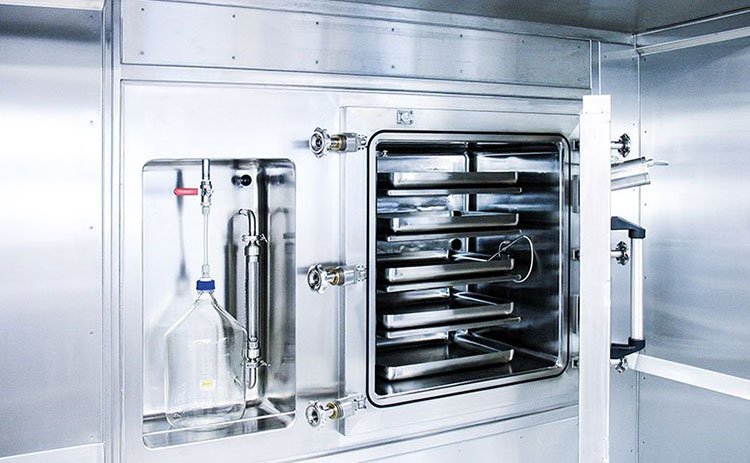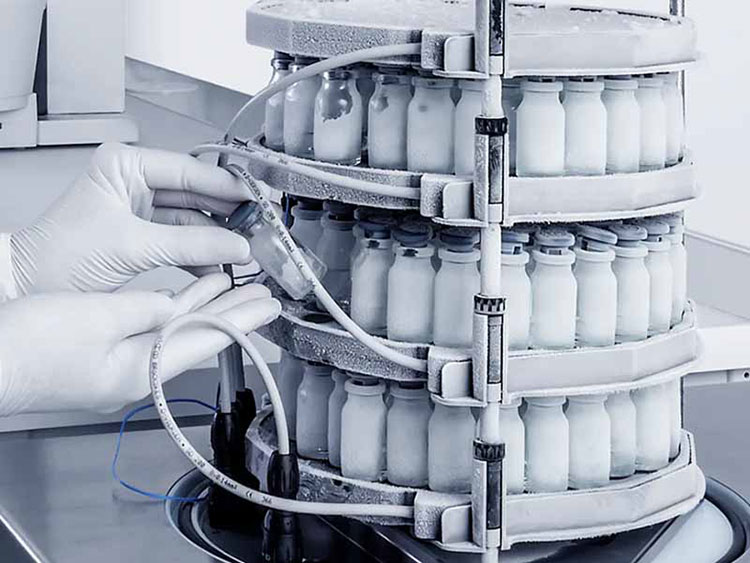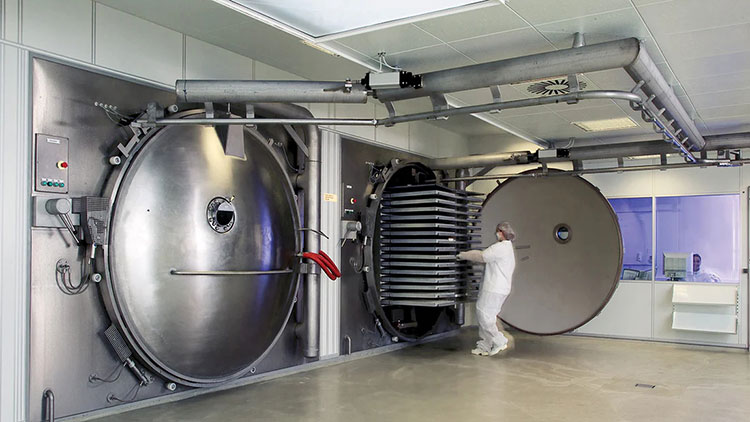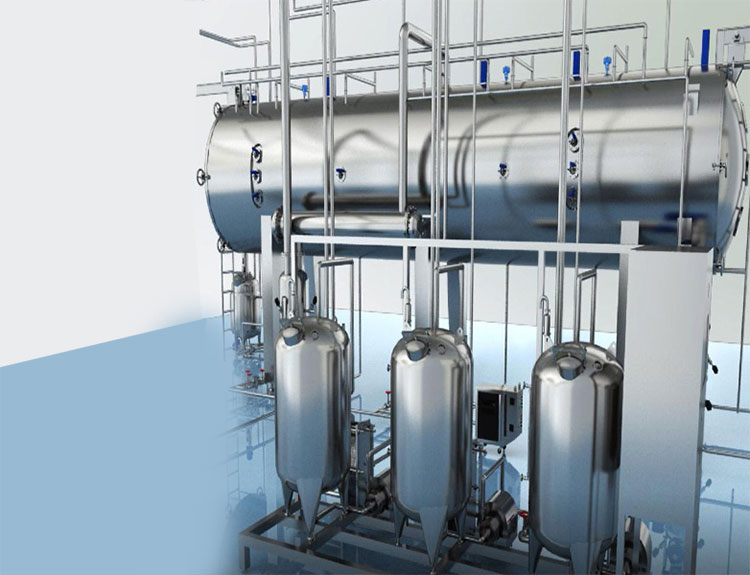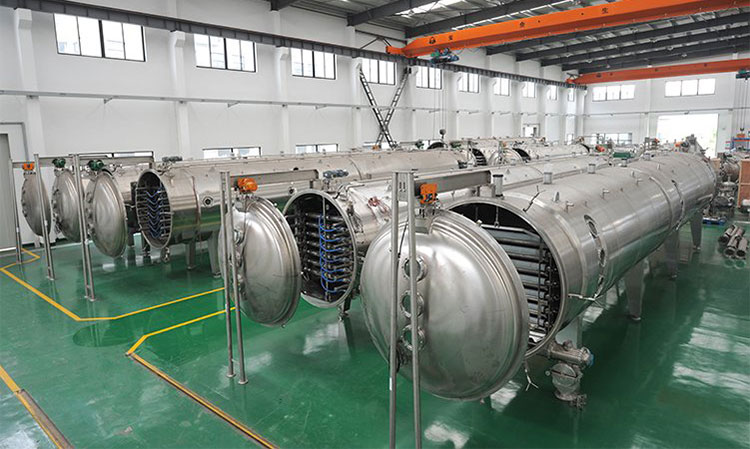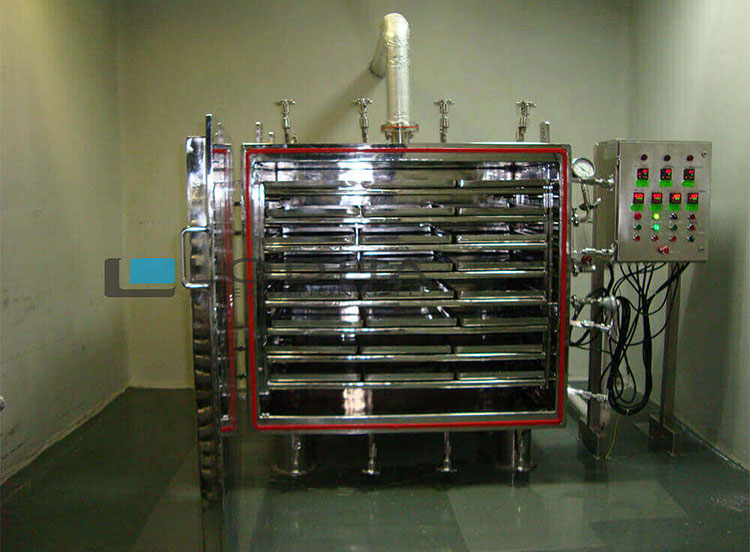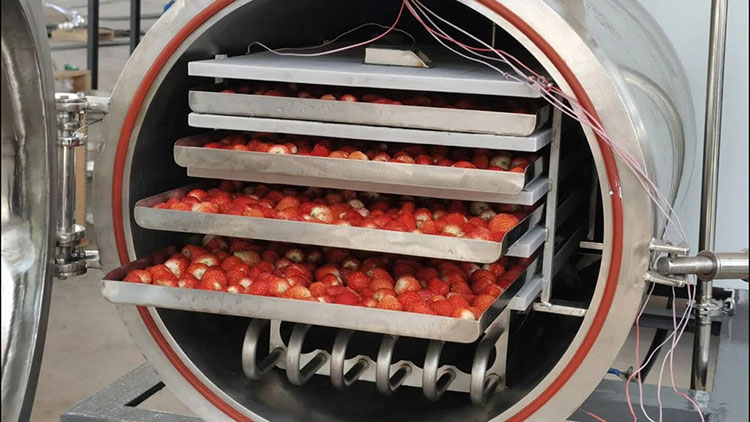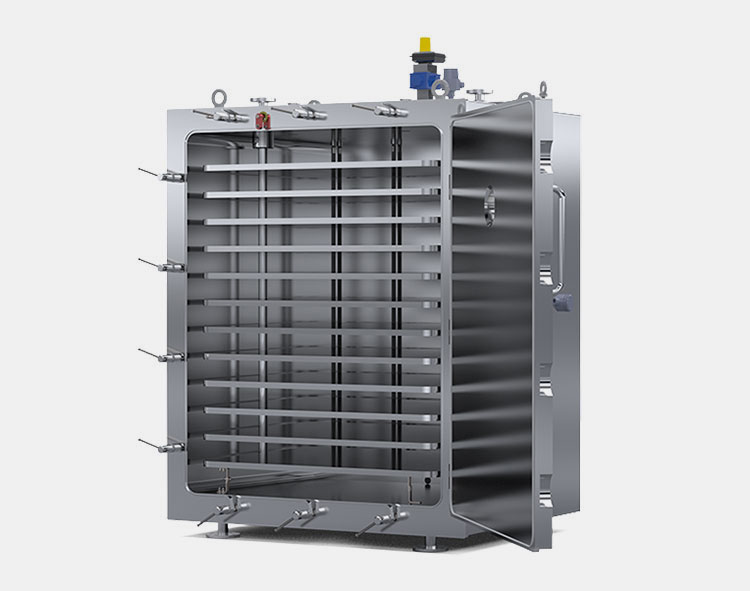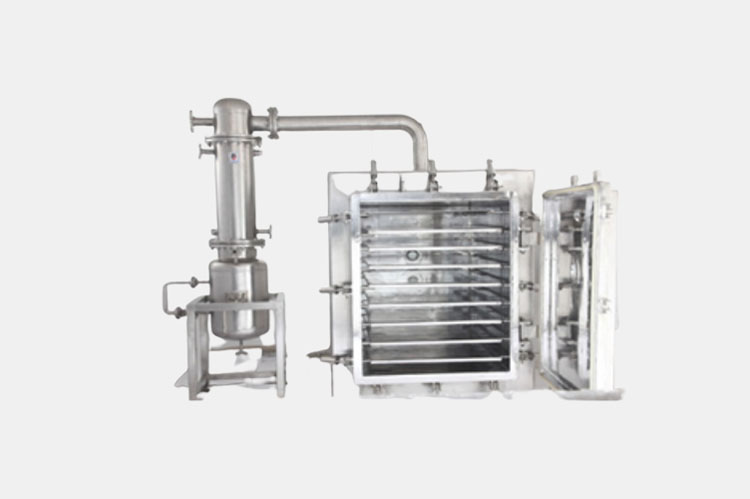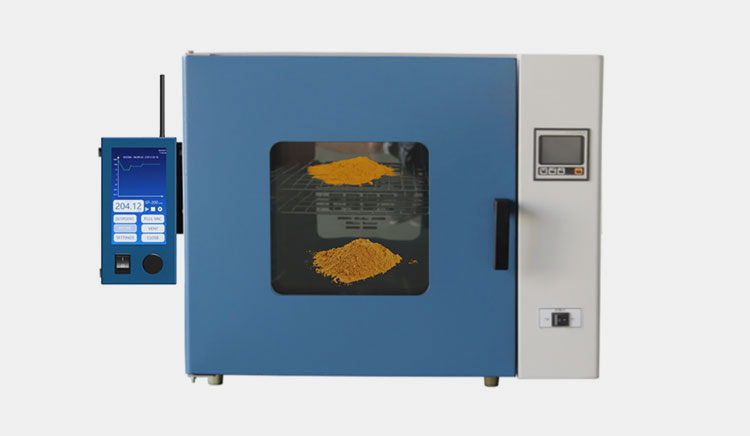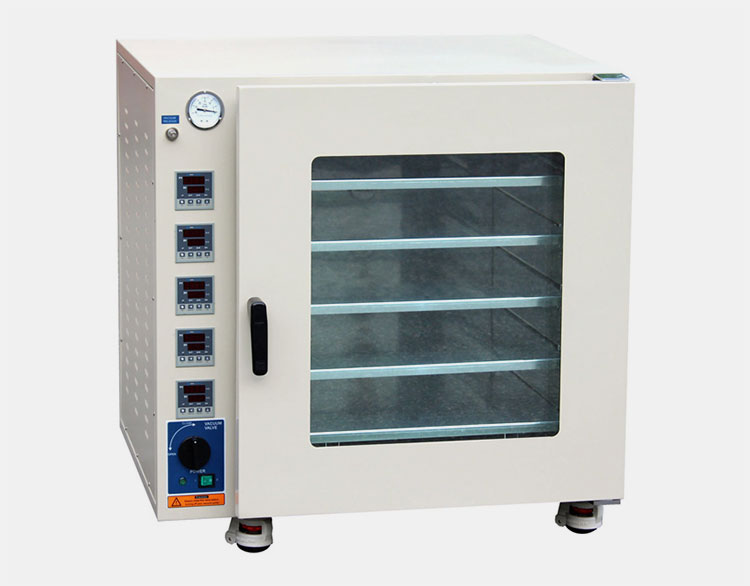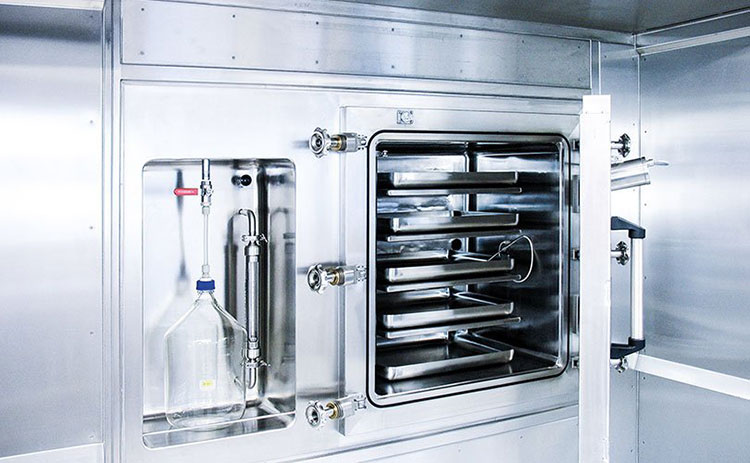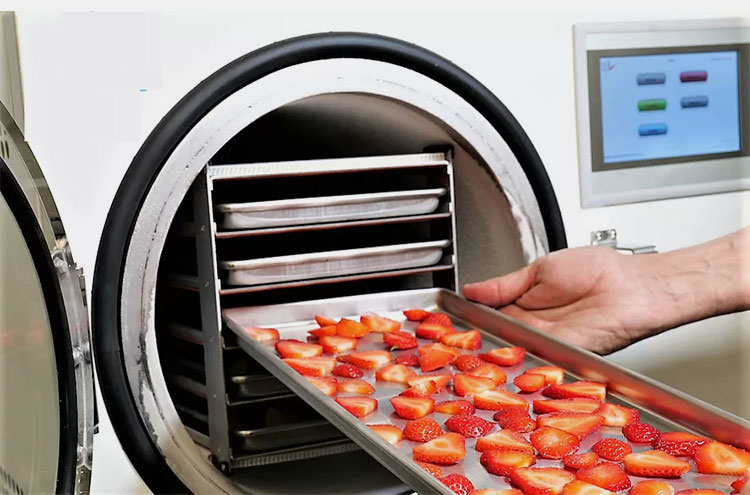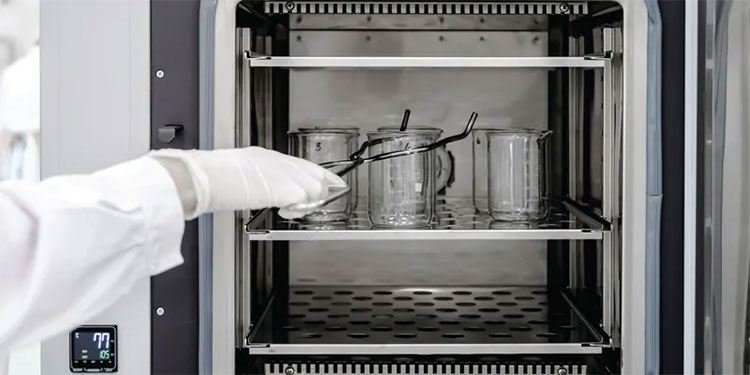
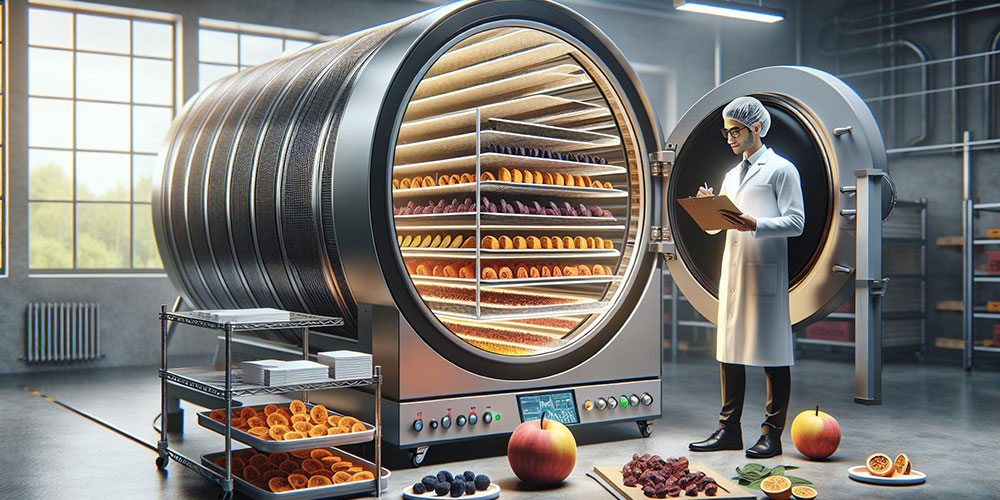
Vacuum-Dryer-6

Vacuum Dryer: The Complete Buying Guide In 2025

Vacuum Dryer: The Complete Buying Guide In 2025

Have you ever wondered how to sustain product quality when drying? You must be well aware of the demerits of conventional drying methods. Now, many of the old drying methods are obsolete. Because it can bring drying with compromised product quality.

A vacuum dryer is the solution to preserve the potency of your materials by subtly evaporating unwanted moisture. This blog is all about the vacuum dryer and extensive knowledge that you must know.

Whether you are a researcher, pharmacist, biotechnologist, technologist, or businessperson. This is the right place for you. Why? Here you can find A to Z information hooked to this equipment. Without wasting your time, let's jump into the main subject.

    Add a header to begin generating the table of contents

    1.What is a vacuum dryer?

    vacuum dryer

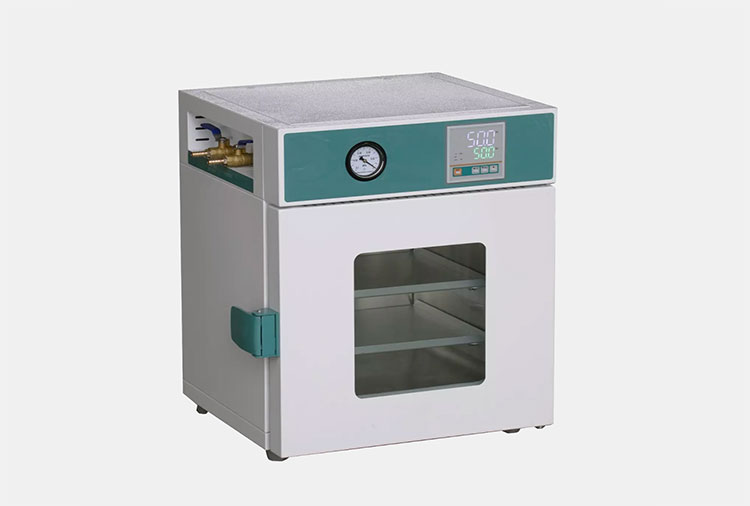
    Vacuum Dryer

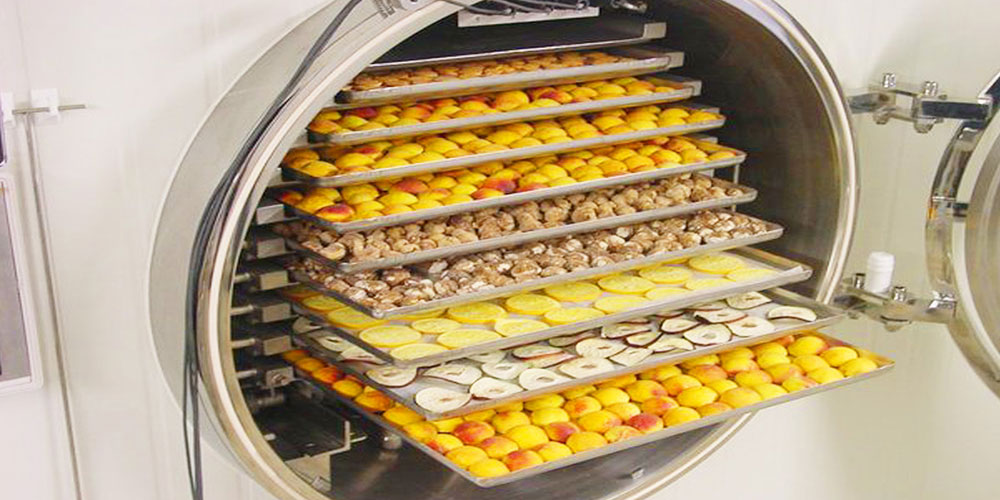
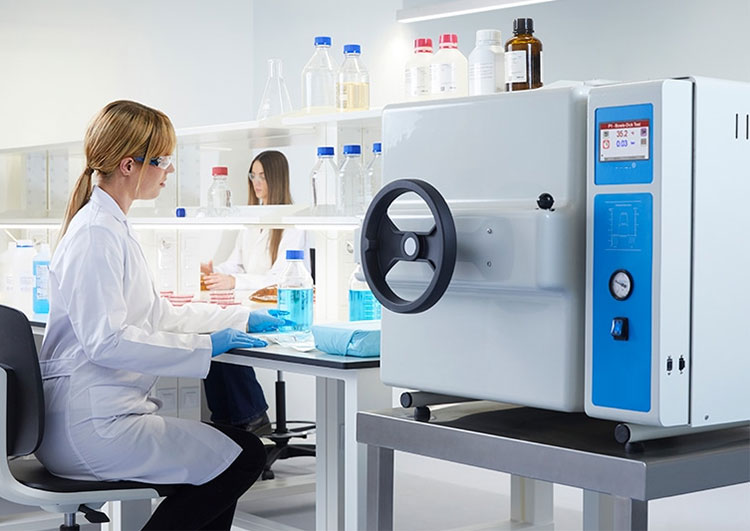
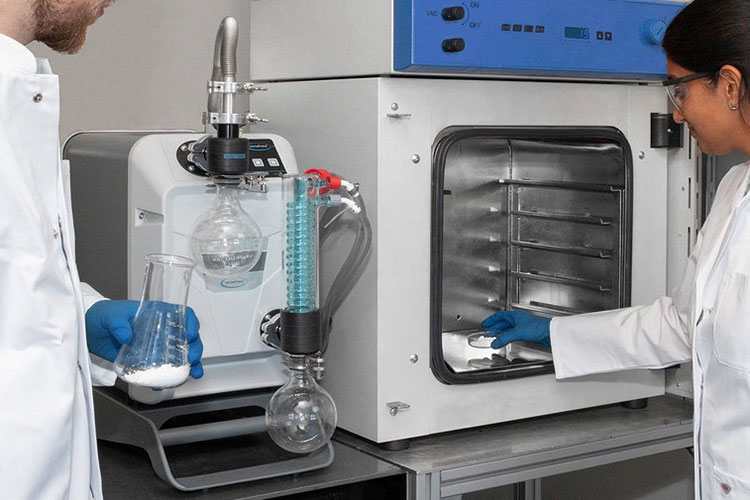
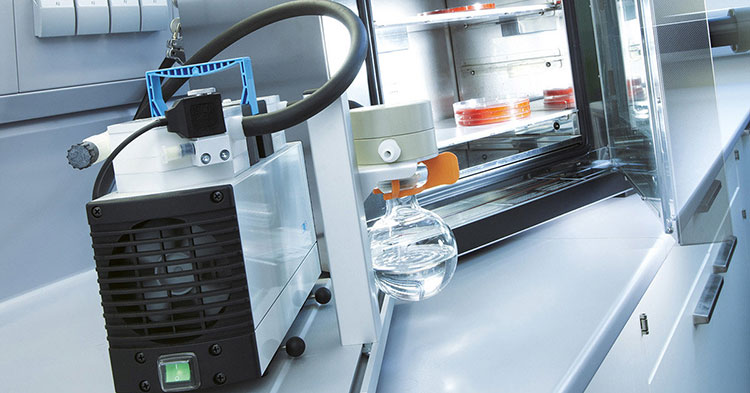
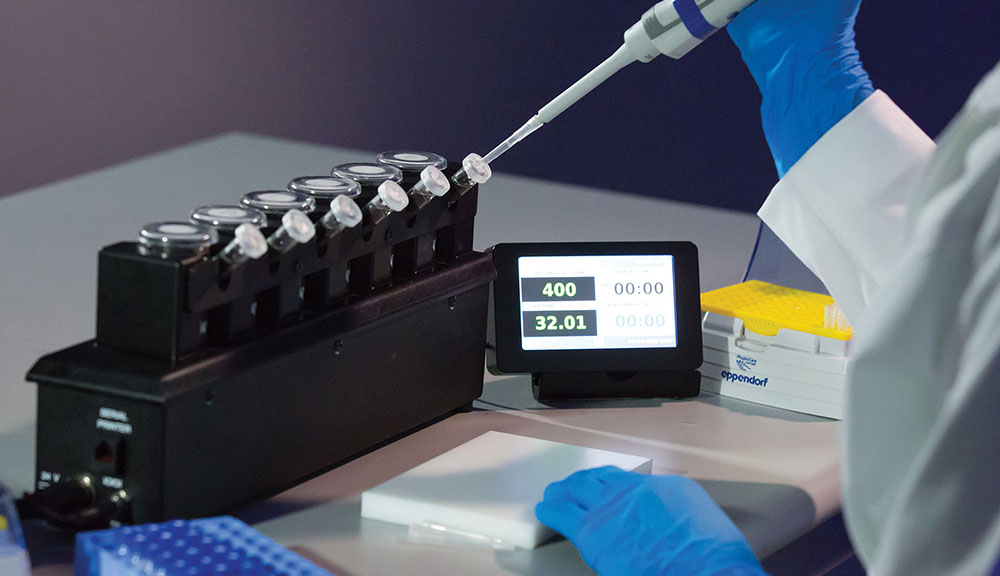
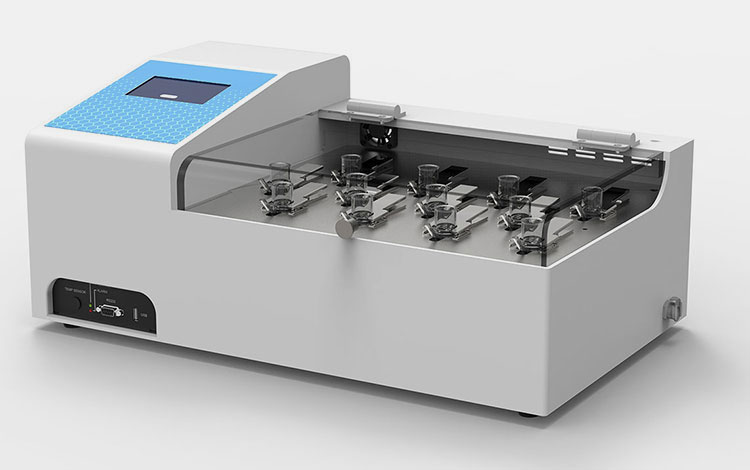
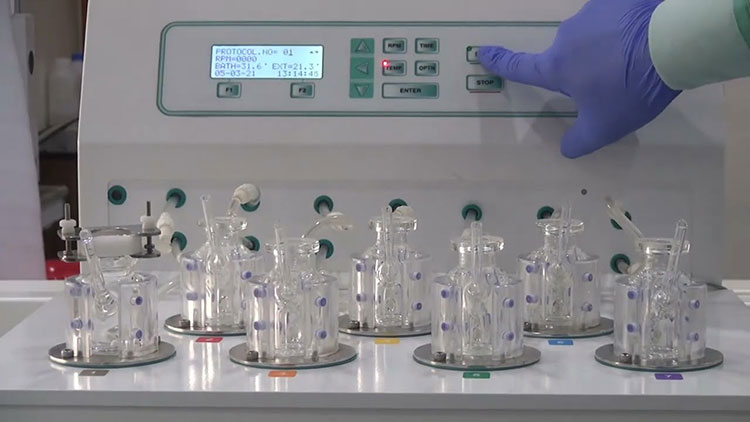
    The vacuum dryer the suitable unit used for various batch processes to minimize the pressure of air. By reducing pressure directly lowers down the boiling point of the water.

    Ultimately, the presence of moisture in the particles goes out and makes your content evenly dried. The machine is highly recommended for ingredients those are very sensitive to heat.

    However, machine follows the subtle principles to maintain the potency of the products. Such as, inducing the heat which dried the content at a lower temperature. The vacuum itself is responsible for removal of air and moisture content. That’s why it is mainly responsible for the drying of heat sensitive materials.

    2.What are the benefits of a vacuum dryer?

    A vacuum dryer is considered as a quiet reliable unit for the drying process and has been utilized for a longer period of time. All due to their various benefits it is offering to their customers. That’s the reason, pharma, foods, biotechnology and various fields require it for attaining safe drying procedure. have a look at below discussed important advantages offered by a vacuum dryer.

    Less Energy Expenditure More Drying
    Less Energy Expenditure More Drying

    Energy Conservation- Picture Courtesy: Inspired Ingredients

    Do you know that energy conservation is the biggest advantage of vacuum drying? This is true, you need less amount of energy which directly shortens your economic expenditures required for the drying process.

    The vacuum dryer tends to make the drying process very fast therefore cutting down the time required for the drying of moisture present in the product.

    Safe for your Ingredients
    Safe for your Ingredients

    Preservation of ingredients

    This is the second most important benefit of using a vacuum dryer where your ingredients are meant to be safe when it comes to dealing with this unit. This is pretty normal that some materials may be capable of experiencing high temperatures, but some do not.

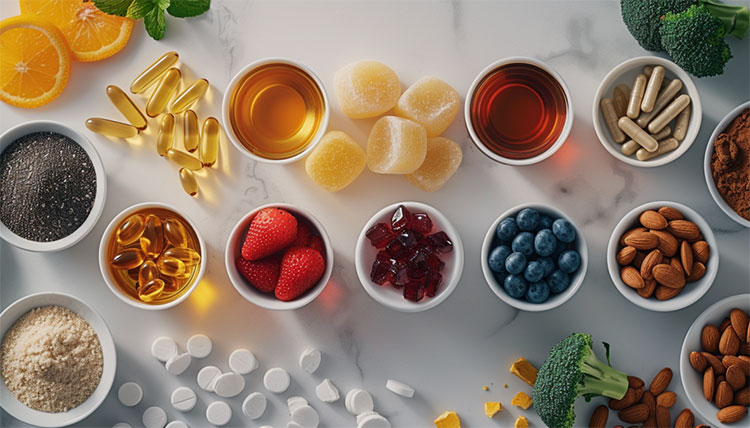
    This is nothing to worry about as a vacuum dryer is a reliable machine that helps in maintaining the integrity of the content without harming their qualities. That’s why pharma, foods, nutraceuticals, and many other facilities prefer vacuum dryer for drying procedures.

    Secure for your Workers
    Secure for your Workers

    Vacuum Dryer

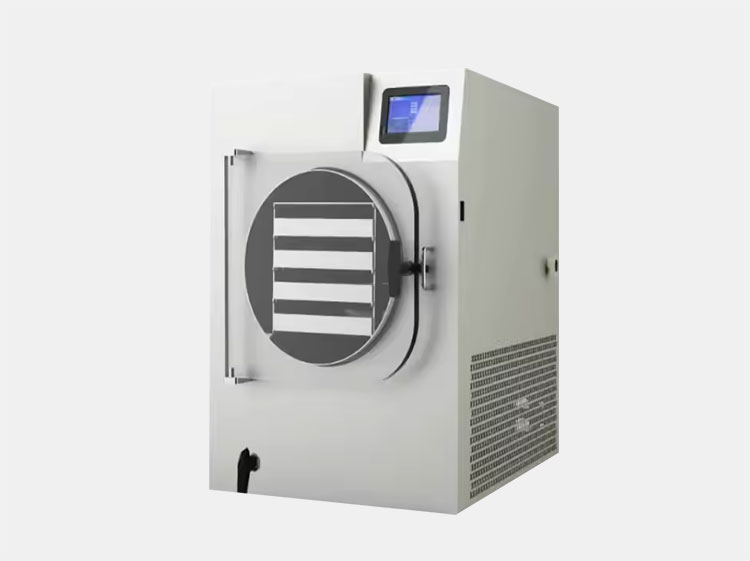
    If you see other kinds of dryers, they are constructed in a way that gives off fumes from vented parts. The generation of those particles in your environment makes the workers sick and also affects the working facilities. The vacuum dryer in this way is safer as it is capable of capturing the moisture in the collector with the help of a condenser and removed by using a vacuum pump.

    High Productivity
    High Productivity

    Greater Production- Picture Courtesy: EnWave Corporation

    As compared to traditional or direct modes of drying the contents, the vacuum dryer offers you greater production capacity. This is because the drying efficiency of the machine is so fast. It lowers the boiling point and induces the vacuum which offers a faster drying. You can enjoy maximum production capacity due to its rapid drying time.

    Excellent Automation
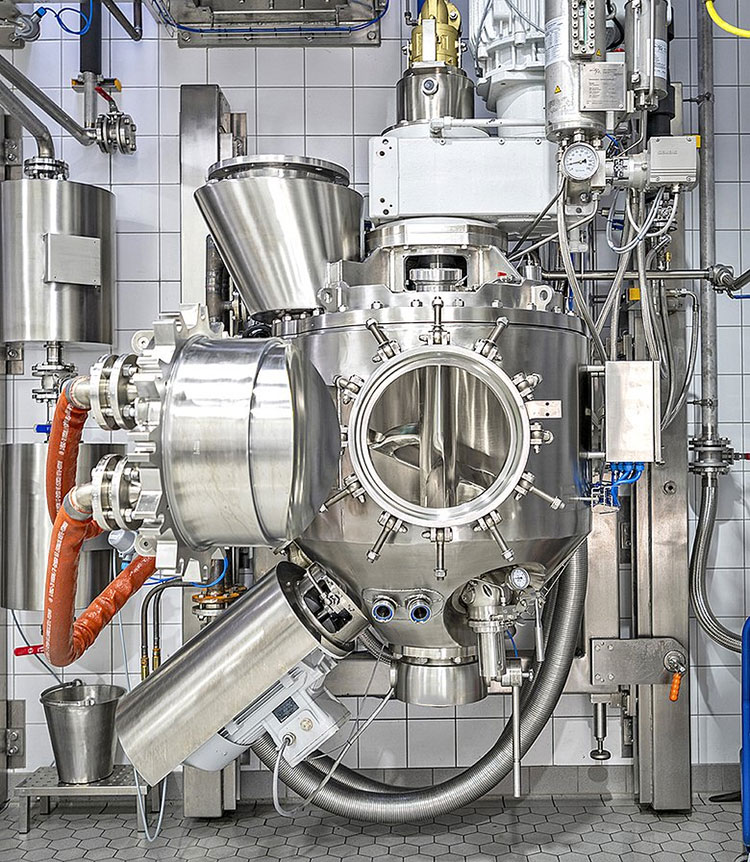
    Excellent Automation

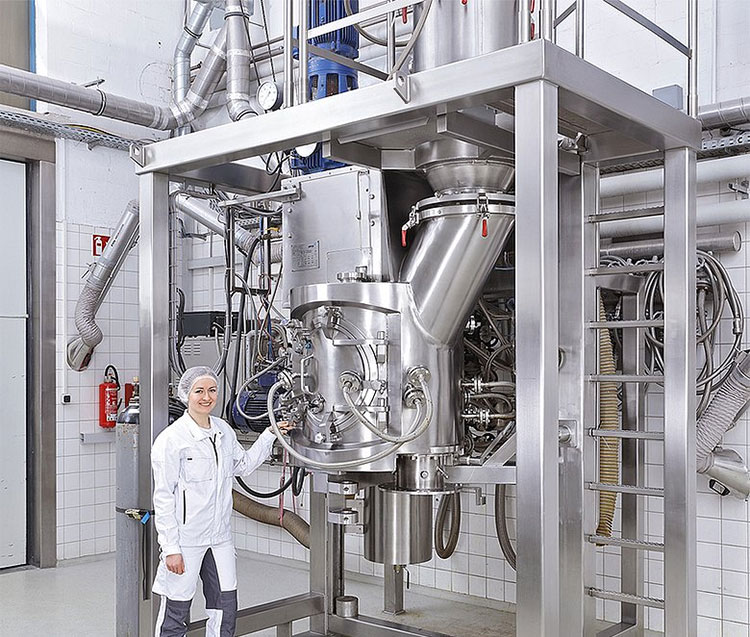
    Vacuum Dryer with Excellent Automation- Picture Courtesy: Amixon GmbH

    The vacuum dryer is mainly designed with automatic keys which are features with auto-sensor, temperature regulator, induction of vacuum, drying time, etc.

    With so many properties, you do not need to stand all the time to monitor the process. Similarly, as machine senses the temperatures, reduces the insight pressure, and develops a vacuum, with automatic time which is already fed in before starting the procedure.

    So, with these features, you can only introduce the materials to be dried and start the machine, further operation will be performed by the machine automatically.

    No More Chemical Reaction

    No More Chemical Reaction

    Product’s Integrity- Picture Courtesy: Busch Australia

    When you’re using a vacuum dryer, you will have greater control over the parameters inside the vacuum chamber. For example, you have controlled variables such as temperature and pressure. This means it can help in the prevention of chemical reactions happening inside. For example, there’s no chance of oxidation with certain medicines when encountered with a vacuum dryer.

    Due to the vacuum, you can provide a gentle way of drying hence well-controlled process can be achieved without interrupting the content or substances with powdered texture.

    3.What are the applications of vacuum dryer?

    A vacuum dryer is widely utilized in the broad industrial sector as it offers you various distinguishing benefits. Let’s see the industrial applications of vacuum dryers.

    Food Industry

    Food Industry

    Food industry- Picture Courtesy: Avid Armor

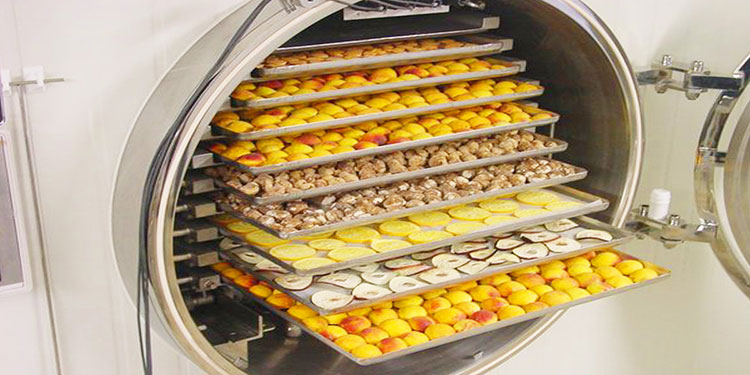
    In the food industry, there are several goods prepared that are dried by vacuum dryer to preserve their potency freshness, effectiveness, and aroma. When you are subjecting them to a conventional dryer, there might be a greater possibility of damaging all the above properties of your food. Thus, vacuum dryer makes consumers appeal and efficacy of foods.

    There are various nutritional ingredients such as spices, dried foods, snacks, coffee, powdered milk, tea, and various dried products such as pulses, grains, etc are dried by this unit which lowers the presence of water level by reducing the pressure and boiling point of water. Thus, more safe drying is achieved.

    Pharmaceutical Industry
    Pharmaceutical Industry

    Pharmaceutical Industry- Scenesafe

    When drugs have moisture content, it has more chance to be oxidized. In the pharmaceutical industry, no one can ignore the significance of vacuum dryers. Because it helps in the drying of drugs and medicines without affecting their therapeutic activities.

    As medicines are mainly required for the treatment of various ailments therefore to prepare them under control conditions is mandatory and it must be promising in terms of treatment.

    This is mainly used in the manufacturing of medicines to have them with stable shelf life, possessing greater integrity and high potency. For example, preparation of antibiotics, powder suspension, dry powders for topical preparations, etc.

    Biotechnology

    Biotechnology

    Biotechnology- Picture Courtesy: Boniik

    This is a sensitive and complex field where advanced ways are applied to biological systems to bring new fruitful products. Various elements such as proteins, enzymes, microbiological assays, yeast, amino acids, and macroscopic as well as microscopic studies are carried out.

    For this purpose, this sector is always installed with a vacuum dryer to achieve safe and desirable outcomes.

    Research and Development

    Research and Development

    Research and development- Picture Courtesy: Vetoquinol Australia

    In research and development, a vacuum dryer has been hooked to broad applications. It dries the assay powders and sensitive elements of research studies-controlled environment. Hence it supports the research assays by preserving the quality of the goods. For example, drying of raw materials, isolation of powders, antibiotics, various animal and herb samples, macroscopic and microscopic samples, etc to preserve them safely for a certain period of time.

    Chemical Industry

    Chemical Industry

    Chemical Industry- picture Courtesy: EY

    You can dry various chemicals whether it is heat-sensitive, non-heat-sensitive, reactive, or non-reactive by using a vacuum dryer. This machine ensures that chemicals are dried without interfering with their properties or affecting the characteristics of items. It ensures that unwanted chemical degradation or reaction is less likely to occur, and your product is kept preventive and can be released from the machine with the same intact properties.

    Agriculture Industry
    Agriculture Industry

    Agriculture Industry- Picture Courtesy: Crop Science Society of America

    A vacuum dryer is used in the agricultural industry when drying the crops after washing and making them cleaned and entirely dried. This is required to increase the shelf life of agricultural products by maintaining their nutritional value and essential properties.

    You can employ them in the preservation of seeds and may use them during breeding periods to get effective germination and extensive crop growth. Moreover, for the herb’s extraction in the agricultural field, a vacuum dryer is required to improve the extraction and good quality extraction.

    4.What is the construction of a vacuum dryer?
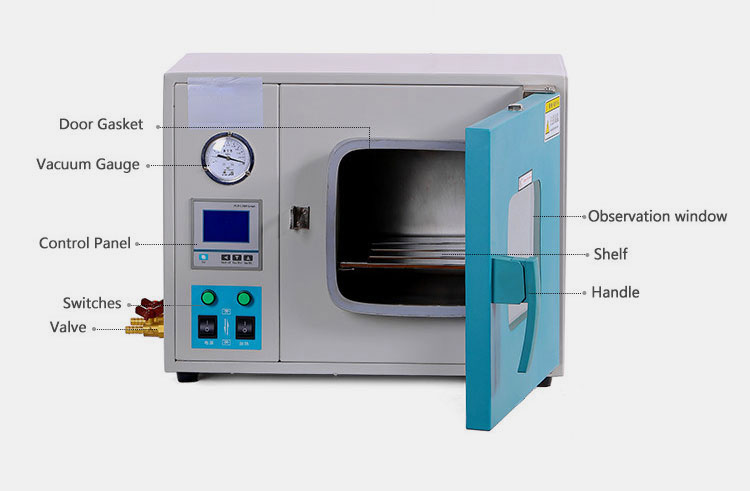
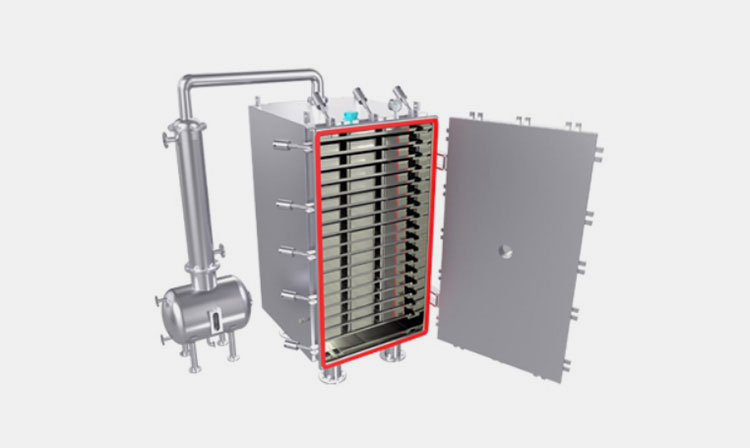
    Parts of Vacuum Dryer

    Parts of Vacuum Dryer

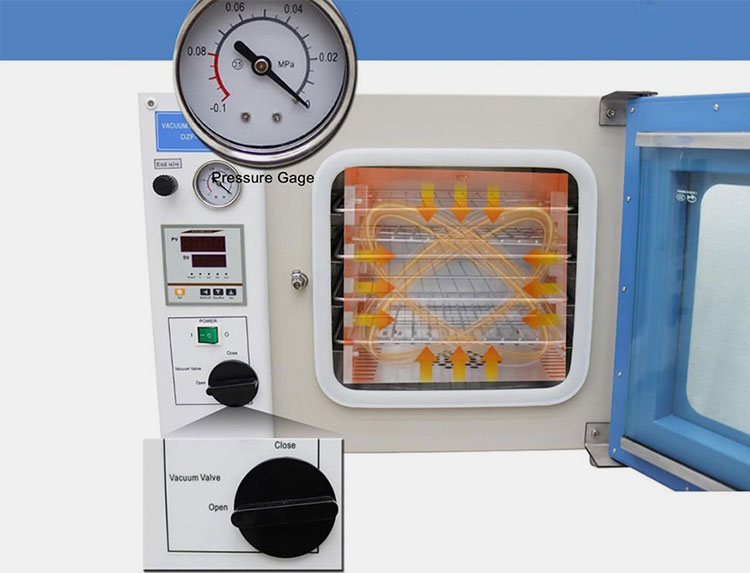
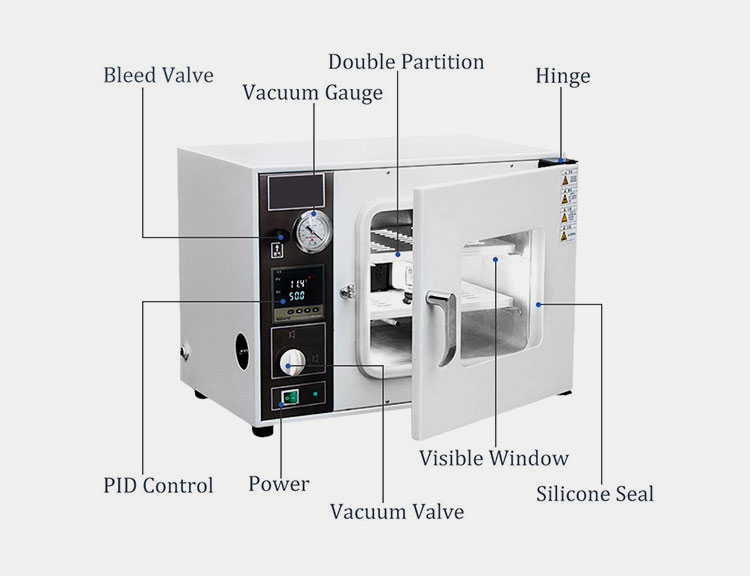
    The parts and description are mentioned in the given table.

    Parts Description
    Door Gasket A silicon or rubber-made door gasket is an important part of a vacuum dryer. The purpose of this specialized door is to attain an airtight sealing. When it is closed firmly, the possibility of achieving a vacuum is way faster. The outside air won’t be able to enter the unit so you can achieve the required drying rapidly.
    Vacuum Gauge The purpose of a vacuum gauge is to display the particular pressure gauge. You can easily determine the real-time measurements present inside the vacuum chamber.
    Control Panel You can control various characteristics such as vacuum pressure, drying time, temperature regulation, run time, troubleshooting, and other programmable settings are optimized by using a control panel.
    Switches Switches significantly enable you to operate the machine. They are simple and highly protective in terms of operation. You can turn the ON and OFF the machine with the help of switch regulations.
    Valve The regulation of airflow inside and outside the system is carried out by the help of valves. The proper working of valves ensures that the system is working effectively and the unit is safe without risks of contamination.
    Observation Window The glass window is mainly made up of transparent materials ensuring you monitor what’s going on inside. Here you don’t need to open and close the window again and again hence the vacuum condition becomes stable.
    Shelf You can place materials to be dried on the shelves. These are mainly perforated in design with stainless steel corrosion-free materials that ensure a safe and uniform airflow inside the chamber. Therefore, the number of items arranged on the trays or shelves receives maximum time and treatment to get sufficient air drying.
    Handle This is a pretty common part of the machine that allows you to open and close the gasket door conveniently. The handles are designed with a firm twisting mechanism that ensures an airtight closing of the door.

    5.What is the working of a vacuum dryer?
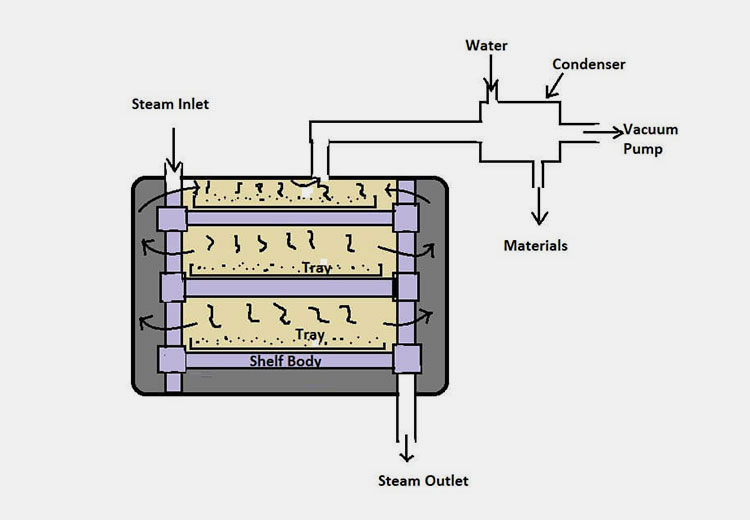
    Working Principle of Vacuum Dryer
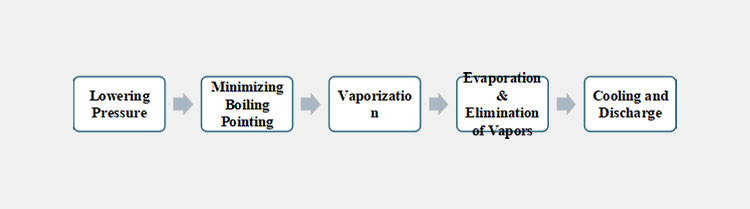
    Working Principle of Vacuum Dryer

    Process Steps of Vacuum Dryer

    Process Steps of Vacuum Dryer

    Step 1

    As the chamber of the vacuum dryer is categorized with multiple shelves, therefore, you can simply place the sample to be dried over them. The basic working principle of the vacuum chamber is based on the induction of a vacuum. So, once you close the door tightly. The following process starts by simply starting the key on the control panel.

    Step 2

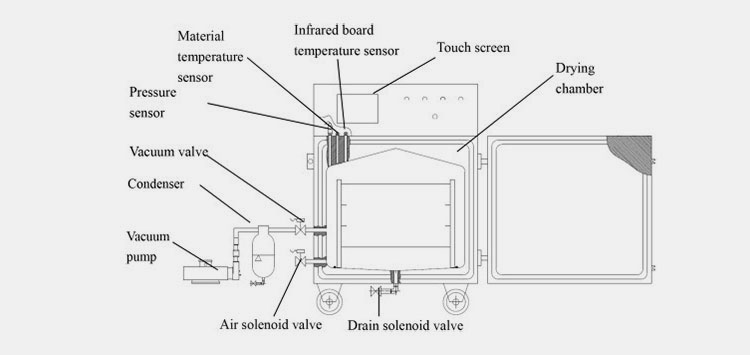
    The made up of vacuum dryer is associated with a vacuum pump which helps in the lowering of pressure inside. Also, the machine is integrated with a condenser which mainly supports your content from moisture as it evaporates effectively.

    The typical range for vacuum pressure lies between 30 to 60 Kpa. This is mainly achieved by the utilization of vacuum pumps.

    Moreover, the steam inside the chamber is evenly distributed via conduction. In this state, the water molecules evaporate quickly. The optimum temperature used is around 25-30°C.

    Upon generation of vacuum, the process of vaporization becomes faster with simultaneous heat conduction which helps in the evaporation of water or moisture content. They’re mainly removed from the vacuum pump to avoid being transformed back thus you can get sufficient drying.

    Step 3

    After vacuum drying, your materials are cooled down. After achieving certain stabilization, you can carefully collect the materials from the shelves.

    6.What is the classification of a vacuum dryer?

    There are certain types of vacuum dryer. Let’s see them below:

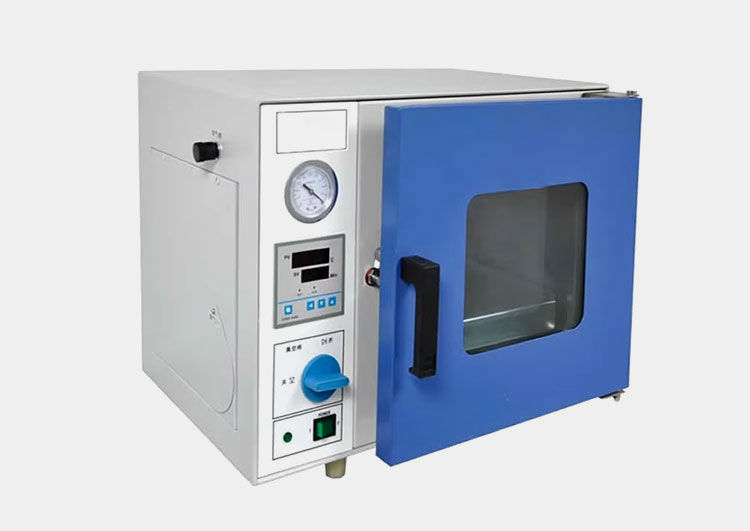
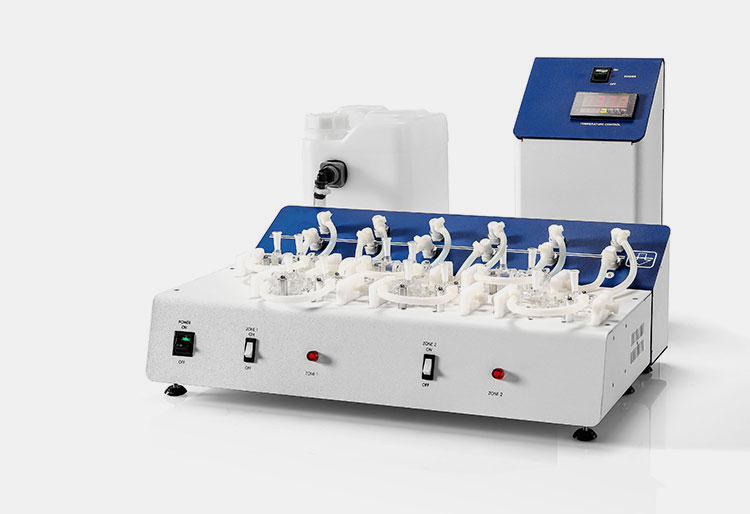
    Benchtop Vacuum Dryer
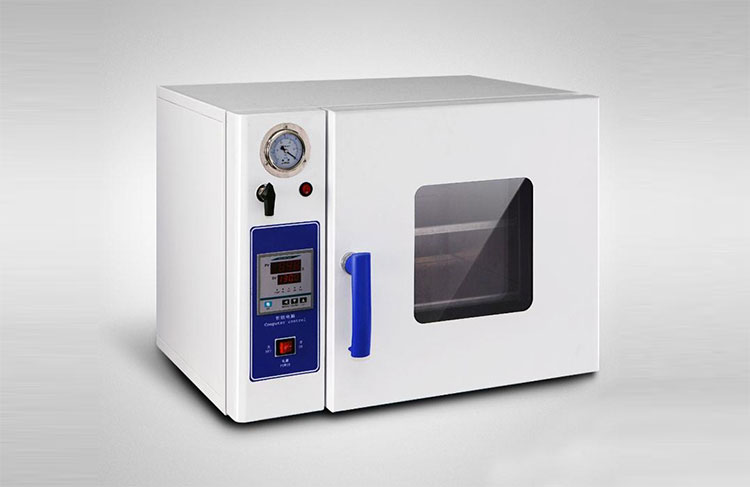
    Benchtop Vacuum Dryer

    Benchtop vacuum dryer- Picture Courtesy: NBchao.com

    This is commonly known as a lab vacuum dryer or static vacuum dryer. In this machine, uniform heat conductivity is generated and supplied over various shelves.

    The process of drying for thick or viscous materials is a bit slow; it is because vacuum drying is not accompanied by agitation.

    There are various examples of benchtop or lab vacuum dryer. For example, tray lab vacuum dryer, shelf vacuum dryer, and microwave vacuum dryer.

    Tumbling Vacuum Dryer

    Tumbling Vacuum Dryer

    AIPAK Tumbling Vacuum Dryer

    It is another primary kind of vacuum dryer. Since it employs the rotating or agitating drum or vessel, it is also called a rotary vacuum dryer. The materials rotate in the vessel in the vacuum condition. The products are continuously exposed to high temperatures due to the rotation of the vessel, leading to faster drying times.

    Variances in moisture retention are minimized due to constant rotational motion, which improves uniform material drying. Furthermore, it can treat bulk volumes of products and thus is more suited to mass-scale manufacturing. But it is less ideal for processing fragile products, as it degrades them. Its subcategories are:

    Double Cone Rotary Vacuum Dryer
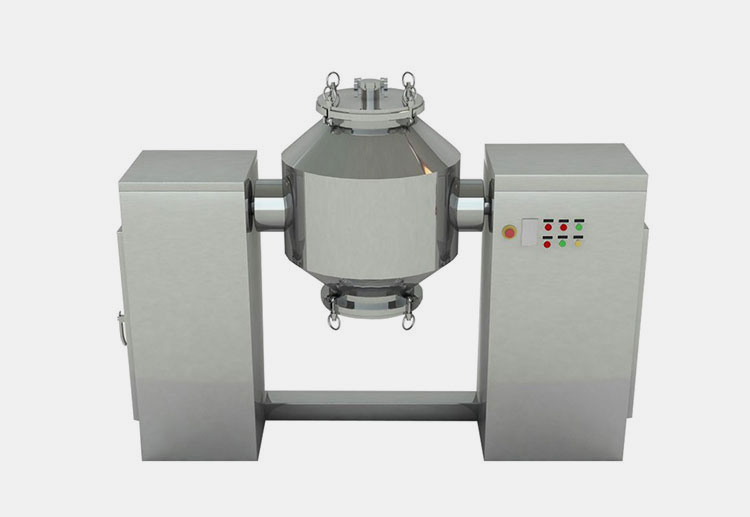
    Double Cone Rotary Vacuum Dryer

    Allpack Double Cone Rotary Vacuum Dryer

    A double-cone rotary vacuum dryer is an ideal solution for pulp, viscous, and thermolabile content which is mainly dried under low temperatures. The machine is capable of dealing with high-capacity content and materials prone get oxidized rapidly. This controlled unit, it can handle products without harming the integrity of raw materials.

    Vacuum Pan Dryer
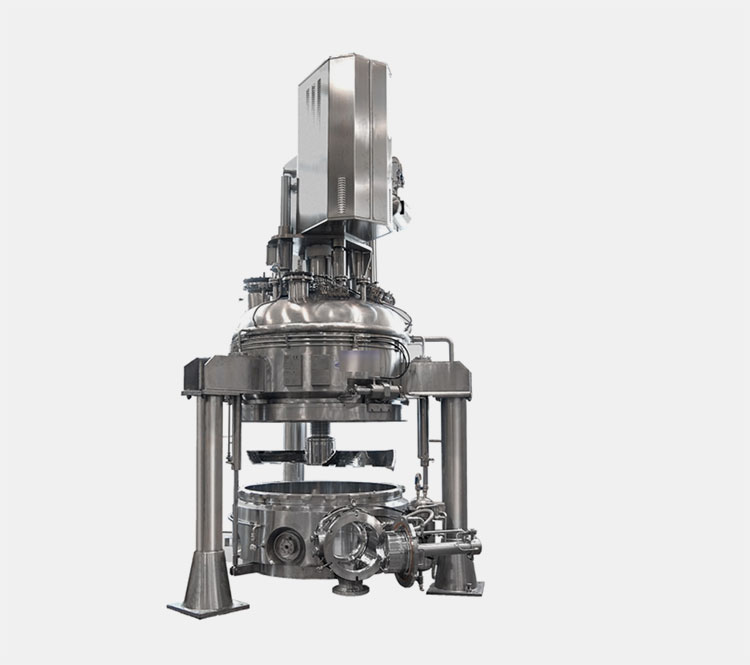
    Vacuum Pan Dryer

    Vacuum Pan Dryer- Picture Courtesy: Heinkel

    It is the form of a vacuum dryer in which heat-sensitive, pasty, and viscous products are heated more quickly with the aid of axial and radial agitators. It consists of a circular pan that offers a flat surface for even distribution of materials. This pan can be turned or rotated to speed up the drying process.

    Vacuum pan dryer has the shortest drying cycle and produces even mixing without any lumps or balls due to its constant agitating movement.

    Spherical Vacuum Dryer
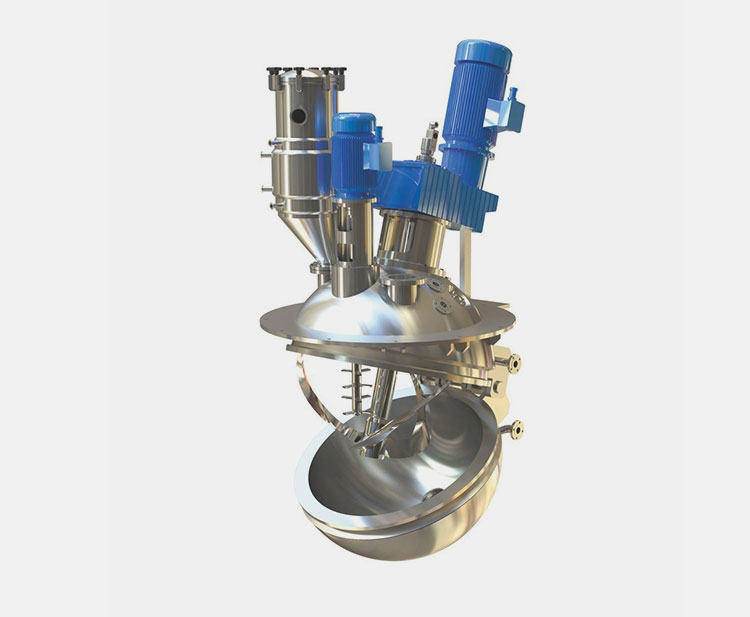
    Spherical Vacuum Dryer

    Spherical vacuum dryer- Picture Courtesy: gmmpfaudler

    The machine is designed with a hollow heated vessel with a jacketed wall. The presence of a rotating agitator ensures materials' uniform drying throughout the process. The spherical disc helps in the quick opening and closing of the system of charge and discharging of content.

    Conical Vacuum Dryer
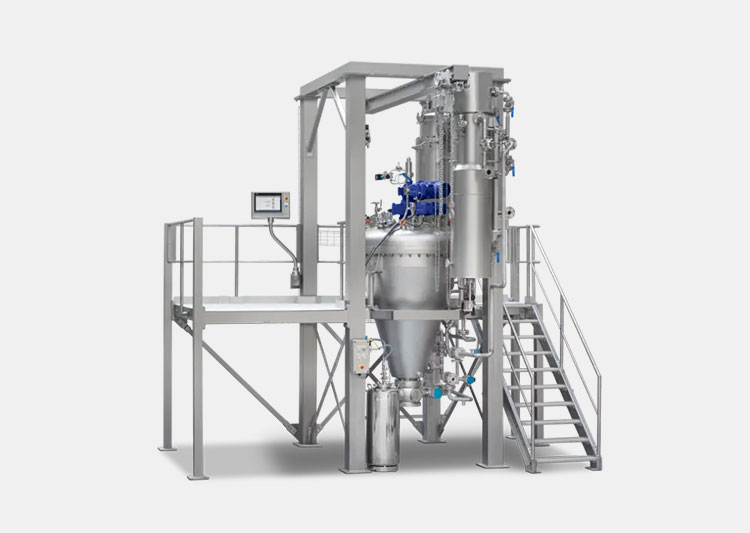
    Conical Vacuum Dryer

    Conical Vacuum Dryer- Picture Courtesy: Hosokawa micron

    The conical vacuum dryer mainly utilizes convection mixing for the drying. The constant rotation of the mixer ensures convective forces inside the conical vessel. For the drying procedure heat energy is required which is transferred into the vessel via a jacketed vessel that is induced by either hot air, water, or other media.

    The presence of a vacuum ensures the elimination of vapors at a very low temperature that’s why it is known as an ideal solution for thermolabile products.

    Horizontal Vacuum Dryer
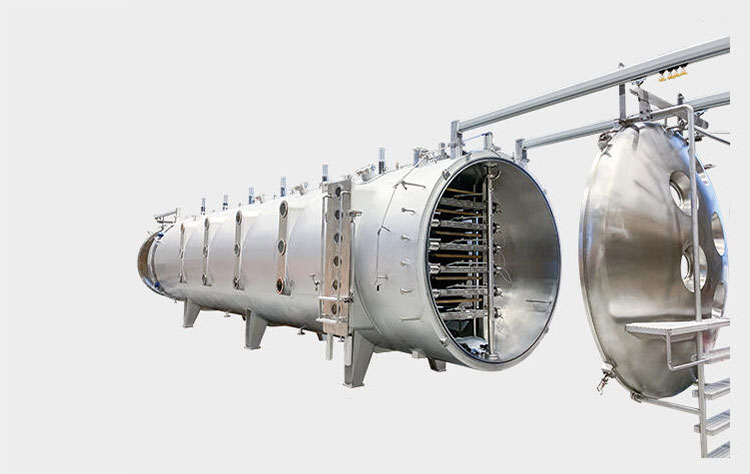
    Horizontal Vacuum Dryer

    Vacuum Belt Dryer- Picture Courtesy: Bucher Unipektin

    This vacuum dryer is equipped with a conveyor belt that aids in homogenous drying. This belt conveys samples through various heating zones and a cooling zone in the vacuum chamber. The heat is administered from above or below the belt. The materials are placed on the parallel running belts. It has a design like an industrial boiler or a silo.

    The vacuum belts have a direct connection with the heating and cooling plates, so, they directly transfer heat for drying products. Its drying temperature is about 35℃-90℃ and vacuum pressure is approximately 10mbar to around 80mbar.

    Vertical Vacuum Dryer

    Vertical Vacuum Dryer

    Vertical Vacuum Dryer- Picture Courtesy: HEINKEL Group

    It is identical in construction to a rotary vacuum dryer, except it has a vertical configuration with a conical bottom structure. This part is advantageous because of its minimal footprint, complete product discharge with lesser holdup, and easy cleanability. It also has an agitator that thoroughly mixes and dries while preventing lumping and caking.

    It can accommodate about 25-13,000 liters of product while its drying temperature is about -10 to 150°C.

    7.Can a vacuum dryer be suitable for dusty or hygroscopic materials?

    Hygroscopic Materials

    Hygroscopic Materials

    Yes, why not? A vacuum dryer is considered to be the safest unit for the drying of content those are hygroscopic or dusty in nature. Conversely, using hot air dry can affect the integrity of thermolabile and hygroscopic materials.

    Therefore, a vacuum dryer is suitable as it mainly works under low pressure and reduced temperature which is a good option for heat-sensitive and hygroscopic goods. A vacuum dryer is demonstrated to show a greater rehydration rate than a conventional way of drying.

    Therefore, this is the only option for manufacturing and other fields to use for the drying of hygroscopic materials, glutinous, or lumpy materials.

    8.Is a vacuum dryer the same as a freeze dryer?
    Vacuum Dryer-2

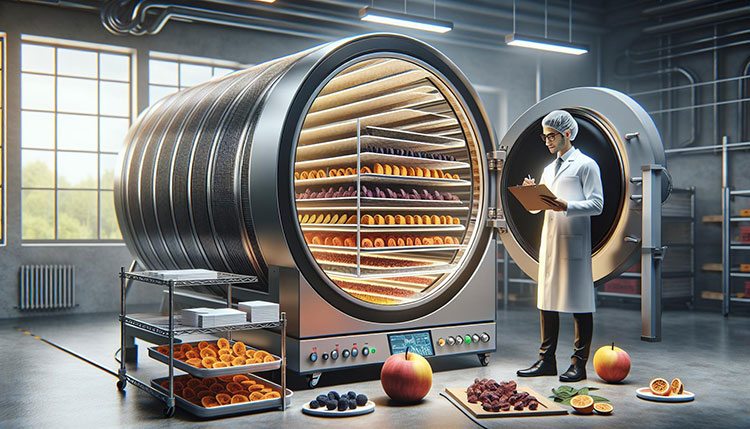
    Vacuum Dryer- Picture Courtesy: Green Thumb Depot

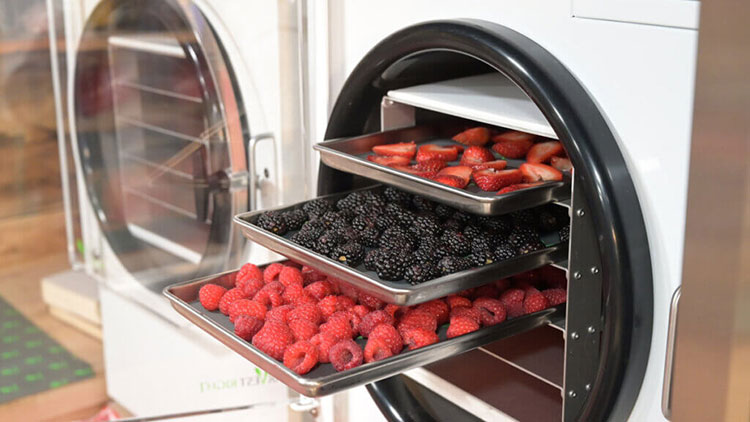
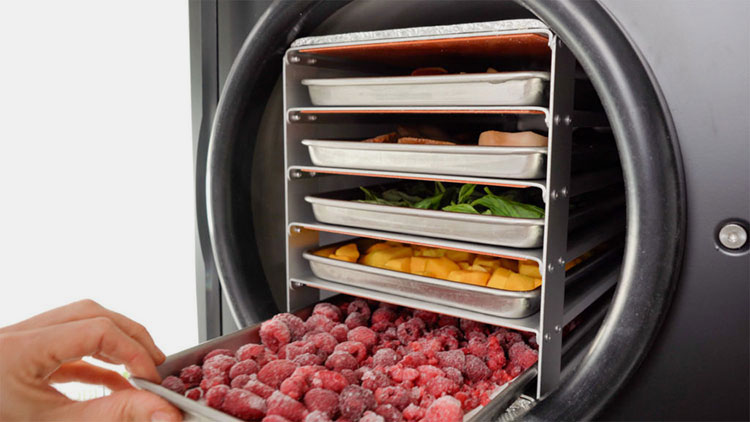
    Vacuum dryers and freeze dryers are different from each other. Generally, vacuum dryers and freeze dryers are applied in de-moisturizing processes within industries, but they operate on fundamentally different principles. Knowing the difference between them will guide you on which of the two is best for your case.
    Here is a short comparison of vacuum dryers versus freeze dryers on key aspects:

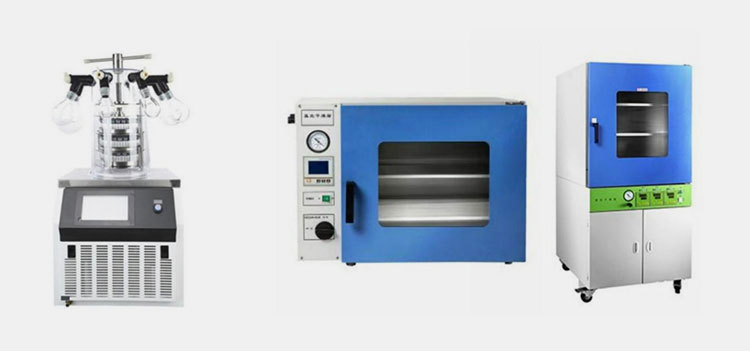
    Drying Mechanism
    Drying Mechanism

    Mechanism

    Vacuum Dryer Freeze Dryer
    It operates on the principle of a low-pressure environment that creates a reduced boiling point for water. It uses the lyophilization process. Material is frozen, then pressure is decreased enough that the ice sublimates directly into vapor without going through the liquid phase.

    Temperature and Pressure

    Temperature and Pressure

    Freeze Dryer (Temperature-40 to -80) - Picture Courtesy: Barnalab

    Vacuum Dryer Freeze Dryer
    It is mainly operated at mild temperature range i.e. 40°C - 100°C. It works at very low temperatures, sometimes between -40 and -80 degrees Celsius, and very high vacuum conditions.

    Drying Time

    Drying Time

    Shorter Drying Time in Vacuum Dryer-Picture Courtesy: Waldner

    Vacuum Dryer Freeze Dryer
    Vacuum dryer has a relatively fast drying cycle, in the order of minutes or hours depending on the material and the level of moisture. Freeze dryer requires hours to days, and every step includes freezing, sublimation, and the final drying, which require careful handling.

    Energy Consumption

    Energy Consumption

    Freeze Dryer- Energy Intensive – Picture Courtesy: Senieer

    Vacuum Dryer Freeze Dryer
    It is regarded as more energy-efficient energy because it operates at intermediate temperatures and needs only a vacuum pump to maintain reduced pressure. Freeze drying requires much energy as it involves working under low temperatures and maintaining refrigeration and a vacuum.

    Cost and Machinery

    Cost and Machinery

    High-tech and Expensive Requirement for Freeze Dryer -Picture Courtesy: Industrial-Integration

    Vacuum Dryer Freeze Dryer
    The process uses less and inexpensive equipment, making vacuum drying inexpensive. Freeze drying requires sophisticated, high-cost equipment due to refrigeration systems, vacuum pumps, and special chambers.

    9.Does the Vacuum Dryer Follow a Batch or Continuous Process?

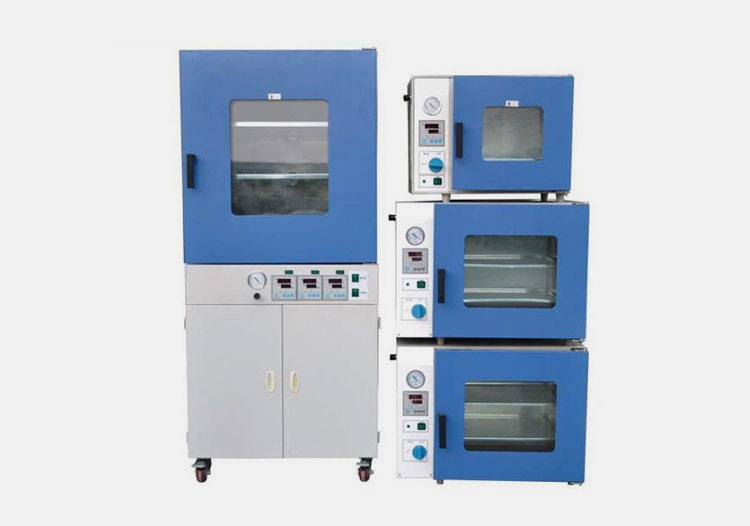
    Today, vacuum dryer are available in a broad category that follows both processes such as batch and continuous process.
    Vacuum dryer-3

    Vacuum dryer- Picture Courtesy: Tefic. biotech

    Nevertheless, lab vacuum dryers or many benchtop vacuum dryers are designed in a way that follows a batch process. This means you can load samples for treatment and receive them once cooled and dried. For example, double-cone rotary vacuum dryers, conical, vertical vacuum dryers, etc.
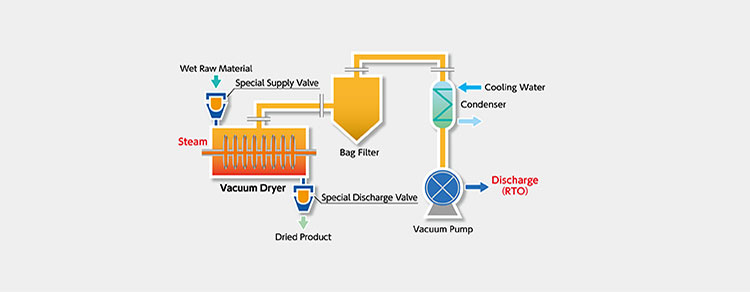
    Design flow chat of continuous vacuum dryer

    Design flow chat of continuous vacuum dryer- Picture Courtesy: nara.co.japan

    However, newly developed innovation ensures a continuous process by supplying and discharging the sample with the help of supply valves making it possible to achieve a constant and continuous vacuum drying process.

    10.What are the technical problems associated with vacuum dryer? How to solve them?

    Vacuum dryers are extensively employed in numerous industries for effective drying of various materials and products. But have you ever come across some technical issues with their performance? Let’s dive into some common snags associated with vacuums and how you can deal with them.

    Having Trouble with Insufficient Drying Efficiency
    Having Trouble with Insufficient Drying Efficiency

    Vacuum Pump Maintenance

    Issue Troubleshooting
    If there isn’t enough vacuum or less efficient heat transfer, have you observed the drying process dragging on? These two considerations can slow down the performance and the productive moisture removal. To keep things running smoothly, make sure that:

    The heating components are in working order.

    The vacuum pump has to be sized appropriately and serviced frequently.

    Periodic calibration of the system for both temperature and pressure.

    Coping with Equipment Contamination

    Contamination Control

    Contamination Control- Picture Courtesy: Griffin Machinery

    Issue Troubleshooting
    Lubricants, residues, or even dust from the vacuum chamber can sneak in and deteriorate the quality standard of your product. To keep your vacuum dryer in excellent order, keep these points in consideration:

    The materials used are repellent to contamination.

    Keep an eye on vacuum chamber leakage.

    Look over for residue and contamination regularly.

    Let’s have a satisfactory cleaning maintenance routine in place.

    Lack of Exhaust Control

    Lack of Exhaust Control

    Valve for Exhaust Control- Picture Courtesy: Amixon GmbH

    Issue Troubleshooting
    Have you ever noticed that introducing dry air or nitrogen during the drying process might impact fine powder? If the exhaust flow is inadequate, it can lead to powder washing away and particle loss. Using a regulator or valve to accurately control the exhaust stream can really help manage problems that arise with the introduction of nitrogen or dry air. It’s crucial to pay attention to balancing water vapor elimination without losing powder.

    Noticed Vacuum Level Fluctuations

    Noticed Vacuum Level Fluctuations

    Vacuum Stability- Picture Courtesy: MJ Dryer

    Issue Troubleshooting
    Have you ever encountered rapid variations in a vacuum? It may lead to the powder material escaping into the atmosphere. Keep in mind that the vacuum level needs to be adjusted gradually. Rapid changes can affect the stability of particles and create dust.

    Facing Temperature Control Issues

    Facing Temperature Control Issues

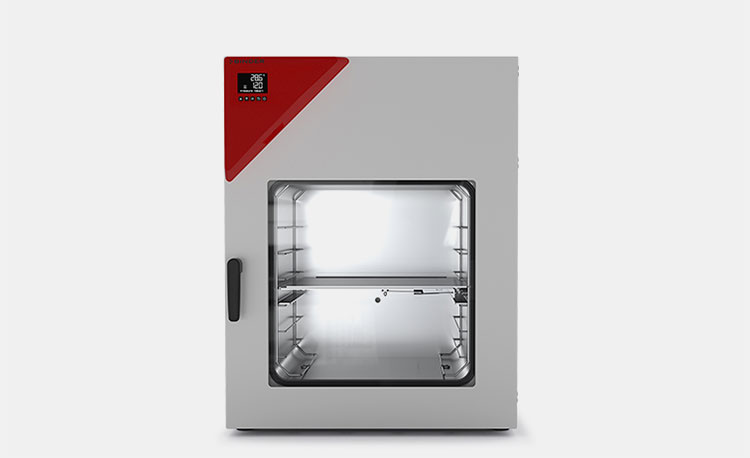
    Temperature control system inspection- Picture Courtesy: BINDER GmbH

    Issue Troubleshooting
    This is pretty common that utmost alterations in drying temperature generate excessive heating, In fact, affects the quality of the product. Ensure these key aspects:

    Frequent calibration of sensors.

    Uniform heat distribution—temperature profiling.

    Spotting Vacuum Leakages

    Spotting Vacuum Leakages

    Leak Proof Vacuum System- Picture Courtesy: Lodha Pharma

    Issue Troubleshooting
    If you’re experiencing low-pressure conditions owing to a leak in your vacuum system? Let’s find some quick solution. Pay attention to:

    Manage systematic inspection of seals, gaskets, and connections for any wear and damage.

    A vacuum leak detector helps you to detect repair leaks on time.

    Struggling with High Energy Consumption
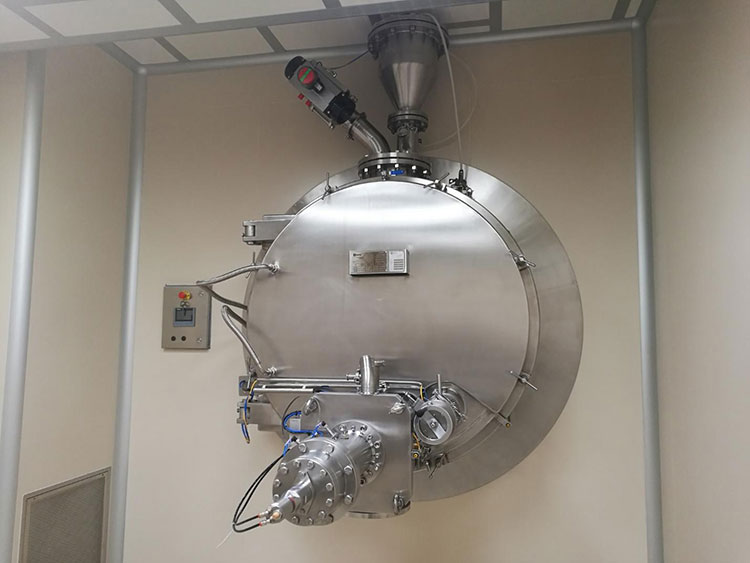
    Struggling with High Energy Consumption

    Energy-Efficient Vacuum System- Picture Courtesy: DCM Delta

    Issue Troubleshooting
    If you are experiencing incompetent operation and unsatisfactory insulation, this can contribute to enormous energy usage and operational costs. The possible strategies include:

    Optimize the parameters of the drying process for heat loss reduction and to improve insulation.

    Moreover, utilize energy-saving components.

    Mechanical Failures

    Mechanical Failures

    Schedule maintenance- Picture Courtesy: MJ Dyers

    Issue Troubleshooting
    You may experience a mechanical breakdown decline in efficiency attributed to wear and tear in moving parts of vacuum pumps and dryers. This is particularly concerning for essential components such as seals. You must consider regular maintenance to identify early wear in parts. This proactive approach helps in sudden mechanical failure and smooth operation. For example:

    Incorporate lubrication.

    Part replacement.

    Regular inspection.

    Conclusion

    A vacuum dryer is a one-stop solution for drying thermolabile and hygroscopic content in the safest manner. That’s the reason it is used for not only medicinal purposes but also in various fields of manufacturing sectors discussed above. This is a profitable unit in a various way such as energy conservation, saving your time, saving product loss, and much more. Willing to purchase a vacuum dryer? Why not contact our team? Why us? We are the experts in offering a series of reliable and economical machines that firmly adhere to FDA regulations. Send a Quote to begin the journey of success with us.

    Don't forget to share this post!

    CONTACT US

    Tell us your raw material and project budget to get quotations within 24 hours.

    WhatsApp Us: +86 181 6426 8586

    Invalid Email
    Invalid Number

    Vacuum Dryer: The Complete Buying Guide In 2025 Read More »
    IQ-OQ-PQ-6

    Performance Qualification VS Operational Qualification

    Performance Qualification VS Operational Qualification

    In the pharmaceutical and clinical industries, even a slight mistake can lead to serious problems. Therefore, in the pharmaceutical, medical device and clinical industries, they should be strictly regulated. In order to ensure the safety and quality of equipment in production and operation, operational qualification and performance qualification are proposed and strictly stipulated.

    Performance-Qualification-VS-Operational-Qualification

    Performance Qualification VS Operational Qualification-sourced: csolsinc

    What is operational qualification and performance qualification? Why they are important? How to perform and what you need to pat attention? Following this performance qualification vs operational qualification post, you may grab the free guide. Let's go!

      Add a header to begin generating the table of contents

      1.What Is Operational Qualification?

      What-Is-Operational-Qualification

      What Is Operational Qualification-sourced: tgm

      Operational qualification refers to a series of tests on equipment. Its purpose is to determine whether the equipment performance meets the user's requirements and specifications within the operating range specified by the manufacturer. This type of testing has specific requirements and specifications.

      After testing, the performance of the equipment will be recorded. It includes a detailed review of the equipment startup, operation, maintenance, cleaning and safety procedures of the equipment hardware and software.

      2.What Is Performance Qualification?

      What Is Performance Qualification-sourced: Pharmaguideline

      Performance qualification is the next step after operational qualification. It is the final stage of equipment certification. Performance qualification does not test the components and instruments of the equipment separately.

      It generally introduces a third-party expert to ensure the thoroughness and accuracy of the equipment. The purpose of this process is to ensure that the product quality of the equipment is continuously guaranteed during its operating time.

      3.Performance Qualification VS Operational Qualification: How To Perform?

      Unlike operational qualification, performance qualification does not test individual parts of the equipment.

      How To Perform Operational Qualification-sourced: Pharmaceutical Specifications

        Operational Qualification: How To Perform
      Perform functional tests l Perform tests to verify that the equipment's operating functions are within the specified range.
      Safety measures check l Test all safety functions of the equipment, including alarms and fault protection, to ensure that the equipment is in normal working condition.
      Validation plan development l Record the complete equipment test performance and data, and analyze the deviation from the expected parameters.
      Report generation l Compile all data reports into a comprehensive operational qualification report in accordance with specifications and requirements for subsequent retrieval and review.

      How-To-Perform-Performance-Qualification

      How To Perform Performance Qualification-sourced: gmpinsiders

        Performance Qualification: How To Perform
      Unify performance standards l Clear and unify the performance standards of the equipment under operating conditions.
      Long-term equipment testing l Run the equipment for a long time to record and evaluate its long-term performance.
      Environmental condition testing l Run the equipment in different environments and conditions to record and evaluate its performance.
      Data analysis l Verify, correct and re-test the different differences shown by the equipment under different environments and conditions.
      Report generation l Compile all data into a detailed performance qualification report for subsequent retrieval and review.

      4.Performance Qualification VS Operational Qualification: What Makes Them Successful?

      After the operational qualification and performance qualification are performed, you may know whether they are successful through the following standards and indicators. They are:

      OQ

      OQ

      OQ-sourced: nodeviation

      The equipment can operate normally within the operational range;

      • All operational tests meet the acceptance criteria of the operational qualification protocol;
      • During the test, the equipment operation has no deviations or unqualified conditions;
      • During the test, the deviation of the equipment operation will not affect the overall capability or other performance of the equipment;
      • The equipment can correctly identify and handle faults and errors;
      • It can connect other integrated equipment without any compatibility issues or interruptions;
      • Positive operator and user feedback;
      • The operational qualification test is successfully completed and all standards are met.

      PQ

      PQ

      PQ-sourced: media

      • The equipment's products and product processes meet the standards;
      • The equipment's process capabilities are stable and meet the standards for a long time;
      • The equipment's system can handle multiple products without lag problems;
      • The work processes will not affect each other;
      • The equipment can correctly identify and handle different known materials;
      • The equipment can operate normally and meet the relevant standards in actual work;
      • The equipment can automatically identify some potential unqualified conditions during operation, including: overheating, excessive vibration, noise, pressure difference, process medium back-flow, etc.

      5.Performance Qualification VS Operational Qualification: Why You Should Perform PQ And OQ?

      Why should you obey and perform the operational qualification and performance qualification? In short, this is the FDA's requirement. To expand, its benefits are:

      OQ

      Reasons-to-Perform-Operational-Qualification

      Reasons to Perform Operational Qualification-sourced: polarseal

      Reduce risks

      Obtaining operational qualification in advance can reduce the risk that the equipment cannot operate normally or as expected, thereby it can reduce the loss of users.

      Protect equipment parts

      If the equipment does not pass operational qualification, it may face risks such as component damage, software problems, and workflow problems. After operational qualification, these problems can be well eliminated and parts can be protected from damage.

      Help manufacturers improve

      Only through a series of tests in operational qualification can equipment manufacturers find problems and make corresponding improvements. Therefore, the upper and lower limits of the equipment can be determined and the corresponding operating standards can be made.

      PQ

      Reasons-to-Perform-Performance-Qualification

      Reasons to Perform Performance Qualification-sourced: polarseal

      Eliminate potential equipment problems

      The hardware and software problems of the equipment may meet the standards, but it is difficult to find other potential problems without operating tests. For example, overheating, excessive vibration, noise, pressure difference, etc.

      Ensure equipment performance

      Through performance qualification testing, the normal and stable operation of the equipment can be guaranteed, thereby ensuring the performance of the equipment for a long time.

      Forming validation documents

      If any problems occur during the use of the equipment, the verification documents of performance qualification can be used to eliminate the problems in the operation of the equipment and help users, manufacturers or regulatory agencies to find the cause.

      6.Performance Qualification VS Operational Qualification: What Are Their Essential Documentation?

      When the equipment has passed the operational qualification and performance qualification, a comprehensive document will be formed. It includes:

      OQ Documentation

      OQ-Documentation

      OQ Documentation-sourced: golighthouse

      Operational qualification documentation mainly includes the equipment's objectives, scope, methods, acceptance criteria, requirements, and reports.

      Objective: clarify the equipment's objectives, specific operating parameters and functions that need to be tested.

      Scope: equipment-related components, systems, hardware, software, and operating procedures;

      Methods: equipment operating steps and procedures, related conditions and settings, etc.;

      Acceptance criteria: what conditions the equipment needs to meet to pass each test;

      Requirements: manufacturer and user specifications, supervision of equipment, etc.;

      Report: OQ report mainly records the execution and test results of the equipment, including whether it is faulty, whether there is deviation, etc.

      SOP: mainly includes equipment operation, maintenance, calibration, processing, recording deviation and other procedures.

      PQ Documentation

      PQ-Documentation

      PQ Documentation-sourced: golighthouse

      Performance qualification documentation mainly includes equipment pre-qualification inspection, program testing, data collection, acceptance criteria, deviation management, document formation, document approval and review.

      Pre-qualification inspection: ensure that the equipment has been properly installed and calibrated, and properly maintained;

      Procedure testing: ensure that the content and process of the equipment's system procedure testing are fully executed;

      Data collection: determine the data collection method and ensure that the data collection tools and systems are operating normally;

      Acceptance criteria: clarify that the equipment's acceptance criteria meet industry standards and regulatory requirements;

      Deviation management: debug, correct, record and retest equipment with data deviations;

      Documentation: ensure that all required documents are complete and correct;

      Approval and review: requires review and approval by relevant personnel.

      7.Performance Qualification VS Operational Qualification: What Are Their Reports?

      Compared with operational qualification documentation, its reports are simpler. It is mainly used to verify whether the equipment system, software or hardware operates as expected.

      OQ reports

      OQ-reports

      OQ reports-sourced: biotechserv

      • List of test items for equipment acceptance criteria;
      • Documentation for executing equipment test runs;
      • List of information about equipment test items and sequences;
      • List of designated equipment test tools;
      • List of equipment acceptance criteria;

      Performance qualification reports are the final documents for the entire equipment. It indicates that the equipment has passed the test and meets all standards.

      PQ reports

      PQ-reports

      PQ reports-sourced: dicksondata

      Test summary: including an introduction and objectives of the equipment test;

      Summary of test content: detailed description of the equipment execution process, including test methods, environmental conditions and test results;

      Data analysis: the analysis and improvement of data deviations and qualification process;

      Test conclusion: summary of test results;

      Test recommendations: recommendations for improvement and adjustment of subsequent equipment;

      Approval: signature of test and responsible personnel;

      8.Performance Qualification VS Operational Qualification: What Are The FDA Requirements?

      FDA attaches great importance to the qualification process and it is part of its regulation. The purpose is to allow drugs and medicines to be manufactured under normal and controlled conditions. Their requirements are:

      Comply with good manufacturing practices

      Comply-with-good-manufacturing-practices

      Comply with good manufacturing practices-sourced: eriks 

      FDA requires that devices should follow good manufacturing practices. This includes accurate documentation, precise data collection, and performance testing that meets standards.

      Data integrity

      Data-integrity

      Data integrity-sourced: fivevalidation

      Whether you perform operational qualification or performance qualification, you need to ensure the accuracy, consistency, authenticity, and reliability of the test data during the test process. If there are any deviations, they need to be marked and explained.

      Document compliance

      Document-compliance

      Document compliance-sourced: docsvault

      You need to archive the qualification process and related documents to facilitate audits and supervision by subsequent staff.

      9.Why Is Performance Qualification And Operational Qualification Critical In The Pharmaceutical Industry?

      The operational qualification and performance qualification are critical in the pharmaceutical industry rather than other industries. Reasons are:

      Regulations of the U.S. Food and Drug Administration (FDA)

      Regulations-of-the-U.S.-Food-and-Drug-Administration-(FDA)

      Regulations of the U.S. Food and Drug Administration (FDA)-sourced: thefdagroup

      This is a hard requirement of the FDA. The FDA believes that equipment certification is essential for the production and production of drugs. Any manufacturer needs to ensure that their equipment is well designed, easy to clean and maintain, and has the prescribed effectiveness and suitability.

      Product quality assurance

      Product-quality-assurance

      Product quality assurance-sourced: sofeast

      Only equipment that has passed operational qualification and performance qualification can its quality be guaranteed. And it can help drugs to be produced safely and accurately.

      Patient safety assurance

      Patient-safety-assurance

      Patient safety assurance-sourced: encrypted

      Even the slightest equipment installation error may cause the produced drugs to have fatal consequences for patients. Only by ensuring the production and operation safety of the equipment can the safety of patients be guaranteed.

      Help record and track

      Help-record-and-track

      Help record and track-sourced: integrity-asia

      Even if the equipment has passed operational qualification and performance qualification, there is a chance of problems in the later operation. Therefore, the relevant test records can well help users troubleshoot, record and track.

      10.What Types Of Tests Are Conducted During Performance Qualification And Operational Qualification?

      There are specific tests need to be conducted during the operational qualification and performance qualification.

      The main OQ test types are:

      The-main-OQ-tests

      The main OQ tests-sourced: media

      Functional test: mainly checks whether the equipment operates as expected;

      Stress test: evaluates the operating effect of the equipment under extreme conditions;

      Calibration check: ensures the accuracy and stability of the equipment;

      Repeatability test: takes the average of multiple running results to evaluate the stability of the equipment.

      The main PQ test types are:

      The-main-PQ-tests

      The main PQ tests-sourced: susupport

      Operating range test: evaluates the upper and lower limits of the equipment;

      Calibration and verification check: compares and verifies with known standards to ensure accuracy and consistency;

      Sample analysis: tests samples produced during the operation of the equipment to check whether their quality meets the standards;

      Integration test: connects with other whole-line equipment to ensure the smoothness and stability of the whole line.

      11.What Happens If Performance Qualification And Operational Qualification Test Failed?

      Operational-Qualification-and-Performance-Qualification-Failed

      Operational Qualification and Performance Qualification Failed-sourced: chapter5academy

      If the operational qualification and performance qualification tests fail, the reason may be that the test results did not achieve the expected effect, or the data produced a very large deviation. This equipment may need to be adjusted, repaired or re-qualified. The operational qualification and performance qualification can be re-qualified by re-adjusting the equipment.

      12.What Are The Best Practices For Writing Performance Qualification And Operational Qualification Protocols?

      After passing the operational qualification and performance qualification, you need to write the corresponding qualification protocols. You can follow the practices below to do this.

      Practices For Writing Operational Qualification Protocols

      Operational-Qualification-Protocols

      Operational Qualification Protocols-sourced: madgetech

      Operational Range

      Normal environment testing, upper and lower limit environment testing. For example, you can test the device at the highest speed and the lowest speed range. This ensures that the device maintains stable performance during variable production requirements.

      Failure Mode Testing

      Test the device's ability to detect and handle fault conditions by simulating fault scenarios. This evaluates the reliability of the device's protection measures and management system.

      Interoperability Testing

      Connect the device to other devices or other complete lines to test the device's interoperability. To ensure seamless connection and online between systems.

      Execution Sequence Testing

      Have the device operate the test as required and record the execution sequence. This can reflect the use of the device during the production cycle, ensuring a smooth and efficient production workflow.

      Load Testing

      Load the device under different conditions, including maximum capacity and variable load. This ensures that the quality and reliability of the device can be maintained under load.

      Practices For Writing Performance Qualification Protocols

      Performance-Qualification-Protocols

      Performance Qualification Protocols-sourced: madgetech

      Real-time Monitoring

      Use real-time monitoring tools to analyze and summarize the real-time data provided during the operation of the equipment for subsequent adjustments.

      Dynamic Adjustment


      Combined with the application of process analysis technology, dynamic adjustment of parameters is performed.

      Scalable Protocols

      Design scalable protocols. Make sure that the protocols you design are scalable. This will facilitate the subsequent test process to expand the production scale.

      13.Performance Qualification VS Operational Qualification: What Is An Equipment Qualification Protocol?

      Equipment-Qualification-Protocol-6

      Equipment Qualification Protocol-sourced: egnyte

      The equipment qualification protocol is a written plan. It describes the qualification process of the equipment. This protocol mainly includes the component evaluation of the equipment, the steps of OQ and PQ qualification, parameter testing, product testing, and the production process and deviation handling.

      Step 1

      Write and formulate the protocol. A detailed document is prepared by relevant staff or experts. It mainly includes the scripts, methods and steps you need to test. Standardize acceptable test results. Specify relevant parameters and acceptance criteria.

      Step 2

      Prepare the pre-checklist. Evaluate the system for equipment inspection and testing to ensure product quality and user safety. Establish and divide the corresponding time and responsibilities.

      Step 3

      Thoroughly understand and inspect the equipment. Understand the intended use and effect of the equipment and recognize the functions of the equipment.

      Step 3

      Test the equipment according to the requirements and specifications. And collect the necessary documents and data. Handle it according to the design specifications and standard operating procedures.

      Step 4

      Understand the documents and processes required for certification OQ and PQ. Understand the overall process flow of the equipment.

      Step 5

      Review the FAT and SAT records that have been carried out. Conduct evaluation and analysis.

      Step 6

      Thoroughly review current regulatory guidance and warning letters. Develop clear and concise protocols.

      Conclusion:

      Operational qualification and performance qualification are key processes in the pharmaceutical industry. In addition to enabling equipment to operate continuously and effectively, they also ensure product compliance, high quality, and safety. Through this complete performance qualification vs operational qualification guide, you can also follow such a guide later. If you have more questions, you are welcome to consult ALLPACK now!

      Don't forget to share this post!

      CONTACT US

      Tell us your raw material and project budget to get quotations within 24 hours.

      WhatsApp Us: +86 181 6426 8586

      Invalid Email
      Invalid Number

      Performance Qualification VS Operational Qualification Read More »

      Performance-Qualification

      Performance QualificationThe Complete FAQ Guide In 2025

      Performance QualificationThe Complete FAQ Guide In 2025

      If you are in the process of getting GMP standard, you may know the performance qualification which also called as PQ in many place. It is the qualification which test the processing performance of your industry. You cannot ignore it if you want to make your manufacturing process reliable and efficient.

      How much you know about it? Why you need performance qualification? What industry can performance qualification be applied? What is performance qualification testing? Performance qualification isn’t a complex qualification. After the reading of this post, you may become the expert in performance qualification!

        Add a header to begin generating the table of contents

        1.What Is Performance Qualification And What Its Aim?

        Performance Qualification

         Performance Qualification- Sourced: ciqa

        Performance qualification is the kind of qualifying test which tests your equipment to find its process and working problem in expected or actual condition. It can help you find the potential problem in your processing and can prove the right processing result and safe and consistent manufacturing process.

        To get your GMP standard, you may give the performance qualification process which shows the standard and qualified equipment working process. It aims to promote the smooth and consistent equipment performance and gets the right results. This qualification can be applied in manufacturing of medical products , instruments and utilities.

        2.Why YouNeed Performance Qualification?

        Why you need performance qualification? Is it essential for your manufacturing. In a word, one cannot get your GMP standard without your performance qualification. And besides, it also has other benefits which will promote your manufacturing business.

        Make standard processing

        Make standard processing

        Make Standard Processing-Sourced:geeklymedia

        Performance qualification can prove your manufacturing equipment and process in standard. The standard processing may prove the smooth and efficient manufacturing. You may thus get the high efficient work and have your profits improved.

        Prove product quality

        Prove product quality

        Prove product quality-Sourced :corporatevision-news

        Performance qualification investigates the manufacturing process. For the unqualified or unreliable tactic, the timely optimizing can avoid the making of the unqualified results. It in some way prove your results’ quality and can force the production line to make products with high quality.

        Reduce your business risk

        Prove product quality-Sourced :corporatevision-news

        Reduce Your Business Risk-Sourced:integrify

        Performance qualification can reduce your business risk as it identifies and corrects problems. The minimizing of problems and deviation reduce your business risk. And the standard performance which align with law, business requirements and user requirements can also help reduce your business disputes.

        Better regulation

        Better regulation

        Better Regulation-Sourced:sloanreview

        For any problem in manufacturing or using process, the well recorded performance qualification may give the relative documents as evidence. This helps the efficiency of problem solving as it improves the speed of regulatory authorities and manufacturer to retrace and solve problems.

        3.What Industry CanPerformance Qualification Be Applied?

        Performance qualification can be applied in many places as it is an essential part of GMP standard. Here are the representative industries which required the performance qualification.

        Medical device industry

        Medical device industry

        Medical Device Industry-Sourced:brighton-science

        There is a legal requirement of FDA about medical device. There are also clear requirement on machine designing, locating, performing, maintaining and so on. For the medical device industry which updates with high speed, performance qualification is essential as it proves the great performance of machine and takes the reliable and safe processing.

        Pharmaceutical industry

        Pharmaceutical industry

        Pharmaceutical Industry-Sourced:viracresearch

        Performance qualification is very important in pharmaceutical industry. It improves the manufacturing process and tests the feasibility of manufacturing. Performance qualification helps make the welcomed and reasonable medical products.

        Food industry

        Food industry

        Food Industry-Sourced:amtrustfinancial

        In food industry, performance qualification is also inescapable. It proves the actual smooth, safe and efficient manufacturing by testing the food making process. And it also can avoid risk by careful testing of performance. In a word, it assures the food quality and your business profits.

        4.Why Performance Qualification Is So Important In Pharmaceutical Industry?

        In pharmaceutical industry, performance qualification takes an important position and makes a lot for great pharmaceutical products manufacturing.

        Test feasibility

        Test Feasibility

        Test Feasibility-Sourced:rmsresults

        Performance qualification is an important part to test feasibility. There are various medical dosage and also various medical device type. To get the real suitable one, you should make the strict performance qualification to test the feasibility of your pharmaceutical production line.

        Make qualified products

        Make qualified products

        Make Qualified Products-Sourced:oktopost

        To make the qualified medical products, you should first of all make sure the pass of performance qualification. The performance qualification acceptance criteria can prove the qualified manufacturing and products making. Besides, the small damage of instruments can also be found and solved for the nice and qualified products making.

        Prove the processing efficiency

        Prove the processing efficiency

        Prove The Processing Efficiency-Sourced:businessmapping

        Performance qualification tests the capability for the consistent operating. It also tests the efficiency of other tactic and operation. In performance qualification, you can find the flaws in processing and improve your efficiency by improving or ameliorating the missing part. The medicine processing efficiency can improved in this way.

        5.What IsPerformance Qualification Testing?

        To pass the performance qualification, you may first get the performance qualification testing. Here are some of the detailed testing contents.

        Operator training

        Operator training

        Operator Training-Sourced:nhancetech

        There are standard in operating parameter and limits in performance qualification. Thus, you should make the special operator training to standardize operating. You should make clear the operator parameter and limits of your field and then trained your workers to make the reliable operation.

        SOP

        SOP

        SOP-Sourced:ceomastery

        SOP is the abbreviation of standard operating procedure. It includes the cleaning, maintaining, operating and other procedure for equipment or processing system. In performance qualification testing, SOP is also an essential part which shows the regulation and standard of equipment processing.

        Production material

        Production material

        Production Material-Sourced:happho

        Performance qualification testing uses production material, qualified substitute material or simulated products to get reliable results of different operating conditions. It can thus get the appropriate production material and get the results of different operating parameters under different material.

        Processing parameter

        Processing Parameter

        Processing Parameter-Sourced:corporatefinanceinstitute

        Processing parameter is one deciding factor which affects the manufacturing efficiency and products feature. In performance qualification testing, there is also part for the processing parameter investigation and study.

        6.What Are The Requirements For Performance Qualification?

        It is suggested that performance qualification should be written well with great care and concerns. And here are the requirements for your performance qualification.

        Requirements on operation

        Requirements on operation

        Requirements On Operation-Sourced:zenbusiness

        The requirements on operations make the regulation on manufacturing condition and operating manner. You should make clear testing operation like standard operation parameter, instruments limits and inputting number. You should also make clear the material applied in performance qualification testing.

        Requirements on time

        Requirements on time

        Requirements On Time-Sourced:laurabrandenburg

        Time is the important parameter for performance qualification. There are requirements on time frame in repeatability, time limits and so on. There should be requirements on time as it in some way affect the operational parameter.

        Requirements on test plan

        Requirements on test plan

        Requirements On Test Plan-Sourced:qaworld

        The test plan should make the clear requirement on material, testing machine, calibration manner, validation manner, assessing manner, sampling plan and so on. Besides, you should also make clear the way to deal with unqualified situation and remediation manner for the emergency condition in performance qualification testing.

        Requirements on operator

        Requirements on operator

        Requirements On Operator-Sourced:flaticon

        The operators for performance qualification are varied. You should make clear their qualification and training plan. There are also other relative personnel for different department for you consider for smooth and reliable performance qualification.

        7.What Is Performance Qualification Acceptance Criteria?

        The qualification acceptance criteria isn’t that difficult or complex. Here is the essential qualification acceptance criteria which may guide your behavior in performance qualification.

        Temperature monitoring

        Temperature monitoring

        Temperature Monitoring-Sourced:zenatix

        Temperature monitoring provides the essential evidence about temperature products maintained in processing or transporting. The temperature should be set according to the operation norm in SOP. Temperature should not be neglected as it in some way affects manufacture processing and also the products feature.

        Packaging integrity testing

        Packaging integrity testing

        Packaging Integrity Testing-Sourced:purple-diamond

        Performance qualification has the visual inspection for packaging. The primary, secondary, tertiary packaging and ancillary components should be inspected with great care. In this part, you should emphasize the integrity of packaging and products. The integrity can be assessed by limiting quality, inspection, sample plan and so on.

        Transporting process confirming

        Transporting process confirming

        Transporting process confirming-Sourced:mykn.kuehne-nagel

        Your well made products may get damage in transporting. There are minor, major and critical damage for a product. And the smallest damage may lead the interest damage as it reduce the products integrity. There are functionality testing, product quality attribute testing and container closure integrity testing in performance qualification as testing manner.

        8.What Element Should Be Considered In Performance Qualification?

        There are several essential elements which you should considered seriously in performance qualification. The violating of these elements may lead the mistakes in performance qualification

        Accuracy

        Accuracy

        Accuracy-Sourced:documentmedia

        The results of performance qualification should be precise or the wrong results may affect your later processing. Accuracy is one of the most important element of performance qualification. The precise results is the base for qualified products making and reliable analytical data.

        Stability

        stability

        Stability-Sourced:thebluediamondgallery

        You may assure the stability of your performance qualification result. You may also prove the stability of results by investigating instruments or equipment seriously. The assurance of stability in performance qualification makes sure the little deviation or fault in operating.

        Repeatability

        Repeatability

        Repeatability-Sourced:aivaraszvinklysofficial

        There are so many factors which may affect your performance results. To get the reliable products results, you should make the repeated testing. The repeated testing can reduce the affect of changing factors happened in regular operating. The repeatability can thus makes the more dependable results.

        Regulatory Compliance

        Regulatory Compliance

        Regulatory Compliance-Sourced:essentialdata

        Performance qualification makes the strict investigation about the relative law or standard the industry applied. To pass the performance qualification, the equipment and instrument must adhere to the relative GMP, cGMP, SOP and other relative laws or regulations. The violating of regulation may lead fail in performance qualification and damage to your business.

        Document compliance

        Document compliance

        Document Compliance-Sourced:cio

        The strict and precise data is one powerful evidence for performance qualification investigation. The careful recording of various data in manufacturing process is thus irreplaceable in performance qualification. You should record as detailed as possible. Besides plan and results, the deviation is also helpful in trace.

        9.What Are The Key FeaturesOne Should Consider In Performance Qualification Phrase?

        In performance qualification phrase, one should take much emphasis on the key features which affect your qualifying phase when making the performance qualification testing.

        Controllable environment

        Controllable environment

        Controllable Environment-Sourced:starrco

        For performance qualification, you should make the controllable environment. You may then test the typical operating environment and the worst one. The controllable environment can thus assure accuracy in consistent and repeated testing. Environment can make much influence on performance qualification testing.

        Comprehensive document

        Comprehensive document

        Comprehensive Document-Sourced:myinnovative

        The documents for performance qualification should be comprehensive and thorough. Besides standard operating procedure, your documents should also include training part, maintaining part and so on. You should thus make the comprehensive documents which offered to all equipment user for standard performance.

        Tractable data

        Tractable data

        Tractable Data-Sourced:reltio

        The data of performance qualification must be tractable. You would better save data backup, archiving or make other plan for your data. The tractable data is the prove for integral and comprehensive performance qualification.

        10.What Common ProblemsCan Performance Qualification Identify?

        In your performance qualification phrase, there may be some problems. Here are some common problems which may be found from performance qualification and you may just relaxed when come cross with it.

        Excessive heat

        Excessive heat

        Excessive Heat-Sourced:slatesafety

        The consistent testing of performance qualification may lead the excessive heating of equipment or instruments. For the excessive heat, you may just pause the operating and wait second for later operating. The insisting on operating while ignoring heating may lead problem on equipment or instrument.

        Excessive vibration

        Excessive vibration

        Excessive Vibration-Sourced:memtechacoustical

        Excessive vibration is also the common problems in testing for performance qualification. It may caused by various reasons and you may stop machines and solve the relative problems. Vibration may began in many occasion, just relaxed if it happened in your performance qualification.

        Excessive noise

        excessive noise

        Excessive Noise-Sourced:magicvalleypublishing

        The excessive noise just like excessive vibration or heat comes for various reason. You may just stop and repair it if it comes for the excessive operating. And you may also guarantee your performance qualification accuracy by making other test under the same circumstance to see its noise condition.

        Process media back flow

        Process media back flow

        Process Media Back Flow-Sourced:tvwd

        Process media back flow when solution comes form one drainage pipe and went to another one. This may induce the bursting and product damaging. It comes from various reason from broke pump, plumping overhauling and so on. You should find the problem and make the timely repairing. For stricter results, you’d better test several more times on this part.

        Pressure difference

        Pressure difference

        Pressure Difference-Sourced:elgi

        Pressure difference is also a common problem in performance qualification. The pressure difference may caused by liquid difference or environment. For this problem, you should find the cause and solved it. And then the more testing on this part may make more just results.

        11.Are ThereOther Qualification For Equipment Qualification?

        Have you ever wondered the existence of other qualification besides equipment qualification. There of course are other qualifications. Here are the other three representative qualifications for manufacturing besides performance qualification.

        Design qualification

        Design qualification

        Design Qualification-Sourced:dr-sharayu-sawant

        For many manufacturer, product designing is a deciding part. It decides the capability, manufacturer warranty, powder needs and so on especially for medical device. The safety and efficiency of device or equipment are also tested in this part. From design qualification, the performance and use of device are considered thoroughly.

        Installation qualification

        Installation qualification

        Installation Qualification-Sourced:sifo-medical

        Installation qualification may find if your parts or components installed well according to manufacturer’s requirements. The successful installation qualification should follow the manufacturer’s guideline and requirements strictly. Installation qualification covers a wide range of process including inspection, documenting and so on.

        Operational qualification

        Operational qualification

        Operational Qualification-Sourced:angstromtechnology

        After the meeting of installation qualification, operational qualification comes to make sure the equipment performance adhere to regulation. In operational qualification, the quality of instruments are inspected with great detail to ensure the great performance and productivity of relative equipment or device.

        Conclusion

        The complete FAQ guide in 2024 for performance qualification shows you the detailed information about this protocol. The deeper understanding of performance qualification may help you control your manufacturing process better. If you have any problem on performance qualification, you may just contact ALLPAK.

        Don't forget to share this post!

        CONTACT US

        Tell us your raw material and project budget to get quotations within 24 hours.

        WhatsApp Us: +86 181 6426 8586

        Invalid Email
        Invalid Number

        Performance QualificationThe Complete FAQ Guide In 2025 Read More »

        FAT-And-SAT

        FAT And SAT:The Complete FAQ Guide In 2025

        FAT And SAT:The Complete FAQ Guide In 2025

        There are many processes involved in the production and commissioning of equipment. Factory Acceptance Testing (FAT) and Site Acceptance Testing (SAT) serve as two vital stages. The completion of acceptance at these two stage represents that the machine is qualified.

        How much do you know about these two types of acceptance testings? Why are these two acceptance testing means so important? Are you curious about the similarities and differences between them? Do you know their procedures?

        Well, today, let’s explore the complete FAQ guide of FAT and SAT.

          Add a header to begin generating the table of contents

          1.What is FAT?

          Factory-Acceptance-Testing

          Factory Acceptance Testing - Sourced: NSFLOW

          The full name of FAT is Factory Acceptance Testing. As the name shows, FAT refers to the inspection of equipment at factory, that is, before it is delivered to customers.

          During the factory acceptance testing stage, both the customer and manufacturer will take part in the acceptance at the manufacturer’s factory. The goal of this testing is to confirm whether the equipment meets the specifications as expected.

          2.What is SAT?

          Site-Acceptance-Testing

          Site Acceptance Testing - Sourced: Issuu

          SAT, officially known as Site Acceptance Testing, is conducted after implementing FAT. This testing means refers to checking whether the equipment is functioning properly at the customer’s site.

          There are several content involved in SAT. Generally, SAT includes inspections of the mechanical appearance, electrical wiring, and other aspects of the equipment.

          3.Why is FAT and SAT so Important?

          As two vital stages in the acceptance testing of equipment, do you know why FAT and SAT are important processes? If you are curious about it, let’s move on the importance of FAT and SAT.

          Importance-of-FAT-and-SAT

          Importance of FAT and SAT - Sourced: BF Group

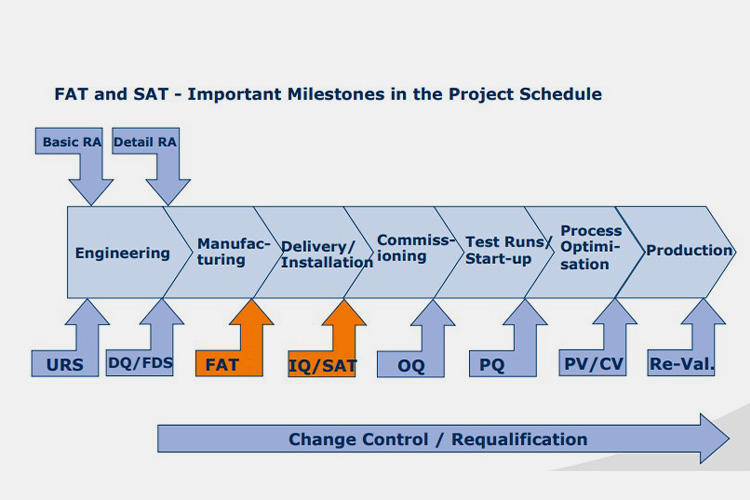
          According to the above figure, FAT and SAT are two important acceptance stages in the equipment production to delivery process. Strict acceptance criteria and detailed testing data are key to the successful execution of FAT and SAT.

          For factories, FAT is important means to ensure product quality and production safety. Through professional testing, factories can discover problems and hidden dangers in the machine’s production process, and take timely measures to improve production efficiency and machine’s quality. In addition, FAT can also help factories comply with legal and regulatory requirements, avoiding fines and legal liabilities caused by illegal operations.

          For customers, SAT is also an important way of ensuring product quality. User conduct site acceptance testing of the equipment to ensure that its performance and functionality meet expectations in actual usage environments. This step ensures that the system can work stably and reliably under actual operating conditions, and meet the needs of users.

          4.What are the Benefits of FAT and SAT?

          Why we need conduct FAT and SAT? These two stages play a crucial role in the delivery, installation, and commissioning of equipment. Through these two stages of acceptance procedures, it can be ensured that the equipment can operate smoothly and meet the needs of users. Are you curious about their detailed benefits?

          (1)Meeting customers requirement

          Meeting-customers’-requirement

          Meeting Customers Requirement - Sourced: protoplastics.com

          Satisfying the customer’s need is the ultimate objective of product. FAT and SAT can check that the machine whether meet the customer’s requirements. Once the equipment passes the inspection, it can proceed to the next step.

          (2)Safeguarding the quality of the equipment

          Through professional testing of FAT and SAT, problems with the equipment can be identified and timely adjustments and repairs can be made to ensure the quality of the final product, and ensure that system components and overall performance meet industry standards..

          (3)Saving time and cost

          Saving-time-and-cost

          Saving Time and Cost - Sourced: Applied Performance

          By conducting FAT and SAT, machine problems can be detected and reported to relevant departments for timely repair, thereby avoiding rework and maintenance costs caused by final product quality issues.

          (4)Reducing risk

          Reducing-Risk

          Reducing Risk - Sourced: 54 Collective

          These two testing methods can avoid certain risks. By testing the system in a controlled environment, potential issues can be identified and fixed, reducing the risk of failure after on-site installation.

          5.What are the Similarities between FAT and SAT?

          We have learned that FAT is conducted at the manufacturing plant before shipment, and SAT is the on-site testing of installation after shipment to the user. As two acceptance testing, FAT and SAT testing methods have some similarities, mainly including:

          (1)Quality and safety assurance

          Quality-Assurance

          Quality Assurance - Sourced: Wise IT

          The main purpose of FAT and SAT is to test the quality and safety of products and meet customers’ need before they are put into use.

          (2)Requiring documentation

          During the process of FAT and SAT, the test date and corrective behaviors need to be documented and a final FAT/SAT report need to be written.

          (3)Comply with regulatory standards

          regulatory-standards

          Regulatory Standards - Sourced: The FAIR Institute

          Both FAT and SAT need to be tested according to industry regulations and standards, which are set by agencies such as FDA and EMA.

          6.What are the Differences between FAT and SAT?

          Although FAT and SAT both belong to acceptance testing and have some similarities, there are also some differences between these two acceptance methods, mainly reflected in the testing site, environmental conditions, and other aspects.

          (1)Testing site

          Testing site

          Testing Site - Sourced: AIST Global

          The biggest difference between FAT and SAT lies in the detection site. FAT is tested at the manufacturer’s location. SAT conducts testing at the customer’s location. After the equipment is successfully delivered to the user’s site, the user representative will conduct SAT to ensure that the performance and functionality of the equipment meet expectations in the actual usage environment.

          (2)Environmental conditions

          Because they conduct in different sites, the environmental conditions of the testing sites where FAT and SAT conduct are diversified, mainly displaying in compressed air or steam, temperature and humidity.

          (3)Documentation

          Documentation

          Documentation - Sourced: Zamann Pharma Support

          FAT and SAT need documentation, and they are differed in the level of detail of the content. The information in the FAT documentation is more abundant than SAT documentation. FAT needs to undergo more functional and safety testing, with more specific and diverse testing content, in order to guarantee the quality of the product when it leaves the factory.

          (4)Time

          FAT and SAT are at different time stages in the completion of equipment. FAT conducts before delivering the machine to the customer, and SAT conducts after the installation of the machine.

          7.What are the Procedures of FAT and SAT?

          Due to the similarities and differences between FAT and SAT, their procedures also have similarities and differences. Well, let’s learn about their detailed process together.

          (1)FAT procedure

          The common FAT procedure goes through 6 stages, as follows:

          Procedures Description
          1.Planning and preparation Before acceptance, the staff need to develop a detailed acceptance plan, including the equipment to be accepted, the acceptance personnel, the acceptance time, and standards.
          2.Visual testing Checking the appearance of the equipment, mainly including components, labels, joint and painting. It is also necessary to check whether the instruments and accessories are consistent with the contract.

          In addition, it is necessary to check the wiring of the power supply unit, the input voltage of the power supply, and whether the nameplate is correct.

          3.Functional testing Conducting functional testing on the equipment, including charging and discharging cycles, adjusting parameters, etc.
          4.Stability test When conducting stability tests on the machine, continuous operation for 72 hours is required. Mechanical, electrical, or software adjustments cannot be made without the buyer’s permission.
          5.Safety testing Testing the safety of the equipment, including alarm function, to ensure compliance with safety standards and enable safety protection measures under fault conditions.
          6.Documentation Recording the results of the test and any issues that arise.

          (2)SAT procedure

          The common SAT procedure goes through 5 stages, as follows:

          Procedures Description
          1.Preparation and installation Before conducting SAT acceptance, it is necessary to make sufficient preparations for the equipment, including installation, debugging, calibration, etc.

          Preparing for equipment installation and debugging, and reading the FAT documentation. Installing the equipment by technical personnel from the manufacturer at the customer’s location.

          2.Visual testing Check for any damage or issues with the equipment during transportation.
          3.Functional testing Connecting the equipment to other devices and conducting functional testing on the equipment. For control systems, loop verification is a necessary step.
          4.Inspection of User Requirement Specifications Check the user requirements specifications to ensure that the design and functionality of the equipment meet the user’s needs.
          5.Documentation Record the results of the test and any issues that arise.

          Overall, the processes of FAT and SAT can be repetitive, both the customer and manufacturer need to send engineers to participate in FAT and SAT, but SAT can detect issues that FAT cannot detect in actual environments.

          8.What Items are Included on the FAT and SAT Checklists?

          The Factory Acceptance Testing and Site Acceptance Testing Checklist is a comprehensive document that lists the standards, procedures, and requirements for evaluating and verifying the quality and functionality of machine and systems. All FAT and SAT checklists are not exactly the same, but they basically include the following points.

          FAT-and-SAT-Checklists

          FAT and SAT Checklists - Sourced: Psychology Today

          List of testing machines: This mainly records the names and models of the machines that need to be tested.

          The reference specification list: It includes a series of related files involved in the FAT and SAT processes, such as dimensions, materials, and performance parameters.

          Equipment calibration certificates: A calibration certificate for testing equipment is a document that proves that a specific device has been inspected, tested, and adjusted to meet specific accuracy and precision requirements.

          Test data: After conducting functional, performance, and security tests, the operators record test results, including any issues identified during testing.

          9.Why Is SAT Conducted After FAT?

          One major difference between FAT and SAT is that they are in different time periods, and SAT needs to be conducted after FAT. Do you know the reason behind it?

          Generic-Project-Life-Cycle

          Generic Project Life Cycle - Sourced: Secura

          The picture above shows the generic project life cycle. When the equipment completes FAT, it can ensure the quality of the equipment before leaving the factory. During the transportation of equipment to customers, damage may occur. SAT can further detect quality issues and, when operated in actual environments, can detect problems that were not detected in the factory.

          FAT mainly focuses on the manufacturing quality and performance of equipment, while SAT pays more attention to the reliability and stability of equipment in actual use environments. Therefore, site acceptance testing must be conducted after factory acceptance testing.

          10.What Should be Considered When Conducting FAT and SAT?

          In order to obtain accurate results, we need to consider multiple factors when conducting FAT and SAT.

          (1)Using proper materials

          Different-Materials

          Different Materials - Sourced: PixelSquid

          Each machine uses different materials, including liquids, solids, and particles. Different materials can affect the testing results, and in severe cases, even the performance of the machine. Therefore, it is necessary to choose suitable materials according to the machine’s user manual.

          (2)Training operators and technicians

          Training-operators-and-technicians

          Training Operators And Technicians - Sourced: Exelliq

          It is necessary to enhance employees’ professional knowledge and skills, strengthen their knowledge of equipment testing, verification, and compliance. Technical personnel are required for guidance and installation during FAT and SAT. Operators need to constantly observe the operating status of the machine, identify problems and defects of the machine.

          (3)Understanding user requirements specification

          user-requirements-specification

          User Requirements Specification - Sourced: Post en Dekker blog

          During the initiation phase of the project, users provide their expected usage requirements for the production equipment. This instruction needs to be combined with practical factors such as usage purpose, usage environment, and purpose.

          Based on sufficient information collected, the equipment requirements should be provided as comprehensively as possible, and these requirements should be verifiable. The descriptions used in the URS should be clear, accurate, and measurable. These requirements include: Product and process requirements, regulatory compliance requirements, operational, maintenance, and technical requirements.

          (3)Effective cooperation and communication

          Effective-cooperation-and-communication

          Effective Cooperation And Communication - Sourced: GenSight

          Effective communication plays an important role in greatly improving work efficiency. Manufacturers and customers need strengthen cooperation and communication. During the FAT and SAT processes, effective communication is necessary to promptly adjust and resolve any issues that arise with the machinery and equipment.

          Conclusion

          FAT and SAT serve as a significant role in the acceptance progress of machines, which should be taken seriously to ensure the smooth delivery and use of equipment. Have you gained a better understanding of FAT and SAT after reading this article? If you have any further questions about acceptance testing, feel free to contact Allpack at any time.

          Don't forget to share this post!

          CONTACT US

          Tell us your raw material and project budget to get quotations within 24 hours.

          WhatsApp Us: +86 181 6426 8586

          Invalid Email
          Invalid Number

          FAT And SAT:The Complete FAQ Guide In 2025 Read More »

          Lab-Vacuum-Dryer-6

          Lab Vacuum Dryer: The Complete Buying Guide In 2025

          Lab Vacuum Dryer: The Complete Buying Guide In 2025

          Drying is an integral step in the preparation of different ingredients, especially solid dosage forms. Vacuum drying has significance in drying raw material by lowering the temperature of solvents, leading to energy conservation. Isn’t that sustainable? How vacuum drying is carried out?

          The lab vacuum dryer is a dynamic device that quickly and uniformly dries different ingredients- from pharmaceuticals to foodstuff. What are its pros? What are its types? Several questions confuse operators and manufacturers alike. So, we have compiled this guide to improve your understanding of this promising instrument. Let’s enlighten your minds!

            Add a header to begin generating the table of contents

            1.What is a lab vacuum dryer?

            lab vacuum dryer

            Lab Vacuum Dryer- Picture Courtesy: Labec

            A lab vacuum dryer is a specialized category of equipment that effectively vaporizes chemicals, gases, moisture, or watery content from the feed without oxidizing material or causing undesired reactions in it.

            It works on the principle of the formation of a vacuum to reduce the vessel pressure below the solvent vapor pressure, resulting in its boiling. The solvent molecules travel to the surface of the feed and vaporize owing to decreased pressure.

            It is an integral device utilized in laboratories and manufacturing units for drying, curing, and heat treatment procedures under low-pressure settings. It has higher drying proficiency because of enhanced heat transfer.

            2.What are the benefits of a lab vacuum dryer in different manufacturing units?

            A lab vacuum dryer is an innovative and cutting-edge machine that has a plethora of features to provide manufacturers and researchers with financial and industrious benefits. A few significant advantages of lab vacuum dryer include:

            Improved Product Stability

            Improved Product Stability

            Improved Product Stability- Picture Courtesy: Homesteading Family

            Water content plays a major part in microbial growth. Manufacturers and developers use a lab vacuum dryer to remove moisture content, consequently inhibiting microbial growth. Moreover, by regulating the amount of moisture in the products, this device is essential in preserving product integrity and averting alterations that could affect their functionality and stability.

            High Product Quality

            High Product Quality

            High Product Quality- Picture Courtesy: Somafina

            Conventional drying techniques tend to damage heat-sensitive materials, resulting in the loss of their structural integrity. The lab vacuum dryer is specially designed to handle heat-sensitive fragile items with its low-temperature drying. Furthermore, there are no issues such as the development of hard and leathery crusts in a lab vacuum dryer, which are quite common with traditional dryers. Therefore, it retains the quality, appearance, and potency of pharmaceutical and food items.

            High Product Shelf Life

            High Product Shelf Life

            High Product Shelf Life- Picture Courtesy: 100% Chef

            The materials dried with a lab vacuum dryer exhibit longer shelf life because the latter lowers the likelihood of oxidation and hydrolysis. The chemical reactions in the product and their oxidation promote spoilage and degradation chances, leading to a short life shelf.

            Rapid Drying Time

            Rapid Drying Time

            Rapid Drying Time- Picture Courtesy: RAYPA

            The low pressure due to the vacuum decreases the boiling points of solvents, as a result, the vaporization procedure is accelerated and drying occurs in a short time. Rapid drying times contribute to higher process productivity and throughput in the manufacturing units. This is particularly important in industries- requiring quick movement of products.

            Increased Energy Efficiency

            Increased Energy Efficiency

            Increased Energy Efficiency

            Since the lab vacuum dryer minimizes the required drying temperature and time, so this device uses less energy than other standard dryers. Lower energy consumption translates into reduced utility bills, making drying processes in a lab vacuum dryer more eco-friendly and financially viable for manufacturers.

            More Product Uniformity

            More Product Uniformity

            More Product Uniformity- Picture Courtesy: Soln Pharma

            Drying in the lab vacuum dryer occurs in controlled settings of temperature and pressure, leading to uniform vaporization across samples. This reduces variances in drying throughput and delivers constant and reproducible outcomes.

            Higher Product Yield

            Higher Product Yield

            Higher Product Yield

            The lab vacuum dryer operates at significantly lower temperature situations, so is effective in keeping products safe from overheating in turn preventing their degradation and minimizing wastage. The mild drying conditions decrease product deterioration, contributing to higher proportions of feasible products.

            Versatility

            Versatility

            Versatility

            Lab vacuum dryer is frequently used for drying multitudes of materials- from slurries to solids, powders to liquids- because it can effortlessly process a wide range of materials and is adjusted to accommodate diverse drying needs.

            Low Safety Risks

            Low Safety Risks

            Low Safety Risks- Picture Courtesy: New York Weekly

            By using a lab vacuum dryer, productions minimize the safety risks to the operators. There is no formation of vented fumes and particles in the lab vacuum dryer. These undesired drying products are inhaled by operators, making them sick. However, ventilation does not happen in a lab vacuum dryer, so operators managing this device are safer.

            3.Where does a lab vacuum dryer find its use?

            A lab vacuum dryer has a huge deal of significance in manufacturing fields because of its potential to safely process materials. Let’s discuss various platforms in which lab vacuum dryer is routinely found:

            Pharmaceutical Industry

            Pharmaceutical Industry

            Tablets and Powders- Picture Courtesy: Bluebird Provisions

            Lab vacuum dryer has a major role during the drug formulation process, as it delicately removes solvents from active ingredient materials, maintains properties of sensitive material, and does not change the chemical profile of excipients and drug components. So, this instrument is pivotal in increasing productivity for pharmaceuticals, such as orally disintegrating tablets, camphor, and lactose granules.

            Chemical Industry

            Chemical Industry

            Chemical Resins- Picture Courtesy: Siegwerk Druckfarben

            Sometimes, chemicals severely lose their physical attributes and chemical structure on drying with conventional drying approaches. Therefore, a lab vacuum dryer has a key part in the drying of polymers, resins, and fabricated materials because it ascertains product propriety and quality.

            Life Sciences Industry

            Life Sciences Industry

            Cell Culture- Picture Courtesy: Pawitra Biotek

            Lab vacuum dryer is a part of recurrent biological research protocols to prepare life samples, for example, proteins, enzymes, cell culture, microbes (bacteria), and tissues. It proficiently dries biological materials while upholding their quality and biological activity.

            Food and Beverage Industry

            Food and Beverage Industry

            Dried Fruits

            Lab vacuum dryer dries food products, for instance, fruits, vegetables, spices, herbs, and coffee. It upholds their nutritional quality, color, texture, delicacy, taste, and aroma. This equipment is involved in the dehydration and curing of different types of food products, such as baby powder, milk powder, flavoring, and protein powder.

            Cosmetic and Personal Care Industry

            Cosmetic and Personal Care Industry

            Cosmetic and Personal Care Powders

            Cosmetic preparations usually deal with botanical and herbal extracts and their potency and integrity are compromised on processing with standard drying methods. Hence, cosmetic preparations like creams, gels, powders, and lotions make use of a lab vacuum dryer, as it gently handles cosmetic products and decreases their likelihood of clumping due to moisture.

            Electronic Industry

            Electronic Industry

            Semiconductors- Picture Courtesy: Keyence

            Oven and hot air drying exert thermal stress on electronic components like semiconductors, circuit boards, and batteries, leading to their cracking and melting. Therefore, manufacturers prefer to use a lab vacuum dryer for the removal of moisture from electrical components, consequently averting the risk of short-circuiting, corrosivity, and other electrical issues.

            4.What is the structural design of a lab vacuum dryer?

            A lab vacuum dryer consists of several integral components having unique functionalities. Here is a complete list of parts featured in a lab vacuum dryer:

            Structural Design

            Lab Vacuum Dryer-1

            Structural Design of Lab Vacuum Dryer- Picture Courtesy: ResearchGate

            Bleed Valve It is known by terms, such as vent or pressure relief valve. It aids in pressure equalization by reintroducing the gaseous molecule inside the chamber. It gradually restores air concentration, thereby, preventing the immediate air influx, which may degrade the end product.
            PID Control It is a typical type of feedback control mechanism to manage different inputs, such as temperature, pressure, and time. It continuously estimates the difference between the preprogrammed and actual values and controls process parameters, and hence, stabilizes drying conditions.
            Vacuum Gauge The users can easily adjust and control the vacuum level in the lab vacuum dryer by scrutinizing the vacuum level through a vacuum gauge.
            Power Button  The basic purpose of the power button is to start and turn off the machine. It powers different electronic parts and safely shuts off heating and vacuum systems.
            Double Partition It is a structural design attribute, consisting of two layers of partition to increase heating efficiency by uniformly dispensing heat across every corner of the chamber. It provides an insulation barrier to decrease heat deficit.
            Vacuum Valve This valve is essential in regulating the air diffusion in and out of the vacuum chamber. It produces a vacuum, maintains it, and releases the said vacuum upon complete drying.
            Hinge It is located at the side of the doors and allows gentle opening and closing of the door. It secures the seal and provides accessibility and safety to operators.
            Visible Window It is a transparent window and is produced from tempered glass. Users can observe the functioning of the device through the visible window without accessing the sealed chamber and disrupting the vacuum environment.
            Silicon Seal This seal is routinely installed in a lab vacuum dryer to ensure the airtightness of the vacuum chamber by averting the leakage of gas in or out of the chamber. There are diverse types of silicon seals, for instance, O-rings, gasket seals, etc.
            Material Temperature Sensor This sensor is pivotal in controlling the temperature of the sample being dried. It offers real-time temperature data and aids in safeguarding thermolabile materials.
            Pressure Sensor It verifies that the desired pressure range is maintained in the chamber.  The pressure sensor delivers feedback to the control system and operator by examining pressure changes inside the vacuum vessel.
            Condenser It is usually found in the lab vacuum dryer manufactured for solvent recovery. This device collects and condenses the vaporized solvent chamber with the help of its cooling mechanism (consisting of cold water or refrigerants).
            Vacuum Pump There are several kinds of vacuum pumps in the lab vacuum dryer, for instance, rotary vane or diaphragm pump, which establish a low-pressure environment in the drying chamber by eradicating gaseous components from the chamber. It is located outside the drying vessel and has integrated pipes for maintaining the vacuum inside the chamber.
            Air Solenoid Valve It is an electromagnetic valve that works on signaling by electricity and regulates the flow of incoming and exhaust air. Thus, it keeps the vacuum level in a chamber under the desired threshold.
            Infrared Temperature Sensor It gauges the temperature range of material or component by examining the amount of infrared radiation released from it. This sensor does not come in direct contact with the object but allows the scrutinizing of real-time temperature alterations during the drying process.
            Touch Screen It is an intelligent screen to configure the drying process by programming desired inputs. It is a simple control screen to modify the parameter settings. It stores pre-saved drying recipes to quickly operate the lab vacuum dryer.
            Drain Solenoid Valve It regulates the movement of moisture or vapors to a drainage mechanism. It manages the offloading of condensate materials and other fluids produced while drying and ensures the stability and efficiency of the compartment environment.
            Drying Chamber It is a core component of a lab vacuum dryer in which a vacuum is maintained for drying. It is manufactured from corrosion-tolerant material to resist low-pressure conditions and avert the risk of contamination. It comes with airtight secure safety interlocking doors to uphold vacuum stability. This compartment is typically insulated to prevent temperature fluctuations.

            5.What are the working stages of a lab vacuum dryer?

            By learning about a lab vacuum dryer, you can gain insight into its working and methodologies, which are fruitful in effective moisture vaporization and high expiry period of products. Therefore, we are discussing the working stages of a lab vacuum dryer for scientists, developers, and engineers, who are inquisitive about details regarding this device:

            Loading of Material

            Loading of Material

            Loading of Material” Picture Courtesy: VACUUBRAND

            At the start, the samples are gently introduced inside the drying compartment. After loading, the vacuum chamber is completely and securely sealed to establish a closed atmosphere for vacuum drying.

            Vacuum Creation and Product Heating

            Vacuum Creation and Product Heating

            Vacuum Creation and Product Heating: Picture Courtesy: KNF

            The vacuum pump is activated which in turn begins decreasing the pressure inside the drying compartment by creating a vacuum. With the pressure drop, the vaporization of the solvent becomes easier. As soon as a vacuum is set up inside the chamber, a controlled heating source is utilized to accelerate moisture evaporation.

            Evaporation

            Evaporation

            Evaporation

            The solvents are converted into vapors at lower temperatures and are consistently removed from the drying vessel using a vacuum pump. This prevents vapors from transforming back into moisture. Some lab vacuum dryers are equipped with condensers, where solvents are condensed and recovered.

            Cooling and Unloading of Product

            Cooling and Unloading of Product

            Cooling and Unloading of Product

            The temperature of materials is decreased inside the drying chamber for their cooling, once the solvent evaporation is completed. The product is kept inside the vacuum for a short interval for stabilization. On successful cooling, the vacuum is slowly discharged to allow re-entry of air in the chamber.

            After the restitution of pressure, the door of the lab vacuum dryer is opened and then the dried and moisture-free product is slowly offloaded from the chamber for next-in-line processing.

            6.What are the available categories of a lab vacuum dryer?

            There exists a diversity in the types of a lab vacuum dryer, including:

            Static Lab Vacuum Dryer

            Static Lab Vacuum Dryer

            Static Lab Vacuum Dryer- Picture Courtesy: News-Medical

            It is a kind of lab vacuum dryer in which original products stay immobile on the trays or other holders in the drying chamber. It is easier to maintain and operate because of the lack of moving parts. In the static lab vacuum dryer, the heat is uniformly transferred to every surface of the vacuum chamber, resulting in regulated and even vaporization of moisture.

            The rate of drying is slow, especially for thicker products, because of the absence of agitation. Moreover, static lab vacuum dryers have restricted space, consequently limiting the processing volumes of materials.

            Its further categorization includes:

            Tray Lab Vacuum Dryer

            Tray Lab Vacuum Dryer

            Tray Lab Vacuum Dryer- Picture Courtesy: PharmaChem Cosmetics Industries

            It is composed of stationary trays that house products for drying. It has a simple design and is popular for lab, pilot, and small-scale drying due to its precise temperature control. The trays are vertically housed in the rectangular kind of cabinets. It utilizes low-pressure conditions to boost the drying rate.

            The minimal volume and ergonomic design increase energy conservation by decreasing the quantity of heating liquid needed.

            Lab Vacuum Oven Dryer

            Lab Vacuum Oven Dryer

            Lab Vacuum Oven Dryer- Picture Courtesy: Digivac

            It is a type of static lab vacuum dryer and follows the same working principle- dielectric heating principle- as that of a standard oven. However, the lab vacuum oven dryer runs in a vacuum environment to reduce boiling points and boost drying.

            The high-frequency electromagnetic radiations interact with molecules of materials, causing them to heat. Lab vacuum oven dryer is different from other static lab vacuum dryers because in the former heat is produced by the transformation of electromagnetic energy into kinetic energy. So, materials are dried from deep within, resulting in quicker drying.

            Lab Vacuum Shelf Dryer

            Lab Vacuum Shelf Dryer

            Lab Vacuum Shelf Dryer- Picture Courtesy: Labquip

            It features a cylindrical or rectangular shape drying vessel in which shelves are stacked over one another. The materials are put on the shelves for drying via conduction. Shelves have their specific heating plates for improved heat transmission and maintenance of accurate temperature across drying planes.

            Drying is much more rapid and uniform in the lab vacuum shelf dryer in comparison with the tray lab vacuum dryer.

            7.What are the technical problems and troubleshooting relevant to a lab vacuum dryer?

            A lab vacuum dryer is state-of-the-art equipment with long lists of handy benefits, however, now and then, it faces some unfortunate issues that potentially halt its operativity, resulting in a loss of profit margins. Nevertheless, there is no need to worry, as these problems are rectified by implementing the following suggestions:

            Vacuum Leakage

            Vacuum Leakage

            Vacuum Leakage- Picture Courtesy: Waldner

            Sometimes, there is leakage in the air pressure, resulting in a lower drying rate and longer drying cycles. Materials are also subjected to air or moisture, affecting their physical structure and other properties.

            Cause

            This issue is due to several reasons, for instance, faulty sealing components, broken glass windows, and unsecured connection in the drying chamber or vacuum hoses.

            Troubleshooting

            To rectify this problem, you should thoroughly check the working condition of O-rings, gaskets, and other seals. Replace damaged seals if required. Inspect the window for cracks and substitute it if broken. Examine connectivity between hoses and tighten all flanges. Pressure drop in the drying vessel can be checked by a vacuum gauge.

            Uneven Heating

            Uneven Heating

            Uneven Heating- Picture Courtesy: Holland Green Science

            It is observed that some product sections remain wet while others are heavily dried and degraded due to uneven heating in a lab vacuum dryer.

            Cause

            This problem stems from worn-out heating bars, incorrect positioning of trays or products, or inadequate airflow.

            Troubleshooting

            It is advised to check the functioning of heating bars and substitute malfunctioning ones. Reload the products evenly in the drying chamber without overloading. Reposition incorrectly placed trays and provide adequate air circulation for uniform heat distribution.

            Longer Drying Cycle

            Longer Drying Cycle

            Longer Drying Cycle- Picture Courtesy: Lab Manager

            The problem of longer drying time arises in a lab vacuum dryer, unsettling the smooth workflow of lab operations.

            Cause

            The issue of longer drying cycles is due to inadequate vacuum settings, low-temperature ranges, and incorrect placement of materials.

            Troubleshooting

            First, alter the settings of the vacuum pump to attain a low-pressure range, Secondly, optimize the temperature inputs, so that the heating process becomes faster. Reintroduce samples inside the vacuum chamber and ensure the sample load is below the working capacity of a lab vacuum dryer.

            Moisture Condensation

            Moisture Condensation

            Moisture Condensation- Picture Courtesy: Pella Windows

            The issue of moisture condensation is encountered occasionally in the device, resulting in vapors on chamber walls liquifying to solvents. This may contribute to the reabsorption of moisture in the dried sample.

            Cause

            The reasons for this problem are poor heating, inadequate vacuum level, or leftover moisture that has not completely evaporated.

            Troubleshooting

            It is solved by increasing the temperature in the drying chamber so that it can fully evaporate moisture. Inspect leakage in the vacuum pumps to fix the faults in vacuum levels. Complete moisture evaporation must be observed using suitable temperature and vacuum conditions.

            Loss of Product Integrity

            Loss of Product Integrity

            Loss of Product Integrity-Picture Courtesy: Freeman Technology

            Sometimes, the samples being dried may lose their physical structure, efficacy, or flavor. These materials may be discolored in a lab vacuum dryer.

            Cause

            The factors that contribute to this predicament are high heat and inadequate vacuum settings that degrade the thermos-sensitive samples.

            Troubleshooting

            To resolve this predicament, it is important to minimize the temperature to a certain value that is ideal for drying materials. Modify the vacuum level to lower the boiling temperatures of solvents. Heat exposure to samples can be minimized by using a shorter drying cycle in which materials are satisfactorily dried.

            Conclusion

            In summary, a lab vacuum dryer is an extraordinary machine capable of drying a wide array of samples- ranging from fresh fruits to sensitive drugs. It is a need of today’s green world because it conserves energy. Procuring this instrument is extremely advantageous for labs and small-scale industries, as it opens new arenas of success. For purchase-related queries, you are more than welcome to contact Allpack. We have a wide portfolio of high-quality lab vacuum dryers, customized to fulfill your unique drying requirements.

            Don't forget to share this post!

            CONTACT US

            Tell us your raw material and project budget to get quotations within 24 hours.

            WhatsApp Us: +86 181 6426 8586

            Invalid Email
            Invalid Number

            Lab Vacuum Dryer: The Complete Buying Guide In 2025 Read More »
            Installation Qualification Example

            Installation Qualification Example: The Complete FAQ Guide In 2025

            Installation Qualification Example: The Complete FAQ Guide In 2025

            Are you trying to install equipment? Are you trying to minimize hazardous risks during installation? Installation is a must before successfully operating the equipment. Effective installation guarantees the smooth performance of any device. One must follow manufacturer specifications and recommendations to ensure error-free installation. How to verify that the installation conforms with standards?

            Installation qualification is an indispensable procedure that ensures the instrument and systems’ safety, quality, functioning, and reliability. It is not only a good practice but also a legal requirement. People are always confused about the definition of installation qualification and what it entails. So, here is a FAQ guide “Installation Qualification Example: The Complete FAQ Guide In 2024” to satisfy ever-curious minds. Let’s look at the list of questions.

              Add a header to begin generating the table of contents

              1.What is installation qualification?

              installation qualification

              Installation Qualification- Picture Courtesy: Zamann Pharma

              Installation qualification is a module of the process validation protocol that comprises a documented series of steps to assure manufacturers and regulatory bodies of effective delivery, installation, mounting, calibration, and arrangement of devices and systems.

              It is the first step in the equipment qualification protocol and records every vital facet of equipment installation and verifies that these installation steps are carried out by following guidelines defined in the design specification, equipment manual, and in-facility user requirements.

              Installation qualification provides documented evidence for the correct installation of the instrument and ensures that its installation will not severely impact its functioning. It verifies the installation and configuration of the machine, its components, piping, or service against a manufacturer requirement checklist. This step is performed before operational and performance qualification.

              2.What is an installation qualification example?

              installation qualification example

              Installation Qualification Example- Picture Courtesy: GF Machining Solutions

              Whether your instrument is physical or digital, once you have configured it, here are some installation qualification examples for you to inspect your installation protocol:

               Location Plan Find a suitable location and ensure its suitability regarding floor space, ventilation, and outlets or drainage system.
              Utility Inspection Verify that various utilities, for example, water, electricity, compressed air, or other facilities are mounted as per design drawings.
              Documentation Collect and review every manual, certification, instruction guide, checklist, and other to verify the validity of every installation step.
              Unpacking Unwrap every piece of instrument and inspect them for wear and tear. Cross-check every step with the manufacturer's guide to ensure you are proceeding in the right way.
              Component Verification Install ancillary parts and other components, for instance, sensors, seals, screws, valves, etc. Ensure that they are fitted and aligned properly.
              Recording Note details like firmware models, serial numbers, and other instrument-related information.
              Inspection of Environmental Setting Examine and ensure that environmental and functioning conditions, for instance, temperature, humidity, and ventilation are according to manufacturer recommendations.
              Software Installation Verify that the updated version of the software is installed in the desired location. Check that the software is set up with correct settings and network accessibility and performs its core functions as anticipated.
              Calibration Carry out every component calibration or adjustment. Record these calibration procedures with their execution dates and tools.
              Connectivity Validation Check every connection and communication is established with secondary or supplementary support components in line with the user guide.

              3.How does the installation qualification example serve industries?

              Installation qualification example has central importance in ensuring performance and conformity of equipment and systems. It is a critical testing phase that has immense value in verifying the quality and efficiency of procedures in regulated manufacturing units. Let’s detail its important uses:

              Compliance with Regulations

              Compliance with Regulations

              Compliance with Regulations

              This process is a pivotal requirement for industries overseen by regulatory authorities, such as the FDA, EMA, or, WHO. It confirms that instruments are installed according to configuration parameters set by the manufacturers and governing bodies. Its records are typically inspected during regulatory audits. Therefore, fulfilling the installation qualification example is a failsafe way to meet GMP and ISO quality standards.

              Risk Alleviation

              Risk Alleviation

              Risk Alleviation- Picture Courtesy: PharmOut

              This testing validation minimizes risks associated with incorrect installation of the instruments. Improper system installation and configuration could lead to erroneous measurements and faulty treatment procedures. Thus, the installation qualification example mitigates problems related to system malfunctioning, failure, and safety incidents.

              Instrument Longevity

              Instrument Longevity

              Instrument Longevity

              The installation qualification example is a reliable approach to monitoring minor errors in the installation process that contribute to problems down the line and affect the working of the system. The rightly configured instrument generally has a lower component breakdown and lasts for many decades.

              Records for Auditing

              Records for Auditing

              Records for Auditing

              The documentation comprising installation qualification examples is a historical record of installation procedures and inspection checklists. It also documents details of operators checking installation parameters and errors that are rectified during the installation step. This report is integral for auditing productions and helps in troubleshooting technical issues that may arise in the future.

              Decreasing Downtime

              Decreasing Downtime

              Decreasing Downtime

              The installation qualification example serves as a guide for technicians to properly configure the machine first time. So, operational delays and expensive downtime are prevented by following correct installation standards. This also cut down the need for recurrent machine alteration and repairs, saving maintenance costs and operational time.

              4.What type of industries need the installation qualification example?

              Installation qualification is integral in laying the groundwork for process validation. Since it ensures the stable and effective working of the instruments; therefore, it is needed in various industries, including:

              Pharmaceutical Industry

              Pharmaceutical Industry

              Pharmaceutical Industry- Picture Courtesy: Verywell Health

              A wide range of equipment is utilized in the pharmaceutical industry to manufacture top-quality, safe, and potent dosage forms. Pharmaceutical machines, for instance, mixers, blenders, tablet presses, capsule fillers, granulators, etc., must be validated using an installation qualification example checklist to ensure they are fit for working and operate according to expected criteria.

              Biotechnology Industry

              Biotechnology Industry

              Biotechnology Industry- Picture Courtesy: BioSpectrum India

              Installation qualification example is a proactive step to reduce the adverse risks linked with the installation of biotech equipment, for example, incubators, centrifuges, chromatography devices, spectrometers, and bioreactors. This measure ensures that biotech systems are qualified for their proposed purpose. Therefore, it is indispensable in biotechnology industries for the efficient validation of research protocols and bioengineered products.

              Medical Industry

              Medical Industry

              Medical Industry- Picture Courtesy: Asimily

              In the medical industry, the installation qualification example serves as an indicator of the safety and quality of medical devices and products. Proper installation of medical instruments- for example, sterilization units, diagnostic tools, surgical devices, etc.- is essential in patients’ treatment and safety. Any discrepancy in the installation of medical devices can jeopardize the life of the patient.

              Food and Beverage Industry

              Food and Beverage Industry

              Food and Beverage Industry- Picture Courtesy: Kompass Solutions

              The installation qualification example is not just a regulatory requirement in the food and beverage industry; it is a significant measure to guarantee consistency in the food and beverage sector. It satisfies the safety and regulatory standards set by HACCP and ISO 22000 for the food industry. By following correct installation qualification examples, brands decrease contamination during manufacturing and build customer trust in the quality of their produced goods.

              Chemical Industry

              Chemical Industry

              Chemical Industry- Picture Courtesy: Sigma-Aldrich

              Different types of instruments- such as chemical reactors, distillation units, pumps, and heat exchange systems- are routinely used in the chemical industries. So, to comply with OSHA, EPA, RCRA, and, NPDES, the chemical manufacturers must perform installation qualification protocol. This validation protocol verifies that chemical equipment is safely installed and does not pose any risk to the operator and environment.

              Cosmetics Industry

              Cosmetics Industry

              Cosmetics Industry- Picture Courtesy: More Natural

              Compliance with GMP protocols is the first step to successfully marketing and distributing cosmetic products. Deviations in quality assurance steps directly affect the user's health. So, cosmetic brands follow recommended installation qualification examples to verify that their cosmetic products are designed by the highest quality standards.

              Electronic Industry

              Electronic Industry

              Electronic Industry- Picture Courtesy: Integra Sources

              Proper installation of manufacturing units- such as cleanrooms, water assembly systems, and testing tools- is pivotal in electronic and semiconductor fabrication. Thus, an installation qualification example is needed in this industry to verify manufacturing precision and prevent risks like electronic failure and fire incidents.

              5.What are fundamental installation qualification example documents?

              Installation qualification example is a prerequisite of any validation process and to confirm that it proceeds as required, one must have basic installation qualification example documents, including:

              Fundamental Installation Qualification Example Documents

              Fundamental Installation Qualification Example Documents

              Installation Qualification Protocol

              Installation Qualification Protocol

              Installation Qualification Protocol

              It is a detailed framework that documents the scope, strategy, and, measures to execute the installation qualification example. It further details:

              • Instrument identification essentials (version, product code, tag, manufacturer, vendor).
              • Name of devices and systems to be qualified.
              • Installation needs specified according to the manufacturer's guide.
              • Environmental conditions for installation.
              • A worksheet of approval criteria

              Installation Qualification Checklist

              Installation Qualification Checklist

              Installation Qualification Checklist

               It is a comprehensive specification list obtained from the installation qualification protocol, encompassing every facet of installation validation. It covers manual component inspection, utility installation, electric connections, calibration, hardware and software installation checkpoints, alignment, screw fastening, installation of axillary parts, and control schematics.

              Installation Qualification Report

              Installation Qualification Report

              Installation Qualification Report

              In this report, details of steps performed during the execution of the installation qualification protocol are mentioned. It offers a concise summary of detections, observations, and outcomes. Moreover, it explicitly expresses the acceptance or rejection of instrument installation criteria.

              6.How do you fulfill the installation qualification example, step by step?

              Installation qualification example is a structured procedure, requiring careful planning and a proper mindset. It can be subdivided into five major steps to achieve precise system validation. Let’s discuss step by step completion of installation qualification example:

              Steps in Execution of Installation Qualification Protocol

              Steps in Execution of Installation Qualification Protocol

              Step 1: Preparation and Planning

              Preparation and Planning

              Planning of Installation Qualification Protocol- Picture Courtesy: Dickson Data

               It is crucial to prepare and plan by reviewing objectives and establishing the scope of installation qualification before starting installation tests. You should define what instruments and parts will be tested and make sure all the applicable facilities are available for installation qualification.

              You should also specify how to handle any issue encountered during the qualifying procedure. Similarly, identify and assess perils associated with installation. This is critical to measure the severity and probability of risk and develop suitable risk alleviation approaches.

              Step 2: Development of Installation Qualification Protocol

              Development of Installation Qualification Protocol

              Development of Installation Qualification Protocol

              After executing the preparation step, you should develop the installation qualification protocol. This code of conduct should mention the instrument or system, the name of the qualifying test, its methodologies, approval standard, rejection criteria, test outcomes, testing personnel, and date of testing.

              It should enlist details of qualification testing to be performed, including assessment. It should specify the jobs, tasks, and responsibilities of personnel who will conduct the qualification process and who will evaluate and accept results. Moreover, references to documents used using qualifying procedures, variances handling, and modification adjustment procedures should be mentioned in the protocol.

              Step 3: Implementation of Installation Qualification Protocol

              Implementation of Installation Qualification Protocol

              Implementation of Installation Qualification Protocol- Picture Courtesy: Overbook Scientific

              The skilled personnel carry out stated tests and examinations during this step to verify that the installation satisfies the preset approval criteria. In the execution phase, the proper installation of the instrument is verified, the calibration of devices is inspected, and the working of control panels is evaluated.

              It is pivotal to adhere to the qualification protocol diligently and record the outcomes precisely. Also, any variances and abnormalities during testing should be documented and addressed accordingly. In this way, you can ascertain the reliability and traceability of qualification validation testing.

              Step 4: Maintain Records of Installation Qualification Protocol

              Maintain Records of Installation Qualification Protocol

              Maintain Records- Picture Courtesy: Freezerworks

              Documentation is a key aspect of the installation qualification example because it offers records of testing tasks and verification of compliance, thus leading to simpler future inspections. It is recommended to document every piece of information like test figures, annotations, conclusion, installation details, qualification methodology, etc. in an explicit and systematized manner during the complete duration of the documentation phase.

              This documentation must be detailed, precise, and readily available. This step also includes keeping version changes, utilizing regulated templates, and housing documents in a safe and centralized area in the facility.

              Step 5: Review Installation Qualification Protocol

              Review Installation Qualification Protocol

              Review Installation Qualification Protocol- Picture Courtesy: Dickson Data

              The last step in the installation qualification example is to assess and accept test outcomes and ancillary documentation produced during the qualification procedure.

              The authorized personnel should inspect the qualification outcomes thoroughly to attest every prerequisite has been satisfied and if the installation is appropriate for its expected task.

              In addition, they should meticulously read the documentation. They should attest that every investigation and examination is performed accurately, that approval criteria were satisfied, and any installation errors are rectified successfully.

              7.What are ideal practices for the effective installation qualification example?

              The installation qualification example should be executed diligently to avoid any inconsistencies during qualifying tests. So, here are some ideal practices that should be kept in mind to successfully carry out the installation qualification example:

              effective installation qualification example

              Ideal Practices For The Effective Installation Qualification

              Consider Risk Mitigation from the Start

              Consider Risk Mitigation from the Start

              Consider Risk Mitigation from the Start- Picture Courtesy: Soluen Engineering Solutions LTD

              It is important to integrate a risk-grounded strategy early on into the installation qualification protocol for recognizing probable risks related to instrument installation and prioritize qualification strategies based on these risks. By this personnel can ensure that serious problems impacting product quality and safety are resolved first.

              Go over Past Experiences

              Go over Past Experiences

              Go over Past Experiences- Picture Courtesy: ZipRecruiter

              Review old installation protocols and documentation for the same device within the facility. This review can uncover frequent installation problems, which leads to proactive modification within the protocol.

              Define Acceptance Criteria

              Define Acceptance Criteria

              Define Acceptance Criteria

              Instead of specifying that the instrument must be configured according to manufacturer guidelines, you should precisely describe your quantifiable and specific approval criteria for every roadblock in installation. It clears any vagueness and ascertains that validation auditors empirically evaluate compliance.

              Take into Account Future Flexibility

              Take into Account Future Flexibility

              Take into Account Future Flexibility- Picture Courtesy: 35 North

              It is best to plan the installation qualification protocol by considering future instrument upgrades or adjustments. A modular section in documentation helps in quick and effortless updates, which decreases the necessity of rewriting the whole document later on.

              Utilize Visual Aids

              Utilize Visual Aids

              Utilize Visual Aids

              Ideally, illustrations, flowcharts, and, pictures should be included in the installation qualification example protocol to improve the clarity of installation guidelines and expectancies. This aids in easier understanding and implementation from technicians and validation teams. Visual aids- for example, comprehensive wiring figures- guide technicians and decrease installation errors.

              Strategize for Environmental Factors

              Strategize for Environmental Factors

              Strategize for Environmental Factors- Picture Courtesy: Renejix Pharma Solutions

              Consider and plan for the effect of environmental settings (temperature, humidity, air) on installation steps. Incorporate any expected environmental controls- like keeping the temperature under the required limit – and inspections to guarantee that these conditions do not severely impact the equipment installation and operation.

              8.How to troubleshoot frequent errors during installation qualification example?

              Experienced people admit that installation qualification is a challenging job. Resolving these challenges is a crucial job in the validation process to ensure that the instrument is correctly installed, otherwise next stage of validation does not occur.

              So, let’s discuss these frequent errors and their solutions during the installation qualification example:

              Improper Utility Connections

              Improper Utility Connections

              Improper Utility Connections

              The instrument does not start because of an incorrect or insufficient connection with electricity, water, gas, etc.

              Troubleshooting

              Look through the manufacturer’s guide for electric current, pressure, and, water flow to ascertain these utilities are properly connected. Manually examine connection points to verify they are connected with matching inlets or outlets. To test gas lines or compressed air connections, it is advised to use a pressure gauge. Moreover, a multimeter should be utilized to assess electric assembly. The utility diagram of the factory or laboratory should match with equipment requirements, if not then update it.

              Component Misalignment

              Component Misalignment

              Component Misalignment

              Sometimes, during the installation, mechanical parts, for instance, drives, sensors, conveyor belts, pressure valves, and more are incorrectly aligned or assembled.

              Troubleshooting

              First, physically locate any misaligned or loose components, for instance, belts, and gears, then dismantle those parts, and reinstall them correctly and tightly as per manufacturer specifications. It is advised to use precision orientation devices like a ruler, dial indicator, and laser leveling tool to correctly position and level components. Inspect different bolts, screws, nuts, and other rivets, to properly secure them.

              Inaccurate Calibration

              Inaccurate Calibration

              Calibration in Installation

              Different accessory devices like temperature sensors, pressure gauges, piston gauges, and gas piston meters have inadequate, or unverified calibration ranges. Sometimes, these instruments are found out of calibration during installation qualification.

              Troubleshooting

              To address this challenge, you should first look for valid calibration certifications for every vital piece of equipment and if they are outdated then renew their calibration. If required, you must carry out in-house calibration with standard calibration reference. Also, document every calibration outcome in the installation qualification protocol and note any anomaly and actions performed to encounter during this process.

              Unsuccessful Safety Assessment

              Unsuccessful Safety Assessment

              Unsuccessful Safety Assessment- Picture Courtesy: Fluke Corporation

              During installation qualification, there comes a time when safety components, such as emergency stop buttons, alarm lights, interlocks, gaskets, and valves fail to meet safety criteria because they are non-functional or incorrectly fitted.

              Troubleshooting

              To rectify this installation error, inspect wiring and other connections of different safety features, and verify that they are wired and assembled properly according to the manufacturer's standards. Activation of safety instruments should be checked by inducing unsafe settings in the facilities. Replacement of faulty instruments must be carried out with certified components. Last but not least, it is suggested to contact the manufacturer for troubleshooting support if the device still fails to work after following the above instructions.

              Labeling Slipups

              Labeling Slipups

              Labeling Slipups- Picture Courtesy: Marcajes Telleria

              Systems or other crucial devices are not correctly labeled, or have missing identification tags, causing mix-up during processing or maintenance.

              Troubleshooting

              It is recommended to solve this issue by going along with these suggestions like cross-checking the labeling stipulations from the installation qualification with manufacturing standards. Place correct, long-lasting, and, clear labels or tags on every part, utility, wiring, or piping. Installation qualification documentation should be updated to indicate precise labeling items for the upcoming review.

              Conclusion

              Installation qualification example in an integral procedure in the validation process to confirm proper installation, configuration, and functioning of any system, equipment, component, and, software. By following the step-by-step instructions and complying with the best practices mentioned in this blog post, you can efficaciously and lucratively conduct installation qualification examples, mitigate installation and operational mistakes, and satisfy stringent regulatory standards for your business and facility. Now, if you are keener on learning about installation qualification protocol for validation of routine industrial devices, you are highly encouraged to contact Allpack through our messaging or email service.

              Don't forget to share this post!

              CONTACT US

              Tell us your raw material and project budget to get quotations within 24 hours.

              WhatsApp Us: +86 181 6426 8586

              Invalid Email
              Invalid Number

              Installation Qualification Example: The Complete FAQ Guide In 2025 Read More »

              Regulated-Industries-6

              DQ, IQ, OQ, PQ In FDA-Regulated Industries: The Complete FAQ Guide In 2025

              DQ, IQ, OQ, PQ In FDA-Regulated Industries: The Complete FAQ Guide In 2025

              Have you ever heard of DQ, IQ, OQ, or PQ? In FDA-Regulated industries, every piece of equipment and system is hooked to proper regulations. This means each step and protocol is jotted down in specified protocols. Why is it required to have verified documentation? What happens if your equipment is missing functional specifications?

              In this article, we have talked about from basic to advanced literature about DQ, IQ, OQ, PQ in FDA-regulated industries. Stay on this page if you have less time and more questions in mind. We have explained the topic with interactive illustrations and examples to make you learn about these important certifications required in FDA regulated industries.

                Add a header to begin generating the table of contents

                1.What are DQ, IQ, OQ, PQ In FDA-Regulated Industries?

                FDA

                DQ, IQ, OQ, PQ in FDA-Regulated Industries

                To understand the answer, you should first grasp what are FDA regulated industries. Actually, FDA is mainly meant to ensure safety and protection. Especially when it comes to dealing with medicines, biologicals, and items associated with health and medicine. Therefore, it is particularly important when you’re producing goods for foods, humans, pets, etc.

                So, the FDA or Food and Drug Administration USA has regulated some essential rules and regulations; and is responsible for maintaining them.

                In the pharma industry, you cannot deny accuracy and safety. You should know that any slight mishandling or error can cause potential hazards to patients. Subsequently, the reliability of equipment is paramount. DQ, IQ, OQ, PQ in FDA regulated industries is providing a promising way that certifies the current equipment and procedure is compiled with reliable performance and results and ensuring client safety.

                2.What is DQ?

                DQ

                DQ- Picture Courtesy: MGA Techonology

                This is ‘design qualification’ which is utilized in several industries like pharmaceuticals. It ensures that the system design is exactly according to regulated specifications. The DQ is mainly carried out when you are at the beginning of any project development; that promises you the machine is up to the mark with high-quality standards.

                The DQ is associated with deep evaluation of design documentation involved with specifications and structural framework of the equipment. Hence it certifies that the design is complete with all possible essential documentation.

                The prime objective of DQ is to immediately identify the structural flaws of equipment. Side by side, it ensures that equipment is compliant with FDA regulations and the establishment of the records relevant to the unit.

                It is involved with the needs of users as well as user specifications. That requires a detailed design format with review and approval of the machine by various personnel such as engineering teams, quality analysts, and stakeholders. Test and simulation and risk analysis (safety features), record keeping, and final approval.

                3.What is IQ?

                Installation qualification

                Installation qualification- Picture Courtesy: Access Industrial Solutions

                So, once you confirm that the design qualification of equipment is up to the mark therefore the next task is the installation of the unit. Do you know how your system implements the experimentation? It is all based on the right installation.

                FDA-regulated industries mainly focus on IQ whenever install a piece of new equipment and it is called an ‘Installation Qualification’ or IQ. It is actually a verification document that certifies that your system is qualified and configured as it is promised in its specification. For that, you can mostly refer to the installation checklist mentioned in the manual of the machine-generated by the manufacturer.

                Moreover, the IQ that is involved with methods should be well-documented and included in the ‘Validation Master Plane’ or VMP.

                The compulsory steps involved for IQ are mainly outlining the methods and conducting assessments. That is mainly involved with the verification of the machine and things associated with it. It is included with the specifications given by the manufacturer. Moreover, the installation conditions such as area and temperature around the equipment, electrical essentials, and software installation.

                4.What is OQ?

                Operational Qualification

                Operational Qualification- Picture Courtesy: Tien Tuan Pharmaceutical

                Whenever you check IQ, it is parallel to performing the OQ or operational qualification of the equipment. As its name shows, it is an assessment to analyse the operational performance of the equipment as per your needs. The purpose of this verification is to ensure that whatever your manufacturer claimed is really performing in your functional range. This means it is mainly performed to identify the properties of the unit and ensure its seamless operation.

                To perform this test, the plan sheet provided by the manufacturer or regulated body is properly checked and accepted by the facility once the test is successfully conducted.

                The essential steps for OQ involve a thorough inspection of the unit. It means, the inspection of software and hardware, how to start and run the test, and assessing the safety protocols. Moreover, the test run is conducted to ensure that the machine is providing you the fruitful results hence you can confidently run the machine hereafter.

                5.What is PQ?

                Performance qualification

                Performance qualification- Picture Courtesy: Contract Pharma

                This is the final step which is assuring the absolute functional capability of the equipment. The performance qualification or PQ promises you that the unit will offer a consistent output for a long period of time.

                The pharmaceutical industry considers PQ as a major asset. Consistency and high throughput are what every pharma looks for to generate high-production batches and meet healthcare needs. Therefore, the test ensures that the functionality, installation, and efficacy of the machine are up to regulatory standards.

                6.Why DQ, IQ, OQ, PQ In FDA-Regulated Industries is essential?

                Every FDA-regulated industry like medicine, pharmaceuticals, research, biologicals, and others cannot work without addressing specified compliance requirements. So, there are multiple reasons to implement DQ, IQ, OQ, PQ in FDA-regulated industries. What are those points? We have discussed them below so have a look at them.

                You Can't Ignore FDA regulations

                Ignore FDA regulations

                FDA regulated Protocols

                As per FDA statement in 21 CFR Title 211.63, the equipment utilized for processing, packaging, and overall manufacturing of medicinal items must be in accordance with the correct in structure, and sizes, and up to suitability of the facility to bring operation and for cleaning as well as maintenance. So, it is the responsibility of the manufacturing company to bring you unit with up-to-the-mark features.

                It should be provided with detailed instructions and usage properties. That includes how to operate, clean, and maintain the unit to give it an effective application.

                Make Patients Safe & Ensure Quality Product

                Ensure Quality Product

                Safe and quality preparation- Picture Courtesy: Makinew

                When you’re manufacturing any medicine or product in your plant; slight mishaps, mishandling, or problems in the unit can lead to severe consequences for you and the patient. This is commonly referred to that equipment which is new without any history. Therefore DQ, IQ, OQ, PQ in FDA regulated industries make you pretty safe from failure in performance or error in the making of medications.

                It creates everything in well-documented pieces of evidence and verifies the hardware and software of the units. So, what’s next? It makes lesser chances of incorrectness and makes you ensure that equipment is passed with design till its final performance with reproducible output. Thus, you can ultimately get a good quality product.

                Your Facility is Compliant

                Quality standards

                Quality standards- Picture Courtesy: Microsoft news

                Every pharmaceutical industry must be compliant with FDA regulations. Following the documentation for equipment installation meets all needs that are set up by FDA. The verification for DQ, IQ, OQ, PQ in FDA regulated industries ultimately minimizes the chances of batch withdrawal or recalls and saves your budget.

                No Failure and Early Management

                Minimize interruption

                Minimize interruption- Picture Courtesy: WIPO

                Every manufacturing industry keeps processing its protocols 24/7. Hence, there are high chances of failure. The strict adherence of DQ, IQ, OQ, PQ in FDA regulated industries helps you in the identification of issues at the beginning.

                When you consider DQ, it assures you that the purchase unit is strictly designed with quality standards. Similarly, IQ, OQ, and PQ assessments are thorough testing assuring everything about the processing and future protocols.

                Therefore, once you’re well aware of every stage will have high confidence in operating, identification of problems, and early troubleshooting.

                Record Keeping

                Verified data

                Verified data- Picture Courtesy: Vaisala

                Implementation of DQ, IQ, OQ, PQ in FDA regulated industries allows verified records related to equipment from its making to processing. You can easily trace the history required for various activities in pharmaceuticals and related companies. So, you can have a clear picture with easily identifiable issues about the unit.

                Offering Good Training and Knowledge

                Good Training and Knowledge

                Good knowledge- Picture Courtesy: Technopharm

                Bringing a new setup into your facility will allow your employees to facilitate training and gain good knowledge during the DQ, IQ, OQ, PQ approach. By this, a group of workers understands the protocols, relevant troubleshooting, and extensive knowledge that ensures your team is well aware of the work process and handling.

                Good relationships with Vendor

                Good relationships with Vendor

                Good relationships with vendor- Picture Courtesy: Pharmaceutical Technology

                During DQ, IQ, OQ, PQ, and verification, you may discuss general matters and discussion about equipment closely. It directly opens the gateway between you and the vendor and can carry it out for long-term professional relationships.

                7.What type of sectors utilizes DQ, IQ, OQ, PQ In FDA-Regulated Industries?

                You cannot ignore the implementation of DQ, IQ, OQ, and PQ in FDA-regulated industries. What are those industries? Let's discuss how each of these plays a significant role with examples accordingly.

                Pharmaceutical Industry

                Pharmaceutical Industry

                Pharmaceutical equipment- Picture Courtesy: Korber Pharma

                This is the major core to produce medicines. Whether oral, parenteral, topical, or powder medicines; a minor error can result in risky outcomes. It directly affects your expenditure and delay in processing. Therefore, whenever a new set of equipment is installed in a pharma facility.

                The series of tests DQ, IQ, OQ, and PQ are followed to ensure conformity with regulatory standards. This general qualification activity guarantees that the manufacturing process satisfies all requirements and provides you with quality products.

                Biotechnology Industry

                Biotechnology Industry

                Biotechnology assays- Picture Courtesy: faCellitate

                In the biotechnology industry, absolute working is needed when dealing with delicate assays, sampling, and cell culture procedures. The necessities for DQ, IQ, OQ, PQ are paramount as the functioning equipment for biotechnology tasks ensures reliable and efficient performance.

                Due to conduction with sensitive testing related to genomic alteration, molecular level, cellular level, and blood sampling in biotechnology; the safety, effectiveness, and purity must be maintained by strict following up of FDA regulations.

                Medical Devices Industry

                Medical Devices Industry

                Medical Devices Industry- Picture Courtesy: SJRA

                It is essential to qualify the equipment used for manufacturing and packaging procedures for the medical devices industry. However, under real conditions of production, it will deliver medical devices and parts with high quality, thereby, the products manufactured will be totally safe for patients and end-users.  For example, X-ray machines, CT- Scanner, implantation devices, or radiology medical equipment.

                Food Industry

                Food Industry

                Food industry- Picture Courtesy: Redline

                In the food sector, safety related to raw ingredients, manufacturing, filling, and packaging plays a significant role. For this, your equipment must have adhered to DQ, IQ, OQ, and PQ documentation to ensure the system is well-functioning and compliant with regulatory requirements.

                Nutraceutical Industry

                Nutraceutical Industry

                Nutraceutical Products- Picture Courtesy: Market Research Intellect

                Just like pharmaceuticals and food, the nutraceutical industry also undergoes strict testing and production of goods related to human consumption. Most of us the equipment used in nutraceuticals is derived from natural sources that offer wellness to you.

                Therefore, DQ, IQ, OQ, and PQ confirm that the design of the machine conformed with all the requirements and conditions needed for manufacturing products under the required conditions.

                Veterinary Industry

                Veterinary Industry

                Veterinary Industry

                There is a surging need for good quality veterinary products nowadays. This field of production is equally important as the above-mentioned FDA-regulated industries. The life and health of animals must be dealt with by medicines or energy-boosting products that are manufactured with strict conformities by regulatory bodies.

                The DQ, IQ, OQ, and PQ documentation significantly emphasized that the current units used for the preparation of products, such as solid dosage, parenteral, or liquid formulation for your animals are safe and prepared by FDA-approved equipment.

                8.How to execute DQ, IQ, OQ, PQ In FDA-Regulated Industries?

                Typically, the pharma and related FDA-regulated industries focus on the following steps for the execution of DQ, IQ, OQ, PQ. For instance:

                DQ

                Design qualification

                Design qualification- Picture Courtesy: GEA

                DQ is mainly verified by the following three steps.

                Step 1 Here, it involved double checking of ‘purchase order’ as well as the ‘user requirement specification’. In many cases, the purchase order is also termed as a ‘request for purchase’. The purpose of this step is to ensure that manufacturers agree to offer the following properties, specifications, and materials are mentioned in the document and well-engineered.
                Step 2 This section is hooked to detailed design specifications of the equipment that must be compliant with the drawing as presented to their customers and provided with updated features.
                Step 3 You can term it as the final step where you can have a deep inspection of the overall presentation of the product and prepare a summary related to the equipment.

                IQ

                Installation Qualification-1

                Installation Qualification

                The IQ process is verified by the following steps:

                Step 1 In this step, you will need to check the identification of the new equipment that is involved with the series, model number, type, automation, brand, etc.
                Step 2


                It is involved with the series of equipment and the qualification system as the installation requirement provided by the manufacturer's specification.
                Step 3 The entire favorable condition is verified by checking the temperature of the installation area, measuring the humidity level, monitoring the electrical connections as well as assessing the machine’s calibration. The final report is prepared once all evaluation is done.

                OQ

                Operational Qualifications

                Operational Qualifications

                OQ verification is performed to ensure that the equipment is operating properly as specified by the manufacturer. There are the following steps to make a successful OQ processing.

                Step 1 The detail of the system, its software and hardware, and its operation is evaluated to check if the operational specifications is compliant with FDA regulations.
                Step 2 The step-by-step running of the machine is conducted out and various operating tests are carried that are highlight operation with surrounding conditions. Here, you can also create intentional failure situations and simulate the error modes to learn teamwork with troubleshooting for unexpected circumstances.
                Step 3 The result is summarized by observing all major details and possible recorded deviations and the corrective actions. The elaboration of each step in OQ validates that the unit is reliable and highlights the various risks and handling to enhance operational comprehensiveness.

                PQ

                Performance qualification-1

                Performance qualification- Picture Courtesy: Chemtech

                The performance qualification steps are:

                Step 1 The real-time assessing tools are techniques are implemented to monitor the data by PQ execution, here you can integrate various sensors as well as utilize software to analyze critical parameters.
                Step 2 Furthermore, process analytical technology or PAT is offered to assess the quality and performance of the system.
                Step 3


                Also, the process capacity and design protocols are considered to evaluate the final limit of the production requirements. For example, if your recent production is 50, so in the future if it reaches above 100 then the PQ conduction test would verify that the process would be successful without affecting the quality of products.

                9.What are the challenges of maintaining and designing DQ, IQ, OQ, PQ In FDA-Regulated Industries?

                With DQ, IQ, OQ, PQ In FDA-regulated Industries' usual strategies, you also encounter some challenges. We have discussed some major issues and their solutions.

                Inadequate Planning and Scope Definition

                Inadequate Planning and Scope Definition

                Complex planning and scope

                Problem Solution
                One of the major issues in initial planning is vague or ambiguous requirements to be addressed by qualification, which most often brings gaps in documentation and compliance.

                Now, a very vague scope can introduce uncertainty in particular validation needs, and such things may eventually be left out of the qualification process.

                therefore, stress over scope definition and clarity of requirements. Teams often compromise full documentation in order to meet very tight deadlines and miss all the critical steps.

                Precise Requirements Definition
                Engage with stakeholders as early as possible—quality assurance, engineering, and operations teams—to make sure that all requirements are clear and complete from the beginning so that all aspects of the validation process are understood by everyone involved.Clean Scope Documentation

                Develop a Validation master plan (VMP) that defines the scope of qualification, objectives, timelines, and contact responsibilities for each phase of qualification.

                The plan is supposed to be a roadmap that will cover the topic clearly and result in full compliance with standards that have been laid down by regulatory bodies.

                Clearly defining the scope and involving stakeholders leads to reduced risks of compliance and documentation gaps for companies.

                Requirement and Fulfilling of each Phase

                Requirement and Fulfilling of each Phase

                Utilization of regulation- Picture Courtesy Pharmaceutical Processing world

                Problem Solution
                Each qualification including DQ, IQ, OQ, and PQ has different requirements and expectations, thus making the general process somewhat complicated. Since regulatory bodies like the FDA have to issue constant upgrades, it can get complicated for organizations to keep up with new norms.

                Standards and guidelines of regulatory agencies, which are very often updated, may leave some gaps in qualification as companies cannot update fast enough.


                Risk-based approach
                DQ, IQ, OQ, and PQ efforts should highlight the critical parameters and processes. Therefore, most risks need importance in the consideration that it complies with and is safe for the product being produced.Continuing Education and Training
                Regular and continuing training programs should be implemented so that all personnel will be current on all regulatory requirements, best practices, and new or additional standards or guidelines issued by agencies such as the FDA.

                Regular regulatory review
                It should be set up to have a continuous process of reviews of changes in regulations and adapt qualification procedures accordingly to keep pace with the changes in standards and minimize the risk of nonconformity. Interpretation of these updates by a dedicated team or system would have been an immediate prerequisite for adaptation.

                Data and Documentation Management Challenges

                Data and Documentation Management Challenges

                Data and Documentation Management

                Problem Solution
                The DQ, IQ, OQ, PQ may generate huge amounts of data, making it very hard to manage accurately and in a timely manner, hence increasing risk for errors and delay in compliance.

                Heavily documented needs can sometimes be incomplete, inconsistent, or simply inaccurate records. The lack of information about suppliers and manufacturers, coupled with the validation process, has hollowed credibility as well as compliance.


                Advanced-Data Management Tools

                Think then about the modern data management solutions that would simplify collection, storage, and analysis. Even the usage of electronic systems must improve accuracy, tracking, and reporting for requirements.

                Document Management System

                Secondly, a comprehensive document management system should be adopted and standardize formats of documents automatically, whereby all documentation processes are automated. This minimizes the chance for error and increases consistency, further simplifying retrieval and review during audits or regulatory checks.

                Inadequate or Missing Reports

                Inadequate or Missing Reports

                Report issues- Picture courtesy: Zamann pharma

                Problem Solution
                Reports may be incomplete or lack clarity, hindering effective decision-making and compliance verification.


                Report preparation templates

                Implement the use of templates whereby all reports have full details, easy to communicate, and are in similar formats for easier understanding.

                Inconsistent Systems and Protocols

                Inconsistent Systems and Protocols

                Inconsistent Systems and Protocols- Picture Courtesy: EESS

                Problem Solution
                In the present system, different departments follow one single procedure for validation. Most equipment types lack standard operating procedures for qualification and their results vary. It means that either the protocols are vague, wrong, or incoherently defined. Thus, inaccuracies are introduced within the qualification process. Standard operating procedures (SOPs)
                Standardize all the SOPs. This shall include qualification for a uniform process and documentation across this will certainly assure consistency and rule out errors from the fragmented processes.

                Continuous Monitoring and Review

                Continuous Monitoring and Review

                Continuous Monitoring and Review

                Problem Solution
                Maintaining control and oversight overqualified systems can be challenging, leading to potential lapses in compliance.


                Standard Review Procedures

                Implement a process of continuous monitoring and auditing so that the qualified system continues to remain in compliance with regulatory standards and operational requirements.

                Conclusion

                The path of adding new equipment in your medical facility, pharmaceutical, biotechnology, etc is absolutely striking with challenges. But if you follow the right strategy and ideal resources that are compliant with FDA regulation can limit the obstructions. We would suggest if you have any problem or need to seek some advice, then always approach the right solution and experts who can solve the complexities during the regulatory issues. Why not contact us? We are a team of advisory professionals and manufacturers who strive for your support and guidance. For more information or FDA-regulated equipment for your production line, contact the Allpack team now.

                Don't forget to share this post!

                CONTACT US

                Tell us your raw material and project budget to get quotations within 24 hours.

                WhatsApp Us: +86 181 6426 8586

                Invalid Email
                Invalid Number

                DQ, IQ, OQ, PQ In FDA-Regulated Industries: The Complete FAQ Guide In 2025 Read More »

                Chlorine Tablet Press Machine

                Chlorine Tablet Press Machine: The Complete Buying Guide In 2025

                Chlorine Tablet Press Machine: The Complete Buying Guide In 2025

                Wait a second! Are you in search of a guide that gives you whole information about chlorine tablet press machine? Here you got it! This ‘Chlorine Tablet Press Machine: The Complete Buying Guide In 2024’ will cover every aspect of the main theme. Starting from its introduction, it will tell you its benefits, applications, elements, operation method, maintenance and important factors that you should consider before buying this machine.

                Let me tell you the questions this guide will deal with:

                  Add a header to begin generating the table of contents

                  1.What is a chlorine tablet?

                  chlorine tablet

                  Chlorine Tablets Use for Pools

                  A chlorine tablet is a compact form of chlorine gas prepared in tablet form for suitable dosage. It is used for removal or putting an end to the presence of microorganisms in water.

                  Chlorine tablets are made for the purpose of cleaning water or any other liquid. It functions best for the disinfection of water which works in the release of chlorine from water from time to time. Its composition involves dichloroisocyanuric acid and trichloroisocyanuric acid which implies that it contains chlorine in abundance i.e. 90-95%.

                  2.What is a chlorine tablet press machine? 

                  chlorine tablet press machine

                  Tablet press machine: Picture Courtesy: AIPAK

                  A chlorine tablet press machine is also termed a ‘ chlorine tablet punching machine’. It is a highly specialized machine that makes the task of making chlorine tablets easy as well as automated. Hence it automatically compressed the dosage powder into compact form of tablets having well-proportioned size and uniform dimensions.

                  Basically, it helps in pressing the granular substances or tablet dose which is in powdered form. In this way, the powder or grainy substance has its solid shape and compact size. Moreover, this innovative machinery designs hollow containers that is called mold and utilizes it to give specific shape and size to the chlorine tablets.

                  3.How does a chlorine tablet press machine benefit you?

                  The chlorine tablet press machine has all your desired features to benefit you in many ways;

                  Topmost Efficiency

                  Topmost Efficiency

                  Highly Efficient Chlorine Tablet

                  Manual methods which were used for pressing tablets is very time as well as energy-consuming. Moreover, these traditional methods are more likely to be erroneous. But presently, chlorine tablet press machine makes this task trouble free and effortless. It works smoothly along with topmost efficiency.

                  Operational Consistency

                  Operational Consistency

                  Consistency in Process

                  With a PLC  control device installed in the chlorine tablet press machine, it enables the operation to be done more competently. Hence you won’t face any inconsistency in tablet dose during the whole process.

                  Maximum Degree of Precision

                  Maximum Degree of Precision

                  Error-Free Chlorine Tablet Production

                  Its automated operation make certain the process is aligned with maximum degree of accuracy and precision. It has an automatic system of detecting missing doses to keep the tablet dosage uniform throughout the process.

                  High Quality Production

                  High Quality Production

                  Greater Production

                  Chlorine tablet press machines is economical for small enterprises as well as big companies because it can be installed in less space as compared to other heavy machinery. Hence giving its owner more benefit with its high production capacity in a short period of time.

                  Alternativeness in Dimensions

                  Alternativeness in Dimensions

                  Variety of Products

                  Moreover, industries can reap financial rewards from  chlorine tablet press machine because they can deal with a variety of materials to be pressed. This variation gives them the opportunity to enter into various businesses with this single advanced machine.

                  4.What is the industrial use of a chlorine tablet press machine?

                  Today’s era is the age of seeking multitasking machines so you may get multiple advantages. The same is the case for machines, one searches to get solutions offering less human intervention, and giving more production together with producing varieties.

                  Many industries are searching for the type of automatic machinery that can be used for different purposes or in different industries. You can invest in chlorine tablet press machine for various commercial applications. Let’s see which businesses can use this machinery;

                  Pharma Industry

                  Pharma Industry

                  Pharmacy Drug Health Tablets

                  Pharma-corporations deal with the production of medicines, and they provide these medications with safe packaging. As this is concerned with the patient’s health and people’s life, it is a very delicate business to deal with.

                  A tiny defect in dose can lead to adverse effects on patients’ s physiology and affect the reputation of the industry.

                  But a chlorine tablet press machine is a quick fix for these issues. It can press the tablets in bulk meanwhile maintaining the quality standards, dose, and consistency of your product with its highly efficient devices.

                  Nutraceutical Industry

                  Nutraceutical Industry

                  Nutrients Supplement

                  The Nutraceutical industry needs chlorine tablet press machine for preparing supplements of fruits, vegetables, or other nutrients in this form.

                  The chlorine tablet press machine is useful in this sector to produce nutrient supplements from a mixture of different things such as minerals, vitamins, phytochemicals, plant extracts, or botanical compounds etc.

                  Chemical Sector

                  Chemical Sector

                  Tablets Use as Fertilizer

                  The chemical sector has its own applications from chlorine tablet press machines. The industry uses varieties of pesticides, antiseptics, and decontaminating agents including phenyl, fertilizers etc. These all items are converted into tablet shapes having different sizes for more convenient use. So, chemical industries can install this machine for the usage of these products in tablet form so that an appropriate amount of dose is taken.

                  Food industry

                  Food industry

                  Food Wash Cleaning Tablets

                  These machines are useful for making food goods that are generally used in compact form. Therefore, it is widely spread throughout the globe in the food processing or also catering industries. It is highly recommended to use for making compact food products such as mint, confectioneries snacks etc.

                  5.Does a chlorine tablet press machine deal with other items?

                  Chlorine tablet press machine can deal with a variety of substances and transform them into tablet form but be aware! It can not convert all your powdered items into compact form such as tablets.

                  The automatic chlorine tablet press machine is capable of providing a compact shape to the powdered substances efficiently. Moreover, granules can also be pressed together to form a tightly packed tablet dose.

                  Loose Particles

                  Loose Particles

                  Picture Courtesy: mcePharma a.s 

                  Many items are needed in specific doses that are basically in powdered form or in loose particle shape. These loose particles are present in different sizes and shapes. The chlorine tablet press machine helps in pressing this powdered form into a compact structure called a tablet.

                  A tablet is a suitable form for powder because it contains the appropriate amount of dosage needed for any purpose.

                  Granules

                  Granules

                  Nutrient Supplements

                  Granules are also particles in nature but their size is smaller than a pebble or bigger than a sand particle. But this machine with all its latest technology, can turn granules into tablets with much ease and comfort.

                  6.What are the major parts of a chlorine tablet press machine?

                  A chlorine tablet press machine is composed of various components featured with innovative traits. These components are listed below;

                  parts of a chlorine tablet press machine

                  Components of Chlorine Tablet Press Machine: Picture Courtesy: AIPAK

                  Hopper

                  The material is loaded into the hopper of the feeding system present in a chlorine tablet press machine. An optimum amount of raw material is used to fill the hopper making certain uniformity in the whole manufacturing process of chlorine tablets.

                  Die Cavity

                  This is one of the most significant components due to its vital role of compressing the powder into compact shaped tablets. The die cavity is designed in such a way that makes it compatible with shape or size of tablets, its diameter or thickness etc.

                  Feeding Paddle

                  The feeding paddle is the component that feeds chlorine powder into die cavity. Meanwhile, it ensures the required weight or dimensions of a tablet along with its quick rotation.

                  Punches

                  Punches are primarily inserted to press the powder into tablet form. The chlorine tablet press machine consists of two punches named upper punch and lower punch. Both have their own function. The upper punch moves in a downward direction to press the powder and give it a compact shape. While the lower punch moves in an upward direction to throw out the compressed tablet.

                  Cam Tracks

                  Cam tracks are induced into the chlorine tablet press machine to guarantee that both the upper and lower punches are functioning in a normal state.

                  Ejection Cam:

                  Ejection Cam is the component that becomes functional when the powder is pressed by the punches and the chlorine tablet is ready in a compact design. It moves the prepared tablet in upward direction by guiding the lower punch. In this way, it ejects the chlorine tablet from the die cavity.

                  Capacity Control

                  Capacity control is induced to keep the tablet in the die cavity till the time it is compressed by the punches.

                  Pre-Compression Roller

                  Pre-compression roller are there to release the surplus air captured in the die cavity. It performs this function by providing these with the compression force during the process.

                  Main Compression

                  Now, this is the component that ensures the chlorine tablets’ firmness, density, or its endurance ability. It gives the finishing compression force to give it high stability or durability.

                  Discharge Chute

                  The primary function of the discharge chute in a chlorine tablet press machine is to convey the prepared and compressed tablets from the main compression towards the tablet collection centre.

                  Operational Panel

                  This is the control centre of a chlorine tablet press machine which is used to set various parameters such as; diameter, pressure level, or thickness of the product.

                  7.How does a chlorine tablet press machine work?

                  The chlorine tablet press machine’s working principles depend on the type or model of the machine. But here you will study the general mechanism in which it works.

                  There are four (4) fundamental stages involved in this process.

                  Filling

                  Filling

                  Picture Courtesy: Shanghai Tablet Press Mechanics

                  It is the first step to initiate the process of chlorine tablet compression. The hopper is filled with the powder which uses free paddles to transfer it to the die cavity. The powder is distributed evenly or uniformly into each die.

                  Metering

                  Metering

                  Picture Courtesy: Herun Machinery

                  This is the second phase of the chlorine tablet pressing process. This step is significant because it is concerned with the discharge of extra powder from turret. In this way it controls the quantity of powder as to ensure right quantity. Metering, basically allows the correct dose for chlorine tablet pressing.

                  Compression

                  Compression

                  Picture Courtesy: LinkedIn

                  Compression is completed in two phases;

                  Pre-Compression Phase

                  This phase is subjected to lowering the upper punch due to which the ingredients present in the die cavity are applied with tolerable pressure. This aims to form a compressed mass from powder called slug.

                  Slug helps in removing extra air gaps from the powder which is base for pre-compression phase.

                  Main-Compression Phase

                  This phase is characterized by applying  additional pressure over the slug by upper punch. It results in the additional compression of the powder and finally in this phase the powder is changed into a compact form i.e. tablet. In simple words, it gives final shape to the powder and transformed the powder into tablet form.

                  Ejection

                  Ejection

                  Picture Courtesy: Wanbin Ren

                  Once you are done with the compression phase, tablets now enter into the next phase which is ejection. For this purpose, the lower punch moves upward and let out the prepared chlorine tablet from die pocket. Lubricants are applied for smooth ejection of the tablet from die cavity which helps in preventing the process from stopping or the tablets from jamming or clogging.

                  8.What are the various types of chlorine tablet press machine?

                  You can find a wide range of chlorine tablet press machine according to your production requirements. These are different from each other in terms of their structural design, capacity for production, speed, tablet structure or shape etc. Lets learn the most important chlorine tablet press machine with its brief description.

                  Single Punch Chlorine Tablet Press Machine

                  Single Punch Chlorine Tablet Press Machine

                  Allpack Single-Punch Automatic Tablet Press Machine

                  Single automatic chlorine tablet press machine is the machine which has simplest configuration or design. It is suitable for the small- scale businesses whose production capacity is limited.

                  It is very simple to operate as it has a set of two dies and a punch that performs the function of pressing the powder into compact tablets in uniform manner. This machine has the options for you to get different tablets by just changing its parameters of punch or dies.

                  It works in the following way:

                  • Set the dies and punch with required parameters.
                  • The powder moves through feeding hopper.
                  • After that, dies fill with powder.
                  • Here in the dies, the powder will be applied with necessary pressure from punches.
                  • And pressure turns the powder into tablet.
                  • Finally, the tablet is ejected in the form of compact chlorine tablet.

                  Rotary Automatic Chlorine Tablet Press Machine

                  Rotary Automatic Chlorine Tablet Press Machine

                  Rotary Automatic Chlorine Tablet Press Machine: Picture Courtesy: AIPAK 

                  Rotary automatic tablet press machine is available in many varieties from basic to most advanced one. These variants are different from each other with regard to its level of automation and the process flow rate.

                  The machine has applications in a wide range of industries due to its expeditious speed and unfailing net results. It is its high-efficiency that make it able to deal with millions of tablets in a single hour meanwhile retaining the tablet quality.

                  Let’s learn how it works:

                  • It starts with the filling of powder into the hopper where it undergoes wet granulation procedure.
                  • In the second step, the required amount of powder is poured into the cavity.
                  • In third step, the basic process of compression occurs where required amount of pressure is exerted onto the powder and it turns into tablet.
                  • The fourth step is related to the discharge of the prepared tablet when lower punch rises in upward direction.

                  Bilayer Tablet Compression Machine

                  Bilayer Tablet Compression Machine

                  Bilayer Tablet Compression Machine- Picture Courtesy: deepujpharmamachinery

                  Now this machine has got some interesting features and it is specially designed for making bilayer chlorine tablets. It makes bilayer tablets by contraction or pressing of two formulations in each separate tablet. Pharmaceutical, nutrient-specific businesses, or food sector are using this machine for large-scale production due to its innovative technology.

                  Its working procedure is discussed below:

                  • At first the die cavities are filled with first formulation and here it is compressed with punches.
                  • Now, these die cavities are moved with turret and loaded with second formulation.
                  • Here the function of main compression begins which exerts pressure over these formulations and give them a compact shape i.e. bilayer tablets.
                  • After the formation of tablets, these are ejected one by one from the die cavities.

                  Multilayer Chlorine Tablet Press Machine

                  Multilayer Chlorine Tablet Press Machine

                  Multi Layer Chlorine Tablet Press Machine: Picture Courtesy: deepujpharmamachinery

                  If you want one of the most modern chlorine tablet press machine featured with innovative traits, here is multi-layer chlorine tablet press machine. It has unique capability of making three-layered chlorine tablets where each layers’ dose is formed with high precision. It ensures this high-precision dosage with the help of its weighing or checking features.

                  The operative steps of this machine are the following:

                  • The die cavities are loaded with first kind of powder to be compressed by punches.
                  • After pressing the first powder, the turret brings second powder into the feeding cavities and pressed with the help of punches.
                  • Once second powder is pressed uniformly, two layer are made.
                  • Now, third powder is filled in these same die cavities and compressed altogether with other two powder layers.
                  • In this way three-layer chlorine tablet is produced and then discharged through the discharge chute.

                  9.Which maintenance techniques are necessary for a chlorine tablet press machine?

                  The following maintenance techniques help you in decreasing the chances for malfunctioning of the machine during the production procedure. These techniques can be exercised on daily, weekly or monthly basis.

                  Regular Clean-up

                  Regular Clean-up

                  Picture Courtesy: Shang Hai Shi

                  Cleaning the machine regularly and dusting it, ensures its efficiency for a longer period of time. It is very important to clean or dust all the components including hopper, punches dies to prevent any trouble during compression tablets.

                  Lubrication

                  Lubrication

                  Apply good lubricants over the parts such as rollers, punches, or other movable parts. It will guarantee the process to be completed in a uniform manner.

                  Look for Wear and Tear Parts

                  Look for Wear and Tear Parts

                  Picture Courtesy: Pharma Efucat.Net

                  It is better to keep a check on the machine regularly and look for its damaged or non-functional components. If you find any, replace them with the new ones to keep it working smoothly. Moreover, in this way, you will prevent further damage to the machine.

                  10.How to troubleshoot the problems with the chlorine tablet press machine?

                  While working with a chlorine tablet press machine, you might encounter some unfortunate incidents that could stop the manufacturing process or slow it down. But do not worry about this as every problem has its solution. Some are very common troubles related to these machines that have easy solutions, so let’s learn about it.

                  Chlorine Tablet Capping

                  Chlorine Tablet Capping

                  Picture Courtesy: Romaco

                  Chlorine tablet capping refers to the breakdown of the layers of the tablet during the production process. Its main cause is the entrapment of air in the powder. When excessive air is unable to get out during the compression of the powder, this situation arises.

                  Solution

                  By increasing the time of stay during the compression stage helps the powder to release extra air which otherwise causes chlorine tablet capping. The resetting of punches, or dusting or cleaning of dies will also be helpful in tackling this issue.

                  Powder Sticking

                  Powder Sticking

                  Powder Sticking: Picture Courtesy: Scientist Live

                  Sometimes you find the powder particles to adhere with the heads of the upper or lower punches.  It's quite irritating as it slows down the process of compression of tablets. It may be caused by to presence of moisture in the powder particles. While it may cause the other way round, for punches heads or tips may also catch the particles.

                  Solution

                  The solution for this problem is to dry the powder adequately or to increase the time for compression following its wet granulation. Additionally, it is recommended to polish the punching tools frequently. It will minimize risk of sticking of powder with punches’ tips.

                  Production of Attached Chlorine Tablet

                  Production of Attached Chlorine Tablet

                  Chlorine Tablets

                  This is the condition when tablets are tightly attached to each other and unable to get separated. It happens due to the overuse of binding agents, as it results in attaching the sides of tablets to each other.

                  Solution

                  The best solution for this issue is to use the appropriate quantity of binding agents. Reducing the lubrication is also a good thought to avoid this condition.

                  Tablets’ Fragility

                  Non- Fragile Chlorine Tablet

                  Non- Fragile Chlorine Tablet: Picture Courtesy: Freepik

                  Fragile tablets are a big challenge for the packaging or filling industries. The fragile condition of tablets makes them more vulnerable to breaking during their coating or delivery. It has three major reasons. These include:

                  Limited binders.

                  Compression speed goes beyond the normal degree.

                  Particles having relatively larger size than normal i.e. powder isn’t in its finest state.

                  Solution

                  Don’t worry! It has its own tactics such as: apply binders in the ingredients in required amount, bringing the pressure to optimum level, and check the granules’ size. This will solve your problem and the production process won’t get stopped.

                  11.Enumerate a list of relevant factors that should be considered while purchasing a chlorine tablet press machine?

                  There are a number of factors you should consider before buying a chlorine tablet press machine. Lets discuss it one by one.

                  Production Capacity

                  Production Capacity

                  Greater Productivity

                  Go for checking the production capacity of the chlorine tablet press machine first and then decide which one to buy. It is a very crucial factor as it directly affects the profit outcome of your business.

                  Efficiency

                  Efficiency

                  Efficient Chlorine Tablet Production: Picture Courtesy: Easy Pooling.com

                  If you want to achieve your manufacturing demands on time in fact in a short period of time, you should consider the efficiency of the machine. It is important to have knowledge about the speed of the machine and its durability.

                  Construction Material

                  When buying a chlorine tablet press machine, you should select a machine with highly strong structural features. For example, a machine made up of stainless steel will be highly resistant to heat or corrosion. Therefore, to avoid loss of time, energy, and investment, it is better to select a machine constructed with high-quality material.

                  Expert’s opinion

                  Chlorine Tablets

                  Chlorine Tablets: Experts Choice

                  If you are a beginner in this area of business, you should give a thought to ask a consultant or expert of the machine for a better choice.

                  Conclusion

                  In a nutshell, buying a chlorine tablet press machine will be beneficial for you and it will open the door of success for you in many related industries. As its application shows its multi-functioning capabilities ranging from pharmaceutical industries to food and chemical corporations, now you can opt for the best one that meets your demands. If you are interested in purchasing this machine, AllPack has all the varieties of this machine. Allpack has modelled such innovative chlorine tablet press machines that have all important and useful features. If you are left with any questions in your mind then we are here to assist you. Feel free to contact us.

                  Don't forget to share this post!

                  CONTACT US

                  Tell us your raw material and project budget to get quotations within 24 hours.

                  WhatsApp Us: +86 181 6426 8586

                  Invalid Email
                  Invalid Number

                  Chlorine Tablet Press Machine: The Complete Buying Guide In 2025 Read More »

                  Protein Powder Making Machine

                  Protein Powder Making Machine: The Complete FAQ Guide In 2025

                  Protein Powder Making Machine: The Complete FAQ Guide In 2025

                  Are you interested in knowing about protein powder making machine? If yes, you are at the right place and at the right time. We have something new and comprehensive for you related to your interest. This guide is best for you whether you are a beginner or owning a big firm.

                  Protein Powder

                  Protein powder making is one of the growing industries worldwide and its utilization is immense in the current age. So, please be here to know more!
                  The questions we are going to discuss in this article are the following:

                    Add a header to begin generating the table of contents

                    1.What is a protein powder making machine?

                    Protein powder-1

                    Protein powder

                    Protein powder making machine is a specialized apparatus used for the production of protein powder from a number of sources. Passing the ingredients through various machines, finally, fine powder is formed by utilizing this equipment. It does various tasks like grinding, vaporization of moisture from protein powder, mixing it with other ingredients, and also sometimes used in casing or wrapping for such products.

                    Additionally, on the basis of these different purposes, these instruments are of different types and sizes. A magnificent machine that has a lot of use in your daily life. It fulfils the basic protein needs of everyone.

                    2.What advantages do you get from a protein powder making machine?

                    The machine under discussion has got advantages from its innovative technology and is beneficial for both manufacturers and buyers. Some of its major advantages are mentioned below;

                    Digestive Support Drink Mix

                    Digestive Support Drink Mix

                    Greater Production

                    High Production

                    High Production

                    It makes the process faster as compared to traditional methods of making protein powder. The process has been modernized escalating the production capabilities by utilizing this machine that completely complies with the increasing industrial demands.

                    Product Quality

                    Product Quality

                    Better quality

                    Its precise monitoring and command system reduces waste production resulting in a high quality product consistently. This is good for the brands to enhance their reputation among their competitors.

                    Lowering the Costs

                    Lowering the Costs

                    Economical Choice

                    Protein powder making machine is fully automatic therefore it lowers labor costs. As it is not dependent on human intervention that is liable to commit errors, this machine is highly advantageous for you.

                    Variety

                    Variety

                    Variety of Your Choice

                    Protein powder making machine can deal with a variety of products such as casein, whey, collagen, and egg protein in powder form.

                    3.Where do you use a protein powder making machine? What industries require protein powder making machine?

                    Protein is an essential nutrient and a major energy source makes the use of protein powder  making machine necessary at various platforms which include the following.

                    Drug Industry

                    Drug Industry

                    Picture Courtesy: Nestle Medical Hub

                    Drug companies use protein powder making machines to make beneficial drugs for those who lack protein-type enzymes and hormones, and also for the infected one who requires antibodies and vaccines which are made of protein.

                    Human Food Industry

                    Human Food Industry

                    Organic Protein Formula

                    The deficiency of protein in human bodies is usually treated by having protein-rich food. This protein rich food is prepared by food manufacturers with the help of protein powder making machine by injecting protein powder into the food items.

                    Animal food industry

                    Animal food industry

                    Animal Whey Protein: Picture Courtesy: Animal Pak

                    Animals as same as humans also require protein rich food for being healthy. So animal food industry manufactures a high protein diet for animals with the help of protein powder making machine.

                    Research labs

                    Research labs

                    Different Protein Powder Sample

                    In this progressive world, research labs use protein powder making machine for testing and for a lot of new experiments to discover more about proteins.

                    Grooming items industry

                    Grooming items industry

                    Protein Powder for Self- Care

                    Protein-abundant humans have a fresh, healthy and clear skin, and long and healthy hair. So protein powder making machine is used in making cosmetics mill and in different hair products making factories.

                    4.Enumerate the different types of protein powders prepared by the protein powder making machine?

                    It helps a lot to prepare different types of protein powders. All these are produced with the help of this highly advanced machine such as pea protein, milk protein, egg protein whey protein, etc. Here are the details for each type:

                    Pea Protein Powder

                    Pea Protein Powder

                    Plant-Based Protein

                    This pea protein with so many benefits is prepared with protein powder making machine. As it is a valuable protein mostly consumed by those people who don’t use animal proteins. It is a plant protein, that’s why used by most of the vegans.

                    The machine uses pisum sativum to produce this type which contains abundant amino acids like all other proteins. It makes protein powder in such a fine manner that it can easily be digested.

                    This machine helps in extracting 79 to 80 percent of protein content and up To 5 percent fat content from the raw materials. Well, it gives it a smooth texture.

                    Milk Protein Powder

                    Milk Protein Powder

                    Meal Replacement Protein Powder

                    Most of the people drink milk daily at night or in the morning to bring health to them. As we have discussed the use of protein powder making machine in the food industry, milk protein that contains all essential amino acids that help to regulate body weight is also prepared with the help of this equipment.

                    Egg Protein Powder

                    Egg Protein Powder

                    Egg Whey Protein

                    Egg protein which has so many advantages including muscles growth, manufactured by protein powder making machine.

                    Whey Protein Powder

                    Whey Protein Powder

                    Milk-Based Protein Powder

                    Protein powder making machine is also used for production of whey protein. Whey even is usually prepared from liquid milk during cheese manufacturing.  It contains both types of essential and branched-chain amino acids. This machine helps in the production of whey protein that is most often used by bodybuilders and athletes.

                    Hemp Protein Powder

                    Hemp Protein Powder

                    Additive Free Hemp Protein: Organic Superfood

                    Hemp protein powder is another protein powder that can also be made by the  protein powder making machine. It is prepared with the powerful granulating apparatus that is usually used to make the immune system strong and it helps in digestion and also supports the heart keeping it healthy.

                    5.How does a protein powder making machine work?

                    Protein powder making machine works very smoothly due to its automated system and convenient process within short period of time. Let's learn the process of protein powder from milk sources step by step.

                    Separation

                    Separation

                    Curd and Whey: Picture Courtesy: Science Learning Hub

                    The actual process begins after milk is pasteurized, it goes through curdling when an enzyme named rennet is added into the milk. This process is carried out within high-qualified machines that is composed of mechanical stirs and agitators. These agitators aids in making an even mixture of milk and rennet.

                    Basically in this phase, the mixture is separated into solid curd and liquid whey. Pasteurization of the mixture is carried out again to ensure a contaminant free product.

                    Filtering

                    Filtering

                    Picture Courtesy: Fitness Standard

                    Now, it’s time to filter the protein mixture. Here, the protein is isolated from the mixture either through membrane filtration or ion exchange method. Now we have the protein ready to be entered into next stage.

                    Drying

                    Drying

                    Spray Drying: Picture Courtesy: Dedert Corporation

                    Step it up, and the filtered protein liquid is transformed into fine powder using spray dryers for this purpose. During this process specialized machines are employed that make sure high standard and quality product. And in this way you get the milk-based protein powder in most finest form.

                    Protein Powder Filling

                    Protein Powder Filling

                    Protein Powder - Picture Courtesy: Healthline

                    When the protein powder is prepared either it is milk-based or plant-based, it goes through the process to be filled in the containers. Bags, pouches, cups, jars and cans are good choices for packaging of protein powder. So for this purpose, there are specially designed protein powder filling machines that will work automatically and provide you with high percentage of accuracy.

                    6.Do you know the various types of a protein powder making machine?

                    Protein powder making process is a bit complicated as it has many steps involved in it. Hence the process has to deal with many machines at a time. These machines are of many types depending on the quality of the products given out by the machine and the different working and purposes of the machine. So, following are some of the advanced machinery that is involved in this process and each machine has its own purpose in this process.

                    Classification of protein powder making machine

                    Classification of protein powder making machine

                    Based on Automation

                    There are many types of protein powder making machines based on level of automation in its operating method. Below are its types with brief description.

                    Semi Automatic Protein Powder Making Machine

                    Semi-Automatic Protein Powder Making Machine

                    Semi-Automatic Protein Powder Making Machine: Picture Courtesy: AIPAK

                    Sometimes proteins are present in liquid form and are required in powder form. At that time semi automatic protein powder making machine is used. It makes it easy to fill the container with required concentration of protein powder while preserving its quality. Its handling capacity makes it useful for many powdered substances such as spices, chilli, cocoa, coffee, whey, epoxy, or talcum and many more.

                    Its major components including a  split hopper, servo motor drive screw, LCD touch system, and highly advanced dust removal system make it a promising choice among many. And it has easy maintenance and can be washed easily.

                    It operates in the following way;

                    • Feeding the hopper with ingredients.
                    • Place the container manually for filling.
                    • As the machine sense the container, it fills it through the filling nozzles with required amount of product.
                    • Filled container moves forward for further processing.

                    Automatic Protein Powder Making Machine

                    Automatic Protein Powder Making Machine

                    Automatic Protein Powder Making Machine: Picture Courtesy: AIPAK

                    This is an automatic auger filling machine designed specifically for the filling of products into hard containers like bottles, cans, jars etc. It has made the filling process of protein powder so much easier because most of the processes such as metering, filling, and releasing of protein powder are done by its automated system and advanced technology.

                    Its unique design make it more appropriate for filling or packaging of dry powder or granular substances. It is widely used in a number of businesses or fields such as; food, chemical, drugs, granular additives and food items. It is featured with high power transmission system, controlling system and detection and rejection sensors that ensure high degree of accuracy and precision.

                    It operates in the following manner;

                    • All its components are connected and coordinates when they are loaded with the protein powder.
                    • Once the container is detected by its sensors, the machine starts filling; it uses auger devices or filling nozzles for this function.
                    • The container moves onward after filling with protein powder.

                    Based on Filling Material

                    Another category is the classification of protein powder making machines based on the filling container or material. There are varieties of protein powder making machine available in the market. Some of them with their distinctive features are discussed below;

                    Pouch Filling Machine

                    Pouch Package Machine

                    Pouch Package Machine: Picture Courtesy: Lenis Machine

                    If you desire to get the product in ultra-fine powder form, then this machine is best for you. Its PLC control and easy interface help you in the adjustment of parameters according to your requirements. It is capable of providing high-standard packaging to the protein powder which is essential to retain the quality of protein powder increasing its shelf-life.

                    Moreover, it has multiple purposes and can be used in many other industries, for instance, packaging of carbon, other powder form substances or additives, chemical industry, pharmaceutical sector etc.

                    Its working steps are following;

                    • Stack of unloaded pouches are put inside a bag magazine.
                    • These vacant pouches are picked separately by the grippers.
                    • Then it is transferred to the inflating area to be blown up by the air.
                    • Now, these empty blown up pouches are filled the protein powder.

                    Sachet Filling Machine

                    Powder Sachet Filling Machine

                    Powder Sachet Filling Machine: Picture Courtesy: Samful Packing

                    This is one of the specialized protein powder making machines manufactured globally. It has a completely compact design with automatic features making it suitable for filling the products into sachets, bottles, jars or cans etc.

                    It can measure or weigh the amount of the product which helps it in rejecting the underweight or overweight amount. Moreover, for uniform process it has been devised with the photo eye detectors which detect the sachet or container. This photo eye sensor stops the filling process when detect that there is no sachet to be filled with powder.

                    Here in this case, it is highly recommended for protein powder making industry to fill the powder in sachet in the appropriate amount. However, you can not use this machinery for filling liquid or fluid materials into sachets.

                    Its working manner is discussed below;

                    • As for sachet, it is provided with the film on the film case.
                    • The rotation of the disc helps it in unwinding.
                    • Forming tube convert this film into a small packet like container called sachet.
                    • Auger filler of the machine filled the sachet with protein powder in required amount.
                    • Finally, the filled sachet is sealed with the glue.

                    Can Filling Machine

                    Can Protein Package Powder Machine

                    Can Protein Package Powder Machine: Picture Courtesy: Threepac

                    This is an automatic can filling machine designed specifically for the filling of products into hard containers like cans, bottles, jars etc. It has made the filling process of protein powder so much easier because most of the processes such as metering, filling, and releasing of protein powder are done by its automated system and advanced technology.

                    Its unique design make it more appropriate for filling or packaging of dry powder or granular substances. It is widely used in a number of businesses or fields such as; food, chemical, drugs, granular additives and food items. It is featured with high power transmission system, controlling system and detection and rejection sensors that ensure high degree of accuracy and precision.

                    Its working principle is given below;

                    • First of all load the machine with empty cans.
                    • After detecting the empty cans, the machine starts filling it with protein powder.
                    • After filling with set amount of the product, can is conveyed to further packaging.

                    Jars Filling Machine

                    Automatic Jar Filling Machine

                    Automatic Jar Filling Machine:  Picture Courtesy: Vtops

                    This is electrically powered machine that has automatic mouth locking device which prevents the powder from leakage. The protein powder jar filling machine is made of stainless steel which make its structure strong and highly resistant towards corrosion or acid.

                    Moreover, its servo filling system, weighing scale, and stainless steel storage bucket ensure greater accuracy. Its application varies from pharmaceutical industry to chemical and foodstuff sector.

                    It works on the following steps;

                    • At first, set the jars on the conveyors at predetermined intervals.
                    • Filling area bring them into the place of filling one after the other.
                    • By setting the parameters with PLC system, you can adjust the required quantity of the product.
                    • After filling successfully with powder via nozzles, the jar is transported towards capping or sealing system.

                    7.What are the preventive measures needed for protein powder making machine?

                    Quality Needs Maintenance

                    Quality Needs Maintenance

                    Here are some of the preventive measures needed to adopt while using the protein powder making machine.

                    Constant tidying

                    Regular purification of machine and it’s components lessens the chance of being defected and being deteriorated. It increases the machine’s life span.

                    Use lubricants

                    Constantly lubricating the parts of machine helps to work smoothly without any disturbance. Also it prevents the wear and tear of the parts of the protein powder making machine.

                     Energy assurance

                    You should regularly have a check on the electricity supply. It will increases your safety chances. Also helps to prevent electrical shocks and fire.

                     Tutoring or coaching

                    Machine users should be well-trained. Properly trained people know very well how to use machine in a convenient way. In this way, correct machine handling will be ensured.

                     Loading and unloading

                    If you want the machine to work properly then a specific amount of ingredients should be poured into the protein powder making machine at a specific time and the final product should be extracted out after a certain period of time.

                    Temperature handling

                    Scorching can cause inappropriate and slow working of protein powder making machine. So machine’s temperature should be kept normal by using cooling reagents.

                    8.What are some common problems and their solutions related to protein powder making machine? 

                    Some of the common problems you may encounter while using protein powder making machine, are given below: 

                    Clogging  

                    Clogging

                    Protein powder blending: Picture Courtesy: AIPAK

                    Irregular cleaning and overflow of protein powder through the machine can  lead to  clogging and congestion of the machine. When clogged by protein powder, then there will be no product produced because the process had been stopped midway.

                    Solution

                    This problem has an easy and simple solution to clean the machine regularly after use and oil the machine 2 times a week. Also, the filling in the machine should be checked.

                    Failed to Start

                    Failed to Start

                    Control Panel

                    You may encounter a situation when a machine fails to start. It may occur due to sudden damage of fuses or another wiring system.

                    Solution

                    It can be solved by replacing the fuse with a new one and repairing power lines or wiring.

                    Irregular Powder Flow

                    Irregular Powder Flow

                    Protein Powder Filling into Containers

                    The amount of humidity affects the powder flow during the process. The moisture present in the powder causes it to flow in irregular patterns that eventually slow down the machine’s speed.

                    Solution

                    It is good to reduce the amount of humidity and increasing the agitator speed will help reduce the irregular flow.

                    Producing unwanted sounds

                    Producing unwanted sounds

                    Atomizer Nozzle

                    Machines usually produce unwanted sounds when it is not well maintained. Then machine become clanged. Producing  unwanted sounds leads to noise pollution which also affects the workers working abilities.

                    Solution

                    Examine the machine and its maintenance at regular basis. The working solution for this issue is the tightening of loose parts and repairing or replacing the impaired parts.

                    Over heating of the machine

                    Over heating of the machine

                    Peristaltic Pump

                    Machine get over heated  by the usage for a long time and do not having a proper cooling and freezing system. This can cause the damage of machine. Over heated machines do not work well and it’s working ability will be affected.

                    Solution

                    It’s solution is also quite easy. Use the machine timely and giving breaks during work for a little time. And install proper cooling systems to treat the scorching of machine.

                    Wear and tear of the machine

                    Dryer Spray Equipment for Protein Detergent Powder

                    Dryer Spray Equipment for Protein Detergent Powder

                    Every machine has a limited life span. After that they get expired. But sometimes, it is before their expiry date that their parts torn up because of overuse or being defaulted and left neglected.

                    Solution

                    The one and only solution to keep machine from being torn up before expiration is to keep a check on machine and take good care of it.

                    Incorrect level detection

                    There is a major problem regarding the level of recognition by the protein powder making machine. Sometimes machine are not purified by the workers so they remain polluted due to which protein powder making machine cannot identify the original size.

                    Solution

                    Keep check and balance while feeding the machine with raw materials and set the parameters according to requirements so that the machine can detect the material size and its dimensions for further process.

                    9.What are the important factors to consider before buying a protein powder making machine?

                    Best Quality Protein Powder

                    Best Quality Protein Powder

                    There are always some essential factors which need to be considered before buying a machine for any purpose. Same is the case with protein powder making machine .Some important factors are given below:

                    Output work rate

                    The most important factor is to check the work rate of the protein powder making machine to know that how much of protein powder can be produced in a specific amount of time.

                    Abrasive cutting capacity

                    Before buying a protein powder making machine you should check the abrasive cutting capacity of it whether it is suitable for the product you are going to make or not.

                    Spotlessness and purity

                    Cleanliness is the major factor that decides the machine’s life span. So you must opt for the machine which can easily be purified.

                    Scorching

                    The best machines are those that do not get scorched easily by working for a little. So a machine with good cooling reagents which don’t allow it to become so hot in less time should be considered.

                    Size

                    The size before buying a protein powder making machine is also a very important factor you have to look at. You should select the one with a size according to your work requirements.

                     Efficiency

                    No machine can be one hundred percent efficient but the protein powder making machine with a high efficiency is preferred.

                    Warranty

                    A Warranty of so many years  provides you  surety of the best working of the protein powder making machine. So it’s another factor that  you should think about.

                    Conclusion

                    So this was all important information about protein powder making machine. All information regarding its construction, uses benefits, and all the factors that should be considered before its purchase is present here. Now you have got the idea and it will be easy for you to decide where to go for the best protein powder making machine. If you have further queries feel free to contact us.

                    Don't forget to share this post!

                    CONTACT US

                    Tell us your raw material and project budget to get quotations within 24 hours.

                    WhatsApp Us: +86 181 6426 8586

                    Invalid Email
                    Invalid Number

                    Protein Powder Making Machine: The Complete FAQ Guide In 2025 Read More »

                    Drug Transdermal Diffusion Tester

                    Drug Transdermal Diffusion Tester: The Complete Buying Guide In 2025

                    Drug Transdermal Diffusion Tester: The Complete Buying Guide In 2025

                    Everyone prefers a non-invasive mode of drug delivery! Drug transdermal formulations are the world’s renowned and accepted route of drug delivery as they release the medication through your skin. Isn’t that amazing? How is it confirmed that drug transdermal medication works effectively? Are drug-transdermal products absorbing inside the skin? How is it estimated?

                    The drug transdermal diffusion tester is a promising device that ensures the quality of your product. How it works? What benefits it offer? There are plenty of queries that will be knocking on your mind; this article is here to answer all about the device. Have a look at the enlisted questions and detailed answers below:

                      Add a header to begin generating the table of contents

                      1.What is a drug transdermal diffusion tester?

                      drug transdermal diffusion tester

                      Allpack Drug Transdermal Diffusion Tester

                      It is a form of pharmaceutical testing equipment that estimates the drug release profile of semi-solid tropical or transdermal medications in vitro. This apparatus measures the quantity, rate, and diffusive extent of active ingredients that penetrate through skin or membrane at a given time point.

                      A drug transdermal diffusion tester has a central role in measuring the potency and release behavior of transdermal delivery systems, such as transdermal patches, gels, creams, and ointments. It facilitates analysts in assessing the permeability potential of drugs and optimizing tropical drug formulations.

                      The data outcomes supplied by the drug transdermal diffusion tester allow researchers to predict the rate at which active pharmaceutical ingredients flow into systemic circulation when administered to the skin.

                      2.When does a drug transdermal diffusion tester come into use?

                      History of Transdermal Drug Delivery System

                      History of Transdermal Drug Delivery System- Picture Courtesy: The Canadian Encyclopedia

                      Humans have been applying different medicinal and cosmetic substances to the skin for treating disorders and for beauty purposes, respectively. The skin became a route for drug delivery at the beginning of the 20th century.

                      To carry out systemic research into in vivo and in-vitro association, T.J. Franz developed a drug transdermal diffusion tester in 1975. Since its invention, this tester has become a major instrument for evaluating the permeability and stability of transdermal products.

                      3.What is the role of a drug transdermal diffusion tester in drug formulation?

                      A drug transdermal diffusion tester is a standard and well-utilized instrument in formulation development and quality control approaches to characterize the permeation of tropical semi-solid dosage. Now let’s read about the integral role of a drug transdermal diffusion tester in drug development:

                      Formulation Optimization

                      Formulation Optimization

                      Formulation Optimization- Picture Courtesy: Elerctrolab

                      Pharmaceutical and cosmeceuticals have intricate makeup, in which several ingredients interact with each other and skin tissues. So, with the use of a drug transdermal diffusion tester, developers can test different combinations of ingredients- such as solvents, excipients, penetration enhancers, and many more- to discover ideal formulation components that boost drug bioavailability and then fine-tune in preparation accordingly.

                      Role in Permeation Studies

                      Role in Permeation Studies

                      Role in Permeation Studies- Picture Courtesy: Teledyne Hanson

                      A drug transdermal diffusion tester assesses the permeation pattern of drug components that pass through the skin layer and go into blood circulation. It helps in gauging whether a drug has the potential for skin administration.

                      Safety Evaluation

                      Safety Evaluation

                      Safety Evaluation- Picture Courtesy: Teledyne Hanson

                      Tropical medications are smeared on the skin and provide localized and systematic effects. However, in some cases, these medications cause adverse reactions and irritate the skin. Therefore, a drug transdermal diffusion tester evaluates the safety profile of tropical drugs in vitro by determining the potential antagonist effects of core ingredients.

                      Role in Bioequivalence Studies

                      Role in Bioequivalence Studies

                      Role in Bioequivalence Studies-Picture Courtesy: Vitronic

                      Using a drug transdermal diffusion tester, analysts study the release profile, efficacy, and absorption pattern of several generic and branded medications. It helps in comparing the amount of drug delivered by both formulations over time. It shows that generic and innovative drugs are bioequivalent to each other.

                      Compliance with Drug Regulations

                      Compliance-with-Drug-Regulations-1

                      Compliance with Drug Regulations- Picture Courtesy: Teledyne Hanson

                      Transdermal drugs are subjected to drug regulations so, they must be evaluated through tests to establish that they fulfill safety criteria. Hence, the data produced by a drug transdermal diffusion tester provides evidence of the effectiveness of preparation and is needed by drug authorities when applying for drug approval.

                      Non-Invasive Testing

                      Non-Invasive Testing

                      Non-Invasive Testing- Picture Courtesy: Femto Scientific

                       This apparatus is highly popular for non-invasive studies, as it offers noteworthy perceptions about the behavior of a drug in the human body without requiring human or animal models. It stimulates the skin environment and predicts therapeutic outcomes of formulation in the body, thus conserving time and resources.

                      4.What important information is provided by the drug transdermal diffusion tester?

                      Data by Drug Transdermal Diffusion Tester

                      Data by Drug Transdermal Diffusion Tester- Picture Courtesy: Teledyne Hanson

                      A drug transdermal diffusion tester is benchmarked in testing tropical and transdermal dosage forms because it assists manufacturers in determining a multitude of pivotal facets of drugs. The basic information provided by a drug transdermal diffusion tester includes:

                      Flux It is the number of drug molecules penetrating through the barrier layer or membrane into the circulatory system per unit of time. It helps estimate the rate of drug absorption.
                      Total Quantity of Permeated Drug It is the cumulative amount of the drug going across the membrane during specific time intervals. The effectiveness of the drug delivery method and bioavailability of formulation is estimated through this parameter.
                      Lag Time It is a time interval between the administration of formulation and the duration required by drug molecules to attain the steady-state concentration in the receptor system. This metric aids in developing rapid or extended-release medications.
                      Steady-State Diffusion The active ingredients attain a steady-state diffusion stage after the lag phase, at this stage the diffusion occurs constantly. Steady-state diffusion aids in predicting therapeutic levels of drugs over time.
                      Permeability Coefficient A drug transdermal diffusion tester also provides estimates of the permeability coefficient, which is the rate at which active ingredients penetrate the barrier membrane. It determines how speedily the drug will permeate the skin in real time.
                      Skin Retention The quantity of formulation that is retained in the skin tissues is called skin retention. The information obtained from the drug transdermal diffusion tester is utilized for measuring the skin retention rate. This is necessary to predict the effect of local tropical medications as their components stay on the skin over a specific time point.
                      Membrane Integrity and Stability This instrument mimics skin physiology and allows researchers to study the diffusion rate of the drug through intact and compromised membranes. It can gauge the integrity of the membrane utilized in the studies and ascertain the precision and dependability of permeation outcomes.

                      5.Where is a drug transdermal diffusion tester utilized?

                      A drug transdermal diffusion tester is originally invented to assess the permeability and stability of various dermatological medications. Different manufacturing and research sectors utilized this instrument because it establishes associations between skin, drug, and preparation. Some of the primary sectors where a drug transdermal diffusion tester is utilized include:

                      Pharmaceutical Industry

                      Pharmaceutical Industry

                      Transdermal Patches- Picture Courtesy: News-Medical

                      A drug transdermal diffusion tester is a well-accepted assay in the pharmaceutical sector that reliability determines the release kinetics of tropical remedies in-vitro and ex-vitro. It screens different combinations of active substances, excipients, and enhancers to discover suitable components that offer desired drug permeation and absorption.

                      Quality Control Inspections

                      Quality Control Inspections

                      Quality Control Inspections- Picture Courtesy: Amarin Technologies

                      Quality control of tropical and transdermal preparations is integral in determining their therapeutic efficacy, the number of undesired effects, and their compliance with pharmacopeial regulations. Therefore, due to its simplicity, a drug transdermal diffusion tester is routinely used in quality control inspections to evaluate the toxicity and stability of dermatological drugs.

                      Academia

                      Academia

                      Academic Research- Picture Courtesy: ERCO Pharma

                      This sector is in continuous pursuit of formulating dermatological therapies with better effectiveness and limited skin irritation problems. So, to analyse drug permeation rates and dermato-pharmacokinetics of various skin-related formulations, researchers use estimation tools like drug transdermal diffusion tester. They also shed light on release patterns of novel drug delivery systems, for instance, nanoparticles, liposomes, and biofilms, to name a few.

                      Cosmetic Sector

                      Cosmetic Sector

                      Cosmetic Skincare Patches- Picture Courtesy: Cosmetics & Toiletries

                      Cosmetic and dermatological products, such as lotions, creams, gels, serums, etc. come with positive benefits, for example, hydration, skin brightening, anti-aging properties, and healing effects for skin disorders. A drug transdermal diffusion tester models physiological conditions, consequently, it directly compares different cosmeceutical products, assesses their safety potential, and evaluates their intended effect.

                      Veterinary Industry

                      Veterinary Industry

                      Veterinary Tropical Medications- Picture Courtesy: VetMedics Compounding Pharmacy

                      The utility of a drug transdermal diffusion tester goes beyond the scope of the pharmaceutical industry and extends to the veterinary sector. This apparatus analyses the diffusion rate, release kinetics, absorption rate, and performance of veterinary formulations for treating skin diseases in pets and livestock.

                      6.What are the design and parts of a drug transdermal diffusion tester?

                      A drug transdermal diffusion tester is comprised of several parts that team up to mimic a controlled physiological setting for investigating drug permeation across biological or artificial membranes. A list of basic components and design elements of a drug transdermal diffusion tester is discussed below:

                      Parts of Drug Transdermal Diffusion Tester

                      Parts of Drug Transdermal Diffusion Tester- Picture Courtesy: PermeGear

                      Components of Diffusion Cell

                      Components of Diffusion Cell

                      Picture Courtesy

                      Picture Courtesy: Copley

                      Donor Chamber It is known by different names, such as cell cap, cell top, donor chamber, or donor compartment. It is manufactured from a permeable material and retains the drug vehicle, for instance, patches or ointment.
                      Joint The top portion of the cell body or receptor chamber and the mating downward part of the donor compartment are collectively termed joint.
                      Membrane An inert and highly permeable barrier is present between the donor and receptor compartment. It behaves like a conduit through which permeation occurs. Several membrane types are used to conduct transdermal drug estimations, such as human skin tissues, animal tissues, synthetic membranes (PVDF, Supor Polyethersulfone, and Strat-M Membranes), and human skin equivalents.  It is put in the center of the joint and kept in place by a clamp.
                      Heater/Water Circulator This part is integral in keeping the temperature under the required range by circulating hot water or other liquid around the apparatus.
                      Water Jacket It is also termed a heating jacket and is a glass compartment enclosing the receptor chamber. It flows liquids- such as water- to keep the temperature of a drug transdermal diffusion cell under a range of 32-37°C.
                      Sampling Port It is present in the receptor compartment and provides a suitable outlet through which aliquot is extracted at a particular time point for evaluation.
                      Receptor Chamber It is the innermost component present in the lower part of the diffusion cell. The diffused drug is collected in this chamber. It is loaded with appropriate solvents, for instance, phosphate buffer saline to dissolve the drug.
                      Stir bar This magnetic stirrer or stirring bar is present in a receptor compartment that constantly stirs the solution. It ensures the homogenous distribution of active substances in the receptor liquid. The stirring speed is usually in the range of 200 to 2000 RPM.
                      Cell Clump It is also known as a membrane holder and is made of metal, which serves the purpose of securing the membrane between two chambers. It guarantees precise diffusion appraisals by offering a leakage-proof tight seal.
                      Insulation Insulation is an essential component located in a non-jacketed drug transdermal diffusion tester and reduces heat loss or gain, while the machine is running. It helps increase the heating efficiency of a heating block by averting heat transfer between the system and surroundings.
                      LCD Screen Panel It is present in advanced versions of the drug transdermal diffusion tester and has a role in displaying real-time data- for example, temperature, stirring velocity, sampling interval, and elapsed time. It acts as a control interface using which operators program and modify operational settings.
                      Heating Block A heating block is designed with heating elements and temperature control systems to provide heating to the system for keeping a constant temperature. It is typically found in the non-jacketed drug transdermal diffusion tester.

                      7.What is the working principle of a drug transdermal diffusion tester?

                      The working principle of a drug transdermal diffusion tester is grounded on the mechanism of in-vitro diffusion. This is the movement of active material (permeant or drug) across the barrier (modelling skin behavior) from the area of higher concentration gradient to the area of lower concentration gradient.

                      A drug transdermal diffusion tester follows the diffusion principle by introducing a drug vehicle (a drug with a medium like water, alcohol, or propylene glycol) to one side of the barrier and calculating drug movement into the receptor compartment.

                      Let’s take a look into the various steps involved in the working of a drug transdermal diffusion tester:

                      Preparation of Diffusion Cell Apparatus

                      Preparation of Diffusion Cell Apparatus

                      Preparation of Diffusion Cell Apparatus- Picture Courtesy: Sigma-Aldrich

                      First, the receptor fluid is filtered with a vacuum filtration flask. This fluid is a lipophilic or hydrophilic substance that behaves similarly to the bloodstream. Then, the stirring system for every cell in the drug transdermal diffusion tester is switched on.

                      After that, the membrane is positioned- shiny side up between the donor and receiving compartments, and this arrangement is secured by a metallic clamp. Next, the lower compartment- receptor chamber in case of jacketed drug transdermal diffusion tester- is loaded with receptor buffer,

                      A syringe loaded with a receptor fluid is inserted into the sampling port to prevent the formation of air bubbles.

                      A fixed amount of drug or permeant is incorporated into the vehicle medium and then this preparation is introduced in the donor chamber. The arrangement of the diffusion cell apparatus is kept at 32°C and 37°C to replicate ambient skin temperature.

                      Drug Diffusion

                      Drug Diffusion

                      Drug Diffusion- Picture Courtesy: Teledyne Hanson

                      After a while, the active components in the donor chamber pass through a barrier and are collected inside the receiving chamber. This drug diffusion is dependent upon membrane permeability, characteristics of the drug vehicle, and fluidity of the receptor buffer.

                      Sampling and Evaluation

                      Sampling and Evaluation

                      Sampling and Evaluation- Picture Courtesy: sigmaaldrich

                      The quantity of permeant accumulated in the receiving chamber is measured in short intervals by the sampling port. A device or syringe is inserted in the sampling port to extract the receptor fluid. Sampling must be repeated approximately 5-6 times to attain reliable calculations.

                      After sampling, the samples are dispensed in vials and then permeant is detected by chromatographic or spectroscopic methodologies.

                      8.What are available types of drug transdermal diffusion testers?

                      A drug transdermal diffusion tester is categorized into two diverse categories, based on design structure and the presence of a heating jacket. These kinds include:

                      available types of drug transdermal diffusion testers

                      According to the Design Configuration

                      There are two primary types of drug transdermal diffusion testers when classified based on design configuration.

                      Vertical Drug Transdermal Diffusion Tester

                      Vertical Drug Transdermal Diffusion Tester

                      Vertical Drug Transdermal Diffusion Tester- Picture Courtesy: Copley

                      In this kind of drug transdermal diffusion tester, the donor chamber is situated above the barrier membrane, while the receptor chamber is positioned under the membrane. The drug vehicle is kept against the membrane via gravitational force.

                      This design configuration is identical to applying the drug to the skin. It has better sealing properties, as the drug stays smeared on the membrane. In vertical drug transdermal diffusion tester, sampling is carried out from the lower portion of the machine, preventing the chances of disturbing membrane-drug arrangement.

                      Stirring is more consistent due to the placement of the stirrer in the receptor compartment.

                      Horizontal Drug Transdermal Diffusion Tester

                      Horizontal Drug Transdermal Diffusion Tester

                      Horizontal Drug Transdermal Diffusion Tester- Picture Courtesy: Logan Instrument Corps.

                      It has a horizontal configuration in which donor and receptor chambers are positioned side-by-side. The membrane is positioned sideways between these compartments. Thus, it is also called a side-by-side drug transdermal diffusion tester. The diffusion of drugs occurs laterally through the membrane and there is no role of gravity in this setup.

                      The drug vehicle in this design type is more prone to evaporation due to increased exposure of the drug to the air. It is more difficult to perform sampling in a horizontal drug transdermal diffusion tester because of the horizontal alignment of membrane and drug preparation, which can alter the drug-membrane setup. Due to its horizontal orientation, it is difficult to stir receptor fluid.

                      According to the Heating System

                      There are two kinds of drug transdermal diffusion testers depending on their temperature control systems.

                      Jacketed Drug Transdermal Diffusion Tester

                      Jacketed Drug Transdermal Diffusion Tester

                      Jacketed Drug Transdermal Diffusion Tester- Picture Courtesy: Logan Instrument Corps.

                      It has a double-walled insulation chamber that circulates a temperature-controlled liquid. The latter can be heated or cooled to maintain a uniform temperature range within the diffusion cell. The receptor compartment and heating jackets are manufactured at the same time by hand blowing, hence they do not separate.

                      Due to its intricate design, it is more expensive than its counterparts. However, it is preferred in studies of the pharmacokinetics of transdermal and topical formulation because it closely models the physiochemical changes in the skin by providing precise control of temperature.

                      Non-Jacketed Drug Transdermal Diffusion Tester

                      Non-Jacketed Drug Transdermal Diffusion Tester

                      Non-Jacketed Drug Transdermal Diffusion Tester- Picture Courtesy: Teledyne Hanson

                      It has a more straightforward design, as it does not consist of a heating jacket and usually relies on ambient temperature for drug diffusion.  The non-jacketed drug transdermal diffusion tester is dependent on a heating block, water bath, or temperature-regulated surroundings to keep the temperature under the required threshold.

                      Due to its simple design, it is less pricey than the jacketed drug transdermal diffusion tester. It is commonly found in laboratories.

                      9.What are the common medications marketed by examining on drug transdermal diffusion tester?

                      Transdermal Medications

                      Transdermal Medications- Picture Courtesy: Aspercreme

                      A variety of medications are sold as a transdermal drug delivery system after studying their characteristics by a drug transdermal diffusion tester. Their names and uses are described in the table below:

                      Drug Use Marketed Name Application Time
                      Nicotine Smoking Abstinence Nicoderm CQ® 24 hours
                      Hormones

                      Estradiol

                      Testosterone

                      Menopausal symptoms

                      Hypogonadism

                      Vivelle-Dot®

                      Androderm®

                      2 times per week

                      24 hours

                      Fentanyl Pain Management Duragesic® 3 days
                      Clonidine Hypertension Catapres-TTS® 7 days
                      Scopolamine Motion Sickness

                      Nausea

                      Scopace® 3 days
                      Rivastigmine Alzheimer's disease

                      Dementia

                      Exelon® 24 h
                      Lidocaine Postherpetic Neuralgia Lidoderm®

                      Dermalid®


                      up to 3 times daily for no more than 12 hours
                      Buprenorphine Chronic Pain

                      Opioid Dependence

                      Butrans® 7 days
                      Methylphenidate Attention Deficit Hyperactivity Disorder (ADHD) Daytrana® 9 days
                      Selegiline Depression Emsam® 24 hours
                      Rotigotine Parkinson's Disease Restless Legs Syndrome Neupro® 24 hours
                      Diclofenac Localized Pain

                      Arthritis

                      Flector® 12 hours
                      Nitro-glycerine angina Minitran®

                      Nitro-dur®

                      12-14 hours

                      10.What are the precautions for a drug transdermal diffusion tester?

                      Precautions For Drug Transdermal Diffusion Tester

                      Precautions For Drug Transdermal Diffusion Tester- Picture Courtesy: Teledyne Hanson

                      A drug transdermal diffusion tester is an exceptional equipment for assessing the permeation rate of the skin-administered formulation. However, necessary precautions must be adopted to guarantee the safety of the operator and experiment during the run. So, here are some essential precautions for operating a drug transdermal diffusion tester:

                      • First, carry out some preliminary experiments to prevent manifestation of personal errors, if you are not skilled enough to conduct permeation studies.
                      • During membrane setup, gently handle the membrane and do not overstretch or break it by puncturing.
                      • The skin specimen must have a larger size so that its fringes are securely positioned in the diffusion cell around the opening.’
                      • The skin membrane should not extend into the receiving compartment as otherwise, it could hinder the stirring of receptor buffer.
                      • If you are going to use membrane later, then it is best to freeze it at -80°C.
                      • Uniformly distribute drug vehicles to donor chambers because failure to do so would cause a disparity in outcomes.
                      • The tester should have consistent temperature throughout the run because temperature changes influence the diffusion estimates.
                      • Do not disturb membrane setup during sampling and pipetting because it could lead to discrepancies in results.

                      11.What are the technical issues and solutions relevant to a drug transdermal diffusion tester?

                      A drug transdermal diffusion tester is a sophisticated instrument, designed to minimize errors but even then, some occasional technical issues find their way into this equipment and reduce the efficiency and reproducibility of test estimations. That’s why, we are penning some technical issues and solutions to minimize your unease.

                      Temperature Deviations

                      Temperature Deviations

                      Temperature Deviations- Picture Courtesy: LABOAO

                      From time to time, unexpected inconsistencies occur in the temperature control of the drug transdermal diffusion tester, contributing to poor estimations of permeation rates because temperature impacts the movement of formulations across the membrane.

                      Solutions

                      To address this issue: you should check the working performance of the insulation, heating block, and water jacket. Also, regularly calibrating the heating mechanism alleviates the issue of temperature fluctuations. Monitoring of real-time temperature assessment must be done using an LCD screen. It is recommended to use an external temperature sensor to verify temperature stability.

                      Variances in Membrane Characteristics

                      Variances in Membrane Characteristics

                      Variances in Membrane Characteristics- Picture Courtesy: Teledyne Hanson

                      In certain cases, characteristics of the membrane deviate from batch to batch, resulting in inaccuracies in the determination of diffusion rates and variable results.

                      Solutions

                      To solve this problem, it is suggested to procure membranes from reputable and standardized sources so that there would not be any inconsistencies in the properties of membranes. It is ideal to pre-test the thickness, hydration, and quality of the membrane before carrying out formal tests. The high variability associated with biological membranes is minimized with artificial membranes.

                      Presence of Air Bubbles

                      Presence of Air Bubbles

                      Presence of Air Bubbles- Picture Courtesy: Teledyne Hanson

                      Air is entrapped under the membrane layer or in the cell body, disrupting expected drug diffusion patterns and leading to imprecisions in permeation estimates.

                      Solutions

                      To rectify the problem of air bubbles, operators should degas the fluid by introducing a vacuum. Care should be taken when assembling the diffusion cell apparatus, especially setting the membrane to avert the buildup of air bubbles.

                      Evaporation from Donor Chamber

                      Evaporation from Donor Chamber

                      Evaporation from Donor Chamber- Picture Courtesy: Teledyne Hanson

                      Sometimes, the drug vehicle evaporates from the donor chamber, producing drug concentration changes and impacting the diffusive behavior of formulation.

                      Solutions

                      This technical issue is resolved by properly sealing and covering the donor chamber using paraffin films or other sealing materials, which prevent the vaporization of the formulation vehicle. Secondly, perform the permeation analysis in controlled humid surroundings to cut down evaporation possibility. Periodically monitor volume changes in the donor chamber to identify any minor evaporation incident.

                      Insufficient Stirring

                      Insufficient Stirring

                      Insufficient Stirring- Picture Courtesy: Teledyne Hanson

                      At times, there is an event of irregular stirring in the receptor compartment, causing non-uniform mixing of receptor liquid that leads to the formation of concentration gradients and errors in diffusion rate calculations.

                      Solutions

                      To remedy this predicament, modify the stirring velocity to correctly mix receptor fluid without creating turbulence. Carefully place the stirrer in the receptor chamber to prevent mixing dead zones. Regularly schedule calibration of the magnetic stirrer to make sure it is correctly working.

                      Conclusion

                      Let’s conclude this enlightening blog post about a drug transdermal diffusion tester by stating that this instrument is a great way to standardize in-vitro transdermal drug testing protocols. It assesses the permeability behavior of tropical and transdermal drugs using different model membranes. It is known for its real-time stimulation of skin physiology, thus providing systematic insights into the in-vitro-in vivo association of formulation. Consequently, you can achieve consistency, producibility, and excellence in your testing procedures by adding a drug transdermal diffusion tester in your labs and institutes. We, Allpack are here to guide you in the choice of a superior machine for your test procedures. Get in touch with us at your earliest convenience.

                      Don't forget to share this post!

                      CONTACT US

                      Tell us your raw material and project budget to get quotations within 24 hours.

                      WhatsApp Us: +86 181 6426 8586

                      Invalid Email
                      Invalid Number

                      Drug Transdermal Diffusion Tester: The Complete Buying Guide In 2025 Read More »
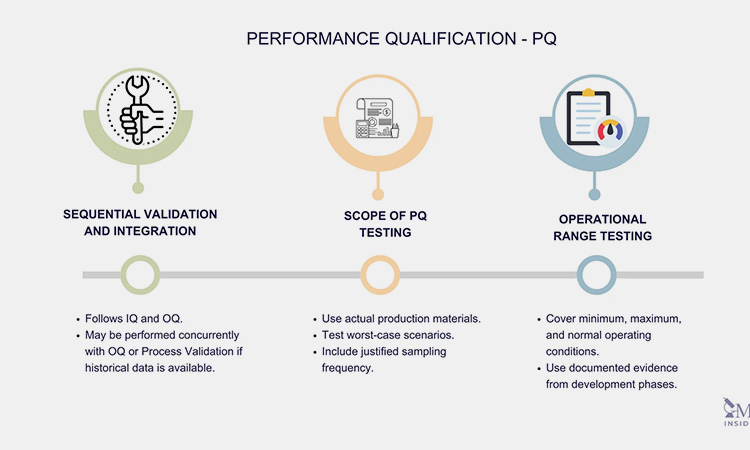
                      Scroll to Top