
Regulated-Industries-6

DQ, IQ, OQ, PQ In FDA-Regulated Industries: The Complete FAQ Guide In 2025

DQ, IQ, OQ, PQ In FDA-Regulated Industries: The Complete FAQ Guide In 2025

Have you ever heard of DQ, IQ, OQ, or PQ? In FDA-Regulated industries, every piece of equipment and system is hooked to proper regulations. This means each step and protocol is jotted down in specified protocols. Why is it required to have verified documentation? What happens if your equipment is missing functional specifications?

In this article, we have talked about from basic to advanced literature about DQ, IQ, OQ, PQ in FDA-regulated industries. Stay on this page if you have less time and more questions in mind. We have explained the topic with interactive illustrations and examples to make you learn about these important certifications required in FDA regulated industries.

    Add a header to begin generating the table of contents

    1.What are DQ, IQ, OQ, PQ In FDA-Regulated Industries?
    FDA

    DQ, IQ, OQ, PQ in FDA-Regulated Industries

    To understand the answer, you should first grasp what are FDA regulated industries. Actually, FDA is mainly meant to ensure safety and protection. Especially when it comes to dealing with medicines, biologicals, and items associated with health and medicine. Therefore, it is particularly important when you’re producing goods for foods, humans, pets, etc.

    So, the FDA or Food and Drug Administration USA has regulated some essential rules and regulations; and is responsible for maintaining them.

    In the pharma industry, you cannot deny accuracy and safety. You should know that any slight mishandling or error can cause potential hazards to patients. Subsequently, the reliability of equipment is paramount. DQ, IQ, OQ, PQ in FDA regulated industries is providing a promising way that certifies the current equipment and procedure is compiled with reliable performance and results and ensuring client safety.

    2.What is DQ?
    DQ

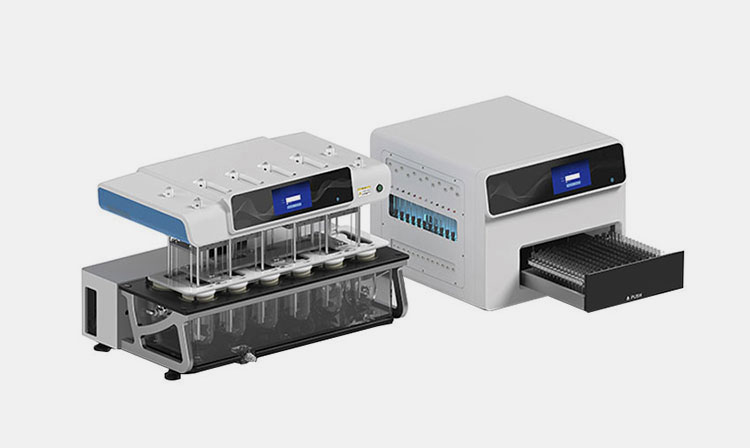
    DQ- Picture Courtesy: MGA Techonology

    This is ‘design qualification’ which is utilized in several industries like pharmaceuticals. It ensures that the system design is exactly according to regulated specifications. The DQ is mainly carried out when you are at the beginning of any project development; that promises you the machine is up to the mark with high-quality standards.

    The DQ is associated with deep evaluation of design documentation involved with specifications and structural framework of the equipment. Hence it certifies that the design is complete with all possible essential documentation.

    The prime objective of DQ is to immediately identify the structural flaws of equipment. Side by side, it ensures that equipment is compliant with FDA regulations and the establishment of the records relevant to the unit.

    It is involved with the needs of users as well as user specifications. That requires a detailed design format with review and approval of the machine by various personnel such as engineering teams, quality analysts, and stakeholders. Test and simulation and risk analysis (safety features), record keeping, and final approval.

    3.What is IQ?
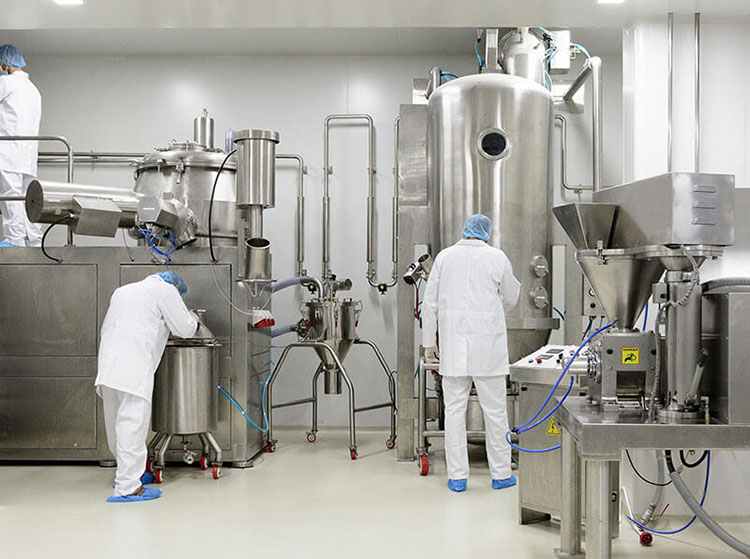
    Installation qualification

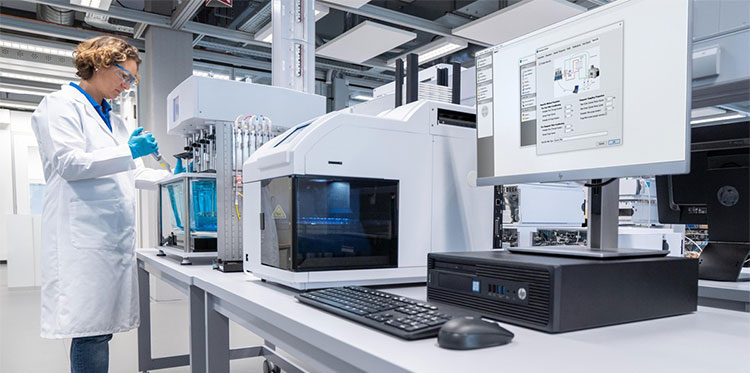
    Installation qualification- Picture Courtesy: Access Industrial Solutions

    So, once you confirm that the design qualification of equipment is up to the mark therefore the next task is the installation of the unit. Do you know how your system implements the experimentation? It is all based on the right installation.

    FDA-regulated industries mainly focus on IQ whenever install a piece of new equipment and it is called an ‘Installation Qualification’ or IQ. It is actually a verification document that certifies that your system is qualified and configured as it is promised in its specification. For that, you can mostly refer to the installation checklist mentioned in the manual of the machine-generated by the manufacturer.

    Moreover, the IQ that is involved with methods should be well-documented and included in the ‘Validation Master Plane’ or VMP.

    The compulsory steps involved for IQ are mainly outlining the methods and conducting assessments. That is mainly involved with the verification of the machine and things associated with it. It is included with the specifications given by the manufacturer. Moreover, the installation conditions such as area and temperature around the equipment, electrical essentials, and software installation.

    4.What is OQ?
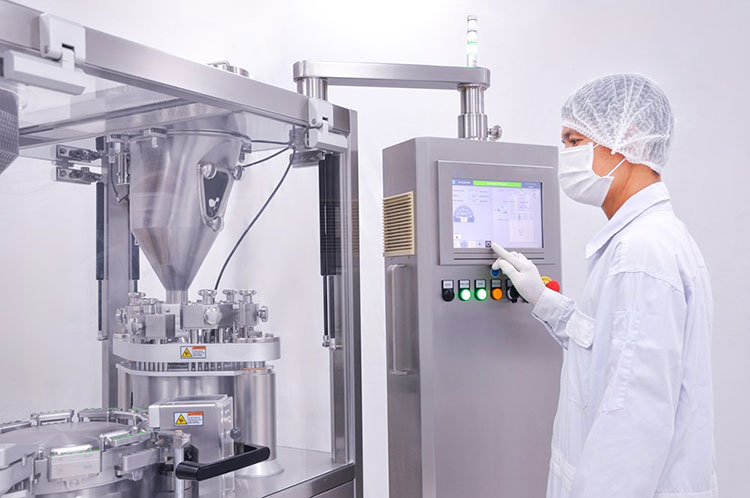
    Operational Qualification

    Operational Qualification- Picture Courtesy: Tien Tuan Pharmaceutical

    Whenever you check IQ, it is parallel to performing the OQ or operational qualification of the equipment. As its name shows, it is an assessment to analyse the operational performance of the equipment as per your needs. The purpose of this verification is to ensure that whatever your manufacturer claimed is really performing in your functional range. This means it is mainly performed to identify the properties of the unit and ensure its seamless operation.

    To perform this test, the plan sheet provided by the manufacturer or regulated body is properly checked and accepted by the facility once the test is successfully conducted.

    The essential steps for OQ involve a thorough inspection of the unit. It means, the inspection of software and hardware, how to start and run the test, and assessing the safety protocols. Moreover, the test run is conducted to ensure that the machine is providing you the fruitful results hence you can confidently run the machine hereafter.

    5.What is PQ?

    Performance qualification

    Performance qualification- Picture Courtesy: Contract Pharma

    This is the final step which is assuring the absolute functional capability of the equipment. The performance qualification or PQ promises you that the unit will offer a consistent output for a long period of time.

    The pharmaceutical industry considers PQ as a major asset. Consistency and high throughput are what every pharma looks for to generate high-production batches and meet healthcare needs. Therefore, the test ensures that the functionality, installation, and efficacy of the machine are up to regulatory standards.

    6.Why DQ, IQ, OQ, PQ In FDA-Regulated Industries is essential?

    Every FDA-regulated industry like medicine, pharmaceuticals, research, biologicals, and others cannot work without addressing specified compliance requirements. So, there are multiple reasons to implement DQ, IQ, OQ, PQ in FDA-regulated industries. What are those points? We have discussed them below so have a look at them.

    You Can't Ignore FDA regulations

    Ignore FDA regulations

    FDA regulated Protocols

    As per FDA statement in 21 CFR Title 211.63, the equipment utilized for processing, packaging, and overall manufacturing of medicinal items must be in accordance with the correct in structure, and sizes, and up to suitability of the facility to bring operation and for cleaning as well as maintenance. So, it is the responsibility of the manufacturing company to bring you unit with up-to-the-mark features.

    It should be provided with detailed instructions and usage properties. That includes how to operate, clean, and maintain the unit to give it an effective application.

    Make Patients Safe & Ensure Quality Product

    Ensure Quality Product

    Safe and quality preparation- Picture Courtesy: Makinew

    When you’re manufacturing any medicine or product in your plant; slight mishaps, mishandling, or problems in the unit can lead to severe consequences for you and the patient. This is commonly referred to that equipment which is new without any history. Therefore DQ, IQ, OQ, PQ in FDA regulated industries make you pretty safe from failure in performance or error in the making of medications.

    It creates everything in well-documented pieces of evidence and verifies the hardware and software of the units. So, what’s next? It makes lesser chances of incorrectness and makes you ensure that equipment is passed with design till its final performance with reproducible output. Thus, you can ultimately get a good quality product.

    Your Facility is Compliant

    Quality standards

    Quality standards- Picture Courtesy: Microsoft news

    Every pharmaceutical industry must be compliant with FDA regulations. Following the documentation for equipment installation meets all needs that are set up by FDA. The verification for DQ, IQ, OQ, PQ in FDA regulated industries ultimately minimizes the chances of batch withdrawal or recalls and saves your budget.

    No Failure and Early Management
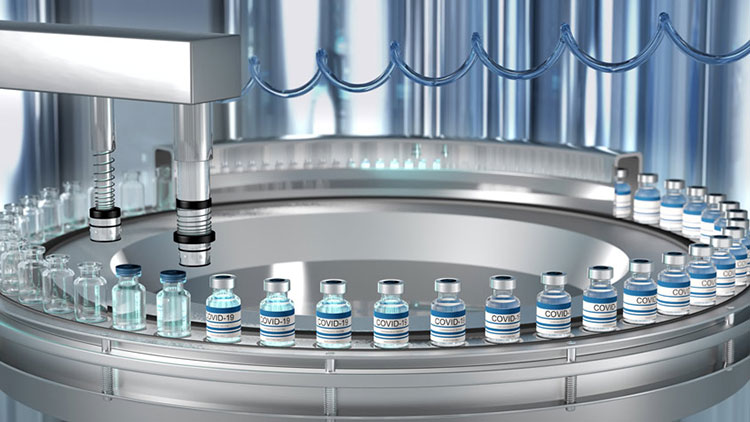
    Minimize interruption

    Minimize interruption- Picture Courtesy: WIPO

    Every manufacturing industry keeps processing its protocols 24/7. Hence, there are high chances of failure. The strict adherence of DQ, IQ, OQ, PQ in FDA regulated industries helps you in the identification of issues at the beginning.

    When you consider DQ, it assures you that the purchase unit is strictly designed with quality standards. Similarly, IQ, OQ, and PQ assessments are thorough testing assuring everything about the processing and future protocols.

    Therefore, once you’re well aware of every stage will have high confidence in operating, identification of problems, and early troubleshooting.

    Record Keeping
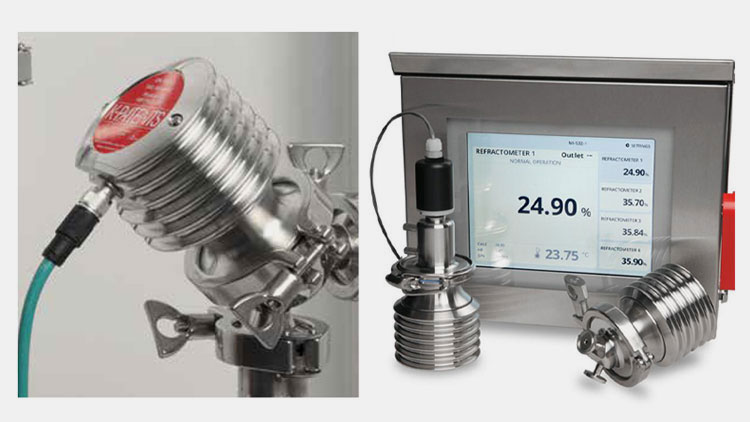
    Verified data

    Verified data- Picture Courtesy: Vaisala

    Implementation of DQ, IQ, OQ, PQ in FDA regulated industries allows verified records related to equipment from its making to processing. You can easily trace the history required for various activities in pharmaceuticals and related companies. So, you can have a clear picture with easily identifiable issues about the unit.

    Offering Good Training and Knowledge

    Good Training and Knowledge

    Good knowledge- Picture Courtesy: Technopharm

    Bringing a new setup into your facility will allow your employees to facilitate training and gain good knowledge during the DQ, IQ, OQ, PQ approach. By this, a group of workers understands the protocols, relevant troubleshooting, and extensive knowledge that ensures your team is well aware of the work process and handling.

    Good relationships with Vendor
    Good relationships with Vendor

    Good relationships with vendor- Picture Courtesy: Pharmaceutical Technology

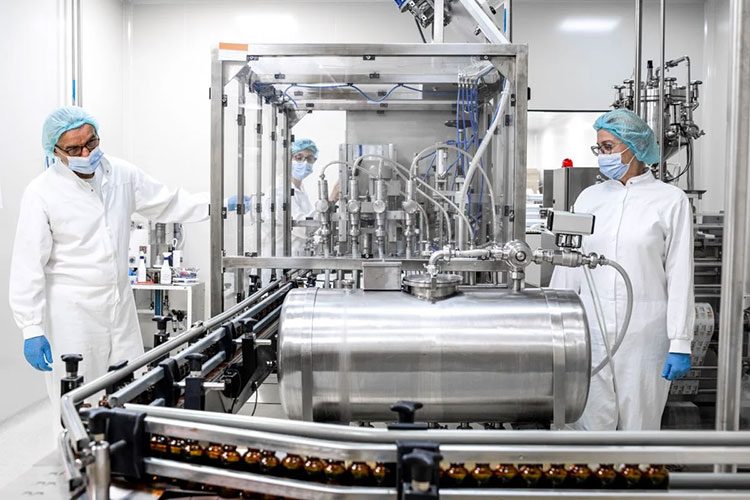
    During DQ, IQ, OQ, PQ, and verification, you may discuss general matters and discussion about equipment closely. It directly opens the gateway between you and the vendor and can carry it out for long-term professional relationships.

    7.What type of sectors utilizes DQ, IQ, OQ, PQ In FDA-Regulated Industries?

    You cannot ignore the implementation of DQ, IQ, OQ, and PQ in FDA-regulated industries. What are those industries? Let's discuss how each of these plays a significant role with examples accordingly.

    Pharmaceutical Industry
    Pharmaceutical Industry

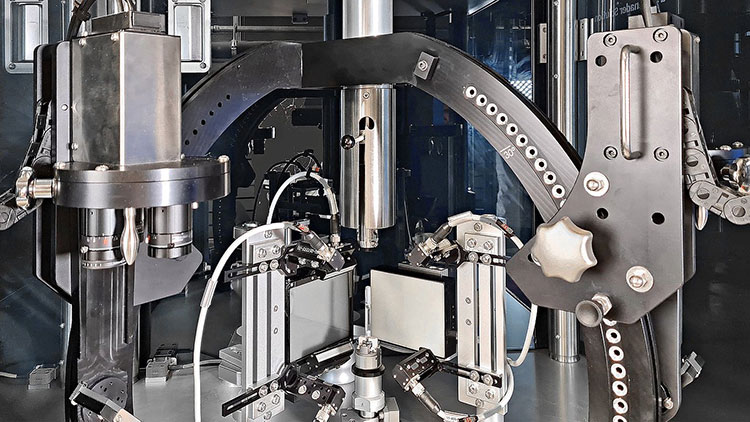
    Pharmaceutical equipment- Picture Courtesy: Korber Pharma

    This is the major core to produce medicines. Whether oral, parenteral, topical, or powder medicines; a minor error can result in risky outcomes. It directly affects your expenditure and delay in processing. Therefore, whenever a new set of equipment is installed in a pharma facility.

    The series of tests DQ, IQ, OQ, and PQ are followed to ensure conformity with regulatory standards. This general qualification activity guarantees that the manufacturing process satisfies all requirements and provides you with quality products.

    Biotechnology Industry

    Biotechnology Industry

    Biotechnology assays- Picture Courtesy: faCellitate

    In the biotechnology industry, absolute working is needed when dealing with delicate assays, sampling, and cell culture procedures. The necessities for DQ, IQ, OQ, PQ are paramount as the functioning equipment for biotechnology tasks ensures reliable and efficient performance.

    Due to conduction with sensitive testing related to genomic alteration, molecular level, cellular level, and blood sampling in biotechnology; the safety, effectiveness, and purity must be maintained by strict following up of FDA regulations.

    Medical Devices Industry
    Medical Devices Industry

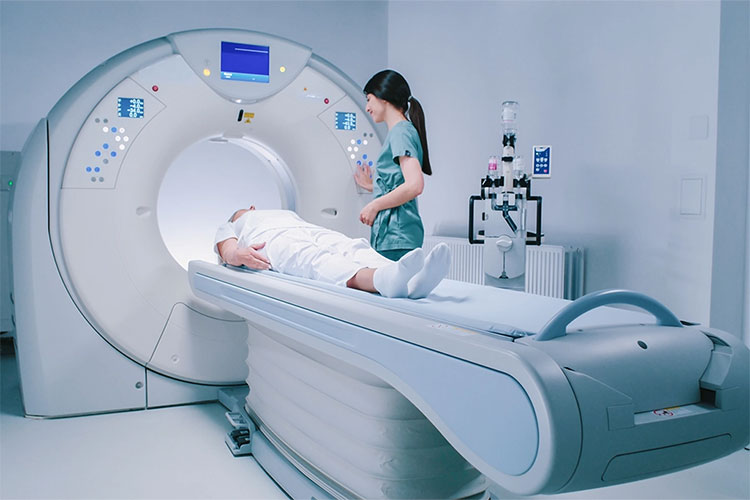
    Medical Devices Industry- Picture Courtesy: SJRA

    It is essential to qualify the equipment used for manufacturing and packaging procedures for the medical devices industry. However, under real conditions of production, it will deliver medical devices and parts with high quality, thereby, the products manufactured will be totally safe for patients and end-users.  For example, X-ray machines, CT- Scanner, implantation devices, or radiology medical equipment.

    Food Industry

    Food Industry

    Food industry- Picture Courtesy: Redline

    In the food sector, safety related to raw ingredients, manufacturing, filling, and packaging plays a significant role. For this, your equipment must have adhered to DQ, IQ, OQ, and PQ documentation to ensure the system is well-functioning and compliant with regulatory requirements.

    Nutraceutical Industry

    Nutraceutical Industry

    Nutraceutical Products- Picture Courtesy: Market Research Intellect

    Just like pharmaceuticals and food, the nutraceutical industry also undergoes strict testing and production of goods related to human consumption. Most of us the equipment used in nutraceuticals is derived from natural sources that offer wellness to you.

    Therefore, DQ, IQ, OQ, and PQ confirm that the design of the machine conformed with all the requirements and conditions needed for manufacturing products under the required conditions.

    Veterinary Industry

    Veterinary Industry

    Veterinary Industry

    There is a surging need for good quality veterinary products nowadays. This field of production is equally important as the above-mentioned FDA-regulated industries. The life and health of animals must be dealt with by medicines or energy-boosting products that are manufactured with strict conformities by regulatory bodies.

    The DQ, IQ, OQ, and PQ documentation significantly emphasized that the current units used for the preparation of products, such as solid dosage, parenteral, or liquid formulation for your animals are safe and prepared by FDA-approved equipment.

    8.How to execute DQ, IQ, OQ, PQ In FDA-Regulated Industries?

    Typically, the pharma and related FDA-regulated industries focus on the following steps for the execution of DQ, IQ, OQ, PQ. For instance:

    DQ
    Design qualification

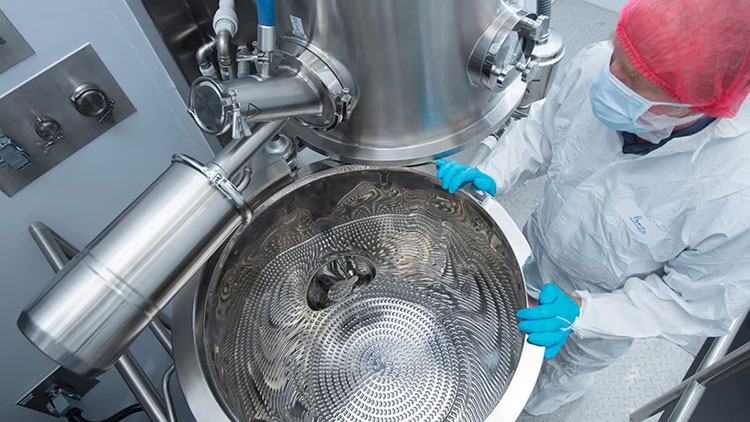
    Design qualification- Picture Courtesy: GEA

    DQ is mainly verified by the following three steps.

    Step 1 Here, it involved double checking of ‘purchase order’ as well as the ‘user requirement specification’. In many cases, the purchase order is also termed as a ‘request for purchase’. The purpose of this step is to ensure that manufacturers agree to offer the following properties, specifications, and materials are mentioned in the document and well-engineered.
    Step 2 This section is hooked to detailed design specifications of the equipment that must be compliant with the drawing as presented to their customers and provided with updated features.
    Step 3 You can term it as the final step where you can have a deep inspection of the overall presentation of the product and prepare a summary related to the equipment.

    IQ

    Installation Qualification-1

    Installation Qualification

    The IQ process is verified by the following steps:

    Step 1 In this step, you will need to check the identification of the new equipment that is involved with the series, model number, type, automation, brand, etc.
    Step 2


    It is involved with the series of equipment and the qualification system as the installation requirement provided by the manufacturer's specification.
    Step 3 The entire favorable condition is verified by checking the temperature of the installation area, measuring the humidity level, monitoring the electrical connections as well as assessing the machine’s calibration. The final report is prepared once all evaluation is done.

    OQ

    Operational Qualifications

    Operational Qualifications

    OQ verification is performed to ensure that the equipment is operating properly as specified by the manufacturer. There are the following steps to make a successful OQ processing.

    Step 1 The detail of the system, its software and hardware, and its operation is evaluated to check if the operational specifications is compliant with FDA regulations.
    Step 2 The step-by-step running of the machine is conducted out and various operating tests are carried that are highlight operation with surrounding conditions. Here, you can also create intentional failure situations and simulate the error modes to learn teamwork with troubleshooting for unexpected circumstances.
    Step 3 The result is summarized by observing all major details and possible recorded deviations and the corrective actions. The elaboration of each step in OQ validates that the unit is reliable and highlights the various risks and handling to enhance operational comprehensiveness.

    PQ

    Performance qualification-1

    Performance qualification- Picture Courtesy: Chemtech

    The performance qualification steps are:

    Step 1 The real-time assessing tools are techniques are implemented to monitor the data by PQ execution, here you can integrate various sensors as well as utilize software to analyze critical parameters.
    Step 2 Furthermore, process analytical technology or PAT is offered to assess the quality and performance of the system.
    Step 3


    Also, the process capacity and design protocols are considered to evaluate the final limit of the production requirements. For example, if your recent production is 50, so in the future if it reaches above 100 then the PQ conduction test would verify that the process would be successful without affecting the quality of products.

    9.What are the challenges of maintaining and designing DQ, IQ, OQ, PQ In FDA-Regulated Industries?

    With DQ, IQ, OQ, PQ In FDA-regulated Industries' usual strategies, you also encounter some challenges. We have discussed some major issues and their solutions.

    Inadequate Planning and Scope Definition

    Inadequate Planning and Scope Definition

    Complex planning and scope

    Problem Solution
    One of the major issues in initial planning is vague or ambiguous requirements to be addressed by qualification, which most often brings gaps in documentation and compliance.

    Now, a very vague scope can introduce uncertainty in particular validation needs, and such things may eventually be left out of the qualification process.

    therefore, stress over scope definition and clarity of requirements. Teams often compromise full documentation in order to meet very tight deadlines and miss all the critical steps.

    Precise Requirements Definition
    Engage with stakeholders as early as possible—quality assurance, engineering, and operations teams—to make sure that all requirements are clear and complete from the beginning so that all aspects of the validation process are understood by everyone involved.Clean Scope Documentation

    Develop a Validation master plan (VMP) that defines the scope of qualification, objectives, timelines, and contact responsibilities for each phase of qualification.

    The plan is supposed to be a roadmap that will cover the topic clearly and result in full compliance with standards that have been laid down by regulatory bodies.

    Clearly defining the scope and involving stakeholders leads to reduced risks of compliance and documentation gaps for companies.

    Requirement and Fulfilling of each Phase
    Requirement and Fulfilling of each Phase

    Utilization of regulation- Picture Courtesy Pharmaceutical Processing world

    Problem Solution
    Each qualification including DQ, IQ, OQ, and PQ has different requirements and expectations, thus making the general process somewhat complicated. Since regulatory bodies like the FDA have to issue constant upgrades, it can get complicated for organizations to keep up with new norms.

    Standards and guidelines of regulatory agencies, which are very often updated, may leave some gaps in qualification as companies cannot update fast enough.


    Risk-based approach
    DQ, IQ, OQ, and PQ efforts should highlight the critical parameters and processes. Therefore, most risks need importance in the consideration that it complies with and is safe for the product being produced.Continuing Education and Training
    Regular and continuing training programs should be implemented so that all personnel will be current on all regulatory requirements, best practices, and new or additional standards or guidelines issued by agencies such as the FDA.

    Regular regulatory review
    It should be set up to have a continuous process of reviews of changes in regulations and adapt qualification procedures accordingly to keep pace with the changes in standards and minimize the risk of nonconformity. Interpretation of these updates by a dedicated team or system would have been an immediate prerequisite for adaptation.

    Data and Documentation Management Challenges

    Data and Documentation Management Challenges

    Data and Documentation Management

    Problem Solution
    The DQ, IQ, OQ, PQ may generate huge amounts of data, making it very hard to manage accurately and in a timely manner, hence increasing risk for errors and delay in compliance.

    Heavily documented needs can sometimes be incomplete, inconsistent, or simply inaccurate records. The lack of information about suppliers and manufacturers, coupled with the validation process, has hollowed credibility as well as compliance.


    Advanced-Data Management Tools

    Think then about the modern data management solutions that would simplify collection, storage, and analysis. Even the usage of electronic systems must improve accuracy, tracking, and reporting for requirements.

    Document Management System

    Secondly, a comprehensive document management system should be adopted and standardize formats of documents automatically, whereby all documentation processes are automated. This minimizes the chance for error and increases consistency, further simplifying retrieval and review during audits or regulatory checks.

    Inadequate or Missing Reports

    Inadequate or Missing Reports

    Report issues- Picture courtesy: Zamann pharma

    Problem Solution
    Reports may be incomplete or lack clarity, hindering effective decision-making and compliance verification.


    Report preparation templates

    Implement the use of templates whereby all reports have full details, easy to communicate, and are in similar formats for easier understanding.

    Inconsistent Systems and Protocols

    Inconsistent Systems and Protocols

    Inconsistent Systems and Protocols- Picture Courtesy: EESS

    Problem Solution
    In the present system, different departments follow one single procedure for validation. Most equipment types lack standard operating procedures for qualification and their results vary. It means that either the protocols are vague, wrong, or incoherently defined. Thus, inaccuracies are introduced within the qualification process. Standard operating procedures (SOPs)
    Standardize all the SOPs. This shall include qualification for a uniform process and documentation across this will certainly assure consistency and rule out errors from the fragmented processes.

    Continuous Monitoring and Review

    Continuous Monitoring and Review

    Continuous Monitoring and Review

    Problem Solution
    Maintaining control and oversight overqualified systems can be challenging, leading to potential lapses in compliance.


    Standard Review Procedures

    Implement a process of continuous monitoring and auditing so that the qualified system continues to remain in compliance with regulatory standards and operational requirements.

    Conclusion

    The path of adding new equipment in your medical facility, pharmaceutical, biotechnology, etc is absolutely striking with challenges. But if you follow the right strategy and ideal resources that are compliant with FDA regulation can limit the obstructions. We would suggest if you have any problem or need to seek some advice, then always approach the right solution and experts who can solve the complexities during the regulatory issues. Why not contact us? We are a team of advisory professionals and manufacturers who strive for your support and guidance. For more information or FDA-regulated equipment for your production line, contact the Allpack team now.

    Don't forget to share this post!

    CONTACT US

    Tell us your raw material and project budget to get quotations within 24 hours.

    WhatsApp Us: +86 156 0710 8630

    Invalid Email
    Invalid Number

    DQ, IQ, OQ, PQ In FDA-Regulated Industries: The Complete FAQ Guide In 2025 Read More »

    Chlorine Tablet Press Machine

    Chlorine Tablet Press Machine: The Complete Buying Guide In 2025

    Chlorine Tablet Press Machine: The Complete Buying Guide In 2025

    Wait a second! Are you in search of a guide that gives you whole information about chlorine tablet press machine? Here you got it! This ‘Chlorine Tablet Press Machine: The Complete Buying Guide In 2024’ will cover every aspect of the main theme. Starting from its introduction, it will tell you its benefits, applications, elements, operation method, maintenance and important factors that you should consider before buying this machine.

    Let me tell you the questions this guide will deal with:

      Add a header to begin generating the table of contents

      1.What is a chlorine tablet?

      chlorine tablet

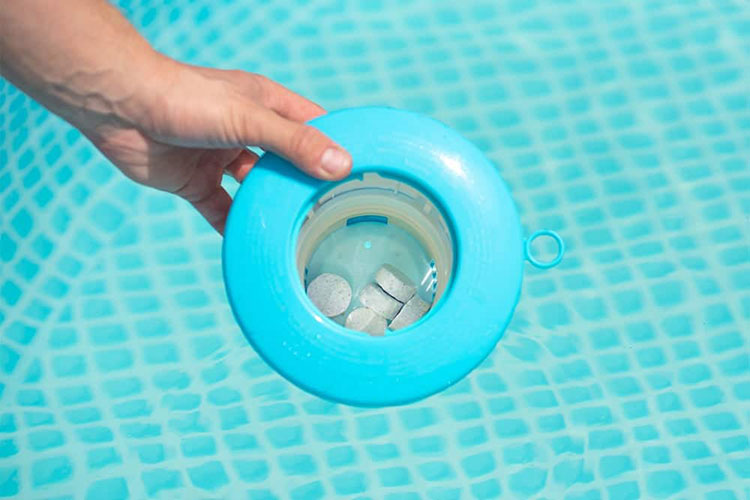
      Chlorine Tablets Use for Pools

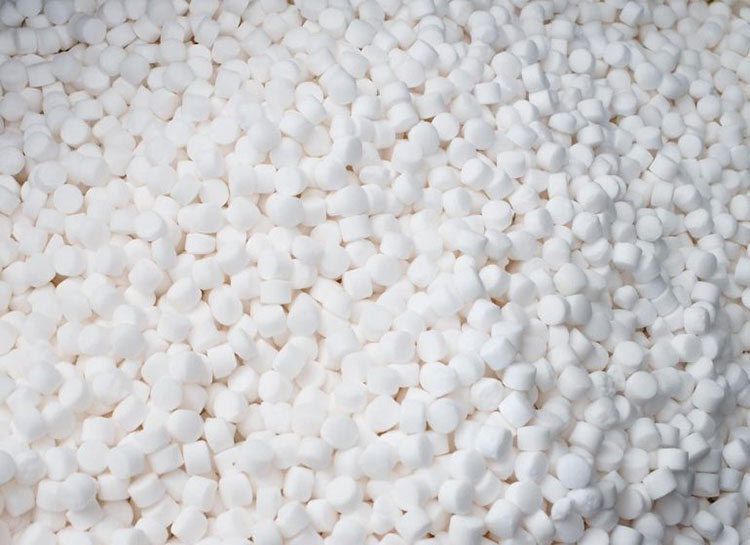
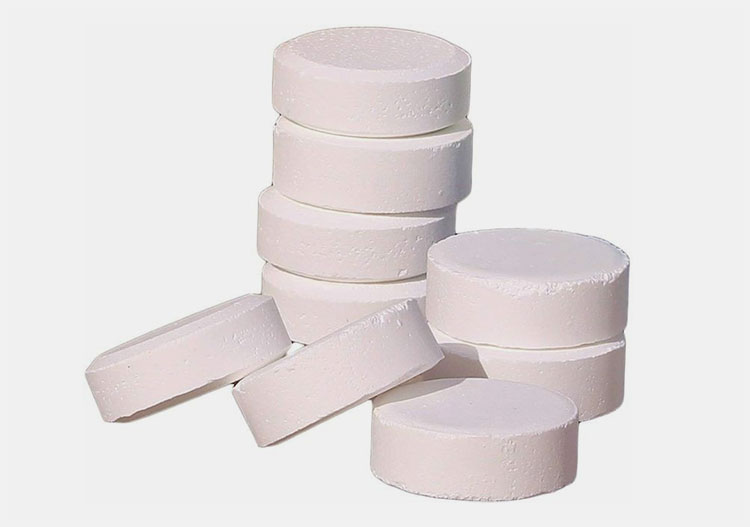
      A chlorine tablet is a compact form of chlorine gas prepared in tablet form for suitable dosage. It is used for removal or putting an end to the presence of microorganisms in water.

      Chlorine tablets are made for the purpose of cleaning water or any other liquid. It functions best for the disinfection of water which works in the release of chlorine from water from time to time. Its composition involves dichloroisocyanuric acid and trichloroisocyanuric acid which implies that it contains chlorine in abundance i.e. 90-95%.

      2.What is a chlorine tablet press machine? 

      chlorine tablet press machine

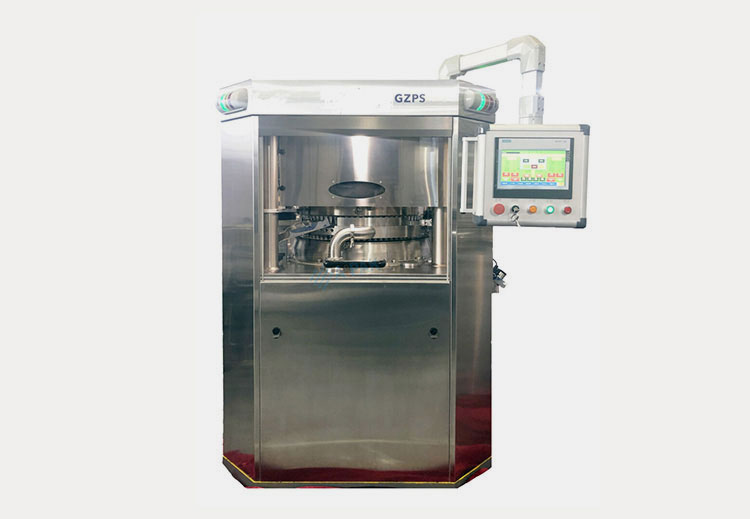
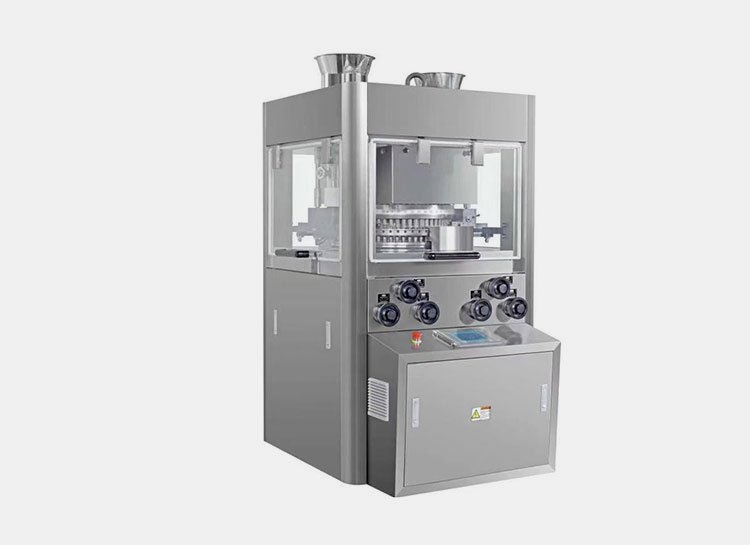
      Tablet press machine: Picture Courtesy: AIPAK

      A chlorine tablet press machine is also termed a ‘ chlorine tablet punching machine’. It is a highly specialized machine that makes the task of making chlorine tablets easy as well as automated. Hence it automatically compressed the dosage powder into compact form of tablets having well-proportioned size and uniform dimensions.

      Basically, it helps in pressing the granular substances or tablet dose which is in powdered form. In this way, the powder or grainy substance has its solid shape and compact size. Moreover, this innovative machinery designs hollow containers that is called mold and utilizes it to give specific shape and size to the chlorine tablets.

      3.How does a chlorine tablet press machine benefit you?

      The chlorine tablet press machine has all your desired features to benefit you in many ways;

      Topmost Efficiency

      Topmost Efficiency

      Highly Efficient Chlorine Tablet

      Manual methods which were used for pressing tablets is very time as well as energy-consuming. Moreover, these traditional methods are more likely to be erroneous. But presently, chlorine tablet press machine makes this task trouble free and effortless. It works smoothly along with topmost efficiency.

      Operational Consistency

      Operational Consistency

      Consistency in Process

      With a PLC  control device installed in the chlorine tablet press machine, it enables the operation to be done more competently. Hence you won’t face any inconsistency in tablet dose during the whole process.

      Maximum Degree of Precision

      Maximum Degree of Precision

      Error-Free Chlorine Tablet Production

      Its automated operation make certain the process is aligned with maximum degree of accuracy and precision. It has an automatic system of detecting missing doses to keep the tablet dosage uniform throughout the process.

      High Quality Production

      High Quality Production

      Greater Production

      Chlorine tablet press machines is economical for small enterprises as well as big companies because it can be installed in less space as compared to other heavy machinery. Hence giving its owner more benefit with its high production capacity in a short period of time.

      Alternativeness in Dimensions

      Alternativeness in Dimensions

      Variety of Products

      Moreover, industries can reap financial rewards from  chlorine tablet press machine because they can deal with a variety of materials to be pressed. This variation gives them the opportunity to enter into various businesses with this single advanced machine.

      4.What is the industrial use of a chlorine tablet press machine?

      Today’s era is the age of seeking multitasking machines so you may get multiple advantages. The same is the case for machines, one searches to get solutions offering less human intervention, and giving more production together with producing varieties.

      Many industries are searching for the type of automatic machinery that can be used for different purposes or in different industries. You can invest in chlorine tablet press machine for various commercial applications. Let’s see which businesses can use this machinery;

      Pharma Industry

      Pharma Industry

      Pharmacy Drug Health Tablets

      Pharma-corporations deal with the production of medicines, and they provide these medications with safe packaging. As this is concerned with the patient’s health and people’s life, it is a very delicate business to deal with.

      A tiny defect in dose can lead to adverse effects on patients’ s physiology and affect the reputation of the industry.

      But a chlorine tablet press machine is a quick fix for these issues. It can press the tablets in bulk meanwhile maintaining the quality standards, dose, and consistency of your product with its highly efficient devices.

      Nutraceutical Industry

      Nutraceutical Industry

      Nutrients Supplement

      The Nutraceutical industry needs chlorine tablet press machine for preparing supplements of fruits, vegetables, or other nutrients in this form.

      The chlorine tablet press machine is useful in this sector to produce nutrient supplements from a mixture of different things such as minerals, vitamins, phytochemicals, plant extracts, or botanical compounds etc.

      Chemical Sector

      Chemical Sector

      Tablets Use as Fertilizer

      The chemical sector has its own applications from chlorine tablet press machines. The industry uses varieties of pesticides, antiseptics, and decontaminating agents including phenyl, fertilizers etc. These all items are converted into tablet shapes having different sizes for more convenient use. So, chemical industries can install this machine for the usage of these products in tablet form so that an appropriate amount of dose is taken.

      Food industry

      Food industry

      Food Wash Cleaning Tablets

      These machines are useful for making food goods that are generally used in compact form. Therefore, it is widely spread throughout the globe in the food processing or also catering industries. It is highly recommended to use for making compact food products such as mint, confectioneries snacks etc.

      5.Does a chlorine tablet press machine deal with other items?

      Chlorine tablet press machine can deal with a variety of substances and transform them into tablet form but be aware! It can not convert all your powdered items into compact form such as tablets.

      The automatic chlorine tablet press machine is capable of providing a compact shape to the powdered substances efficiently. Moreover, granules can also be pressed together to form a tightly packed tablet dose.

      Loose Particles

      Loose Particles

      Picture Courtesy: mcePharma a.s 

      Many items are needed in specific doses that are basically in powdered form or in loose particle shape. These loose particles are present in different sizes and shapes. The chlorine tablet press machine helps in pressing this powdered form into a compact structure called a tablet.

      A tablet is a suitable form for powder because it contains the appropriate amount of dosage needed for any purpose.

      Granules

      Granules

      Nutrient Supplements

      Granules are also particles in nature but their size is smaller than a pebble or bigger than a sand particle. But this machine with all its latest technology, can turn granules into tablets with much ease and comfort.

      6.What are the major parts of a chlorine tablet press machine?

      A chlorine tablet press machine is composed of various components featured with innovative traits. These components are listed below;

      parts of a chlorine tablet press machine

      Components of Chlorine Tablet Press Machine: Picture Courtesy: AIPAK

      Hopper

      The material is loaded into the hopper of the feeding system present in a chlorine tablet press machine. An optimum amount of raw material is used to fill the hopper making certain uniformity in the whole manufacturing process of chlorine tablets.

      Die Cavity

      This is one of the most significant components due to its vital role of compressing the powder into compact shaped tablets. The die cavity is designed in such a way that makes it compatible with shape or size of tablets, its diameter or thickness etc.

      Feeding Paddle

      The feeding paddle is the component that feeds chlorine powder into die cavity. Meanwhile, it ensures the required weight or dimensions of a tablet along with its quick rotation.

      Punches

      Punches are primarily inserted to press the powder into tablet form. The chlorine tablet press machine consists of two punches named upper punch and lower punch. Both have their own function. The upper punch moves in a downward direction to press the powder and give it a compact shape. While the lower punch moves in an upward direction to throw out the compressed tablet.

      Cam Tracks

      Cam tracks are induced into the chlorine tablet press machine to guarantee that both the upper and lower punches are functioning in a normal state.

      Ejection Cam:

      Ejection Cam is the component that becomes functional when the powder is pressed by the punches and the chlorine tablet is ready in a compact design. It moves the prepared tablet in upward direction by guiding the lower punch. In this way, it ejects the chlorine tablet from the die cavity.

      Capacity Control

      Capacity control is induced to keep the tablet in the die cavity till the time it is compressed by the punches.

      Pre-Compression Roller

      Pre-compression roller are there to release the surplus air captured in the die cavity. It performs this function by providing these with the compression force during the process.

      Main Compression

      Now, this is the component that ensures the chlorine tablets’ firmness, density, or its endurance ability. It gives the finishing compression force to give it high stability or durability.

      Discharge Chute

      The primary function of the discharge chute in a chlorine tablet press machine is to convey the prepared and compressed tablets from the main compression towards the tablet collection centre.

      Operational Panel

      This is the control centre of a chlorine tablet press machine which is used to set various parameters such as; diameter, pressure level, or thickness of the product.

      7.How does a chlorine tablet press machine work?

      The chlorine tablet press machine’s working principles depend on the type or model of the machine. But here you will study the general mechanism in which it works.

      There are four (4) fundamental stages involved in this process.

      Filling

      Filling

      Picture Courtesy: Shanghai Tablet Press Mechanics

      It is the first step to initiate the process of chlorine tablet compression. The hopper is filled with the powder which uses free paddles to transfer it to the die cavity. The powder is distributed evenly or uniformly into each die.

      Metering

      Metering

      Picture Courtesy: Herun Machinery

      This is the second phase of the chlorine tablet pressing process. This step is significant because it is concerned with the discharge of extra powder from turret. In this way it controls the quantity of powder as to ensure right quantity. Metering, basically allows the correct dose for chlorine tablet pressing.

      Compression

      Compression

      Picture Courtesy: LinkedIn

      Compression is completed in two phases;

      Pre-Compression Phase

      This phase is subjected to lowering the upper punch due to which the ingredients present in the die cavity are applied with tolerable pressure. This aims to form a compressed mass from powder called slug.

      Slug helps in removing extra air gaps from the powder which is base for pre-compression phase.

      Main-Compression Phase

      This phase is characterized by applying  additional pressure over the slug by upper punch. It results in the additional compression of the powder and finally in this phase the powder is changed into a compact form i.e. tablet. In simple words, it gives final shape to the powder and transformed the powder into tablet form.

      Ejection

      Ejection

      Picture Courtesy: Wanbin Ren

      Once you are done with the compression phase, tablets now enter into the next phase which is ejection. For this purpose, the lower punch moves upward and let out the prepared chlorine tablet from die pocket. Lubricants are applied for smooth ejection of the tablet from die cavity which helps in preventing the process from stopping or the tablets from jamming or clogging.

      8.What are the various types of chlorine tablet press machine?

      You can find a wide range of chlorine tablet press machine according to your production requirements. These are different from each other in terms of their structural design, capacity for production, speed, tablet structure or shape etc. Lets learn the most important chlorine tablet press machine with its brief description.

      Single Punch Chlorine Tablet Press Machine

      Single Punch Chlorine Tablet Press Machine

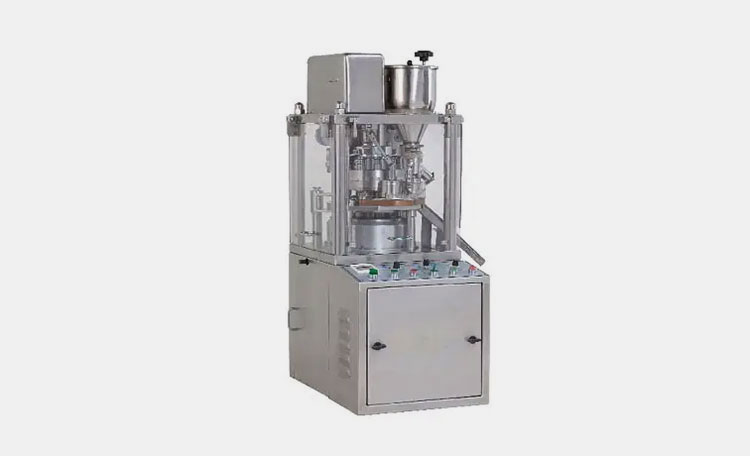
      Allpack Single-Punch Automatic Tablet Press Machine

      Single automatic chlorine tablet press machine is the machine which has simplest configuration or design. It is suitable for the small- scale businesses whose production capacity is limited.

      It is very simple to operate as it has a set of two dies and a punch that performs the function of pressing the powder into compact tablets in uniform manner. This machine has the options for you to get different tablets by just changing its parameters of punch or dies.

      It works in the following way:

      • Set the dies and punch with required parameters.
      • The powder moves through feeding hopper.
      • After that, dies fill with powder.
      • Here in the dies, the powder will be applied with necessary pressure from punches.
      • And pressure turns the powder into tablet.
      • Finally, the tablet is ejected in the form of compact chlorine tablet.

      Rotary Automatic Chlorine Tablet Press Machine

      Rotary Automatic Chlorine Tablet Press Machine

      Rotary Automatic Chlorine Tablet Press Machine: Picture Courtesy: AIPAK 

      Rotary automatic tablet press machine is available in many varieties from basic to most advanced one. These variants are different from each other with regard to its level of automation and the process flow rate.

      The machine has applications in a wide range of industries due to its expeditious speed and unfailing net results. It is its high-efficiency that make it able to deal with millions of tablets in a single hour meanwhile retaining the tablet quality.

      Let’s learn how it works:

      • It starts with the filling of powder into the hopper where it undergoes wet granulation procedure.
      • In the second step, the required amount of powder is poured into the cavity.
      • In third step, the basic process of compression occurs where required amount of pressure is exerted onto the powder and it turns into tablet.
      • The fourth step is related to the discharge of the prepared tablet when lower punch rises in upward direction.

      Bilayer Tablet Compression Machine

      Bilayer Tablet Compression Machine

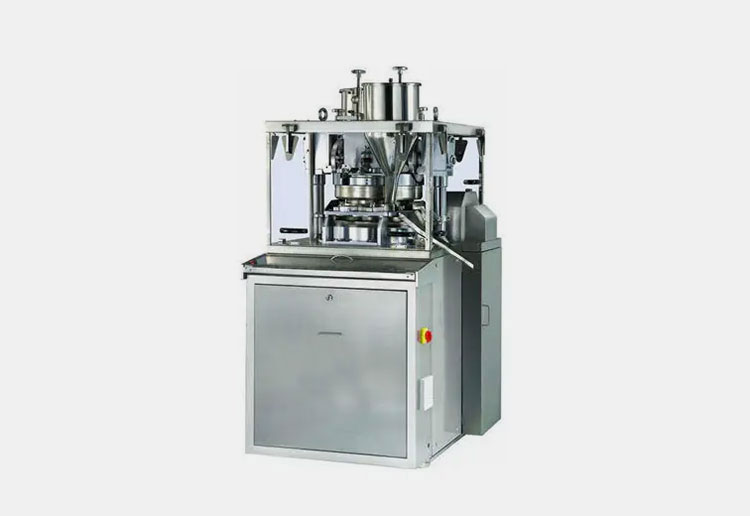
      Bilayer Tablet Compression Machine- Picture Courtesy: deepujpharmamachinery

      Now this machine has got some interesting features and it is specially designed for making bilayer chlorine tablets. It makes bilayer tablets by contraction or pressing of two formulations in each separate tablet. Pharmaceutical, nutrient-specific businesses, or food sector are using this machine for large-scale production due to its innovative technology.

      Its working procedure is discussed below:

      • At first the die cavities are filled with first formulation and here it is compressed with punches.
      • Now, these die cavities are moved with turret and loaded with second formulation.
      • Here the function of main compression begins which exerts pressure over these formulations and give them a compact shape i.e. bilayer tablets.
      • After the formation of tablets, these are ejected one by one from the die cavities.

      Multilayer Chlorine Tablet Press Machine

      Multilayer Chlorine Tablet Press Machine

      Multi Layer Chlorine Tablet Press Machine: Picture Courtesy: deepujpharmamachinery

      If you want one of the most modern chlorine tablet press machine featured with innovative traits, here is multi-layer chlorine tablet press machine. It has unique capability of making three-layered chlorine tablets where each layers’ dose is formed with high precision. It ensures this high-precision dosage with the help of its weighing or checking features.

      The operative steps of this machine are the following:

      • The die cavities are loaded with first kind of powder to be compressed by punches.
      • After pressing the first powder, the turret brings second powder into the feeding cavities and pressed with the help of punches.
      • Once second powder is pressed uniformly, two layer are made.
      • Now, third powder is filled in these same die cavities and compressed altogether with other two powder layers.
      • In this way three-layer chlorine tablet is produced and then discharged through the discharge chute.

      9.Which maintenance techniques are necessary for a chlorine tablet press machine?

      The following maintenance techniques help you in decreasing the chances for malfunctioning of the machine during the production procedure. These techniques can be exercised on daily, weekly or monthly basis.

      Regular Clean-up

      Regular Clean-up

      Picture Courtesy: Shang Hai Shi

      Cleaning the machine regularly and dusting it, ensures its efficiency for a longer period of time. It is very important to clean or dust all the components including hopper, punches dies to prevent any trouble during compression tablets.

      Lubrication

      Lubrication

      Apply good lubricants over the parts such as rollers, punches, or other movable parts. It will guarantee the process to be completed in a uniform manner.

      Look for Wear and Tear Parts

      Look for Wear and Tear Parts

      Picture Courtesy: Pharma Efucat.Net

      It is better to keep a check on the machine regularly and look for its damaged or non-functional components. If you find any, replace them with the new ones to keep it working smoothly. Moreover, in this way, you will prevent further damage to the machine.

      10.How to troubleshoot the problems with the chlorine tablet press machine?

      While working with a chlorine tablet press machine, you might encounter some unfortunate incidents that could stop the manufacturing process or slow it down. But do not worry about this as every problem has its solution. Some are very common troubles related to these machines that have easy solutions, so let’s learn about it.

      Chlorine Tablet Capping

      Chlorine Tablet Capping

      Picture Courtesy: Romaco

      Chlorine tablet capping refers to the breakdown of the layers of the tablet during the production process. Its main cause is the entrapment of air in the powder. When excessive air is unable to get out during the compression of the powder, this situation arises.

      Solution

      By increasing the time of stay during the compression stage helps the powder to release extra air which otherwise causes chlorine tablet capping. The resetting of punches, or dusting or cleaning of dies will also be helpful in tackling this issue.

      Powder Sticking

      Powder Sticking

      Powder Sticking: Picture Courtesy: Scientist Live

      Sometimes you find the powder particles to adhere with the heads of the upper or lower punches.  It's quite irritating as it slows down the process of compression of tablets. It may be caused by to presence of moisture in the powder particles. While it may cause the other way round, for punches heads or tips may also catch the particles.

      Solution

      The solution for this problem is to dry the powder adequately or to increase the time for compression following its wet granulation. Additionally, it is recommended to polish the punching tools frequently. It will minimize risk of sticking of powder with punches’ tips.

      Production of Attached Chlorine Tablet

      Production of Attached Chlorine Tablet

      Chlorine Tablets

      This is the condition when tablets are tightly attached to each other and unable to get separated. It happens due to the overuse of binding agents, as it results in attaching the sides of tablets to each other.

      Solution

      The best solution for this issue is to use the appropriate quantity of binding agents. Reducing the lubrication is also a good thought to avoid this condition.

      Tablets’ Fragility

      Non- Fragile Chlorine Tablet

      Non- Fragile Chlorine Tablet: Picture Courtesy: Freepik

      Fragile tablets are a big challenge for the packaging or filling industries. The fragile condition of tablets makes them more vulnerable to breaking during their coating or delivery. It has three major reasons. These include:

      Limited binders.

      Compression speed goes beyond the normal degree.

      Particles having relatively larger size than normal i.e. powder isn’t in its finest state.

      Solution

      Don’t worry! It has its own tactics such as: apply binders in the ingredients in required amount, bringing the pressure to optimum level, and check the granules’ size. This will solve your problem and the production process won’t get stopped.

      11.Enumerate a list of relevant factors that should be considered while purchasing a chlorine tablet press machine?

      There are a number of factors you should consider before buying a chlorine tablet press machine. Lets discuss it one by one.

      Production Capacity

      Production Capacity

      Greater Productivity

      Go for checking the production capacity of the chlorine tablet press machine first and then decide which one to buy. It is a very crucial factor as it directly affects the profit outcome of your business.

      Efficiency

      Efficiency

      Efficient Chlorine Tablet Production: Picture Courtesy: Easy Pooling.com

      If you want to achieve your manufacturing demands on time in fact in a short period of time, you should consider the efficiency of the machine. It is important to have knowledge about the speed of the machine and its durability.

      Construction Material

      When buying a chlorine tablet press machine, you should select a machine with highly strong structural features. For example, a machine made up of stainless steel will be highly resistant to heat or corrosion. Therefore, to avoid loss of time, energy, and investment, it is better to select a machine constructed with high-quality material.

      Expert’s opinion

      Chlorine Tablets

      Chlorine Tablets: Experts Choice

      If you are a beginner in this area of business, you should give a thought to ask a consultant or expert of the machine for a better choice.

      Conclusion

      In a nutshell, buying a chlorine tablet press machine will be beneficial for you and it will open the door of success for you in many related industries. As its application shows its multi-functioning capabilities ranging from pharmaceutical industries to food and chemical corporations, now you can opt for the best one that meets your demands. If you are interested in purchasing this machine, AllPack has all the varieties of this machine. Allpack has modelled such innovative chlorine tablet press machines that have all important and useful features. If you are left with any questions in your mind then we are here to assist you. Feel free to contact us.

      Don't forget to share this post!

      CONTACT US

      Tell us your raw material and project budget to get quotations within 24 hours.

      WhatsApp Us: +86 156 0710 8630

      Invalid Email
      Invalid Number

      Chlorine Tablet Press Machine: The Complete Buying Guide In 2025 Read More »

      Protein Powder Making Machine

      Protein Powder Making Machine: The Complete FAQ Guide In 2025

      Protein Powder Making Machine: The Complete FAQ Guide In 2025

      Are you interested in knowing about protein powder making machine? If yes, you are at the right place and at the right time. We have something new and comprehensive for you related to your interest. This guide is best for you whether you are a beginner or owning a big firm.

      Protein Powder

      Protein powder making is one of the growing industries worldwide and its utilization is immense in the current age. So, please be here to know more!
      The questions we are going to discuss in this article are the following:

        Add a header to begin generating the table of contents

        1.What is a protein powder making machine?

        Protein powder-1

        Protein powder

        Protein powder making machine is a specialized apparatus used for the production of protein powder from a number of sources. Passing the ingredients through various machines, finally, fine powder is formed by utilizing this equipment. It does various tasks like grinding, vaporization of moisture from protein powder, mixing it with other ingredients, and also sometimes used in casing or wrapping for such products.

        Additionally, on the basis of these different purposes, these instruments are of different types and sizes. A magnificent machine that has a lot of use in your daily life. It fulfils the basic protein needs of everyone.

        2.What advantages do you get from a protein powder making machine?

        The machine under discussion has got advantages from its innovative technology and is beneficial for both manufacturers and buyers. Some of its major advantages are mentioned below;

        Digestive Support Drink Mix

        Digestive Support Drink Mix

        Greater Production

        High Production

        High Production

        It makes the process faster as compared to traditional methods of making protein powder. The process has been modernized escalating the production capabilities by utilizing this machine that completely complies with the increasing industrial demands.

        Product Quality

        Product Quality

        Better quality

        Its precise monitoring and command system reduces waste production resulting in a high quality product consistently. This is good for the brands to enhance their reputation among their competitors.

        Lowering the Costs

        Lowering the Costs

        Economical Choice

        Protein powder making machine is fully automatic therefore it lowers labor costs. As it is not dependent on human intervention that is liable to commit errors, this machine is highly advantageous for you.

        Variety

        Variety

        Variety of Your Choice

        Protein powder making machine can deal with a variety of products such as casein, whey, collagen, and egg protein in powder form.

        3.Where do you use a protein powder making machine? What industries require protein powder making machine?

        Protein is an essential nutrient and a major energy source makes the use of protein powder  making machine necessary at various platforms which include the following.

        Drug Industry

        Drug Industry

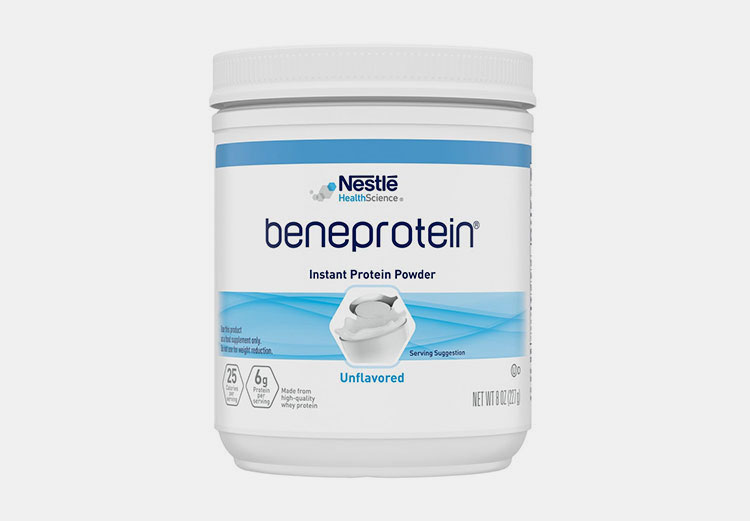
        Picture Courtesy: Nestle Medical Hub

        Drug companies use protein powder making machines to make beneficial drugs for those who lack protein-type enzymes and hormones, and also for the infected one who requires antibodies and vaccines which are made of protein.

        Human Food Industry

        Human Food Industry

        Organic Protein Formula

        The deficiency of protein in human bodies is usually treated by having protein-rich food. This protein rich food is prepared by food manufacturers with the help of protein powder making machine by injecting protein powder into the food items.

        Animal food industry

        Animal food industry

        Animal Whey Protein: Picture Courtesy: Animal Pak

        Animals as same as humans also require protein rich food for being healthy. So animal food industry manufactures a high protein diet for animals with the help of protein powder making machine.

        Research labs

        Research labs

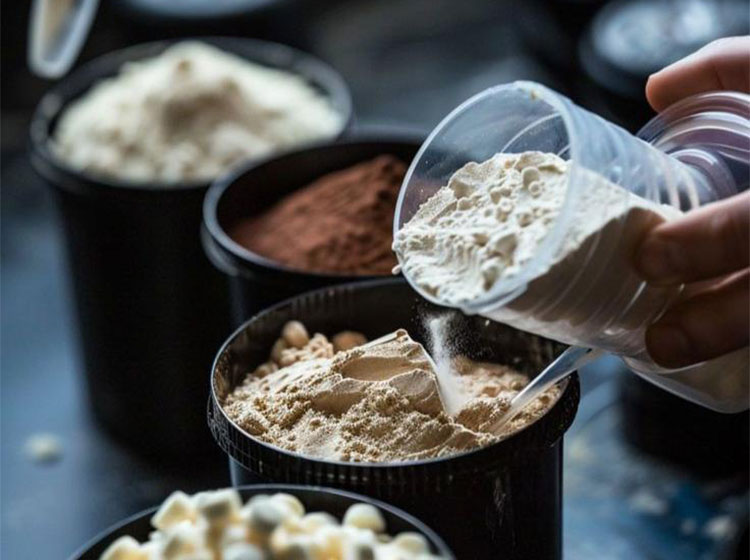
        Different Protein Powder Sample

        In this progressive world, research labs use protein powder making machine for testing and for a lot of new experiments to discover more about proteins.

        Grooming items industry

        Grooming items industry

        Protein Powder for Self- Care

        Protein-abundant humans have a fresh, healthy and clear skin, and long and healthy hair. So protein powder making machine is used in making cosmetics mill and in different hair products making factories.

        4.Enumerate the different types of protein powders prepared by the protein powder making machine?

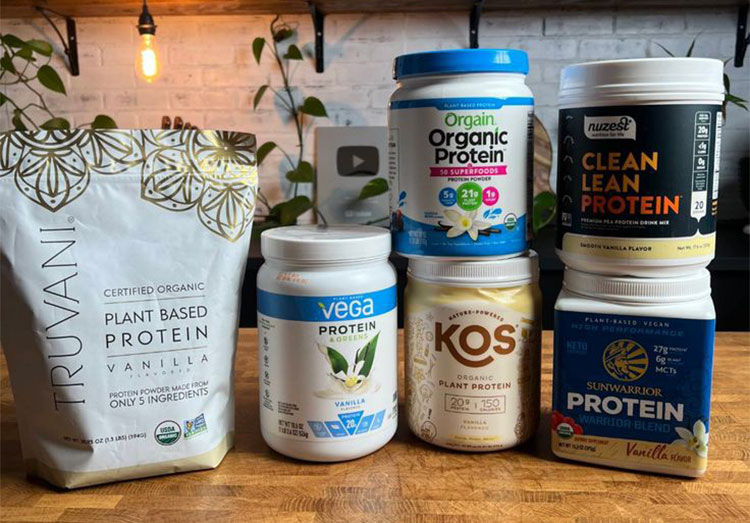
        It helps a lot to prepare different types of protein powders. All these are produced with the help of this highly advanced machine such as pea protein, milk protein, egg protein whey protein, etc. Here are the details for each type:

        Pea Protein Powder

        Pea Protein Powder

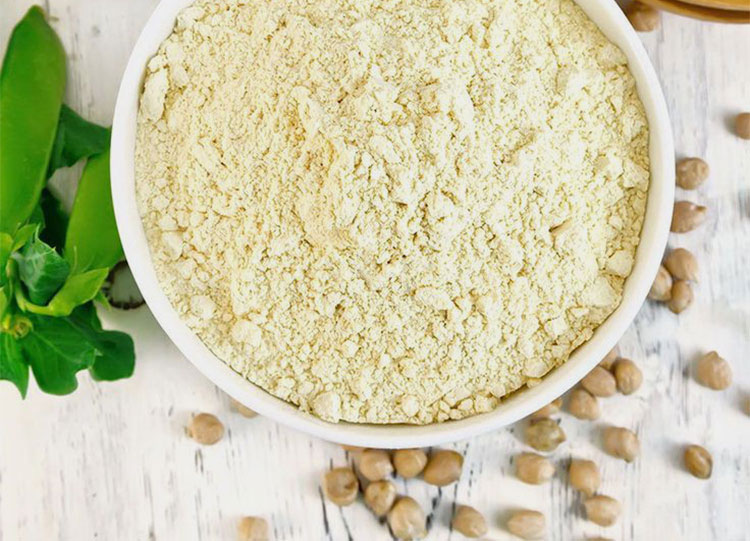
        Plant-Based Protein

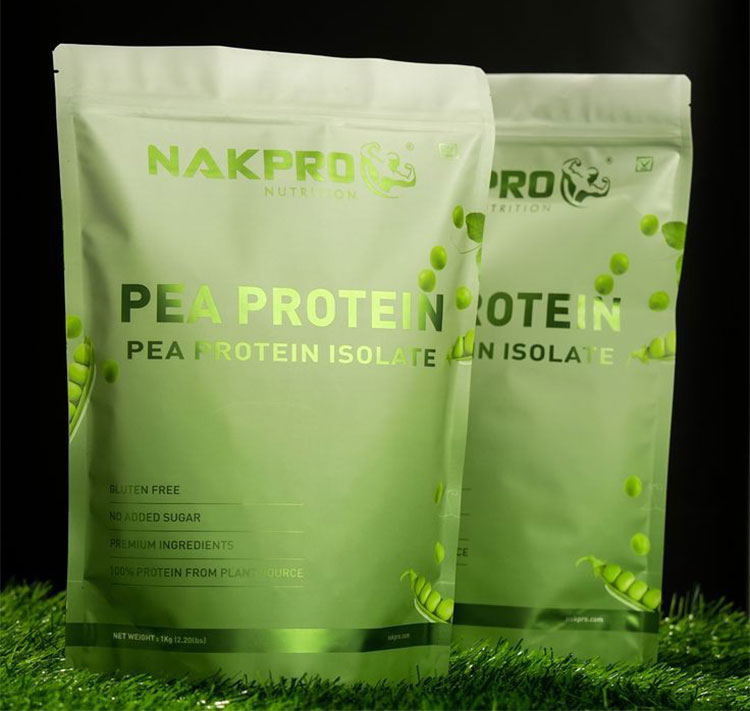
        This pea protein with so many benefits is prepared with protein powder making machine. As it is a valuable protein mostly consumed by those people who don’t use animal proteins. It is a plant protein, that’s why used by most of the vegans.

        The machine uses pisum sativum to produce this type which contains abundant amino acids like all other proteins. It makes protein powder in such a fine manner that it can easily be digested.

        This machine helps in extracting 79 to 80 percent of protein content and up To 5 percent fat content from the raw materials. Well, it gives it a smooth texture.

        Milk Protein Powder

        Milk Protein Powder

        Meal Replacement Protein Powder

        Most of the people drink milk daily at night or in the morning to bring health to them. As we have discussed the use of protein powder making machine in the food industry, milk protein that contains all essential amino acids that help to regulate body weight is also prepared with the help of this equipment.

        Egg Protein Powder

        Egg Protein Powder

        Egg Whey Protein

        Egg protein which has so many advantages including muscles growth, manufactured by protein powder making machine.

        Whey Protein Powder

        Whey Protein Powder

        Milk-Based Protein Powder

        Protein powder making machine is also used for production of whey protein. Whey even is usually prepared from liquid milk during cheese manufacturing.  It contains both types of essential and branched-chain amino acids. This machine helps in the production of whey protein that is most often used by bodybuilders and athletes.

        Hemp Protein Powder

        Hemp Protein Powder

        Additive Free Hemp Protein: Organic Superfood

        Hemp protein powder is another protein powder that can also be made by the  protein powder making machine. It is prepared with the powerful granulating apparatus that is usually used to make the immune system strong and it helps in digestion and also supports the heart keeping it healthy.

        5.How does a protein powder making machine work?

        Protein powder making machine works very smoothly due to its automated system and convenient process within short period of time. Let's learn the process of protein powder from milk sources step by step.

        Separation

        Separation

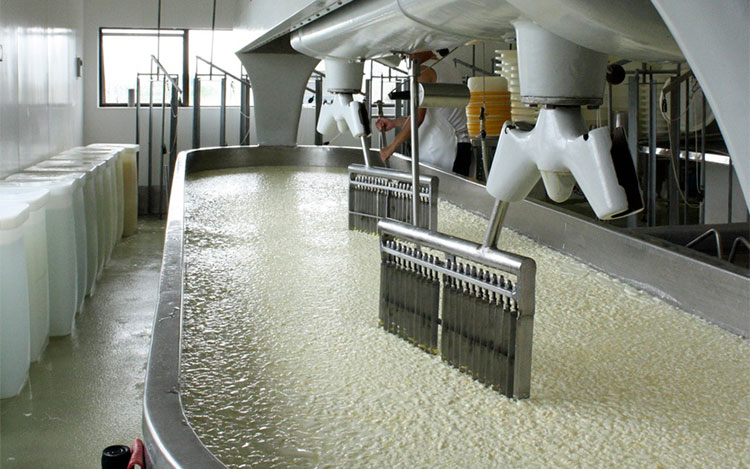
        Curd and Whey: Picture Courtesy: Science Learning Hub

        The actual process begins after milk is pasteurized, it goes through curdling when an enzyme named rennet is added into the milk. This process is carried out within high-qualified machines that is composed of mechanical stirs and agitators. These agitators aids in making an even mixture of milk and rennet.

        Basically in this phase, the mixture is separated into solid curd and liquid whey. Pasteurization of the mixture is carried out again to ensure a contaminant free product.

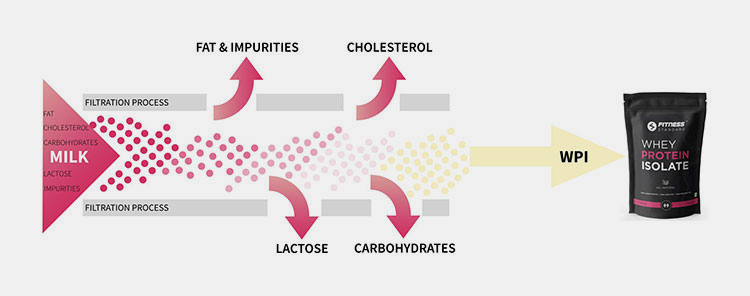
        Filtering

        Filtering

        Picture Courtesy: Fitness Standard

        Now, it’s time to filter the protein mixture. Here, the protein is isolated from the mixture either through membrane filtration or ion exchange method. Now we have the protein ready to be entered into next stage.

        Drying

        Drying

        Spray Drying: Picture Courtesy: Dedert Corporation

        Step it up, and the filtered protein liquid is transformed into fine powder using spray dryers for this purpose. During this process specialized machines are employed that make sure high standard and quality product. And in this way you get the milk-based protein powder in most finest form.

        Protein Powder Filling

        Protein Powder Filling

        Protein Powder - Picture Courtesy: Healthline

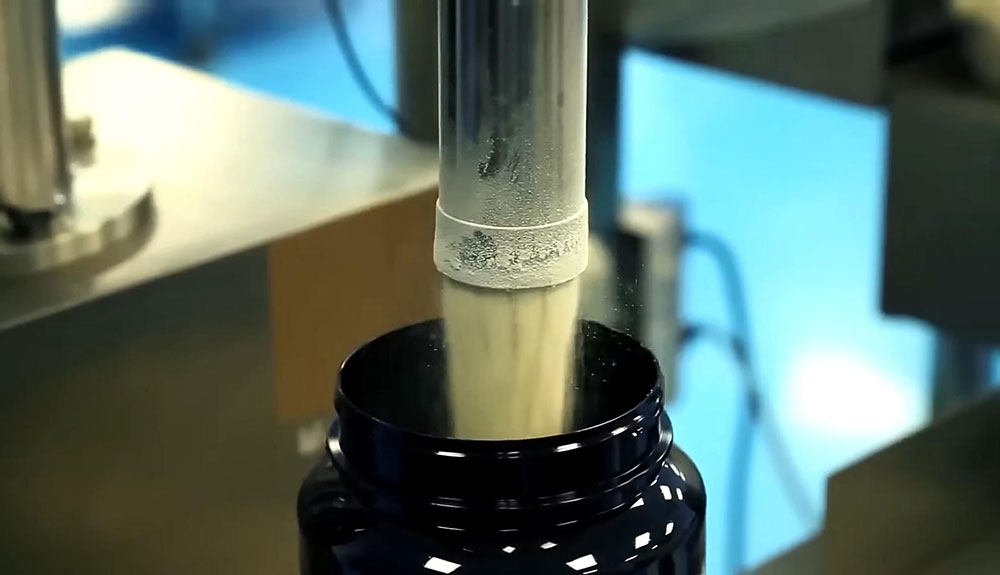
        When the protein powder is prepared either it is milk-based or plant-based, it goes through the process to be filled in the containers. Bags, pouches, cups, jars and cans are good choices for packaging of protein powder. So for this purpose, there are specially designed protein powder filling machines that will work automatically and provide you with high percentage of accuracy.

        6.Do you know the various types of a protein powder making machine?

        Protein powder making process is a bit complicated as it has many steps involved in it. Hence the process has to deal with many machines at a time. These machines are of many types depending on the quality of the products given out by the machine and the different working and purposes of the machine. So, following are some of the advanced machinery that is involved in this process and each machine has its own purpose in this process.

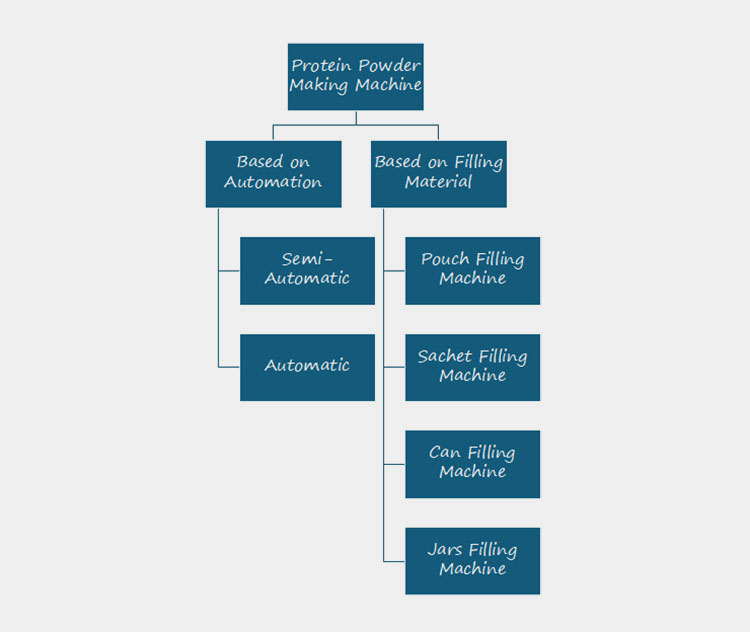
        Classification of protein powder making machine

        Classification of protein powder making machine

        Based on Automation

        There are many types of protein powder making machines based on level of automation in its operating method. Below are its types with brief description.

        Semi Automatic Protein Powder Making Machine

        Semi-Automatic Protein Powder Making Machine

        Semi-Automatic Protein Powder Making Machine: Picture Courtesy: AIPAK

        Sometimes proteins are present in liquid form and are required in powder form. At that time semi automatic protein powder making machine is used. It makes it easy to fill the container with required concentration of protein powder while preserving its quality. Its handling capacity makes it useful for many powdered substances such as spices, chilli, cocoa, coffee, whey, epoxy, or talcum and many more.

        Its major components including a  split hopper, servo motor drive screw, LCD touch system, and highly advanced dust removal system make it a promising choice among many. And it has easy maintenance and can be washed easily.

        It operates in the following way;

        • Feeding the hopper with ingredients.
        • Place the container manually for filling.
        • As the machine sense the container, it fills it through the filling nozzles with required amount of product.
        • Filled container moves forward for further processing.

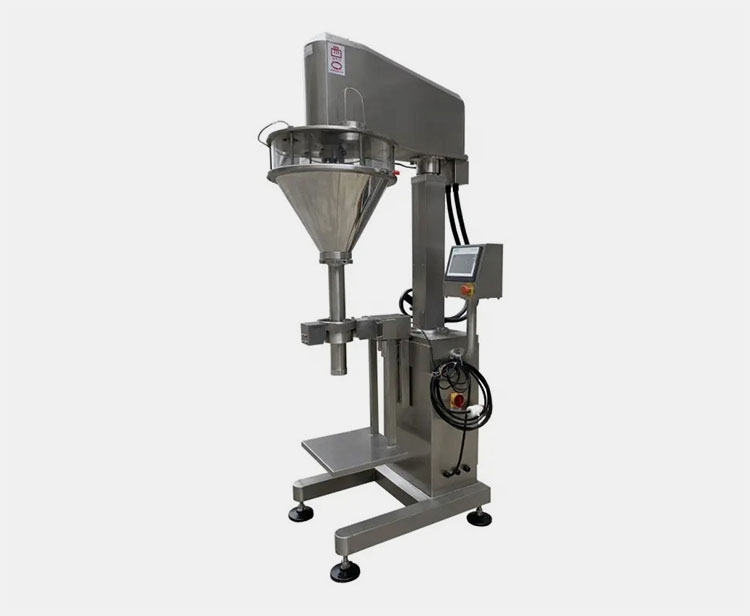
        Automatic Protein Powder Making Machine

        Automatic Protein Powder Making Machine

        Automatic Protein Powder Making Machine: Picture Courtesy: AIPAK

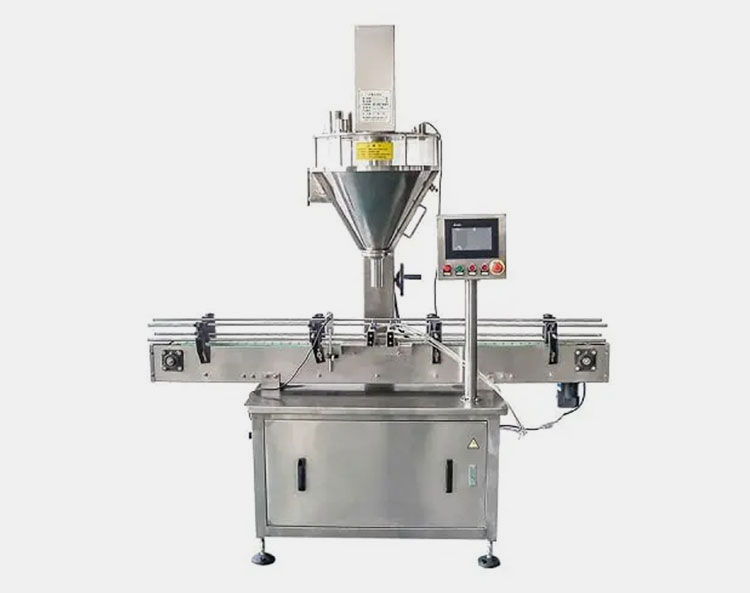
        This is an automatic auger filling machine designed specifically for the filling of products into hard containers like bottles, cans, jars etc. It has made the filling process of protein powder so much easier because most of the processes such as metering, filling, and releasing of protein powder are done by its automated system and advanced technology.

        Its unique design make it more appropriate for filling or packaging of dry powder or granular substances. It is widely used in a number of businesses or fields such as; food, chemical, drugs, granular additives and food items. It is featured with high power transmission system, controlling system and detection and rejection sensors that ensure high degree of accuracy and precision.

        It operates in the following manner;

        • All its components are connected and coordinates when they are loaded with the protein powder.
        • Once the container is detected by its sensors, the machine starts filling; it uses auger devices or filling nozzles for this function.
        • The container moves onward after filling with protein powder.

        Based on Filling Material

        Another category is the classification of protein powder making machines based on the filling container or material. There are varieties of protein powder making machine available in the market. Some of them with their distinctive features are discussed below;

        Pouch Filling Machine

        Pouch Package Machine

        Pouch Package Machine: Picture Courtesy: Lenis Machine

        If you desire to get the product in ultra-fine powder form, then this machine is best for you. Its PLC control and easy interface help you in the adjustment of parameters according to your requirements. It is capable of providing high-standard packaging to the protein powder which is essential to retain the quality of protein powder increasing its shelf-life.

        Moreover, it has multiple purposes and can be used in many other industries, for instance, packaging of carbon, other powder form substances or additives, chemical industry, pharmaceutical sector etc.

        Its working steps are following;

        • Stack of unloaded pouches are put inside a bag magazine.
        • These vacant pouches are picked separately by the grippers.
        • Then it is transferred to the inflating area to be blown up by the air.
        • Now, these empty blown up pouches are filled the protein powder.

        Sachet Filling Machine

        Powder Sachet Filling Machine

        Powder Sachet Filling Machine: Picture Courtesy: Samful Packing

        This is one of the specialized protein powder making machines manufactured globally. It has a completely compact design with automatic features making it suitable for filling the products into sachets, bottles, jars or cans etc.

        It can measure or weigh the amount of the product which helps it in rejecting the underweight or overweight amount. Moreover, for uniform process it has been devised with the photo eye detectors which detect the sachet or container. This photo eye sensor stops the filling process when detect that there is no sachet to be filled with powder.

        Here in this case, it is highly recommended for protein powder making industry to fill the powder in sachet in the appropriate amount. However, you can not use this machinery for filling liquid or fluid materials into sachets.

        Its working manner is discussed below;

        • As for sachet, it is provided with the film on the film case.
        • The rotation of the disc helps it in unwinding.
        • Forming tube convert this film into a small packet like container called sachet.
        • Auger filler of the machine filled the sachet with protein powder in required amount.
        • Finally, the filled sachet is sealed with the glue.

        Can Filling Machine

        Can Protein Package Powder Machine

        Can Protein Package Powder Machine: Picture Courtesy: Threepac

        This is an automatic can filling machine designed specifically for the filling of products into hard containers like cans, bottles, jars etc. It has made the filling process of protein powder so much easier because most of the processes such as metering, filling, and releasing of protein powder are done by its automated system and advanced technology.

        Its unique design make it more appropriate for filling or packaging of dry powder or granular substances. It is widely used in a number of businesses or fields such as; food, chemical, drugs, granular additives and food items. It is featured with high power transmission system, controlling system and detection and rejection sensors that ensure high degree of accuracy and precision.

        Its working principle is given below;

        • First of all load the machine with empty cans.
        • After detecting the empty cans, the machine starts filling it with protein powder.
        • After filling with set amount of the product, can is conveyed to further packaging.

        Jars Filling Machine

        Automatic Jar Filling Machine

        Automatic Jar Filling Machine:  Picture Courtesy: Vtops

        This is electrically powered machine that has automatic mouth locking device which prevents the powder from leakage. The protein powder jar filling machine is made of stainless steel which make its structure strong and highly resistant towards corrosion or acid.

        Moreover, its servo filling system, weighing scale, and stainless steel storage bucket ensure greater accuracy. Its application varies from pharmaceutical industry to chemical and foodstuff sector.

        It works on the following steps;

        • At first, set the jars on the conveyors at predetermined intervals.
        • Filling area bring them into the place of filling one after the other.
        • By setting the parameters with PLC system, you can adjust the required quantity of the product.
        • After filling successfully with powder via nozzles, the jar is transported towards capping or sealing system.

        7.What are the preventive measures needed for protein powder making machine?

        Quality Needs Maintenance

        Quality Needs Maintenance

        Here are some of the preventive measures needed to adopt while using the protein powder making machine.

        Constant tidying

        Regular purification of machine and it’s components lessens the chance of being defected and being deteriorated. It increases the machine’s life span.

        Use lubricants

        Constantly lubricating the parts of machine helps to work smoothly without any disturbance. Also it prevents the wear and tear of the parts of the protein powder making machine.

         Energy assurance

        You should regularly have a check on the electricity supply. It will increases your safety chances. Also helps to prevent electrical shocks and fire.

         Tutoring or coaching

        Machine users should be well-trained. Properly trained people know very well how to use machine in a convenient way. In this way, correct machine handling will be ensured.

         Loading and unloading

        If you want the machine to work properly then a specific amount of ingredients should be poured into the protein powder making machine at a specific time and the final product should be extracted out after a certain period of time.

        Temperature handling

        Scorching can cause inappropriate and slow working of protein powder making machine. So machine’s temperature should be kept normal by using cooling reagents.

        8.What are some common problems and their solutions related to protein powder making machine? 

        Some of the common problems you may encounter while using protein powder making machine, are given below: 

        Clogging  

        Clogging

        Protein powder blending: Picture Courtesy: AIPAK

        Irregular cleaning and overflow of protein powder through the machine can  lead to  clogging and congestion of the machine. When clogged by protein powder, then there will be no product produced because the process had been stopped midway.

        Solution

        This problem has an easy and simple solution to clean the machine regularly after use and oil the machine 2 times a week. Also, the filling in the machine should be checked.

        Failed to Start

        Failed to Start

        Control Panel

        You may encounter a situation when a machine fails to start. It may occur due to sudden damage of fuses or another wiring system.

        Solution

        It can be solved by replacing the fuse with a new one and repairing power lines or wiring.

        Irregular Powder Flow

        Irregular Powder Flow

        Protein Powder Filling into Containers

        The amount of humidity affects the powder flow during the process. The moisture present in the powder causes it to flow in irregular patterns that eventually slow down the machine’s speed.

        Solution

        It is good to reduce the amount of humidity and increasing the agitator speed will help reduce the irregular flow.

        Producing unwanted sounds

        Producing unwanted sounds

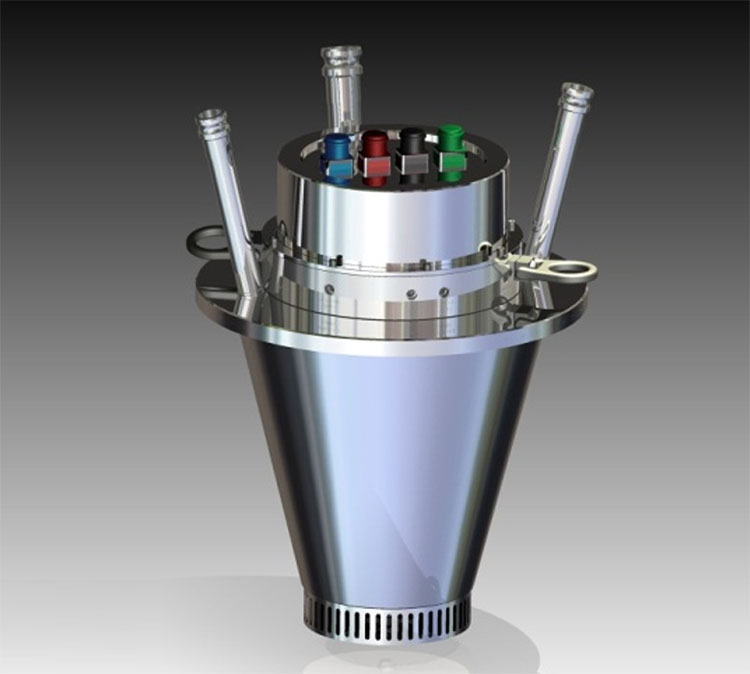
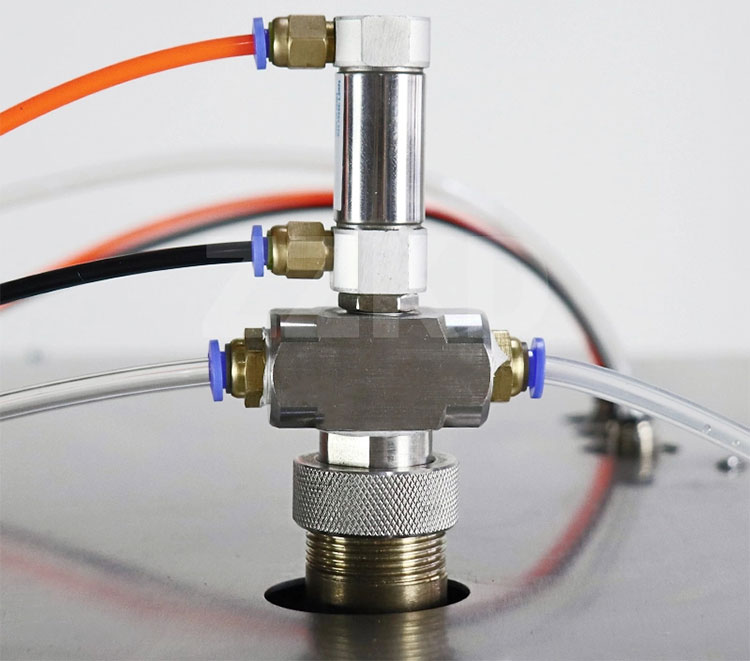
        Atomizer Nozzle

        Machines usually produce unwanted sounds when it is not well maintained. Then machine become clanged. Producing  unwanted sounds leads to noise pollution which also affects the workers working abilities.

        Solution

        Examine the machine and its maintenance at regular basis. The working solution for this issue is the tightening of loose parts and repairing or replacing the impaired parts.

        Over heating of the machine

        Over heating of the machine

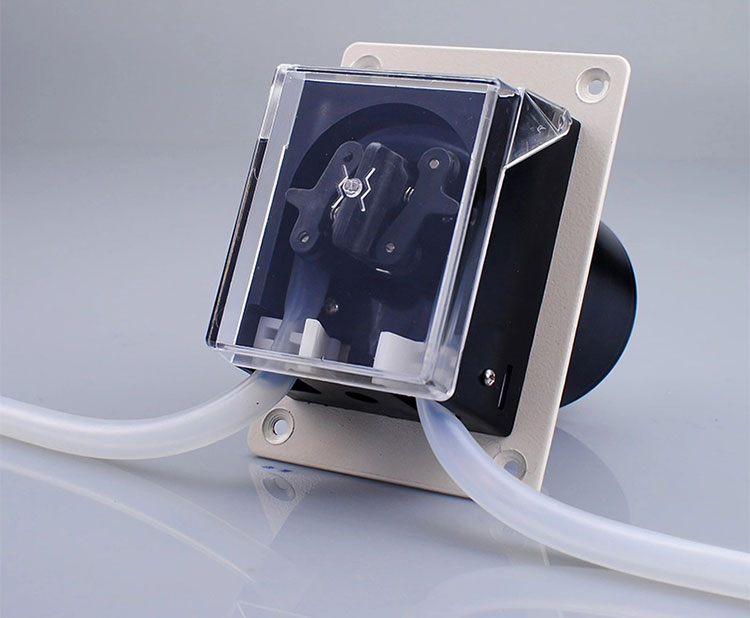
        Peristaltic Pump

        Machine get over heated  by the usage for a long time and do not having a proper cooling and freezing system. This can cause the damage of machine. Over heated machines do not work well and it’s working ability will be affected.

        Solution

        It’s solution is also quite easy. Use the machine timely and giving breaks during work for a little time. And install proper cooling systems to treat the scorching of machine.

        Wear and tear of the machine

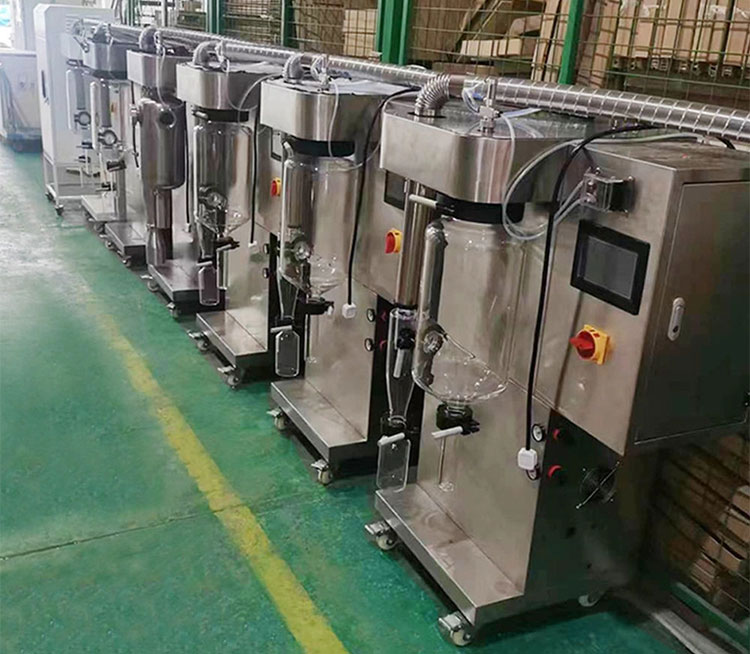
        Dryer Spray Equipment for Protein Detergent Powder

        Dryer Spray Equipment for Protein Detergent Powder

        Every machine has a limited life span. After that they get expired. But sometimes, it is before their expiry date that their parts torn up because of overuse or being defaulted and left neglected.

        Solution

        The one and only solution to keep machine from being torn up before expiration is to keep a check on machine and take good care of it.

        Incorrect level detection

        There is a major problem regarding the level of recognition by the protein powder making machine. Sometimes machine are not purified by the workers so they remain polluted due to which protein powder making machine cannot identify the original size.

        Solution

        Keep check and balance while feeding the machine with raw materials and set the parameters according to requirements so that the machine can detect the material size and its dimensions for further process.

        9.What are the important factors to consider before buying a protein powder making machine?

        Best Quality Protein Powder

        Best Quality Protein Powder

        There are always some essential factors which need to be considered before buying a machine for any purpose. Same is the case with protein powder making machine .Some important factors are given below:

        Output work rate

        The most important factor is to check the work rate of the protein powder making machine to know that how much of protein powder can be produced in a specific amount of time.

        Abrasive cutting capacity

        Before buying a protein powder making machine you should check the abrasive cutting capacity of it whether it is suitable for the product you are going to make or not.

        Spotlessness and purity

        Cleanliness is the major factor that decides the machine’s life span. So you must opt for the machine which can easily be purified.

        Scorching

        The best machines are those that do not get scorched easily by working for a little. So a machine with good cooling reagents which don’t allow it to become so hot in less time should be considered.

        Size

        The size before buying a protein powder making machine is also a very important factor you have to look at. You should select the one with a size according to your work requirements.

         Efficiency

        No machine can be one hundred percent efficient but the protein powder making machine with a high efficiency is preferred.

        Warranty

        A Warranty of so many years  provides you  surety of the best working of the protein powder making machine. So it’s another factor that  you should think about.

        Conclusion

        So this was all important information about protein powder making machine. All information regarding its construction, uses benefits, and all the factors that should be considered before its purchase is present here. Now you have got the idea and it will be easy for you to decide where to go for the best protein powder making machine. If you have further queries feel free to contact us.

        Don't forget to share this post!

        CONTACT US

        Tell us your raw material and project budget to get quotations within 24 hours.

        WhatsApp Us: +86 156 0710 8630

        Invalid Email
        Invalid Number

        Protein Powder Making Machine: The Complete FAQ Guide In 2025 Read More »

        Drug Transdermal Diffusion Tester

        Drug Transdermal Diffusion Tester: The Complete Buying Guide In 2025

        Drug Transdermal Diffusion Tester: The Complete Buying Guide In 2025

        Everyone prefers a non-invasive mode of drug delivery! Drug transdermal formulations are the world’s renowned and accepted route of drug delivery as they release the medication through your skin. Isn’t that amazing? How is it confirmed that drug transdermal medication works effectively? Are drug-transdermal products absorbing inside the skin? How is it estimated?

        The drug transdermal diffusion tester is a promising device that ensures the quality of your product. How it works? What benefits it offer? There are plenty of queries that will be knocking on your mind; this article is here to answer all about the device. Have a look at the enlisted questions and detailed answers below:

          Add a header to begin generating the table of contents

          1.What is a drug transdermal diffusion tester?

          drug transdermal diffusion tester

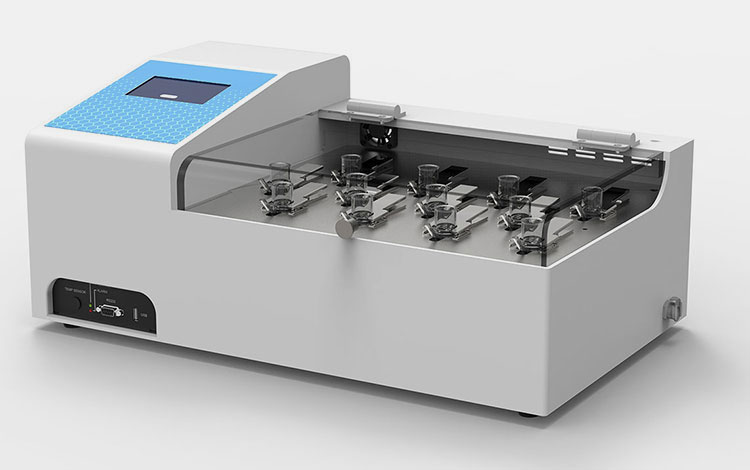
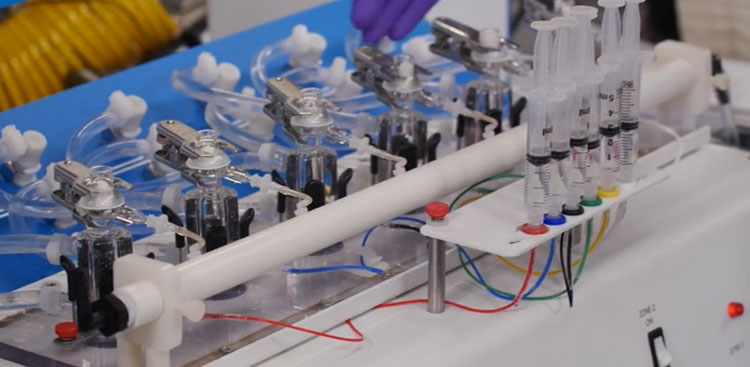
          Allpack Drug Transdermal Diffusion Tester

          It is a form of pharmaceutical testing equipment that estimates the drug release profile of semi-solid tropical or transdermal medications in vitro. This apparatus measures the quantity, rate, and diffusive extent of active ingredients that penetrate through skin or membrane at a given time point.

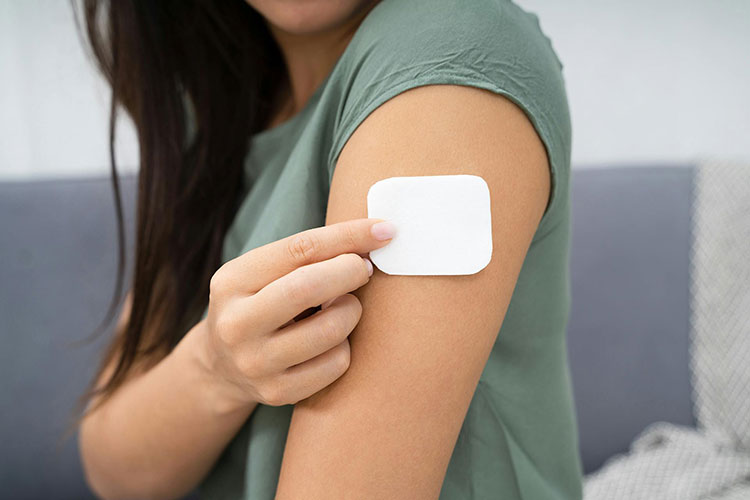
          A drug transdermal diffusion tester has a central role in measuring the potency and release behavior of transdermal delivery systems, such as transdermal patches, gels, creams, and ointments. It facilitates analysts in assessing the permeability potential of drugs and optimizing tropical drug formulations.

          The data outcomes supplied by the drug transdermal diffusion tester allow researchers to predict the rate at which active pharmaceutical ingredients flow into systemic circulation when administered to the skin.

          2.When does a drug transdermal diffusion tester come into use?

          History of Transdermal Drug Delivery System

          History of Transdermal Drug Delivery System- Picture Courtesy: The Canadian Encyclopedia

          Humans have been applying different medicinal and cosmetic substances to the skin for treating disorders and for beauty purposes, respectively. The skin became a route for drug delivery at the beginning of the 20th century.

          To carry out systemic research into in vivo and in-vitro association, T.J. Franz developed a drug transdermal diffusion tester in 1975. Since its invention, this tester has become a major instrument for evaluating the permeability and stability of transdermal products.

          3.What is the role of a drug transdermal diffusion tester in drug formulation?

          A drug transdermal diffusion tester is a standard and well-utilized instrument in formulation development and quality control approaches to characterize the permeation of tropical semi-solid dosage. Now let’s read about the integral role of a drug transdermal diffusion tester in drug development:

          Formulation Optimization

          Formulation Optimization

          Formulation Optimization- Picture Courtesy: Elerctrolab

          Pharmaceutical and cosmeceuticals have intricate makeup, in which several ingredients interact with each other and skin tissues. So, with the use of a drug transdermal diffusion tester, developers can test different combinations of ingredients- such as solvents, excipients, penetration enhancers, and many more- to discover ideal formulation components that boost drug bioavailability and then fine-tune in preparation accordingly.

          Role in Permeation Studies

          Role in Permeation Studies

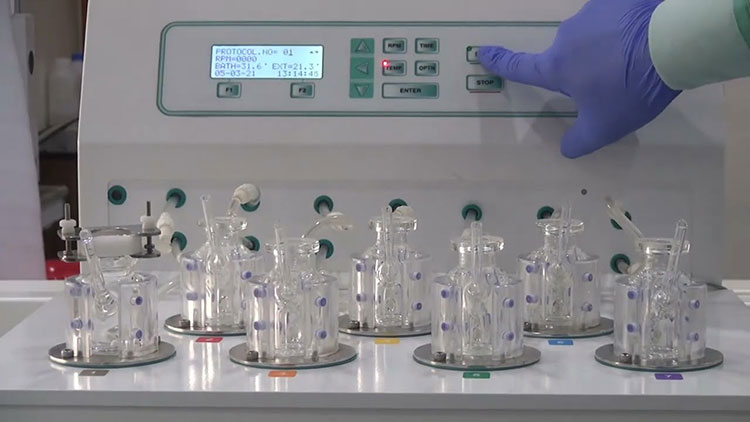
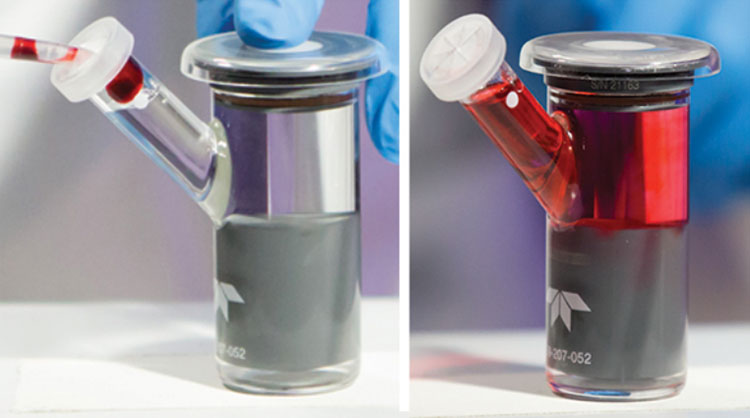
          Role in Permeation Studies- Picture Courtesy: Teledyne Hanson

          A drug transdermal diffusion tester assesses the permeation pattern of drug components that pass through the skin layer and go into blood circulation. It helps in gauging whether a drug has the potential for skin administration.

          Safety Evaluation

          Safety Evaluation

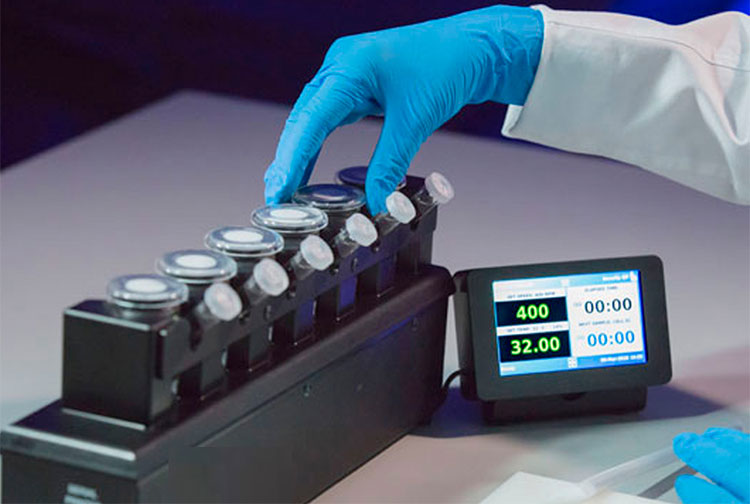
          Safety Evaluation- Picture Courtesy: Teledyne Hanson

          Tropical medications are smeared on the skin and provide localized and systematic effects. However, in some cases, these medications cause adverse reactions and irritate the skin. Therefore, a drug transdermal diffusion tester evaluates the safety profile of tropical drugs in vitro by determining the potential antagonist effects of core ingredients.

          Role in Bioequivalence Studies

          Role in Bioequivalence Studies

          Role in Bioequivalence Studies-Picture Courtesy: Vitronic

          Using a drug transdermal diffusion tester, analysts study the release profile, efficacy, and absorption pattern of several generic and branded medications. It helps in comparing the amount of drug delivered by both formulations over time. It shows that generic and innovative drugs are bioequivalent to each other.

          Compliance with Drug Regulations

          Compliance-with-Drug-Regulations-1

          Compliance with Drug Regulations- Picture Courtesy: Teledyne Hanson

          Transdermal drugs are subjected to drug regulations so, they must be evaluated through tests to establish that they fulfill safety criteria. Hence, the data produced by a drug transdermal diffusion tester provides evidence of the effectiveness of preparation and is needed by drug authorities when applying for drug approval.

          Non-Invasive Testing

          Non-Invasive Testing

          Non-Invasive Testing- Picture Courtesy: Femto Scientific

           This apparatus is highly popular for non-invasive studies, as it offers noteworthy perceptions about the behavior of a drug in the human body without requiring human or animal models. It stimulates the skin environment and predicts therapeutic outcomes of formulation in the body, thus conserving time and resources.

          4.What important information is provided by the drug transdermal diffusion tester?

          Data by Drug Transdermal Diffusion Tester

          Data by Drug Transdermal Diffusion Tester- Picture Courtesy: Teledyne Hanson

          A drug transdermal diffusion tester is benchmarked in testing tropical and transdermal dosage forms because it assists manufacturers in determining a multitude of pivotal facets of drugs. The basic information provided by a drug transdermal diffusion tester includes:

          Flux It is the number of drug molecules penetrating through the barrier layer or membrane into the circulatory system per unit of time. It helps estimate the rate of drug absorption.
          Total Quantity of Permeated Drug It is the cumulative amount of the drug going across the membrane during specific time intervals. The effectiveness of the drug delivery method and bioavailability of formulation is estimated through this parameter.
          Lag Time It is a time interval between the administration of formulation and the duration required by drug molecules to attain the steady-state concentration in the receptor system. This metric aids in developing rapid or extended-release medications.
          Steady-State Diffusion The active ingredients attain a steady-state diffusion stage after the lag phase, at this stage the diffusion occurs constantly. Steady-state diffusion aids in predicting therapeutic levels of drugs over time.
          Permeability Coefficient A drug transdermal diffusion tester also provides estimates of the permeability coefficient, which is the rate at which active ingredients penetrate the barrier membrane. It determines how speedily the drug will permeate the skin in real time.
          Skin Retention The quantity of formulation that is retained in the skin tissues is called skin retention. The information obtained from the drug transdermal diffusion tester is utilized for measuring the skin retention rate. This is necessary to predict the effect of local tropical medications as their components stay on the skin over a specific time point.
          Membrane Integrity and Stability This instrument mimics skin physiology and allows researchers to study the diffusion rate of the drug through intact and compromised membranes. It can gauge the integrity of the membrane utilized in the studies and ascertain the precision and dependability of permeation outcomes.

          5.Where is a drug transdermal diffusion tester utilized?

          A drug transdermal diffusion tester is originally invented to assess the permeability and stability of various dermatological medications. Different manufacturing and research sectors utilized this instrument because it establishes associations between skin, drug, and preparation. Some of the primary sectors where a drug transdermal diffusion tester is utilized include:

          Pharmaceutical Industry

          Pharmaceutical Industry

          Transdermal Patches- Picture Courtesy: News-Medical

          A drug transdermal diffusion tester is a well-accepted assay in the pharmaceutical sector that reliability determines the release kinetics of tropical remedies in-vitro and ex-vitro. It screens different combinations of active substances, excipients, and enhancers to discover suitable components that offer desired drug permeation and absorption.

          Quality Control Inspections

          Quality Control Inspections

          Quality Control Inspections- Picture Courtesy: Amarin Technologies

          Quality control of tropical and transdermal preparations is integral in determining their therapeutic efficacy, the number of undesired effects, and their compliance with pharmacopeial regulations. Therefore, due to its simplicity, a drug transdermal diffusion tester is routinely used in quality control inspections to evaluate the toxicity and stability of dermatological drugs.

          Academia

          Academia

          Academic Research- Picture Courtesy: ERCO Pharma

          This sector is in continuous pursuit of formulating dermatological therapies with better effectiveness and limited skin irritation problems. So, to analyse drug permeation rates and dermato-pharmacokinetics of various skin-related formulations, researchers use estimation tools like drug transdermal diffusion tester. They also shed light on release patterns of novel drug delivery systems, for instance, nanoparticles, liposomes, and biofilms, to name a few.

          Cosmetic Sector

          Cosmetic Sector

          Cosmetic Skincare Patches- Picture Courtesy: Cosmetics & Toiletries

          Cosmetic and dermatological products, such as lotions, creams, gels, serums, etc. come with positive benefits, for example, hydration, skin brightening, anti-aging properties, and healing effects for skin disorders. A drug transdermal diffusion tester models physiological conditions, consequently, it directly compares different cosmeceutical products, assesses their safety potential, and evaluates their intended effect.

          Veterinary Industry

          Veterinary Industry

          Veterinary Tropical Medications- Picture Courtesy: VetMedics Compounding Pharmacy

          The utility of a drug transdermal diffusion tester goes beyond the scope of the pharmaceutical industry and extends to the veterinary sector. This apparatus analyses the diffusion rate, release kinetics, absorption rate, and performance of veterinary formulations for treating skin diseases in pets and livestock.

          6.What are the design and parts of a drug transdermal diffusion tester?

          A drug transdermal diffusion tester is comprised of several parts that team up to mimic a controlled physiological setting for investigating drug permeation across biological or artificial membranes. A list of basic components and design elements of a drug transdermal diffusion tester is discussed below:

          Parts of Drug Transdermal Diffusion Tester

          Parts of Drug Transdermal Diffusion Tester- Picture Courtesy: PermeGear

          Components of Diffusion Cell

          Components of Diffusion Cell

          Picture Courtesy

          Picture Courtesy: Copley

          Donor Chamber It is known by different names, such as cell cap, cell top, donor chamber, or donor compartment. It is manufactured from a permeable material and retains the drug vehicle, for instance, patches or ointment.
          Joint The top portion of the cell body or receptor chamber and the mating downward part of the donor compartment are collectively termed joint.
          Membrane An inert and highly permeable barrier is present between the donor and receptor compartment. It behaves like a conduit through which permeation occurs. Several membrane types are used to conduct transdermal drug estimations, such as human skin tissues, animal tissues, synthetic membranes (PVDF, Supor Polyethersulfone, and Strat-M Membranes), and human skin equivalents.  It is put in the center of the joint and kept in place by a clamp.
          Heater/Water Circulator This part is integral in keeping the temperature under the required range by circulating hot water or other liquid around the apparatus.
          Water Jacket It is also termed a heating jacket and is a glass compartment enclosing the receptor chamber. It flows liquids- such as water- to keep the temperature of a drug transdermal diffusion cell under a range of 32-37°C.
          Sampling Port It is present in the receptor compartment and provides a suitable outlet through which aliquot is extracted at a particular time point for evaluation.
          Receptor Chamber It is the innermost component present in the lower part of the diffusion cell. The diffused drug is collected in this chamber. It is loaded with appropriate solvents, for instance, phosphate buffer saline to dissolve the drug.
          Stir bar This magnetic stirrer or stirring bar is present in a receptor compartment that constantly stirs the solution. It ensures the homogenous distribution of active substances in the receptor liquid. The stirring speed is usually in the range of 200 to 2000 RPM.
          Cell Clump It is also known as a membrane holder and is made of metal, which serves the purpose of securing the membrane between two chambers. It guarantees precise diffusion appraisals by offering a leakage-proof tight seal.
          Insulation Insulation is an essential component located in a non-jacketed drug transdermal diffusion tester and reduces heat loss or gain, while the machine is running. It helps increase the heating efficiency of a heating block by averting heat transfer between the system and surroundings.
          LCD Screen Panel It is present in advanced versions of the drug transdermal diffusion tester and has a role in displaying real-time data- for example, temperature, stirring velocity, sampling interval, and elapsed time. It acts as a control interface using which operators program and modify operational settings.
          Heating Block A heating block is designed with heating elements and temperature control systems to provide heating to the system for keeping a constant temperature. It is typically found in the non-jacketed drug transdermal diffusion tester.

          7.What is the working principle of a drug transdermal diffusion tester?

          The working principle of a drug transdermal diffusion tester is grounded on the mechanism of in-vitro diffusion. This is the movement of active material (permeant or drug) across the barrier (modelling skin behavior) from the area of higher concentration gradient to the area of lower concentration gradient.

          A drug transdermal diffusion tester follows the diffusion principle by introducing a drug vehicle (a drug with a medium like water, alcohol, or propylene glycol) to one side of the barrier and calculating drug movement into the receptor compartment.

          Let’s take a look into the various steps involved in the working of a drug transdermal diffusion tester:

          Preparation of Diffusion Cell Apparatus

          Preparation of Diffusion Cell Apparatus

          Preparation of Diffusion Cell Apparatus- Picture Courtesy: Sigma-Aldrich

          First, the receptor fluid is filtered with a vacuum filtration flask. This fluid is a lipophilic or hydrophilic substance that behaves similarly to the bloodstream. Then, the stirring system for every cell in the drug transdermal diffusion tester is switched on.

          After that, the membrane is positioned- shiny side up between the donor and receiving compartments, and this arrangement is secured by a metallic clamp. Next, the lower compartment- receptor chamber in case of jacketed drug transdermal diffusion tester- is loaded with receptor buffer,

          A syringe loaded with a receptor fluid is inserted into the sampling port to prevent the formation of air bubbles.

          A fixed amount of drug or permeant is incorporated into the vehicle medium and then this preparation is introduced in the donor chamber. The arrangement of the diffusion cell apparatus is kept at 32°C and 37°C to replicate ambient skin temperature.

          Drug Diffusion

          Drug Diffusion

          Drug Diffusion- Picture Courtesy: Teledyne Hanson

          After a while, the active components in the donor chamber pass through a barrier and are collected inside the receiving chamber. This drug diffusion is dependent upon membrane permeability, characteristics of the drug vehicle, and fluidity of the receptor buffer.

          Sampling and Evaluation

          Sampling and Evaluation

          Sampling and Evaluation- Picture Courtesy: sigmaaldrich

          The quantity of permeant accumulated in the receiving chamber is measured in short intervals by the sampling port. A device or syringe is inserted in the sampling port to extract the receptor fluid. Sampling must be repeated approximately 5-6 times to attain reliable calculations.

          After sampling, the samples are dispensed in vials and then permeant is detected by chromatographic or spectroscopic methodologies.

          8.What are available types of drug transdermal diffusion testers?

          A drug transdermal diffusion tester is categorized into two diverse categories, based on design structure and the presence of a heating jacket. These kinds include:

          available types of drug transdermal diffusion testers

          According to the Design Configuration

          There are two primary types of drug transdermal diffusion testers when classified based on design configuration.

          Vertical Drug Transdermal Diffusion Tester

          Vertical Drug Transdermal Diffusion Tester

          Vertical Drug Transdermal Diffusion Tester- Picture Courtesy: Copley

          In this kind of drug transdermal diffusion tester, the donor chamber is situated above the barrier membrane, while the receptor chamber is positioned under the membrane. The drug vehicle is kept against the membrane via gravitational force.

          This design configuration is identical to applying the drug to the skin. It has better sealing properties, as the drug stays smeared on the membrane. In vertical drug transdermal diffusion tester, sampling is carried out from the lower portion of the machine, preventing the chances of disturbing membrane-drug arrangement.

          Stirring is more consistent due to the placement of the stirrer in the receptor compartment.

          Horizontal Drug Transdermal Diffusion Tester

          Horizontal Drug Transdermal Diffusion Tester

          Horizontal Drug Transdermal Diffusion Tester- Picture Courtesy: Logan Instrument Corps.

          It has a horizontal configuration in which donor and receptor chambers are positioned side-by-side. The membrane is positioned sideways between these compartments. Thus, it is also called a side-by-side drug transdermal diffusion tester. The diffusion of drugs occurs laterally through the membrane and there is no role of gravity in this setup.

          The drug vehicle in this design type is more prone to evaporation due to increased exposure of the drug to the air. It is more difficult to perform sampling in a horizontal drug transdermal diffusion tester because of the horizontal alignment of membrane and drug preparation, which can alter the drug-membrane setup. Due to its horizontal orientation, it is difficult to stir receptor fluid.

          According to the Heating System

          There are two kinds of drug transdermal diffusion testers depending on their temperature control systems.

          Jacketed Drug Transdermal Diffusion Tester

          Jacketed Drug Transdermal Diffusion Tester

          Jacketed Drug Transdermal Diffusion Tester- Picture Courtesy: Logan Instrument Corps.

          It has a double-walled insulation chamber that circulates a temperature-controlled liquid. The latter can be heated or cooled to maintain a uniform temperature range within the diffusion cell. The receptor compartment and heating jackets are manufactured at the same time by hand blowing, hence they do not separate.

          Due to its intricate design, it is more expensive than its counterparts. However, it is preferred in studies of the pharmacokinetics of transdermal and topical formulation because it closely models the physiochemical changes in the skin by providing precise control of temperature.

          Non-Jacketed Drug Transdermal Diffusion Tester

          Non-Jacketed Drug Transdermal Diffusion Tester

          Non-Jacketed Drug Transdermal Diffusion Tester- Picture Courtesy: Teledyne Hanson

          It has a more straightforward design, as it does not consist of a heating jacket and usually relies on ambient temperature for drug diffusion.  The non-jacketed drug transdermal diffusion tester is dependent on a heating block, water bath, or temperature-regulated surroundings to keep the temperature under the required threshold.

          Due to its simple design, it is less pricey than the jacketed drug transdermal diffusion tester. It is commonly found in laboratories.

          9.What are the common medications marketed by examining on drug transdermal diffusion tester?

          Transdermal Medications

          Transdermal Medications- Picture Courtesy: Aspercreme

          A variety of medications are sold as a transdermal drug delivery system after studying their characteristics by a drug transdermal diffusion tester. Their names and uses are described in the table below:

          Drug Use Marketed Name Application Time
          Nicotine Smoking Abstinence Nicoderm CQ® 24 hours
          Hormones

          Estradiol

          Testosterone

          Menopausal symptoms

          Hypogonadism

          Vivelle-Dot®

          Androderm®

          2 times per week

          24 hours

          Fentanyl Pain Management Duragesic® 3 days
          Clonidine Hypertension Catapres-TTS® 7 days
          Scopolamine Motion Sickness

          Nausea

          Scopace® 3 days
          Rivastigmine Alzheimer's disease

          Dementia

          Exelon® 24 h
          Lidocaine Postherpetic Neuralgia Lidoderm®

          Dermalid®


          up to 3 times daily for no more than 12 hours
          Buprenorphine Chronic Pain

          Opioid Dependence

          Butrans® 7 days
          Methylphenidate Attention Deficit Hyperactivity Disorder (ADHD) Daytrana® 9 days
          Selegiline Depression Emsam® 24 hours
          Rotigotine Parkinson's Disease Restless Legs Syndrome Neupro® 24 hours
          Diclofenac Localized Pain

          Arthritis

          Flector® 12 hours
          Nitro-glycerine angina Minitran®

          Nitro-dur®

          12-14 hours

          10.What are the precautions for a drug transdermal diffusion tester?

          Precautions For Drug Transdermal Diffusion Tester

          Precautions For Drug Transdermal Diffusion Tester- Picture Courtesy: Teledyne Hanson

          A drug transdermal diffusion tester is an exceptional equipment for assessing the permeation rate of the skin-administered formulation. However, necessary precautions must be adopted to guarantee the safety of the operator and experiment during the run. So, here are some essential precautions for operating a drug transdermal diffusion tester:

          • First, carry out some preliminary experiments to prevent manifestation of personal errors, if you are not skilled enough to conduct permeation studies.
          • During membrane setup, gently handle the membrane and do not overstretch or break it by puncturing.
          • The skin specimen must have a larger size so that its fringes are securely positioned in the diffusion cell around the opening.’
          • The skin membrane should not extend into the receiving compartment as otherwise, it could hinder the stirring of receptor buffer.
          • If you are going to use membrane later, then it is best to freeze it at -80°C.
          • Uniformly distribute drug vehicles to donor chambers because failure to do so would cause a disparity in outcomes.
          • The tester should have consistent temperature throughout the run because temperature changes influence the diffusion estimates.
          • Do not disturb membrane setup during sampling and pipetting because it could lead to discrepancies in results.

          11.What are the technical issues and solutions relevant to a drug transdermal diffusion tester?

          A drug transdermal diffusion tester is a sophisticated instrument, designed to minimize errors but even then, some occasional technical issues find their way into this equipment and reduce the efficiency and reproducibility of test estimations. That’s why, we are penning some technical issues and solutions to minimize your unease.

          Temperature Deviations

          Temperature Deviations

          Temperature Deviations- Picture Courtesy: LABOAO

          From time to time, unexpected inconsistencies occur in the temperature control of the drug transdermal diffusion tester, contributing to poor estimations of permeation rates because temperature impacts the movement of formulations across the membrane.

          Solutions

          To address this issue: you should check the working performance of the insulation, heating block, and water jacket. Also, regularly calibrating the heating mechanism alleviates the issue of temperature fluctuations. Monitoring of real-time temperature assessment must be done using an LCD screen. It is recommended to use an external temperature sensor to verify temperature stability.

          Variances in Membrane Characteristics

          Variances in Membrane Characteristics

          Variances in Membrane Characteristics- Picture Courtesy: Teledyne Hanson

          In certain cases, characteristics of the membrane deviate from batch to batch, resulting in inaccuracies in the determination of diffusion rates and variable results.

          Solutions

          To solve this problem, it is suggested to procure membranes from reputable and standardized sources so that there would not be any inconsistencies in the properties of membranes. It is ideal to pre-test the thickness, hydration, and quality of the membrane before carrying out formal tests. The high variability associated with biological membranes is minimized with artificial membranes.

          Presence of Air Bubbles

          Presence of Air Bubbles

          Presence of Air Bubbles- Picture Courtesy: Teledyne Hanson

          Air is entrapped under the membrane layer or in the cell body, disrupting expected drug diffusion patterns and leading to imprecisions in permeation estimates.

          Solutions

          To rectify the problem of air bubbles, operators should degas the fluid by introducing a vacuum. Care should be taken when assembling the diffusion cell apparatus, especially setting the membrane to avert the buildup of air bubbles.

          Evaporation from Donor Chamber

          Evaporation from Donor Chamber

          Evaporation from Donor Chamber- Picture Courtesy: Teledyne Hanson

          Sometimes, the drug vehicle evaporates from the donor chamber, producing drug concentration changes and impacting the diffusive behavior of formulation.

          Solutions

          This technical issue is resolved by properly sealing and covering the donor chamber using paraffin films or other sealing materials, which prevent the vaporization of the formulation vehicle. Secondly, perform the permeation analysis in controlled humid surroundings to cut down evaporation possibility. Periodically monitor volume changes in the donor chamber to identify any minor evaporation incident.

          Insufficient Stirring

          Insufficient Stirring

          Insufficient Stirring- Picture Courtesy: Teledyne Hanson

          At times, there is an event of irregular stirring in the receptor compartment, causing non-uniform mixing of receptor liquid that leads to the formation of concentration gradients and errors in diffusion rate calculations.

          Solutions

          To remedy this predicament, modify the stirring velocity to correctly mix receptor fluid without creating turbulence. Carefully place the stirrer in the receptor chamber to prevent mixing dead zones. Regularly schedule calibration of the magnetic stirrer to make sure it is correctly working.

          Conclusion

          Let’s conclude this enlightening blog post about a drug transdermal diffusion tester by stating that this instrument is a great way to standardize in-vitro transdermal drug testing protocols. It assesses the permeability behavior of tropical and transdermal drugs using different model membranes. It is known for its real-time stimulation of skin physiology, thus providing systematic insights into the in-vitro-in vivo association of formulation. Consequently, you can achieve consistency, producibility, and excellence in your testing procedures by adding a drug transdermal diffusion tester in your labs and institutes. We, Allpack are here to guide you in the choice of a superior machine for your test procedures. Get in touch with us at your earliest convenience.

          Don't forget to share this post!

          CONTACT US

          Tell us your raw material and project budget to get quotations within 24 hours.

          WhatsApp Us: +86 156 0710 8630

          Invalid Email
          Invalid Number

          Drug Transdermal Diffusion Tester: The Complete Buying Guide In 2025 Read More »
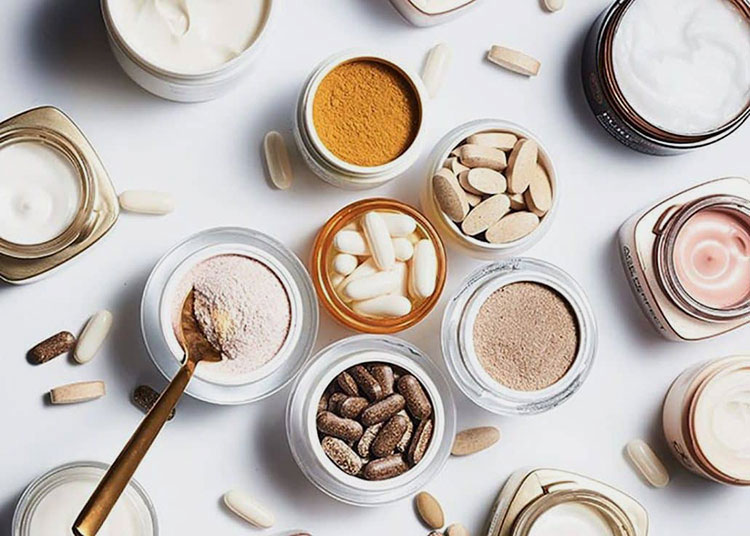
          Viscosity Tester-6

          Viscosity Tester:The Complete Buying Guide In 2025

          Viscosity Tester:The Complete Buying Guide In 2025

          As an important physical parameter measuring instrument, the application of viscosity tester is across multiple industries. It can provide you with more refined and highly stable viscosity measurement. Do you understand the application and effectiveness of viscosity tester? In which industries can it be applied? Is its safety and effectiveness limited?

          If you want to choose a suitable viscosity tester, what aspects should you know about? After choosing a viscosity tester, how should you apply and maintain it? This complete guide of viscosity tester will give you a comprehensive answer. Let's make it clear now!

            Add a header to begin generating the table of contents

            1.What Is Product Viscosity?

            What-Is-Product-Viscosity

            What Is Product Viscosity-sourced: vikingpump

            Product viscosity is a measure of the resistance or internal friction of liquids and viscous bodies during flow. Liquids with low viscosity have higher fluidity, such as water. Liquids with high viscosity have lower fluidity, such as hand cream. The formula for testing product viscosity is: product viscosity = shear stress / shear rate. Its results are usually expressed in centipoise (cP).

            2.What Products Need Viscosity Testing?

            What products are used for viscosity testing? Products in most industries, as long as they are related to liquids and pastes, are basically used for viscosity testing.

            Food Products

            Food-Products

            Food Products-sourced: food52

            The food industry is widely used for viscosity testing. Its products include but are not limited to beverages, milk, coffee, seasonings, ketchup, mayonnaise, jam, syrup, etc. By measuring the viscosity of food, it can help the product choose packaging containers and packaging methods.

            Pharmaceutical Products

            Pharmaceutical-Products

            Pharmaceutical Products-sourced: aphenapharma

            Various antibiotic liquid products, saline and glucose, vitamins and electrolyte liquids, cold and cough syrups, etc., can all be tested for viscosity to verify the product's effectiveness and subsequent packaging applications.

            Chemical Products

            Chemical-Products

            Chemical Products-sourced: cdhfinechemical

            Various chemical products, such as adhesives, petroleum, concrete, etc., will be tested for viscosity. The viscosity test of adhesives can help consider whether the adhesive flows on the parts after application. The viscosity test of petroleum can help predict the effectiveness of lubricants and help with pipeline design, etc.

            Cosmetics

            Cosmetics

            Cosmetics-sourced: sensient-beauty

            Through viscosity testing of various cosmetics and skin care products, it can help manufacturers get the product usage experience and absorption effect in advance. The viscosity of skin care products is very important to the user's experience. These products include but are not limited to toner, lotion, cream, shampoo, shower gel, body lotion, etc.

            3.What Is Viscosity Tester?

            What-Is-Viscosity-Tester

            What Is Viscosity Tester-sourced: mtixtl

            Viscosity tester, also called as viscometer or rheometer, is a tool used to measure the viscosity or flow resistance of liquids or fluids. It can accurately measure the flow resistance and friction inside the fluid. Viscosity tester can be used to test a variety of materials, including paints, coatings, adhesives, waxes, oils, plastics, food, beverages, toothpaste, cosmetics and shampoo.

            4.What Industry May Benefit From Viscosity Tester?

            Now all walks of life are widely using viscosity testers to measure products in different fields. These include:

            Petrochemical and Oil Industry

            Petrochemical-and-oil-industry

            Petrochemical and Oil Industry-sourced: chem

            The viscosity measurement of oil is related to the quality of the product and the design and laying of the subsequent oil pipeline. In order to reduce costs and improve the effect, it is necessary to conduct viscosity testing in advance.

            Pharmaceutical, Biotechnology and Clinical Research Industries

            Pharmaceutical,-Biotechnology-and-Clinical-Research-Industries

            Pharmaceutical, Biotechnology and Clinical Research Industries-sourced: thoughtco

            Now various fluid drugs, biotechnology and clinical research industries need viscosity testers to detect the main conditions and quality of drugs. This facilitates the subsequent drug development.

            Food and Beverage Industry

            Food-and-Beverage-Industry

            Food and Beverage Industry-sourced: drinkjapan

            The viscosity measurement of food and beverages is mainly for the subsequent selection of corresponding packaging methods and packaging containers. Products with different viscosities require different packaging methods.

            Beauty and Cosmetics Industry

            Beauty-and-Cosmetics-Industry

            Beauty and Cosmetics Industry-sourced: today

            More beauty and cosmetics industries are beginning to rely on viscosity testers. They can help detect the viscosity of products and thus predict the user's use effect.

            Chemistry Industry

            Chemistry-Industry

            Chemistry Industry-sourced: smcompany

            Many chemicals, such as pesticides, fertilizers, coatings, pigments, etc., also require viscosity testing. This can facilitate subsequent quality monitoring.

            5.Why Should You Test Product Viscosity With Viscosity Tester?

            You may wonder, what is the use of measuring the viscosity of products for our industry? It has the following main functions:

            Understand the Viscosity of Materials

            Viscosity-of-Materials

            Viscosity of Materials-sourced: anton-paar

            Using a viscosity tester to test materials can give a good understanding of the viscosity of boring materials. Therefore, it is possible to predict in advance

            the performance of materials in the real world and the effect and quality of use.

            Predict the Design of Production and Transportation Processes In Advance

            The viscosity of products can greatly affect the final production, packaging and transportation plans of subsequent products. Products with high viscosity generally try not to use packaging that is difficult to access. Products with low viscosity have a wider range of packaging options.

            6.What Are The Benefits Of Viscosity Tester?

            Using viscosity tester can bring you the following advantages:

            Wide Range of Applications

            Wide-Range-of-Applications

            Wide Range of Applications-sourced: rheologylab

            The viscosity tester is able to handle various types of materials and measure the corresponding viscosity. In addition to this, it can handle products of various shapes.

            Improve Accuracy and Precision

            Improve-Accuracy-and-Precision

            Improve Accuracy and Precision-sourced: researchgate

            There is a big difference in accuracy and precision between the viscosity measured by the naked eye or touch and the viscosity tester. The viscosity tester uses a built-in microprocessor to collect data, which can avoid data being affected by factors such as technology, temperature fluctuations and time changes.

            Improve Efficiency and Speed

            Improve-Efficiency-and-Speed

            Improve Efficiency and Speed-sourced: labbulletin

            Most viscosity testers are fully automatic models. In addition to providing the most accurate and precise results, it also simplifies the measurement process and avoids manual measurements and lengthy data analysis. Its application can significantly improve your measurements.

            Enhance Data Collection and Management

            Enhance-Data-Collection-and-Management

            Enhance Data Collection and Management-sourced: amsoil

            Viscosity tester records all data electronically, eliminating the need for manual transcription. This avoids mistakes in manual transcription. You can easily access, view, export, etc. to enhance data collection and management.

            Improve Safety and Reduce Waste

            Improve-Safety-and-Reduce-Waste

            Improve Safety and Reduce Waste-sourced: psl-rheotek

            Even with very few samples, the viscosity tester is able to make measurements and produce accurate results. This can reduce the dosage of test samples and reduce waste to a greater extent.

            7.How Do You Measure Viscosity With The Viscosity Tester?

            How Do You Measure Viscosity With The Viscosity Tester-sourced: fluidmatters

            To measure the viscosity with the viscosity tester may need the following steps:

            Wear Personal Protective Equipment

            Before using the viscosity tester, you should wear personal protective equipment such as goggles and gloves. Avoid splashing and spilling of chemicals during operation.

            Proper Setup

            Check if the viscosity tester is properly placed. Make sure the digital rotational viscometer is mounted on a stable, level surface.

            Sample Handling

            Place the prepared sample safely under the spindle of the viscosity tester. Avoid spilling or splashing. Do not overfill the sample container, which will interfere with the rotating spindle.

            Temperature Control

            Regulate the temperature of the viscosity tester according to the user manual. Also pay attention to keeping the sample within the specified temperature range during the measurement.

            Spindle Installation and Removal

            When the device is tested and the data is output, disconnect the power supply. Safely remove the sample container and carefully remove the spindle or rotor accessories.

            Data Reading and Recording

            After the data is output and the spindle is removed, you can export and record the data for later comparison and processing.

            8.How Many Types Of Viscosity Tester Are There?

            There are several types of viscosity tester for your choice with good quality and stability. They are:

            Capillary Viscometer

            Capillary-Viscometers

            Capillary Viscometers-sourced: icllabs

            Capillary viscometer, also called as U-tube or glass viscometer, is one type instrument used in the laboratory to measure the viscosity of materials. The viscosity of a material is measured by calculating the time it takes for a transparent or translucent fluid to flow through a glass tube. This type of capillary viscometer can also be divided into manual and automatic types.

            Rotational Viscometer

            Rotational-Viscometers

            Rotational Viscometers-sourced: dtc-webshop

            Rotational viscometer, also called as Brookfield type viscometer. It mainly measures the viscosity of a material by the torque required by the rotating spindle in the torsion spring in the material. By changing the rotor speed and size, etc., it can help you measure different ranges of material viscosity. Rotational viscometer can use different spindle geometries to adapt to different types of materials.

            Falling Ball Viscometer

            Falling-Ball-Viscometers

            Falling Ball Viscometers-sourced: cromocol

            Falling ball viscometer is the viscometer that use the rolling ball principle. They measure the viscosity of a sample by rolling a ball in a closed, inclined capillary filled with a sample and calculating the time it takes to pass and the resistance it encounters under the action of gravity. An inductive sensor in the device can measure and record the time the ball rolls.

            Vibrational Viscometer

            Vibrational-Viscometer

            Vibrational Viscometer-sourced: dscbalances

            Vibrational viscometer mainly uses the resistance encountered by the vibrating blade when vibrating in the fluid to measure the viscosity of the fluid. Its shaft vibration and detection are both carried out through magnetism.

            Cone and Plate Viscometer

            Cone-and-Plate-Viscometer

            Cone and Plate Viscometer-sourced: solvica

            The cone and plate viscometer is a viscometer specifically used in laboratories. It is mainly used to measure the viscosity of non-Newtonian fluids. The sample is placed on a plate and the cone is rotated to apply pressure. This allows the shear rate applied to the fluid to be accurately controlled and measured.

            9.What Are The Parts Of Viscosity Tester?

            The parts of viscosity tester is simple. However, if there are more needs, you can also choose optional accessories like temperature probe, sample holder and protective cover to help you measure accurately and safely.

            What-Are-The-Parts-Of-Viscosity-Tester

            What Are The Parts Of Viscosity Tester-sourced: worldoftest

            Rotating Spindle or Rotor

            During the measurement process, it will be immersed in the sample. By applying shear stress to the spindle, it will cause the fluid to flow and deform, thereby measuring the viscosity of the fluid.

            Torque Sensor

            Torque sensor is mainly used to measure the resistance or torque experienced by the spindle during rotation, that is, the force it needs to overcome the sample. Its sensitivity is generally very high and the viscosity measurement is very accurate.

            Drive System or Motor

            The drive system or motor is mainly responsible for the speed of the spindle or rotor. It can keep the spindle running at a constant speed during the test.

            Temperature Control

            Temperature control is mainly responsible for keeping the sample at a constant temperature throughout the measurement process without being disturbed by the environment. Because viscosity usually changes with temperature.

            Display and Interface

            Display and interface can provide you with a friendly data viewing and monitoring platform. Generally, professional viscosity testers are equipped with LCD screens or touch screens to facilitate your data visualization.

            Sample Chamber or Cup

            The sample chamber or cup is used to hold the material to be measured. Its design and materials can reduce sample contamination and are suitable for most materials. It is also convenient for you to clean and maintain.

            10.What Is The Unit And Rating Of Product Viscosity By Viscosity Tester?

            In the process of understanding viscosity tester and product viscosity, it is inevitable to understand the unit of product viscosity.

            The Unit Of Product Viscosity- Centipoise

            The-Unit-Of-Product-Viscosity

            The Unit Of Product Viscosity-sourced: thinkymixer

            Centipoise is a common term for liquid viscosity. It is the smallest unit of dynamic viscosity. That is, the resistance and internal friction of a fluid when it flows under a certain shear stress. Its unit is: cP.

            Rating Of Product Viscosity By Viscosity Tester

            Rating-Of-Product-Viscosity-By-Viscosity-Tester

            Rating Of Product Viscosity By Viscosity Tester-sourced: amazonaws 

            By using a viscosity tester, you can rate the viscosity of different materials. The higher the centipoise value, the higher the viscosity of the material. The lower the centipoise value, the lower the viscosity of the material.

            Below are some examples of daily necessities and their corresponding viscosities:

            Items Centipoise Viscosity
            Water 1 Non-viscous
            Perfume 1-7 Non-viscous
            Liquid ink 25 Non-viscous
            Syrup 44 Semi-viscous
            Oil 160 Semi-viscous
            Varnish 420 Semi-viscous
            Shampoo 800 Viscous
            Ketchup 190,000 Viscous
            Peanut butter 250,000 Viscous
            Vaseline 64,000 Viscous

            11.What Are The Industry Standards For Viscosity Testing By Viscosity Tester?

            There are several different, widely accepted standards for using a viscosity tester and doing viscosity testing. They include:

            ASTM D4287

            This standard refer to apply the cone or plate viscometer to determine the high shear viscosity of a sample. This method is suitable for testing the viscosity of paints, varnishes and related products at a shear rate of 12,000 s−1. However, it is not possible to measure the viscosity of very fast drying products.

            BS 3900-A7

            The BS 3900-A7 standard applies to the viscosity of most liquids or fluids. It is a widely accepted method and standard.

            ISO 2884

            ISO 2884 is an international standard on how to measure and evaluate the viscosity of materials. It specifies the use of a rotational viscometer to determine the viscosity of paints, varnishes and related products.

            12.What Are The Factors To Consider When Choosing A Viscosity Tester?

            By understanding the different types of viscosity testers and their characteristics. How do you consider and choose before using? There are several points for your reference:

            Type and Properties of Test Materials

            Type-and-Properties-of-Test-Materials

            Type and Properties of Test Materials-sourced: hanchen

            Different materials are suitable for different types of viscosity testers. Some specific materials are suitable for more professional instruments. For example, when you are considering measuring corrosive liquids, you must consider the corrosion resistance of the instrument.

            Measuring Range and Accuracy

            Measuring-Range-and-Accuracy

            Measuring Range and Accuracy-sourced: sptthailand

            If you do not have high requirements for the measurement range and accuracy, you can use a simple, home or laboratory type of viscosity tester. If you have high requirements for the measurement range and accuracy, then you should choose more professional rotational viscometers.

            Temperature Control

            Temperature-Control

            Temperature Control-sourced: anton-paar

            During the measurement process, temperature control of materials and viscosity testers is very important. Different rheometers and viscometers have different sensitivities. The influence of temperature will also affect the data collection and analysis of the equipment.

            Ease of Use and Maintenance

            Ease-of-Use-and-Maintenance

            Ease of Use and Maintenance-sourced: cscscientific

            If the demand for ease of use and maintenance is high, you can choose rheometers and viscometers that are easier to use than others. You can also choose the type of laboratory instrument that operates efficiently.

            Conclusion:

            Choosing the right viscosity tester for your business and laboratory is a crucial decision. Through this complete buying guide of viscosity tester, you may learn about the different types of instruments and their related applications. If there are more types you want to know, please contact Allpack now!

            Don't forget to share this post!

            CONTACT US

            Tell us your raw material and project budget to get quotations within 24 hours.

            WhatsApp Us: +86 156 0710 8630

            Invalid Email
            Invalid Number

            Viscosity Tester:The Complete Buying Guide In 2025 Read More »
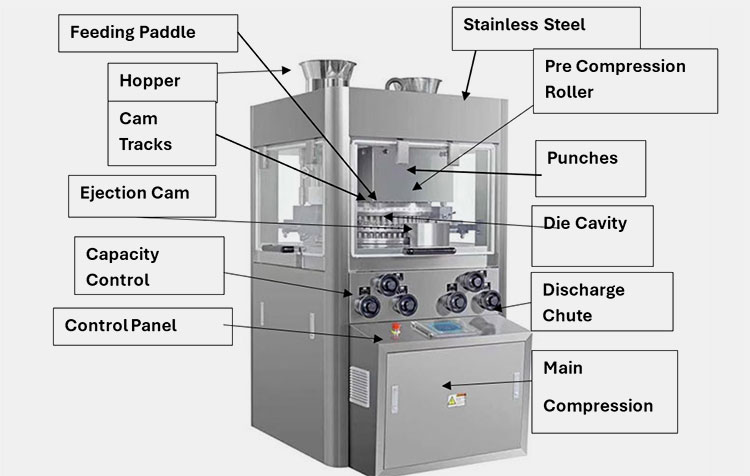
            Dissolution Autosampler

            Dissolution Autosampler: The Complete Buying Guide In 2025

            Dissolution Autosampler: The Complete Buying Guide In 2025

            Are you ready to know about the dissolution autosampler? If you are unfamiliar with it then this blog is ideal to explore the equipment. In pharma, quality control testing critically requires a dissolution autosampler to keep recording the essential data related to your medicine profile. Nevertheless, it must be uniform and consistent in every batch.

            By utilizing a dissolution autosampler, you can estimate the releasing behavior of medicine when it enters the body, so you can’t ignore this essential device for manufacturing and testing the pharmaceutical ingredients. To know more about it! Please have a look at our blog, we promise, you will find it worth reading.

              Add a header to begin generating the table of contents

              1.What is a dissolution autosampler?

              Dissolution Autosampler

              Allpack Dissolution Autosampler

              Dissolution testing is a fundamental assaying technique in pharmaceutical development for determining the release timings of active medicinal components from their source dosage. It is a time-dependent evaluation process that should be automated with the use of a dissolution autosampler to save valuable seconds and decrease variances in the sampling protocol.

              A dissolution autosampler has special worth in designing pharmaceuticals because it mechanically extracts test samples from the dissolution apparatus at any given time. It has versatile functions- from filtering fluidic medium and withdrawing samples to collecting these aliquots in vials for next-in-line HPLC and UV processes.

              It centralizes dissolution testing through its speedy and effective sampling, which is integral in the consistent inspection of the dissolution process without considering hectic manual sampling.

              2.What is the purpose of a dissolution autosampler?

              A dissolution autosampler is an automated device that has revolutionized techniques of sampling. Due to this machine, manufacturers attain the reliability of test estimations. Let’s learn about the important pros of a dissolution autosampler.

              High Efficiency

              High Efficiency

              High Efficiency- Picture Courtesy: Agilent

              In the dissolution testing, multiple formulations are evaluated in particular time intervals. So, the need for automated sampling is fulfilled by a dissolution autosampler. It boosts efficiency by a greater margin with its potential to extract multitudes of samples over an extended duration. It does not require consistent manual interference, which improves the throughput of dissolution analysis. It also stores data protocols and saves time for setting up the machine.

              High Sampling Time Points

              High Sampling Time Points

              High Sampling Time Points- Picture Courtesy: SOTAX

              It is dictated in US Pharmacopeia (USP) that sampling and filtration of the dissolution medium must be performed within ± 2% of the desired time point. Manual sampling is grounded on the researcher watching a stopwatch or being notified by an alarm. Hence, protocols with the smallest intervals between time points are hectic to handle physically.

              However, a dissolution autosampler easily starts the sampling sequence within short intervals by keeping cannulas in the dissolution vessel for the entire duration of the test.

              More Consistent Data

              More Consistent Data

              More Consistent Data- Picture Courtesy: Agilent

              The slip-ups in extracting samples from incorrect and non-uniform positions within the vessel remain unnoticed in a post-run evaluation, challenging the consistency of the dissolution profile.

              By utilizing a dissolution autosampler, analysts and developers gain precise control over important factors, for instance, sampling volume, time, location, and sampling depth, which results in the generation of consistent, repeatable, and accurate data and lowers the degree of variance in dissolution outcomes.

              Upholding Sample Integrity

              Upholding Sample Integrity

              Upholding Sample Integrity- Picture Courtesy: Agilent

              A dissolution autosampler is responsible for collecting, purifying, and transferring data without even a minor change in sample integrity. It is comprised of clean sampling probes and tubes that avert contamination possibility. Moreover, it reduces the exposure to environmental factors that comprise the stability of the sampling aliquot.

              Role in Real-Time Investigations

              Role in Real-Time Investigations

              A dissolution autosampler can be integrated into advanced analytical systems, for instance, UV spectrophotometers or HPLC systems to assess the release rate of formulations in real-time. These investigations into dissolution profiles aid in rapid data collection, lower the waiting time for result collection, and boost decision-making capabilities for better quality control.

              3.Where a dissolution autosampler is needed?

              A dissolution autosampler goes hand in hand with the dissolution testing apparatus. It is needed in every field where dissolution tester is utilized for kinetic release studies. We are penning some fundamental sectors, where you are more likely to see a dissolution autosampler.

              Pharmaceutical Sector

              Pharmaceutical Sector

              Pharmaceutical Manufacturing- Picture Courtesy: Supply Chain Digital

              A dissolution autosampler is invented to speed up the development and testing of pharmaceuticals. With the aid of this machine, developers can easily test numerous drug prototypes simultaneously. It also allows researchers to quickly compare bioequivalence parameters of generic and branded therapeutics. Moreover, this device facilitates the assessment of the dissolution behavior of novel drugs during preclinical trials.

              Biopharmaceutical and Biologics Manufacturing

              Biopharmaceutical Manufacturing

              Biopharmaceutical Manufacturing- Picture Courtesy: BioSpectrum Asia

              Nowadays, biopharmaceuticals including vaccines, clotting factors, antibodies, and many more are frequently manufactured to cater the human therapeutic needs. Therefore, a dissolution tester with a dissolution autosampler is normally utilized in this sector to study and determine the release characteristics of various biologics and biopharmaceuticals.

              Nutraceutical Sector

              Nutraceutical Sector

              Nutraceutical Manufacturing- Picture Courtesy: ACG

              With the increase in health fitness trends, there is a high need for vitamin, mineral, and herbal dietary supplements. Consequently, there is substantial demand for a dissolution autosampler in the nutraceutical sector to automate the dissolution evaluation practices for nutraceutical formulation. This equipment streamlines analysis procedures by its efficient and steadfast testing of various sample batches.

              Veterinary Pharmaceuticals

              Veterinary Pharmaceuticals

              Veterinary Pharmaceuticals- Picture Courtesy: Croda Pharma

              Veterinary medications are also analysed at every formulation step to make sure they have a preferred dissolution profile and absorption rate. Hence, a dissolution autosampler is a pivotal instrument for determining the safety and potency of veterinary care drugs.

              Biotech Research

              Biotech Research

              Biotech Research- Picture Courtesy: Croda Pharma

              A dissolution autosampler has a crucial role in studying the pharmacokinetics profile of novel drug delivery technologies, for example, nanoparticles, liposomes, or microspheres. It measures the intended duration at which these systems release their core drug ingredients.

              Agrochemical Sector

              Agrochemical Sector

              Agrochemical Sector

              Dissolution testing is also implemented in the agriculture field to investigate and determine the dissolution, absorption, and bioavailability of pesticides, herbicides, and fungicides solid formulations. Therefore, a dissolution autosampler is a key instrument to gauge the effectiveness, safety, and environmental risk of different agrochemicals.

              4.What are the components of a dissolution autosampler?

              Various parts in a dissolution autosampler collaborate to attain work efficiency. These components automate the complete cycle of sample drawing, filtering, and relocating. A detailed list of various parts and their function in a dissolution autosampler is written below:

              Parts of Dissolution Autosampler

              Parts of Dissolution Autosampler- Picture Courtesy: teledynelabs

              Interchangeable Rack This part is located at the topmost area of the dissolution autosampler. It can accommodate various sizes and kinds of vials types- containing filtered medium- for various testing needs. It boosts the adaptability and vial format handling of the dissolution autosampler and aids operators in easily changing sampling parameters.
              Dispense Head It transfers the sample fluid into suitable vials or other container types with the help of sampling tubes or pumps. It features several channels for quick and precise dispensing of sample aliquots to execute real-time dissolution assessment.
              Tray Handle It is a mechanical component found in the dissolution autosampler to take out the sample collection tray or interchangeable rack from the machine. The tray handle is a vital component that imparts ease and safety to operators when they switch or collect sample vials.
              Touch Screen It is an interface through which users can interact with the dissolution autosampler. In modern types of machines, this display screen is used for programming and adjusting devices for new testing operations. The operators control the settings of sampling volume, sampling intervals, and filtration options through this panel. It usually has features for real-time visualization and self-troubleshooting.
              Power Switch It is typically found at the back or side panel of a dissolution autosampler and regulates the flow of electric current to core components. The machine performs its sampling tasks when this switch is set on.
              Autosampler Handle This component acts as a portability support and facilitates operators in relocating or repositioning the machine. The Autosampler handler is installed in the compact model of the dissolution autosampler.
              Syringes or Peristaltic Pump Syringes are core parts of the machine and are integral in pulling out and relocating required volumes of dissolution fluid from the dissolution vessel. Their movements are controlled and directed by the motor units. Peristaltic pumps are also found in some types of dissolution autosamplers and they utilize rollers for exerting pressure on elastic tubes and extracting the aliquot liquid.

              5.How does a dissolution autosampler work?

              A dissolution autosampler operates together with a dissolution tester. It can pull out samples from several vessels in one cycle, consequently increasing processing speed. A sequential order of working steps in the dissolution autosampler is described below:

              Dissolution Autosampler Protocol

              Dissolution Autosampler Protocol- Picture Courtesy: cytiva

              Preparation

              Preparation

              Preparation

              At the start, operators diligently configure programming options, for example, sampling time interval, sample extraction volume, and number of vessels from which samples are withdrawn.

              Sampling

              Sampling

              Sampling- Picture Courtesy: Agilent

              On starting the machine, it begins processing operational parameters and sets off the sampling system at a designated instant, which in turn instigates the dropping of sampling probes or cannulas into dissolution vessels. For consistency in sample extraction, the cannulas go at a fixed depth (halfway between the top point of the paddle or basket and the surface of the fluid).

              After lowering, the sampling is carried out through a peristaltic or syringe pump that maintains sampling volume precision, and after dispensing aliquots in vials, the leftover media in the sampling line is transferred back to the vessel.

              Filtration

              Filtration

              Filtration Plates

              The filter system- located at the junction of the sampling cannulas and sampling loop or before the start of the analytical system- filters out the undissolved residues while the dissolved drug is retained from analysis or storage.

              Sampling Transfer

              Sampling Transfer

              Sample Transfer- Picture Courtesy: Agilent

              Finally, the dissolved drug sample is loaded into vials present on the sample collection tray or interchangeable rack. UV spectrometers or HPLC are integrated with some types of dissolution tester systems for instantaneous investigation, which reduces manual intervention and is time-efficient.

              6.What are the classifications of dissolution autosampler?

              There is a wide array of models of a dissolution autosampler, but for simplicity, this machine is categorized into two primary subtypes, which are:

              classifications of dissolution autosampler

              Syringe-based Dissolution Autosampler

              Syringe-based Dissolution Autosampler

              Syringe-based Dissolution Autosampler- Picture Courtesy: Electrolab

              It is a typical dissolution autosampler, equipped with extremely precise syringe pumps to extract even a minute quantities of dissolution fluid from the vessel at a precise and consistent rate. This type of dissolution autosampler has a multitude of pumps with its motor-driven syringe that pull out the liquid through its ascending and descending motion.

              Syringe-based dissolution autosampler is popular among manufacturers due to its aptitude to draw volumes at a controlled rate, providing reproducibility in test estimations. It is found in small labs because it only pulls small amounts of liquids. There is no contamination during sampling owing to minimal interaction between the outside environment and the sampling medium.

              Peristaltic Pump-based Dissolution Autosampler

              Peristaltic Pump-based Dissolution Autosampler

              Peristaltic Pump-based Dissolution Autosampler- Picture Courtesy: Labindia Analytical

              This category of dissolution autosampler is ideal for large pharmaceutical setups because of its continuous sampling ability and versatility in extracting both small and large quantities of dissolution fluid. It can conduct testing of typical immediate-release medications and can be employed to sample more intricate extended-release prototypes.

              Peristaltic pump-based dissolution autosampler is extremely useful in pulling sensitive and delicate media, as it gently handles the liquids without exerting shear pressures that could affect the integrity of delicate samples and change their dissolution profile. It is fairly easy to maintain because it needs tube replacement and could be used for longer periods without going for challenging and costly repairs.

              7.What are the sampling system parameters of the dissolution autosampler?

              Parameters of Dissolution Autosampler

              Parameters of Dissolution Autosampler- Picture Courtesy: Erweka

              Proper operational control and exactitude in testing methods in the dissolution autosampler depends on the proper programming of sampling system parameters. Let’s discuss some basic sampling system parameters:

              Sampling Volume The volume of dissolution aliquot collected from the dissolution vessel during each cycle is called sampling volume. About 1-10 ml of sampling volume is pulled during the sampling sequence. The amount of sampling volume should match the analysis method and estimate of the analyte.
              Sampling Intervals They are pre-determined time intervals during which an aliquot sample is extracted from the dissolution media and examined for the quantity of dissolved drug. It is calculated by considering the dissolution time of the sample and the required level of understanding needed from the dissolution study. Samples should be drawn at the selected time within a 2%-time window.
              Sampling Location It is a precise area in the dissolution vessel where the sampling probe is lowered. This location should be one cm away from the vessel wall to ascertain the fluidity of the media. The actual sampling position is dependent on the total test volume. Deviations in sampling location likely produce erroneous readings because the concentration of dissolved product is inconsistent in the entire dissolution vessel.
              Sampling Flow Rate It is the rate at which aliquots are taken out using a cannula or probe. Consistency in the sampling flow rate is necessary for minimizing the turbulence of medium or inaccurate sampling.
              Temperature A uniform temperature of 37°C is sustained throughout the dissolution autosampler to prevent a shift in the solubility of the drug.

              8.How to clean the parts of the dissolution autosampler?

              Cleaning of Dissolution Autosampler

              Cleaning of Dissolution Autosampler- Picture Courtesy: SOTAX

              The dissolution autosampler must be cleaned between the batches to eliminate the likelihood of contamination and ensure sampling meticulousness. So, here are some basic learning tips to increase the productivity of your system.

              Disassembly of System

              First, you must turn off the device and disengage its power source to avoid accident risk. Next, unload sampling trays or racks from the machine. Gently and gradually disassemble parts, for example, sampling probes, lines, and pump heads.

              Cleaning

              Use a soft-hair brush and light cleaning agent to clean sticky particles or solid substances both from the interior and exterior of the sampling probe. Use a suitable solvent or water for completely flushing the interior of the syringes to expel the dissolution liquid.

              Inline filter mechanisms must be replaced after every batch to avoid the buildup of contaminants. Pump heads and sample loops must be sanitized with an appropriate cleaning agent.

              Rinsing and Drying

              Rinse sampling trays, tubing, and collection vials with water or other cleaning solvent. Reassemble the components after thoroughly air drying them.

              9.How to fix the common dissolution autosampler issues?

              Unexpected problems in a dissolution autosampler are due to certain reasons and addressing those reasons is key to resolving these problems. However, they should be rectified on time, as otherwise, it would result in serious downtime. Here are some main and frequent issues and their solutions in a dissolution autosampler:

              Poor Performance of Pumps

              Poor Performance of Pumps

              Poor Performance of Pumps- Picture Courtesy: SOTAX

              The syringe or peristaltic pumps are unable to pull or transfer the sampling medium. It is because of continuous abrasion on pumps, syringe components are not correctly installed or aligned, or pump lines in peristaltic pumps are old or incorrectly positioned.

              Solution

              To overcome this issue, you should replace old and defective pumps. Check the installation and alignment of syringes in syringe-based dissolution autosampler and reinstall or readjust their alignment. For the peristaltic pump-based dissolution autosampler, you must replace or reposition the pump tubing if it’s worn out or wrongly placed.

              Trapped Air in Sampling Probe

              Trapped Air in Sampling Probe

              Trapped Air in Sampling Probe

              This issue can disrupt the precision of sample retrieval and lead to capricious data findings. There is a variety of causes of this issue including, inadequate degassing of dissolution fluid, fissures in tubes or unsecured lines, and high aspiration speed.

              Solution

              It is advised to remove the trapped air by degassing the dissolution fluid before initiating test protocols. Change old or faulty tubes and tightly secure any loose lines. Decrease the aspiration speed to lower the frequency of air bubble formation.

              Inconsistency in Extraction Volumes

              Inconsistency in Extraction Volumes

              Inconsistency in Extraction Volumes

              Sometimes, there is variability in volumes pulled out of the dissolution vessel, contributing to erroneous testing calculations. This is the result of several factors, such as air bubbles in the sampling probes, failure in properly maintaining the syringe or peristaltic pump, hindrances in sampling tubes, and leakage in sampling lines.

              Solution

              To solve this issue, you must purge the sampling probes and cannulas to eliminate entrapped air bubbles. Secondly, properly schedule calibration cycles to attain consistency in sampling volume. Checking and cleaning sampling pathways remove the clogging and blockage in lines. Frequently test sampling lines for leakage and switch defective lines.

              Sampling Interruptions

              Sampling Interruptions

              Sampling Interruptions- Picture Courtesy: Agilent

              It happens in some cases that the machine cannot withdraw samples at exact time points, affecting accuracy in dissolution computations. There are errors in inputting sampling timings, causing sampling collection inaccuracies. Furthermore, sampling lagging is also because of software errors or mechanical calibration issues.

              Solution

              To address this challenge, recheck and re-enter correct inputs on the control panel for seamless sampling withdrawal. Look for software updates to settle timing problems or bugs. Last but not least, recalibrate your systems to attain synchronization between the dissolution autosampler and dissolution apparatus.

              Conclusion

              A dissolution autosampler offers improvements in test precision over human-based sampling, because various parameters such as, timing interval, and filtration facets are regulated and implemented without discrepancies from the operator. It pulls sampling fluid precisely at the right time points and locations. It ensures sampling and filtration timing accuracy and enhanced throughput. Investing in the dissolution autosampler is the answer to all your problems of variable sampling and anomalous data outcomes. To buy a top-notch and cutting-edge dissolution autosampler, you are requested to contact our sales representatives. Allpack is committed to offering unparalleled service and support and is well-experienced in fulfilling the unique needs of your businesses.

              Don't forget to share this post!

              CONTACT US

              Tell us your raw material and project budget to get quotations within 24 hours.

              WhatsApp Us: +86 156 0710 8630

              Invalid Email
              Invalid Number

              Dissolution Autosampler: The Complete Buying Guide In 2025 Read More »
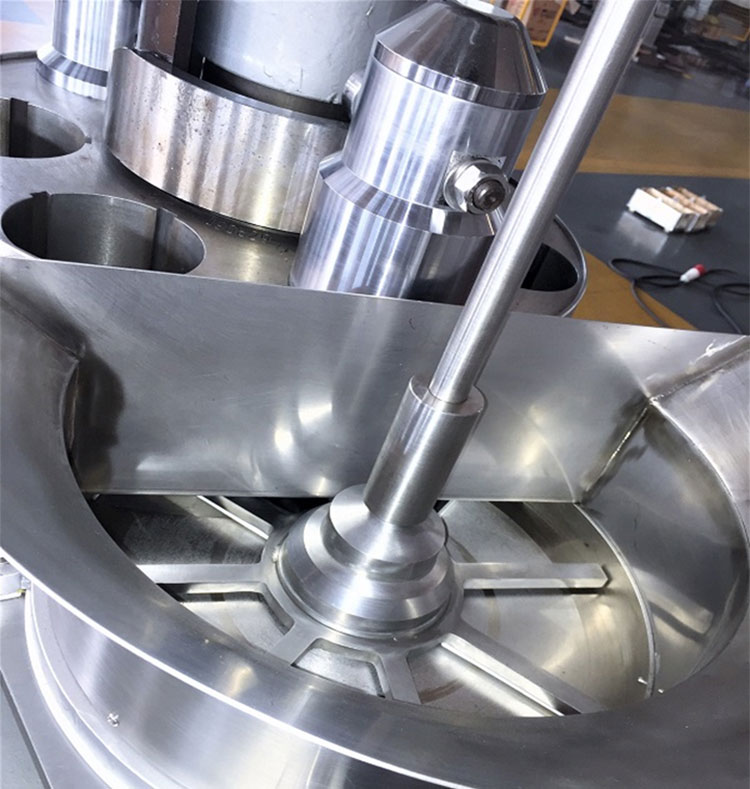
              Flowability Tester-6

              Flowability Tester: The Complete Buying Guide In 2025

              Flowability Tester: The Complete Buying Guide In 2025

              From morning breakfast till ending our house chores and taking self-care, we constantly use powders either in form of condiments, detergent powder, cosmetics, or supplements. By this, we simply get how important role the various powders play in our lives. But have you ever wondered how they maintain their originality for months? The answer is simple by going through a Flowability Tester!

              Flowability

              This innovative equipment represents cutting-edge technology which provide you to conduct flowability testing for your powders in multiple testing conditions. It is a perfect tool to give information about powders in advance, so, that you won't be bothered to face the complexities during production. Moreover, its precise structure, convenient operation, and quick maintenance further extend its worth. So, let's start exploring all about Flowability Tester in this guide!

                Add a header to begin generating the table of contents

                1.What Is A Flowability Tester?

                Flowability Tester

                Powder flowability tester- Picture Courtesy: erweka.com

                Flowability tester can be easily defined as equipment designed to determine the flow rate of various types of powders and granules. It consists of several parts for carrying out the function of measuring flowability.

                The process simply involves stirring the powder in hopper which pushes the powder to adopt continuous flow downward in the collection tray. This nonstop flow of particles is kept noticing by various methods like laser beam and information is provided over digital screen. The entire operation is efficient as well as safe, thus, you can employ it for any kind of small to large dry particulates.

                2.Why Flowability Tester Is Important In Pharmaceutical Industry?

                Pharmaceutical Industry

                Pharmaceutical solid dosage form- Picture Courtesy: askthescientists.com/qa

                As a matter of common observation, pharmaceutical industry is a field constantly involved in the manufacturing, processing, and development of drugs. Now, these drugs are most of the time categorized as oral dosage form and liquid dosage form. Due to effective drug release and convenient drug administration, solid dosage form is always on top which include capsules, tablets, and pills etc.

                Although, the amount of powder each tablet or capsule hold is low but it is still valuable because of a pharmaceutical mixture. That's the reason, each particle play effective role in drug formulation. For this reason, flowability tester is eminent in pharmaceutical industry to determine the flow of powders, so, the equipment like tablet press and encapsulation machine may be settled accordingly.

                3.What Are The Benefits Of A Flowability Tester?

                Well, a flowability tester has many features which in turn become its benefits for you. So, let's enumerate few of the notable ones!

                Precise Structure

                Precise flowability tester

                Precise flowability tester- Picture Courtesy: copleyscientific.com

                With small footprint and compact design, flowability tester has a precise structure which is easy to mobilize. It covers less space thus you can place it anywhere you want. Moreover, it also makes the setting and maintenance of the equipment more handy.

                User-friendly

                User operating a flowability tester

                User operating a flowability tester- Picture Courtesy: erweka.com

                Another benefit of a flowability tester is associated with its large panel which holds over it multiple knobs and a screen. Similarly, by using simple software system, it is possible for every layman to operate the device by just getting the basic information.

                Customization

                Customization is important for many reasons because most of the time a single machine is meant to be used for multiple purposes. In this way, a flowability tester can be easily customized by changing the size of hopper, type of stirrer, and measurement methods.

                Flexibility

                Various food powders

                Various food powders- Picture Courtesy: hanningfield.com

                Flowability tester is best known for its adaptability and versatility that it is able to process both powder and granules with varying degrees of particles size and flowability.

                Safety

                Stainless steel hopper

                Stainless steel hopper & stirrer- Picture Courtesy: erweka.com

                The contact parts of the tester including stirrer, hopper, and collection container are made from quality stainless steel which are fully protected against corrosion and bacteria. So, the processed powders are safe during operation.

                4.Explain The Working Principles Of A Flowability Tester?

                The working principles of a flowability tester can be easily understood by looking into the underlying steps:

                Working Principles Of A Flowability Tester

                Tester Setting

                Flowability tester setting

                Flowability tester setting- Picture Courtesy: erweka.com

                First, you need to set your flowability tester by integrating the necessary parts like stirrier, funnel, and collection plate etc. Then adjust the parameters by bringing in use the control panel.

                Material Loading

                Material Loading

                Powder loading into hopper- Picture Courtesy: erweka.com

                Now, close the outlet of hopper and load desired material which can be powder or granules. Make sure not to overload the hopper as it will cause poor flow or blockage of the nozzle.

                Material Flowing

                Material Flowing

                Powder flowing into container- Picture Courtesy: erweka.com

                Upon successful material loading, just switch on the tester and open the outlet nozzle. The stirrer will start rotation inside funnel which will cause the particles to adopt continuous gravitational movement downward.

                Flowability Measurement

                Flowability Measurement

                Powder flow measuring- Picture Courtesy: erweka.com

                At this point, the flowability tester will keep measuring the flow of material by using different techniques which vary from employing a laser beam to timer. Similarly, the angle of material flow as well as the overall weight of material collected in tray will also be shown at the end of operation.

                Material Discharging

                Material Discharging

                Operator discharging collection plate from powder flowability tester- Picture Courtesy: bulksolids-portal.com

                Once you are done with a cycle of flowability testing, just remove the material filled plate from tester. You may also get the complete output data in form of print by using USB printing.

                5.What Are The Components Of A Flowability Tester?

                Flowability tester has a compact body which is composed of several small to large components. These parts along with their functions are described below:

                Components Of A Flowability Tester

                Components of a flowability tester- Picture Courtesy: erweka.com

                Electric System

                This part of the flowability tester refers to its collective power system which helps it to carry out the function. It consists of wires, fuses, and other electrical parts like USB connection area for printing etc.

                LCD Display

                LCD display is a flat screen that show over it the tester data by illuminating. It displays information about the test during and after information.

                Numerical Membrane Keypad

                It refers to the panel which consists of large number of buttons indicating alphabets, numbers, and directions etc. This keypad enables the user to adjust the parameters of flowability tester for conducting a test on desired measurements setting.

                Stainless Steel Hopper

                The tester also has a stainless steel hopper or funnel which is usually of small size. It is used to hold the powder or granule before testing and during testing the powder is released from the hopper through narrow outlet.

                Stirrer Unit

                Flowability tester come with optional but important stirrer unit which is useful for making the lumpy and cohesive powders flow easy. The stirrer is attached to adjustable unit, so, its height can be easily adjusted.

                Built-up Cone

                Built-up cone is a conical tool which is placed inside the powder collection tray for checking the angle of substance flow during test.

                Powder Collection Tray

                It is a collection container located right under the powder flowing nozzle. Here, the desired substance whether powder or granule is dispensed.

                Balance

                Flowability tester has an integrated automatic balance with pre-set sample weight. Thus, it helps in determining the weight of flowing particles.

                Main Frame

                The main frame of the tester is made from durable and quality material. It is strong enough to keep all the parts together as a single equipment.

                Stable Foot

                Four feet are attached to the flowability tester on the bottom side. These enable the tester to stand up right and function smoothly by avoiding vibration and shaking.

                6.What Are The Three Methods For A Flowability Tester?

                Although, flowability tester is used for determining the flow properties of powders and granules, it is not always necessary that a single method will help in finding the exact flow behavior. For this purpose, three different techniques are used by the same flowability tester to check the flow. These are explained below:

                Angle of Repose

                Angle of Repose

                Angle of repose method- Picture Courtesy: sotax.com

                Angle of repose is a critical setup which is adopted for a flowability tester. In this method, additional built-up cone is placed inside the collection tray right below the funnel. Similarly, the flowability of particulates is checked by the horizontal angle of repose in degrees after adjusting the height of cone.

                Orifice with Cylinder Setup

                Orifice with Cylinder Setup

                Orifice with cylinder setup- Picture Courtesy: sotax.com

                Orifice with cylinder setup is another method employed to measure the flow of powder moving over powder. In this method, cylinder is used instead of cone and flowability is measured as mass per time flowing from any container. The flowability greatly depends upon the the type of hopper as well as the shape of orifice being used.

                Orifice with Funnel Setup

                Orifice with Funnel Setup

                Orifice with funnel setup- Picture Courtesy: sotax.com

                Orifice with funnel setup is a frequently used method to stimulate the flow of materials during testing. Here, a single orifice at the end of funnel helps in the continuous flowing of particulates by just contacting the wall of hopper.

                7.Where Can You Use A Flowability Tester?

                Almost every industry, where there is processing of powders and granules, the need for a flowability tester can be realized to know their exact flow ratio. Similarly, we have highlighted some of the applications of a flowability tester in the upcoming paragraphs:

                Pharmaceutical Industry

                Various pharmaceutical solid dosage

                Various pharmaceutical solid dosage form- Picture Courtesy: anton-paar.com

                Knowing the accurate flow of powders and granules is inevitable for the production of various pharmaceutical and nutraceutical dosage. Similarly, a flowability tester is always used in pharmaceutical laboratories and research centers to carry out this task.

                Veterinary Industry

                Veterinary oral powder sache

                Veterinary oral powder sache- Picture Courtesy: bioveta.eu

                Medications prepared for treating animals also need to be properly examined and made after thorough processing. Thus, the use of a flowability tester is also practiced in veterinary industry.

                Herbal Industry

                Herbal powder

                Herbal powder- Picture Courtesy: silverrootsagro.com

                Herbs are often obtained from leaves and the inner parts of plants. That's why, most of the time you get a crushed mixture which is cohesive and rough. For this reason, an advanced equipment like flowability tester that comes with stirrer, can better help in the processing of herbal powder.

                Detergent Industry

                Scoop in detergent powder

                Scoop in detergent powder- Picture Courtesy: stock.adobe.com

                The use of a flowability tester is also prevalent in detergent powder manufacturing industries. Here, the flow behavior of different solid cleaning agents like laundry powder and dish washing powder is examined in order to use compatible filling system for their packaging.

                Food Industry

                Various spice powders in spoons

                Various spice powders in spoons- Picture Courtesy: womenshealthmag.com

                Flour, sugar, spices, coffee powder, and milk powder all are available in either powder or granules form. However, each substance has different flow ratio but how you will know that? Simply by using a flowability tester! It will help you employ the type of filling machine, technology, and hopper which is compatible to the type of ingredients.

                Cosmetic Industry

                Various cosmetic powders

                Various cosmetic powders- Picture Courtesy: treehugger.com

                We also have great variation of powders and granules in cosmetic industry. Similarly to find their flow properties, a flowability tester can be used for substances like compact powder, bleach powder, and eyeshades etc.

                8.How To Clean And Maintain A Flowability Tester?

                Regular cleaning and maintenance enable you to optimize the performance of your flowability tester and manage issues before they escalate. So, be careful not to skip these steps:

                Operator setting a flowability tester

                Operator setting a flowability tester- Picture Courtesy: collegedunia.com

                Cleaning:Clean the washable parts of your flowability tester on regular basis which simply include the hopper, orifice, and container etc. For other external parts, use a soft moist cloth to remove the dust.

                Monitoring:Keep evaluating the tester during operation for noise and abnormalities and try to find the root cause for effective troubleshooting.

                Parts Changeover:As flowability tester use different tools for different methods, it is necessary to keep changing the parts in accordance with material requirements. In case of part damage, simply replace it with new one.

                Adjustment:Conduct adjustment for your flowability tester both structurally and parameters wise. For instance, adjust the height of hopper, place of stirrer, and measurement setting of the control panel.

                9.What Quality Standards Should A Flowability Tester Comply To?

                Flowability tester must comply to internationally recognized quality standards in order to be termed as safe for pharmaceutical and other powders. Some of these quality standards include:

                FDA logo surrounded by medicines

                FDA logo surrounded by medicines- Picture Courtesy: pharmaoffer.com

                International Organization for Standardization (ISO)

                Good Manufacturing Practices (GMP)

                Food and Drugs Administration (FDA)

                Conformate European (CE)

                American Society for Testing and Materials (ASTM)

                10.Troubleshoot The Common Problems Of A Flowability Tester?

                Flow problems of powder and granules cause frustration and result in huge time losses. That's why, flowability tester is tailored to counter these issues in advance and let you know the favorable environmental conditions and flowing method for your concerned particulates. So, let's know the troubleshooting of a flowability tester!

                i. Material not flowing
                Granules filled hopper

                Encircled agitator inside the hopper- Picture Courtesy: erweka.com

                Cause:

                High environmental humidity causes blockage of material.

                Powders with high moisture content.

                Irregular shape particulates.

                Solution:

                Operate the tester in an environment with no humidity.

                Reduce the moisture level.

                Use mechanical agitator.

                ii. Slow flow of substance
                Encircled agitator inside the hopper

                Granules filled hopper- Picture Courtesy: erweka.com

                Cause:

                The hopper is small or overfilled causing poor material flow.

                There is error in flow volume setting.

                Solution:

                Use large size hopper or leave the 1/3 area empty for effective delivery of particles.

                Adjust the setting by increasing volume at slow speed.

                iii. Decreasing flow
                Highlighting decreasing powder flow

                Highlighting decreasing powder flow- Picture Courtesy: erweka.com

                Cause:

                Buildup of static charge can stick the particles to hopper surface.

                Too dry and fast-moving particles often cause electrostatic charges.

                Solution:

                Eliminate the static by using electro-polish or adding Teflon coating to feeder surface.

                You may reduce the dryness level granulation.

                iv. Material clumping
                Powder clumping

                Powder clumping- Picture Courtesy: azom.com

                Cause:

                High humidity level often leads to particles coalescence.

                Production of electrostatic charges.

                Cohesive particles form lumps.

                Solution:

                Reduce the humidity level.

                Ground the feeder to avoid static buildup.

                Reduce particles cohesion.

                11.What Are The Top Considerations For A Flowability Tester?

                Whenever you intend to purchase a flowability tester, make sure to consider some of the crucial factors that may help you in finding your ideal flowability tester for powder and granules. Here, we have enlisted few tips for you:

                Degree of Automation

                Degree of Automation

                Operator feeding the funnel- Picture Courtesy: teledynelabs.com

                Flowability testers come in varying degrees of automation and specifications. So, you meet to determine what type of equipment you are aspiring for. It will simply relate to your current production scale. For example, if you are running large size manufacturing then opting for latest flowability tester will be a good choice. In contrast, a semi-automatic or hand operated tester may well good for you.

                Adaptability

                Adaptability is the key for selecting an effective flowability tester. It relates to all kinds of testers as it deals with the type and volume of material you want to process. So, must check if you can conduct modification for the desired tester like changing the hopper size and adding an agitator etc.

                Quality Compliance

                Quality Compliance

                Quality icon- Picture Courtesy: adobe.stock.com

                It is important for every flowability tester to comply established standards and adhere to their policies. So, make sure to check the quality compliance along with necessary certifications.

                Cost

                Estimating cost

                Estimating cost & placing coins in a jar- Picture Courtesy: brother.co.uk

                Cost also matters a lot! After all the game is all about profit. So, ask your vendor to show you flowability testers with different prices along with their operation and maintenance cost and then take a final decision.

                Conclusion

                Let's wrap up this informative review about a Flowability Tester: The Complete Buying Guide In 2024! We hope you have understood all the above-mentioned information in a well manner. No doubt, the discoveries in science and technology has also raised concerns regarding the products safety especially in a sensitive field like pharmaceutical industry. In such a case, the use of a flowability tester become inevitable. Thus, we are aiming to meet your needs by designing sophisticated flowability testers which come along with one year of warranty. So, if you are interested in purchasing it, don't forget to contact us!

                Don't forget to share this post!

                CONTACT US

                Tell us your raw material and project budget to get quotations within 24 hours.

                WhatsApp Us: +86 156 0710 8630

                Invalid Email
                Invalid Number

                Flowability Tester: The Complete Buying Guide In 2025 Read More »
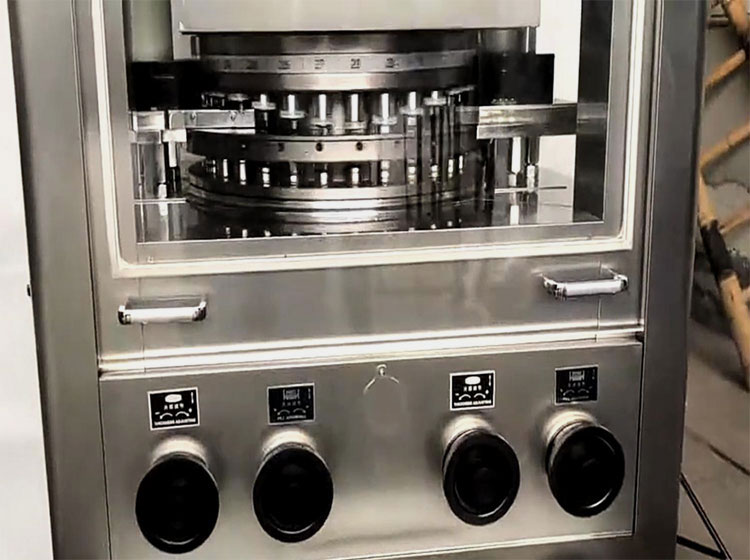
                Melting Point Tester

                Melting Point Tester: The Complete Buying Guide In 2025

                Melting Point Tester: The Complete Buying Guide In 2025

                Nowadays, the development of the industries is directly influenced by the products’ quality. And, products’ melting point is related to the products’ purity. Many industries have use melting point testers to control the products’ quality and keep safe production.

                Facing diverse melting point testers, you will get into trouble to choose a suitable one. Are you curious about what are the main types, parts and working principle of melting point tester. What should you understand and consider when choosing your desired device?

                Well, let’s explore the complete buying guide of melting point testers together!

                  Add a header to begin generating the table of contents

                  1.What Is the Melting Point Tester?

                  Melting Point Tester

                  Melting Point Tester - Sourced: vtsyiqi

                  As the name shown, the melting point tester is a device to detect the melting point of the material. Melting point tester, also called as melting point apparatus, is widely used in many research.

                  Usually, when the substance is contaminated, its temperature detected by the melting point tester is lower than a pure one.

                  2.Why Is the Melting Point Tester Important?

                  Melting point tester has been widely used, and its importance has been displayed. Why is the melting point tester more and more important?

                  (1)Research and development

                  Research-and-development

                  Research and Development - Sourced: Church & Dwight Careers

                  Melting point tester has been a significant role in the research and development in many industries. Scientists use this device to check the effects of the material.

                  (2)Quality control

                  Quality-control

                  Quality Control - Sourced: Medium

                  Melting point is mainly used to detect the purity of the substance and ensure the products’ quality. Once the operators find that the products are not purified, they can report this result to the related personnel to control other products’ quality.

                  3.What Are the Benefits of Melting Point Tester?

                  After understanding the importance of the melting point tester, do you know their benefits? What can this device contribute to your industry?

                  (1)Easy and fast detection

                  Easy and fast detect

                  Easy and Fast Detect - Sourced: buchi.com

                  With specialized system, melting point tester can get the melting point easily and vastly. You can watch the changes in melting point data through display screens and video recordings. These data can be quickly managed through computer software.

                  (2)Accurate

                  Melting point tester can test the melting point accurately with compared to manual testing. Melting point tester can avoid errors caused by manual detection, and can more accurately identify the melting process and the temperature.

                  (3)Cost savings

                  Cost-savings

                  Cost Savings - Sourced: Inc. Magazine

                  By using the melting point tester, the manufactures can detect unqualified products, and avoid the rework and delay of the products, so this device help the manufactures save a lot of cost.

                  4.What Are the Applications of Melting Point Tester?

                  Which industry can melting point tester apply? As long as the industries need test melting point, they will use this device, which will contribute a lot to them.

                  (1)Textile industry

                  Textile

                  Textile - Sourced: 123rf.com

                  Fiber is a common material in the textile industry, which adopts melting point tester to detect the quality and different types of the fiber. This device serves as a significant role in the textile production.

                  (2)Pharmaceutical Industry

                  Drug

                  Drug - Sourced: Wolters Kluwer

                  Active pharmaceutical ingredient is the core part of the drugs, and melting point tester is used to detect its quality. This process ensures the efficiency of the drugs and provide healthy support for patients.

                  (3)Food industry

                  Snack

                  Snack - Sourced: Sanctifly

                  Fats and oil are common material used in the food industry. Melting point tester is used to test the purity of these material, and evaluate its quality, such as detecting the degree of deterioration of oils and fats in fried foods.

                  (4)Scientific research industry

                  Scientific-research

                  Scientific Research - Sourced: University of Utah

                  Researchers in universities, research institutes, and other institutions, use melting point testers to study the melting point characteristics of substances, and then investigate their physical and chemical properties, providing data support for the development and research of new materials.

                  5.How Many Different Types of Melting Point Tester?

                  How much do you know about the types of the melting point tester? Nowadays, with the technology, there are many shapes of melting point tester. Well, let’s learn four main kinds of this device.

                  (1)Thiele tube

                  Thiele-tube

                  Thiele Tube - Sourced: Wikipedia

                  This device is mainly used to detect the melting point of liquids, and the operation is very simple. The operator only needs to pour the liquid into the tube and heat it with fire until the liquid boils.

                  (2)Fisher-Johns melting tester

                  Fisher-Johns-melting-tester

                  Fisher-Johns Melting Tester - Sourced: Wikimedia Commons

                  This device does not use tubes, but instead uses small circular glass coverslips for detection. The operator places the material on a glass coverslip, turns on the device for heating, and can observe the changes in the material through a lens.

                  (3)Gallenkamp (Electronic) melting-point tester

                  Electronic-Melting-point-Apparatus-1

                  Gallenkamp (Electronic) Melting-point Tester - Sourced: Eiscolabs

                  This type of device can be used to detect different types of materials. This device adopts mercury thermometer to detect the result, which can enhance its accuracy. It is capable of recording temperature changes during solid melting process.

                  (4)Automatic melting-point tester

                  Automatic-Melting-Point-Tester-1

                  Automatic Melting-Point Tester - Sourced: thomassci

                  Automatic melting-point tester is a common device used in many industries. This machine is equipped with an LCD display screen. Therefore, the operator can more accurately observe the changes and the range of temperature.

                  6.What Are the Key Parts of Melting Point Tester?

                  Although melting point tester is a small device, it is very important to understand its key parts. As shown in the picture below, the melting point tester is mainly made of four parts.

                  Key Parts of Melting Point Tester

                  Key Parts of Melting Point Tester - Sourced: vtsyiqi

                  Key Parts Description
                  Capillary tube Capillary tube is thin tube, which is made of glass. This part is adopted for holding the material to conduct melting point analysis.
                  Heating chamber Heating chamber is used to storing the test material. This part is usually made of metal or glass that can be adapted to all kinds of material.
                  Magnifying lens The function of a magnifying lens is to magnify the process of material melting, making it easier for operators to observe. Operators can clearly observe the melting process of the material through the magnifying lens.
                  Temperature screen display Temperature screen display can record and display the initial and final results of the material melting, which make it convenient for operators to observe.

                  7.What Is the Working Principle of Melting Point Tester?

                  You will feel confused how to operate melting point tester. The working principle of the melting point tester will endure several stage. Looking at the following workflow, and you will understand it clearly.

                  Working Principle of Melting Point Tester

                  Working Principle of Melting Point Tester - Sourced: labster

                  Step 1: Prepare material

                  You should prepare the material that you want to test. The material should keep dry, or it will influence the melting result.

                  Step 2: Put the material into the capillary tube

                  Capillary tube is a disposable tool. One end of the capillary tube is in a closed state, and the other end is in an open state. You need to load the material through the unsealed end.

                  Step 3: Turn on the device

                  After put the material into a new capillary tube, you should insert the capillary tube in the melting point tester and start the device to operate.

                  Step 4: Record the initial temperature

                  Once you turn on the device, you should record the initial temperature of the material when it does not melt.

                  Step 5: Record the result

                  After a period of time, the material melts gradually. When the solid completely melts, you should record the finial temperature.

                  8.What Are the Main Methods Used by Melting Point Tester?

                  Why does melting point tester can detect the melting point? Do you know its methods? The common method used by the melting point tester is the capillary method and microscopic melting point determination method

                  (1)Capillary method

                  Capillary-Tube

                  Capillary Tube - Sourced: World Lab Supplies

                  This method will use capillary tubes. The operator loads the sample material into a capillary tube, places it in a hot bath, continuously heats it, observes the melting point, and records the initial melting and full melting.

                  (2)Microscopic melting point determination method

                  Microscopic-determination-method

                  Microscopic Determination Method - Sourced: Optotune

                  This method uses a microscope to observe the process of material melting. The operator places the sample material on a glass slide, places the slide under the microscope of the melting point analyzer, and turns on heating to observe the process of material melting and record the temperature at which the material completely melts.

                  9.What Factors Will Influence Melting Point Tester?

                  The result of melting point tester is influenced by many factors. When we use this device, we should pay attention to this factors.

                  (1)The control of temperature

                  The-control-of-temperature

                  The Control of Temperature - Sourced: Flaticon

                  The temperature will influence the result of melting point tester. The rate of heating should not be too fast or too slow, and should be maintained within a reasonable range. The faster the heating rate, the higher the melting point.

                  (2)The type of bonding

                  The type of bonding between material will influence the melting point. If the material is equipped with ionic bonds, it will have higher melting points than those with covalent bonds.

                  (3)Impurity

                  Impurity in liquid

                  Impurity in Liquid - Sourced: iStock

                  Impurity is a vital factor that influence the measure result of the melting point tester. If there are lots of impurities in the material, it will influence the result of the device. The more impurities in the material, the lower the melting point is.

                  10.How to Maintain Melting Point Tester?

                  Everything needs maintenance, and good maintenance can extend its lifespan. In order to ensure accuracy of melting point tester, you should pay attention to maintain it.

                  (1)Store properly

                  When you do not use melting point tester, you should put the device in a dry and clear place. Therefore, it can prevent the machine from being eroded or entering debris, which may affect the accuracy of the data.

                  (2)Cleaning

                  Cleaning

                  Cleaning - Sourced: pharmaguideline

                  The storage of machines inevitably generates dust or other impurities. You should clean the outside of the machine with a soft cloth every day to keep it clean. And cleaning the inside of the machine once a week with a cleaning agent while the machine is turned off.

                  (3)Report issues

                  issues

                  Issues - Sourced: Pix4free

                  When you meet any issues about the melting point tester, including the unclear data display, you should not try to repair it by yourself, and you should report them to related technicians right now.

                  11.How to Choose A Suitable Melting Point Tester?

                  A suitable melting point tester play a significant role in the material detection. When you choose a desired a melting point tester, you should consider following factors.

                  (1)Accuracy

                  You should choose a melting point tester with accuracy suitable for your industry. Only choosing a high accuracy product, you can ensure your products’ quality.

                  (2)Material size

                  Material Size

                  Material Size - Sourced: Yuga Organic

                  Melting point tester can contain different types and sizes of material. But you should according to your material size to choose a suitable melting point tester, so you can avoid the problem of unreasonable size.

                  (3)Material type

                  You should choose a melting point tester based on your material, including metal, glass and fragrances. Different melting point testers are adapted to different material types, and also you can choose a device that suitable for all material types.

                  (4)Temperature range

                  Temperature-range

                  Temperature Range - Sourced: VectorStock

                  Temperature range is diverse among different melting point tester, so you should choose a melting point tester that required for your products.

                  12.What Is theFuture of Melting Point Tester?

                  According to the data, the global market value of melting point tester is about USD 56 million in last year. With the market demand, this number will continue to rise.

                  (1)Demand growth drives market development

                  Novel-Drugs-Development

                  Novel Drugs Development - Sourced: BioWorld

                  With the development of the society, more and more companies pay attention to the research and development of new products, and they need to test the material, especially in pharmaceutical and health care industry.

                  Withe the increase of chronic disease, many pharmaceutical companies continue to detect drugs to develop novel drugs for patients. Therefore, these demand drives the market development of melting point testers.

                  (2)The device will be more accurate

                  More-Accurate

                  More Accurate - Sourced: Journeyfront

                  With the rapid development of technology, melting point testers will become increasingly advanced, display screens will be clearer, and content will be richer. Through various data analysis techniques, the detection results of the melting point tester will become increasingly accurate.

                  Conclusion

                  With its diverse benefits, melting point tester serves as a vital tool in many industries. After reading this article, you must have understand a lot about melting point tester. If you want to know more information about this device, you can contact Allpack at your convenience.

                  Don't forget to share this post!

                  CONTACT US

                  Tell us your raw material and project budget to get quotations within 24 hours.

                  WhatsApp Us: +86 156 0710 8630

                  Invalid Email
                  Invalid Number

                  Melting Point Tester: The Complete Buying Guide In 2025 Read More »
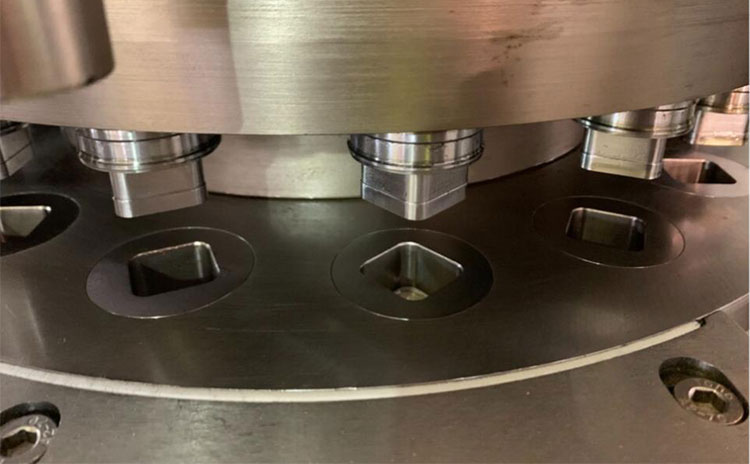
                  Cap Torque Tester

                  Cap Torque Tester:The Complete Buying Guide In 2025

                  Cap Torque Tester:The Complete Buying Guide In 2025

                  Are you curious about how manufactures ensure the safety and quality of the product packaging? The cap torque tester plays an important role. With its high precision and stability, the cap torque tester has become increasing popular in many industries.

                  Have you seen how the cap torque tester accurately measures the torque value? Do you have any doubts about the definition, applied industry, types, main parts and other related elements of cap torque tester?

                  Next, I will provide you with the most complete buying guide for cap torque tester.

                    Add a header to begin generating the table of contents

                    1.What Is the Cap Torque Tester?

                    Cap Torque Tester

                    Cap Torque Tester - Sourced: crane-electronics.com

                    The cap torque tester refers to a device that carefully measure the torque values of the bottle caps. This device is also called as bottle cap torque tester, which involves many packaging products, including bottles, and beverage containers.

                    This device can also meet the requirements of pressure type bottle cap locking and opening force testing.

                    2.What Are the Features of the Cap Torque Tester?

                    Why choose a cap torque tester? What are the features of this machine? The following reveals the features of this device.

                    (1)High precision measurement

                    The cap torque tester can get high precision, duet to its sensor. You can use it to ensure the quality of your products.

                    (2)Adjustable

                    The grips and fixtures of the cap torque tester can be adjustable, so it can be adjustable to different bottle caps.

                    (3)Good stability

                    Good stability

                    Good stability - Sourced: Pix4free

                    Through stable fixing devices and advanced measurement technology, the cap torque tester ensures good repeatability and stability of testing over a long period of time.

                    3.What Are the Applied Industries of Cap Torque Tester?

                    Do you know which industry can cap torque tester apply? This high-precision cap torque tester plays an important role in multiple industries. Next, let’s explore the main industries in which it is applied together:

                    (1)Pharmaceutical industry

                    Drug

                    Drug - Sourced: SKS Bottle

                    Many pharmaceutical industries use cap torque testers to detect the safety of the products. I believe everyone has taken drugs, so you must know that lots of drugs are packaged by various bottles. The sealing of drug bottle is related to the quality of the drug, and even related to the people’s health.

                    (2)Food and beverage industry

                    Beverage

                    Beverage - Sourced: SKS Bottle

                    As you known, the cap is related to the quality of the products. And now, bottle packaging is widely used in the food & beverage industry.. Therefore, the cap torque tester is also used in this industry to avoid leaking during transportation.

                    (3)Cosmetic industry

                    Cosmetic

                    Cosmetic - Sourced: Sphere Resources

                    Cap torque tester is also used in the cosmetics industry to test the torque value of packaging bottle caps. As you can see, many cosmetics are used in the bottles, which need good sealing.

                    If the cosmetics bottle leak, the liquid will get worse and unable to use, so it will affect the customer’s buying experience.

                    In a word, cap torque testers are widely applied in these industries to ensure these products in good sealing and good quality.

                    4.What Arethe Benefits of Cap Torque Tester?

                    Why use a cap torque tester? Do you know what benefits it has? The benefits mainly manifest in the following aspects:

                    (1)Avoiding air leakage issues

                    Air Leakage Issues

                    Air Leakage Issues - Sourced: Alltopbargains

                    Leakage issues can affect product quality, customer shopping experience, and more. Cap torque tester is widely used in various products, effectively avoiding air leakage and oxidation problems, and maintaining product safety.

                    Saving cost

                    The cap torque testers contribute significantly to cost savings by minimizing wasteful product loss and diminishing the necessity for rework, thereby optimizing production efficiency, and reducing overall expenses.

                    Improving product quality

                    Improving Product Quality

                    Improving Product Quality - Sourced: solidworks.com

                    The cap torque tester can accurately improve product quality and increase product qualification rate. For products that fail the inspection, they will be removed to ultimately ensure the safety of the products in the hands of customers.

                    5.How Many Types of Cap Torque Testers?

                    Have you seen different types of cap torque testers? Do you know how many types of this device? Next, I will introduce two main types.

                    (1)Handheld cap torque testers

                    Handheld Cap Torque Tester

                    Handheld Cap Torque Tester - Sourced: mark-10.com

                    Handheld cap torque testers are small than other kinds of testers, so it is convenient to carry. This kind devices are mainly used to measure the tightness of bottles.

                    As showed in the above picture, handheld cap torque testers are equipped with a digital indicator, which can clearly show the test results. This device can detect samples of various sizes and shapes.

                    (2)Desktop cap torque testers

                    Desktop Cap Torque Tester

                    Desktop Cap Torque Tester - Sourced: sotax

                    Desktop cap torque tester is suitable for measuring PET bottles and other materials, and is often found in scientific research in laboratories. It has higher measurement accuracy and stability.

                    The desktop cap torque tester can also be suitable for products of various sizes, mainly for occasions that require high testing accuracy

                    6.What Are the Main Parts of Cap Torque Testers?

                    Although the cap torque tester is relatively compact, it also has many complex components. The cap torque tester is mainly made up of four parts. Well, let’s explore the main parts of cap torque tester together.

                    Main Parts of Cap Torque Testers

                    Main Parts of Cap Torque Testers - Sourced mark-10.com

                    Test stand

                    The test stand is the supporting part of the entire machine. So, the test stand is stable and durable to hold the whole device, which can ensure the normal running of the equipment and keep the accuracy.

                    Torque indicator

                    The torque indicator is also very important, which is used to display the torque value to operators. With the development of the technology, many torque indicators often use digital indicator, which are clear for operators.

                    Torque sensor

                    The torque sensor is the key part of the cap torque tester, and this device is used to accurately measure the torque value.

                    Grips and fixtures

                    Grips and fixtures are used to keep bottle caps do not slide or shift during the testing process. To cater different types and sizes of bottle caps, the grips and fixtures should be designed to adapt to them.

                    The four parts are the core parts of the cap torque tester, to be honest, there are also many other small parts in this device.

                    7.What Is the Working Principle of theCap Torque Tester?

                    Working Principle of The Cap Torque Tester

                    Working Principle of The Cap Torque Tester - Sourced: mqs

                    Have seen how the cap torque tester work? Are you curious about its workflow? The working principle of the cap torque tester is mainly based on torque sensor technology. The workflow of the cap torque tester will experience four steps:

                    Step1: Preparing the sample

                    You should prepare a sample bottle and fix the it on the grips and fixtures of the cap torque tester, and the bottle should be kept stable.

                    Step2: Setting test parameters

                    After placing the bottle, you should set the required parameters for testing through the control system, including rotation direction and rotation speed.

                    Step3: Starting the device

                    Start the cap torque tester, and torque sensor will lead the cap to rotate. During the process, the torque sensor will monitor and record the torque value required for the bottle cap to rotate.

                    Step4: Outputting the result

                    The torque indicator will show real-time torque values. You can refer to the date and check it.

                    8.What Quality Standards Should A Cap Torque TesterMeet With?

                    Cap torque tester also need strictly follow the quality standards. Do you know what are they? Here is an overview of some major ASTM Standards and ISO Standards:

                    (1)ASTM D7860-14

                    ASTM Standards

                    ASTM Standards - Sourced: Nimonik

                    ASTM International is a standard about the products, service, and others. The ASTM D7860-14 standard is used for packaging of child resistant containers, specifying the testing method for cap torque testers to ensure packaging safety, and keep it use easily for children.

                    (2)ASTM D3474

                    ASTM D3474 also belongs to the ASTM Standard. This kind standard categorizes child-resistant packaging as a vital measure to safeguard products from unintended access by children, thereby mitigating the hazards of accidental ingestion or exposure to potentially dangerous materials.

                    (3)ISO 17025

                    ISO Standards

                    ISO Standards - Sourced: GenomSys

                    ISO, as a national standards body in the world, has also developed a standard about torque testing. As a part of ISO Standard, ISO 17025 standard ensures accuracy of testing results of testing and calibration in laboratories.

                    The operators should strictly adhere to ISO 17025 standard, because it serves as a test to their quality management systems.

                    9.What Should You Consider When Choosing A Cap Torque Tester?

                    Do you want to purchase a cap torque tester? When choosing this device, you need to consider multiple factors.

                    (1)Ease of use

                    When purchasing a cap torque tester, you need to choose a machine that is easy to operate, such as a clear interface and simple operation process, which can improve your work efficiency.

                    (2)Accuracy

                    Measurement Accuracy

                    Measurement Accuracy - Sourced: Adobe Stock

                    Accuracy is closely related to the quality of the product. Therefore, you should choose a high-precision cap torque tester, which is crucial for the accuracy measurement results.

                    (3)Capacity

                    It is very important to ensure that the cap torque tester’s measurement range aligns with the specific torque testing demands of the bottle caps. Given the potential variation in torque values among bottle caps for different products, selecting an appropriate measurement range tailored to the actual application is crucial.

                    (4)Device with good brand

                    Brand

                    Brand - Sourced: Adobe Stock

                    As the saying goes, the fragrance of wine is not afraid of deep alleys. Products with good reputation and brands have a certain quality guarantee. Therefore, when choosing a cap torque tester with a good reputation, you will get reliable product quality and after-sales service.

                    10.What Are the Common Issues and Solutions for Cap Torque Tester?

                    During the use of the machine, problems are inevitable. The cap torque tester may encounter some problems during use, and we can solve simple problems ourselves. Therefore, it is very important to understand the common problems and countermeasures of cap torque testers.

                    Common Issues Solutions
                    Power supply When meeting this issue, you should check the power plug. And then, you should check the situation of the power switch and ensure if it is damaged.
                    Inaccurate reading or data loss When you read the measurement results are not accurate or you find the situation of date loss, you should check the power connection of the torque sensor and the quality of the torque sensor. If the torque sensor is damage, you should change it.
                    Mechanical alignment Mechanical issues may affect measurement accuracy. You should pay attention to the cap torque tester to see whether it keeps in suitable place.
                    The torque indicator doesn’t show the result If you have seen the torque indicator doesn’t show the result, you should check the power connection of the torque indicator. If the device cannot run normally, you should change it.

                    11.How to Maintain the Cap Torque Testerfor Effective Work?

                    Things need maintenance in order to last, and machines are no exception. Therefore, you need to maintain the cap torque tester to ensure its accuracy. Here are some specific maintenance solutions:

                    (1)Cleaning

                    Cleaning

                    Cleaning - Sourced: CLH Healthcare

                    Device need clear regularly, so does cap torque tester. When the cap torque tester stores for a long time, it will generate dust and other debris. You should wipe it with a soft cloth and avoid using hard objects for cleaning. Special attention should be paid to sensors and their connection points.

                    (2)Calibrating

                    Calibrating

                    Calibration - Sourced: eleymet.com

                    If you do not calibrate the machine, it may cause error during the measurement progress. So, you should regularly calibrate the cap torque tester according to usage frequency and accuracy requirements to ensure its measurement accuracy.

                    (3)Replacing worn parts

                    For severely worn components, you should replace them in a timely manner to ensure the overall performance of the cap torque.

                    12.What Is the Future Trend of the Cap Torque Tester?

                    As a key equipment in packaging quality control, what is the future of the cap torque tester? Are you curious? Let’s explore its future trend together.

                    (1)Higher precision

                    Higher precision

                    Higher Precision - Sourced: thoughtco.com

                    With the continuous advancement of sensor technology, the cap torque tester will adopt higher precision torque sensors. In addition, it will adopt more advanced data analysis systems to ensure the accuracy and stability of measurement results.

                    (2)More Adaptable

                    More Adaptable

                    Artificial Intelligence - Sourced: DigitalMara

                    With the development of artificial intelligence, the cap torque tester in the future will use AI to achieve more accurate measurement. Therefore, this device can be adjustable to more types of bottle mouths, and meet the needs of more customers.

                    Conclusion

                    The cap torque tester serves as a significant part in packaging quality control in industries such as food, beverage, and pharmaceutical due to its advantages. This article introduces a series of buying guide of the cap torque tester in the hope of providing assistance to you. If you want to know more, feel free to contact Allpack at any time.

                    Don't forget to share this post!

                    CONTACT US

                    Tell us your raw material and project budget to get quotations within 24 hours.

                    WhatsApp Us: +86 156 0710 8630

                    Invalid Email
                    Invalid Number

                    Cap Torque Tester:The Complete Buying Guide In 2025 Read More »
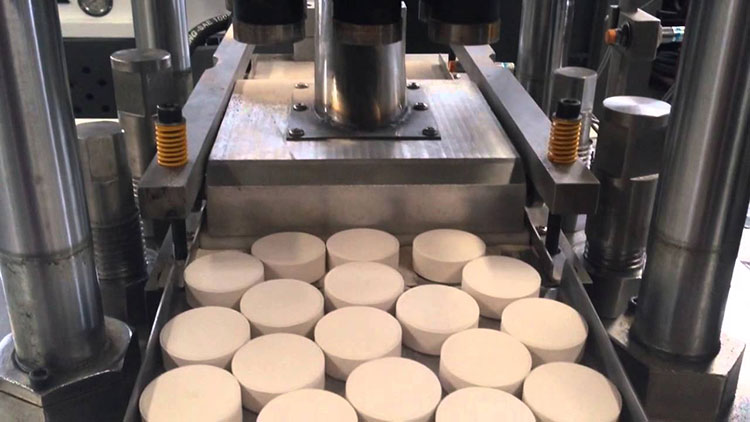
                    Tapped Density Tester-6

                    Tapped Density Tester:The Complete Buying Guide In 2025

                    Tapped Density Tester:The Complete Buying Guide In 2025

                    Do you know what is tap density tester? If you don’t know it, you may still served by it. Metal powder, nonmetal powder, dyes, pharmaceuticals, pesticides, abrasives, paints, food additives and so many kinds of powder products may be tested by tapped density tester.

                    But do you know what is tapped density? What is the difference between apparent density and tapped density? Why you need this and what can the tapped density tester benefit you? After reading of the complete buying guide of tapped density tester in 2024, you may become the professor of this machine! Come on and have a reading!

                      Add a header to begin generating the table of contents

                      1.What Is Density Tester And Tapped Density Tester?

                      Tapped Density Tester

                      Tapped Density Tester-Sourced:bettersizeinstruments

                      To know density tester and tapped density tester, you may first have a clear understanding of density. Density is the ratio of mass to volume. It can converted density ratio into other units and concentrations for specific applications, like alcohol, gravity, API and so on which are widely used in chemical, pharmaceutical and other industries.

                      Tapped density is the important support for compress and flow of powder, granule, pellet, flakes and so on. Tapped density tester gives the precise result efficiently which is rather helpful in pharmaceutical, chemical, medical and many other fields. It can test the natural product like silver powder, nickel powder and artificial one like dyes, pesticides.

                      2.What Can Tapped Density Tester Do?

                      Many industries cannot refuse the contact with tapped density tester. Do you know the reasons?

                      Raw material quality test

                      Raw Material Quality

                      Raw Material Quality-Sourced:nutu

                      Tapped density tester can test the purity and concentration of powder products. With tapped density tester, you may have your raw material a clear and distinct look. You may also makes better products with deeper examination on raw material quality.

                      Raw material composition test

                      Raw material composition

                      Raw Material Composition-Sourced:ujimatchatea

                      Tapped density tester can test the raw powder purity as well as the composition. For pharmaceutical powder, food powder, metal powder and so on, you may have a better look on its composition.

                      Powder flow behavior predict

                      Powder flow behavior

                      Powder Flow Behavior-Sourced:granutools

                      The flow behavior of powder is also an important part for many product. The knowing of powder flow behavior can help deal with many problems. For example, the powder flow behavior of raw material is an important element in making tablets.

                      3.Which Field MayTapped Density Tester Be Applied?

                      Powder is the raw material form which is frequently applied in many fields and industries. Here are the industries which tapped density tester frequently applied.

                      Oil industry

                      Oil industry

                      Oil Industry-Sourced:netzero-events

                      In oil industry, there is the essential use of silver, iron, aluminum, zirconium powder and many other kinds of powders in it. The tapped density tester can test the right composition, flow and many other features of the powder.

                      Chemical industry

                      Chemical industry

                      Chemical Industry-Sourced:gtai

                      Chemical products are varied and the raw powder applied in it are also varied. Titanium dioxide, zeolite, boron carbide, graphite, quartz, gypsum and such essential chemical products have the powder form and can be tested by tapped density tester.

                      Food industry

                      Food industry

                      Food Industry-Sourced:foodmanufacture

                      For food industry, you cannot miss the food additives which are so important in modern world. For the diverse food additives and food powder in food industry, you can have a better prove in the powders added in food industry.

                      Pharmaceutical industry

                      Pharmaceutical industry

                      Pharmaceutical Industry-Sourced:markrhodes

                      Powder can make tablet, pill and many other medical form in pharmaceutical industries. The nice qualified raw powder can make medicine give better effect and make more qualified products.

                      4.What Is The Use Of Tapped Density Tester In Pharmaceutical Field?

                      Powder is the important medical form in pharmaceutical field and the tapped density tester which makes the deep test of this form is thus rather important in pharmaceutical field.

                      Test the compression

                      Test the compression

                      Test The Compression-Sourced:merlin-pc

                      Pharmaceutical powder are usually composed by pharmaceutical ingredients and excipients. To make the real nice and qualified tablet and pill, the pharmaceutical powder should be with great compress features.

                      Test the flow property

                      Test the flow property

                      Test The Flow Property-Sourced:icheme

                      The successful making of some medicine like capsule or medicine with suspend form, one should make the medical powder with great flow property. The tapped density tester can make the precise testing and share you the reliable results.

                      5.What Benefit Can Tapped Density Tester Take You?

                      Tapped density tester can be widely used in many field and takes much benefits to these fields. Here are the benefits which tapped density tester can take you.

                      High precision

                      High Precision

                      High Precision-Sourced: Pngtree

                      Tapped density tester makes precise test and gets every number precise as the missing of a small number may lead the mistake in later work. The test is thus high precise and rather reliable.

                      Easy operation

                      Easy operation

                      Easy Operation-Sourced:anton-paar

                      The operation of the tapped density tester isn’t that difficult though it is highly intelligent and precise. It is equipped with the automatic calculation features and is tend to equipped with touch screen. The operation is easy and will become easier.

                      High Flexibility

                      High Flexibility

                      High Flexibility-Sourced:labulk

                      Tapped density tester is high flexible. You may test powder with one or two test station configurations or combine the two to make the test.

                      Great intelligence

                      Great intelligence

                      Great Intelligence-Sourced:aimsizer

                      Tapped density tester is intelligent enough to make the intelligent judges of the coming number. It keeps its high accuracy with great intelligence and may save much energy and time of operator.

                      6.What Are The Main Components Of Tapped Density Tester?

                      Tapped density tester is small but fragile. Here are the new tapped density tester type and let us explore its main components.

                      Main Components Of Tapped Density Tester

                      Main Components Of Tapped Density Tester-Souced:qlsindia

                      Components Usage
                      Main body


                      The main body of tapped density tester is a regular rectangle box. It has printer and calculator set in it which play the job of making the precise calculating and essential printing for the test.
                      LCD display


                      LCD display is the place which shows the operating process and testing process of tapped density tester. The size of it may varied but you may always have a clear knowing of machine operating from it.
                      Membrane buttons


                      Membrane buttons are the tools which may help the operating of machine and import of number. It is like the brain of the testing machine and the only difference lies in the work is initiated by you.
                      Measuring cylinder


                      Measuring cylinder is the place where place the powder sample and you may find two or three test station configurations work the same time. The cylinder looked simple but not with simple structure. You may find the graduated cylinder, holder, polyurethane washer and so on combined in order to make effect.

                      7.What Is The Working Principle Of Tapped Density Tester?

                      Tapped density is a complex and deep knowledge, but the tapped density tester can give you precise and accurate result with simple operation.

                      Make the preparation

                      Make the preparation

                      Make The Preparation-Sourced:learnloft

                      You should clean machine and check the machine state for the later smooth operation. And for raw material, You’d better dry it. For powder with volatile substance, you should not dry it. And for powder which is oxidized easily, you should dry it in vacuum state. For the powder which cannot be dried, you may test it in real state.

                      Weighing and adding

                      Weighing and adding

                      Weighing And Adding-Sourced:lab-label

                      Weighing the powder you need and adding the weight of powder in machine. While in adding powder in cylinder, you should make the powder in surface level and then place cylinder in vibration platform.

                      Enter tapping number

                      Enter Tapping Number

                      Enter Tapping Number-Sourced:labtroninstrument

                      You may set the tapping number in machine and then let machine start the tapping. The tapping number of different powder all varied, for metal powders, it should be about 3000 times.

                      Adjust vibrating frequency

                      Adjust vibrating frequency

                      Adjust Vibrating Frequency-Sourced:shutterstock

                      The vibrating and tapping frequency can be adjusted. The normal vibrating frequency is 100-300 rounds per minutes. And you may adjust it according to your powder feature.

                      Imputing volume

                      Imputing-Volume-6

                      Imputing Volume-Sourced:torontech

                      For the volume of powder, you may get it clearly if the powder surface is level after tapping. And for the one not level, you should check it several more times and input  the average number.

                      Calculating and printing

                      Calculating and printing

                      Calculating And Printing-Sourced:hmk-test

                      With all data needed get in, you may then get the calculating process and get the results which are completed by machine. You may then get the results printed.

                      8.How To Install Tapped Density Tester?

                      The tapped density tester is a fragile machine, but the installation doesn’t need you much hard work. The machine has the body part complete and most you need to do is to install cylinder part.

                      Choose cylinder size

                      Choose cylinder size

                      Choose Cylinder Size-Sourced:anton-paar

                      A tapped density tester is usually equipped with different size of cylinder. To make the precise and efficient testing, you may get the one based on the powder weight and artificial density.

                      Install cylinder

                      Install cylinder

                      Install Cylinder-Sourced:labulk

                      Cylinder is the straight container. The internal structure is not that simple. You should first lace screw cap and polyurethane washer from the upper side of it. Then you should put the silica jel pad from the bottom of the cylinder. After the screwing of cap, you may then place the tapping apparatus in the guide bearing.

                      Adjust tester and make test

                      Adjust tester

                      Adjust Tester-Sourced:lpp-equipment

                      For later smooth operation, you should adjust your tapped density tester. Is the initial value right? Does the amplitude adjust? Do you choose the right cylinder size? You would better give the new machine a powder test to see the right installation.

                      9.How To MaintainTapped Density Tester?

                      Tapped density tester should be maintained carefully to prolong the life span and help it to make better performance.

                      Make the regular cleaning

                      regular cleaning

                      Regular Cleaning-Sourced:istockphoto

                      You should make the regular cleaning of the machine to prove its great state. You should clean the cylinder with tissue paper and cotton cloth for the soft and clean cleaning. Remember to turn off the machine while cleaning.

                      Check the condition regularly

                      Check The Condition

                      Check The Condition-Sourced:clickmaint

                      You should check your tapped density tester regularly. Do you install printing paper? Do you lubricate the bearing? Is the ground cable in the right condition. All in all, you should observe machine state carefully.

                      Place and move carefully

                      Place and move carefully

                      Place And Move Carefully-Sourced:labulk

                      Tapped density tester should be placed in a stable and firm place. The accidental slip may cause the forever damage of machine. While moving it, you should also take concern to not punch or hurt it.

                      Use with great care

                      Use with great care

                      Use With Great Care-Sourced:medicalexpo

                      In the work of tapped density tester, you would pay attention to the powder or suspend liquid. Do not let liquid flow into or slip into the tapped density tester. The leaking of liquid is hurt to machine.

                      10.What Other Machine Can Be Used For The Density Testing?

                      Tapped density tester is a type of density tester for testing density. And here are other way you may want to know for other density testing.

                      Hydrometer

                      Hydrometer

                      Hydrometer-Sourced:indiamart

                      Hydrometer is a density tester which test the density of liquid. It is made of blown glass and has a steel shot in its bottom. You may get the density by immersing it in sample liquid. It is easy to operate and save time.

                      Pycnometer

                      Pycnometer

                      Pycnometer-Sourced:masiyelabs

                      Pycnometer is also the glass made density meter. It can test the density of liquid, solid and even gas. With right measuring and operating, it can give the result with high accuracy.

                      Digital Density Meter

                      Digital density meter

                      Digital Density Meter-Sourced:anton-paar

                      Digital density meter has portable and bench top type. The two type can both give the precise density measuring. The U-shaped glass tube is the secret of its high accuracy. It can handle various types of sample.

                      Coriolis density meter

                      Coriolis density meter

                      Coriolis Density Meter-Sourced:emerson

                      Coriolis density meter adopts the principle of vibration to get out the density data with high precision. It measures the mass flow not the volumetric flow. One its drawback is that it cannot calibrated while using.

                      Nuclear density meter

                      Nuclear density meter

                      Nuclear Density Meter-Sourced:humboldtmfg

                      Nuclear density meter gets the density of project from the measuring of gamma radiation. It can only measure the products which are seen in the gamma radiation beam. You need certificate and license for the operating.

                      Microwave density meter

                      Microwave density meter

                      Microwave Density Meter-Sourced:global.toshiba

                      Microwave density meter is suitable for the testing of dissolved solids. This type of tester is suitable in the use of consistent solution. It has various way to test the solid density and can prove great accuracy.

                      Ultrasonic density meter

                      Ultrasonic density meter

                      Ultrasonic Density Meter-Sourced:roycewater

                      Ultrasonic density meter calculate the density of material with various principle. But the accuracy and efficiency of data from this way can be great proved. For some type pf this kind, it can only work with the solids with less than 10% concentration.

                      11.What Are The ProblemIn Tapped Density Tester Working And How To Solve Them?

                      The operating of tapped density tester cannot always be smooth and easy. Here are the problem you may meet in tapped density tester and the ways to solve it.

                      Unlit panel

                      Unlit Panel

                      Unlit Panel-Sourced:nbchao

                      Your tapped density tester may be powered with no reaction on panel. You may check the unit and fuse. Do you forget to turn on the unit? Does fuse burned out? After the careful check and relative solution, you may have panel lightened.

                      Obstructed tapping

                      Obstructed tapping

                      Obstructed Tapping-Sourced:indmkt

                      If your tapping can’t go on smoothly, you may check the bearing and ensure the lubricated. For the machine with no tapping work, you may check the speed adjuster and check the related sections.

                      Unclear report

                      unclear report

                      Unclear Report-Sourced:aimsizer

                      The unclear report may caused by the thermo paper problem. Do you have the paper installed in right direction? Do you have the paper with good quality? The checking of paper quality and right place of it can prove the report quality.

                      No printing

                      No Printing

                      No Printing-Sourced:geneq

                      For the printer which is failed to make the smooth printing, it may ran out of the printing paper. Fill the new printing paper and you may have the tapped density tester printed report.

                      12.What Factors May Cause The ErrorsOf Results in Tapped Density Testing?

                      What factors may cause the errors if results in tapped density testing? If you wanna the precise and accurate testing result, here are the factors you should notice.

                      Temperature

                      Temperature

                      Temperature-Sourced:thoughtco

                      Temperature will affect the machine and the material sample. The rising of temperature may cause the decrease of density. And some density tester may also be affected at different temperature.

                      Pressure

                      Pressure

                      Pressure-Sourced:esmagazine

                      Pressure may affect the rigidity of mass flow tube and gravimetric meters. The setting of barometer in density meter can help measure the air pressure.

                      Damage

                      Damage

                      Damage-Sourced:thenounproject

                      The damage of tapped density tester like pitting, cracking, erosion and so on may cause the errors in density testing.

                      Air Bubbles or impurities

                      Air Bubbles Or Impurities

                      Air Bubbles Or Impurities-Sourced:stockfood

                      The air bubble and impurities in sample may cause the density results big difference. The deep cleaning of cylinder may avoid the appearance of this condition.

                      Viscosity

                      Viscosity

                      Viscosity-Sourced:wiki.anton-paar

                      Viscosity has little connection with density, but it may affect the density testing. It is tested that the increasing of sample viscosity may lead the density errors.

                      Conclusion

                      What is tapped density tester and what are the use of it? You may have a clear answers. The complete buying guide of tapped density tester shows you the comprehensive knowledge about this type of machine. If you have any problem about this post or this machine, you may contact us now.

                      Don't forget to share this post!

                      CONTACT US

                      Tell us your raw material and project budget to get quotations within 24 hours.

                      WhatsApp Us: +86 156 0710 8630

                      Invalid Email
                      Invalid Number

                      Tapped Density Tester:The Complete Buying Guide In 2025 Read More »
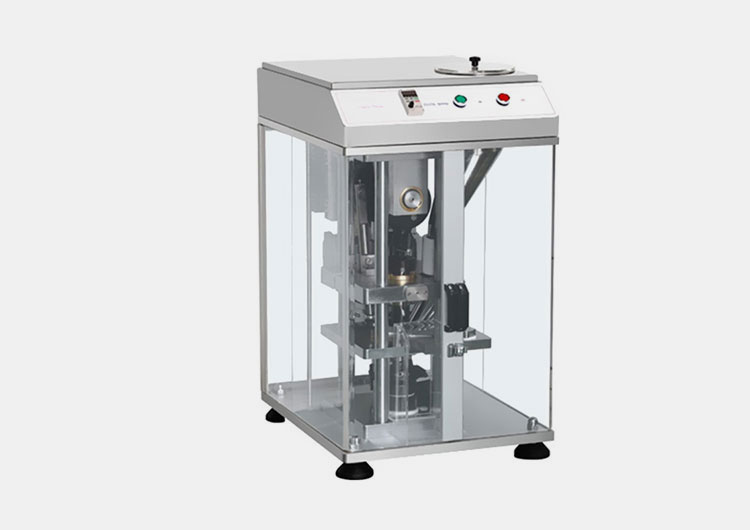
                      Scroll to Top