How to Choose the Right Packaging Machine for Dog Treats?
You want to pack dog treats fast, but bad seals and broken treats ruin your profits. I can show you how to fix this with the right machine.
To choose the right packaging machine for dog treats, you must match your treat type to the weighing system, select proper sealing jaws for fatty products, and pick a bag style. A multihead weigher with a rotary pouch machine works best for premium zipper bags.
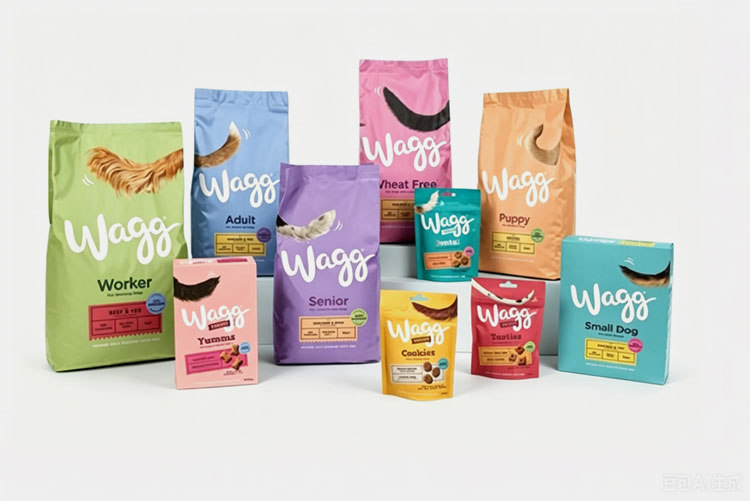
Dog treats packaging machine
Choosing the wrong setup can cost you thousands of dollars in wasted product and unhappy customers. Let us look at the exact steps you need to take to get this right the first time, or you will keep throwing money away on bad bags.
1.How do the distinct material profiles of dog treats dictate your packaging machine selection?
Hard dental chews act differently than soft jerky. If you use the same premade pouch filling machine for both, you will get jams. You need a setup matched to your product.
The shape and texture of your dog treats decide your feeding and weighing parts. Jerky strips need long-piece feeders, while freeze-dried cubes need gentle drops. You must pick the machine parts that handle your specific treat shape without breaking it.
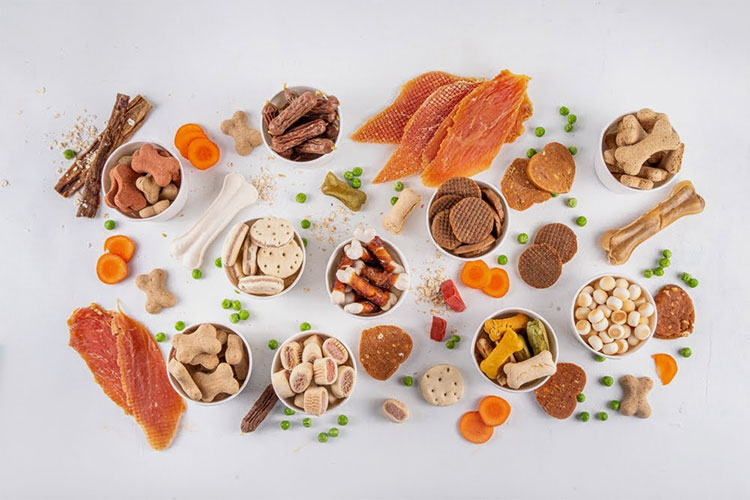
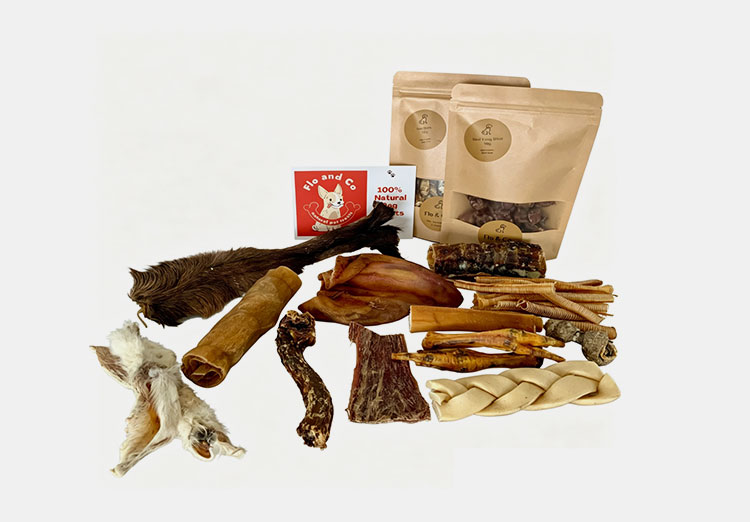
Different dog treat materials types
Matching Machine Parts to Treat Types
I remember when my plant tried to pack long jerky strips using a standard weigher. The strips stood up and jammed the chute. We lost hours of run time. You have to break down your product type before you buy a machine.
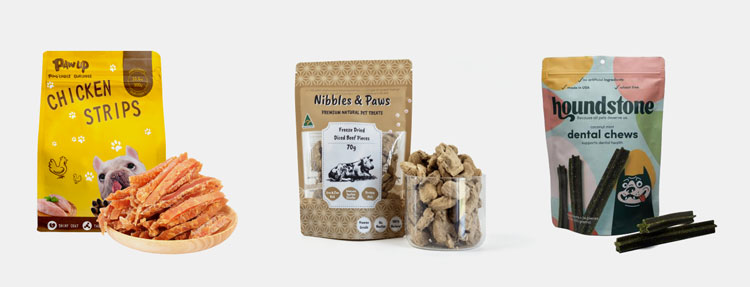
Different treats need different handling methods to move smoothly. If your treats are heavy and hard, like dental bones, they fall fast and can break the machine parts. If they are light and dry, dust becomes a big issue.
You must look at three things: shape, weight, and texture. This tells you what kind of hopper and weigher you need. A heavy chew needs thick steel to stop dents. A long stick needs a steep angle to slide flat. You cannot ignore the physical nature of your food.
| Treat Type | Common Problem | Required Machine Feature |
| Jerky Strips | Jams in the chute | Steeper angles, long-piece buckets |
| Freeze-Dried Cubes | Breaking and dust | Gentle slope, low drop height |
| Dental Chews | Heavy impact damage | Stronger steel buckets, rubber pads |
2.What are the primary root causes of interlocking or product bridging when automating the feeding of irregular pet treats?
Long treats stick together and block the flow. This stops your whole line. You need to know why this happens to stop it.
Bridging happens when irregular treats lock together at the hopper neck. This is caused by narrow chute angles, wrong vibration speeds, and using buckets that are too small. You fix this by using wider chutes and special metal plates.
Challenges of pet treats filling
Why Treats Jam and How to Fix It
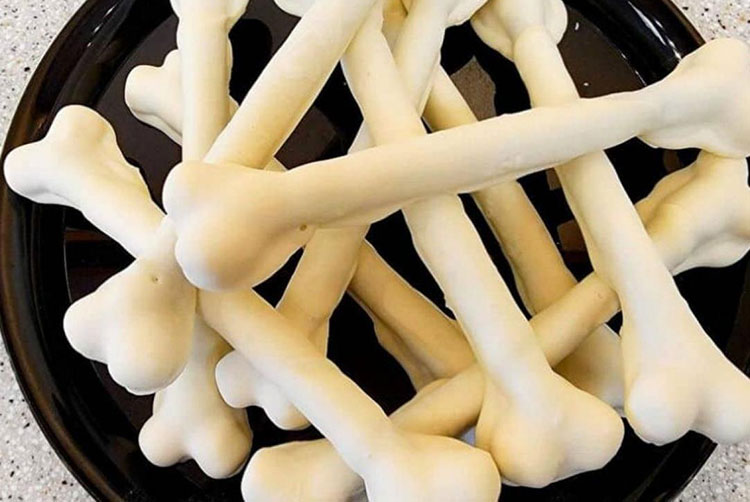
I used to watch our line stop five times an hour because bone-shaped treats locked together. We call this bridging. It happens because the items form a bridge over the hole, stopping anything else from falling through. The main reason is simple physics. When many odd shapes try to go through a small hole at the same time, they get stuck.
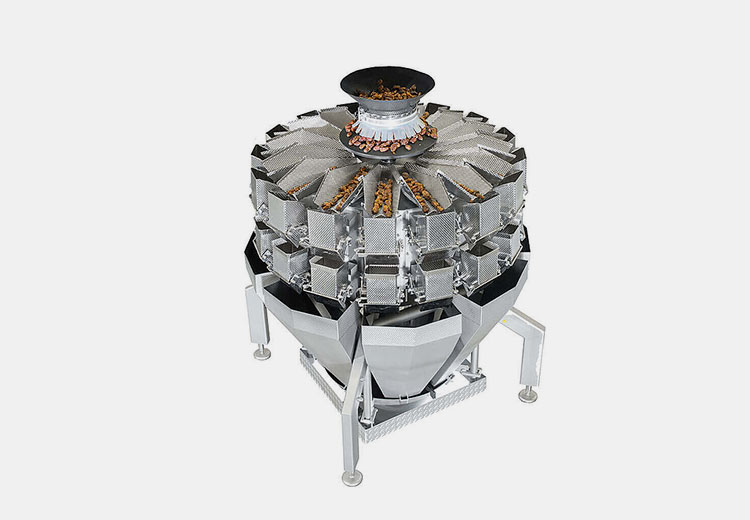
Right vibration setting for proper material
Another big cause is the wrong vibration setting. If the feeder shakes too fast, the treats bounce and tangle. If it shakes too slow, they pile up. You need the right balance. You also need to look at the angles of your metal chutes. If the walls are too flat, gravity cannot pull the treats down. You must open the space and let the treats flow freely.
| Root Cause | What Happens | How to Fix It |
| Chute too narrow | Treats form a knot | Widen the discharge chute |
| Wrong vibration | Treats bounce and tangle | Adjust frequency on the feeder |
| Flat metal plates | Sticky treats grip the metal | Use dimpled stainless steel |
3.How do high-fat or greasy meat treats cause standard sealing jaws to fail, and what real-world adjustments solve this?
Greasy dog treats leave oil on your bag seals. This makes the seal weak and the bag opens. You need special sealing methods.
Fat and oil from meat treats get into the seal area. Standard heat jaws cannot melt through this oil, causing leaks. You solve this by using serrated sealing jaws, higher pressure, and ultrasonic sealing technology to push the grease out.
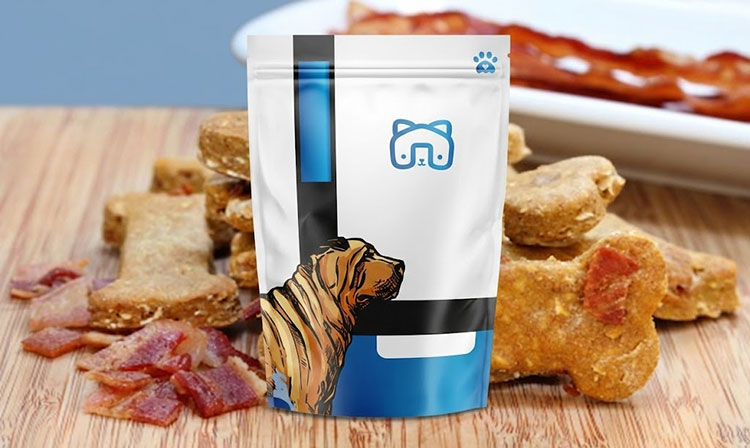
Greasy dog treats sealing challenge
Overcoming Oil in the Seal Zone
Once, we packed high-fat beef bites and had a big failure rate. The bags popped open in the boxes. The oil from the treats coated the inside of the plastic film. When the standard flat heated jaws tried to seal the bag, the oil acted like a shield. The plastic never melted together.
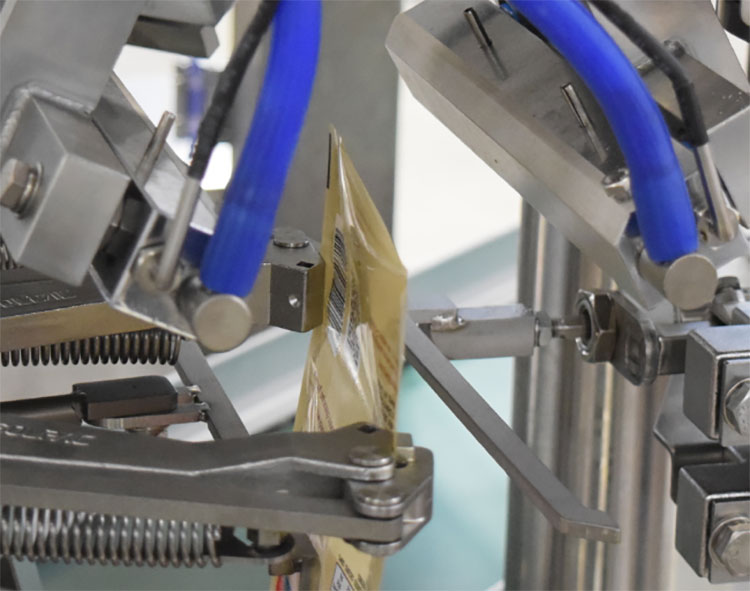
Premade pouch filling machine sealing process
To fix this, you cannot just turn up the heat. Too much heat will burn the plastic. Instead, you need to change how the jaws work. Serrated jaws have teeth. These teeth press hard and squeeze the oil out of the way. If the problem is very bad, ultrasonic sealing is the best choice. It uses sound waves to clean the seal area and melt the plastic at the same time.
| Sealing Method | How it Works | Good for High Fat? |
| Flat Heat Jaws | Melts plastic with flat heat | No, oil blocks the heat |
| Serrated Jaws | Teeth squeeze oil away | Yes, good for most oily treats |
| Ultrasonic Sealing | Sound waves clear oil and seal | Yes, the best for extreme grease |
4.Why is a customized multihead weigher with dimpled stainless steel buckets a non-negotiable requirement for sticky pet treats?
Sticky treats cling to smooth metal. Your weights get messed up and the machine stops. Dimpled metal fixes this sticky problem fast.
Sticky or oily treats act like glue on flat stainless steel. Dimpled buckets have small bumps that reduce the surface area touching the treat. This stops the treats from sticking, ensures accurate weights, and keeps your packaging line moving fast.
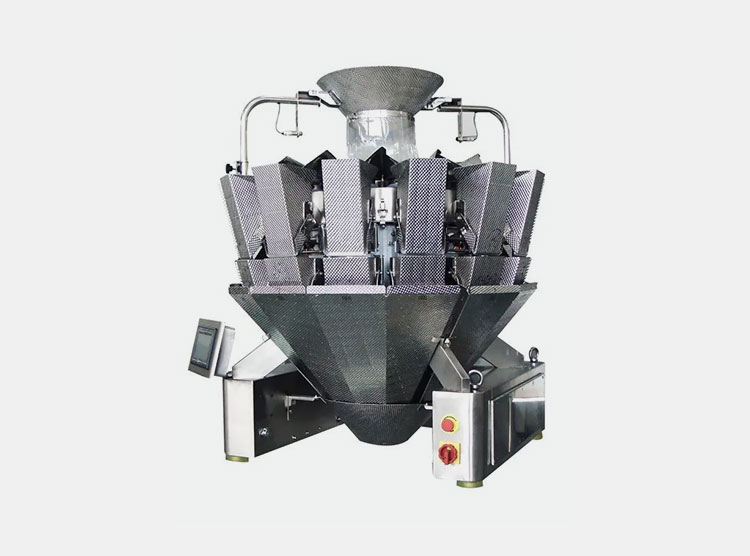
Dimpled bucket weigher
The Science of Dimpled Metal
I learned the hard way that smooth metal is bad for semi-moist dog treats. We had a batch of soft salmon bites. They stuck to the smooth weigh buckets so badly that workers had to scrape them off by hand every twenty minutes. The scale thought the bucket was full when it was just covered in stuck food.
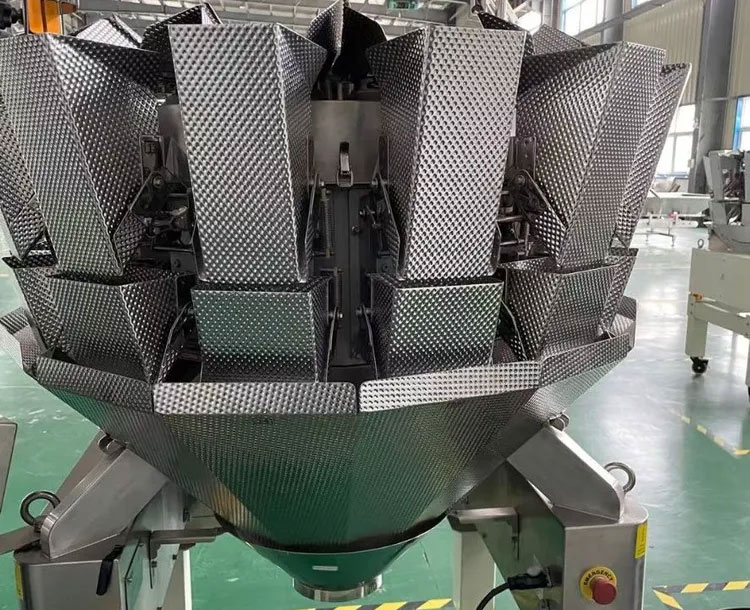
Dimpled steel, also called embossed steel, changes everything. Because the metal has a bumpy pattern, the treat only touches the tops of the bumps. Less contact means less sticking. It is a simple mechanical fix that saves hours of cleaning and keeps your bag weights perfect. You must ask for this feature if your treats have high moisture or added oils.
| Metal Finish | Contact Area | Result with Sticky Treats |
| Smooth Polish | 100% | High sticking, weight errors |
| Teflon Coated | 100% | Low sticking, but coating wears off |
| Dimpled (Embossed) | 30% | No sticking, lasts forever |
5.What is the technical difference between choosing a Vertical Form Fill Seal (VFFS) machine versus an automated rotary pouch packing machine for premium Doypack bags?
You want nice stand-up bags for your treats. Choosing the wrong machine makes bad bags. You need to know which one works best.
A VFFS machine makes bags from a big roll of flat plastic film. A rotary packing machine picks up bags that are already made, opens them, fills them, and seals them. Rotary machines are better for complex, premium zipper bags like Doypacks.
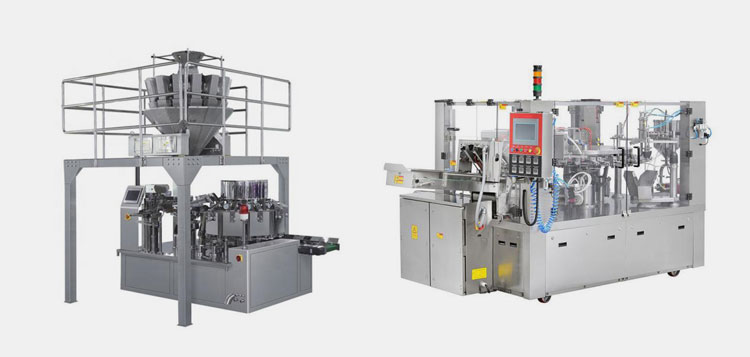
ALLPACK’s Vffs vs rotary pouch machine
Making Film vs Handling Pre-made Bags
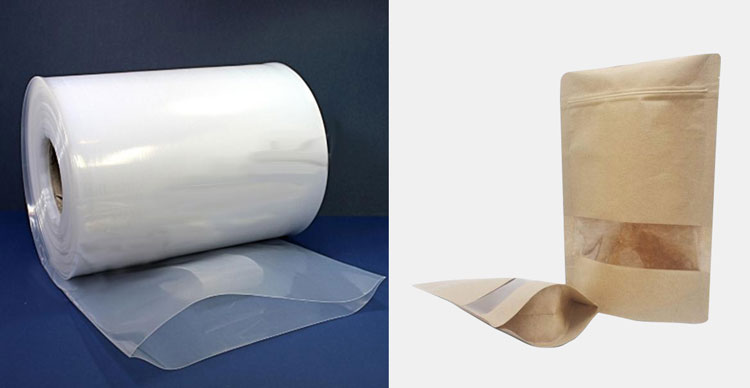
When we wanted to launch a premium line of treats in nice zipper bags, we had to choose between these two machines. A VFFS (Vertical Form Fill Seal) pulls a roll of plastic over a tube. It makes the bag, fills it, and seals it all at once. It is fast and cheap to run. But making a nice stand-up bag with a zipper from a flat roll is very hard to get right.
A rotary pouch machine works in a circle. It takes bags that are already perfectly made by a bag supplier. It just opens, fills, and seals them. The bags look much better on the store shelf. If you want a cheap pillow bag, use VFFS. If you want a premium Doypack, use a rotary machine.
| Feature | VFFS Machine | Rotary Pouch Machine |
| Bag Material | Roll of flat film | Pre-made bags |
| Best Bag Style | Pillow bags, flat bags | Stand-up bags (Doypack) |
| Look on Shelf | Basic | Premium |
6.How can the combination of specialized timing hoppers and multi-drop feeding profiles minimize product breakage during high-speed drops for fragile freeze-dried treats?
Freeze-dried treats cost a lot of money. If they fall too hard, they turn to dust. You need a gentle machine setup.
Fragile treats break when they fall long distances inside the machine. Specialized timing hoppers break the long fall into smaller, shorter steps. Multi-drop feeding releases the treats slowly. This reduces the crash impact and stops your expensive treats from turning into powder.
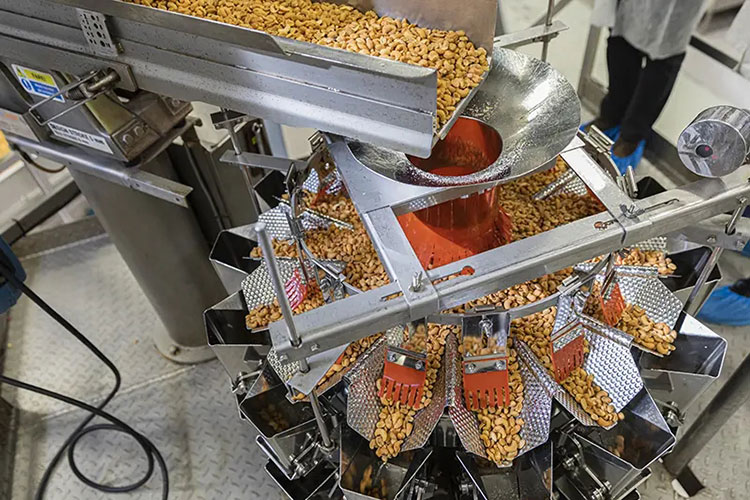
Timing hopper fragile treats
Slowing Down the Fall
I remember opening a sealed bag of our most expensive freeze-dried liver treats, only to find half of it was dust. The treats were falling straight down from the weigher into the bag, hitting the bottom hard. Freeze-dried meat is very light and breaks like glass.
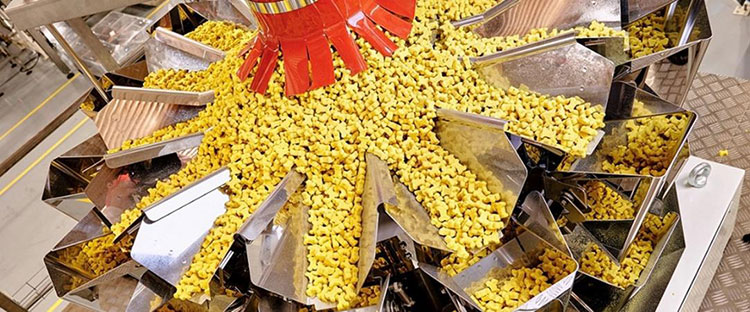
To fix this, you must change how the treats fall. You cannot just drop them all at once. You use a timing hopper. This sits between the scale and the bag. It catches the treats halfway down, stops them, and then opens again.
This cuts the drop height in half. Multi-drop means the machine drops a few pieces at a time instead of a big heavy clump. This protects the food.
| Problem | Cause | Solution |
| High impact at bottom | Long drop distance | Add a timing hopper halfway |
| Treats crush each other | Dropping all at once | Use multi-drop feeding |
| Dust in the bag seal | Broken pieces floating | Gentle handling parts |
7.What is the exact engineering framework required for Modified Atmosphere Packaging (MAP) to achieve an optimal residual oxygen level in pet food pouches?
Oxygen makes dog treats go bad and grow mold. Just blowing gas into a bag is not enough. You need strict controls.
To get oxygen under 1%, your machine needs a closed gas flushing system. It must pull the air out of the bag first with a vacuum. Then, it injects pure nitrogen before sealing. You also need special valves to stop outside air from sneaking back in.
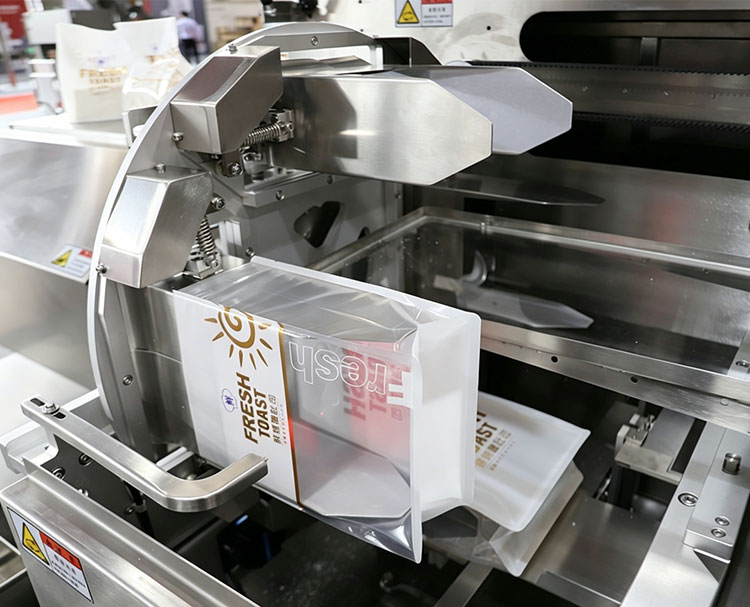
MAP gas flush vacuum system
Keeping the Oxygen Out
Our first try at extending shelf life was a mess. We just blew some nitrogen into the bags before they closed. We tested them and the oxygen level was still high. The treats went bad in two months. We learned that simple gas flushing is not true Modified Atmosphere Packaging (MAP).
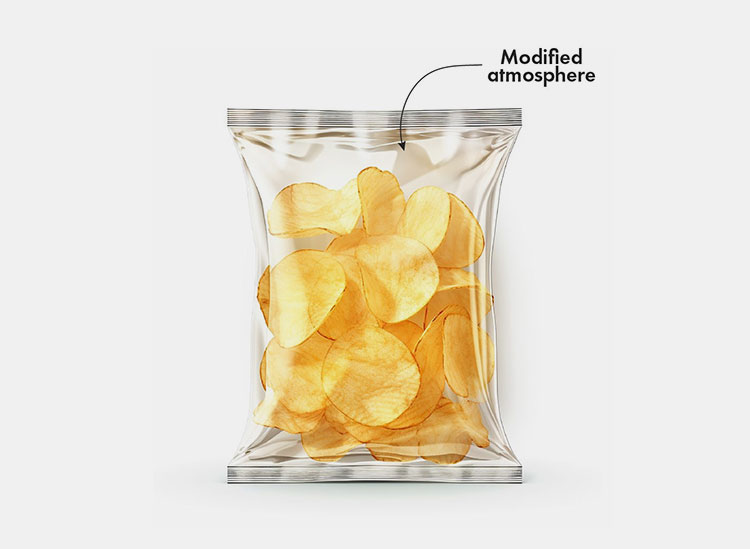
To get the oxygen below 1%, the engineering must be exact. First, the machine must hold the bag tightly. A vacuum nozzle goes in and sucks the normal air out. The bag goes flat. Then, a second nozzle shoots in the nitrogen gas. The sealing jaws must close the exact second the nozzle comes out. If there is even a half-second delay, room air rushes back into the bag.
| MAP Step | What the Machine Does | Why it Matters |
| 1. Vacuum | Sucks out room air | Removes the starting oxygen |
| 2. Gas Flush | Pushes in Nitrogen | Replaces air with safe gas |
| 3. Fast Seal | Jaws close instantly | Stops new oxygen from entering |
8.How does a gas-flushing system sync with high-speed sealing to prevent oxygen ingress without causing the pouch to over-inflate and burst during transit?
If you put too much gas in the bag, it pops during shipping. If you put too little, oxygen gets in. Balance is hard.
The machine uses a smart sensor called a mass flow controller. It measures the exact volume of nitrogen going into each bag. The computer times the sealing jaws to close right before the bag gets too full. This leaves the bag soft but oxygen-free.
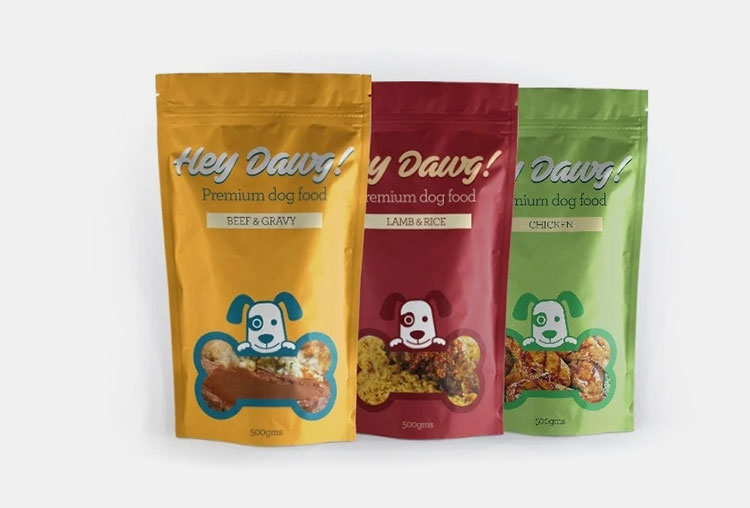
Dog treats pouch bags with proper nitrogen
Balancing Gas Pressure and Seal Timing
We once had a whole truckload of dog treat bags burst because they went over a mountain. The air pressure changed, and our bags were filled too tight with nitrogen. They popped like balloons. This happens when the gas flush system just blasts air on a timer without measuring the pressure.

You need to control the gas perfectly. The packaging machine's computer must talk to the gas valve. We call this a mass flow controller. It puts in just enough gas to push the oxygen out, but stops before the bag gets tight. We call this the pillow effect.
The bag should feel slightly soft. The sealing jaws must close fast to trap the gas, but leave enough empty space so the bag can handle pressure changes.
| Gas Issue | Result | Machine Solution |
| Too much gas | Bags pop in trucks | Use a mass flow controller |
| Too little gas | Oxygen stays in bag | Increase gas flow rate |
| Slow seal jaws | Gas escapes, air enters | Sync jaws with gas shut-off |
9.How should you design the desiccant or oxygen absorber dosing station within a continuous dog treats packaging machine line?
Throwing moisture absorbers into bags by hand is slow and unsafe. You might miss a bag. You need an automated dosing station.
The desiccant dosing station must sit directly above the bag opening, right before the treats drop in. It needs a high-speed cutter that cuts the packets from a roll and drops one into every bag. It must have sensors to stop the line if a packet is missing.
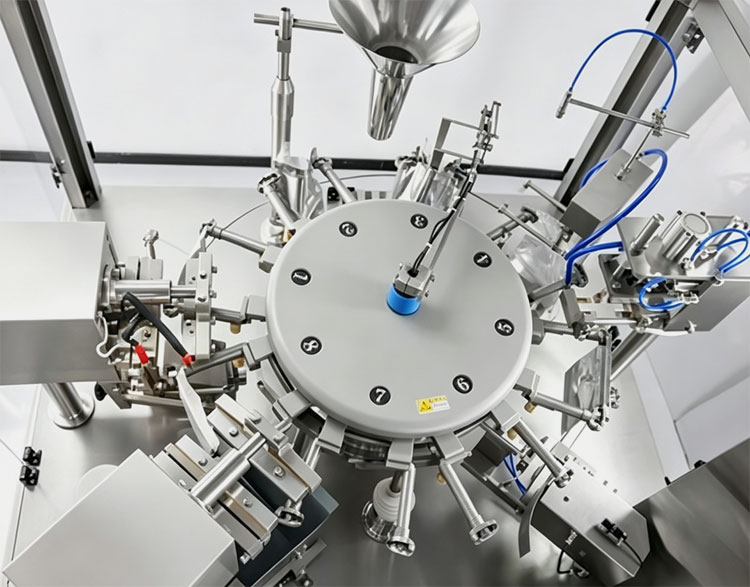
Desiccant dosing station in premade pouch filling machine
Automating Moisture Control
For a long time, we had two workers just dropping little oxygen absorber packets into bags as they moved on the belt. It was boring, and sometimes they dropped two, or missed one. When a customer gets a moldy bag because a packet was missed, it hurts your brand.
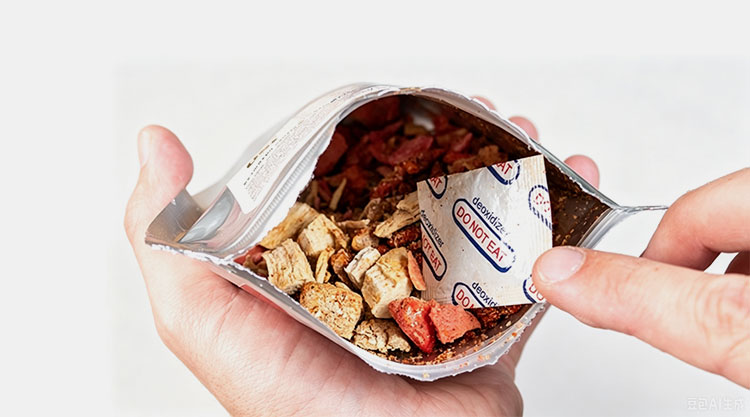
You must automate this. The dosing machine uses a continuous roll of desiccant packets. It uses a small eye-mark sensor to see the line between each packet. A fast knife cuts it, and the packet falls into the empty bag.
The most important part is the verification sensor. If the machine cuts, but nothing falls, the sensor tells the main computer to reject that specific bag. This guarantees every bag has exactly one packet.
| Station Part | Function | Why You Need It |
| Roll Feeder | Holds the strip of packets | Stops manual hand-dropping |
| Eye-Mark Sensor | Finds the cut line | Stops cutting packets in half |
| Drop Sensor | Checks if packet fell | Prevents empty, unsafe bags |
10.How must a dog treats packaging machine be engineered to comply with strict FDA, HACCP, and international pet food safety regulations?
Food safety rules are very strict. If your machine traps old food, bacteria will grow. Inspectors will shut your plant down.
To meet FDA and HACCP rules, the machine must have zero dead spots where food can hide. All parts touching the treats must be 304 or 316 stainless steel. The design must allow workers to take it apart without tools for deep cleaning and daily inspection.
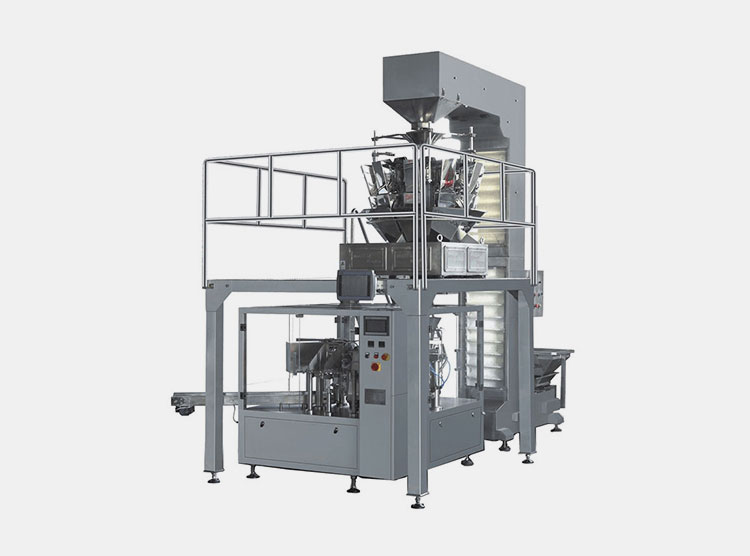
HACCP compliant premade pouch filling machine
Building for Food Safety
I have been through many food safety audits. The first thing an FDA inspector looks at is the welding on the machine hoppers. If the welds are rough or have tiny cracks, old meat dust gets stuck there. Over time, salmonella grows. This is a huge HACCP violation.
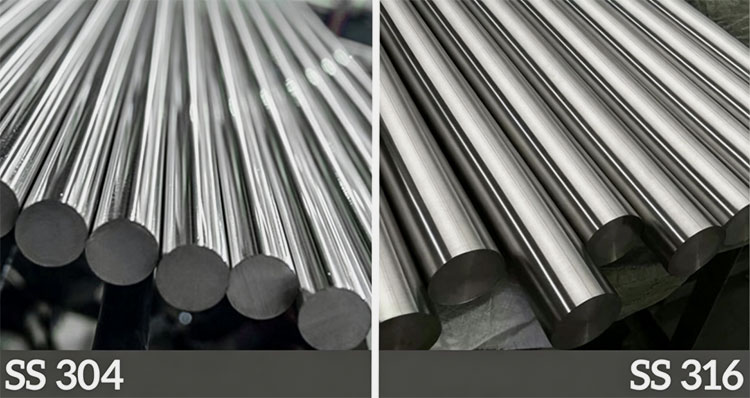
A compliant machine is built differently. Every corner is curved, not sharp. We call this a sanitary radius. All bolts are covered so dust cannot get into the threads. The materials must be food-grade stainless steel.

Also, the machine must be easy to clean. If a worker needs a wrench to take off a hopper, they might not clean it often. Tool-less removal means they can just unclip the parts, wash them, and put them back fast.
| Compliance Rule | Bad Machine Design | Good Machine Design |
| No bacteria traps | Sharp 90-degree corners | Smooth, curved corners |
| Safe materials | Painted metal parts | 304/316 Stainless Steel |
| Easy daily cleaning | Screws and bolts | Tool-less quick release clips |
11.Why is a sanitary washdown design critical for meat-processing environments, and how does it prevent microbial cross-contamination?
Raw meat treats leave bad bacteria on machines. You have to wash them with high-pressure water. Standard machines will break when wet.
Meat environments have high bacteria risks. You must wash the line with hot water and strong soap. An IP65 or IP67 washdown design seals all motors and wires in waterproof boxes. This lets you spray the whole machine down, killing all bacteria and stopping cross-contamination.
Surviving High-Pressure Cleaning
We used to run a standard packaging machine for beef treats. When the cleaning crew came in with hoses, they had to cover the motors with plastic bags. One day, a bag slipped, water got in, and we blew the main electrical board. We lost two days of production.
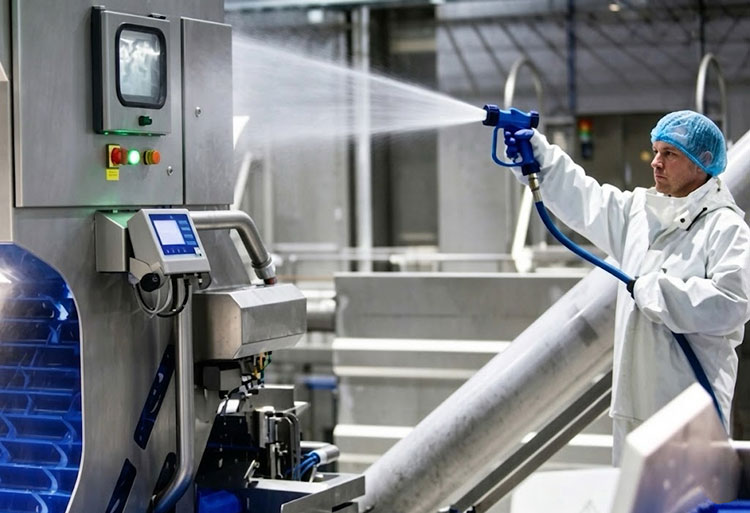
If you pack meat treats, you need a true washdown machine. IP65 means the machine can take low-pressure water jets. IP67 means it can handle total soaking. The enclosures for the computer and motors have special rubber seals.
The frame is built so water drains off easily and does not form puddles. This means your cleaning crew can blast away all the fat, blood, and bacteria safely. A clean machine means no cross-contamination to the next batch.
| IP Rating | What It Means | Best Use Case |
| IP54 | Protects from dust, splashes | Dry kibble only |
| IP65 | Protects from water jets | Most dog treat plants |
| IP67 | Fully waterproof | Heavy raw meat packing |
12.What material traceability documentation and audit trails must your packaging PLC supply to satisfy international food safety inspectors?
If a dog gets sick, you must prove your process was safe. If your machine has no memory, you cannot prove anything.
Your machine computer must log every action. It needs to record bag weights, sealing temperatures, gas levels, and user logins for every shift. You can export this data as a secure file. This proves to inspectors that you packed the food safely on that exact day.

Keeping Digital Records
During a mock recall test, an auditor asked me to prove the heat seal temperature for a batch packed three months ago. Our old machine just showed the current heat. It did not save history. We failed the test. That is when I learned the importance of PLC audit trails.

Modern machines act like black boxes on airplanes. The PLC tracks everything. If the heat drops below the safe limit, it logs the error and rejects the bag.
It also tracks who changed the settings. If an operator turns off the gas flush, the computer records their name and the time. When an inspector comes, you just put in a USB drive and download a clean, unchangeable report. This protects your business.
| Data Needed | Why Inspectors Want It | How the PLC Logs It |
| Seal Temperature | Proves the bag is closed | Records temp every minute |
| User Logins | Shows who made changes | Requires password to change |
| Reject Counts | Shows you catch bad bags | Counts every failed bag |
13.How can a single packaging line execute rapid, tool-less changeovers between varied bag styles, such as flat pillows, gusseted bags, and stand-up zipper pouches?
Changing the machine to run a different bag size takes hours. While the machine is stopped, you make no money.
A smart packaging line uses motorized adjustments and quick-release parts. Instead of using wrenches to change bag widths, the operator presses a button on the screen. The machine moves the clamps automatically. Funnels and bag guides use snap-on clips, making changeovers take minutes instead of hours.
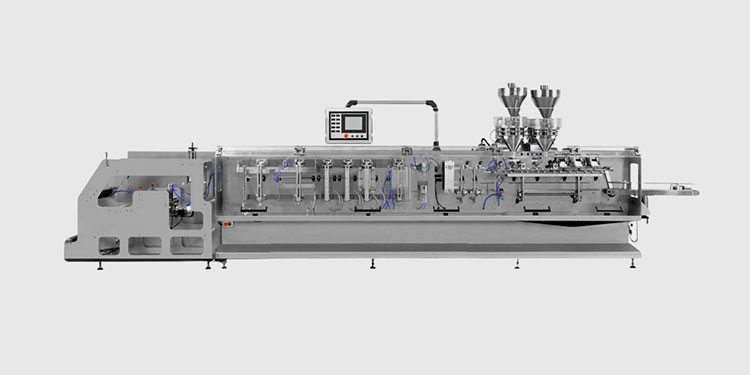
Dog treats filling packaging production line
Speeding Up Bag Changes
In my plant, we pack small flat bags in the morning and large stand-up pouches in the afternoon. With our old machine, a mechanic had to come with a toolbox. He spent two hours loosening bolts to widen the bag clamps. It was a huge waste of time.

Now, we use a machine with tool-less changeovers. The secret is servo motors and memory recipes. I just go to the touch screen and select a new bag size. Small motors automatically slide the bag grippers to the exact right width in ten seconds.
For the parts that still need manual changing, like the filling funnel, they use simple clips. You just pop open a handle, pull the small funnel out, and slide the big one in.
| Changeover Task | Old Way (Tools) | New Way (Tool-less) |
| Change bag width | Wrench and ruler | Tap screen, motors move |
| Change fill funnel | Unscrew 4 bolts | Snap open quick-clip |
| Recall settings | Manual paper notes | Saved computer recipe |
14.What is the engineering Root Cause Analysis (RCA) protocol when downstream weight checkers detect frequent over-filling or under-filling anomalies?
Giving away free product because bags are over-filled destroys your profit. You need to find out why the weights are wrong.
When a checkweigher finds bad weights, you must check three things. First, look for sticky treats clinging to the weigh buckets. Second, check if heavy treats are bouncing out of the buckets. Third, check the load cell calibration. Fixing these stops product giveaway and saves money.
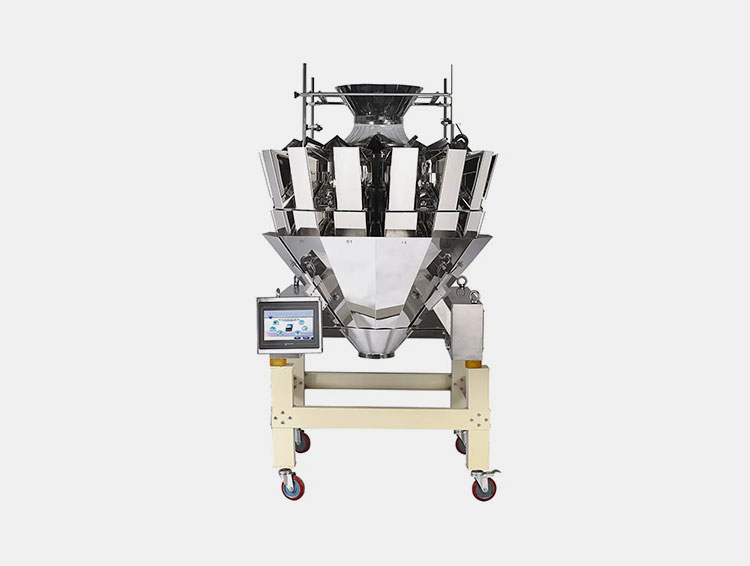
Weight checker
Finding the Cause of Bad Weights
I once noticed our checkweigher kicking out fifty bags an hour for being too heavy. Over-filling means we were giving away expensive treats for free. We had to do a Root Cause Analysis. We started by tracing the problem back up the line to the multihead weigher.

First, we looked at the buckets. Dust and fat had built up, making the scale read wrong. We cleaned them, but the problem stayed. Next, we watched the treats fall. The treats were too big for the small buckets.
When a bucket opened, a big treat would get stuck in the door, allowing extra pieces to fall through. We fixed it by changing the door open speed. You must always check the physical flow of the product first.
| Problem Found | RCA Step to Test | How to Fix |
| Fat buildup | Check empty bucket weight | Clean and use dimpled buckets |
| Treats stuck in door | Watch the bucket open | Adjust door speed and angle |
| Bad sensor reading | Put a test weight on scale | Recalibrate the load cell |
15.How does integrating metal detectors and X-ray inspection systems into the packaging line mitigate global product recall risks for pet food brands?
A piece of metal in a dog treat will kill a dog and ruin your brand forever. You must find it before it leaves the plant.
Metal detectors find loose screws or wire from the meat grinder. X-ray systems go deeper, finding stones, glass, or dense bone fragments hidden inside the treat. Putting both at the end of your packaging line ensures every bag is safe, preventing deadly recalls and lawsuits.
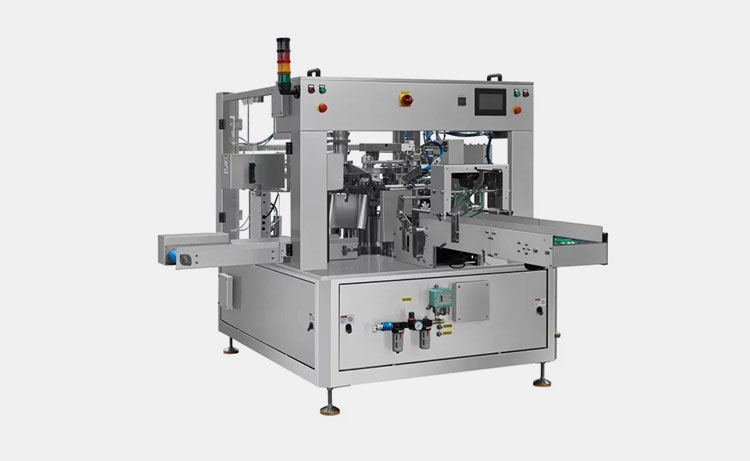
ALLPACK’s premade pouch filling machine with X ray metal detector
The Last Line of Defense
A few years ago, a big pet food brand had to recall millions of bags because wires from a cleaning brush broke off into the meat vat. The recall cost them millions and ruined their trust with buyers. I decided then that my plant would never ship a bag without full inspection.

We put a metal detector right after the bag seals. It creates a magnetic field. If a tiny piece of steel or aluminum passes through, it pushes the bag off the belt. But metal detectors cannot see rocks or hard plastic.
That is why we added an X-ray machine. The X-ray looks inside the solid dog treat. If there is a sharp bone chunk that did not get ground up, the X-ray sees it and rejects the bag.
| Inspection Machine | What it Finds | What it Misses |
| Metal Detector | Steel, Iron, Aluminum | Glass, Rocks, Plastic |
| X-Ray System | Glass, Bones, Stones, Metal | Very soft plastics, hair |
16.Why is choosing the right dog treats packaging machine an investment in reducing product giveaway and protecting brand reputation, rather than just a capital expense?
Good machines cost a lot upfront. But cheap machines waste your food every single day. The waste costs more than the machine.
An accurate packaging machine limits product giveaway to less than one gram per bag. If you pack thousands of bags a day, a cheap machine giving away five extra grams per bag costs you thousands of dollars a month. A precise machine pays for itself very fast.
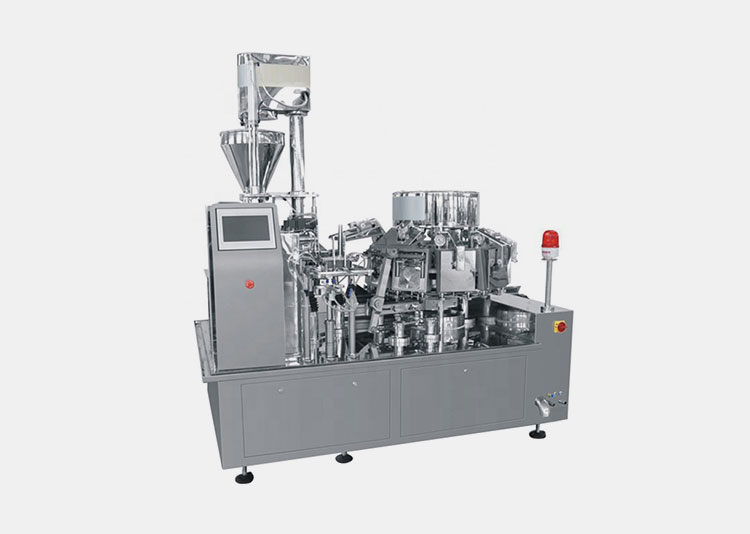
ALLPACK’s premade pouch filling machine reduce product giveaway
The True Cost of Over-filling
When I bought my first machine, I chose the cheapest one. I thought I saved money. But the weigher was not accurate. To make sure no bag was under-weight, we had to set the target weight high. On a 100-gram bag, we were putting in 106 grams.
Six extra grams does not sound like much. But we were running 30 bags a minute, 8 hours a day. That is over 80 kilos of free dog treats given away every single day. In one year, that lost product cost more than a high-end machine.
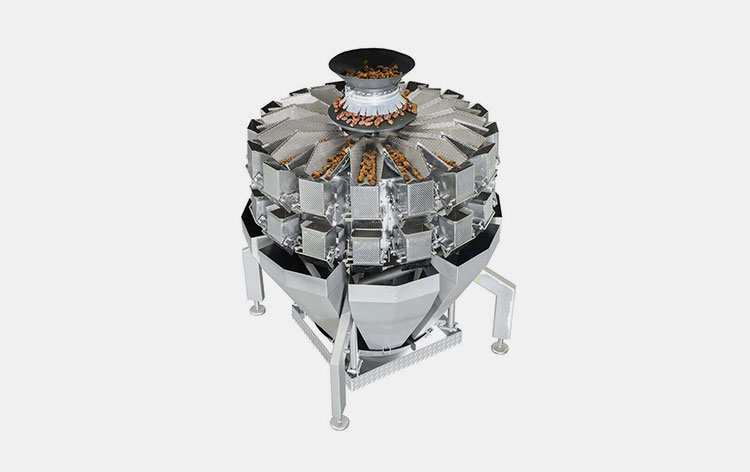
When we finally bought a top-tier multihead weigher, the giveaway dropped to half a gram per bag. The new machine was expensive, but it paid for itself in saved meat within six months.
| Machine Type | Giveaway per Bag | Lost Product per Month |
| Cheap Old Weigher | 5 to 8 grams | Huge financial loss |
| High-End Weigher | 0.5 to 1 gram | Tiny loss |
17.How does ALLPACK provide comprehensive Factory Acceptance Testing (FAT), custom 3D line layouts, and validation documentation to ensure a seamless cross-border implementation?
Buying a machine from overseas is scary. If it arrives and does not work, you are in trouble. You need proof it works before shipping.
ALLPACK removes this risk through strict testing. We build your custom 3D line layout and run your actual dog treats on the machine in our factory. We record the video and provide full validation documents so you know it works perfectly before it ships.
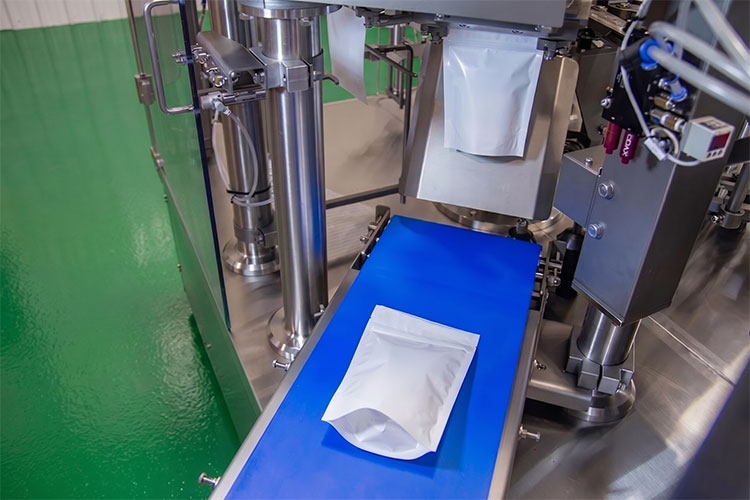
ALLPACK FAT testing
Testing Before Shipping
I know the fear of sending money across the world for big equipment. I once bought a conveyor system that did not fit my floor plan when it arrived. It was a nightmare. This is why ALLPACK does things differently. We do not just put a machine in a box and hope for the best.
First, our engineers make a 3D drawing of your exact factory floor. We make sure the machine fits around your walls and doors. Then, we do the Factory Acceptance Testing. You send us your dog treats and your empty bags.
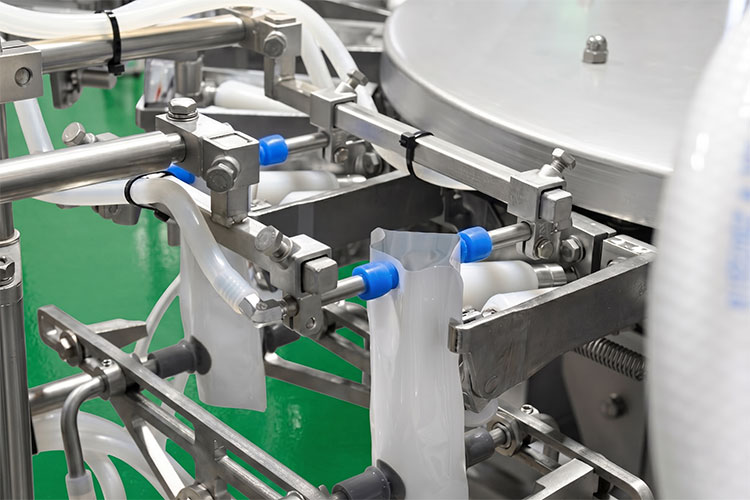
We run the machine at full speed with your product. We check the seals, the weights, and the speed. We invite you on a live video call to watch it. You get all the test reports. We only ship it when you say it is perfect.
| ALLPACK Step | What We Do | How It Helps You |
| 3D Layout | Map your factory space | Ensures the machine fits perfectly |
| FAT Testing | Run your actual product | Proves the machine works |
| Live Video | Show you the test run | Gives you peace of mind |
Conclusion
Choosing the right dog treats packaging machine stops waste and boosts profits. Match your machine to your treat type, ensure food safety, and invest in accuracy for long-term success. Tired of product giveaway and volatile sealing failures tearing into your profit margins? Stop letting irregular or oily pet treats slow down your line. Click here to request a Free Product Dosing Test and see how ALLPACK’s multihead weighing ecosystems optimize your yield today!
Don't forget to share this post!
CONTACT US
Tell us your raw material and project budget to get quotations within 24 hours.
WhatsApp Us: +86 156 0710 8630
The Buyer's Guide
Tell us your material or budget, we'll reply you ASAP within 24 hours